

Florida has quietly become the capital of tiny-house village living: gated ESCAPE-built villages near Tampa, a spring-fed eco-pond in Ruskin, lakefront lots in Winter Haven and a waterfront park where you bring your own home on wheels. The homes, lot rents and joining routes differ sharply from one community to the next — here is how the Sunshine State’s tiny scene actually works, and what it costs to be part of it.
Tiny House Communities in Florida: At a Glance
The most established tiny house communities in Florida cluster around Tampa Bay and the Central Florida lakes, with a second scene along the Gulf Coast and Lake Okeechobee. Between them they cover every way into tiny living: buy a finished village home, rent a lot for your own tiny house on wheels, test the lifestyle in a nightly rental, or join an affordable container-village pilot. This guide profiles the flagship communities one by one — Escape Tampa Bay Village, Circle Pond, The Preserve, Gracious Tiny House Park, Tiny House Siesta and DeLand’s container village — then covers zoning and hurricane reality, the full cost picture, how to join, how to pick your region, and how Florida stacks up against the rest of the Sunbelt.
| Topic | What It Covers | Key Fact or Figure |
|---|---|---|
| 1. Escape Tampa Bay Village | The gated flagship village in Thonotosassa | Homes ~$100,000–$139,930; lots $575–$625/month |
| 2. Circle Pond Tiny Community | The eco-pond village in Ruskin | 12 pads on 4.5 acres; ~$600/month all-in |
| 3. The Preserve | Lakefront lots in Winter Haven | $580/month on 500-acre Lake Mariana |
| 4. Gracious Tiny House Park | Bring-your-own waterfront on Lake Okeechobee | 21 sites, ~10 waterfront, 30/50 amp hookups |
| 5. Tiny House Siesta & DeLand | Nightly rentals and the container village pilot | Siesta rentals $160–$250/night peak |
| 6. Zoning & Hurricane Reality | Legality, storm prep and insurance | Impact glass, tie-downs, elevated foundations |
| 7. The Cost Picture | Homes, lots and the rent comparison | Well below Tampa’s ~$2,280 median rent |
| 8. How to Join | Tours, trial stays and choosing a village | Four-stop trial itinerary across the villages |
| 9. Picking Your Florida | Regions, remote work and the snowbird pattern | Central Florida: legality, variety, lower risk |
| 10. Florida vs. the Sunbelt | Texas and Arizona compared, plus what’s next | Florida wins on village infrastructure |
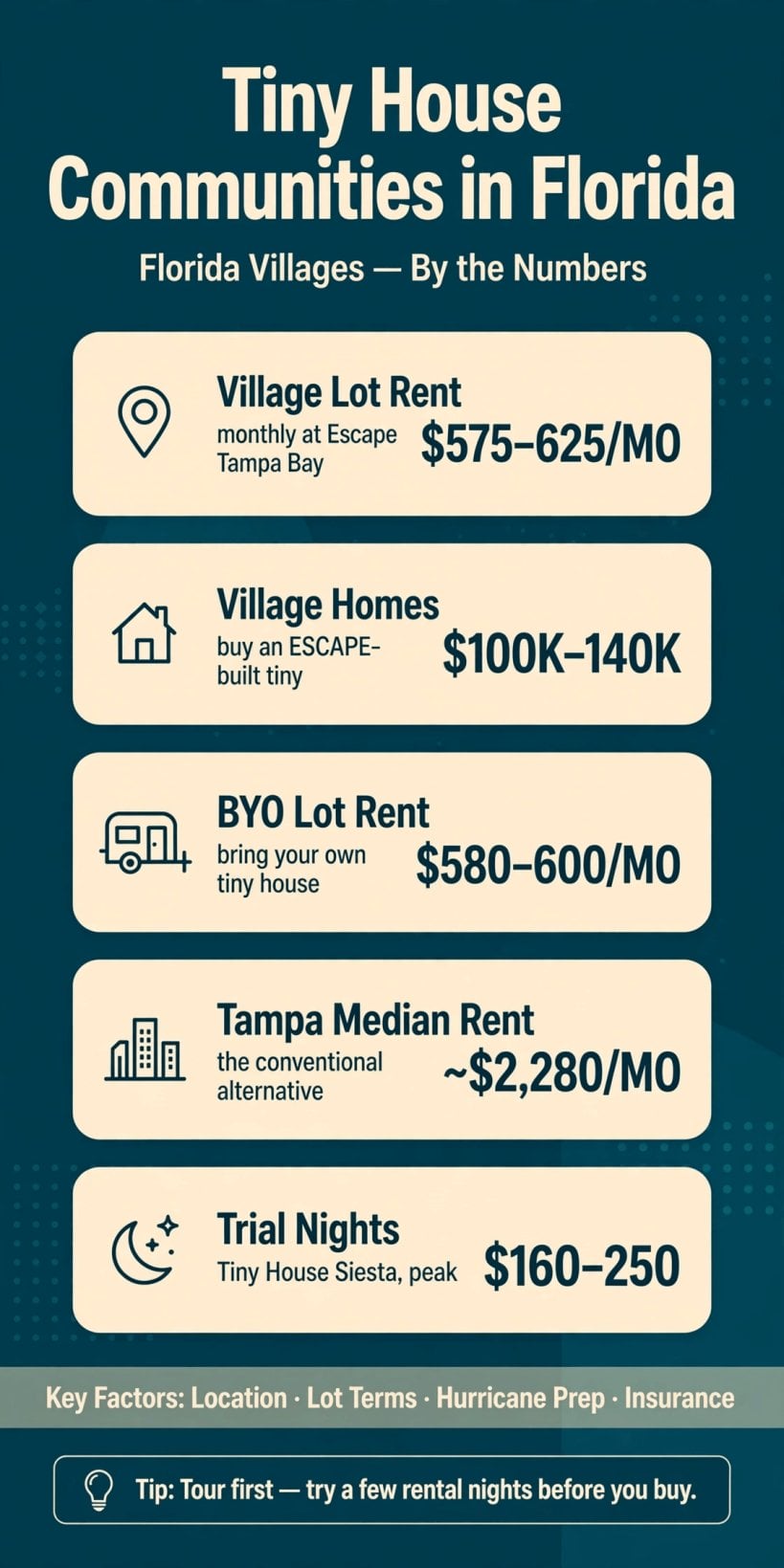
Florida’s villages by the numbers: lot rents of $575–625 a month at the flagship village, homes at $100K–140K, bring-your-own lots at $580–600, and trial nights from $160 — all against a Tampa median rent of roughly $2,280.
1. Escape Tampa Bay Village: The Flagship Gated Village
Escape Tampa Bay Village in Thonotosassa is the community most people picture when they think of Florida tiny living — and the one the others are measured against. It is a gated tiny-home village of ESCAPE-built houses, each under 500 sq ft with most around 400 sq ft, arranged as a finished, turn-key neighbourhood rather than a campground. The homes are custom-built and priced from roughly $100,000 to $139,930, so you are buying a real small house, not parking a trailer.
Lot rents run $575–$625 a month, and the figure is unusually inclusive: water, sewer, garbage, landscaping, the pool and gated security are all covered by the single payment. Set that against Tampa’s median rent of around $2,280 a month and the appeal sharpens — village residents build equity in a home they own instead of handing a landlord four times the lot rent. For anyone who wants the proven Florida model with the fewest moving parts, this is the turn-key benchmark: buy the home, pay the lot rent, and live in the village that set the standard.
2. Circle Pond Tiny Community: The Eco-Pond in Ruskin
Circle Pond in Ruskin takes the opposite approach to the flagship: small, green and deliberately simple. Twelve pads ring a spring-fed pond across 4.5 leafy acres, and the whole community is built around the water and the shade rather than around amenities blocks. It reads less like a resort and more like a small eco-village that happens to be made of tiny houses.
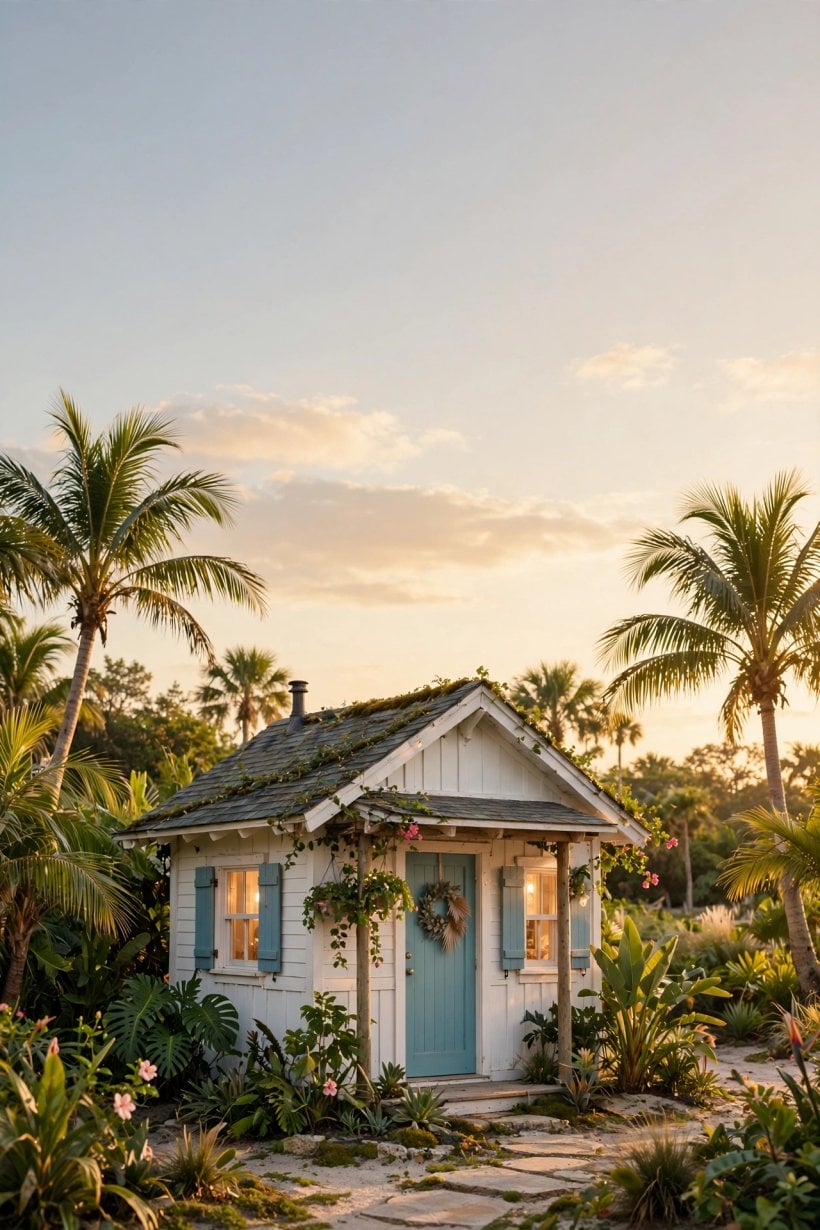
Lot rent is around $600 a month, and it is the most inclusive figure in this guide — water, sewer, garbage, lawn care and electricity are all folded into the one payment, which makes budgeting unusually predictable. The extras reinforce the eco brief: raised garden beds for residents and formal solar recognition for the community’s green credentials. If your tiny dream leans toward permaculture, pond views and a quieter pace — the sustainable end of the spectrum explored in our guide to living off grid in a tiny house — Circle Pond is the Florida address that matches it. Twelve pads also means it fills up: small communities reward early enquiries.
3. The Preserve: Lakefront Lots on Lake Mariana
The Preserve in Winter Haven is the lakefront option. It sits on 500-acre Lake Mariana in Central Florida, and its lots are genuinely spacious by tiny standards — 1,800 to 2,400 sq ft, with full hookups and high-speed internet. Lot rent is $580 a month, which undercuts the gated flagship while delivering something the flagship cannot: your own slice of waterfront.
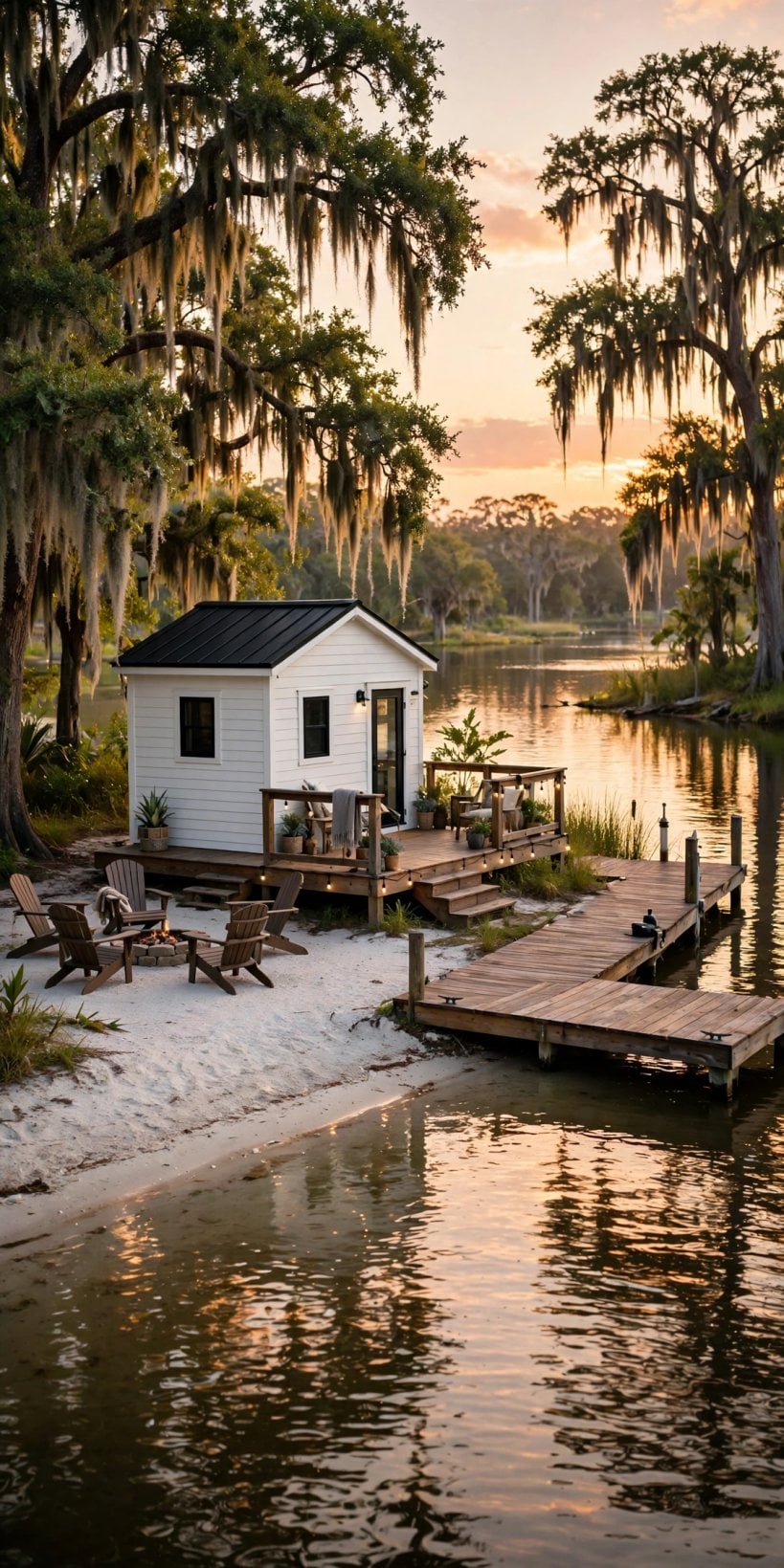
The amenity list is about the lake rather than the clubhouse: private docks, a white sand beach and fire pits for the evenings. The location is the other half of the pitch — Winter Haven sits between Orlando, Lakeland and Tampa, so residents get the Central Florida sweet spot of city access in three directions without living in any of them. For buyers whose priority is the water — morning coffee on the dock, a beach a short walk from the front door — The Preserve is the lake-life entry in this line-up, and at $580 a month it is also among the cheapest ways in. Bring your own tiny house, hook up, and the lake does the rest.
4. Gracious Tiny House Park: Bring Your Own to Lake Okeechobee
Gracious Tiny House Park, on the Rim Canal at Lake Okeechobee, is the bring-your-own community in this guide — a waterfront park built specifically for tiny houses on wheels. There are 21 sites, roughly 10 of them directly waterfront, each with full hookups on 30/50 amp service, so a THOW rolls in, connects, and is home. Before you roll anywhere, though, it pays to understand the wider rules covered in our guide to where you can park a tiny house.
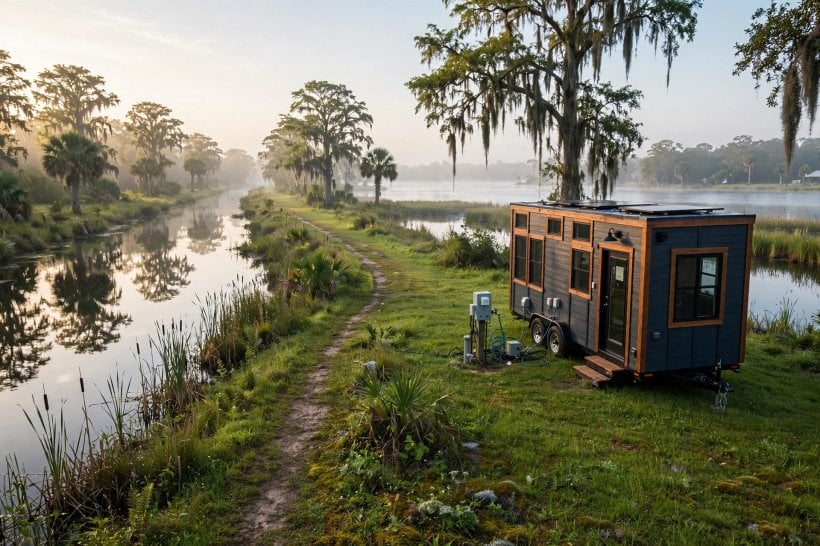
The terms are long-term by design: a six-month minimum stay, typically running yearly. That makes Gracious a home base rather than a stopover — the setting rewards it, with a nature trail and lake views in Florida’s peaceful south-central interior. You bring the house, so there is no $100,000 village purchase; you are renting the waterfront, the hookups and the community. For THOW owners who have been hunting for a legal, long-term, waterfront place to land, this is the park the Florida scene built for them — the independence of your own house with the security of an established community around it.
5. Tiny House Siesta and DeLand: Rent It First, and the Container Village
Not every route into Florida tiny living starts with a purchase. Tiny House Siesta, in Sarasota five minutes from Siesta Key Beach, is the resort-style try-before-you-buy: finished tiny houses rented by the night, at $160–$250 in peak season. A long weekend there answers questions no brochure can — how the space feels at breakfast, whether the loft works for you, whether tiny is a lifestyle or a holiday. Our wider guide to where you can rent a tiny house covers the same test-drive logic beyond Florida.
At the other end of the price spectrum sits DeLand’s container village: a shipping-container tiny village run as a transitional housing pilot, with deeply affordable rent as its mission. It matters beyond its size because of what it signals — cities are beginning to legalise tiny villages as policy, not just tolerate them as novelties. Between Siesta’s nightly rentals and DeLand’s affordability pilot, Florida offers two low-commitment doors into the tiny world: rent the experience first, or watch the affordable end of the market where the next wave is forming.
6. Zoning, Hurricanes and Insurance: The Florida Reality
Florida’s advantage starts with legality: it has the most established tiny villages in the country, which means the models here are proven rather than experimental. Anyone weighing a move should still read our guide to where you can legally live in a tiny home alongside this one, because community living and going it alone are governed very differently.
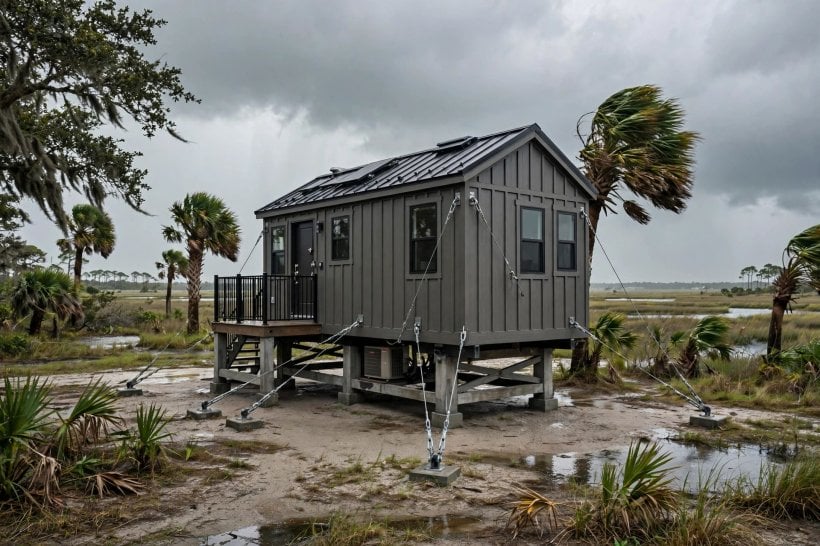
The trade-off is weather. Hurricane readiness is the Gulf Coast requirement set: impact glass, proper tie-downs and elevated foundations are how a tiny house earns its place here, and the established communities require them rather than suggest them. Insurance follows the same geography — premiums run higher on the coast, and the honest advice is to get quotes before you buy, not after. Mitigation cuts both ways: the same impact glass, tie-downs and elevation that protect the house are the items insurers discount for. It is also why so many residents land inland — Central Florida keeps the legality and the variety while stepping down the storm risk and the premiums that come with it.
7. The Cost Picture: Homes, Lots and the Rent Comparison
The numbers across this guide resolve into two models. In the village model, you buy the home — $100,000 to $140,000 for an ESCAPE-built house — and pay $575–$625 a month for the lot beneath it, with utilities and amenities bundled in. In the bring-your-own model, the house is already yours and the lot is the whole cost: $580–$600 a month at the lakefront and pond communities. Either way, the monthly figure lands in a narrow band around $600.
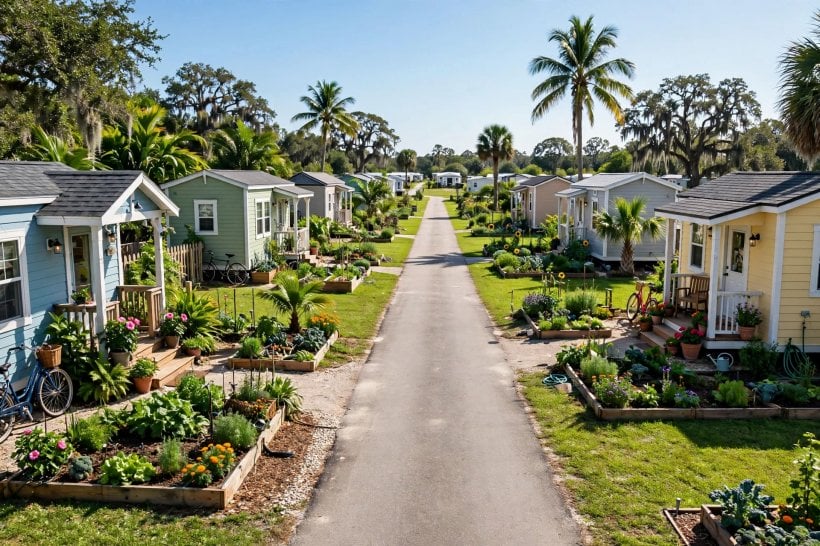
The comparison that sells it is the conventional alternative: against Florida’s soaring rents — Tampa’s median sits around $2,280 a month — the tiny village reads as the affordability answer rather than a lifestyle splurge. Even with coastal insurance added, the total still beats the condo. The honest budget adds the full stack: home, lot, insurance and living costs. And for buyers who would rather own the dirt outright, our guide to tiny houses for sale with land covers the packages and pitfalls of skipping lot rent entirely. Village living trades land ownership for community and low monthly costs — for most residents, that is the right trade.
8. How to Join: Tour, Trial and Settle In
Joining starts with a decision about geography: Tampa Bay, the Central Florida lakes, the Gulf Coast or Lake Okeechobee each give you a different Florida. From there, the proven route is to tour the flagship first — walk Escape Tampa Bay Village, see the standard the others are judged by, and take the measure of village life at its most finished. Then look seriously at the lakefront: The Preserve’s $580 waterfront lot is the value pick of the state.
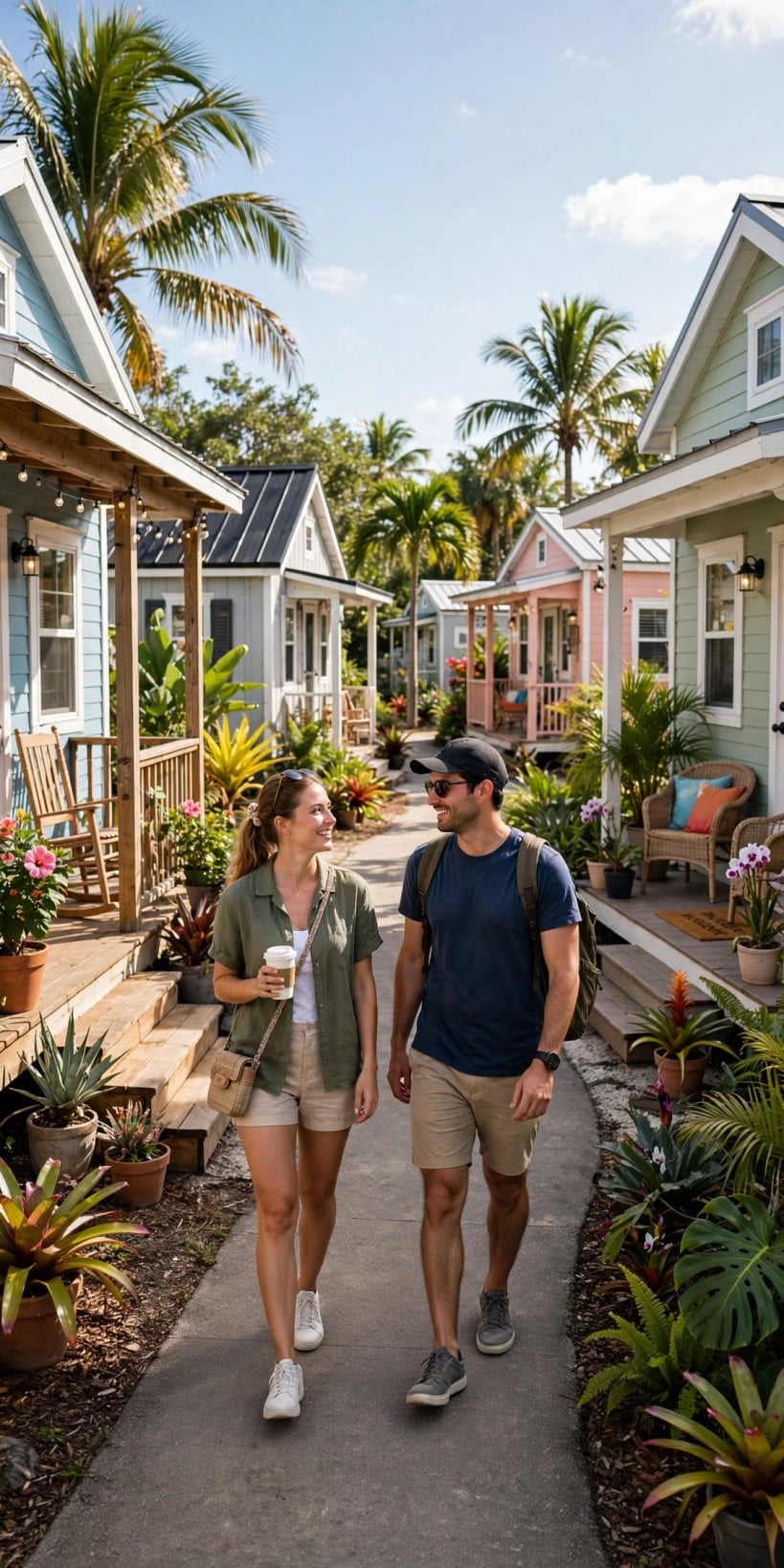
The smartest step is the trial. The four-day itinerary residents recommend runs: Tampa Bay on day one for the Escape Village tour, Ruskin on day two for Circle Pond’s eco-village, Winter Haven on day three for The Preserve’s lakefront, and Sarasota on day four for a night at Tiny House Siesta and the beach. Finish it and you hold the full Florida tiny picture in your head — plus actual nights slept in a tiny house. Before signing anything, verify the Florida fine print: hurricane requirements for your house, insurance quotes, and the exact lot terms. And connect with Florida’s tiny-house groups and communities early; the local intelligence in those conversations is worth more than any listing.
9. Picking Your Florida: Regions, Remote Work and Snowbirds
The Sunshine State advantage is a stack of small things adding up: year-round warmth that makes tiny the natural climate fit, no state income tax quietly improving every budget, the country’s most mature village scene, and beaches, springs and lakes as the backyard. The regional choice inside Florida matters as much as the state choice. Tampa Bay holds the flagship village and the Gulf sunsets; Ruskin the eco-pond; Sarasota the resort trial; and Central Florida — Orlando, Tampa and Lakeland within reach, lakes everywhere — is widely treated as the sweet spot, balancing legality, variety and lower hurricane risk.
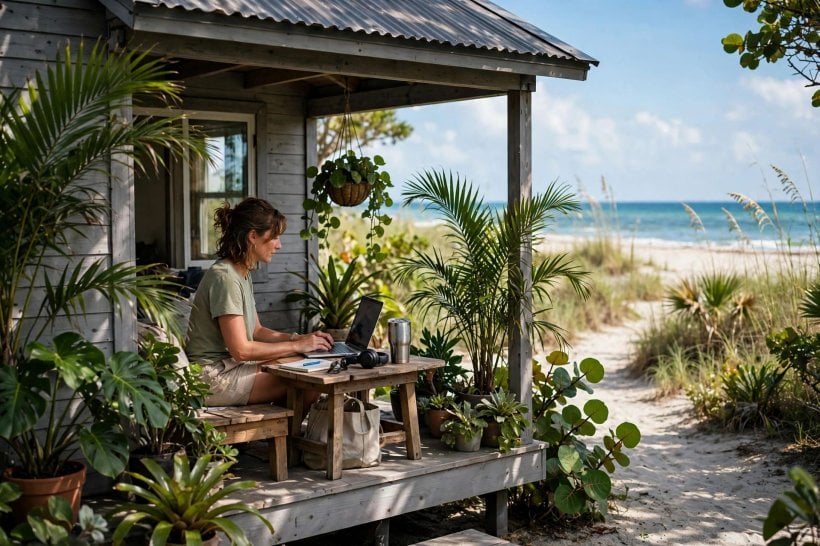
For remote workers the maths is the arbitrage: no income tax on top of a roughly $600 lot, strong connectivity — The Preserve advertises high-speed internet as a headline feature — and a lunch break that can be a beach. The daily rhythm writes itself in the original portrait of village life: coffee by the water in the morning, remote work through the middle of the day, the beach or the springs in the afternoon, and the community fire pit in the evening — the endless-summer schedule that conventional rent never bought anyone. Then there is the snowbird factor: many residents run the seasonal pattern, wintering in Florida and summering elsewhere, and many communities welcome it. A $600 lot as a winter base is the value play of the whole scene — the best of both climates, on one tiny footprint.
10. Florida vs. the Sunbelt — and What Comes Next
Florida is not the only tiny-rich state in the Sunbelt, and the honest comparison helps the undecided. Texas offers land and freedom — the independent route, surveyed in our guide to tiny houses for sale in Texas. Arizona offers desert and dry, the off-grid flavour. Other village scenes are worth a look too, from the mountains in our guide to tiny house communities in North Carolina to the high country covered in Colorado tiny house communities. The verdict, though, holds: Florida wins on village infrastructure — nowhere else has this density of established, legal, varied communities.
The future points the same way. DeLand’s ordinance is the signal: cities legalising villages, new communities in the planning pipeline, and demand fed by an affordability crisis that makes the $600 lot look better every year. The original bet stands — Florida’s tiny leadership continues into the villages of 2030. So run the decision framework: want the turn-key village, choose Escape Tampa Bay; want the lake, The Preserve; want the eco life, Circle Pond; want the beach trial, Siesta; want to bring your own, Gracious Park. Tiny house communities in Florida have a path for every priority — the only step left is picking yours.
Final Considerations
Florida offers the most mature tiny-house village scene in America — the ESCAPE standard at Tampa Bay, $580 lakefront lots at Winter Haven, the eco-pond at Ruskin, waterfront BYO at Okeechobee and a rental test drive at Sarasota. Whether it is the $100,000 village home or the $600 lot, the state’s tiny paradise is open for joining. Mind the hurricanes, verify the fine print, tour before you commit — and dive in. One caution, carried from the original guide: community details and prices change, so verify current offerings directly with each community before you plan around them.

6 Comments