

Living off grid in a tiny house means your home runs on systems you own instead of connections you rent: you make and store your own electricity, secure your own water, and handle your own waste and heat. A tiny house is the natural partner for it — small spaces need less power, less water and less heat than big ones, so the systems stay a manageable size.
Manageable is not the same as effortless, and this guide is honest about that. Off-grid living trades monthly bills for maintenance, attention and a working understanding of your own house. What follows covers each system in turn — power, water in, waste out, heat and connection — with the same discipline throughout: size for the worst week, not the best one, and treat electrical, water-safety and waste rules as professional territory, not improvisation.
1. What Off Grid Really Means
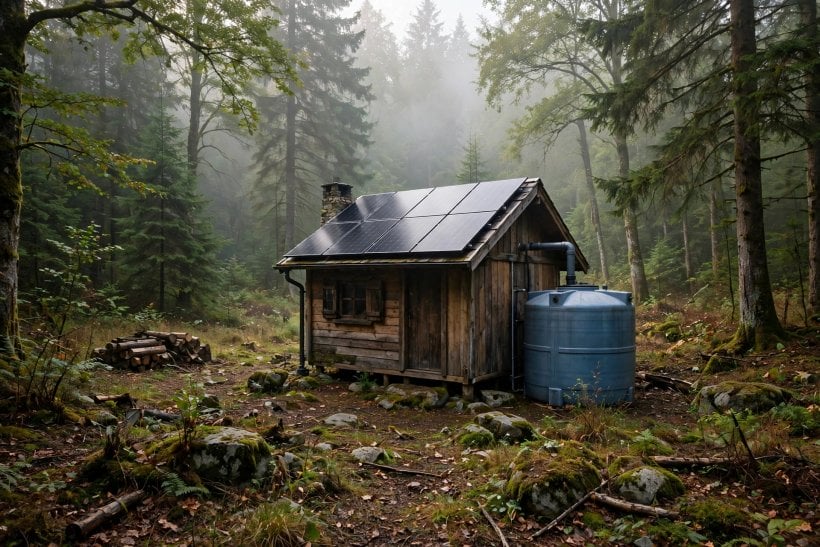
“Off grid” properly means no mains connections: no utility power line, no municipal water, no sewer. In practice, people live at points along a spectrum — fully off grid, off grid except a well, grid-tied with solar and batteries as backup. Decide which point you are aiming for, because each system in this guide changes with the answer. A house that keeps a water connection but drops power, for example, needs a very different setup from one that drops both.
Skills are the third system, after hardware and habits. The off-grid household learns basic plumbing and electrical literacy — enough to diagnose, isolate and make safe, with professionals for the work itself — plus water testing, battery care, stove maintenance and the humility to keep manuals. None of it is exotic; all of it compounds. People a year into off-grid life are not braver than you; they are simply practised at problems that are still new to you, and practice is a schedule, not a talent.
What never changes is the mindset: you become your own utility company. When something fails, there is no supplier to call — there is you, your spares and your understanding of the system. That is the real price of off-grid living and also, for the people who love it, the real reward. Our wider guide to off-grid energy systems sets out the power side in full; this post holds the whole lifestyle together.
2. Power: Making and Storing Your Own Electricity
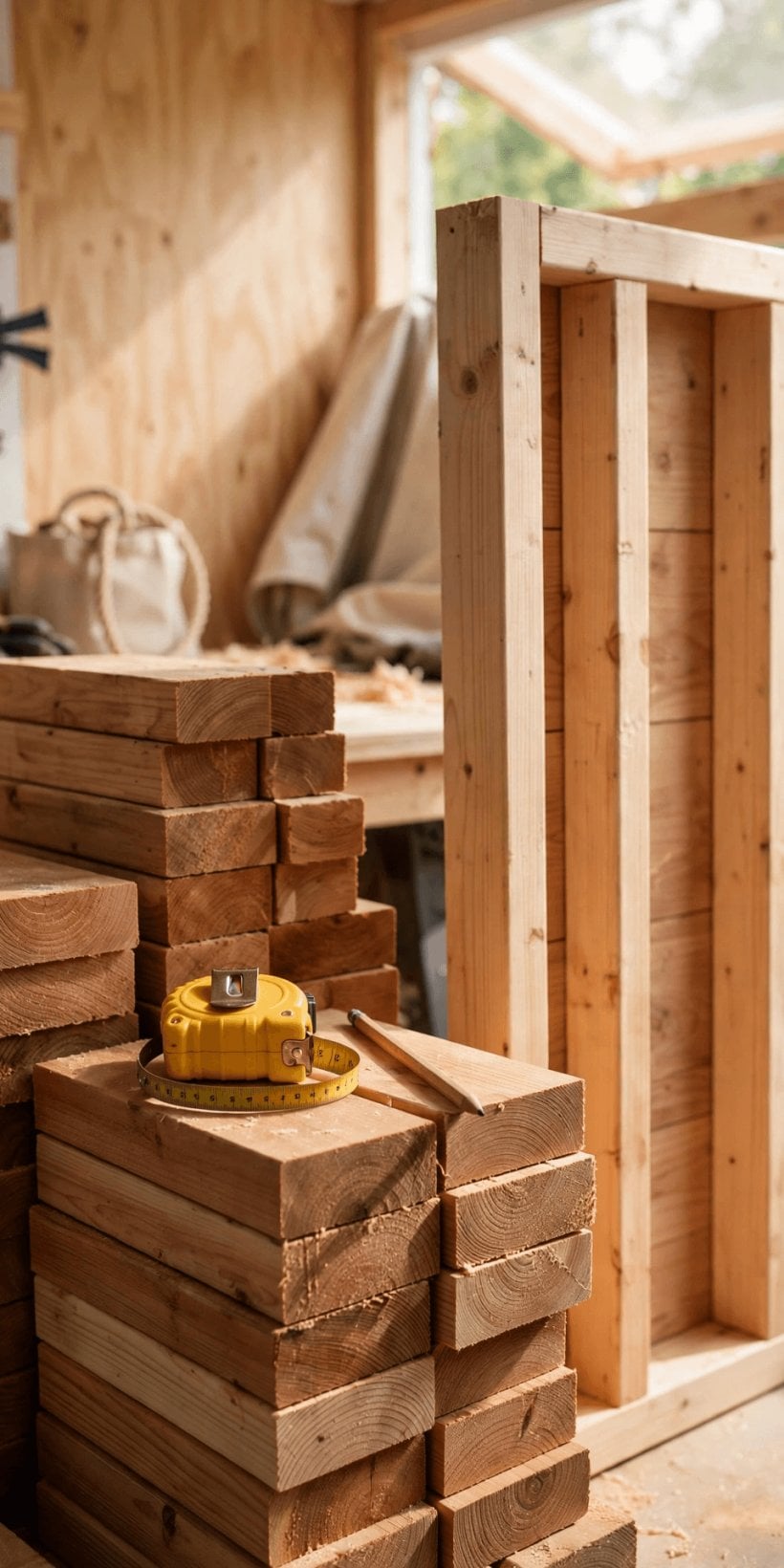
Every off-grid power system starts not with panels but with an audit: list everything you will run, how hungry it is and for how long each day. In a tiny house the big loads decide everything — heating, cooking and water heating dwarf lights and laptops — so the first off-grid skill is choosing appliances and habits that a modest system can feed. Only after the audit do you size generation and storage to match, with winter, not summer, as the design case.
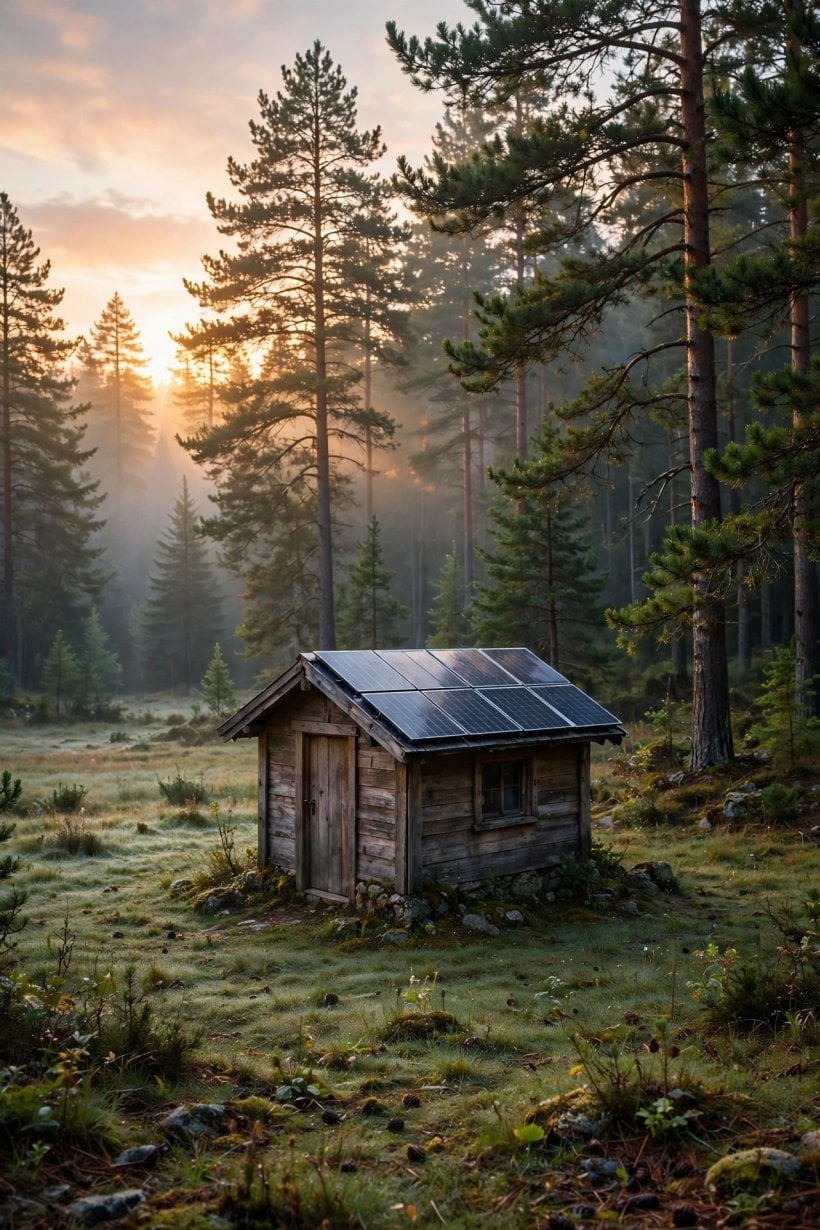
Solar panels plus a battery bank are the usual answer, sometimes with a small generator as winter backup. This is electrical work with real danger in it — battery banks store serious energy — and design and installation belong with qualified professionals, both for safety and because systems of this kind often require sign-off. Our guide to how much solar power a tiny house needs works through the sizing questions. Your daily role is gentler: watch the battery gauge the way grid households watch the weather, and let consumption follow what the sky has given you.
3. Water In: Catchment, Wells and Hauling
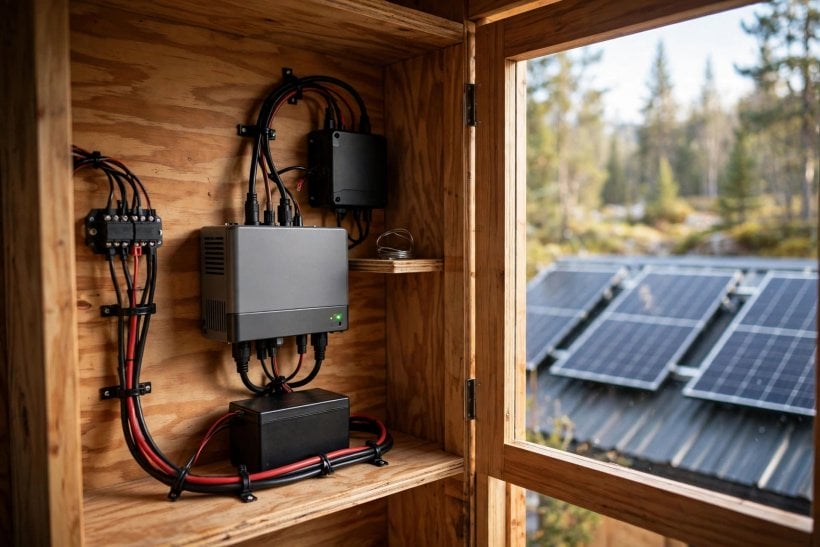
Off-grid water comes from three sources: rain you catch, groundwater you draw, or water you haul. Rainwater harvesting suits tiny houses well — a small roof still collects a useful volume, stored in tanks and filtered before drinking — but rainfall is seasonal, so storage, not collection, is usually the real design problem. Wells give independence at the price of drilling and a pump that joins your power audit. Hauling is the humble option many people start with, and there is no shame in it: it is simple, legal almost everywhere, and buys time to decide.
Whatever the source, drinking water needs proper filtration and periodic testing, and this is a health matter, not a lifestyle garnish — have your treatment setup specified or checked by someone qualified, especially with rainwater. The rules around collection itself vary by place, which our guide to the legality of collecting rainwater explains. The full plumbing picture lives in our guide to off-grid tiny house water systems.
4. Water Out: Waste and the Composting Answer
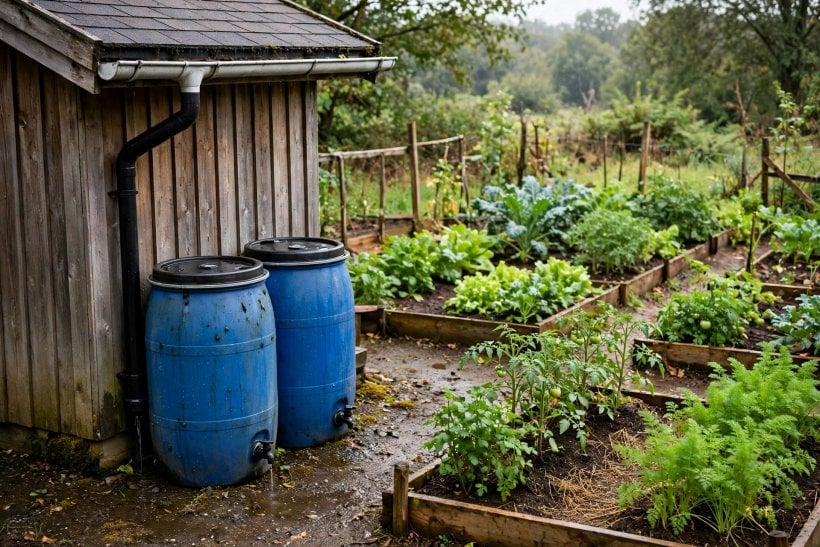
What leaves the house matters as much as what enters. Black water — toilet waste — is where most off-grid tiny houses step away from plumbing entirely: a composting toilet handles it without water or a sewer, which is why it appears in nearly every off-grid build. Our guide to the best composting toilet options for a tiny house compares the types. Used and maintained as the maker directs, it is clean, odour-controlled and entirely ordinary to live with.
Greywater — from sinks, showers and laundry — is the subtler problem. It feels harmless, but soaps, grease and bacteria make it a regulated waste in many places, with rules about filtration and where it may be discharged. Do not assume a pipe into the garden is legal because it is rural; check the local rules first, as our guide to greywater systems sets out. Off grid does not mean outside the law — it means the responsibility moved to you.
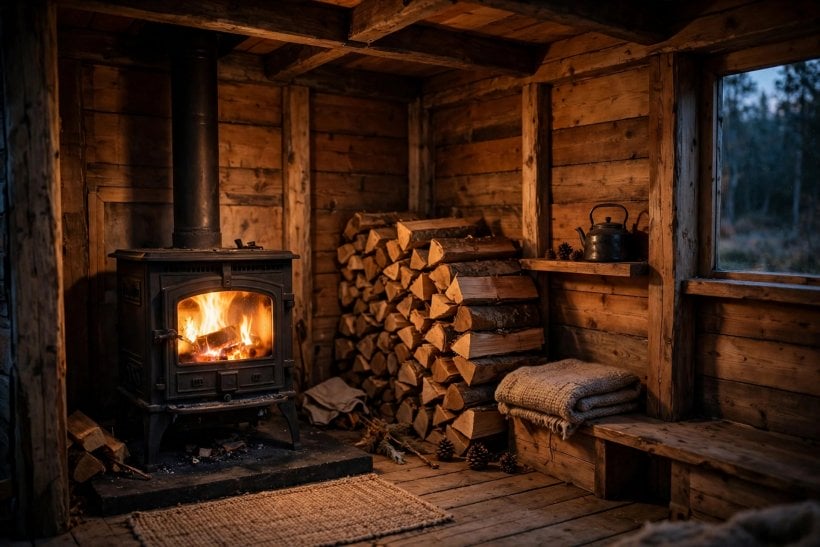
5. Heat and Cooking Without the Mains
Heating decides whether off-grid winter is snug or miserable, and in a tiny house the leading answer is a small wood stove: independent of power, fed by a renewable you can stack by the door, and powerful enough that sizing down matters — an oversized stove in a tiny space is a sauna with a door. Wood stoves are also fire and carbon-monoxide devices, so installation, flueing and clearances are professional, code-governed work, never a weekend improvisation. Alternatives and backups — propane heat, or electric heat where the power system can carry it — each trade convenience against fuel deliveries or battery depth.
Cooking usually goes to propane or to small electric appliances chosen against the audit. The pattern to copy is layering: a primary heat source you control, a backup you rarely use, and insulation good enough that neither works hard. In a well-insulated tiny house, staying warm is a smaller problem than staying cool-headed about fuel stocks in February — keep the woodpile and the propane ahead of the weather, not behind it.
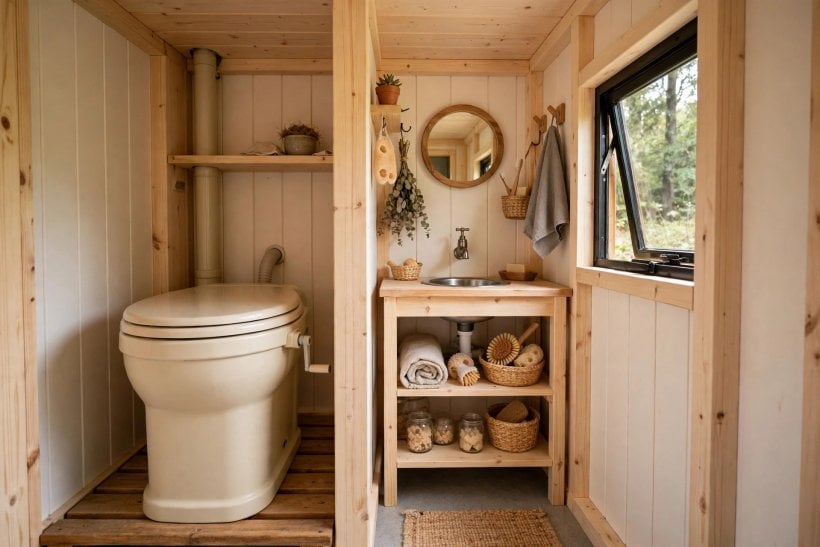
6. The Supporting Systems: Cold Food, Clean Clothes, Light
Refrigeration is the quiet constant load — it runs all day, every day — so an efficient small fridge chosen for low consumption matters more to your battery bank than any appliance you use for an hour. Some off-gridders use propane refrigeration instead; either way, cold food is a system decision, not a shopping detail. Laundry scales down happily: a small washer run at solar noon, or a laundromat rhythm in the nearest town, both work, and line-drying is free in most seasons.
Lighting is the easy win — modern LED lighting sips so little that it barely troubles the audit — and it makes off-grid evenings feel civilised rather than endured. The general principle across all these supporting systems: anything that makes heat or cold from electricity is expensive in power; anything that merely lights, charges or informs is cheap. Design your habits around that asymmetry and the main systems in sections 2 to 5 stay a sane size.
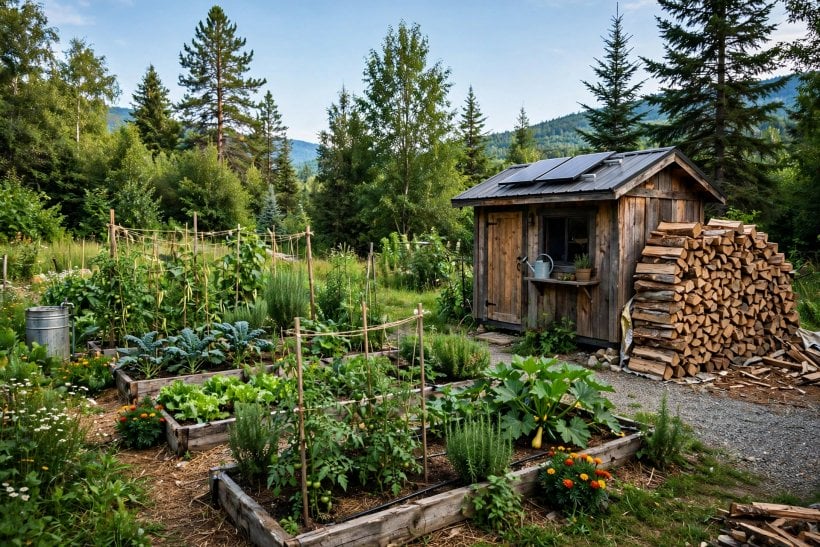
7. Staying Connected: Internet and Work Off Grid
Off grid no longer means out of touch. Satellite internet reaches places no cable will, and cellular data covers much of the rest, so remote work from an off-grid tiny house is a normal arrangement now. The catches are power and weather: the dish or router is another constant load for the audit, and heavy weather can interrupt satellite links. If your income depends on connection, treat it as a utility — cost it, power it, and keep a fallback, even if the fallback is a café in town on storm days.
Our guide to off-grid internet and staying connected compares the routes in detail. Phone signal boosters, data discipline (downloading large files when the sun is high and the signal is strong), and a household rhythm that batches the heavy online work will carry most people. The honest summary: connection is solved well enough that it should rarely be the reason you abandon the plan — power for it is the part to engineer.
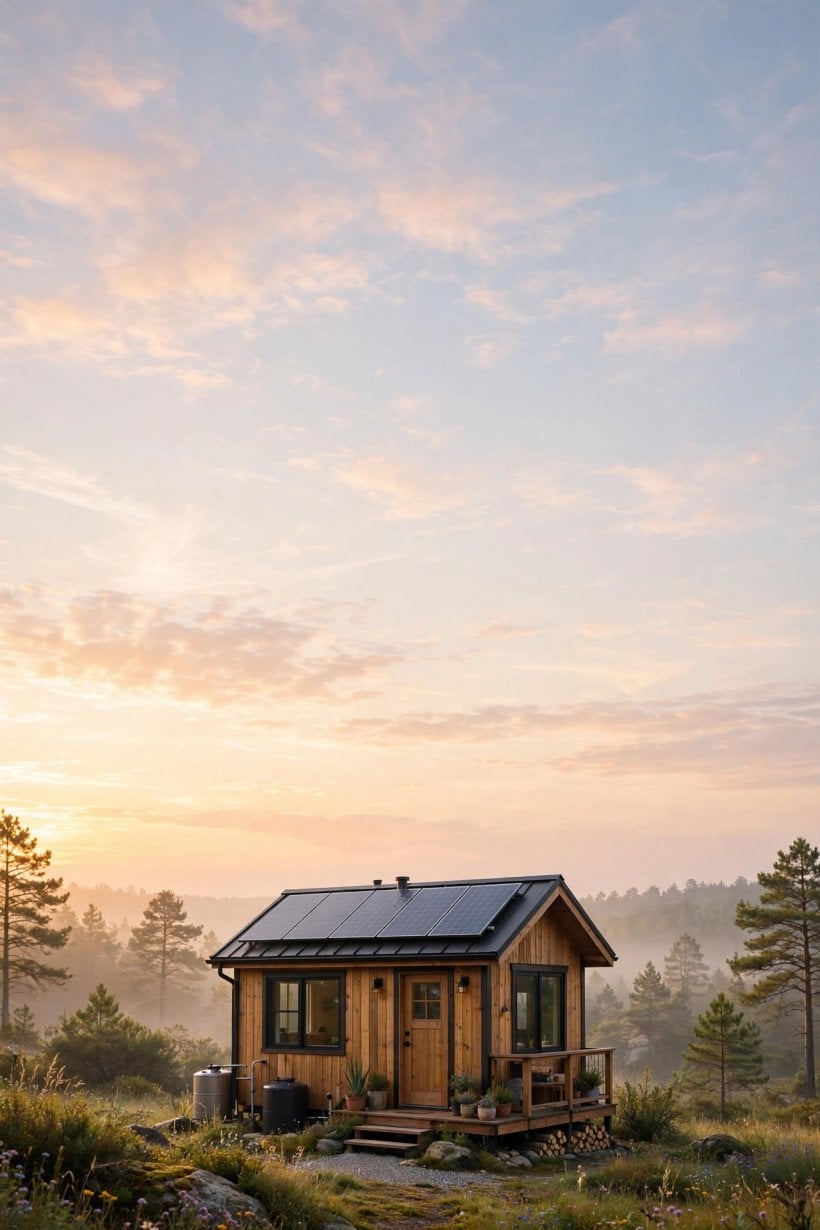
8. Is It Legal? The Rules That Still Apply
New off-gridders are often surprised that “off grid” is a description of connections, not of law. Building standards still govern the house, waste rules still govern your greywater and toilet, water rules still govern wells and catchment, and zoning still governs whether you may live on the land at all. Some places welcome off-grid homes with a clear permit path; others effectively require a sewer connection or a minimum dwelling standard that shapes what you may build.
The variation is local enough that no guide can give you your answer — your county or district office can, and a conversation before you buy land or systems is the cheapest consulting you will ever get. Ask specifically about composting toilets, greywater discharge, rainwater for drinking, and any occupancy rules for the parcel. People do live off grid legally in very many places; they are simply the ones who asked first.
9. The Honest Costs, and Going Gradually
This guide prints no price for going off grid, because the honest figure is an output of your audit, your climate and your land — a house in a sunny, mild place with a well already drilled is a different project from a house facing real winters on hauled water. The cost drivers are consistent, though: generation and storage sized to your loads, water infrastructure, the waste solution, and the professional design and sign-off that keep it all safe and legal. Anyone quoting you a single typical figure is selling something.
Budget a line most plans forget: learning costs. The first year off grid includes a burnt-out component misused in innocence, a tank misjudged, a winter lesson delivered by frozen pipe. These are tuition, and a small contingency for them converts disasters into anecdotes. Every experienced off-grid household has paid it; the wise ones planned to.
The gradual route is how most people actually get there, and it is the smart one. Start with solar and storage while keeping other connections, live a season watching your gauges, then take water off grid, then waste — learning each system while the others still forgive your mistakes. Every step also works as resilience even if you never fully disconnect. Off-grid living is a direction, not a switch, and walking it slowly is not a compromise; it is the method.
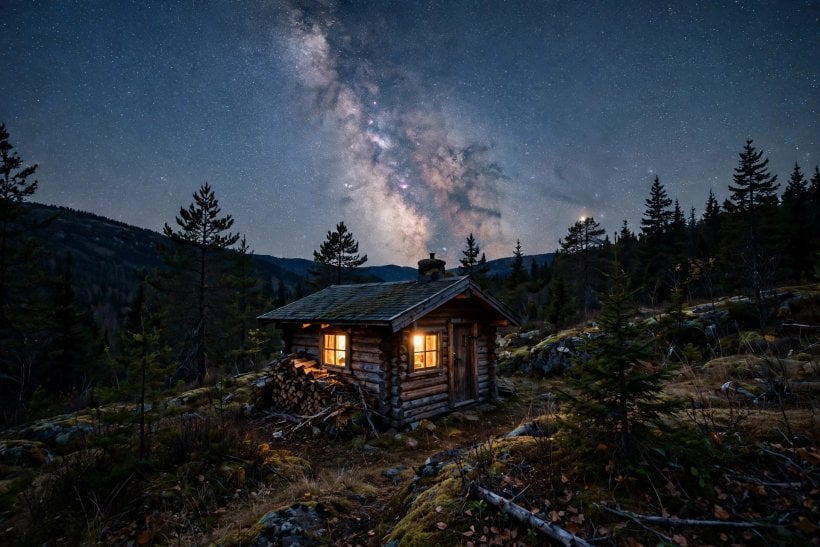
Seasonality ties the whole lifestyle together, and planning by season is the final skill. Fill the wood store before autumn, test water before the driest month, service the generator and stove before the coldest one, and let the garden carry as much of summer’s food load as it can. Off-grid households think in years with seasons inside them, not in weeks — and that long rhythm, once it clicks, is most of the peace the lifestyle is famous for.
10. Frequently Asked Questions
How do you live off grid in a tiny house?
By replacing each mains connection with an owned system: solar generation and battery storage for power, catchment, a well or hauling for water, a composting toilet and lawful greywater handling for waste, and wood or propane for heat. Size everything from an audit of your real usage, and maintain it all yourself.
How much does it cost to go off grid in a tiny house?
There is no honest typical figure — it follows your loads, climate and land. Generation and storage, water infrastructure and professional installation dominate. The reliable method is to audit your usage, specify the systems that meet it, and price those, ideally phasing the work so costs spread across seasons.
Is living off grid in a tiny house legal?
It can be, in many places — but off grid describes your connections, not your legal position. Building, waste, water and zoning rules all still apply, and they are intensely local. Ask your local offices about your specific parcel and systems before you invest; a clear yes in writing is the foundation of the whole project.
Can I have internet off grid?
Yes. Satellite internet reaches most remote land, and cellular data covers much of the rest. Budget the equipment’s constant power draw into your energy audit and expect weather to interrupt satellite service occasionally. For most remote workers it is entirely workable with a town fallback for the worst days.
What is the hardest part of off-grid living?
Water, for most people — securing enough, keeping it safe, and doing so in the driest and coldest weeks. Power feels harder but is more predictable; water is seasonal, heavy and unforgiving of optimistic storage. Close behind comes the discipline of maintenance: off grid, you are the utility company.
How many solar panels does a tiny house need?
As many as your audit demands — there is no standard array. Panel count follows your daily consumption, your roof, your latitude and your winter sun, worked out backwards from what you actually run. Any answer given before the audit is a guess; do the audit, then size, ideally with a professional designer.
Can I go off grid gradually?
Yes, and it is the recommended route. Take one system at a time — usually power first — and live with it through a full season before disconnecting the next. You learn each system while the remaining connections forgive your mistakes, and every stage works as home resilience even if you stop halfway.
Final Considerations
Off-grid tiny living is five systems and one habit: power, water, waste, heat and connection, all held together by the habit of paying attention. Size for the worst week, keep the safety-critical work professional and legal, phase the change so you learn as you go, and the freedom the lifestyle promises is real — not independence from systems, but ownership of them. This guide is general information only, not professional or legal advice.



2 Comments