
Choosing between a tiny house on wheels vs foundation is the first real fork in the road for any tiny build, and it shapes almost every decision that follows. One route treats your home as a vehicle that happens to be lived in. The other treats it as a small but permanent house, fixed to the land it stands on. Both can give you the same compact floor plan, the same loft bed, the same tiny wood stove and the same feeling of a simpler life — yet the paperwork, the money and the daily reality behind them are completely different.
This comparison works through the differences that actually decide the outcome: how each option is classified in law, where you are allowed to put it, how you pay for it, how you insure it, what it takes to look after it, and how easy it is to sell when your plans change. There are no invented prices or miracle claims here. Costs are described the way they behave in practice, and anything that depends on your county, your lender or your insurer is flagged as something to check before you commit money. By the end, you should know which side of this fence your own land, budget and long-term plans really sit on.
Tiny House on Wheels vs Foundation at a Glance
| Criterion | Tiny House on Wheels | Tiny House on Foundation |
|---|---|---|
| Legal status | Usually classed as a recreational vehicle or trailer; titled and registered like a vehicle in many places | Classed as real property once built to local residential code and recorded with the land |
| Mobility | Built to be towed, so the home can move when jobs, land or life change | Permanent; moving on means selling, or paying for a specialist house move |
| Financing | RV loans, personal loans or specialist tiny-house lenders; shorter terms are common | Conventional mortgages may be possible when the home meets code and lender size rules |
| Insurance | RV-style or specialist tiny-house policies, tied to how and where the unit is parked | Standard homeowners insurance is usually available once it is a permitted dwelling |
| Placement | Needs land where a wheeled unit may legally sit: RV parks, tiny-house communities, tolerant rural parcels | Needs a buildable, correctly zoned residential lot, with permits before building starts |
| Upfront cost pattern | The trailer and road-ready build carry most of the cost; site costs are usually lighter | Foundation work, permits, inspections and utility connections add a larger site-cost layer |
| Resale behaviour | Sold like a vehicle asset; value follows condition, certification and demand in a niche market | Sold with the land as property; value follows the local housing market more closely |
| Best for | People who value flexibility, lower site costs and the option to relocate | People who own land, want mortgage access and plan to stay put |

1. What Each Option Actually Is: The Two Builds Defined
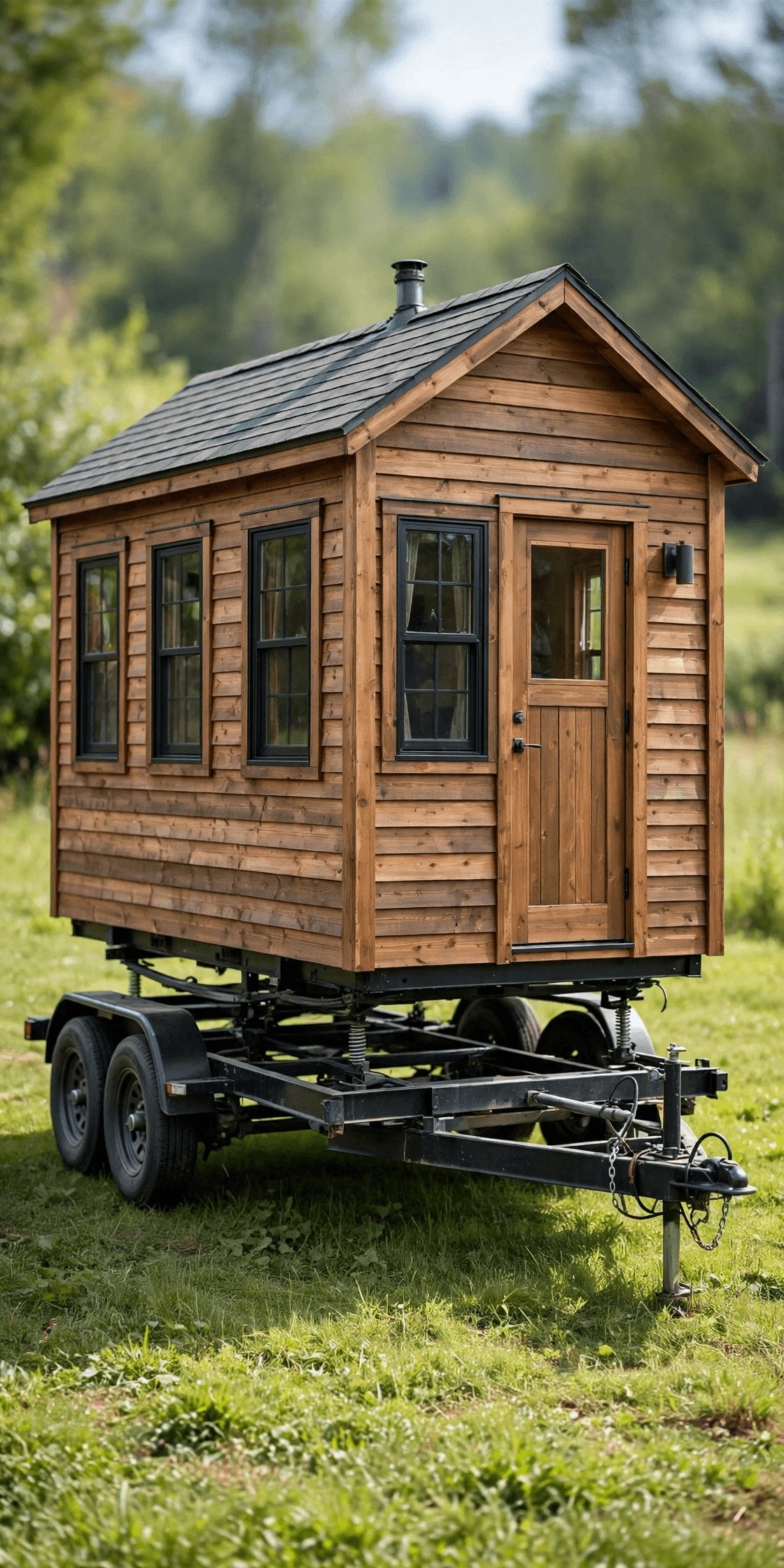
A tiny house on wheels — often shortened to THOW — is a small home built on a trailer chassis instead of a dug foundation. The trailer is not an afterthought: its axles, frame and coupling are engineered to carry the full weight of the house, and the whole structure is kept inside road-legal width, height and weight limits so it can be towed on public highways. Everything inside, from the framing to the roof, is chosen with movement in mind. Fixtures are secured, materials are lighter, and the finished home can be registered, hitched up and driven away like any other large trailer.
A foundation tiny house is a small permanent home in the conventional sense. It sits on a concrete slab, a pier-and-beam base, a stem wall or a full basement, and it is built — or inspected — to the same residential building code that governs a normal house, just at a much smaller scale. It cannot be moved without major work. In exchange, it is treated by councils, lenders and insurers as a real dwelling on real land. The living space inside the two options can look nearly identical; what differs is everything underneath and everything on paper.
2. Legal Status: Vehicle Rules on One Side, Real Property on the Other
The legal gap between the two options is the widest difference in this whole comparison. A wheeled tiny house is, in the eyes of most authorities, a vehicle. It is typically titled through the motor vehicle department, carries a registration plate, and may need recognised recreational-vehicle certification before anyone will finance or insure it. Our walkthrough of how to register a tiny house as an RV covers the titling and certification steps in detail. Because it is a vehicle, it is generally not taxed as real estate, cannot usually be homesteaded, and does not automatically gain the legal protections of a house.
A foundation build travels the opposite road. It goes through plan review, building permits and staged inspections, and it is signed off with a certificate of occupancy when it meets the residential code. Where a jurisdiction has adopted it, IRC Appendix Q for tiny homes relaxes some code requirements — ceiling heights, loft access, stair geometry — for houses under 400 square feet, which makes legal small homes far easier to permit. Once complete, the house and land are one asset: recorded on the deed, taxed as property, and mortgageable like any other home. Check which classification your area applies before you assume either route is open to you.
3. Zoning and Placement: Where Each One Is Allowed to Sit
Owning a legal tiny house is only half the battle; you also need a legal place to put it. Wheeled units run into a classic problem: zoning codes in many towns simply have no category for living full-time in a vehicle outside a licensed park. The realistic placement routes are RV parks that accept long stays, dedicated tiny-house communities, a backyard spot where local accessory-dwelling rules allow a wheeled unit, or rural land in counties with light enforcement and no prohibition. Our guide to zoning laws for tiny houses explains how to approach local officials and get a straight answer before you buy or build.
Foundation homes face a different gatekeeper: the minimum-size and lot rules written for conventional housing. Some zones set a minimum dwelling size that a tiny house cannot meet; others restrict lot coverage, setbacks or the number of dwellings per parcel. Where the code allows a small permitted home, though, placement is secure and permanent — nobody can ask you to move your house along at the end of a season. The honest summary is this: wheels give you more places a unit can physically go, but fewer places it can legally stay forever. A foundation gives you fewer possible plots, but far stronger rights once you are on one.
4. Mobility and Moving: What Happens When Plans Change
Mobility is the headline feature of the wheeled option, and it is real — but it is not the same as effortless. Moving a THOW means checking tyre and bearing condition, securing everything inside, confirming your tow vehicle’s rating against the loaded weight, and sometimes arranging permits if the unit is oversize. Many owners hire a professional mover rather than tow it themselves. Our tiny house moving guide breaks down what a move involves and what drives the cost, and our guide to towing a tiny house covers trucks, hitch weights and road rules for anyone planning to pull their own home.
Even with that effort, the option to move changes your risk. A job in another state, a falling-out with a landowner, a better plot of land — a wheeled home can follow you. A foundation home cannot. Selling and rebuilding is the only real exit, because physically relocating a small house on a truck is a specialist job that only makes sense in rare cases. So judge mobility by how likely change actually is in your life. If you are confident you will stay in one place for a decade, mobility is a feature you are paying for but may never use. If your work, family or land situation is unsettled, it can be the difference between a home that adapts and a home that traps you.
5. Financing: How You Pay for a Vehicle Asset vs a House
Money follows legal status, so the financing menus for the two options barely overlap. A wheeled tiny house usually cannot be bought with a conventional mortgage, because there is no real property securing the loan. Buyers typically use RV loans (often requiring recognised certification), personal loans, or specialist tiny-house lenders who understand the market. Terms tend to be shorter than a mortgage, which means higher monthly payments for the same amount borrowed, and interest rates usually sit between vehicle finance and mortgage rates. Our detailed guide on how to finance a tiny house walks through each loan type and what lenders look for.
A permitted foundation home can qualify for ordinary mortgage lending, with the long terms and lower rates that come with it — provided it clears the lender’s hurdles. Those hurdles are practical: the home must be permanently affixed, built to code, and sometimes above a minimum square footage or minimum loan amount, below which some lenders will not bother. Appraisals can also be tricky in areas with few comparable small-home sales. None of this is a reason to avoid the foundation route; it is a reason to talk to a lender early, before the design is final, so the house you build is a house a bank will actually finance.
6. Insurance: Covering Something That Moves vs Something That Stays
Insurance mirrors financing: the product you can buy depends on what the home legally is. A wheeled tiny house is insured through RV-style or specialist tiny-house policies. The details that matter are how the unit is used — full-time living versus occasional recreational use — and where it is parked, because a policy written for a travelling RV may not respond the way you expect when the unit sits in one place all year as a main home. Transit cover, parked cover and contents cover are separate questions, and our tiny house insurance guide compares how insurers treat the wheeled and foundation routes side by side.
A foundation home, once permitted and occupied as a dwelling, steps into the standard homeowners insurance market. That usually means broader cover, clearer rebuild valuations, and an easier conversation with the insurer — the house is a known quantity in a way a trailer-based home is not. In both cases, keep documentation: certification papers for a wheeled unit, permits and inspection records for a foundation build. Insurers pay claims on paperwork as much as on damage, and the owner who can prove what the home is, and what it was built to, always has the smoother claim.
7. Building and Site Costs: Where the Money Really Goes
Comparing build costs honestly means comparing the whole project, not just the house. With a wheeled build, a meaningful share of the budget goes into the trailer itself — a proper tiny-house trailer is a serious piece of engineering, not a cheap flatbed — plus the lighter materials and hardware that road travel demands. Site costs, though, can stay light: a gravel pad, a power pedestal, a water connection and a waste solution may be all a plot needs. Our breakdown of the true cost of tiny houses shows how the build budget splits in practice.
The foundation route flips that pattern. The house itself may use ordinary materials and skip the premium trailer entirely, but the site starts charging from day one: excavation, concrete or piers, drainage, trenching for water and sewer, a septic system or mains connection where needed, permit fees and inspection visits. Our guide on how to prepare land for a tiny house itemises this groundwork, and it is the part first-time builders most often under-budget. As a pattern — not a promise — wheeled builds concentrate cost in the home, foundation builds spread a larger share into the ground. Get site quotes for your actual plot before deciding which route is truly cheaper for you.
8. Comfort, Utilities and Day-to-Day Living
Day to day, the two homes feel more alike than different — same small kitchen, same compact bathroom, same discipline about storage. The differences are in the connections behind the walls. A foundation home hooks into services the ordinary way: a permanent water line below frost depth, a sewer or septic connection, and a fixed electrical supply, all inspected and all boringly reliable. A wheeled home connects more like a large RV, with hookups for power and water and either a sewer connection, holding tanks or an off-grid setup. Our guide to tiny house utilities maps the power, water and sewage options for both styles of living.
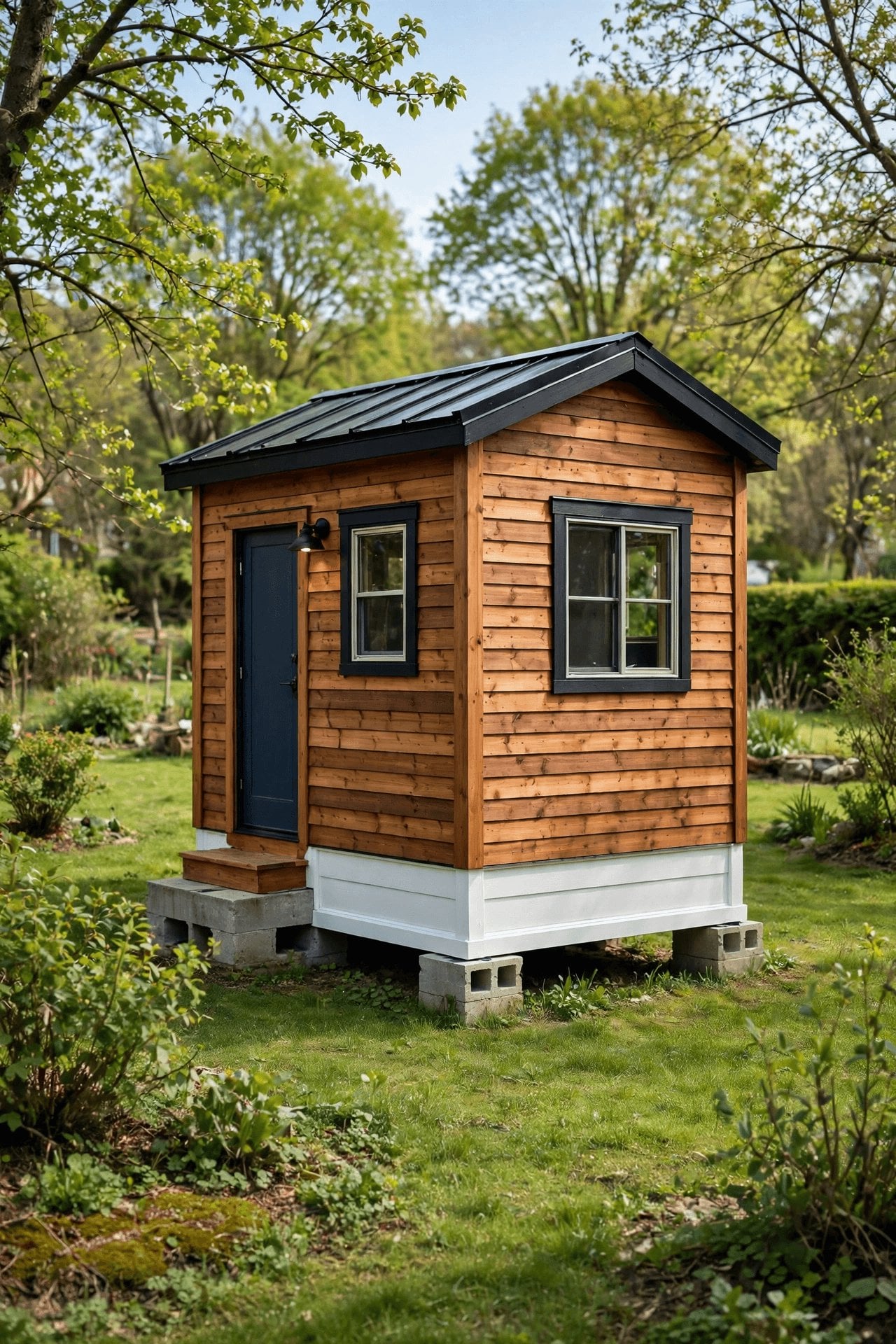
There are smaller lived differences too. A wheeled home sits higher, usually with steps up to the door, and it can flex and creak slightly in high winds or when someone walks through — most owners stop noticing within weeks. Skirting the trailer improves the feel, the look and the freeze protection of the pipes underneath. A foundation home feels like any small house: solid underfoot, quieter in storms, and easier to keep at an even temperature because the floor is insulated from the ground rather than exposed to the air beneath a chassis. Neither feel is better in absolute terms; they are simply different, and worth experiencing in person if you can visit examples of both.
9. Maintenance and Durability: Running Gear vs Groundworks
Each option hands you a different maintenance list. The wheeled home keeps a vehicle’s chores: tyres that age even when they are not rolling, wheel bearings that need periodic attention, a steel chassis to watch for rust, and exterior seals that work harder because the structure flexes slightly with temperature and travel. If you move the home, a pre-move check of running gear is essential. The pay-off is that almost everything is accessible — you can get under a trailer with a jack and a torch in a way you never can under a slab.
The foundation home swaps running gear for groundworks. There are no tyres or bearings, but there is drainage to keep clear so water never sits against the base, soil levels to maintain, and — on pier foundations — occasional re-levelling as the ground settles. Under-floor pipes are warmer and better protected than a trailer’s, especially when the base is skirted or insulated; our overview of tiny house skirting options is useful for both styles, since parked wheeled homes borrow the same tricks. Owners in cold regions should also read our notes on tiny house living in cold climates, because freeze protection is where the two builds differ most in winter workload. Neither list is heavier overall — the question is whether you would rather maintain a vehicle or maintain a building.
10. Resale Value and Selling: Two Very Different Markets
When the time comes to sell, the legal status decides the market again. A wheeled tiny house is sold like a specialist vehicle: listed on tiny-house marketplaces and classified sites, bought with cash or vehicle-style finance, and valued on condition, build quality, certification and the strength of demand in a niche market. Like most vehicles, it tends to lose value over time rather than gain it, although well-built, certified homes hold their value far better than rough DIY builds. Presentation matters: service records for the trailer, certification papers and honest photos all move the price.
A foundation tiny house is sold with its land, through the normal property market, to buyers who can bring mortgage finance with them. That bigger buyer pool, plus the general behaviour of land values, gives it a more conventional value story — the property can appreciate, especially if the land does. The pool is not unlimited: some buyers are wary of very small homes, and valuation still depends on comparable local sales. If you are buying used on either side of this fence, our guide on how to inspect a used tiny home before buying lists what to check before money changes hands. Think about resale at the start, not the end: the option that is easier to sell is the one whose paperwork the next buyer’s lender and insurer will accept.
Final Considerations
So, who should pick which? Choose the wheeled route if flexibility is genuinely part of your plan: you do not yet own land, your work or family situation may move you, you want lighter site costs, or you hope to park in a community or RV setting while you figure out the long term. Accept, in exchange, the vehicle-style financing, the narrower insurance market and a value that behaves more like a vehicle than a property. Choose the foundation route if you own — or are ready to buy — a plot where a small permitted home is allowed, you want access to mortgage lending and standard homeowners insurance, and you expect to stay for many years. Accept, in exchange, the heavier groundwork costs and the fact that your home stays where you built it.
Before you decide, run three checks that cost nothing but time. First, ask your local planning or zoning office, in writing, what each option would be classed as on the land you have in mind. Second, ask a lender and an insurer what they would need from each type of build — their answers often settle the question faster than any comparison article. Third, price the whole project both ways, site costs included, not just the house. The right answer in this comparison is rarely about the building itself; it is about which set of rules, costs and freedoms fits the life you are actually going to live in it.


0 Comments