

A bed that looks inviting in a photograph can still disappoint on the first night. The fabric may feel rougher than expected, the fitted sheet may ride up at the corners, or the duvet may prove far warmer than the season calls for.
Most of those surprises are avoidable. These ten bedding buying checks walk through the material, the fit, the warmth, the care routine and the small print, so the set you choose suits the bed you own and the way you actually sleep.

1. The Checks at a Glance
Bedding is one of the few home purchases you live with every single night, which is why a short pause before ordering pays off. The checks below cover what the fabric is made of, how it feels, whether it fits, how warm it runs, how it washes, and what happens if it does not suit you. Run through them in order and the choice becomes calmer and far less of a gamble.
| What should I check first? | The material and the weave, because they decide how the fabric feels against the skin and how it behaves through the seasons. |
| What causes most fit problems? | Guessing the size. Measure the mattress, including its depth, and check the pillow sizes before ordering anything. |
| How do I judge warmth? | By the fill and the weight of the cover rather than by how thick it looks folded on a shelf. Light layers suit warm sleepers; fuller, loftier fills suit cold rooms. |
| What about washing? | Read the care label as a weekly routine, not a footnote. If the routine does not suit your home, the set will spend more time waiting to be washed than on the bed. |
| What if it does not suit me? | Check the returns terms before ordering, and keep the packaging until you have slept on the set and checked the fit and feel. |
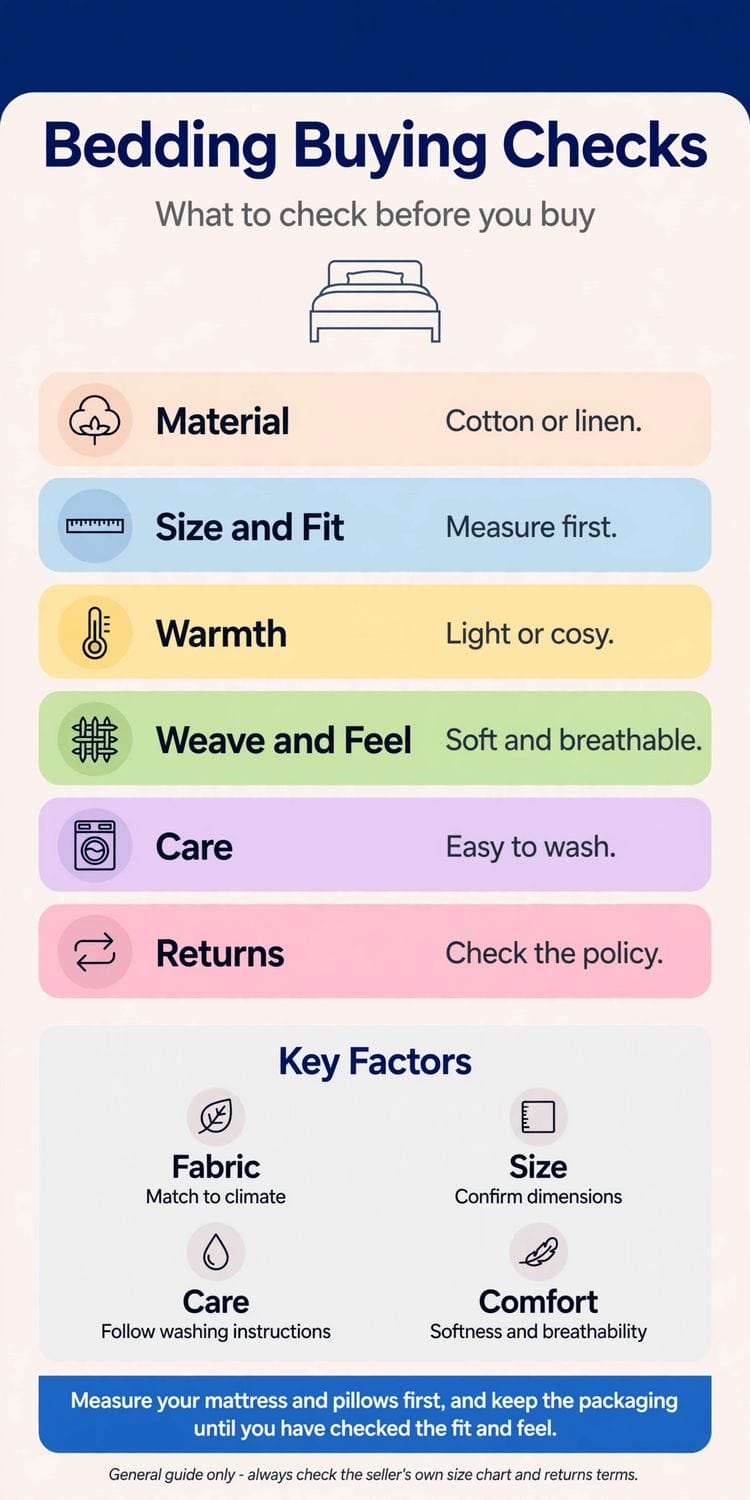
At a glance: material, weave, size, warmth, fill, care and returns — seven short checks that decide whether a new set earns its place on the bed.
2. Start With the Material
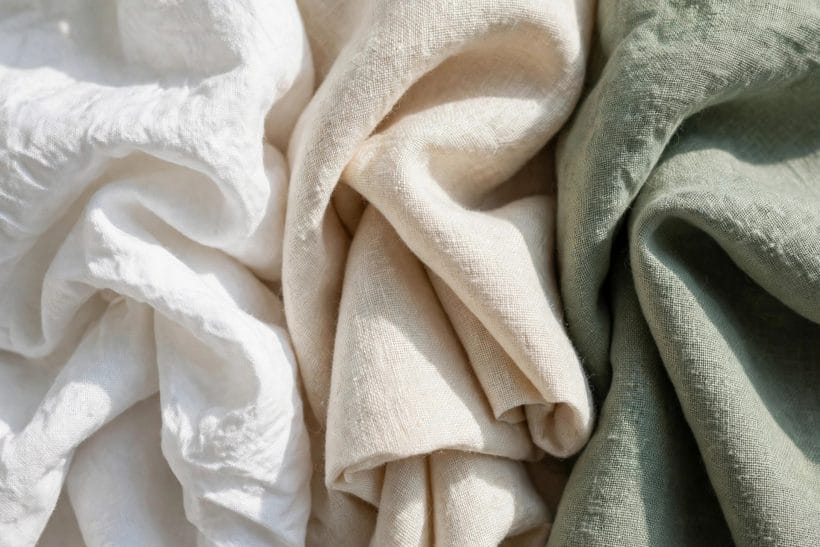
Cotton and linen dominate bedding for good reason. Cotton is soft, familiar and easy to live with, while linen has a relaxed texture and an airy feel that many warm sleepers prefer. Blends can soften either one, and each blend behaves a little differently, so the fibre content on the label matters more than any single marketing word on the packaging.
Think about your own climate and habits before choosing. A household that sleeps warm through summer will value breathability above all else, while a cold bedroom calls for a fabric that feels substantial and cosy from the first touch. If anyone in the home has sensitive skin, a smooth, natural fibre with a simple finish is usually the safer starting point, and a fabric that softens with washing will only improve over time.
Colour and dye deserve a moment too. Pale bedding shows wear and washing marks sooner, while deeper colours can vary between batches and may need gentler washing to hold their tone. If the set must match existing curtains or a headboard, compare the fabric in daylight rather than under shop lighting, and remember that a colour that looks calm in a photograph can read very differently against your own walls.
Finally, consider how the material ages. Some fabrics arrive crisp and relax after several washes; others start soft and stay that way. Neither is a fault in itself, but knowing which you prefer stops a perfectly good set from feeling like a disappointment after the first wash. A Scandinavian tiny house interior shows how natural linen and pale cotton can keep a small bedroom feeling light, which is a useful reference if a calm, natural look is what you want.
3. Feel the Weave Before You Buy
Weave is what turns a fibre into a feeling. A plain, tight weave feels crisp and cool; a softer, brushed finish feels warmer and more relaxed; a looser weave breathes well but may crease more readily. Two sets made from the same fibre can therefore feel entirely different, which is why touching the fabric, or ordering a sample where one is offered, tells you more than any description.
When you handle a set, notice how it drapes. Fabric that falls softly over the edge of the bed usually feels comfortable to sleep under, while fabric that holds a stiff shape may soften with washing or may simply suit a crisper look. Run a hand across the surface for smoothness, check the edges for even stitching, and look at how the seams sit at the corners, since those are the places that take the most strain night after night.
Texture also affects how the bed looks through the day. A gently textured fabric hides creases and gives a relaxed, lived-in look, while a smooth, crisp fabric suits a tailored bedroom and rewards careful folding. Neither choice is better in itself; the right one is the one you will still enjoy looking at after the novelty of a new set has worn off.
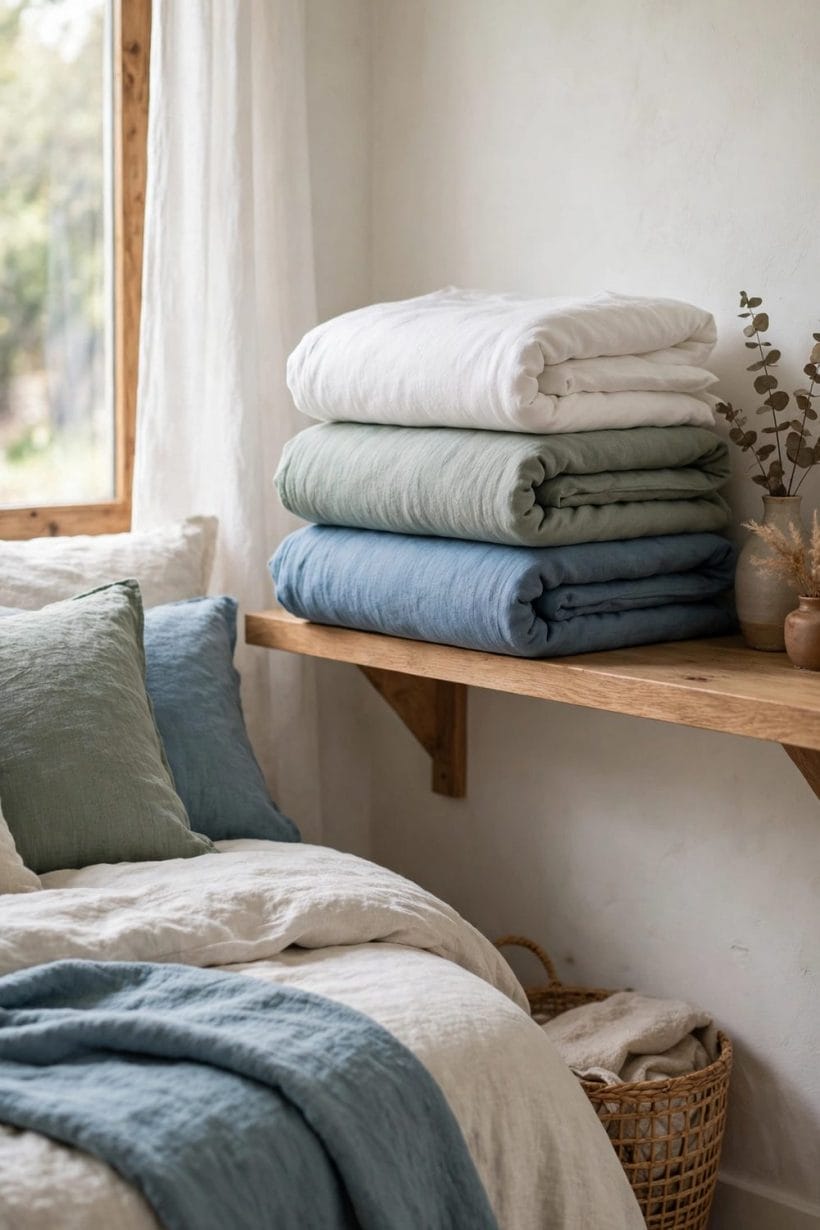
For a small home, texture does extra work. A folded stack of bedding in complementary tones can sit on open shelving as part of the room itself, so choosing colours and textures that sit happily together matters as much as the feel of any single piece. Keep the palette restrained, let one texture lead, and the whole bedroom will feel considered rather than crowded.
4. Know What Comes in the Set
Bedding sets vary far more than their names suggest. One set may include a duvet cover and a pair of pillowcases, while another adds a fitted sheet, a flat sheet or extra pillowcases, and some sets leave the sheet out entirely. Before comparing any two options, list exactly what each one contains and check it against what your bed actually needs.
Pillow sizes cause the most confusion. Standard, larger and smaller pillowcases are all sold under similar names, and a case that is too roomy will bunch, while one that is too snug will strain at the seams. Count your pillows, measure them if you are unsure, and make sure the set covers each one rather than assuming the usual number will do.
Flat sheets and fitted sheets deserve the same attention. Some sleepers love a flat sheet as an extra layer; others find it slips and bunches and prefer a duvet alone. A fitted sheet, meanwhile, must match the mattress depth, not just its length and width, or it will pop off at the corners. Knowing your own preference before ordering saves the familiar frustration of a set that is nearly right.
Spare pillowcases are worth considering at the same time. They wear faster than duvet covers because they are washed more often and take more contact, so a set that includes spares, or a matching pair bought alongside, keeps the bed looking complete for longer. Think of the set as a small system rather than a single purchase, and the gaps become obvious before they become annoyances.
5. Measure the Bed Before You Order
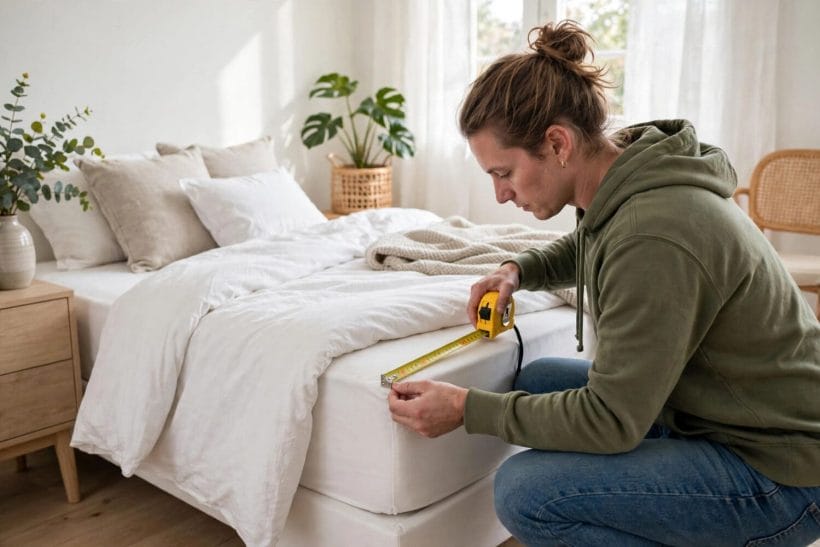
Measuring takes a few minutes and prevents the most common bedding disappointment. Measure the mattress length, width and depth, including any topper, and write the figures down before browsing. Mattress depths vary widely, and a fitted sheet made for a shallow mattress will not stay put on a deep one, however good the fabric feels.
Duvet covers need the same care. A cover that matches the duvet exactly will sit neatly, while one that is roomy will leave the fill shifting inside, and one that is snug will pull at the corners and buttons or ties. If you already own a duvet you like, measure it rather than trusting the size name on the packaging, since naming varies between makers.
Small bedrooms reward exact measuring most of all. In a compact room, an overhanging duvet can swallow the walkway beside the bed, while a short one leaves the mattress edges exposed. Our guide to tiny bedroom ideas shows how carefully scaled bedding keeps a small room feeling open, which is worth bearing in mind when choosing between sizes that seem close.
Finally, measure the pillows and any bolster or cushion you plan to dress. A cover that fits the bed but not the pillows leaves the whole arrangement looking unfinished, and pillow sizes are easy to overlook when the focus is on the duvet. A complete set of measurements, kept somewhere handy, makes every future bedding purchase simpler as well.
6. Match Warmth and Fill to the Season

Warmth is the check most often judged by looks alone, and looks mislead. A thick, puffy duvet is not automatically the warmest option, and a slim cover can still sleep warm if its fill traps heat. Judge warmth by the fill type, the loft of the fill and how the cover breathes, and think about the coldest night the set must handle rather than the average one.
Natural fills, such as down and feather blends, feel light for their warmth and drape softly, while synthetic fills offer easy washing and a more even loft. Each has its place: a household that values simple care may prefer a fill that washes at home, while a sleeper who prizes lightness may prefer a natural fill that packs down small in storage. There is no single best fill, only the fill that suits your room, your washing routine and your sleep.
Seasonal thinking helps too. A single heavy set can leave warm sleepers overheating for much of the year, while a lighter set layered with a throw or an extra blanket adapts from mild evenings to cold snaps. If your home swings between warm summers and cold winters, a mid-weight set with a layering option is often more useful than two extremes that each sit unused for months.
Press the fill before you commit. It should spring back gently rather than staying flattened, and it should feel even across the whole cover rather than thick in the middle and thin at the edges. Baffled or stitched-through construction affects how the fill sits, so look at how the cover is divided and whether the fill can drift. A well-distributed fill keeps its warmth where you sleep, not bunched at the foot of the bed.
7. Read the Care Label Like a Routine

The care label is a preview of your weekends. Some sets wash and dry with no fuss, while others need gentle cycles, shade drying or extra care that not every household can give. Before ordering, read the label as a routine you will repeat often, and ask honestly whether it fits your home, your machine and your patience.
Drying matters as much as washing. A set that dries quickly on a line or in a dryer will be back on the bed the same day, while a slow-drying set needs a spare to cover the gap. If outdoor drying is part of your routine, lighter fabrics and looser weaves will reward you; if you rely on a dryer, check that the fabric tolerates it without shrinking or stiffening.
Ironing is the quiet deal-breaker. Crisp cotton looks wonderful freshly pressed and merely fine straight from the line, while linen embraces its creases as part of its character. Decide which camp you belong to before buying, because a set that demands pressing you will never do becomes a set you quietly stop enjoying.
For small homes, the washing routine also shapes storage, since a spare set must live somewhere while the main set dries. Our guide to tiny laundry room ideas and our washer-dryer tiny house guide both show how compact laundry setups handle bulky bedding, which is worth checking if space is tight and wash day must run smoothly.
8. Plan Storage and a Spare Set

Bedding needs a home when it is not on the bed, and that home should be dry, aired and easy to reach. A spare set folded in a cupboard, a shelf or a storage bench means wash day never leaves the bed bare, and a well-aired store keeps fabric fresh between uses. Damp corners, cramped boxes and plastic bags that trap moisture all work against good fabric, however beautiful it looked when new.
Fold sets together rather than scattering pieces. Keeping a duvet cover with its pillowcases saves the familiar hunt for a matching case and keeps the spare ready to use at a moment’s notice. If space is tight, rolling rather than folding can save room, and a breathable storage bag protects against dust without sealing moisture in.
Colour-coding by room or by season helps in a busy household. A simple system, such as one colour family per bedroom or one set for summer and one for winter, stops the wrong set from landing on the wrong bed and makes changeover day quicker. Label shelves if the household is large, and keep the spare where the person changing the bed can actually reach it.
Small homes benefit most from honest storage planning, because a spare duvet is bulky however neatly it folds. Measure the shelf or bench before ordering a second set, and let the storage you genuinely have decide whether the spare is a full set or simply spare pillowcases. Our small living room ideas guide shows how compact homes tuck bulky items away without clutter, which applies to linen storage just as much as to furniture.
9. Layer the Bed for Comfort and Looks

Layering is where comfort and appearance meet. A fitted sheet, a duvet and a throw, or a light cover over a warmer one, let you adjust through the night without remaking the bed. The trick is to layer for sleep first and looks second: each layer should be easy to push aside, fold back or remove, rather than a display that must be dismantled before bedtime.
Start with the layer closest to the skin, since that is the one you feel most. A smooth, breathable sheet or cover keeps the night comfortable, while the outer layers add warmth and colour. Adding a throw at the foot of the bed gives an easy extra layer for cold feet and a finished look through the day, without complicating the night.
Colour and pattern reward restraint. One pattern or one strong colour, supported by plain layers, keeps the bed calm, while too many competing patterns can make even a good set feel restless. If the bedroom shares its palette with the rest of the home, carry one tone through from the neighbouring room so the bed feels part of the house rather than an isolated display. Our farmhouse living room ideas guide shows how a shared, natural palette ties rooms together, which is a helpful model for bedding colours too.
Finally, dress the pillows with intention. Sleeping pillows, arranged for the night, and decorative cushions, removed before sleep, serve different purposes, and confusing the two leads to a nightly pile on the floor. Keep the sleeping arrangement simple, add decoration only if you enjoy the ritual of arranging it, and the bed will stay inviting rather than becoming a chore.
10. Inspect the Delivery and Ask Before You Order
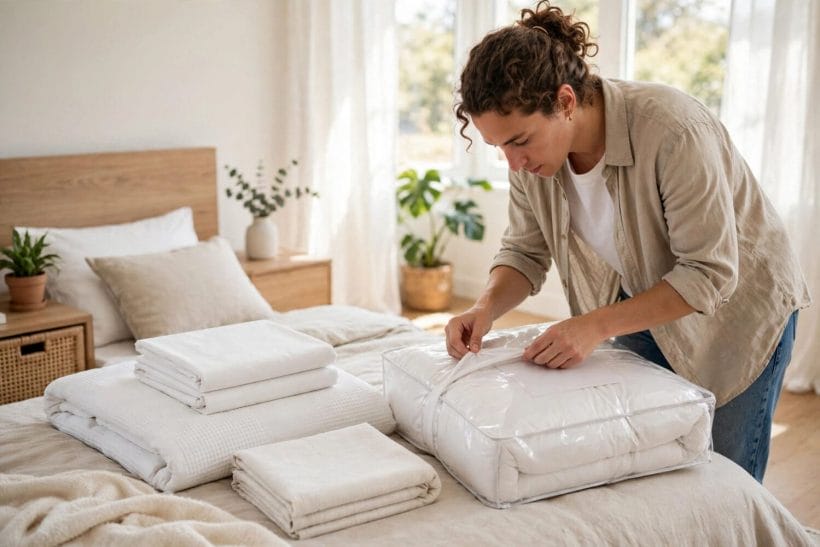
When a set arrives, inspect it before washing or removing any tags. Check the size against your measurements, look over the seams and corners, and confirm that every piece listed is actually in the package. Catching a missing pillowcase or a wrong size at this stage keeps every option open, while washing first can complicate matters.
Then try the set on the bed. Fit the sheet, close the duvet cover, and lie down under it for a few minutes. Notice whether the sheet stays put at the corners, whether the cover sits evenly, and whether the warmth feels right for the room. A set that looks perfect folded can still disappoint once spread, and a short trial on the bed reveals more than any amount of handling in the packaging.
Keep the packaging until you are sure. Store it somewhere out of the way but accessible, and note the returns terms while you still have them to hand. If the set needs to go back, clean, complete and well-packed is the condition that gives you the smoothest path, and keeping the original bag or box makes repacking simple.
Before ordering, a short list of questions turns browsing into a decision. Ask what the set is made of and how it is woven, what sizes each piece actually measures, how warm the fill runs, how it should be washed and dried, what is included, and what the returns terms allow. If any answer is missing or vague, treat that as information in itself and look for a listing that answers plainly.
Also ask how the set will live in your home rather than in a photograph. Will it fit the mattress you own, suit the sleeper who uses it, wash in the routine you follow, and store in the space you have? If the bedroom itself is still taking shape, our guide to how to make a tiny house covers the wider build, which helps when the bed size, the storage and the laundry setup are all still being decided together. Finally, give yourself permission to wait: a set chosen after measuring, comparing and checking the small print is the one you will still enjoy seasons later.
Final Considerations
Good bedding is not about chasing a single perfect fabric or fill. It is about matching a set to a real bed, a real sleeper and a real washing routine, and checking the small print before committing. Material, weave, size, warmth, care, storage and returns each pull their weight, and a set that passes all of them will serve far longer than one chosen on looks alone.
Work through the checks in order, measure before you order, and keep the packaging until the set has proved itself on the bed. The reward is simple and nightly: a bed that feels right, washes well, and welcomes you back at the end of every day.




0 Comments