

Laminate that shrugs off splashes sounds perfect for kitchens, hallways and busy small homes, but the label covers a wide range of quality. This guide explains what to check in the core, the joints, the surface and the small print before you commit to a floor.
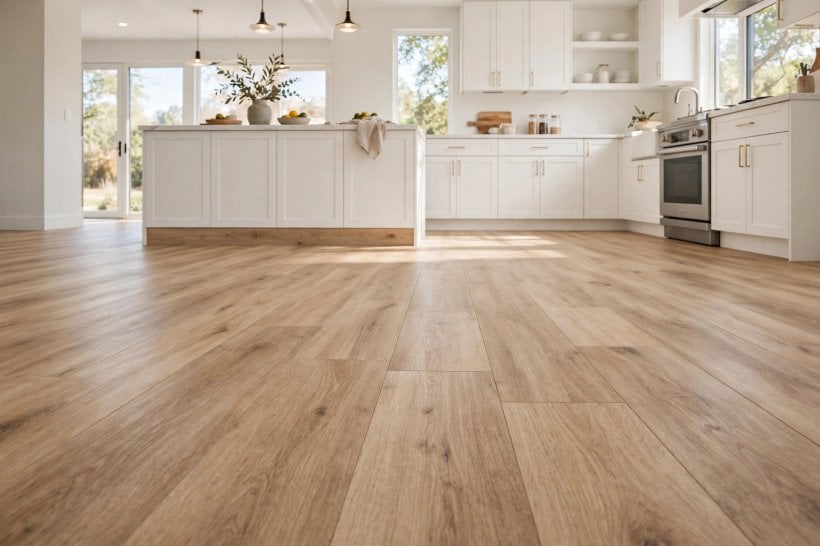
1. At a Glance: Questions and Straight Answers
| Question | Straight answer |
|---|---|
| Is water resistant laminate flooring actually waterproof? | No. Resistant means the boards are built to cope with splashes, drips and damp mopping far better than standard laminate. Standing water left for hours will still find the joints, so treat the claim as protection against everyday accidents, not permission to soak the floor. |
| Where can it sensibly go? | Kitchens, hallways, dining rooms, bedrooms and living spaces are the natural home for it. Bathrooms and utility rooms are a judgement call: only consider them if the maker explicitly approves the product for those rooms, and fit it exactly as instructed. |
| What separates a good board from a poor one? | A dense, well-made core, edges treated to slow moisture, a joint system that locks tightly, and a wear surface suited to your household. Price alone tells you none of this; the construction details do. |
| How quickly must spills be wiped? | Promptly, whatever the packaging promises. Some products are tested against water sitting for a set period, but real homes add grit, heat and repeated wetting. A cloth kept nearby is cheaper than a swollen joint. |
| What should I check before ordering? | Room suitability, what is and is not included, underlay requirements, expansion gaps, cleaning rules and whether spare boards will be available later in the same finish. |
| What is the biggest fitting mistake? | Laying any board over a damp or uneven subfloor. Most failures blamed on the product begin underneath it, weeks before the first plank was clicked together. |
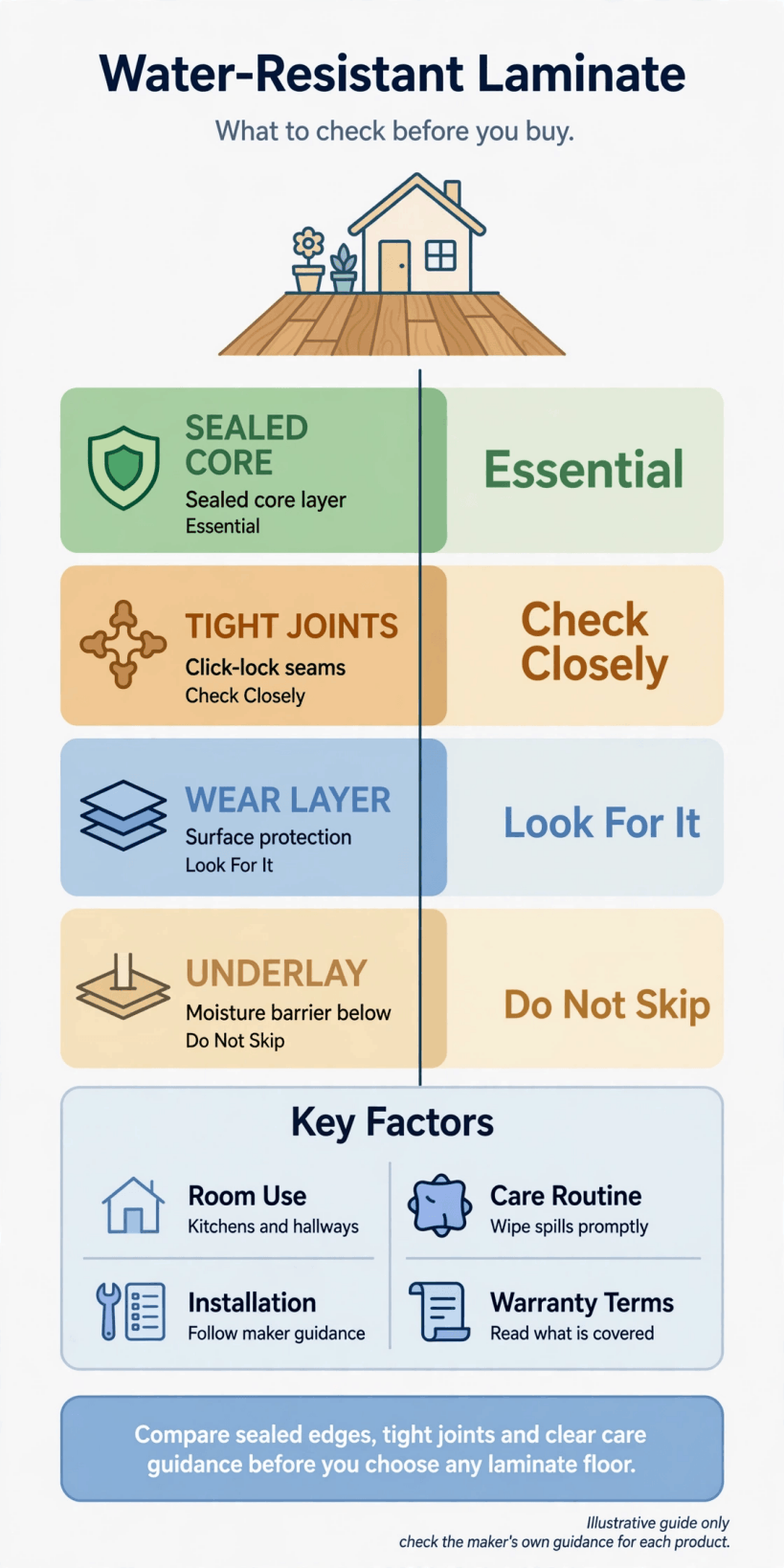
A quick visual summary of the core, joint, surface and subfloor checks that decide how this flooring performs.
Keep this table in mind as you read listings and handle samples. Honest products answer these questions in plain language and publish their room guidance where you can find it. Vague products hide behind a single splash-proof slogan. If your floor is part of a wider refit, plan it alongside the room it serves: our guide to kitchen design for tiny houses shows how flooring, cabinets and worktops need to be chosen together so colours, levels and thresholds all agree.
2. Understand What the Label Actually Promises
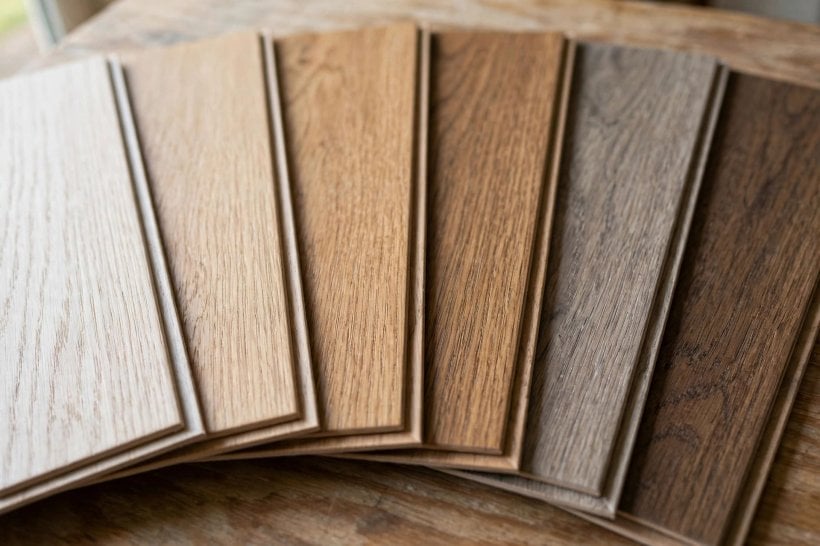
Water resistance in a laminate board is a system, not a coating. It usually combines a moisture-tolerant core, a surface that sheds splashes, and edges designed to slow water creeping into the joint. None of that makes the floor a tank. Water that sits long enough, especially warm water or water pushed into joints by mopping, will eventually swell a fibre-based core. Understanding this single point protects you from the most common disappointment: expecting a resistant floor to behave like sheet vinyl or tile in a wet room.
Look for specifics behind the slogan. Does the maker describe how the boards were tested, and for how long water can sit before damage? Is the claim about the surface only, or about the whole board including its edges? Are bathrooms named as suitable, excluded, or never mentioned at all? Silence is information. A product confident in wet areas says so plainly, with fitting conditions attached. The same caution applies below ground, where the moisture-first approach in our basement design ideas for tiny houses is the right mindset: solve damp at its source first, then choose finishes that forgive the odd accident.
3. Check the Core Before Anything Else
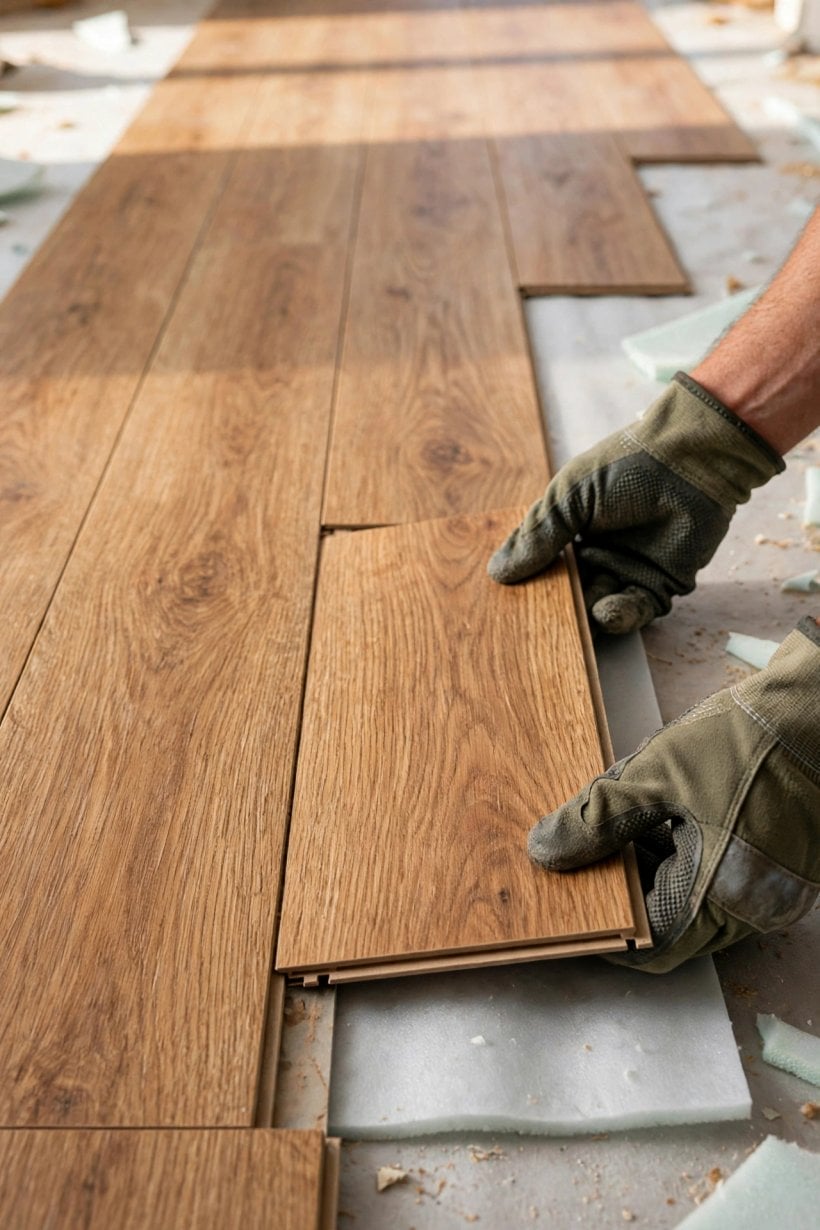
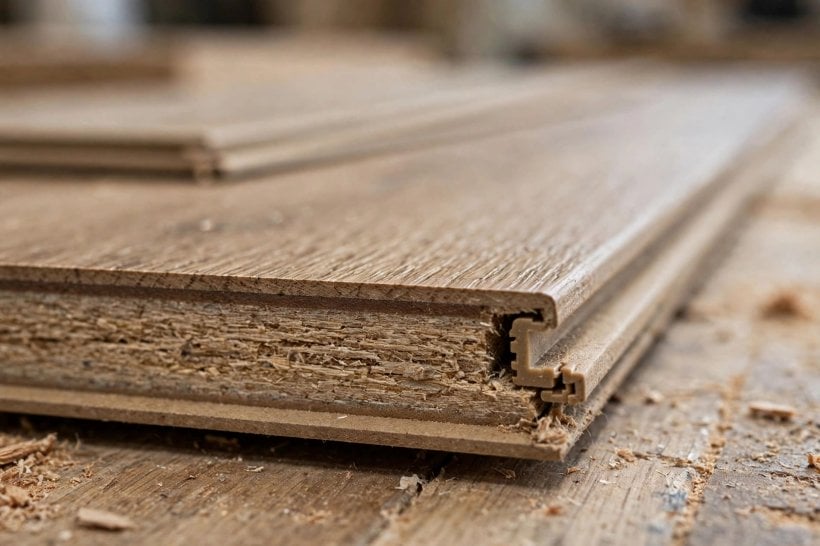
The core is the board’s engine room. Most laminate cores are made from compressed wood fibre, and their density and pressing quality decide how the board responds when moisture reaches it. A dense, well-pressed core swells more slowly and holds its locking profile more firmly than a soft, crumbly one. When you handle a sample, look at the cut edge: it should look tight, even and hard, not fuzzy or layered. Press a thumbnail into the edge. If it dents easily, imagine a chair leg or a dropped pan doing worse.
Ask what the core is treated with and how the edges are protected, because the joint line is where water enters. Some boards carry a wax or resin treatment along the locking edges to buy you time when a spill sits unnoticed. That treatment is a safety net, not a seal of invincibility. Check board thickness too, not as a quality score in itself, but because thicker, denser boards generally feel solider underfoot, sound quieter and tolerate minor subfloor unevenness more gracefully. Judge the sample in your hand, not the photograph on the box: weight, edge hardness and a clean, precise profile tell the truth.
4. Look Closely at the Wear Layer and Finish
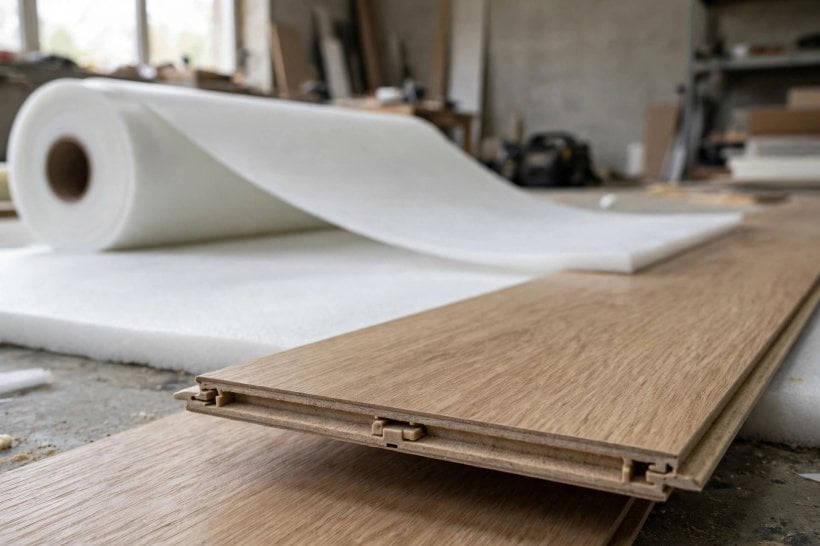
The top of the board lives the hardest life. Its wear layer takes grit from shoes, claws from pets, chair legs, dropped cutlery and the daily traffic of a small home where every route crosses the same few metres. Products are graded for how much wear their surface is built to handle, and the fitting guidance will usually point heavier-duty boards toward hallways and busy kitchens. Match the grade to your busiest room, not your quietest. A floor that is perfect in a spare bedroom can look tired in eighteen months by the front door.
Then judge the finish with your eyes and hands in real light. Deeply embossed textures look convincing and hide scuffs, but their grooves hold dirt and need a brush, not just a mop. Smooth, low-sheen finishes wipe clean quickly and suit small spaces because they reflect light softly without glare. Gloss shows every footprint in a sunny kitchen. Take samples home, lay them where the floor will go, and look at them morning and evening. The sheen lessons in modern living room design for tiny houses apply to floors as much as walls: light, angle and surrounding colours change everything you thought you chose in the shop.
5. Inspect the Click System and the Joints
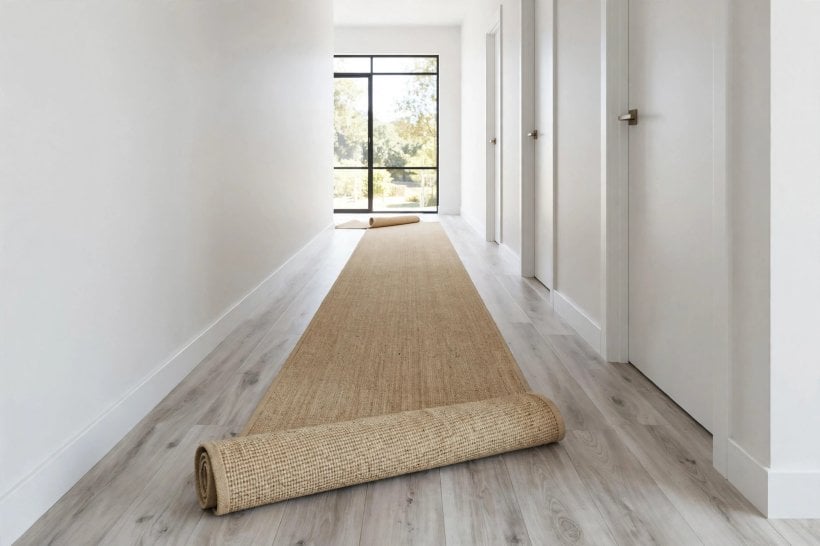
Joints decide whether a resistant board stays resistant once fitted. The locking profile should engage with a positive, even click along both the long edge and the short end, leaving a seam you can barely catch with a fingernail. Loose, sloppy joints invite water and grit in, then open further as the floor flexes. When you test sample pieces, join and unjoin them several times. A profile that chips, cracks or needs hammering to close will not improve across a whole room, and damaged tongues are future swollen seams waiting for their first spill.
Check what the maker says about sealing joints in wet-prone areas. Some systems allow or require a flexible sealant at perimeters or around pipes and in doorways to wet rooms, while others forbid anything that stops the floor floating and expanding as designed. Follow the product’s own instructions, not generic advice, because the warranty will. Also check how the range handles the awkward places: are there matching threshold strips for doorways, pipe covers and stair pieces, or will you be improvising at exactly the spots where water gathers? A complete trim system is a quiet sign of a thought-through product.
6. Read the Room Suitability Guidance Like a Contract
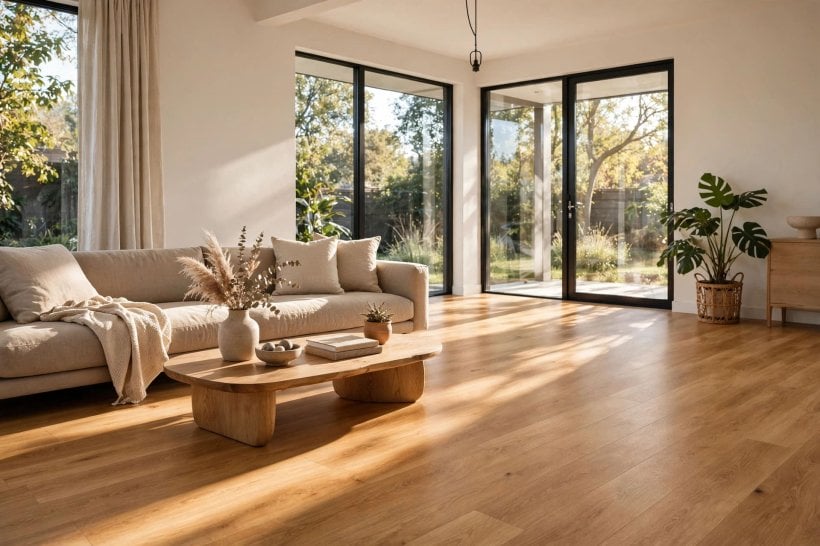
The fitting guide is the most honest document a flooring product has, so read it before you fall for a colour. It will state which rooms the boards are approved for, what subfloors they accept, what underlay is required or forbidden, and what gap to leave at walls. If a bathroom is on your list, look for an explicit yes. Some products approve bathrooms only with extra sealing steps and no wet-room use; others exclude them entirely, in which case believe them and choose a different floor for that room rather than gambling a whole installation on hope.
Note the conditions that can void your protection. Common ones include fitting over damp subfloors, using the wrong underlay, skipping acclimatisation, blocking expansion with heavy fixed units, and cleaning with steam. None of these are tricks; they are the physical limits of a floating fibre-based floor. The wet-room chapters of our guide to bathroom design ideas for tiny houses make the same point from the design side: rooms that get properly wet need materials and details chosen for standing water, and no label on a box changes that. Choose this flooring for the rooms it suits, and it will serve you well for years.
7. Measure Twice, Then Prepare the Subfloor Properly
Measure the room in several places, sketch where doorways, alcoves and fixed units fall, and work out how the board direction will run before you order. Boards usually look best running toward the main light or along the longest wall, and in a small home a continuous run through doorways, where the system allows it, makes spaces feel joined up. Order with a sensible allowance for cuts and the odd damaged board, and check every pack is the same batch and finish code when it arrives. Colour differences between batches are a classic, avoidable heartbreak discovered one row too late.
Then prepare what lies beneath with more care than the surface itself. The subfloor must be dry, level within the maker’s stated tolerance, clean and sound. New concrete needs proper drying time; old boards need loose fixings sorted and hollows filled. Any history of leaks gets fixed and dried before flooring, not covered by it. Choose the underlay the system specifies, especially where moisture protection from below is required, and never double up layers to cheat a bump flat, because a soft, spongy base flexes joints open. Most callbacks, squeaks and swollen seams are born in this hidden stage, long before anyone admires the finish.
8. Plan the Fitting, Gaps and Trims in Advance
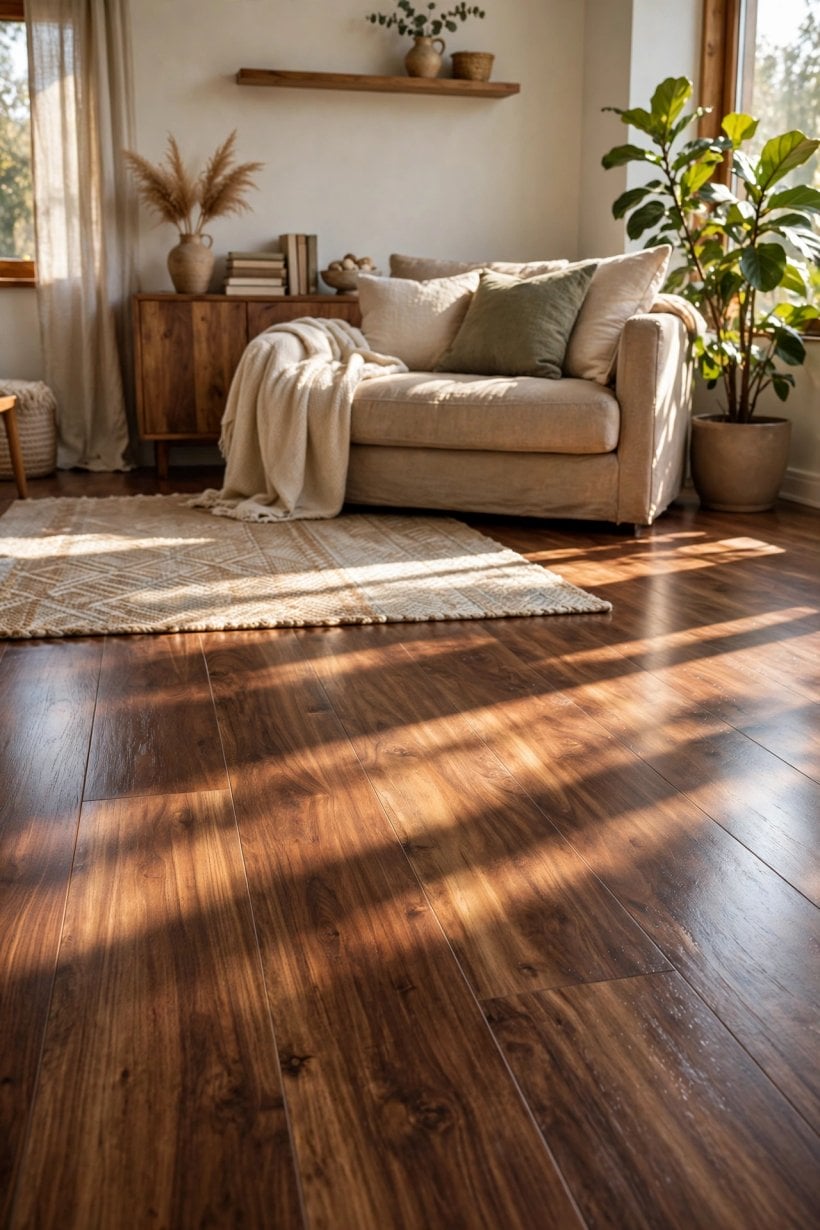
A floating floor is a living surface that expands and contracts with the seasons, so the expansion gap around every wall, pipe and fixed object is structural, not decorative. Plan where it will be covered: skirting fitted after the floor, or trim profiles where skirting stays. Decide in advance how you will handle the fiddly points, around radiator pipes, at the foot of stairs, under the plinths of fitted units, because mid-fit improvisation at these spots is where gaps get forgotten and boards get pinned tight by a careless bead of filler or a fixed cabinet leg.
Acclimatisation belongs in the plan too. Boards need the period in the room, stacked as instructed, that the maker specifies, so they settle to the home’s temperature and humidity before fitting; skipping it invites gaps in winter or peaking in summer. Work out your starting wall and board stagger so short joints do not line up in weak rows, and keep offcuts in length order for the far side of the room. If fitting is beyond your confidence, a good installer is not an admission of defeat; on a floor whose whole value lies in tight joints and correct gaps, it is simply buying the performance you already paid for in the box.
9. Know the Cleaning Rules Before You Commit
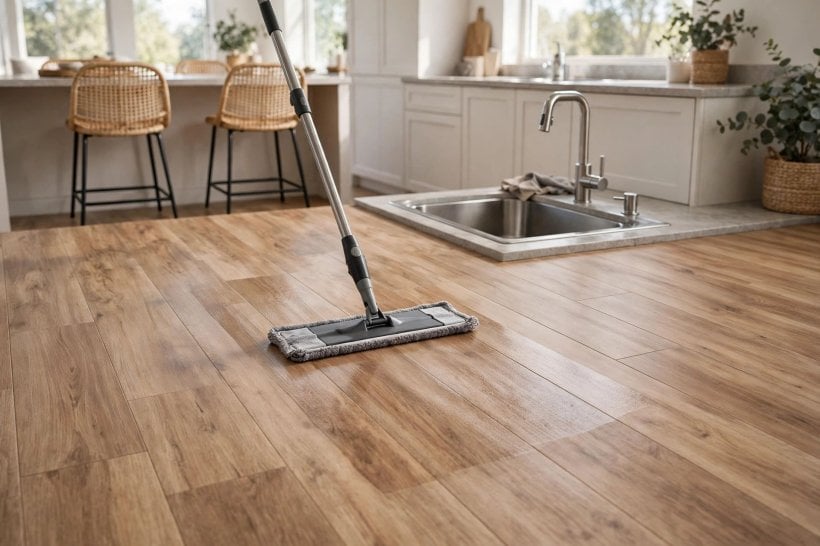
Daily care for this floor is simple but specific: sweep or vacuum grit before it grinds the wear layer, wipe spills when you see them, and mop damp rather than wet. Standing mop water, steam cleaners and soaking a floor ‘for a deep clean’ are the enemies, because each pushes moisture exactly where the board is weakest, into the seams. Use only cleaning products the maker approves; some polishes and waxes dull the finish or leave a film that shows every mark, and vinegar-style home remedies are a common cause of a once-smart floor turning cloudy panel by panel.
Prevention beats cleaning. A good mat at each outside door, felt pads under chair and table legs, a tray under pet bowls and a mat under the sink run will quietly double the floor’s good-looking life. Lift furniture rather than dragging it, and keep a couple of spare boards from the original batch for the one repair you hope never happens. If you are coordinating trims and skirting colours with the new floor, the shade-testing advice in living room paint ideas for tiny houses helps you judge whites and neutrals against the board in your own light, not the shop’s.
10. Think About Repairs, Spares and the Long Term
No floor is forever, so buy for the life you can actually maintain. A board damaged in year five can often be replaced individually by someone who knows the system, but only if the same finish still exists in your spare pack, because ranges change and a discontinued colour is gone for good. Keep your receipt, the batch code and a note of the exact product name somewhere safer than the box in the garage. Store spare boards flat, dry and in the house, not in a damp outbuilding where the spares quietly become the worst boards you own.
Finally, judge the floor by your household, not by a showroom. Homes with dogs, toddlers, bikes in the hall and a frequently mopped kitchen ask more of a surface than a quiet flat for one. The busier the home, the more the core quality, joint tightness and wear grade in the earlier sections matter, and the less a small saving per pack is worth. A calm, well-chosen floor in a workspace or reading corner can echo the practical thinking in tiny house home office ideas: quiet underfoot, easy to clean, and tough enough to disappear beneath daily life. That, in the end, is what good flooring does.
Final Considerations
Buying water resistant laminate flooring well comes down to four checks: a dense core with protected edges, a joint system that locks tight and stays tight, a wear surface graded for your busiest room, and a dry, level subfloor fitted exactly as the maker instructs. This is the second time the full keyword phrase has appeared in this guide, placed here deliberately, because the phrase is a starting point for questions, never an answer in itself. Products that welcome those questions, in writing, are the ones worth your money.
Choose it for the rooms it genuinely suits, wipe spills promptly, respect the expansion gaps, and keep a few spare boards from your batch. Do those unglamorous things and this practical, good-looking floor will repay you with years of service, shrugging off the daily splashes of a small, busy home exactly as you hoped on the day you chose it.




0 Comments