

You bought the house for its bones, its street, its garden — and then winter arrived and one room stayed a cave. But darkness is rarely about the window alone; it is about what the room does with the light it already gets.
These seven ways work in order from the simplest to the boldest: layer the light you have, bounce it further, stop your surfaces swallowing it, and only then consider borrowing more. None of them asks you to knock the house about first.
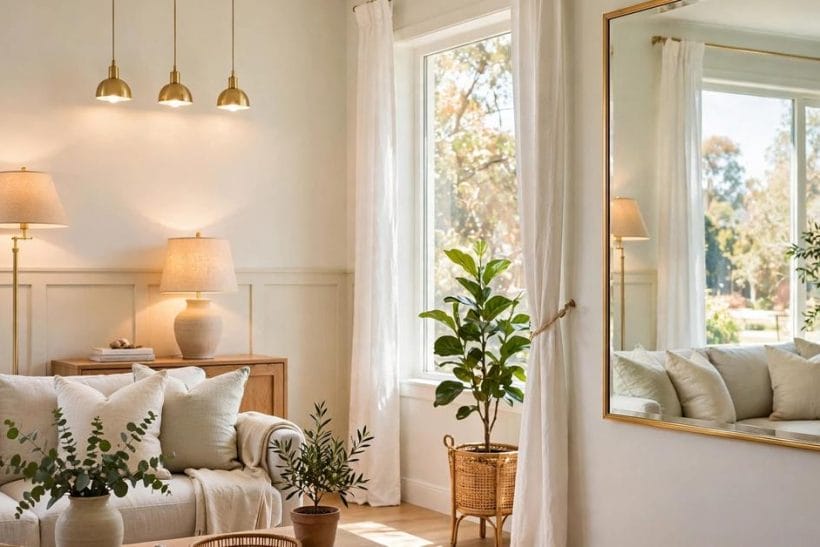
1. A Dark Room at a Glance
Scope first. This guide owns the whole business of lifting a gloomy room, from lamp placement to borrowed light. Its companion, the tiny house interior lighting ideas collection, shows the same principles at work in small homes where every pool of light has to earn its place.
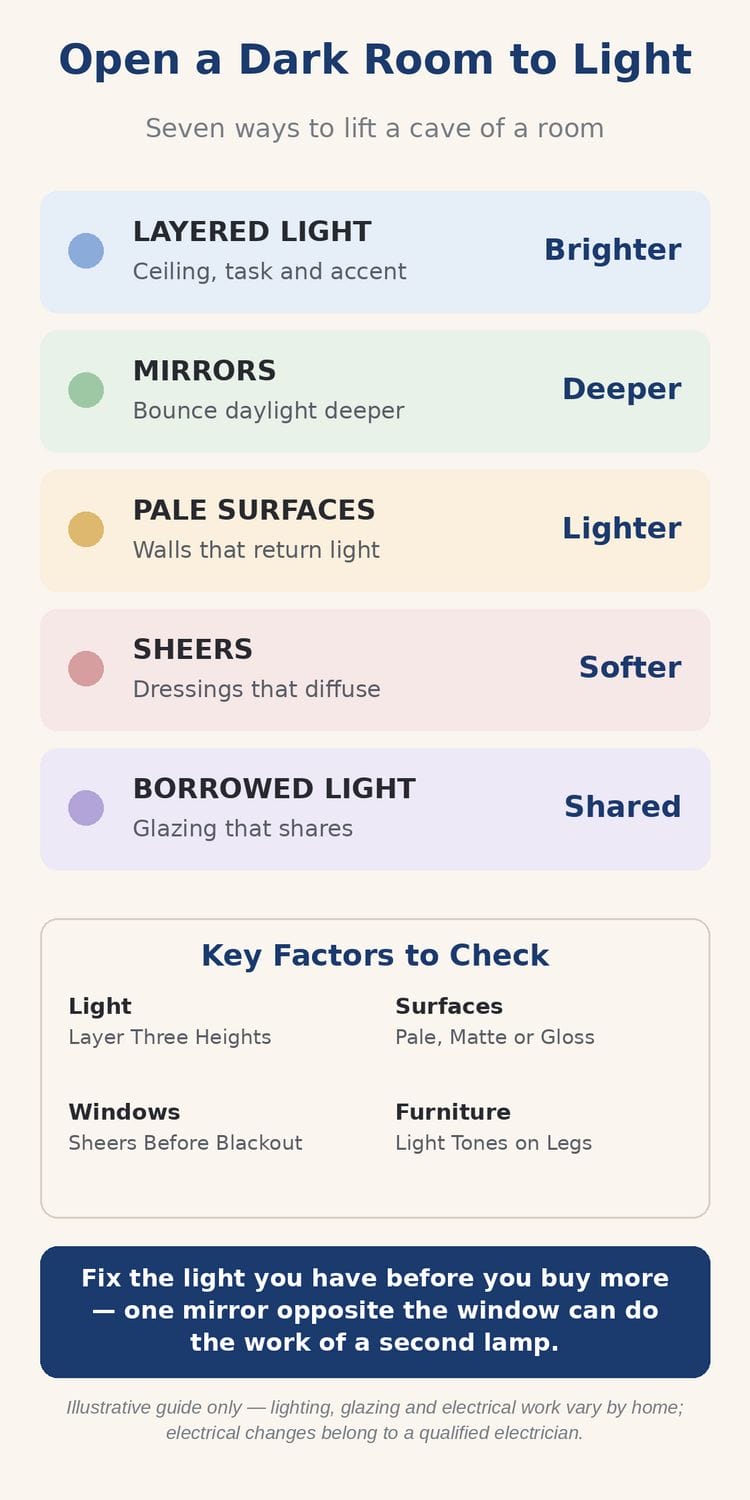
A dark room is usually failing three ways: too few sources of light, surfaces that absorb what light there is, and a window dressed so that daylight never travels. The seven ways below fix those failures one at a time, and most rooms need only the first three or four.
| Way | What it does | Where it works hardest |
|---|---|---|
| Layer the lighting | Replaces one flat source with ambient, task and accent light | Living rooms and kitchens |
| Mirrors and bounce | Throws window light deeper into the room | Rooms with one small window |
| Pale walls and ceiling | Surfaces that return light instead of swallowing it | North-facing rooms |
| Sheer window dressings | Privacy without the blackout | Street-facing rooms |
| Borrowed light | Glazing and openings that share light between rooms | Internal rooms and halls |
| Reflective finishes | Gloss, glass and metal that scatter light | Kitchens and bathrooms |
| Lighter floors and furnishings | Raises the room’s whole tonal floor | Small, low rooms |
2. Way One: Layer the Lighting
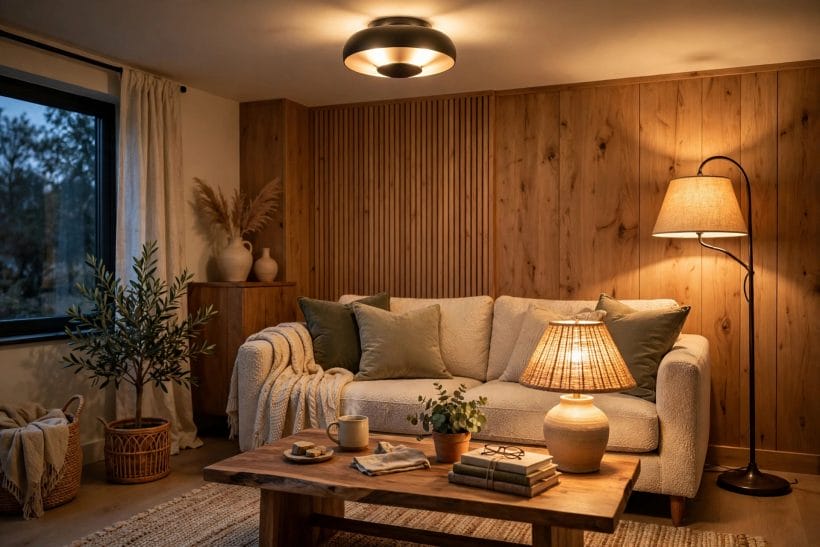
Most dark rooms are lit by a single ceiling fitting doing three jobs badly. The result is a bright patch in the middle, gloom in every corner, and shadows where you sit. Layering replaces that one flat source with three heights of light, and the room feels brighter at once, because the eye reads even light as generous light.
Start with a gentle ambient base
Ambient light is the background wash: a ceiling fitting with a shade that throws light upwards as well as down, or wall lights that bounce their glow off the ceiling. Keep it soft and general. Its job is not to light any one activity but to soften the darkness so the other layers can work without harsh contrast.
Put task light where life happens
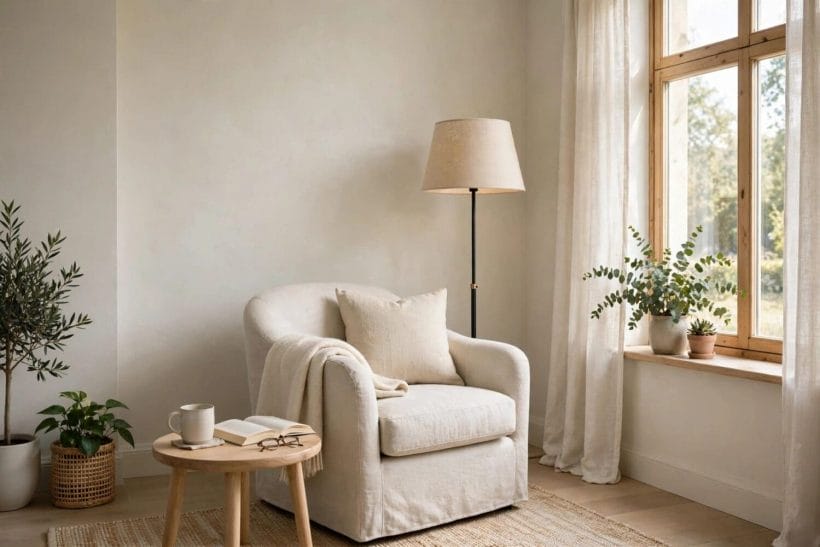
Task light belongs at the chair where you read, the counter where you chop, the desk where you work. A floor lamp beside an armchair or a table lamp on a sideboard lifts the corner you actually use, and a lit corner makes the whole room feel awake. Choose shades that direct light onto the task rather than into your eyes, and the corner becomes a welcoming pool.
Finish with accent and wall-washing
Accent light is the layer most rooms lack: a small lamp on a bookshelf, a picture light, an uplighter washing a pale wall. Washing a wall with light is a quiet trick — the wall becomes a soft source, and the room’s edges stop retreating into shadow. When choosing bulbs for all three layers, the guide to choosing LED colour temperature explains how warmer and cooler light change a room’s mood, so the layers agree instead of arguing.
3. Way Two: Mirrors and Bounce
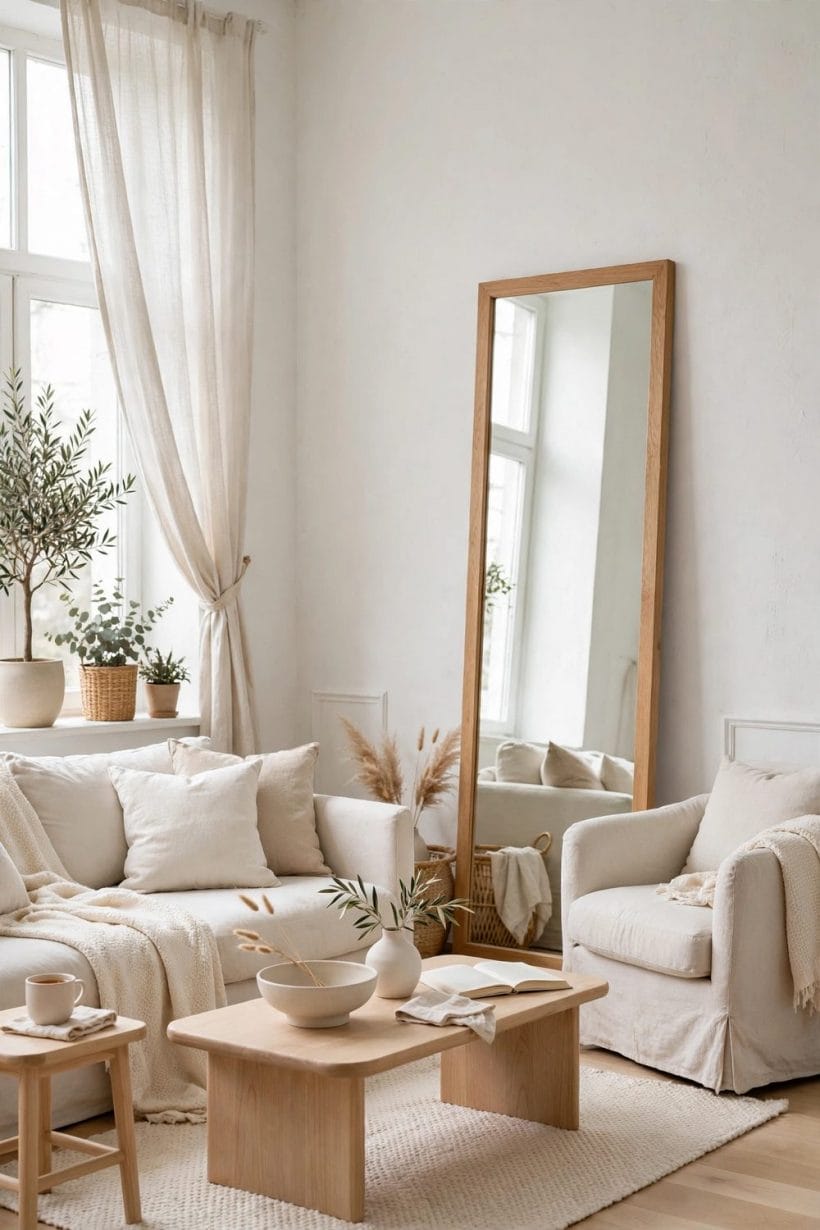
Daylight in a one-window room dies about halfway across the floor. A mirror gives it a second journey. Placed well, a mirror does not just double a view — it takes the brightest thing in the room, the window, and throws its light into the corners the sun never reaches. It is the cheapest way, and it works the day you hang it.
Hang the mirror opposite the window
The classic position earns its reputation: a generous mirror on the wall facing the window catches the daylight whole and sends it back across the room. Size matters more than ornament — a large, plain mirror outperforms a cluster of small decorative ones, because what you want is one clear reflection of the sky, not a dozen fragments of it.
Let furniture bounce light too
Mirrored and gloss-fronted furniture continues the same work at a lower level: a glass-topped table, a cabinet with mirrored doors, a pale lacquered sideboard. Each reflective surface catches lamplight and daylight and scatters it sideways. Used sparingly, one or two such pieces lift a room without tipping it into glitter; the aim is bounce, not sparkle for its own sake.
Paint the window reveals pale
The reveals — the inner sides of the window opening — are an overlooked bounce surface. Painted pale, they catch light at the very point where it enters and soften the hard contrast between a bright window and a dark wall. A deep-set window with pale reveals behaves like a light box, and the window appears larger and kinder for it.
4. Way Three: Pale Walls, Ceilings and Trim
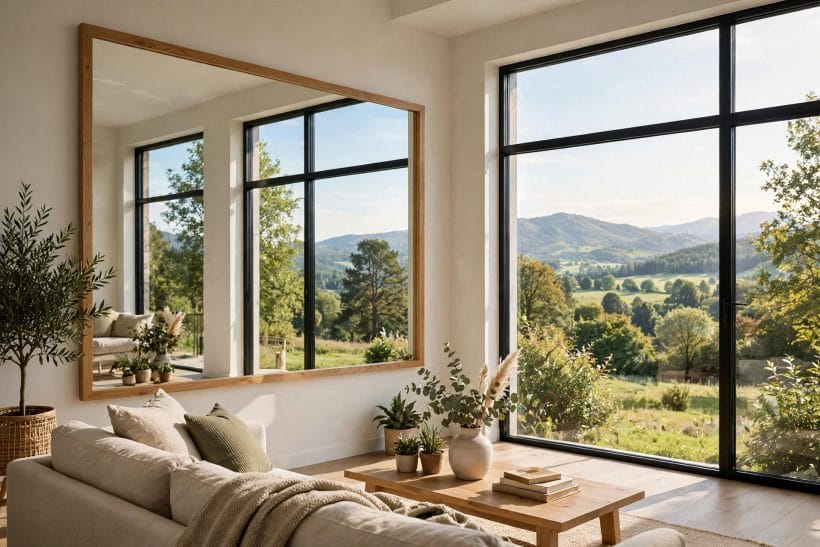
Every surface in a room is either returning light to you or keeping it. Dark walls keep a great deal of it, which is why repainting is the most reliable transformation of all: pale walls and a pale ceiling hand the light back, and the room gains brightness at every hour, without using any electricity at all.
Choose whites by undertone, not by name
Not all whites behave alike in a gloomy room. A white with a warm undertone keeps a north-facing room from turning chilly, while a cleaner white sharpens a room that gets some sun. The head-to-head of Pure White vs Extra White shows how two near-identical whites can read differently once on the wall, and why the swatch card alone misleads.
Keep the ceiling the palest thing in the room
The ceiling is the room’s second sky, and it should almost always be the lightest surface in it. A bright ceiling lifts the eye, makes low rooms feel taller, and gives ambient light a broad surface to bounce from. If the walls take a soft pale colour, let the ceiling stay a step lighter still — the gradient reads as daylight, even when it is lamplight doing the work.
Use one family across walls and trim
Painting walls, skirting and door frames from the same pale family stops the room breaking into dark-edged boxes. The survey of timeless paint colour families explains which whites, greiges and soft neutrals endure, which helps when one scheme must carry several adjoining rooms. Test large patches first and judge them at the hour the room feels darkest; that is the light the colour must survive.
5. Way Four: Window Dressings That Keep the Light
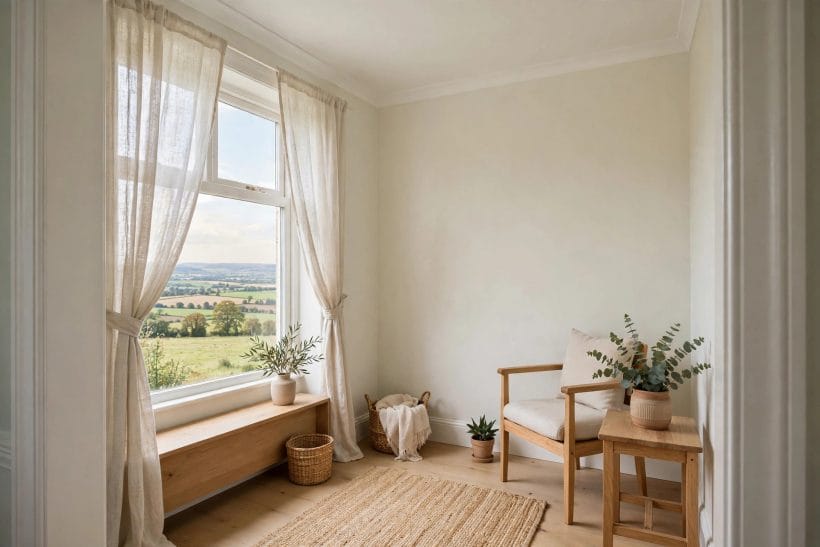
Heavy curtains and half-closed blinds are silent thieves: a room can have a good window and still live in twilight because its dressings never let go of the glass. The fix is not to strip the window bare — most rooms need privacy, and street-facing rooms need it all day — but to choose dressings that filter light instead of stopping it.
Sheers for privacy without the blackout
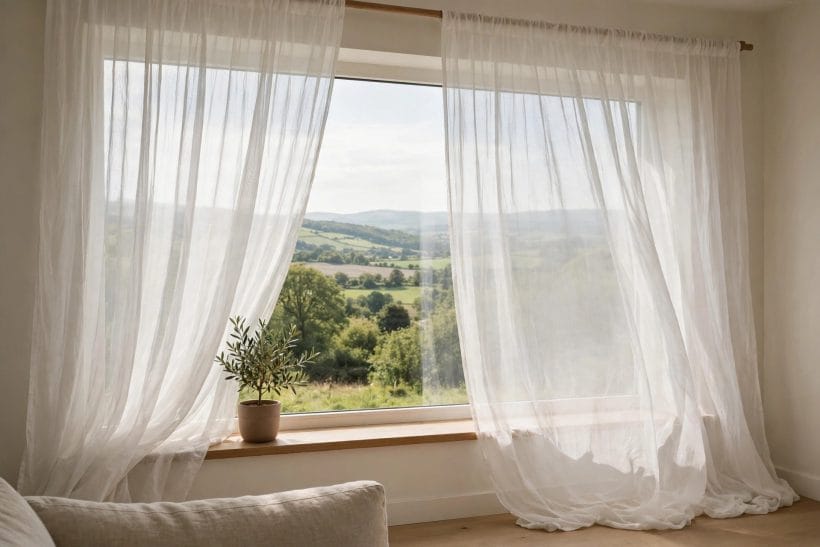
A sheer or voile panel is the dark room’s best friend. It softens glare, hides the room from the street, and turns harsh direct sun into an even, milky glow that travels further across the floor. Hung from ceiling to floor and wider than the window, sheers also make the window feel grander.
Layer sheers with curtains, properly
On winter evenings you still want the warmth and darkness of a real curtain. The answer is two layers that work independently — sheers for the day, curtains for the night — and the guide to double curtains without a double rod shows practical ways to hang both without bulky hardware, so each layer can move freely and neither spends the day bunched across the glass.
Blinds that stack clear of the glass
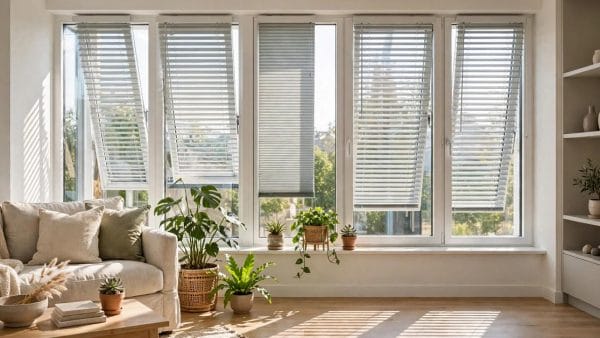
Where blinds suit the room, choose ones that gather tightly: a roller that disappears to the top of the frame, or slim slats that stack to almost nothing. The window blinds ideas collection works through styles room by room. Whatever you choose, fit it so that when it is open, it is truly open — dressings parked over the glass are a tax the room pays in light all day long.
6. Way Five: Borrowed Light
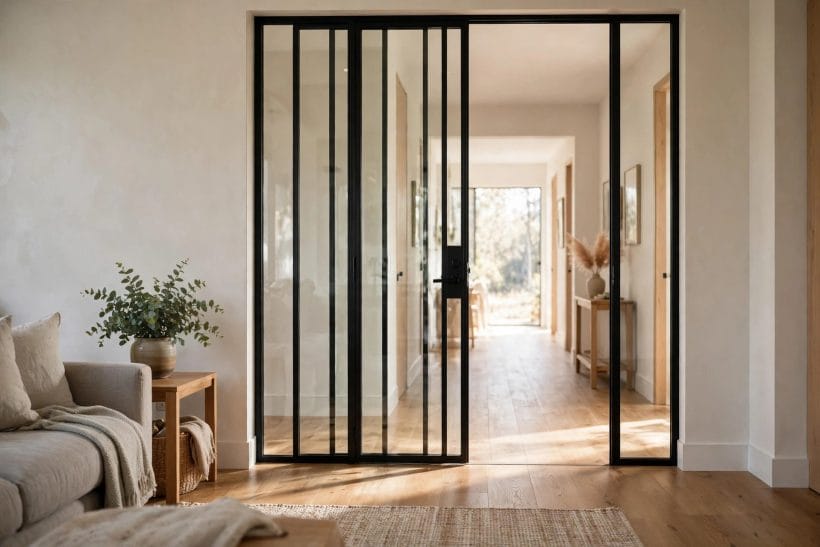
Some rooms have no outside wall — the internal bathroom, the middle hall, the room borrowed from a larger one. These cannot be given a window, but they can be lent light by brighter neighbours. Borrowed light is the boldest way in this guide, and the one where professional framing matters most: anything involving new glazing, altered walls or changed doors belongs with a glazier or builder, not a weekend experiment.
Glazed internal doors share the hall’s light
Swapping a solid internal door for a glazed one is the simplest borrow of all. A hallway door with frosted or clear panes lets the hall’s daylight — or lamplight — spill into the room beyond, and the room lends its light back in return. Frosted glazing keeps privacy for bedrooms and bathrooms. A qualified glazier or joiner should supply and fit glazed doors, so the glass is the right safety type for a door.
Clerestory and high glazing borrow from above
A band of glazing set high in a wall borrows light over the top of furniture and doors, where it travels furthest and disturbs privacy least. The clerestory windows guide explains how high windows work and where they suit. Because this means cutting into a wall, treat it as building work from the start: a builder should confirm what the wall carries before anything is opened up.
Open shelving and half-walls soften the divide
Where a full opening is too much, a half-wall or open shelving between two rooms lets light pass while keeping the rooms distinct. Shelves open on both sides are especially kind: they store, divide and transmit light at once. Again, removing any part of a wall — even the top half — is a job to have assessed by a builder first, since you cannot tell from the paintwork what a wall is holding up.
7. Way Six: Gloss, Glass and Reflective Finishes
Matte surfaces drink light evenly; glossy ones throw it around. A dark room does not need to shine like a showroom, but a measure of gloss, glass and metal gives light something to play on, and the effect is liveliness as much as brightness — the highlights and reflections that tell your eye a room is awake.
Gloss where it earns its keep
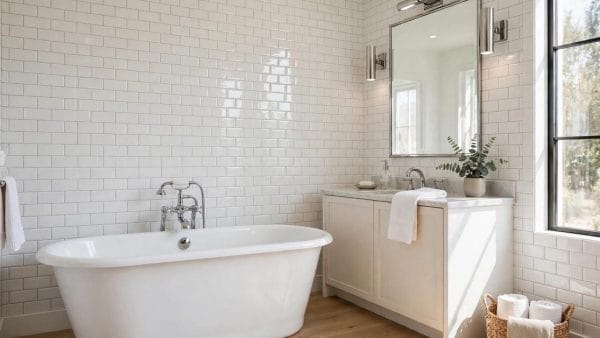
Kitchens and bathrooms suit reflective finishes best: gloss cabinet fronts, glass splashbacks and polished tiles all scatter light across work surfaces where you need it most. A satin or gloss finish on woodwork does quieter work elsewhere, catching lamplight along skirting and door frames and giving the room a faint, enlivening outline in the evening.
Glass and metal as light scatterers
Glass tabletops, metal lamp bases, a brass or chrome fitting, even a tray or a framed print behind glass — each is a small mirror working at a different angle. Together they break up the flatness that makes a room feel dark even at midday. Choose metals in one family so the sparkle reads as polish rather than clutter.
8. Way Seven: Lighter Floors and Furnishings
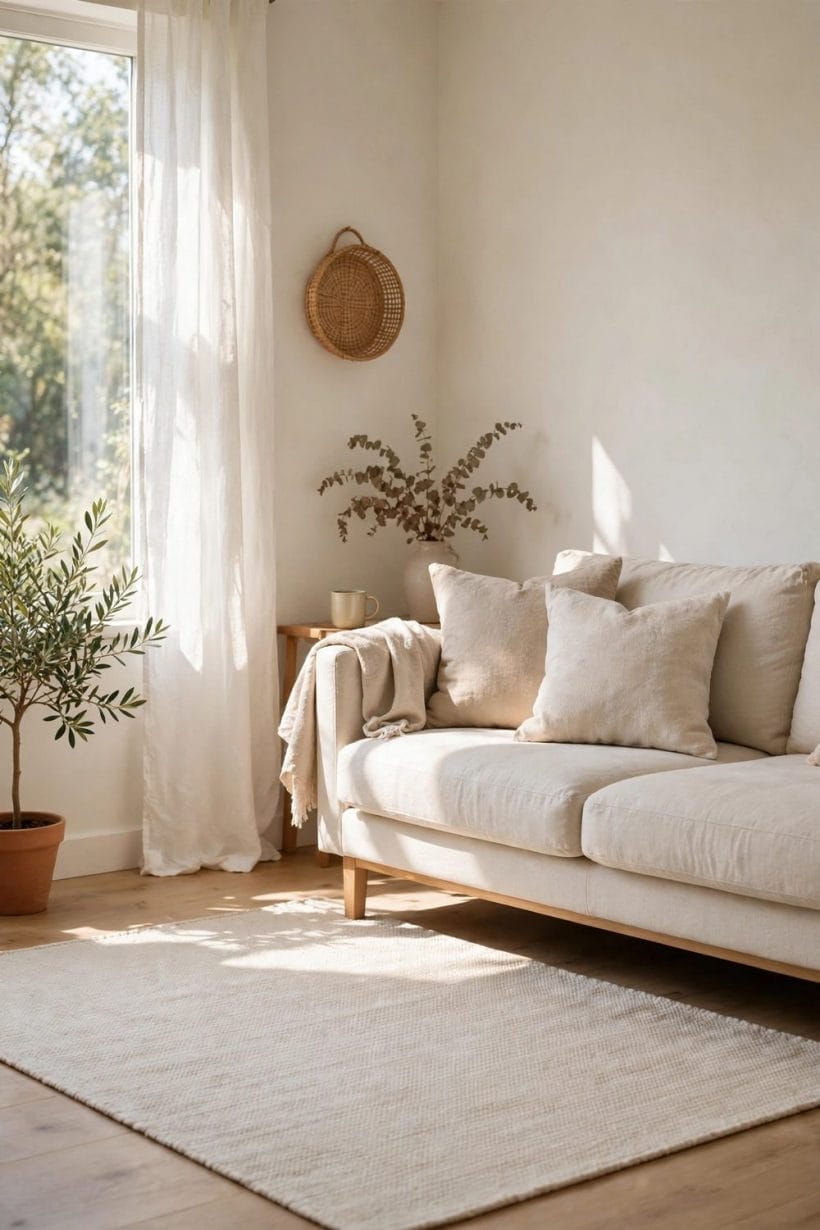
The floor is the largest surface your eye takes in after the walls, and a dark floor under dark furniture sets a low ceiling on how bright a room can ever feel. Raising the room’s tonal floor — literally — is the gentlest way of the seven, because much of it needs only rugs, throws and upholstery.
A pale rug changes the ground itself
You do not have to replace a floor to lighten it. A large pale rug rewrites the ground the furniture stands on, bouncing lamplight upwards and making dark boards or tiles read as a deliberate border rather than a gloom. In a rented room or a cautious first step, this single change often does more than any other, and it can be rolled up and taken with you.
Furnishings in lighter tones, lifted on legs
A pale sofa, light-toned cushions and throws in soft neutrals raise the middle band of the room where your eye rests. Furniture raised on legs helps twice over: light travels beneath it, the floor stays visible, and the room loses the heavy, grounded look that makes it feel cave-like. If replacing furniture is out of reach, slipcovers and throws in pale fabrics achieve most of the same lift for very little.
9. What Will Not Work — and When to Call a Professional
Honesty saves money here. A few popular fixes promise transformation and deliver very little, and a few jobs should never be improvised at all. Knowing both lists keeps a project safe and effective.
Mirages: the single brighter bulb and the dark accent wall
One much stronger bulb in the same single fitting does not lighten a room; it makes a harsher pool in the middle and deeper shadows at the edges. Likewise, a dark accent wall lowers the light of a room that has none to spare. In a cave, every surface must work for the light, not against it. Spend on layers, mirrors and pale surfaces first; they are the fixes with a record.
Professionals for electrics, glazing and structure
Anything beyond changing a bulb or plugging in a lamp belongs to a qualified electrician: new fittings, moved sockets and added circuits are electrical work, not decoration. New or altered glazing belongs to a glazier, and any change to a wall belongs to a builder who can judge its structure. This guide deliberately gives no wiring or fitting instructions — the safe and honest route is to plan the effect you want here, then let qualified tradespeople make it real.
10. A Room-by-Room Order of Attack
Seven ways at once is overwhelming; seven ways in the right order is a plan. Work through a dark room in this order and it brightens at every stage, so you can stop whenever the room feels right — many rooms are cured by the third stage.
Start with light sources, then surfaces
First, layer the lighting and hang the mirror: both work on day one and show you the room’s true potential. Second, deal with the window dressings, so daylight can actually enter. Third, repaint walls and ceiling pale — the biggest single transformation — and add the reflective finishes. Judge the room after each stage, in the evening as well as at noon.
Finish with floors and furnishings
Leave floors and furnishings until last, because they are the tuning rather than the engine. Once the light and surfaces are right, a pale rug and lighter textiles usually complete the cure, and borrowed light — the glazed door or high opening — can be planned calmly as a final, professional stage only if the room still asks for it. Working in this order means every bit of effort lands where the darkness actually lives.
Final Considerations
A dark room is not a verdict on a house; it is a sum of small decisions — one lamp, one heavy curtain, one absorbent wall — and sums can be re-added. Layer the light, bounce it, let pale surfaces return it, dress the window kindly, borrow where you must, and raise the tones underfoot — and the cave you bought becomes the calm, bright room you meant to buy all along.
Begin with the cheapest way that fits your room and live with it for a week before judging. Light is best assessed by living in it, and the room will tell you, evening by evening, exactly which way to try next.

0 Comments