

A good home drinks station earns its place every single week, not just at parties. These wet bar ideas start with the unglamorous essentials — a sensible layout, a proper sink, storage that works at midnight — and build towards the lighting, shelving and seating that make guests linger.
Read in order for a full plan, or jump to the section your room needs: layouts, cabinets, plumbing, surfaces, cooling, display, lighting or seating.
1. Wet Bar at a Glance: Layout, Water and Workflow
Every successful setup answers three questions before any cabinet is ordered: where will water and drainage run, how will the host move between sink, fridge and serving counter, and where will guests stand without blocking that workflow? Settle those, and the styling becomes easy.
| Decision | What to aim for | Why it matters |
|---|---|---|
| Layout | Straight, L-shaped, galley or island, fitted to the room | Controls cost, plumbing runs and how many people can help |
| Water | Sink position settled before cabinets are ordered | Plumbing is the hardest element to move later |
| Workflow | Sink, cooling and serving counter within a few steps | The host spends the evening with guests, not walking |
| Storage | Closed cabinets below, display shelving above | Bottles and tools stay handy; clutter stays hidden |
| Power | Outlets for blender, kettle and ice maker planned early | Small appliances are useless without reachable sockets |
| Light | Task light at the counter, softer light for guests | Mixing drinks and mood need different brightness |
| Seating | Stools or a ledge that keep guests out of the work zone | Company for the host, without a crowded counter |

A quick visual summary of layout shapes, sink placement, storage zones and lighting layers before the ideas begin.
- Start with the sink position. Water supply and drainage decide what is affordable, so place the sink where plumbing is reachable — ideally near an existing kitchen or bathroom line — and design everything else around that anchor point.
- Sketch the host’s triangle. Sink, cold storage and serving counter should sit within a few steps of each other. Stand in the space and mime making a drink; any long walk in that rehearsal becomes a nightly annoyance.
- Give guests a side to belong to. A clear serving face, a raised ledge or a stool row tells visitors where to gather so the host keeps a private working side. This single zoning decision prevents most crowding.
- Plan power before plaster. Blenders, kettles, coffee add-ons and ice makers all need sockets at counter height. Adding outlets after tiling is messy and expensive, so mark every appliance on the plan now.
- Decide the drinks menu honestly. A station for wine and spritzes needs different storage from one built for cocktails or coffee. List what you actually serve monthly, and let that list size the fridge, sink and shelving.
- Leave a landing zone. Reserve clear counter beside the sink for washing up, beside the fridge for bottles, and near the seating for finished drinks. Landing zones are the difference between calm hosting and a juggling act.
- Measure the tall items first. Bottles, blenders and glassware have real heights. Measure your tallest bottle and your stemware before fixing shelf spacing or cabinet heights, and the finished storage will fit first time.
2. Layouts for Every Room Shape
Shape follows the room, not the catalogue. A straight run flatters a spare wall, corners love an L, and open-plan spaces can float an island — the same zoning logic behind our Tiny House Living Room Ideas applies here at smaller scale.

- Straight run along one wall. The simplest and most economical shape: cabinets, sink and fridge in one line. It suits spare walls in living rooms and dining spaces, keeps plumbing in a single run and leaves the rest of the room free.
- L-shaped corner layout. Turning the corner doubles counter space without doubling the footprint. Put the sink on one arm and the serving counter on the other, so washing up and presenting drinks never compete for the same surface.
- Galley layout for narrow rooms. Two facing runs with a walkway between them work in wide hallways and narrow utility spaces. Keep the walkway comfortable enough for one person to turn with a tray, and store everyday items on the sink side.
- Island layout for open plans. A freestanding island with the sink on the working side and stools on the guest side becomes a social anchor. It asks more of plumbing and budget, so confirm floor access for drainage before committing.
- Under-stairs layout. The dead space beneath a staircase often fits a compact straight run with shelving above. Sloped headroom suits storage rather than standing tasks, so place the sink and counter where the ceiling is highest.
- Closet conversion layout. A deep closet or unused pantry can hide a complete station behind doors. Guests see a tidy wall; the host opens up a working drinks nook with sink, shelves and task light already in place.
- Alcove and niche layout. Fireplace alcoves, arched niches and the space beside a chimney breast give a natural frame. Build cabinets to fill the width exactly, and the station reads as architecture rather than furniture.
- Two-zone entertaining layout. Split the functions: a preparation zone with sink and fridge near the kitchen, and a slim serving ledge where guests help themselves. Parties flow better when making and serving happen in different spots.
3. Cabinets and Built-In Storage
Cabinets carry the visual weight of the whole project, so choose their style with the room, not the showroom. Closed storage below the counter and a few honest drawers will outwork any amount of decorative shelving, as the storage-first approach in our Tiny House Interior Design guide shows.

- Shaker-style cabinets for a classic base. Framed shaker doors sit comfortably in traditional and transitional rooms and age gracefully. Paint them to match the room’s woodwork for a built-in look, or contrast them gently against paler walls.
- Flat-front cabinets for a modern base. Slab doors with minimal handles give a calm, contemporary run that lets worktop and backsplash materials star. Push-to-open hardware keeps the line completely clean where the run is short.
- A dedicated bottle drawer. Deep drawers with dividers store bottles upright, visible and safe from tipping — far easier to use than a dark cupboard of clinking glass. Keep the heaviest bottles in the lowest drawer.
- Pull-out waste and recycling. A slim pull-out near the sink swallows bottle caps, citrus peel and empties during the party itself. Hosting feels effortless when clearing up happens invisibly, one small motion at a time.
- Appliance garage for small electrics. A counter-level cabinet with a lift-up or tambour door hides the blender and ice crusher between uses while keeping them plugged in and ready. The counter stays clear; the tools stay close.
- Lockable cabinet for peace of mind. Households with children or teenage guests often add one lockable cupboard for spirits. It blends in with the rest of the run and removes a whole category of worry from entertaining.
- Open base shelving for a relaxed feel. In casual rooms, one open shelf bay under the counter holds baskets, spare glasses and a crate of mixers. The softness balances a long run of closed doors and keeps restocking quick.
- Matching the room’s existing joinery. Copying the profile and colour of nearby bookcases or kitchen cabinets makes a new run feel original to the house. Consistency of detail, more than any feature, creates the bespoke impression.
4. Sinks, Taps and Plumbing
The sink is what makes the station genuinely useful rather than decorative: rinsing glasses, dumping ice, filling kettles and catching drips all happen here. Size it for your largest jug, and choose a tap you can operate with wet hands.

- Undermount sink for a clean counter. Mounted beneath the worktop, an undermount bowl lets crumbs and spills sweep straight in and keeps the counter line unbroken. It pairs especially well with stone and solid-surface worktops.
- Compact bar sink for small runs. A modest square or round bowl is enough for rinsing and ice duties where space is tight. What it saves in width can be given back as precious serving counter on a short run.
- Generous prep sink for serious hosts. If you batch cocktails, wash produce or soak glasses, a larger single bowl earns its footprint daily. Check it swallows your biggest board and jug before ordering anything.
- High-arc tap for filling tall vessels. A gooseneck or high-arc tap fills pitchers, vases and coffee reservoirs without tilting gymnastics. Single-lever control matters when one hand is holding the vessel and the other is wet.
- Pull-down spray for rinsing. A small pull-down spray makes quick work of sticky shakers and the corners of the bowl itself. It is the feature hosts mention most after a year of real use.
- Filtered drinking water tap. A separate filtered tap — or a filter feeding the main tap — improves every drink made with water and cuts bottled water clutter. Plan the filter housing inside the sink cabinet.
- Instant hot water for tea and top-ups. A compact hot-water unit under the sink serves tea drinkers and speeds washing up. It is a comfort upgrade, so add it only where the household will use it weekly.
- Drainage planned with the fall in mind. Waste runs need a gentle, continuous fall to the main drain. Long horizontal runs and pumps add cost and maintenance, which is why sink position belongs at the very start of the plan.
5. Worktops, Backsplashes and Materials
Surfaces here work harder than anywhere except the kitchen: acids, ice, hot kettles and red wine all arrive weekly. Choose materials that forgive, and borrow palette confidence from our Tiny House Interior Paint Colors guide when pairing counters with cabinet colour.

- Quartz worktop for easy care. Engineered quartz shrugs off wine, citrus and coffee rings with a wipe, and its consistent pattern suits short runs beautifully. It is the low-worry choice for a counter that hosts every weekend.
- Butcher-block worktop for warmth. Timber brings softness and a forgiving surface for glassware, at the price of periodic oiling. Keep a board under the ice bucket and the top will age into character rather than damage.
- Stone worktop for a statement run. Marble or granite turns a short counter into a piece of furniture. Seal it faithfully, accept that etching tells the story of parties past, and enjoy the coolest surface for chilling glasses.
- Full-height backsplash in the same material. Running the worktop material up the wall gives a seamless, wipe-clean backdrop and a distinctly tailored finish. It also removes grout lines from the splash zone entirely.
- Tile backsplash for pattern and colour. Handmade-look tiles, a herringbone lay or one confident colour can carry the whole scheme. Choose a wipeable grout tone and seal it, because splashes here are a certainty, not a risk.
- Mirrored or antiqued-glass backsplash. Reflective backing doubles the sparkle of glassware and bottles and bounces light into dark corners. Antiqued finishes hide water spots gracefully, which makes them kinder than plain mirror.
- Timber splashback with a sealed finish. Board or slatted timber behind the counter warms modern cabinetry and links to shelving above. Use a hard-wearing water-resistant finish and keep the kettle’s steam path in mind.
- Metal tray ledge for the serving edge. A shallow brass or steel rail along the serving edge protects the worktop’s front, gives glasses a visual stop line and adds a tailored, bar-like detail guests always notice.
6. Cooling, Ice and Appliances
Cold drinks are the whole point, so cooling deserves real planning: what must be chilled, how much ice a gathering actually melts, and where meltwater goes. Ventilation around appliances is the unglamorous detail that protects the investment.

- Undercounter fridge as the anchor appliance. A counter-height fridge for mixers, wine, beer and garnishes keeps the host self-sufficient all evening. Choose a model designed for built-in ventilation so it can sit behind a matching door.
- Dual-zone wine storage. Where wine matters, two temperature zones keep whites ready to pour and reds at a gentler cool in one cabinet width. It replaces the bottles that otherwise colonise the kitchen fridge door.
- Clear-ice maker for cocktail households. A small ice maker ends the evening’s most common errand — the bag run. It needs water and drainage, so it belongs in the first plumbing conversation, not the last shopping list.
- Insulated ice well in the counter. A simple insulated well or a beautiful bucket sunk into the worktop keeps a bottle and cubes at hand during service. A drip tray beneath saves the cabinet below from meltwater.
- Freezer drawer for glasses and garnish. A slim freezer drawer frosts glasses, stores frozen citrus and holds backup ice. Even a small one transforms summer serving, when everything warms faster than the party ends.
- Coffee add-on for morning-after duty. A compact espresso or filter setup lets the same station serve brunch and overnight guests. If mornings matter in your house, our Home Coffee Bar Design Ideas show how to combine both rituals gracefully.
- Kettle point beside the sink. Tea, toddies and washing-up all want hot water fast. A socket and a heat-safe landing spot beside the sink keep the kettle in the work zone and off the serving counter.
- Ventilation gaps respected. Fridges and ice makers shed heat; follow their clearance guidance and vent into the room, not into a sealed cabinet. Quiet, long-lived appliances are almost always the well-ventilated ones.
7. Shelving, Display and Glassware Storage
What guests see above the counter sets the tone: a few beautiful bottles, honest glassware and breathing room. Display works best edited — the calm, layered approach in our Modern Tiny House Interior Ideas is a good model.

- Floating shelves in a matching finish. One or two thick floating shelves echoing the worktop or cabinet tone give display space without visual bulk. Keep the lowest shelf comfortably above tap height and head height alike.
- Glass-front cabinets for the best pieces. Glazed doors protect special glassware from dust while keeping it part of the display. Plain glass suits modern runs; a subtle reeded glass softens traditional ones and hides minor clutter.
- Stemware rail under a shelf. A simple under-shelf rail stores wine glasses upside down, dust-free and instantly reachable. It uses the dead air beneath every shelf and looks like a professional touch for very little effort.
- Bottle display in odd numbers. Group the handsome bottles in threes and fives with space between groups. The eye reads arrangement instead of inventory, and the everyday working bottles can live in a drawer below.
- Back-bar shelf with a raised rail. One higher display shelf with a slim retaining rail shows off decanters and rare bottles safely out of the splash zone. It gives the run a composed, layered silhouette.
- Integrated tray and tool storage. A shallow drawer or shelf bay sized for trays, jiggers, shakers and openers keeps the kit together. When every tool has an address, resetting the station after guests takes minutes.
- Books and a small plant for softness. Two or three cocktail books and one forgiving plant stop the display reading as a shop shelf. Living rooms should feel lived in; the station is part of the home, not a showroom.
- Closed storage for the back stock. Cases, spare tonic and seasonal extras belong behind doors, in a nearby cupboard or under the counter. Display the evening’s needs; warehouse the rest somewhere guests never see.
8. Lighting and Atmosphere
Light here does two jobs: bright, honest task light for measuring and slicing, then a softer glow that flatters faces and glass. Separate circuits make both possible — a lesson borrowed from the viewing comfort priorities in our Tiny House Home Theater guide.

- Under-shelf task lighting. A continuous strip beneath the lowest shelf lights the whole counter evenly, with no shadows at the sink. Put it on its own switch so prep light never has to double as party light.
- Pendants over the serving counter. Two or three pendants above the guest side mark the gathering spot and give the run its evening identity. Hang them high enough to keep sightlines and conversation across the counter open.
- Dimmers on every circuit. Mixing at full brightness, then dimming everything a third for serving, is the simplest atmosphere upgrade there is. If only one circuit gets a dimmer, choose the pendants.
- Warm light temperature throughout. Consistently warm bulbs keep bottles amber, wood warm and faces kind. Mixing cool task light with warm pendants makes both look wrong, so choose one family and stick to it.
- A small lamp for lamp-lit evenings. A tiny shaded lamp on the counter or a nearby shelf gives the softest possible setting for two people and a nightcap. Not every evening needs the full lighting scheme.
- Light inside glazed cabinets. A gentle strip inside glass-front cabinets turns stored glassware into part of the evening’s glow. It costs little, and guests read it as the mark of a considered build.
- Candle-safe zones planned in. Keep one heat-safe, draught-free spot — a stone tray or metal ledge — where candles can live away from bottles and paper. Atmosphere should never come with a fire-safety footnote.
9. Seating and Entertaining Details
The best stations are social machines: guests settle, the host works happily in view, and everything needed is one step away. These finishing details turn a fitted run of cabinets into the room everyone chooses.
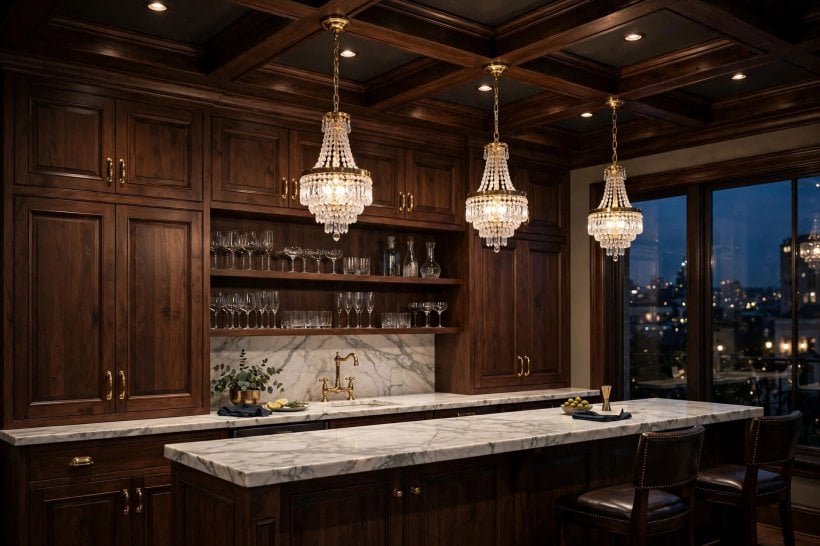
- Counter stools with backs. Guests stay for hours, so choose stools with a backrest and a foot rail, sized so knees clear the counter overhang. Comfort at the counter is what turns a drink into an evening.
- A raised ledge for stand-up gatherings. Where stools will not fit, a slightly raised serving ledge gives standing guests a natural place for glasses and elbows, and quietly protects the work counter behind it.
- Drinks trolley as the flexible extra. A small trolley extends capacity on party nights — extra glasses, a second ice bucket, mixers — then parks in a corner or another room when the gathering is small.
- Garnish station on a board. A dedicated board with citrus, herbs and a small knife, set up before guests arrive, makes drinks feel crafted and keeps prep inside the work zone, not scattered.
- Coasters and cloths within reach. A stack of coasters and two good cloths living in the top drawer protect every surface in the room. Small kindnesses to furniture are what let hosts actually relax.
- Music placed with the seating. A small speaker near where guests sit — not behind the host — keeps conversation easy and the soundtrack social. Volume lives on the guest side of the room here.
- A self-serve water point. A carafe and glasses on the guest side encourage pacing and keep the host out of constant top-up duty. It is the most appreciated detail nobody photographs.
10. Small Spaces, Budgets and Everyday Care
A short run with a real sink beats a long counter without one, every time. Spend first on plumbing, cooling and the tap; display and decoration can grow slowly, and a well-kept station asks only minutes of care each week.
- The one-metre starter version. A single cabinet run with a compact sink, a small fridge and one shelf delivers the full ritual in a metre of wall. Prove the habit small, then expand only if life demands it.
- Spend on plumbing, save on doors. Water, drainage and a good tap are permanent; door styles can be painted or swapped later. Budgets behave best when the irreversible parts get the money first.
- Choose multi-tasking pieces. A fridge that also holds everyday overflow, a sink that serves the garden door, shelves that store party glassware year-round — dual duty is how small stations justify their footprint.
- Weekly reset routine. Ten minutes weekly — wash the board, empty meltwater trays, wipe the tap, restock one shelf — keeps the station party-ready permanently. Neglected corners, not small budgets, make home bars feel sad.
- Protect wood and stone faithfully. Re-oil timber and re-seal stone on the maker’s schedule, and use trays under anything icy. Surfaces here live wet lives; their care calendar is part of the design.
- Plan for the next upgrade. Cap a spare water point, leave one blanked socket and a shelf that could become an ice maker’s home. The station you finish this year can grow without being rebuilt.
Final Considerations
Judge every choice by a Friday evening: can the host make drinks without leaving the conversation, can guests help themselves to water, and can the whole station be reset in ten minutes afterwards? If yes, the layout, cabinets and sink are doing their jobs.
Use qualified trades for the plumbing and electrical work, follow appliance clearance guidance, and keep strong spirits locked away where your household needs it. Built with that care, a home drinks station becomes the most generous corner of the house — useful daily, and ready for a celebration whenever one is declared.


0 Comments