
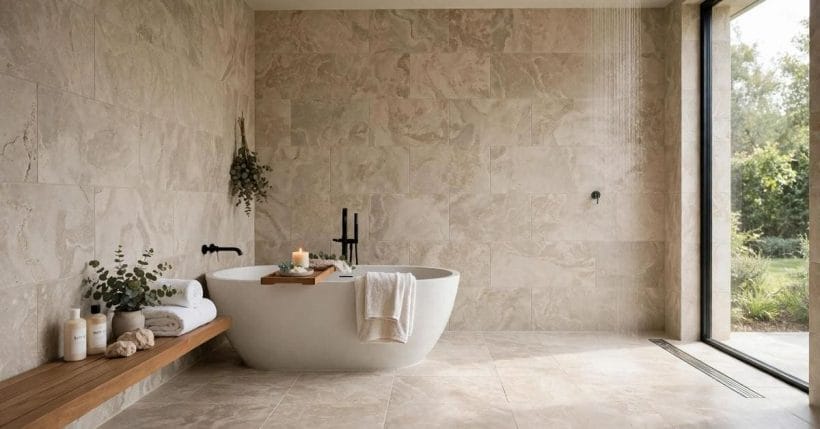
Most bathrooms hide their water behind doors, trays and seals. A wet room does the opposite: it waterproofs the whole room, lays the floor in one calm surface, and lets the shower fall where it pleases — luxury measured not in gold taps but in space, light and ease.
These seventy-five ideas cover luxury wet rooms only: open layouts and drainage, tiles and stone, showers and soaking tubs, warmth, light and storage — with waterproofing and drainage stated generally throughout, and costs kept to the honest drivers behind the calm.
Related Guide: 10 Shower Bench Ideas: Materials, Layouts, Costs and Practical Details
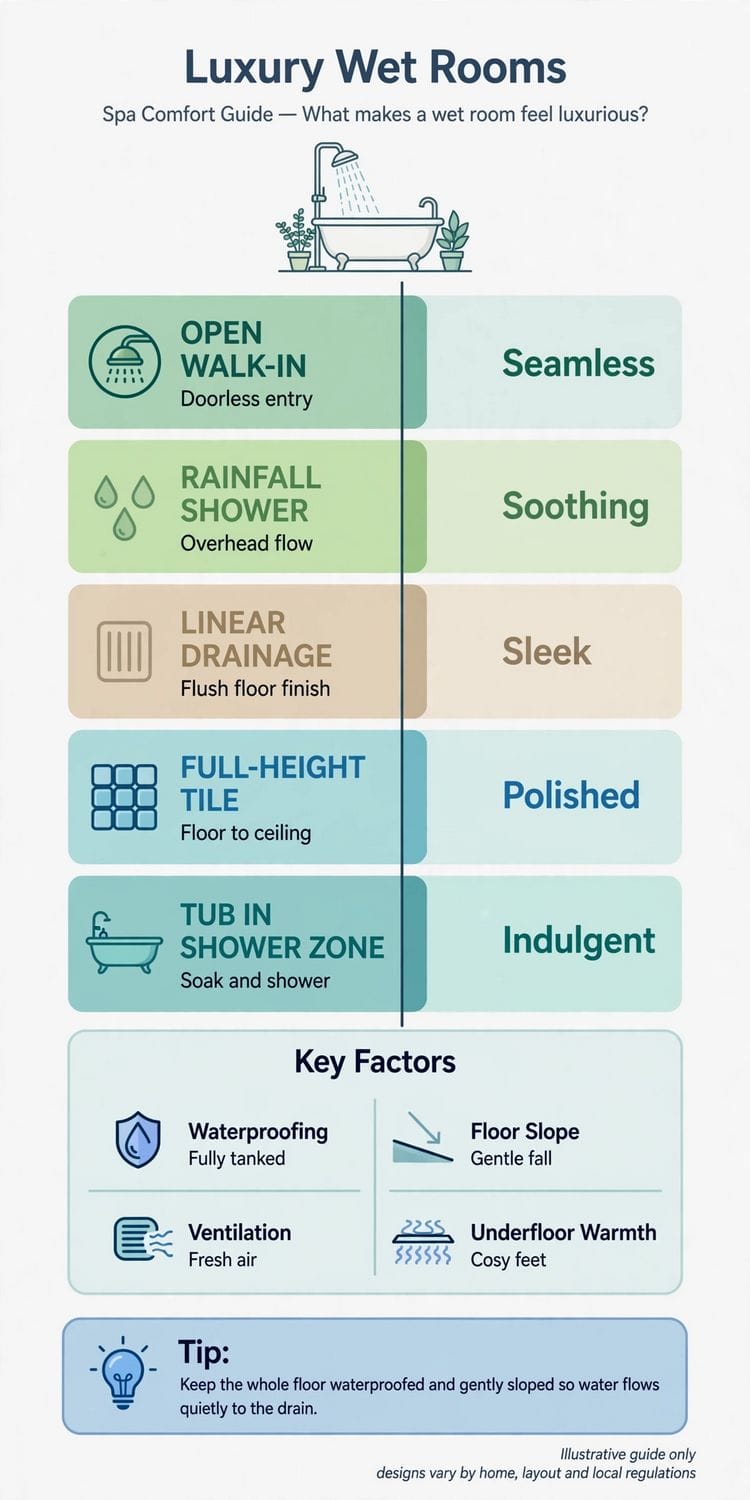
1. Wet Room Ideas at a Glance
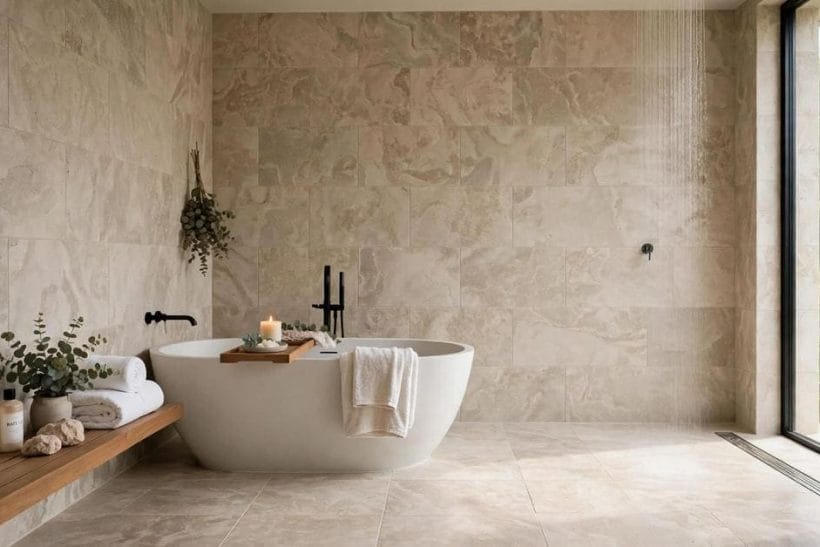
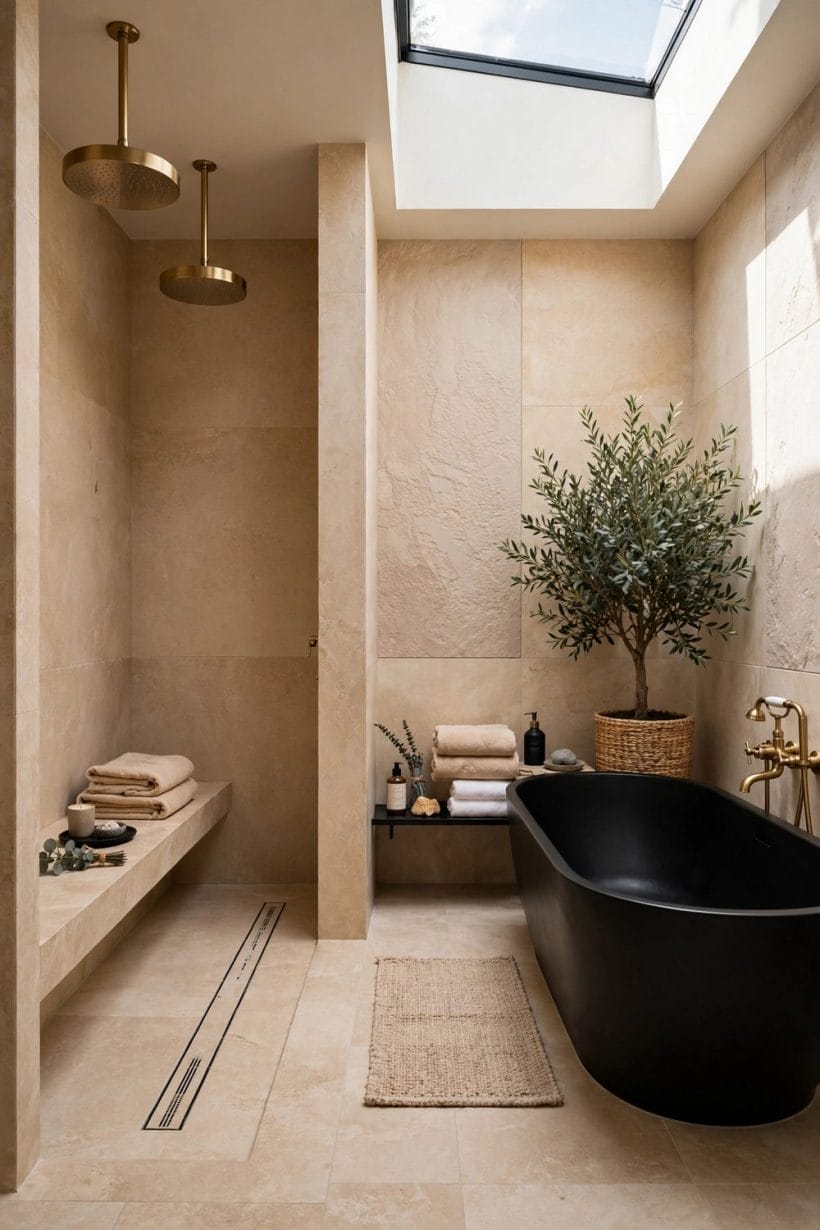
The central entity is the wet room: a fully waterproofed bathroom whose attributes are its tanked envelope, its gently sloped floor and drain, its open shower zone, its materials, its warmth and ventilation, and the way fixtures share one unbroken surface. This post is one room in a crowded bathroom family, and the splits matter: the whole bathroom in all its forms lives in the bathroom ideas pillar; the shared two-door layout belongs to jack and jill bathroom; small-room ingenuity lives in powder room ideas; the corner-fitted shower belongs to corner shower ideas; the tub itself is honoured in bathrooms with clawfoot tubs; and wall finishes in their own right fill bathroom wall tiles design. Within the wet room, the feature photograph states the luxury case: stone-look tiles running unbroken from wall to floor, a freestanding tub inside the shower’s reach, a linear drain at the glass line, and a bench of towels waiting in the dry zone. Waterproofing, falls and drainage are stated generally here — the specifics belong to your installer and your local rules, and the room only works when they are got right.
| Question | Short answer |
|---|---|
| What makes a bathroom a wet room? | The whole room is waterproofed and the floor slopes gently to a drain, so the shower needs no tray or door and water is a guest, not an escapee |
| What does luxury mean here? | Space, stone and warmth: generous room to move, beautiful surfaces underfoot, a floor that dries warm and a shower that feels like weather |
| Can a small bathroom be a wet room? | Yes — small rooms often gain the most, losing the tray and door; the layout and drainage simply need more careful planning |
| What does it cost? | Drivers only: waterproofing and floor work, drainage, tiling area, heating, glass and fixtures — priced by local installers |
| What about safety? | Slip resistance, drainage falls and electrical zoning are professional matters, stated generally here; your installer and local rules decide the specifics |
2. Layouts and Drainage: The Open Floor
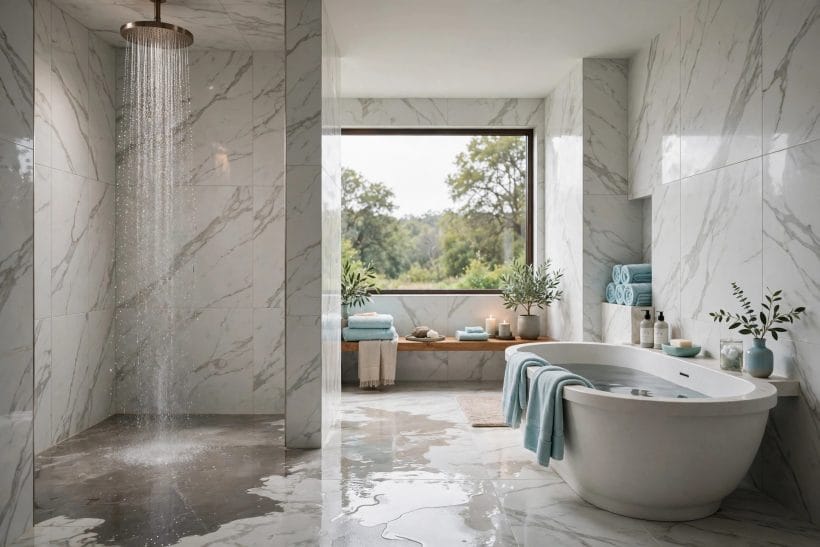
Everything in a wet room follows from one decision: the floor is a single waterproofed surface, sloping almost invisibly to its drain. Arrange the room around that slope and the luxury arranges itself.
1. The fully open plan
No screen, no door, no step — the shower zone occupies the far end of the room and the floor handles the rest. It is the purest wet room and the most demanding: drainage and falls must be planned so spray stays a pleasure, not a puddle elsewhere.
2. A single glass screen
One frameless panel between shower and dry zone is the popular compromise: the room reads open, towels stay dry, and the glass disappears against the tiling. Set its length by where the spray lands, not by symmetry.
3. A tiled nib wall as the divider
A tiled stub wall divides the zones with architecture instead of glass, gives plumbing a home, and offers a ledge for bottles one side and towels the other. In stone tile it can be the room’s most beautiful object.
4. The tub inside the shower zone
Place the freestanding tub within the shower’s splash zone, as the feature room does, and rinsing it, filling it under the shower and hosing down the corner become one easy ritual — the wet room’s signature indulgence.
5. A linear drain along the wall
A slim channel drain at the wall’s foot lets large tiles run almost level in one direction — the detail that makes marble floors practical. It also reads as a deliberate design line the water politely disappears into.
6. A central point drain, honestly tiled
The classic point drain asks the floor to fall from four sides, which small tiles handle gracefully. In a traditional scheme the drain becomes a small tiled medallion — function wearing a pattern.
7. Zoning by tile change alone
Keep the floor one material but change its format beneath the shower — large slabs in the dry zone, smaller cuts where water falls. The eye reads the boundary and no divider interrupts the room.
8. A raised dry platform for vanity and WC
In larger rooms, a shallow platform can lift the vanity zone into guaranteed dryness while the shower floor falls away below. Detail the edge kindly — architecture, not a kerb to trip over.
9. The small wet room that gains space
Remove the tray, the door’s swing and the bath’s rim from a tiny bathroom and it suddenly fits a proper shower and breathing room. Small wet rooms are not a compromise; planned well, they are the smartest small bathrooms of all.
3. Showers: Rain, Steam and Stone
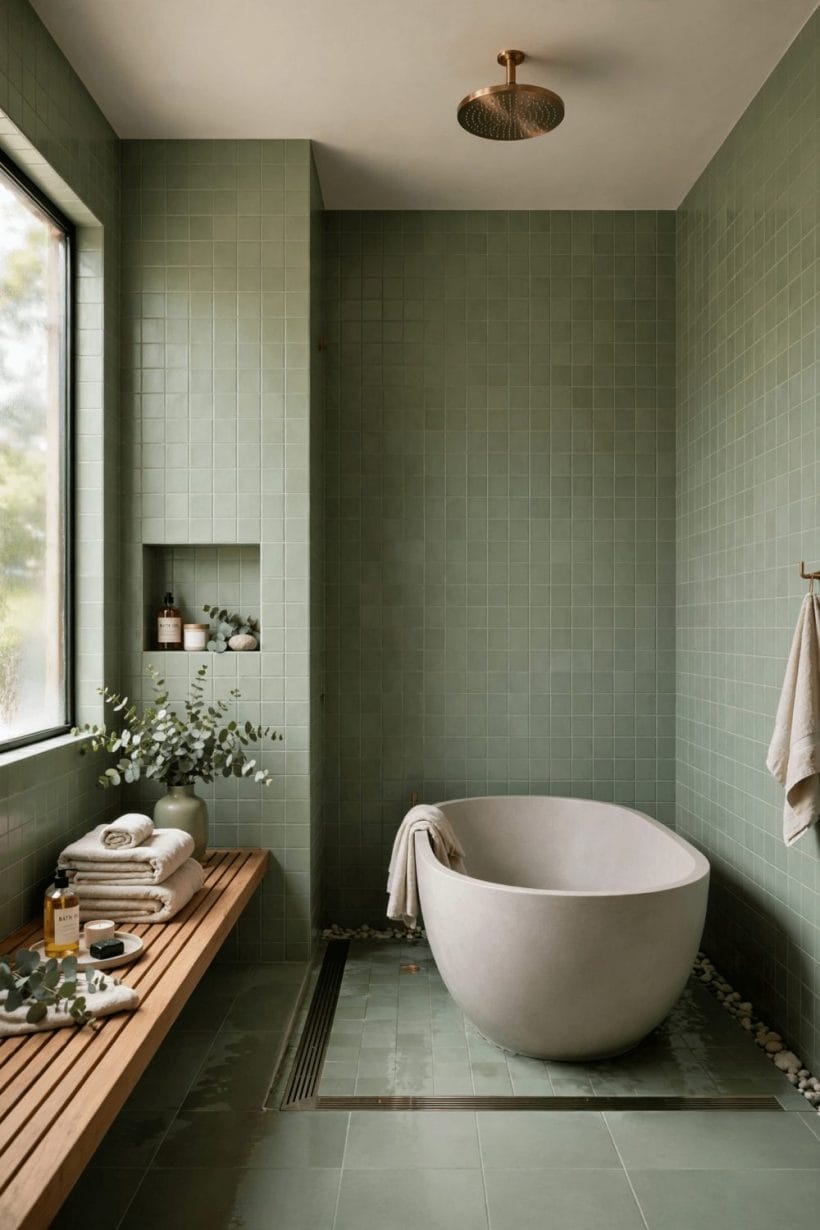
The shower is the wet room’s reason for existing, and freed from its cubicle it can finally be generous — with space, with water, with light.
10. A ceiling-mounted rain shower
Water falling straight down from a generous ceiling head is the wet room’s weather system: silent, enveloping, impossible in a cramped tray. Pair it with controls a dry hand can reach before stepping in.
11. A wall-mounted rain head on an arm
Where ceiling plumbing is impractical, a wall arm brings the rain effect to the same end. A good installer will mock the position up and let you stand under the marked spot before anything is fixed.
12. A hand shower on a slide rail
Every luxury shower needs its humble partner: the hand shower for rinsing hair, children, the tub and the room itself. Mount it on a rail so its height serves everyone, within reach of the main control.
13. Two showers, one zone
In a wide wet room, twin rain heads along one wall turn the morning routine into a shared ritual rather than a queue. The floor and drain must be planned for the doubled water — a drainage conversation, not a style one.
14. Body jets set into the wall
Rows of flush body jets bring the spa home — invigorating, theatrical, honest about their appetite for water. Treat them as the room’s treat rather than its staple; the rain head remains the daily driver.
15. A steam-ready enclosure corner
Steam asks for a sealed section, so give the wet room a glass-fronted steam corner at one end — bench inside, the rest of the room open. It is the one place a door earns its keep.
16. A tiled shower bench
A built-in bench under the water serves shaving, soaked feet, sitting in the rain head’s steam and parking the bottles gracefully. Tile it in the room’s stone and it will be used every day.
17. An open shower under a skylight
Rain below, sky above: a rooflight over the shower zone is the wet room’s most poetic luxury, safe precisely because everything below is waterproofed anyway. Morning showers gain weather of their own.
18. Controls placed outside the spray
True luxury is not getting scalded while the water warms: place controls where they can be reached from outside the falling water, and let thermostatic control keep the temperature honest.
4. Tiles, Stone and Surfaces
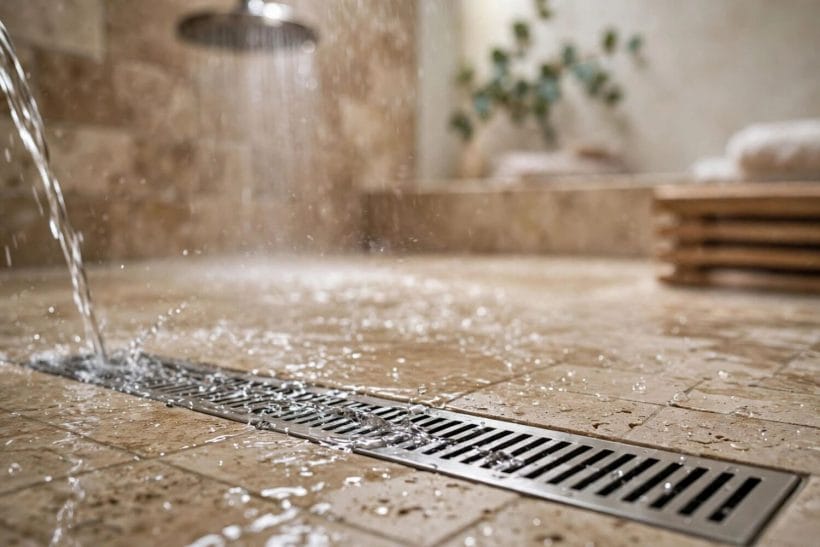
A wet room is finished wall-to-wall and floor-to-ceiling in hard surfaces, so the surfaces are the design. Choose them as you would choose a landscape — for texture underfoot as much as for the view.
19. Large-format porcelain slabs
Oversized porcelain tiles give the wet room its seamless calm: fewer grout lines, easier cleaning, and stone’s beauty without stone’s sealing diary. Porcelain’s consistency is why so many luxury wet rooms are, honestly, porcelain rooms.
20. Natural marble, sealed and loved
True marble brings veining no print can match and a cool, silky feel underfoot. It asks for sealing and a relaxed attitude to patina; households at peace with both get the most aristocratic wet room of all.
21. Travertine and limestone warmth
The feature room’s sandy stone tones show the softer path: warm, matte, forgiving of water marks, and kind to early-morning eyes. Filled and honed finishes keep the texture welcoming rather than rugged on bare feet.
22. Slate and textured stone for grip
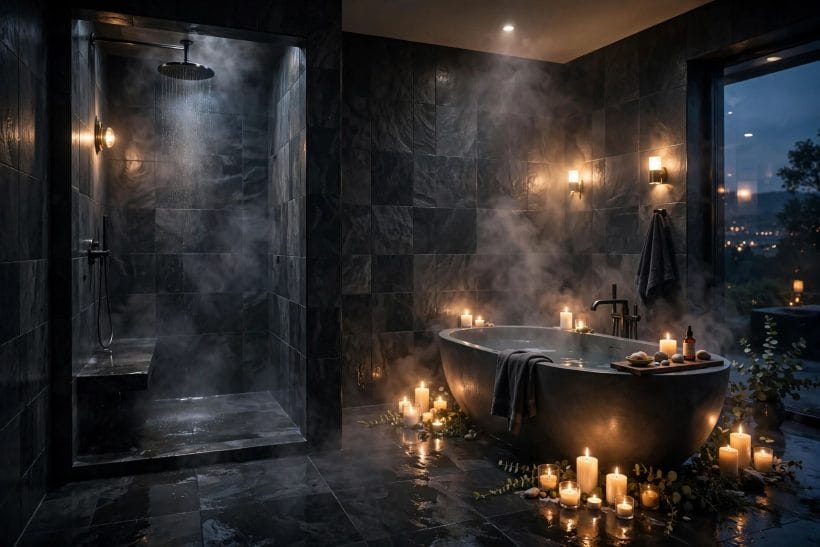
A riven slate floor grips wet feet with its natural clefts and brings moody, spa-like depth to the palette. Dark stone under a rain shower, with pale towels and timber accents, never asks for attention and always gets it.
23. Mosaic floors that follow the falls
Small mosaics bend over drainage slopes like fabric, which is why classic wet rooms wear them. Their many grout lines also grip — the original slip strategy — and a mosaic field inside large-slab walls divides the labour handsomely.
24. Timber-look tiles in the dry zone
Porcelain planks with a wood grain bring the sauna’s warmth without timber’s worries near water. Run them through the dry zone or up a feature wall and the room gains a cabin softness against its stone.
25. A single material everywhere
The boldest wet rooms use one tile for floor, walls and bench, letting light and water do the decorating. Serene and architectural, it leaves no grout-colour decisions to argue about.
26. A patterned encaustic-style floor
In a period house, patterned tiles in the wet zone marry the home’s age to the room’s modernity. Keep walls quiet and let the floor carry the pattern; the drain becomes part of the design’s geometry.
27. Grout chosen as a design line
Grout is a tiled room’s drawing ink: matched, it disappears into calm; contrasted, it grids the walls like graph paper. In a wet room it also works for its living, so choose it as carefully as the tile.
5. Tubs and Soaking in the Wet Zone
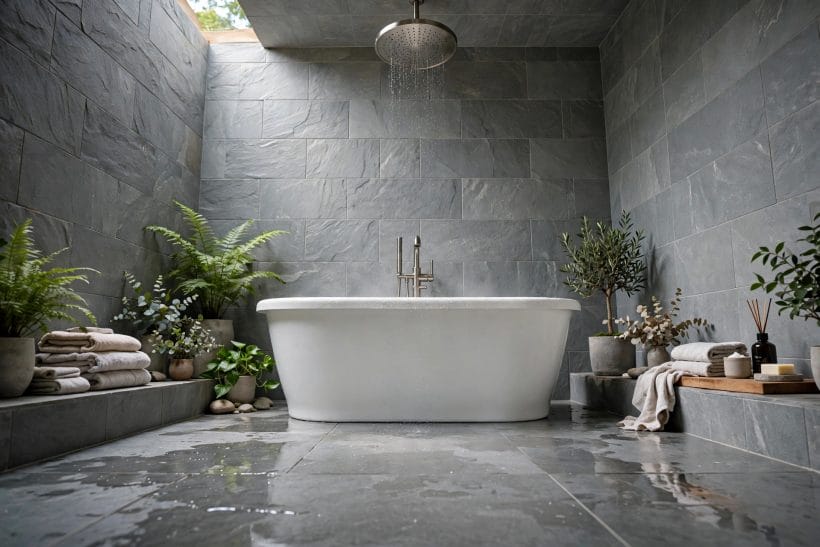
The wet room liberates the tub from the wall. Anywhere the floor is tanked, a bath can stand — and be filled, rinsed and admired from every side.
28. A freestanding oval tub as sculpture
The oval bath is the wet room’s centrepiece: soft from every angle, comfortable at either end. Give it floor space to breathe; sculpture should never be shoved against a wall.
29. A deep soaking tub, Japanese in spirit
A compact, deep soaking tub trades length for depth and warm immersion, suiting smaller wet rooms and serious soakers. A timber bench beside it completes the ritual and gives towels a dry perch.
30. A stone or composite statement bath
Heavy, matte and cool to the touch, a stone-resin bath holds heat beautifully and anchors the room like a boulder in a stream. Its weight is a planning matter — raise it with your installer early.
31. A back-to-wall bath for tight rooms
Where space is honest, a back-to-wall bath keeps the clean floor line and easy cleaning while gaining a bottle ledge along its wall edge — the pragmatist’s freestanding look.
32. A bath beneath the window
Soaking with a view is the oldest luxury there is. In a wet room the window wall is waterproofed like every other, so the tub can sit beneath it without ceremony, privacy handled by the glass choice.
33. A filler over the tub from the wall or floor
Freestanding baths fill from wall spouts, floor-standing fillers or the shower itself. Choose with the installer, and add a hand shower by the tub for rinsing — the detail every bather ends up blessing.
34. A timber bath caddy and bench pairing
Warm timber accessories soften the stone room: a caddy across the tub, a low bench for towels. In a waterproofed room they live safely near water, asking only to be oiled like any good wood.
6. Warmth, Light and Ventilation
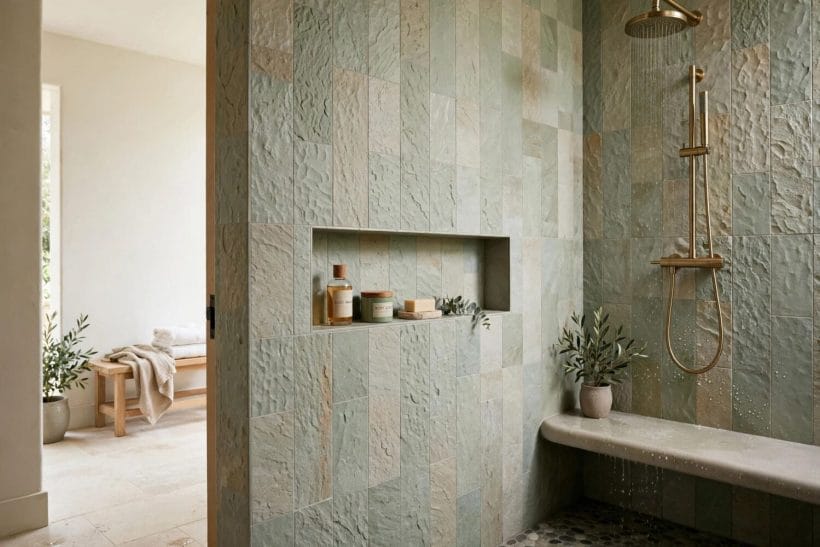
A wet room succeeds or fails on how it feels at the edges of the shower — whether the floor is warm, the light kind and the air clear when you step out of the water.
35. Underfloor heating throughout
Warmth underfoot is the wet room’s quiet miracle: it dries the floor, forgives bare feet in winter and makes the room feel serviced by invisible staff. Plan it as infrastructure, not garnish.
36. A heated towel rail in the dry zone
Warm towels belong just beyond the spray, on a rail sized for the household’s real towel count. In a wet room the rail also works as the room’s gentle background heat alongside the floor.
37. Layered, dimmable lighting
Bright light for the morning, low light for the evening soak: layered, dimmable circuits give the wet room its moods. Fittings near water are chosen for their zone — a decision for your electrician, always respected.
38. A mirror that stays clear
Heated demister mirrors end the wet room’s one petty annoyance — steamed glass after every shower. A small luxury with an outsized effect on the morning’s temper.
39. Serious ventilation, quietly
A room designed to be wet must also be designed to dry: effective extraction, professionally fitted, keeps steam and grout in good temper. Quiet fans get used; loud ones get switched off.
40. Daylight designed in
Wet rooms forgive windows other bathrooms fear, since every surface expects water. Place daylight over the shower or tub where possible; a bright wet room feels like a garden room.
41. Scent and sound, lightly
Eucalyptus hung in the shower and a plant that loves humidity finish what the tiles begin. Keep them simple and replaceable; luxury here is freshness, not equipment.
42. A dry threshold ritual
A beautiful mat, a hook at the right height, slippers waiting on the warm floor: the dry zone’s small ceremonies are where the luxury is actually felt, twice a day.
7. Vanities, Storage and the Dry Zone
Half the room is for getting dry, dressed and ready. The wet room’s discipline — everything waterproofed, everything considered — produces vanities and storage of unusual calm.
43. A floating double vanity
Wall-hung vanities keep the floor sweep unbroken and cleaning effortless, while twin basins end the morning negotiation. Timber fronts warm the stone room; stone fronts double down on serenity.
44. Shower niches tiled in
Recessed niches hold bottles without a single rusting caddy. Tile them in the wall’s material, slope their shelves a whisper so they drain, and size them for real bottles, not catalogue ones.
45. A full-height storage wall
One wall of shallow, full-height cupboards in the dry zone swallows towels, robes and the bathroom’s whole backstage. The joinery still deserves moisture-suitable materials — a specification to agree with your maker.
46. A bench that stores
The bench earns double pay as storage — baskets beneath, towels in a lidded section — and as the room’s seat for dressing and supervising bath-time. Fixed furniture keeps the floor plan serene.
47. Open shelving in the dry zone
Open shelves display the beautiful third of a bathroom’s contents — rolled towels, a plant, the good bottles — while cupboards hide the rest. In a stone room, timber shelves are often the missing warmth.
48. Hooks, rails and the robe question
Robes and towels in use need air, not cupboards: a line of handsome hooks on the dry wall, near the warmth, beats a crowded rail. It is a small decision with daily dividends.
49. A laundry basket that belongs
Give the laundry a designed home — a basket in the dry zone, a lidded bench section — and the wet room stays the calm temple it was built to be, even on wash day.
8. Safety, Waterproofing and Professional Honesty
A wet room is a promise: water everywhere, harm nowhere. Keeping that promise is construction, not decoration — and this section states the principles generally, because the specifics are professional territory.
50. The tanked envelope, whole and unbroken
Waterproofing — tanking — must wrap floor and walls as one continuous envelope before a tile is laid, corners and junctions treated as the critical points they are. Everything beautiful stands on it.
51. Falls that work without being felt
The floor’s slope must drain completely yet go unnoticed underfoot. Getting both is the installer’s core skill — ask how they form and check their falls, and let the answer guide your choice.
52. Slip resistance chosen deliberately
Wet bare feet need honest grip: tiles carry slip-resistance ratings, and the right one for a wet room floor is a specification to settle with your supplier and installer — not to guess from a photograph.
53. Drainage capacity matched to the shower
A rain head’s generous flow must meet a drain sized to carry it away happily. Capacity is a design-stage plumbing calculation — invisible when right, unforgettable when wrong.
54. Electrical safety by the book
Water and electricity share the wet room under strict rules about what may be fitted where. Sockets and circuits are installed by qualified electricians to your local code — where ‘stated generally’ matters most.
55. Grab rails that look like design
A beautiful rail near the tub and in the shower serves every age and every temporary injury, reading as design rather than equipment in brushed metal. Plan its fixing points while walls are open.
56. Water temperature kept honest
Thermostatic control, professionally set, keeps showers steady and protects children and older skin from sudden heat — invisible, unglamorous, and one of the kindest specifications in the room.
57. A professional team, properly questioned
Wet rooms reward specialists: ask installers for wet rooms they have built, and agree in writing who owns the waterproofing guarantee. The cheapest quote is often the one that skips the tanking conversation.
9. Colour, Mood and Spa Styling
With the engineering settled, the wet room becomes a mood: stone palettes, hotel discipline and a little greenery turn a waterproofed box into the room guests ask about.
58. The stone-neutral palette
Sand, bone, warm grey and soft white — the feature room’s palette — is the wet room’s classic register: calm in every light, kind to every skin tone, immune to fashion’s weather. Texture provides the interest.
59. A dark, cocooning wet room
Slate, charcoal tile and low light make a womb-like spa of the wet room — dramatic in the evening, cool in summer. Balance the dark with warm light and pale towels so the mood stays sanctuary.
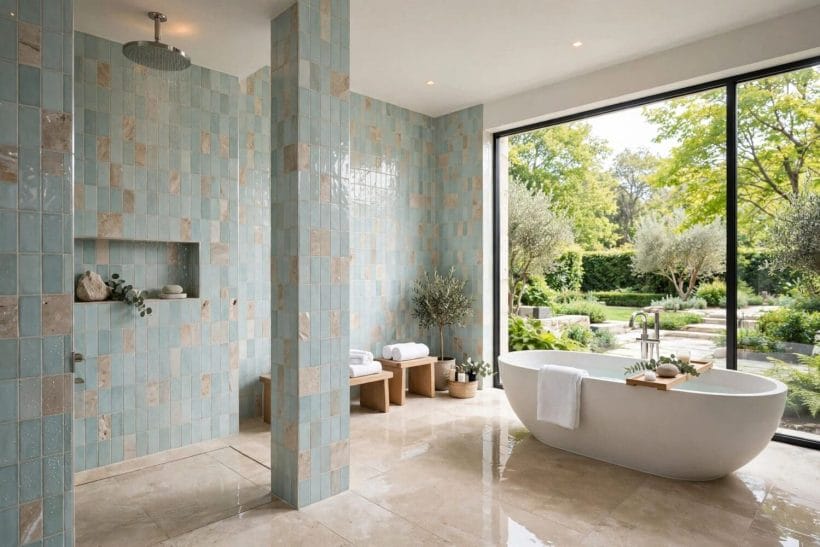
60. A coastal palette of white and blue
White tiles, sea-glass blues and bleached timber bring the beach house indoors, and a wet room wears the theme honestly — it is, after all, a room for water. Keep the blues in towels for easy changes of heart.
61. Terracotta and Mediterranean warmth
Sun-baked tones and handmade-look tiles give the wet room a southern soul, beautiful with brass-toned fittings and linen towels. The palette flatters morning light and warms winter showers.
62. Black fittings against pale stone
Matte black taps, drains and frames draw the eye exactly where the design wants it, like punctuation. Against pale stone the contrast is crisp and hotel-smart; keep black to the fittings.
63. Brass and bronze warmth
Warm metals soften stone’s coolness and age gracefully in steam when chosen in suitable finishes. Paired with travertine or marble, they give the wet room its boutique-hotel signature.
64. Plants that love the steam
Ferns, orchids and trailing plants that thrive on humidity turn the wet room into a glasshouse with plumbing; the shower’s warm mist is free care. Few rooms make plants this happy.
65. Hotel discipline in the details
Rolled white towels, decanted bottles, a robe on a hook — the five-star wet room is mostly tidiness performed daily. Build storage that makes the tidiness easy, and the room keeps its serenity.
66. Aromatherapy from the garden
A bundle of eucalyptus tied at the shower head perfumes the steam without a single product. It costs almost nothing and is replaced in a minute when it fades.
67. Art and objects that can get wet
A stone stool, a ceramic vessel, a framed print in the dry zone — art civilises the wet room. Choose pieces that shrug off humidity, and let one beautiful object do the work of ten accessories.
10. Costs, Planning and Choosing Well
The last attributes are practical: where a wet room’s money honestly goes, how to plan the work without drama, and how to choose the team this unforgiving room deserves.
68. Cost driver: the waterproofing and floor build-up
Tanking, floor forming and drainage are the wet room’s hidden third — invisible in photographs, decisive in budgets and outcomes. Money moved here from visible luxuries is the best-spent in the project.
69. Cost driver: tiling area and material
A wet room tiles nearly everything, so per-metre choices multiply: slab porcelain, natural stone and mosaics each carry material and labour stories. Agree tile, pattern and grout before the quote.
70. Cost driver: glass, brassware and heating
Screens, quality fittings and underfloor heating are the visible luxuries — and the parts touched daily. They are the honest place to spend once the envelope is funded.
71. Planning the sequence with one team
Wet rooms fail at handovers, so a single team owning design, waterproofing, tiling and plumbing in sequence is worth real money. If trades are separate, name the guarantee’s owner before work begins.
72. Living through the build
A bathroom out of action is a household event: agree the programme and the temporary arrangements before the first tile lifts. The room is worth the disruption; surprises about duration are not.
73. Checking the finished room
Before final payment, run the shower long and watch the drain keep up, check the floor dries without ponds, and inspect corners with a dry hand and a bright light. A good installer welcomes exactly this test.
74. Care: squeegee, ventilation, kindness
Daily care is a minute with a squeegee and a running fan; periodic care is grout and sealant attention as your installer advises. Kept this way, the room dries fast and ages like a hotel’s best.
75. The honest question: is a wet room right for this house?
Wet rooms suit households that shower more than they soak and love open space. If toddlers need a shallow bath nightly or the floor structure fights the falls, a beautiful conventional bathroom may serve better — knowing that is also luxury.
Final Considerations
Before the tiles are chosen, stand in the empty bathroom at shower hour and rehearse the room: where the water falls, where the towel waits, how the floor feels at its coldest corner. A wet room is choreography as much as construction, and an hour spent walking its routine in your head is the cheapest design work in the project — the moment a catalogue spa becomes your own morning’s answer.
A wet room earns its luxury by being engineered once and honestly: one unbroken waterproofed envelope, falls that drain without being felt, a drain that keeps up with the rain, warmth underfoot. Keep the family splits clean — the whole bathroom in its pillar, shared layouts with the jack and jill — and let this room be the pure article: open, calm, water exactly where it is invited. Chosen that way, it becomes the room the house is quietly proudest of.


0 Comments