

A bathroom can have warm water, a good shower and a handsome finish, yet still feel unkind the moment you step out — and that brief, chilly gap is exactly where a ceiling heat lamp has kept its place.
Yes, heat lamps are still fitted in bathrooms. This guide answers the question honestly, sets them beside the other warmth options in general terms, and works through the comfort, ventilation and checking questions that matter — with no fitting instructions of any kind.
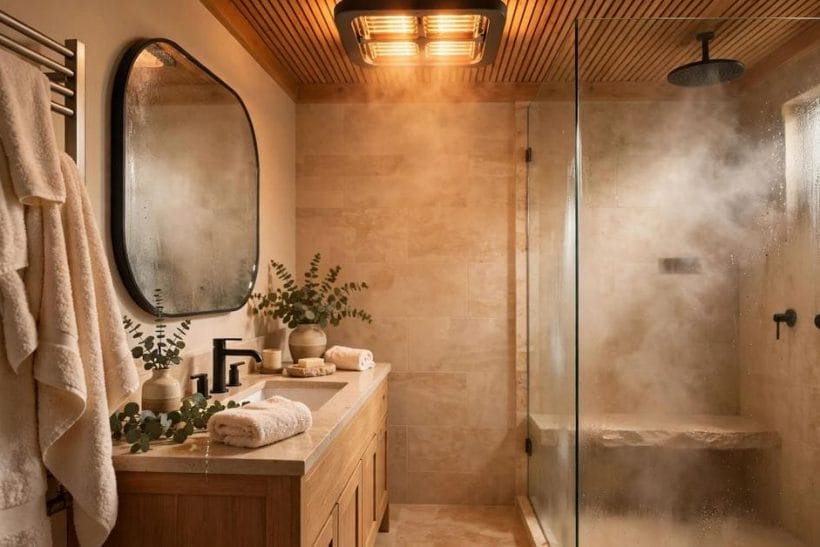
1. Bathroom Heat Lamps at a Glance
Scope first. This post owns one question: whether bathroom warmth should come from a heat lamp, from another source, or from a pairing of sources, judged on comfort and everyday use. Wider room planning sits elsewhere: the broader bathroom ideas cover whole-room design, and everything below stays with warmth alone. One boundary runs through the whole guide, stated plainly here: any electrical work in a bathroom belongs to a qualified electrician. This guide discusses choices and questions only — never how any fitting is put in place.
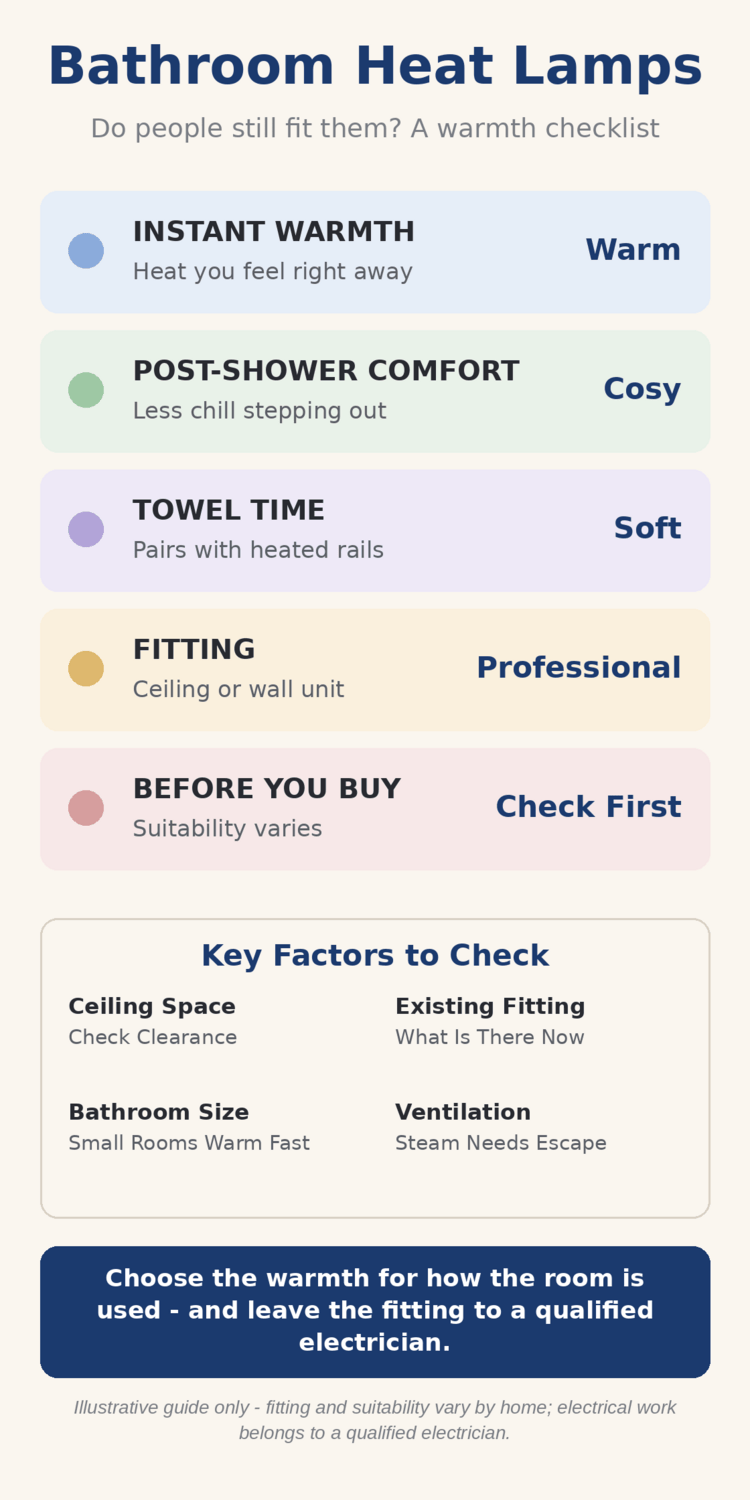
The five rows in the table are the whole decision in miniature. Work down them in order and most buying conversations become easy to compare.
| Aspect | Character | What it means |
|---|---|---|
| Instant Warmth | The Immediate Glow | Radiant warmth felt on the skin straight away when the lamp is on, rather than warmth that slowly fills the whole room |
| Post-Shower Comfort | The Stepping-Out Moment | Warmth aimed at the minutes after a shower or bath, when a cold room feels at its coldest |
| Towel Time | The Supporting Act | A heat lamp warms people, not towels, so dry and welcoming towels usually call for a heated rail alongside |
| Fitting | Qualified Hands Only | Any electrical work belongs to a qualified electrician, and placement is a professional judgement, not a home task |
| Before You Buy | The Honest Check | Room size and use, ventilation, controls and the other warmth options weighed calmly before any choice is made |
2. What a Heat Lamp Is
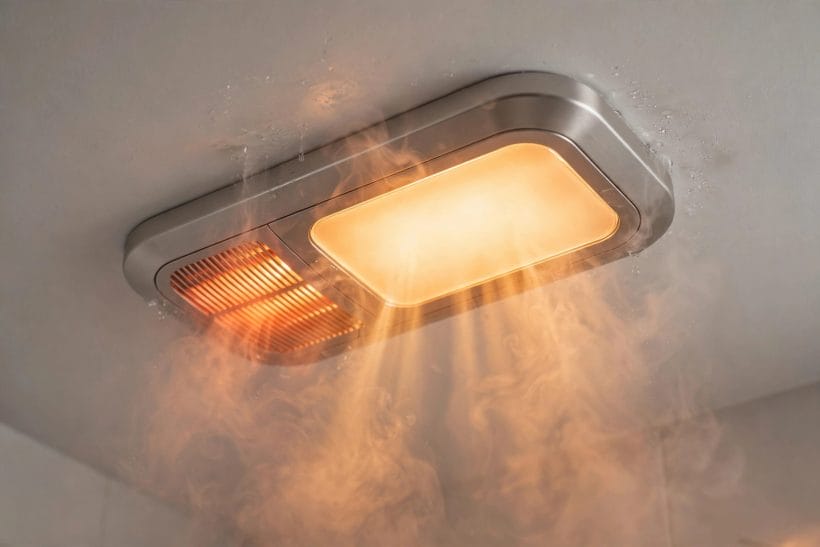
A bathroom heat lamp is a ceiling fitting that gives out radiant warmth, felt directly on the skin much as sunshine is felt outdoors, rather than by slowly warming all the air in the room first. That single difference explains both its lasting appeal and its limits.
Radiant warmth, felt where you stand
Stand under a heat lamp and the warmth arrives at once, aimed at the person below it. Move away and the effect fades just as quickly. A heat lamp is therefore warmth for a place and a moment — the spot where you dry and dress — not a way of making an entire cold room feel warm in every corner.
Often part of a combined ceiling unit
In many bathrooms the heat lamp shares a ceiling fitting with a light and sometimes with an extractor for moist air. That companionship is worth noticing because the three jobs — warmth, light and ventilation — are often planned together even when they are used at different moments. Whether a combined unit or a lamp on its own suits your room is a choice to discuss, not to guess, and any electrical work involved belongs to a qualified electrician.
A long-standing fitting, still current
Heat lamps are not a novelty that came and went. They have been fitted in bathrooms for a long while, they remain on sale, and they are still chosen today — most often in modest bathrooms where instant warmth after a shower matters more than heating an empty room for hours. Their survival is not nostalgia; it is that the job they do, instant radiant warmth, is still a real job worth doing well.
3. Why Bathrooms Feel Cold After a Shower
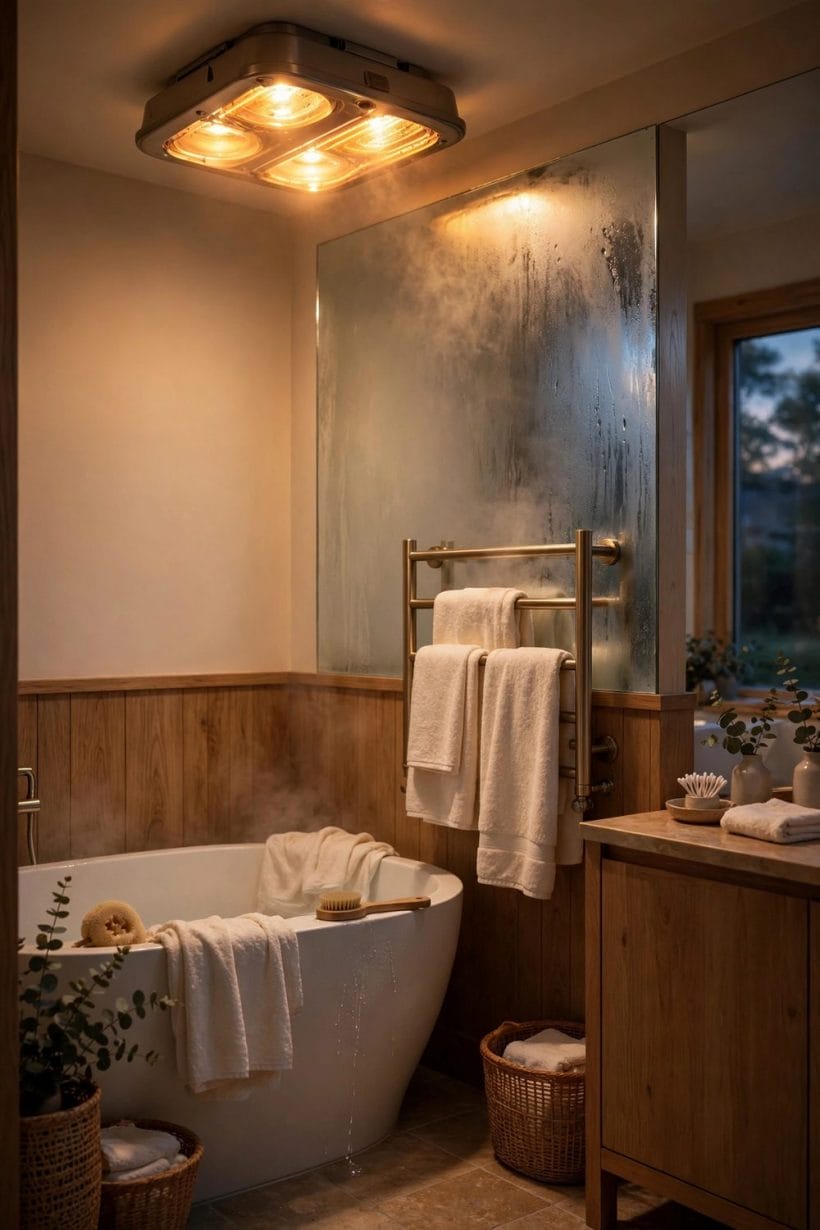
Understanding the chill helps you choose the right answer to it. A bathroom feels cold for ordinary reasons: hard surfaces, moist air, bare skin and warmth escaping quickly. The compact rooms in the small bathroom ideas collection show how little space there often is to solve it in, which is why the choice of warmth source matters so much.
Hard surfaces hold the cold
Tile, stone, porcelain and glass are chosen for bathrooms because they shrug off water, but they feel cool to the touch and give little warmth back. A carpeted room cushions a temperature drop; a tiled bathroom announces it. Floors feel coldest of all because bare, damp feet meet them directly.
The stepping-out moment is the worst moment
During a shower you are surrounded by warm water and steamy air, so the contrast on stepping out is sharp. Wet skin loses warmth quickly as moisture dries on it, and a draught that would go unnoticed at any other time feels bitter just then. Warmth options should be judged at exactly this moment, because it is the moment the bathroom is actually used undressed and unhurried.
Warmth that arrives late is warmth wasted
A source that takes a long while to make a room comfortable asks you to plan ahead, to warm an empty room, or to accept the chill anyway. For a room used in short visits, that delay is the central design problem of bathroom warmth — and why quick-responding options keep being chosen even in homes heated in slower, steadier ways.
4. The Warmth Options Compared
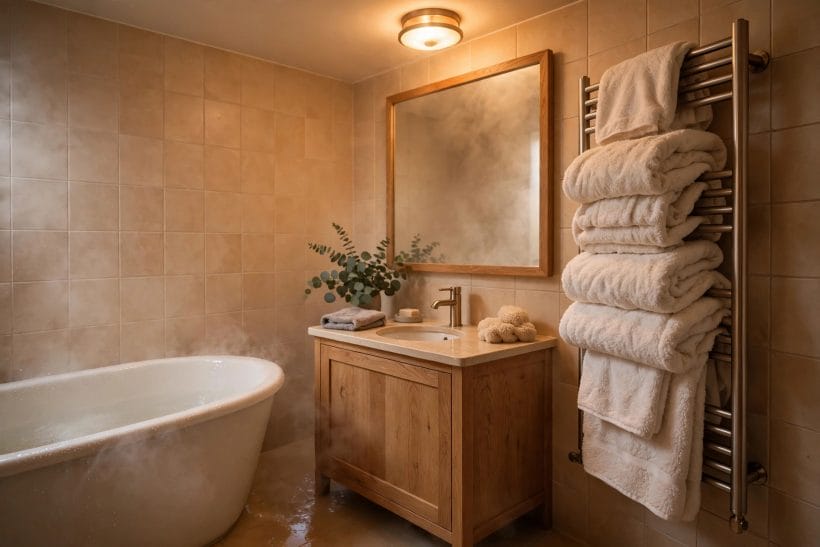
No option wins on every count, and honest comparison is kinder than a league table. Layout guides such as the 5×8 bathroom layout show how tightly services, sanitaryware and storage already compete for room, so each warmth option has to earn its place in general terms: what it warms, how quickly, and what it asks of the room in return.
Ceiling heat lamps
A heat lamp warms the person, instantly, in one favoured spot, and asks for nothing at floor or wall level. It does little for cold floors, little for towels, and little for a room that stays damp. As the single answer in a small, well-ventilated bathroom used briefly, it can be entirely sufficient; as the only answer in a large or lingering bathroom, it usually feels like a partial one.
Heated towel rails, underfloor warmth and radiant panels
A heated towel rail warms towels first and the room gently second. Underfloor warmth answers the cold-floor complaint directly and spreads an even, background comfort, but it responds slowly and suits planned routines rather than sudden visits. Radiant panels give a steadier, broader glow than a lamp, warming a wider area less intensely. Each is a different temperament, and none is simply a better or worse lamp.
Fan heaters and whole-room warmth
A fan heater warms the air itself, so the whole room slowly becomes comfortable, corners included, at the cost of noise, moving air and a slower start. Warming the bathroom from the home’s general heating follows the same logic at a larger scale: even and thorough, but tied to how the rest of the house is heated. Air-warming options suit long soaks; radiant options suit short, sharp visits.
5. Responsiveness: Warmth Exactly When It Is Wanted
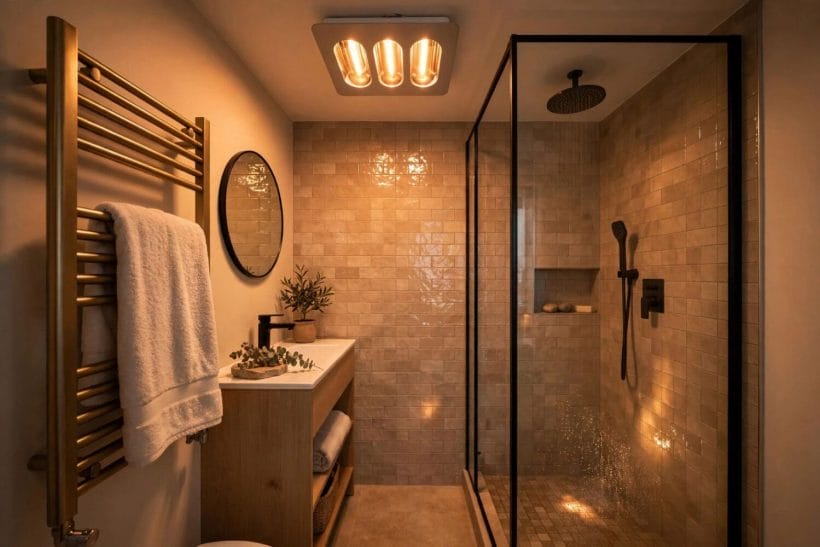
If one quality explains why heat lamps are still fitted, it is responsiveness. Bathrooms are used in bursts — a morning shower, a child’s bath, a quick wash before bed — and warmth that matches that pattern avoids paying to heat an empty room.
Instant on, instant off
A heat lamp is at full effect as soon as it is switched on and stops the moment it is switched off. There is no warming-up period to schedule and no lingering output after you leave. That honesty is satisfying in daily use: the warmth belongs entirely to the minutes you are actually in the room, and nothing is spent before or after those minutes.
Slower sources suit steadier routines
Underfloor warmth and whole-room heating behave oppositely: slow to arrive, steady once present, and most at home where the bathroom is used at predictable times or for long, unhurried baths. Rooms below ground level, like those in the basement bathroom ideas collection, often lean towards these steadier sources because the chill there is constant rather than momentary. Matching the source to the rhythm of use matters more than any single feature.
6. Towel Rails and Pairing Warmth Sources
Many good bathrooms refuse to choose a single winner. A heat lamp for the person, a rail for the towels, and modest background warmth for the room itself divide the work sensibly, and each part can then be modest because none is being asked to do everything.
What a towel rail actually does
A heated rail’s first job is towels: dry, airy and pleasant to reach for, rather than damp and slow to dry between uses. Its second job is gentler — taking the edge off the room’s chill near where it stands. Judged as a room heater alone it disappoints; judged as part of a pairing it is often the piece that makes the whole bathroom feel cared for.
Pairing without duplication
Pair sources that do different jobs rather than two that do the same job twice. A lamp plus a rail is a natural pairing; a lamp plus underfloor warmth answers both the stepping-out moment and the cold floor. Before adding any source, say plainly which complaint it answers. If no complaint can be named, the bathroom probably does not need it, however appealing it looks in a showroom.
Storage and finishes share the same walls
Warmth is planned on the same walls and ceiling as everything else, so rails, cabinets and mirrors have to agree on space. The pale, easy-clean schemes in the white cabinets bathroom ideas show how crowded that planning can become in a small room. A warmth plan drawn alongside storage, rather than after it, avoids the familiar outcome of a rail where a cabinet wanted to be.
7. Ventilation, Moisture and Warmth Together
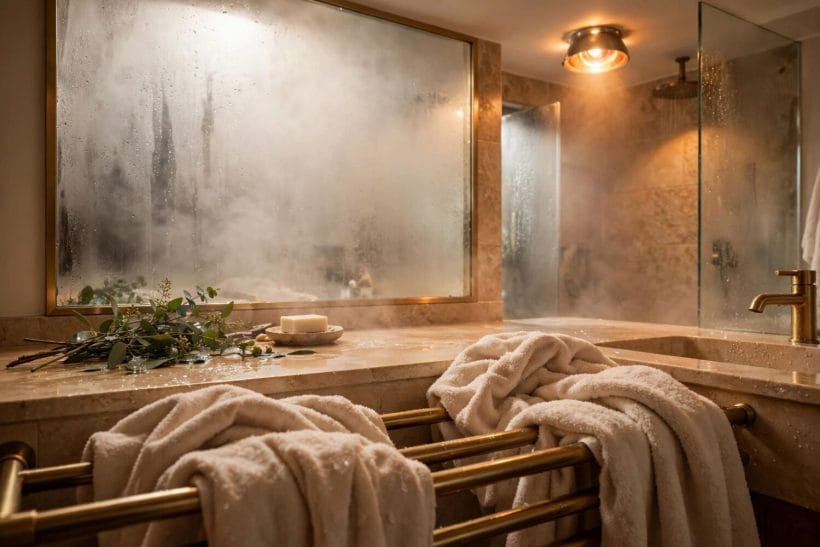
Warmth never works alone in a bathroom, because every shower fills the room with moist air that has to go somewhere. A warm but damp bathroom grows musty and tired-looking; a well-ventilated but cold one is merely unpleasant. The two systems succeed or fail together.
Moist air needs a way out
Extraction during and after bathing carries moist air away before it settles on cold surfaces as condensation. Warmth helps in a supporting role — warmer surfaces collect less condensation than cold ones — but warmth is not a substitute for extraction. Any plan that discusses a heat lamp without discussing how moist air leaves the room is only half a plan.
Warmth can hide a moisture problem
A room that feels cosy can still be quietly damp behind cabinets, around seals and in corners the warmth never gets to. Treat persistent mould, peeling finishes or a lingering damp smell as a ventilation question first and a warmth question second. Choosing stronger warmth to mask those signs leaves the cause untouched.
Short warmth, honest ventilation
The happiest pattern for many bathrooms is brief, responsive warmth for people, paired with extraction that runs while moisture is present and a little while afterwards. Each system does the job it is good at, neither is oversized, and the room dries as reliably as it warms. When you discuss the room with a qualified electrician, keep ventilation in the same conversation, because the fittings often share the ceiling and always share the room.
8. Controls, Timers and Everyday Habits
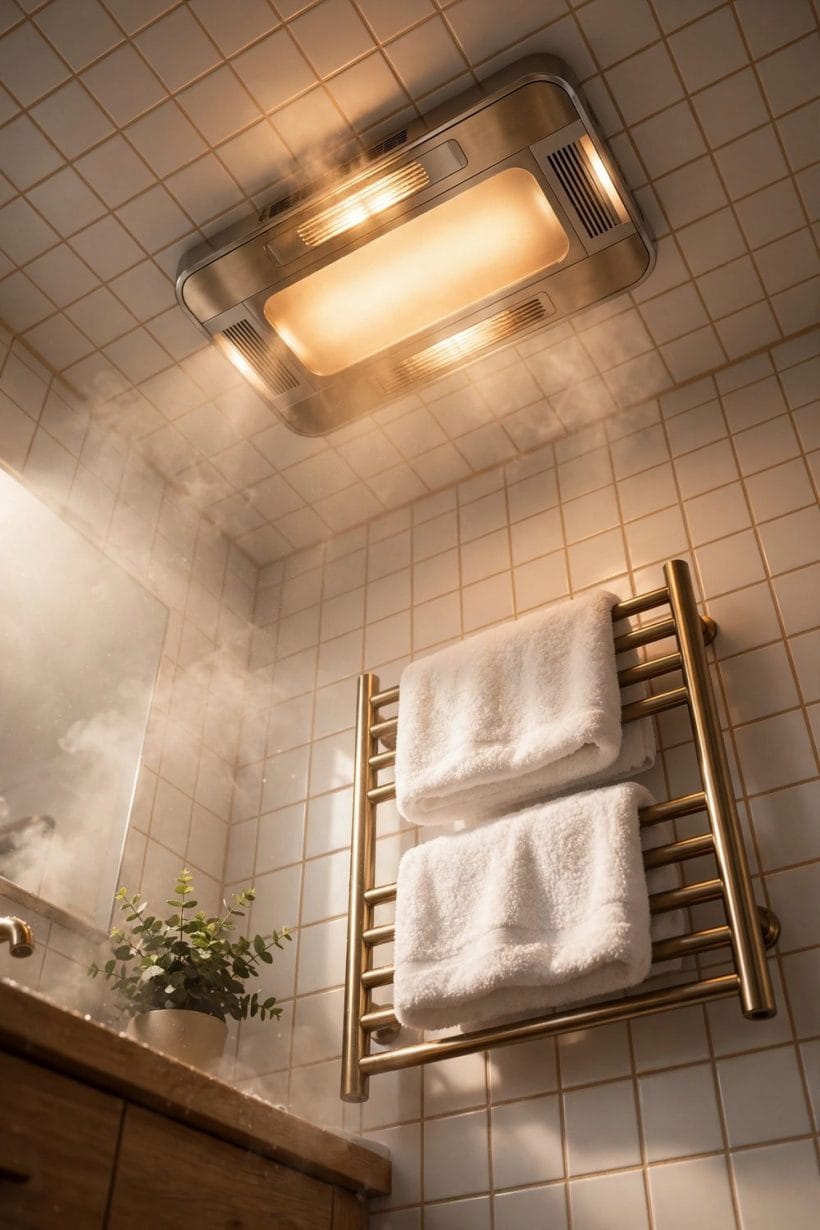
How warmth is switched matters almost as much as which source provides it. A good source with careless controls gets left on in empty rooms or forgotten on cold mornings; a modest source with thoughtful controls feels generous every day.
Simple controls get used well
The best arrangement is the one every household member understands without instruction: clearly placed switching, an obvious way to choose warmth alone or light alone where a combined fitting offers both, and nothing that invites guesswork with wet hands. Controls near the vanity deserve the same care as the fittings chosen from the bathroom vanity buying guide — everyday touchpoints repay thought because they are used daily, in a hurry, and half asleep.
Timers suit forgetful reality
Warmth that turns itself off after a sensible interval forgives the universal habit of leaving a bathroom in a rush. Timed control suits heat lamps particularly well, since their whole virtue is brief, intense use. Whether a timer, a delay or a simple manual habit fits your household is a lifestyle question, and it belongs in the conversation with a qualified electrician, who can say what arrangements are appropriate for the room.
9. Running-Cost Drivers in Plain Terms
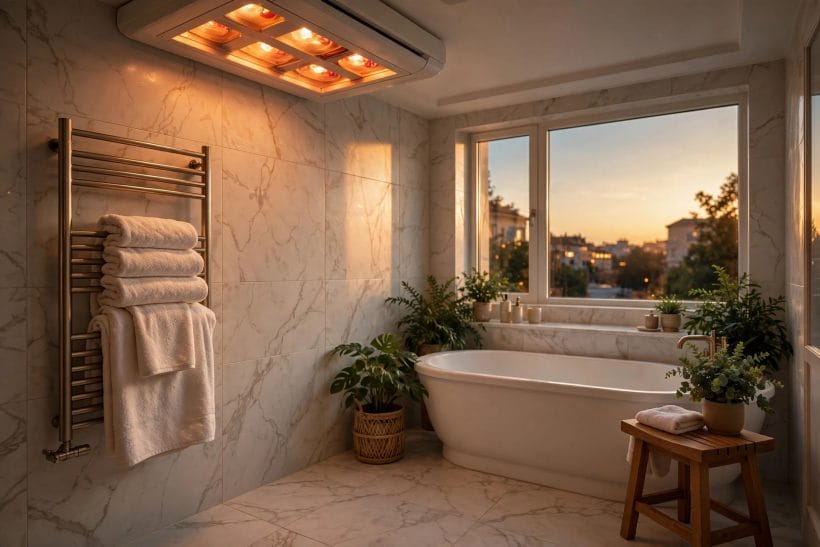
Running cost in a bathroom is rarely decided by the fitting alone. It is decided by how powerful the source is, how long it runs, how often it runs, and how much of its output is spent warming an empty room. Those drivers can be compared honestly in words, without pretending to a precision no general guide can offer.
Duration beats drama
A strong source used briefly can cost less to run than a gentle source left on for hours, because time multiplies everything. This is the quiet strength of responsive warmth: its running time is measured in the minutes of an actual shower routine. Background sources earn their keep differently, by long, steady running — which is exactly why their cost depends so heavily on routine and on how often the room is truly used.
Wasted warmth is the real expense
Heating a bathroom nobody is in, warming a large room for a brief visit, or running two sources where one would do — these habits cost more than any single choice of fitting. Reading your own household pattern honestly, and choosing controls that match it, saves more than agonising over small differences between similar fittings.
Whole-room choices, whole-room bills
The larger the space a source tries to keep warm, and the longer it tries to keep it warm, the more it will cost to run — whatever the source. Small bathrooms therefore forgive many choices, while large, high-ceilinged or frequently used family bathrooms reward careful pairing: instant warmth where people stand, background warmth only as steady as the routine justifies, and nothing running without a reason.
10. When a Heat Lamp Suits, When It Does Not, and What to Ask
By now the pattern should be clear: a heat lamp is an excellent answer to a particular kind of bathroom and a poor answer to another. The calm, lingering rooms in the spa bathroom ideas collection make the contrast vivid — the longer and more leisurely the bathing, the more the room itself, not just the bather, needs warming.
When a heat lamp suits
A heat lamp suits a small to modest bathroom used in short visits, where the stepping-out moment is the main complaint, the floor is not the chief grievance, and ventilation is already sound. It suits households that value instant, switch-on comfort over a room kept warm for hours, and rooms where wall and floor space for other sources is already spoken for by storage and sanitaryware.
When another answer leads
It does not suit, alone, a large or lofty bathroom, a room used for long soaks, a household whose main complaint is cold floors or damp towels, or any room where moisture already lingers. There, underfloor warmth, a rail, a panel or whole-room warmth should lead, with a lamp at most in support. And wherever fitting is discussed, the same plain rule applies: any electrical work belongs to a qualified electrician.
Questions to ask an electrician
Ask whether the room, its ceiling and its existing circuits suit a heat lamp or a combined unit; where warmth would be best placed for the person using the room; what controls or timed arrangements would suit the household; how the lamp would work alongside extraction; and whether a rail or another source would answer part of the need better. Ask, too, what the fitting’s maker states about its intended setting, and keep the answers with the room’s other paperwork.
Final Considerations
Heat lamps are still fitted because the moment they serve — stepping, wet and chilly, out of a warm shower into a hard-surfaced room — has not changed, and no slower source answers that moment as directly. Judged as instant, personal, short-lived warmth, they remain a sound and honest choice, especially in smaller bathrooms with sound ventilation.
Judge them, though, as one option among several: rails for towels, underfloor warmth for cold floors, panels and air-warming for rooms that are lingered in. Choose by the complaint you actually have, pair sources that do different jobs, keep controls simple, and leave every part of the electrical work to a qualified electrician. Warmth chosen that way feels less like a purchase and more like the bathroom simply being kind.

0 Comments