
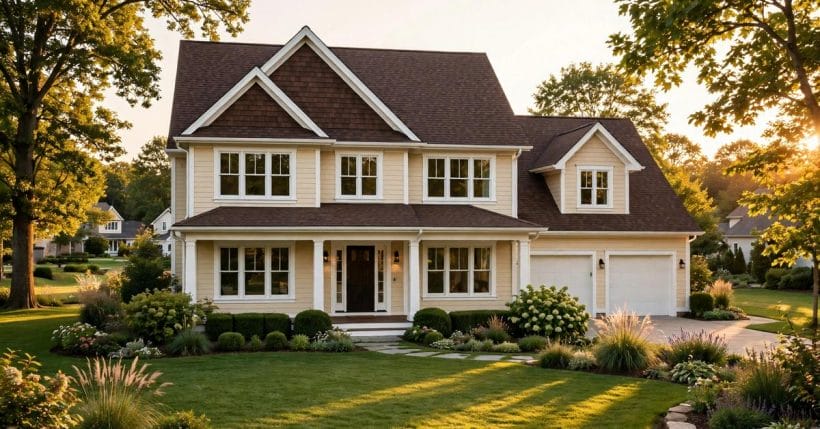
A brown roof is a commitment measured in decades, and it quietly chooses your colour palette for you: warm, grounded and earthy, it flatters some wall colours into elegance and fights others on sight. The good news is that the colours it loves are among the most liveable in the whole exterior book.
This collection works through the pairings that succeed — walls, trim and front doors set against brown roofing of every kind, from shingles to metal to tile. It stays with the roof-led pairing only; exterior colours in general, for every roof, live in the wider collections.
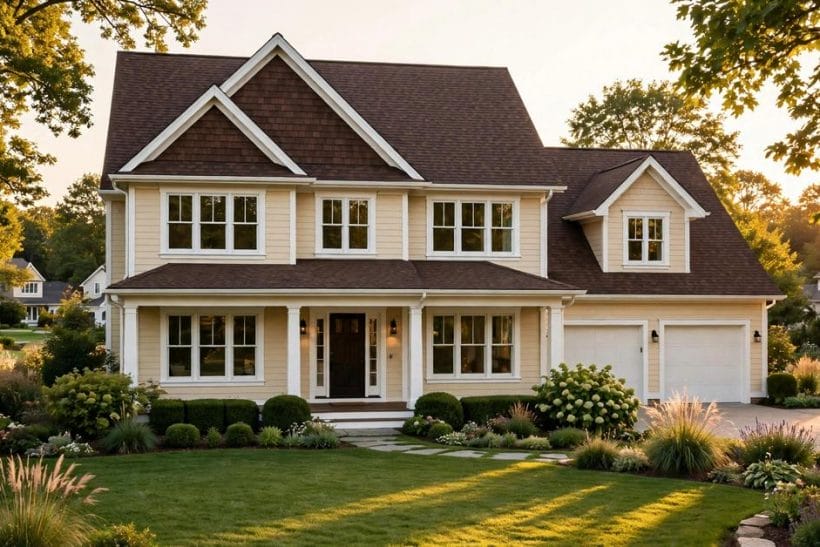
1. Pairings at a Glance
Four pairings answer most brown roofs, and the table below is the whole post in miniature. Exterior design in its full breadth — every roof, every style — is gathered in the exterior home ideas pillar; this post keeps one question only: what belongs under a brown roof.
| Pairing | Character | What it means |
|---|---|---|
| Cream Siding | Soft and timeless | Warm |
| Sage Green | Calm and natural | Fresh |
| Warm Grey | Modern and balanced | Classic |
| Red Brick | Rich and grounded | Bold |
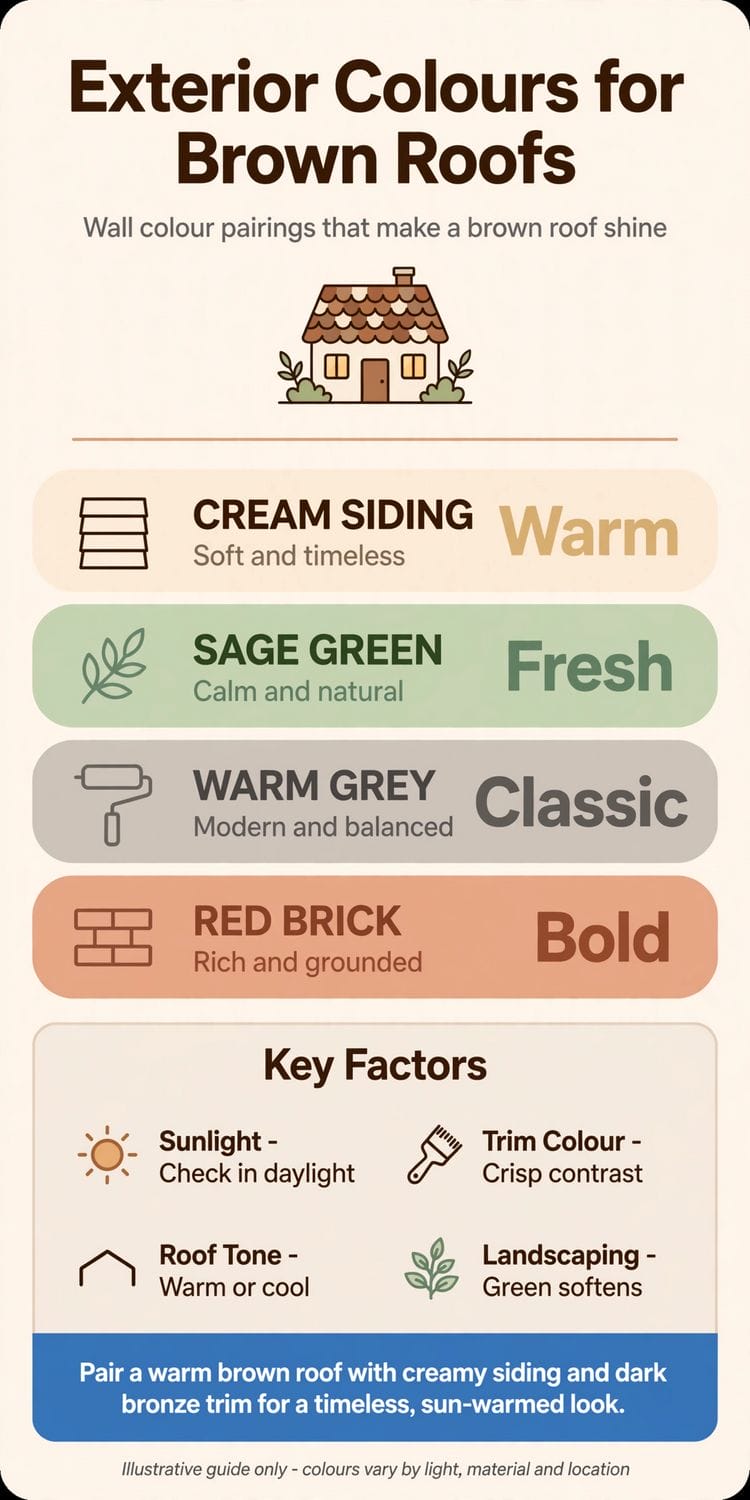
Four factors govern every scheme here: sunlight, because a colour is only ever the colour your light makes it; trim colour, because crisp contrast is what keeps a warm palette awake; roof tone, because browns run warm or cool and the walls must follow; and landscaping, because green planting is the mediator between roof and wall.
A note on how to use the sections that follow: each takes one wall family and stays inside it, because mixing families on one house — sage on the front, warm grey on the back — reads as indecision rather than variety. A house wears one wall colour; the variety lives in the trim, the door and the planting, which is where sections 6 and 8 spend their attention. Read your own roof’s family first, then borrow the trim and door ideas from anywhere in the post.
One discipline runs through the whole collection: nothing here is a manufacturer’s code. Colours are described as families and tones, because the same named colour reads differently on every street, in every light, against every brown. Test on the wall, in daylight, before committing — section 10 returns to how.
2. Warm Grey and Taupe
The modern answer to a brown roof is a grey that has been warmed — greige, taupe and their relations — which meet the roof’s warmth halfway instead of fighting it with blue. The house in this photograph wears exactly that settlement: warm grey walls, white trim, and a brown roof entirely at peace with both.
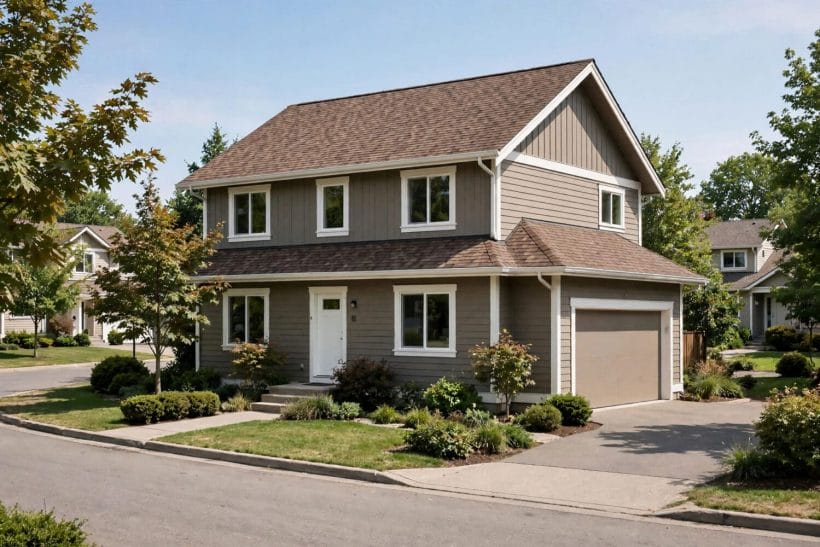
Two warnings before the families themselves. First, cool greys — the blue-leaning kind — are the one grey family a brown roof reliably rejects: the wall turns cold, the roof turns orange, and both look accidental. Second, warm greys are chameleons that borrow from their neighbours, so the sample board must be judged against the actual roof, not against the house across the street. With those two rules held, the four schemes below cover most streets.
1. Warm Grey Siding
A grey with a brown or beige undertone is the brown roof’s easiest modern partner. It reads tailored rather than cold, and it lets the roof stay the warmest thing in the composition.
2. Taupe for a Softer Step
Taupe sits one step warmer than greige and suits houses in leafy, shaded streets, where cooler greys can turn muddy. Against brown shingles it reads as a single, calm gradient.
3. Charcoal Accents on Warm Grey
Shutters, garage doors or a front door in deep charcoal-brown sharpen a warm grey scheme without importing a foreign colour. The accent borrows the roof’s depth and spends it at ground level.
4. Warm Grey With Cream Trim
Bright white trim can glare against a warm palette; cream trim keeps the contrast while staying in the family. It is the difference between a scheme that looks designed and one that looks assembled.
3. Sage and Soft Greens
Green is the colour a brown roof meets in nature — bark and leaf — and the pairing rarely fails. The cottage in this portrait photograph, sage walls under a brown roof and a garden doing the rest, is the combination at its most persuasive. A bolder exterior colour family is explored in the yellow exterior home ideas collection; here, the greens stay soft and grounded.
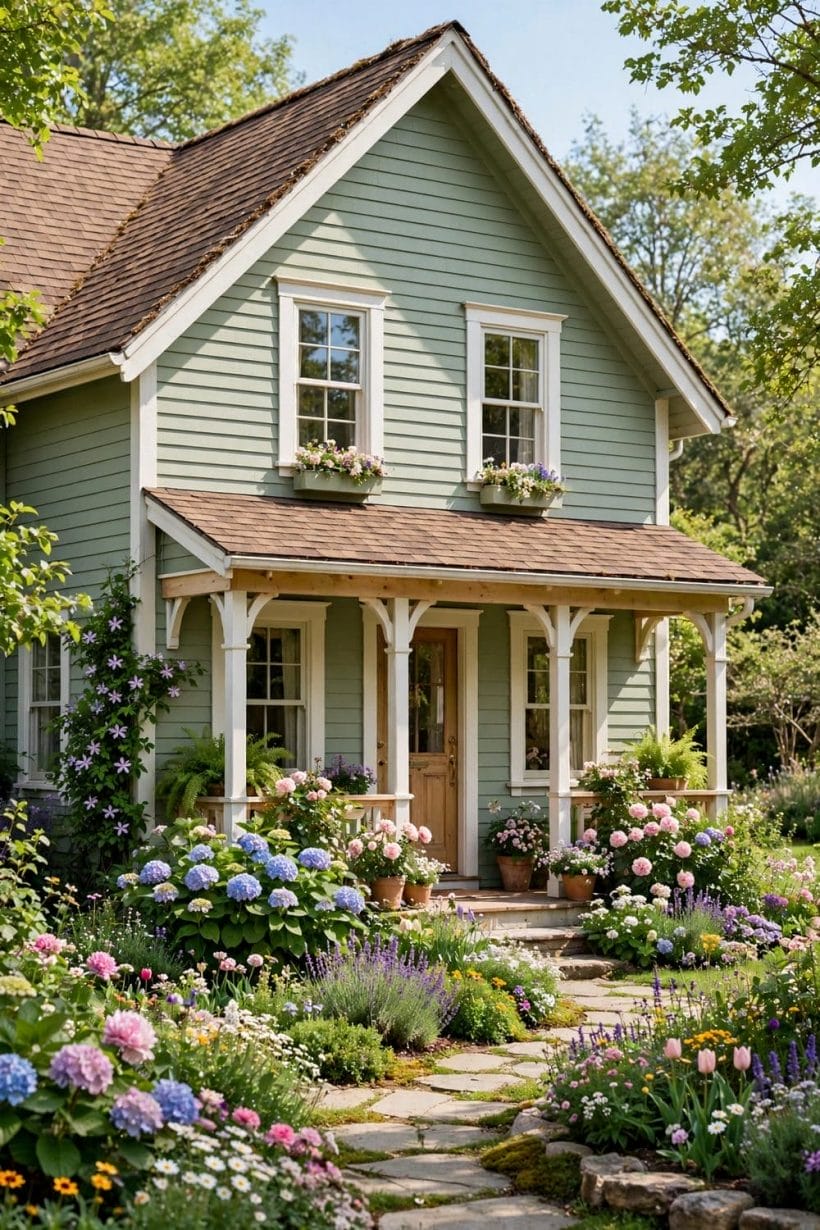
Greens ask for one decision before all others: how much of the garden should the house join? A pale sage keeps the house distinct and lets planting deepen toward it, while a deep forest green can merge house and garden into a single green mass with a brown cap — beautiful on a wooded plot, overwhelming on a bare one. Judge the green against the planting you actually have in winter, not the garden at its June best, because the pairing must survive the leafless months too.
5. Sage Green Siding
Sage is the classic: greyed, gentle and happy beside brown in every light. It suits shingle, board and stucco alike, and it is the pairing least likely to date.
6. Deep Forest Green
A dark green under a brown roof is dramatic and traditional at once — the lodge and cottage end of the palette. Give it pale trim, or the house can brood.
7. Pale Greens in Strong Sun
Delicate mint and pale sage wash out under fierce sun and can read as white with a rumour of colour. In bright, southern light, choose the green one step deeper than the one you love indoors.
8. Green With Natural Timber
A timber door, porch posts or a cedar accent against green walls and a brown roof completes the natural trio. Keep the timber’s tone close to the roof’s, and the three materials read as one decision.
4. Red Brick and Warm Masonry
Brick under a brown roof is the tone-on-tone scheme: warmth on warmth, held together by mortar and trim. The brick house in this photograph shows the balance — the roof echoes the brick’s browner bricks, and cream trim draws the line between them.
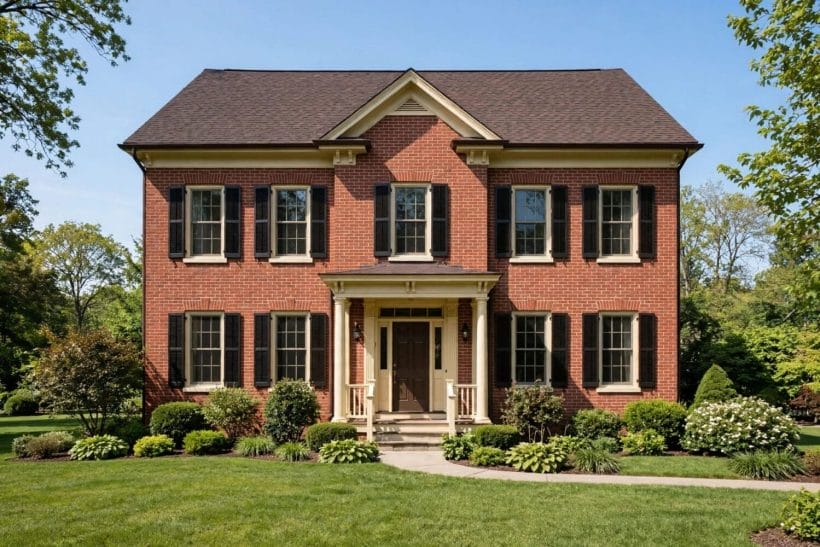
Brick schemes succeed or fail on restraint. The brick already brings pattern, texture and colour variation in every course, so everything added to it — roof, trim, door — should be quieter than the brick itself. The roof in this family is a supporting actor by design: a brown that echoes the brick’s darker tones without trying to match any single brick, since matching one brick exactly only makes the others look wrong.
9. Red Brick, Brown Roof
The pairing works when the roof’s brown leans red rather than grey. Hold a shingle sample against the brick in daylight; if the two warmths agree, the scheme is already made.
10. Mortar Colour Matters
Pale mortar lightens a whole brick elevation and gives the roof something to answer; dark mortar deepens both. Repointing is professional work, but its colour is a design decision worth having early.
11. Cream Trim on Brick
Cream — not bright white — is brick’s classic companion, softening the contrast while keeping windows and cornices crisp. It also forgives the slight colour wander that brick always brings.
12. Terracotta and Clay Tones
For stucco and painted masonry, terracotta and clay colours sit between brick and roof in the same warm family. They suit sunny streets and Mediterranean-leaning houses best.
5. Pale Blue-Grey and Coastal Pastels
The brave exception: a cool wall can work under a warm roof when the blue is greyed and pale, because grey is the treaty colour between the two temperatures. The small coastal house in this photograph, blue-grey boards under brown shingles, is the proof.
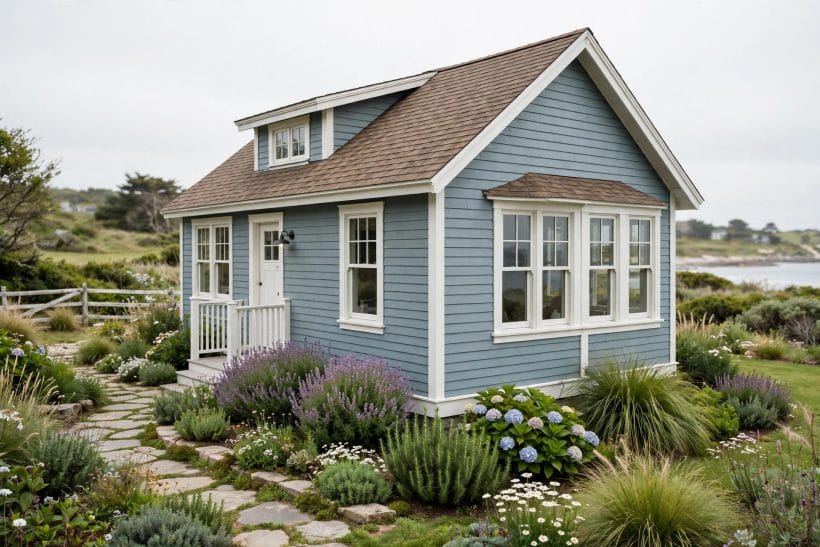
Keep one honest test for this family: the blue must still look deliberate at noon in hard sun, when pale colours bleach toward white and weak blues disappear entirely. If the sample board reads as “almost white” at midday, the colour is too pale for the site, whatever it promises at breakfast. Coastal light is the most demanding of all — it is no accident that the strongest versions of this pairing live within sight of the sea.
13. Pale Blue-Grey Siding
Choose the blue that looks grey in the shade and blue in the sun. It cools a heavy brown roof, reads coastal without costume, and pairs naturally with white trim.
14. Slate Blue, One Step Deeper
Slate blue carries more authority and suits larger houses and exposed sites. Under a brown roof it needs the trim kept light, or the whole elevation can sink.
15. Soft Aqua, Used Carefully
Aqua and turquoise-leaning pastels can charm under brown on small cottages and beach houses — and can turn sugary on anything bigger. Scale is the difference between delight and fancy dress.
16. White Trim Keeps Pastels Crisp
Pastel walls blur at the edges without a defined trim. Bright white on windows, corners and fascia is what makes a soft colour look intentional rather than faded.
6. Trim, Fascia and the Roof Edge
Stand close to a brown roof and the scheme is decided in a hand’s breadth: shingle, fascia, gutter and the first board of wall, exactly as in this photograph’s cream fascia against brown shingles. The materials themselves — including the exterior trim materials choice between PVC and wood — decide how long the crispness lasts; where a porch roof meets the house, the gable roof front porch ideas collection shows the edge handled at porch scale.
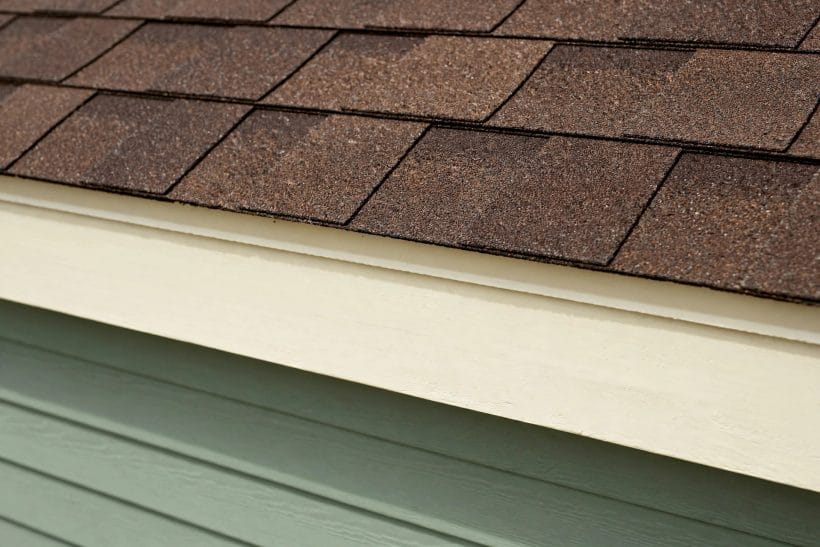
The roof edge is also where schemes age first. Painted fascia weathers faster than walls because it takes the weather the roof sheds, and tired trim makes a fresh wall colour look old before its time. Anyone planning a repaint should budget the trim as part of the same job — and any work at the roof edge itself, from gutter replacement to flashing repairs, belongs with roofing and building professionals rather than the paint crew.
17. Cream Fascia Against Brown Shingles
A pale fascia draws a clean line under the roof and lifts the whole elevation. It is the cheapest-looking expensive decision in exterior colour: one band, everywhere tidy.
18. Dark Bronze and Brown-Black Trim
Trim in the roof’s own deepest tone — dark bronze, brown-black — makes the architecture read tailored and modern. It is the finishing move the summary graphic recommends, and it rarely misses.
19. Gutters Matched to the Roof
Gutters painted or chosen in the roof’s brown disappear into the scheme; mismatched gutters draw stripes across it. When the gutter line crosses a pale wall, match the wall instead.
7. Cream and White Classics
The table’s first family deserves its own section, because cream under brown is the pairing more houses wear than any other in this post. The farmhouse in this photograph — white walls, a brown metal roof, a deep porch — shows its sunniest form.
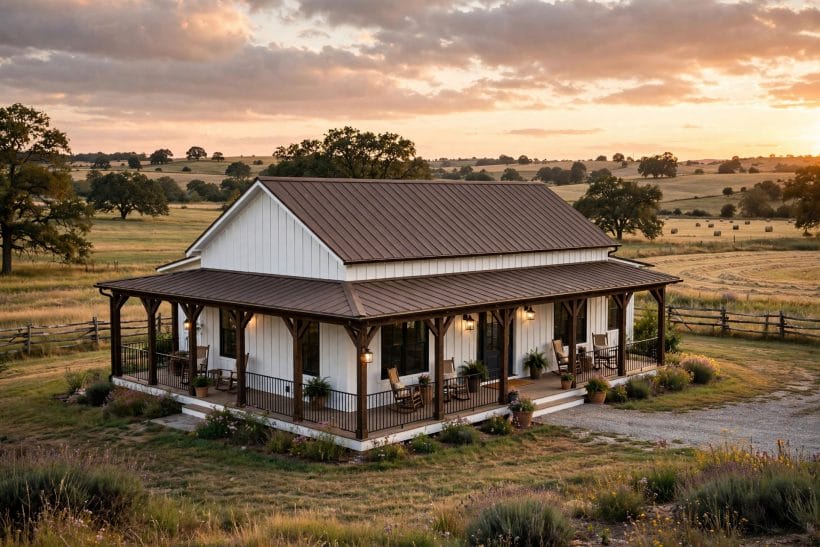
Cream’s one enemy is dirt contrast: very pale walls show streaks and splash-back honestly, which is why the classic schemes pair them with a darker plinth or foundation band and generous planting at the base. The farmhouse opposite handles it with porch shade and garden — the lower wall lives in soft shadow and greenery, and the cream above stays clean-looking far longer than a bare elevation would.
20. Cream Siding, the Timeless Answer
Cream is soft where white is stark, and under a brown roof it produces the warm, settled look that suits almost any house style and any street. If in doubt, begin the sampling here.
21. Bright White With a Brown Metal Roof
A metal roof’s cleaner lines can take a brighter white than shingles can. The contrast is crisp and farmhouse-modern — keep the trim the same white, and let the roof be the only dark note.
22. Off-White and Linen in Shade
On shaded or north-facing walls, pure whites turn grey and cold. Linen and off-white tones keep their warmth in shadow and are the shade-side version of the same classic scheme.
8. Front Doors and Finishing Touches
The front door is where a warm scheme signs its name. The tall white house in this portrait photograph — steep brown roof, stone path, garden gate — is one door colour away from three different personalities, which is precisely the door’s power.
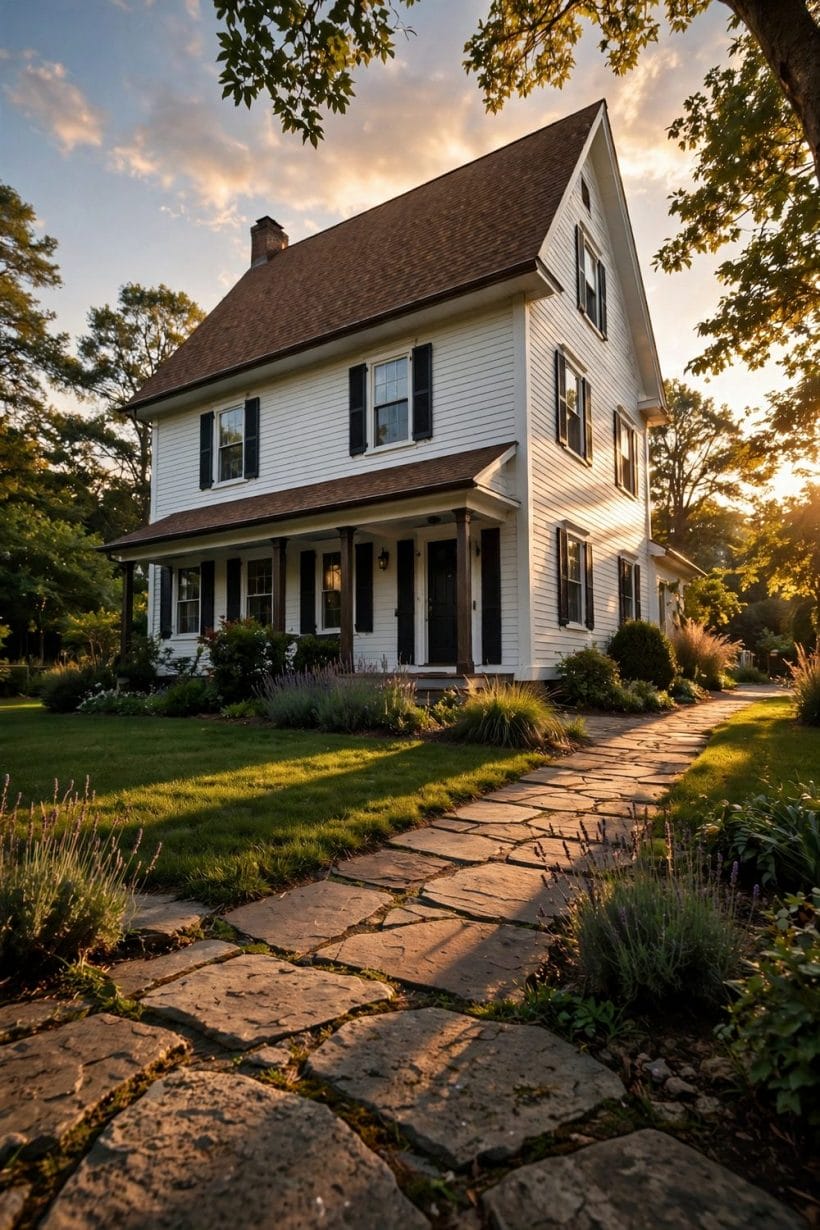
Door colour is the cheapest experiment in this entire post — a single door, a single tin, an afternoon — and it is the right place to test a scheme’s courage before committing the walls. A household unsure between the safe cream scheme and the bolder green one can paint the door green first and live with the answer for a season. Hardware, house numbers and a porch light in the same metal family complete the signature.
23. A Deep Green Front Door
Green repeats the garden and answers the roof’s warmth with cool confidence. On cream, grey or brick walls alike, a deep green door is the classic finishing note.
24. A Black Door, Warmed by Brass
Black is the sharpest door colour and can chill a warm palette; brass or bronze hardware warms it back. The pairing suits the tailored, trim-matched schemes of section 6.
25. Stone, Path and Planting
The last touches are not paint at all: a stone path, warm-toned pavers and green planting soften the junction between house and ground, and green is the mediator every factor list in this post keeps naming.
9. Stucco, Desert and Modern Pairings
Brown tile and low-pitched brown roofs play by slightly different rules: the palette runs to sand, clay and cream, and the sun is stronger than any colour. The desert house in this photograph — cream stucco, brown tiles, timber shade — is the scheme complete. Small-house exteriors in the same spirit are gathered in the tiny house exterior ideas collection.
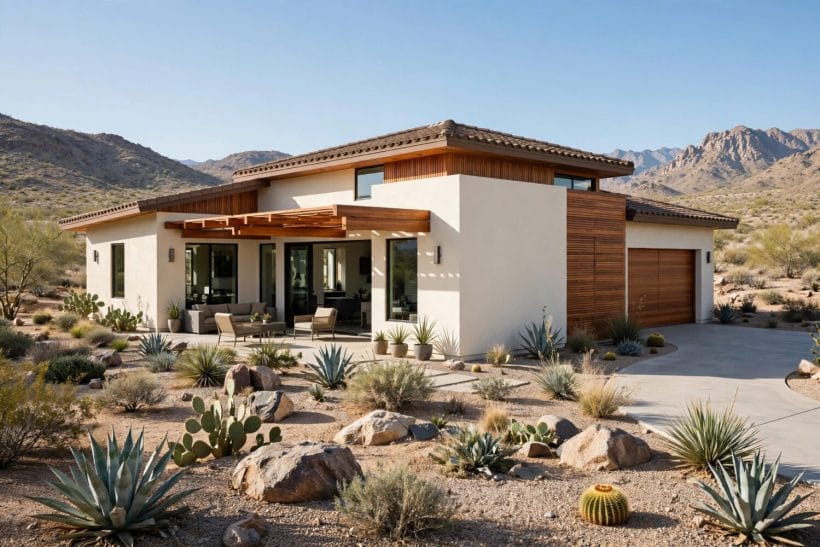
Heat changes the arithmetic in this family: pale walls are not merely a style but a comfort decision, bouncing sun that dark walls would drink. The brown roof still takes the full force of the sky, which is why these houses lean on shade — porches, pergolas and deep reveals — as part of the colour scheme itself. A colour plan for a hot-climate house that ignores shade is only half a plan.
26. Cream Stucco With a Brown Tile Roof
The Mediterranean settlement: warm white walls, brown tiles, deep shade at the openings. It has worked in hot light for centuries and asks only to be left simple.
27. Sand and Clay in Dry Heat
Where the landscape is sand and rock, walls in sand and pale clay tones sit the house in its ground. Saturated colour fights the desert; these tones join it.
28. Modern Forms, Warm Palette
Flat roofs and clean modern volumes take the same warm palette as any cottage — cream, warm grey, sage — because the roof’s warmth, not the house’s style, sets the terms.
10. Reading Your Roof Tone — and What It Costs
Every scheme in this post began with one act of looking, and this final section teaches it directly. Broader palette planning across a whole house is covered by the tiny house color palette guide, and the same warm-versus-cool logic works indoors — the brown couch, grey walls pairing is this post’s closest indoor relative.
29. Warm Brown or Cool Brown?
Look at the flecks in the shingle or the tile’s edge in daylight: reds, golds and oranges mean a warm brown, which takes the cream, sage and warm-grey families; grey and taupe flecks mean a cooler brown, which opens the door to the blue-greys of section 5.
30. Test on Two Walls
Paint large sample boards, not swatches, and live with them against the roof on a sunny wall and a shaded one for a full day. Colours that survive both lights are the only ones allowed to stay.
31. What Drives the Cost
In general terms, repainting costs follow preparation more than paint: washing, repairs, the number of coats and the quality of the paint itself, with professional application — wise for high walls and any work near the roof — the largest single line. Colour choice itself costs nothing; changing your mind after the fact costs everything twice.
32. When the Roof Is the Problem
A faded, patchy or failing roof cannot be rescued by wall colour, and painting around a roof near the end of its life wastes the paint. Roofing assessment and replacement belong to qualified roofing professionals — get the verdict on the roof first, then choose its colours.
Finally, photograph your samples. A phone picture of the sample board against the roof, taken morning and evening, shows you the two houses you will actually own — the bright one and the golden one — side by side. Schemes that please in both photographs are the ones that survive contact with the seasons, and they are rarer and more valuable than any single perfect colour. When a pairing passes that test, further deliberation is usually just delay wearing a thoughtful expression.
Final Considerations
Read the roof first, follow its warmth, and let green planting mediate between wall and shingle. A brown roof is not a limitation on a house’s colours — it is the first colour of the scheme, already chosen, and everything in this collection is simply the art of agreeing with it beautifully.


0 Comments