

A calm living room starts with space to breathe. Low lines, natural materials and uncluttered surfaces do most of the work long before decoration gets a look-in.
These 75 asian decor ideas cover layouts, sofas, colours and layered lighting, so you can build the look one quiet layer at a time, in a room of any size.
1. The Essentials at a Glance
Before the details, here is the whole approach on one screen: what matters, what to choose, and where the money is best spent first.
| Element | What works |
| Layout | Low, centred arrangement with clear walking paths and space around each piece |
| Seating | Low-profile sofas, floor cushions and a couple of stools that can wander |
| Colours | Warm neutrals, dark wood for backbone, one muted colour borrowed from nature |
| Materials | Wood, bamboo, rattan, linen, cotton, stone and handmade ceramics |
| Lighting | Several soft sources at different heights instead of one bright ceiling light |
| Storage | Closed cabinets and baskets, so surfaces stay clear on purpose |
| Decor | Few pieces, chosen slowly: one plant, one artwork, one object with a story |
| Budget | Spend on the sofa and the lighting first; accessories can arrive over time |
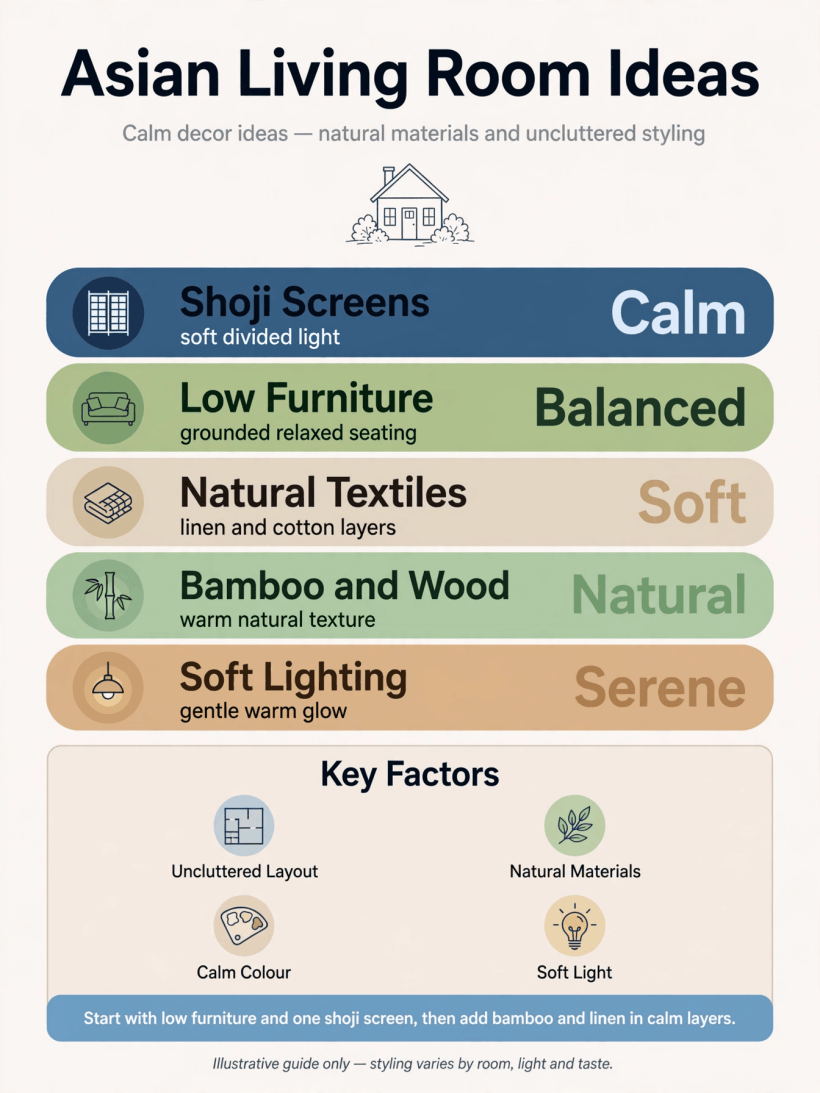
The essentials at a glance: low lines, natural materials, soft layers of light and space left empty on purpose.
Keep this table nearby while you work through the ideas below. Almost every suggestion that follows is simply one of these rows, explored in more depth.
2. Layouts That Breathe
Layout comes first, because calm is mostly about what you leave out.
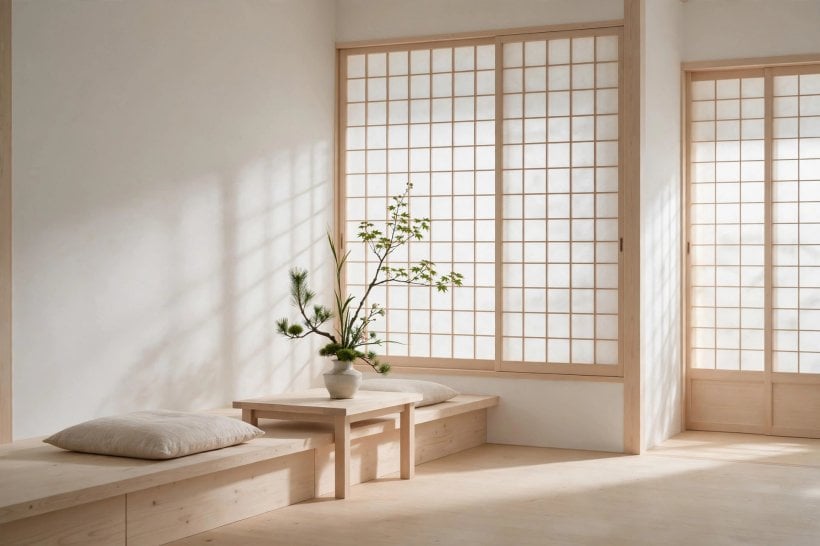
1. Centre the room on a low focal point. A low coffee table or a view to the garden gives the eye a resting place. Arrange seating around it at conversational distance, and let everything else stay quietly at the edges.
2. Keep walkways wide and obvious. Leave clear paths from door to seating to window, roughly a comfortable stride wide. When moving through a room feels effortless, the room itself feels larger and calmer.
3. Push storage to the walls. Line the perimeter with low cabinets and shelves and keep the middle of the room open. This borrows the logic of tiny house living room ideas: every piece earns its footprint.
4. Use symmetry, then relax it. A pair of chairs or matching lamps creates instant order. Break the mirror image with one asymmetric touch, a branch in a vase or an off-centre artwork, so the room feels alive rather than staged.
5. Anchor seating on a flat-weave rug. A natural-fibre rug defines the sitting zone without walls. Choose one large enough for the front legs of every seat, in a tone close to the floor so the boundary stays subtle.
6. Leave one corner completely empty. Negative space is a design material. An unfilled corner lets the pieces you do own stand out, and it gives the room a place where the eye can rest.
7. Float the sofa only with space behind it. Pulling a sofa off the wall works when there is room for a slim console behind it. In tighter rooms, a wall-hugging layout with breathing room in front usually looks better.
8. Align heights along a low horizon. Keep most furniture below seated eye level: low sofas, low tables, low shelves. One tall piece, a plant or a floor lamp, then becomes a deliberate accent instead of visual noise.
3. Low Seating and Sofas
Seating sets the posture of the whole room: low, grounded and unhurried.
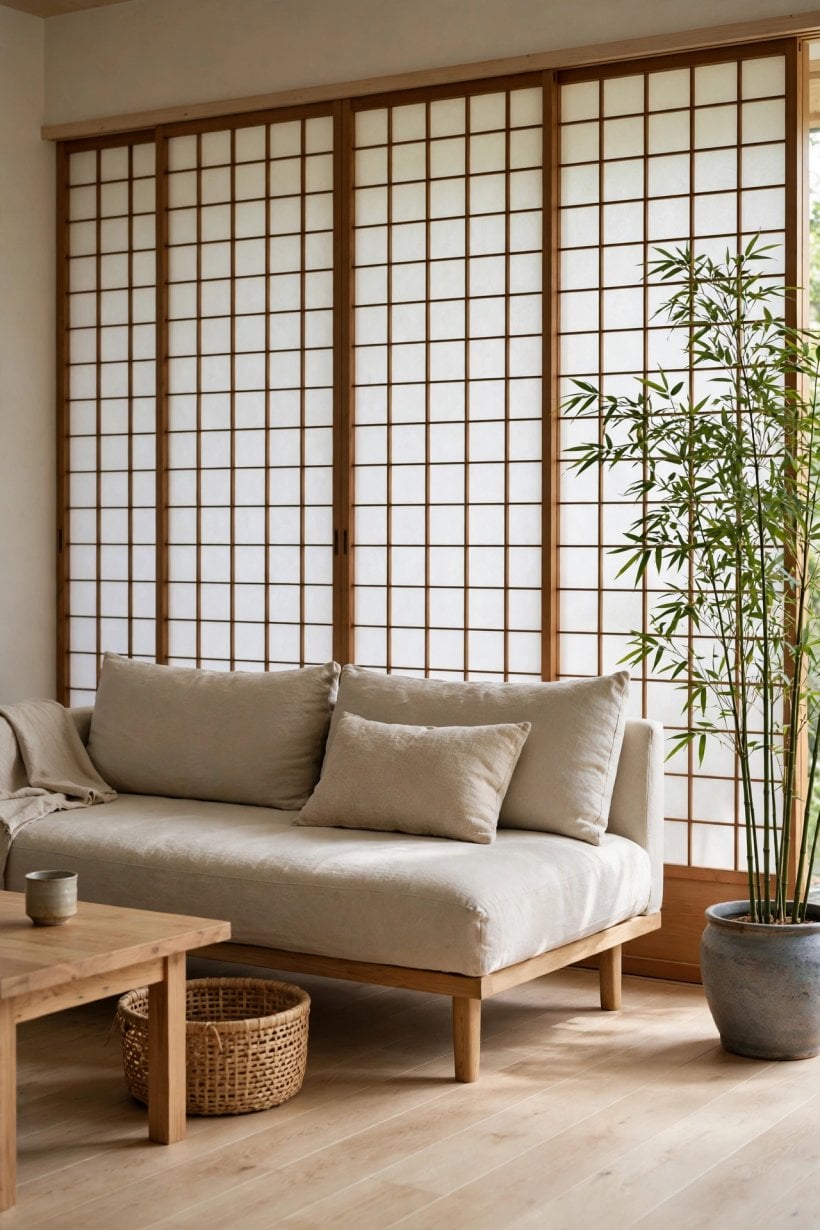
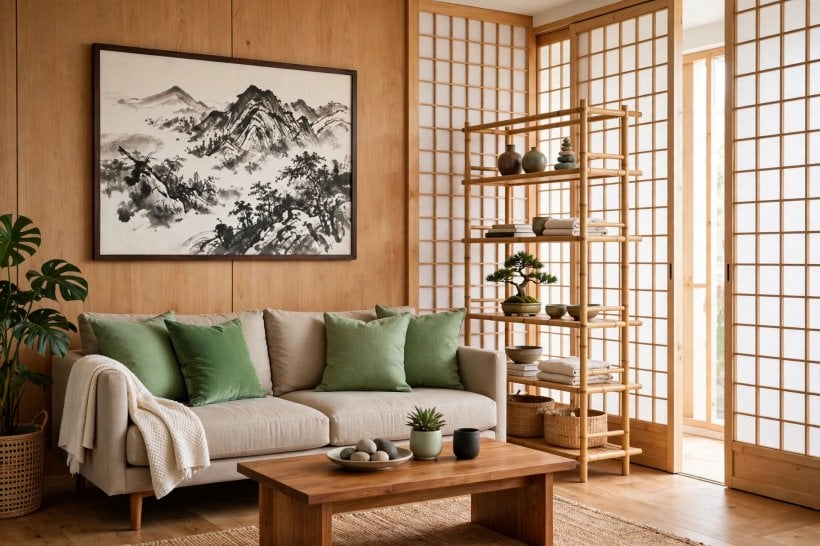
9. Choose a low-profile sofa. A sofa with a low back and a deep seat sets the tone instantly. Simple lines, plain upholstery and wooden or recessed legs keep the silhouette calm and close to the floor.
10. Add floor cushions for flexible seats. Large square cushions stack neatly in a corner and come out when guests arrive. They suit film nights and slow tea alike, and they store away without needing a spare room.
11. Try a daybed along one wall. A simple daybed with a bolster or two doubles as a sofa and a guest bed. Dressed in linen with a folded throw, it reads as intentional seating rather than leftover furniture.
12. Mix one armchair, not a matching set. A single distinct chair, rattan, bentwood or a low lounge shape, adds character. Matching three-piece suites tend to look heavy; variety within one palette looks collected over time.
13. Keep upholstery plain and tactile. Linen, cotton and wool in solid colours age gracefully and layer well. Save pattern for a single cushion or a throw, so texture does the decorating instead of print.
14. Use a low bench as extra seating. A backless wooden bench along a wall or window seats two, holds a tray of books and never blocks the light. It is one of the hardest-working pieces you can own.
15. Add small stools that wander. Lightweight stools move wherever they are needed: side table, footrest, extra seat, plant stand. Two or three in the same wood tone tie scattered corners together.
16. Test seat height before you buy. Sit on the sofa with your usual cushions and check that your feet rest flat and your knees sit comfortably. Low is good; so low that standing up becomes a workout is not.
4. Colour Palettes That Stay Calm
Colour in these rooms is quiet but never cold: warmth does the heavy lifting.
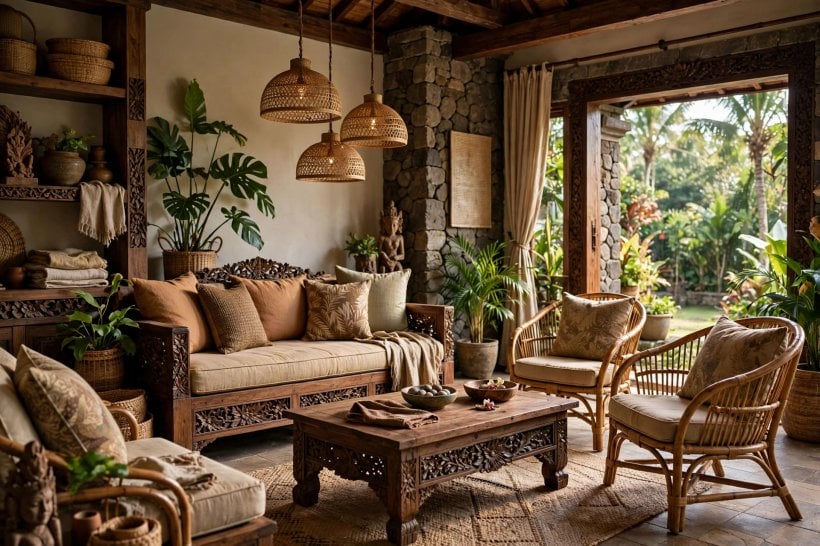
17. Start with warm neutrals. Rice white, warm beige, pale stone and soft greige walls make a forgiving base. They let wood tones glow and keep the room bright without ever feeling stark.
18. Ground the palette with dark wood. Walnut, stained oak or ebonised pieces give pale rooms their backbone. Repeat the dark tone in at least three places, a frame, a table, a lamp base, so it looks deliberate.
19. Borrow one colour from nature. Muted sage, clay, indigo or ochre, used sparingly, stops neutrals from going flat. Pick it up from a plant, a landscape print or the view outside your own window.
20. Let black appear in small doses. A black frame, a calligraphy-style line in an artwork or a slender lamp stem sharpens everything around it. Small amounts read like ink strokes: precise, calm and confident.
21. Keep the floor tone continuous. One floor finish running through the seating area unifies the whole palette. If your floors vary, a large pale rug over the sitting zone can stitch the colours together.
22. Match metals to the mood. Brushed brass and blackened steel suit the style, while chrome usually feels too cold and shiny. Whatever you choose, repeat it in two or three fittings for consistency.
23. Test colours in evening light. These palettes live or die by lamplight. Paint a large swatch, live with it through a full day, then check it again at night before committing to the whole room.
24. Use textiles to shift with the seasons. Swap cushion covers and throws rather than repainting: pale linen for summer, deeper rust or indigo wool for winter. The base stays calm while the room breathes with the year.
5. Natural Materials and Texture
When colour steps back, texture steps forward.
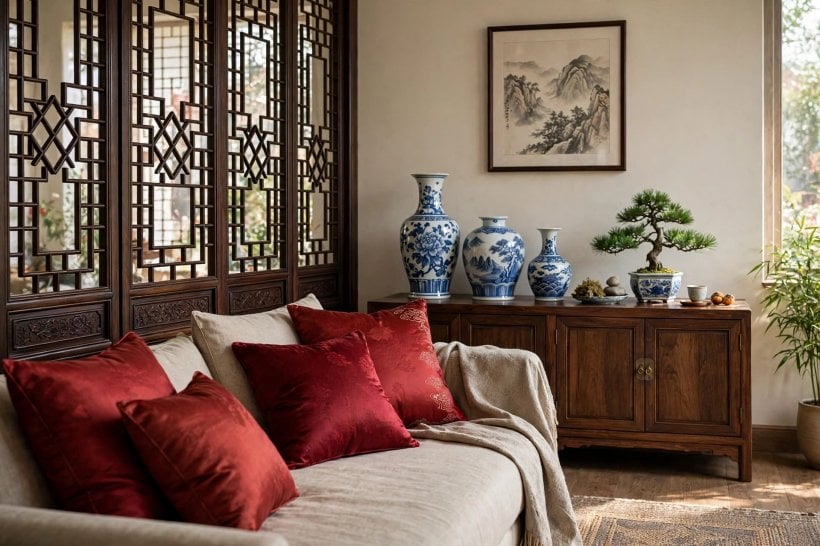
25. Layer at least four natural materials. Wood, bamboo, linen, stone, rattan, paper, clay: pick four or more and repeat them around the room. That quiet variety is what makes a simple room feel rich instead of empty.
26. Choose wood with visible grain. Matte, oiled or waxed finishes show the material honestly. High-gloss lacquer can look impressive, but it fights the relaxed mood everywhere else in the room.
27. Bring in bamboo and rattan lightly. A rattan chair, a bamboo blind or a woven shade adds airy texture. One or two pieces are enough; a full matching set can tip the room towards holiday rental.
28. Use linen and cotton for softness. Slubby linen curtains, cotton throws and canvas cushion covers soften hard lines. Their slight irregularity is the point: handmade-looking surfaces feel human and warm.
29. Add stone or ceramic weight. A stone side table, a ceramic lamp base or an unglazed vase grounds all the textiles. Cool, weighty materials balance the light wood and fabric around them.
30. Hang woven or paper wall pieces. A woven panel, a simple scroll-style print or a paper relief adds texture at eye level without the visual weight of a heavy framed canvas.
31. Prefer handmade over perfect. Slightly uneven pottery, a hand-knotted rug, visible joinery on a stool: small imperfections signal craft. Rooms built from them feel warm even when they are nearly empty.
32. Keep a plant in a quiet pot. One well-shaped plant in a plain ceramic or stone pot does more than a whole crowd of small ones. Choose foliage with a sculptural outline and give it room to be seen.
6. Screens, Partitions and Flow
Dividing a room gently beats building walls, especially in open-plan homes.
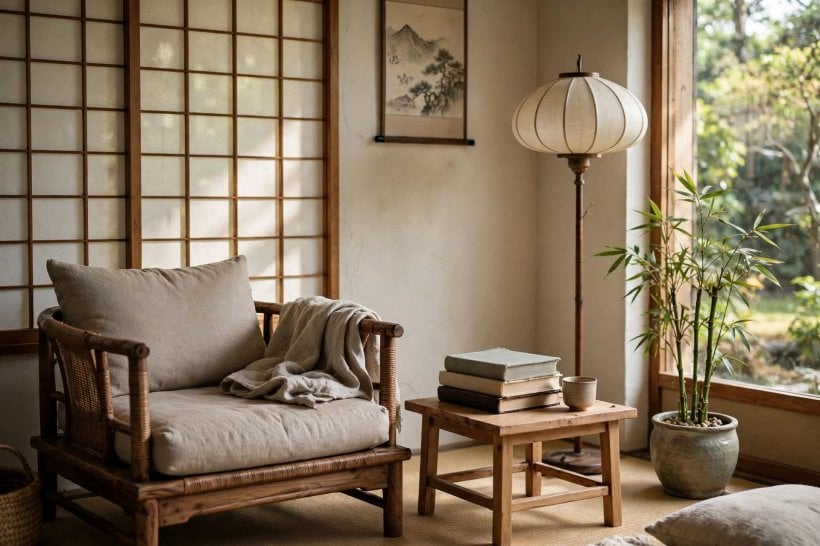
33. Use a shoji-style screen as a soft wall. A translucent panel filters light while hiding a desk or a cluttered corner. It divides without darkening, which is exactly why it suits small and rented rooms so well.
34. Zone an open plan with a low shelf. A waist-high open shelf separates sitting from dining while keeping sightlines long. It is the same open, zoned thinking that makes tiny house kitchen design ideas work in compact homes.
35. Hang a linen curtain as a divider. A ceiling-track curtain closes off a sleeping or work nook at night and stacks away by day. Choose a fabric that glows slightly when light passes through it.
36. Place a folding screen behind the sofa. A three-panel screen behind the seating adds height and pattern where a wall feels bare. It also softens echo a little, which helps hard-floored rooms sound calmer.
37. Mark the zone with a low platform. In larger rooms, a shallow platform under the seating area defines it almost like a stage. Keep the step low and consistent, so nobody trips on it in the dark.
38. Use plants as a living partition. A row of tall plants on a low bench screens a view without blocking air or light. Vary the heights slightly so the line feels grown rather than installed.
39. Keep sightlines to one green view. Arrange partitions so that from the main seat you see one calm view: a garden, a plant shelf or a single artwork. Blocking every view makes a divided room feel chopped up.
40. Choose dividers you can move. Renters and rearrangers alike benefit from screens, curtains and shelves on feet. Fixed joinery is beautiful, but flexibility keeps a small home adapting for years.
7. Layered Lighting
One bright ceiling light flattens everything; several soft ones build the mood.
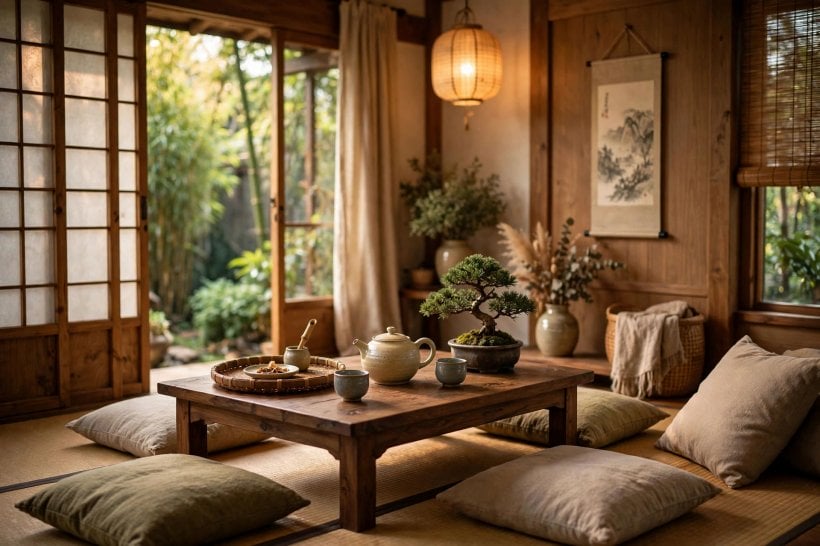
41. Plan three heights of light. Low table lamps, a mid-height floor lamp and a gentle ceiling source together cover tasks and ambience. Switch them separately, so the room can change gear through the evening.
42. Pick paper or fabric shades. Rice-paper pendants, linen shades and frosted glass diffuse light into a glow rather than a beam. Bare bulbs and visible filaments fight the calm you are trying to build.
43. Put every lamp on a dimmer. Dimmers cost little and change everything. The same lamp that lights a book at seven in the evening should melt into background warmth by ten.
44. Light the walls, not just the room. A lamp aimed at a wall, or a picture light over artwork, spreads brightness without glare. Washed walls make small rooms feel wider and ceilings feel higher.
45. Add one lantern-style accent. A low lantern on the floor or hearth, a real candle or a warm LED, marks the room’s resting point. It is the layer you light last and miss the most.
46. Hide cords as part of the plan. Route cables behind furniture, use cord covers in the floor tone, and place lamps near sockets from the start. Visible tangles undo an otherwise serene scheme.
47. Match bulb warmth across the room. Choose one warm colour temperature for every bulb and stick to it. Mixed temperatures, one blue-white and one amber, make even a tidy room feel unsettled.
48. Borrow daylight with mirrors. A mirror opposite a window doubles the green view and the light with it. Pale walls and a light rug quietly bounce daylight deeper into the room all day.
8. Decor, Art and Plants
Decoration here is an edit, not an accumulation: fewer pieces, chosen slowly.
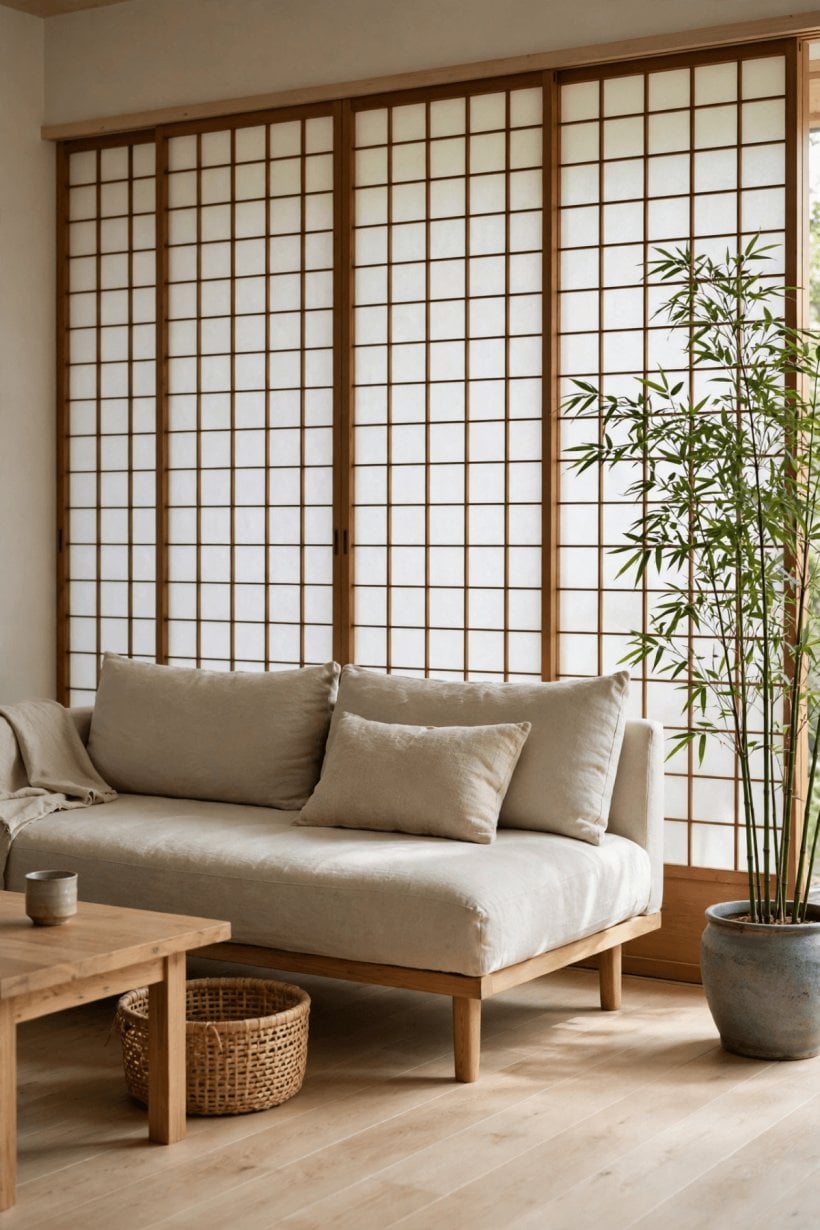
49. Choose one artwork with breathing room. A single generous piece, an ink-style landscape, abstract brushwork or a woven hanging, with empty wall around it. One strong piece calms; a busy gallery wall energises.
50. Display objects in odd numbers. Groups of three or five read as composed, while pairs can look like shop displays. Vary the heights inside each group and leave clear gaps between the clusters.
51. Keep one object with a story. A travel find, a handmade bowl, a stone from a favourite walk: personal pieces stop the room looking like a showroom. Give your story object the best spot in the room.
52. Let plants work as sculpture. A shaped pine, a tall grass or a single stem in a tall vase treats greenery as form. Our tiny house landscaping ideas show how the same less-but-better thinking works outdoors.
53. Rotate decor with the seasons. Store most accessories and display a few at a time. Blossom in spring, seed heads in autumn: the room stays fresh, and the storage cupboard does the editing for you.
54. Use trays to gather small things. A wooden or lacquered tray on the coffee table corrals remotes, coasters and a candle into one calm rectangle. Anything that is not on the tray earns a second thought.
55. Leave tabletops partly empty. Aim for about a third of every surface clear. Empty space around an object is exactly what makes it look chosen rather than merely stored there.
56. Consider scent and sound too. A subtle incense, a small tabletop water feature or simply an open window: the calm of these rooms is sensory, not only visual. Keep background sound as considered as the colours.
9. Storage and Clutter Control
Serenity is mostly storage: everything visible should be there on purpose.
57. Favour closed storage over open shelves. Doors and drawers hide the visual noise of everyday life. It is the same principle behind good tiny house closet design ideas: doors first, display second.
58. Use low cabinets as room architecture. A run of matching low cabinets along one wall reads as part of the building, stores half the house, and gives you a long, calm display surface on top.
59. Add baskets where clutter lands. Mail, chargers, throws, toys: give each one a woven or felt basket at the exact spot it tends to pile up. Contained clutter reads as texture instead of mess.
60. Build a media wall that hides everything. A simple panel or cabinet run that swallows the television, boxes and cables keeps the room’s focus on the seating and the view. Doors closed, the room can rest.
61. Choose furniture with hidden storage. Ottoman cubes, a bench with a lift-up seat, a coffee table with a shelf below: dual-purpose pieces are how small rooms manage to stay this calm.
62. Carve out a work corner that disappears. A small desk behind a screen, or inside a cabinet with folding doors, lets the living room clock off at night. The thinking behind the best tiny home office setups applies to any dual-use corner.
63. Do a weekly ten-minute reset. Calm rooms are maintained, not achieved once. A short weekly pass, surfaces cleared, baskets emptied, cushions straightened, keeps the whole scheme from quietly drifting.
64. Store by frequency, not category. Daily things at hand height, weekly things higher or lower, rare things in the least reachable spot. Any storage system you have to fight daily will eventually lose.
10. Small Rooms and Sensible Budgets
The style is unusually kind to small rooms and modest budgets, because at heart it asks for less.
65. Scale the sofa to the room. In a small room, a compact two-seater with slim arms seats the same people as a bulky one and still leaves space for the emptiness the style depends on.
66. Choose legs over skirts. Furniture raised on visible legs lets light travel underneath, which makes floors look bigger. It is the cheapest extra space you will ever gain.
67. Use one large rug, not several small ones. Small rugs chop a floor into islands. One generous rug under the whole seating group makes a compact room read as a single, calm space.
68. Keep window dressings simple. Plain linen curtains hung high and wide, or simple bamboo blinds, frame the view without stealing wall space or daylight from a small room.
69. Spend first on light and seating. If the budget is tight, buy the sofa and the lamps well and let the decor wait. Almost everything else in these rooms can be thrifted, made or added slowly.
70. Shop second-hand for wood pieces. Solid wood stools, trays and cabinets turn up often in second-hand shops and suit the style’s love of patina. Check joints and woodworm, and clean everything thoroughly before use.
71. Make one piece instead of buying three. A simple cushion cover, a framed print of your own photograph, a painted stool: one handmade piece carries more calm than three bought ornaments ever will.
72. Borrow the palette from what you own. Before buying anything, gather your existing cushions, throws and ceramics in one place. Most homes already own a workable palette; buying only the gaps saves a fortune.
73. Avoid themed sets and novelty items. Matching themed accessory sets date quickly and cheapen the effect. The look comes from proportion, materials and restraint, none of which arrive in a box set.
74. Grow into the room slowly. Live with the layout for a month before filling any gaps. Rooms decorated in a single weekend often get redecorated within a year; slow rooms settle and stay.
75. Photograph the room to see it clearly. A quick phone photo flattens your familiarity and reveals clutter, glare and imbalance you no longer notice. Edit from the photo, then go back to enjoying the room itself.
Final Considerations
The thread running through all of these asian decor ideas is restraint: fewer pieces, honest materials, soft light and space left deliberately empty.
Start with layout and lighting, add texture before colour, and let the room grow slowly from there. The same calm-first thinking shapes our tiny house building design ideas, proof that a gentler room rarely needs a bigger one, just a better-edited one.

0 Comments