

Beige gets an unfair reputation for playing it safe. Done well, it is the warmest, calmest neutral a sleeping space can wear, layering soft creams, oat tones and gentle taupes into a room that slows you down the moment you walk in.
This list gathers seventy-five practical ways to make a beige bedroom feel restful, personal and quietly luxurious, whether your room is generous, compact or somewhere in between.
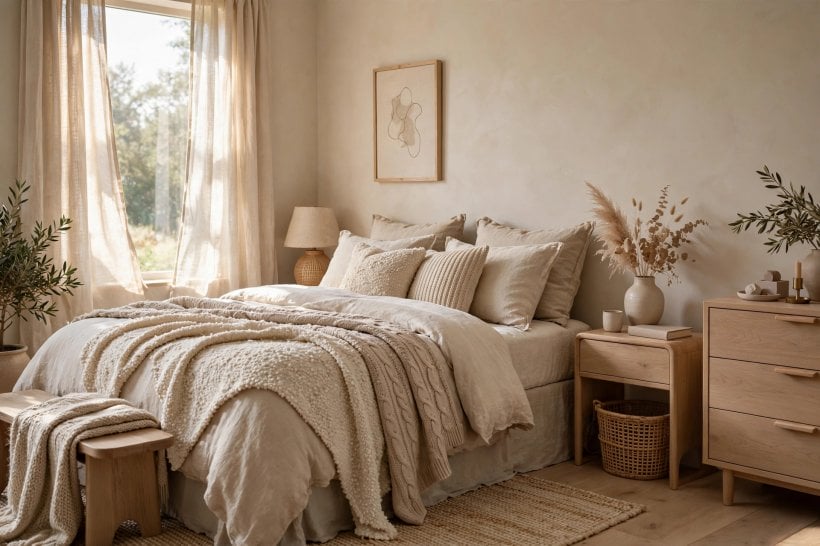
1. Getting the Palette Right
Every calm scheme starts with colour discipline. Pick a small family of warm neutrals, repeat them often, and let texture rather than contrast do the talking. The table below sums up the whole approach before the detailed ideas begin.
| Question | Short Answer |
|---|---|
| What shades work best? | Warm creams, oatmeal, stone and soft taupe layered together. |
| How many tones should I use? | Three to five closely related tones across walls, bedding and furniture. |
| How do I stop it looking flat? | Mix textures: linen, wool, timber, rattan and matte paint finishes. |
| What accent colours pair well? | Muted olive, clay, charcoal and soft black in small doses. |
| Best layout starting point? | Centre the bed, keep walkways clear and balance both sides. |
| Where should storage go? | Closed, low and in matching tones so it visually disappears. |
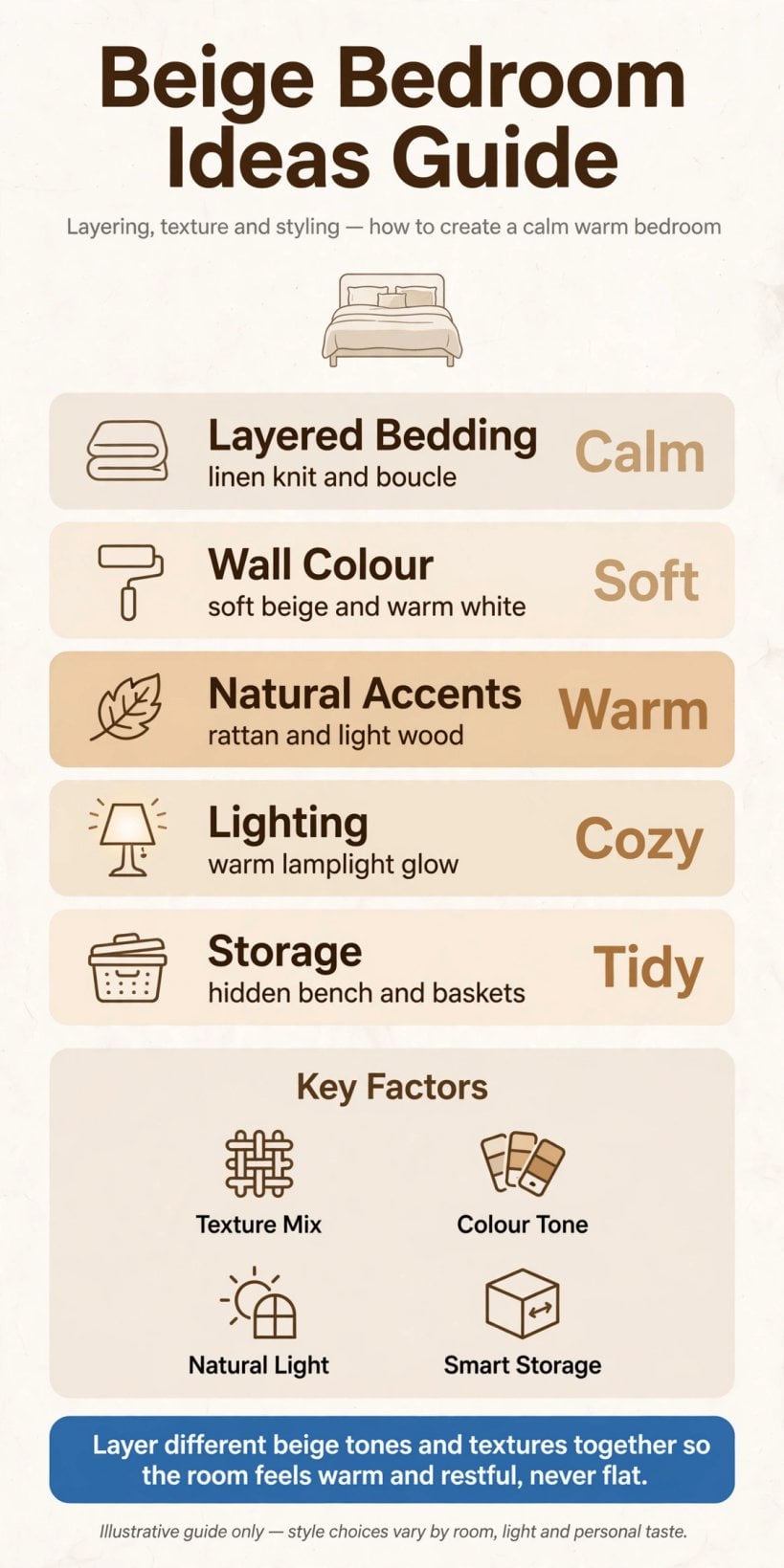
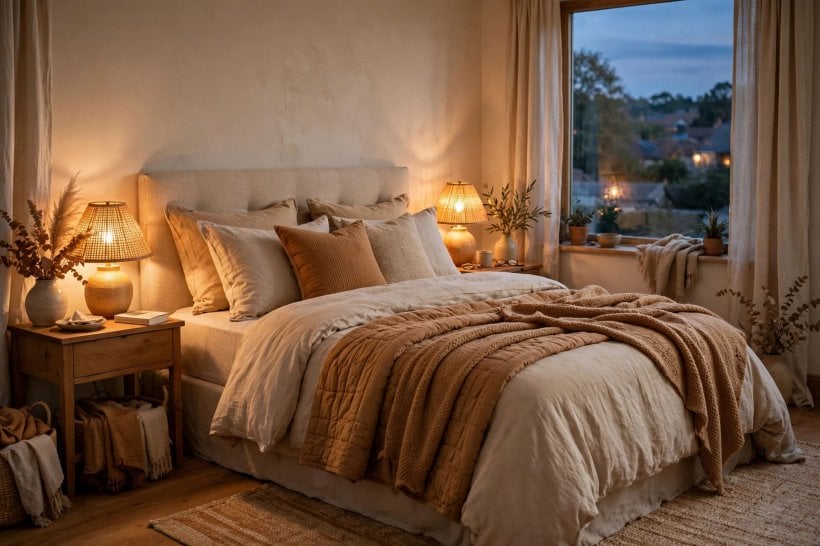
A quick visual summary of the palette, layout and layering ideas covered in this guide.
1. Start with a warm white base
Choose a creamy, warm white for the largest surfaces so the room feels bright without turning cold or clinical under morning light.
2. Layer three tones of beige
Combine light, mid and deeper beige across walls, bedding and furniture so the scheme has depth even though every colour stays neutral.
3. Test paint in two lights
Brush sample squares on two walls and live with them for a day, because beige can shift pink, grey or yellow depending on daylight.
4. Keep undertones consistent
Stay with warm undertones throughout, or cool greige throughout, so fabrics and paints agree instead of quietly fighting each other.
5. Add one grounding dark note
A single charcoal cushion, dark timber stool or black frame anchors the softness and stops the palette drifting into blandness.
6. Use timber as a colour
Light oak, ash or pine furniture counts as part of the palette, bringing natural warmth that paint alone cannot deliver.
7. Repeat each tone three times
A tone used once looks accidental; used three times across the room it looks deliberate, calm and professionally pulled together.
8. Let bedding carry the softest shade
Reserve the palest, creamiest tone for the bed linens, since the bed is where the eye lands first and softness matters most.
2. Layouts That Let the Room Breathe
Neutral colour cannot rescue a cramped layout. Give the bed pride of place, protect your walkways, and let negative space do as much work as furniture. For more small-room thinking, see our guide to small bedroom interior design ideas for compact homes.

9. Centre the bed on the longest wall
A centred bed instantly creates symmetry, and symmetry is the fastest route to a room that feels ordered and restful.
10. Protect a clear walkway
Keep a comfortable, unobstructed path from door to bed and bed to wardrobe, even if it means choosing slightly smaller furniture.
11. Balance both bedside zones
Match the visual weight on each side of the bed with paired tables or lamps so the arrangement feels settled, not lopsided.
12. Float furniture slightly off walls
Leaving a small gap behind wardrobes and dressers reduces the boxed-in feeling and lets shadows soften the room edges.
13. Use a low-profile bed frame
A lower frame makes ceilings feel higher and keeps the proportions gentle, which suits soft neutral schemes particularly well.
14. Place a bench at the foot
A narrow upholstered bench gives you a seat for dressing, a landing spot for throws, and a tidy horizontal line.
15. Keep the window wall light
Avoid tall, heavy furniture against the window wall so daylight spreads evenly and the pale palette can do its brightening work.
16. Create one reading corner
A single chair, small side table and lamp in a corner adds a destination beyond the bed and makes the room feel generous.
3. The Bed as the Calm Centre
The bed occupies most of the visual field, so its styling sets the emotional temperature. Think soft layers, honest fabrics and nothing that rustles, shines or shouts. Ideas for compact sleeping spaces in our modern tiny house bedroom guide translate beautifully to neutral schemes.
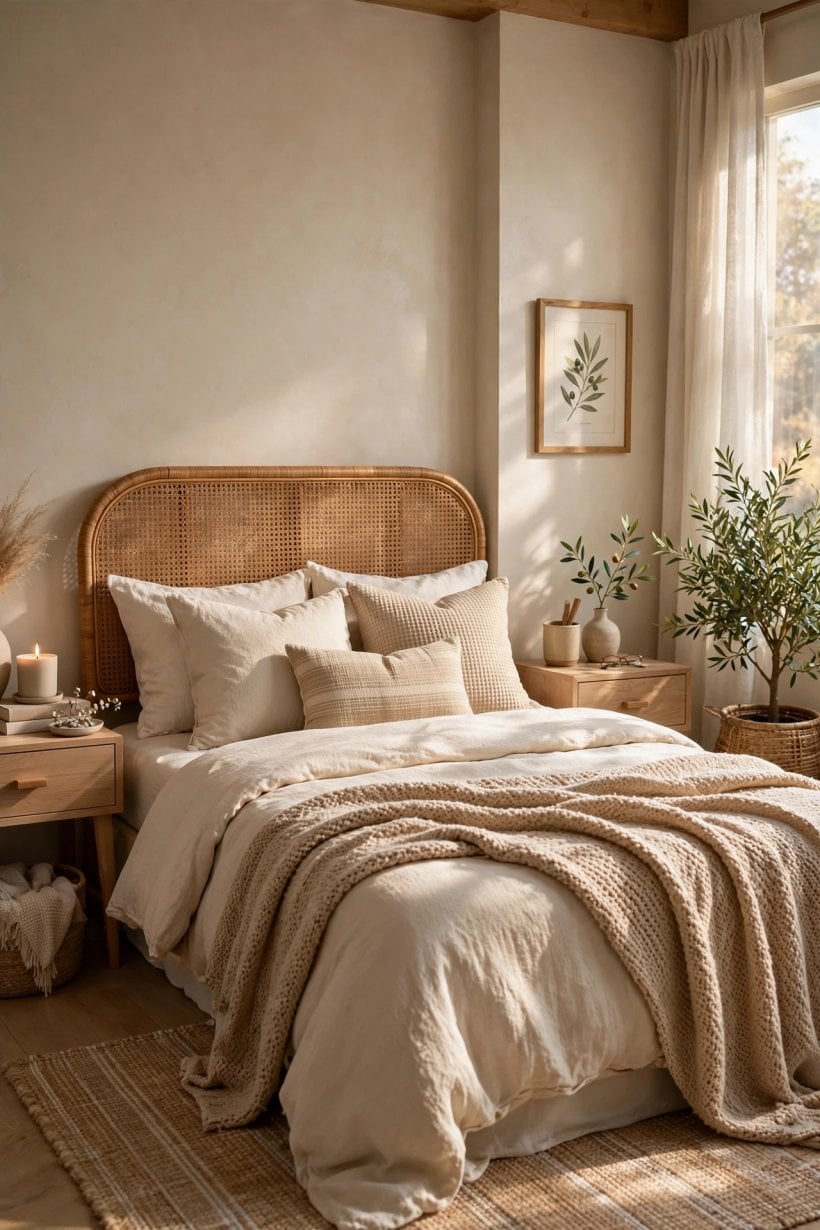
17. Choose washed linen bedding
Washed linen in oatmeal or stone brings a relaxed, slightly rumpled texture that makes a neutral bed feel inviting rather than formal.
18. Layer a quilt over the duvet
Folding a lightweight quilt across the foot of the bed adds a second tone and a handcrafted texture in one simple move.
19. Mix pillow sizes, not colours
Combine standard, square and lumbar pillows in the same tone family; the variety of shapes gives interest without visual noise.
20. Pick an upholstered headboard
A padded headboard in bouclé, linen or soft woven fabric adds comfort for reading and a gentle focal point behind pillows.
21. Tuck bedding in hotel-neat
Smooth, tucked bedding reads as calm. Spend sixty seconds straightening layers each morning and the whole room feels cared for.
22. Add a single textured throw
One chunky knit or fringed throw in a deeper taupe gives the bed a finishing note and somewhere for chilly feet.
23. Keep patterns tone-on-tone
If you want pattern, choose a subtle stripe, check or weave in the same colour family so it whispers instead of competing.
24. Hide the bed base
A valance or upholstered base in a matching neutral removes visual clutter underneath and keeps sightlines smooth and restful.
4. Walls, Paint and Panelling
Walls are the largest canvas in the room. Soft matte finishes, gentle architectural detail and warm artwork turn plain surfaces into a cocoon. Our round-up of bedroom interior design for tiny houses shows how wall choices change small spaces.
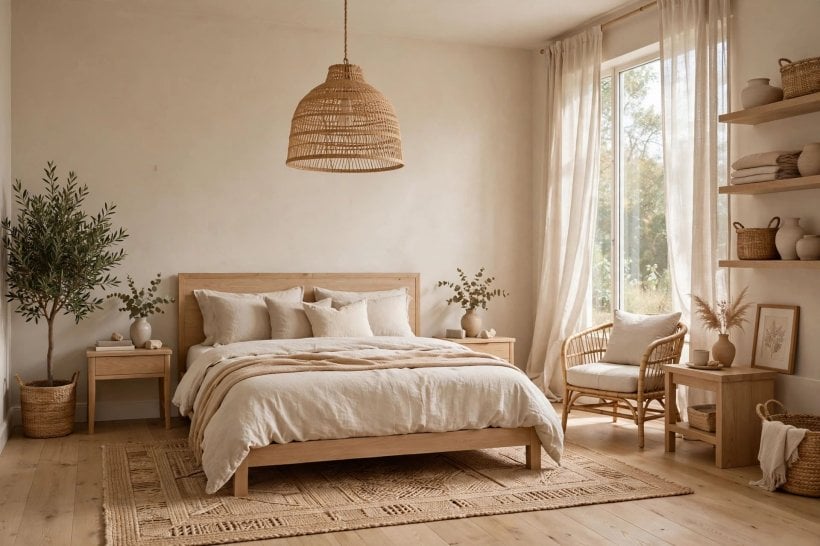
25. Paint walls and trim one colour
Colour-drenching walls, skirting and door frames in the same soft beige removes harsh white lines and makes the room feel enveloping.
26. Try limewash for movement
A limewash or clay-style finish gives flat walls a cloudy, hand-applied movement that flat emulsion cannot match.
27. Add simple wall panelling
Slim batten or shaker-style panelling behind the bed adds shadow lines and structure while staying firmly in the neutral family.
28. Hang oversized neutral art
One large abstract print in cream, sand and charcoal fills a wall calmly, where several small frames would feel busy.
29. Use arched details softly
An arched mirror, doorway or painted arch behind the bed introduces a gentle curve that softens all the straight furniture lines.
30. Keep ceilings warm white
A warm white ceiling lifts the room without the stark contrast of brilliant white, keeping the whole envelope cohesive.
31. Panel just the headboard wall
Limiting panelling to one wall keeps the project manageable and creates a clear, deliberate focal point behind the pillows.
32. Frame textiles as art
A piece of woven fabric, a vintage grain sack or a simple tapestry framed in oak brings texture to the wall plane.
5. Floors, Rugs and Underfoot Comfort
Bedrooms are experienced barefoot, so the floor deserves as much thought as the bed. Pale timber, soft rugs and quiet layering keep the base of the room as calm as its walls. Coastal schemes in our beachy interior design ideas use similar pale flooring to great effect.
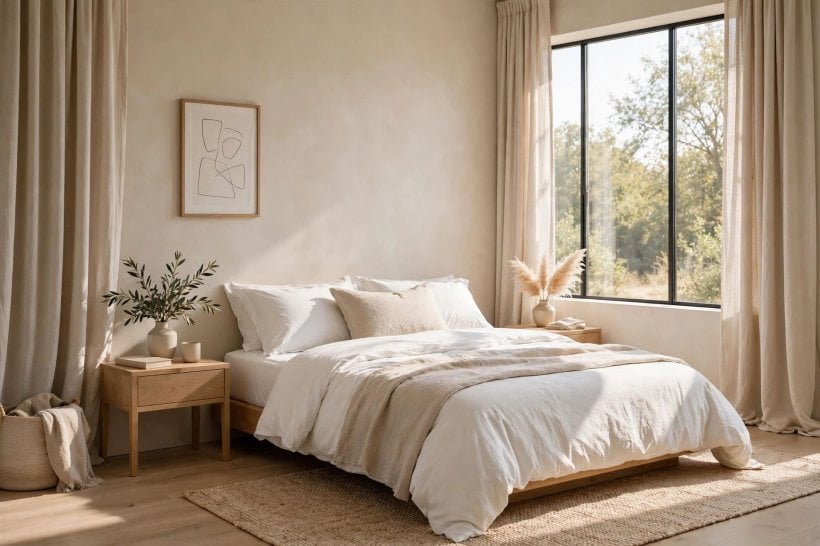
33. Choose pale, matte timber
Light wood floors with a matte finish reflect soft light and pair with every warm neutral you place on top.
34. Size the rug generously
A rug should extend well beyond both sides of the bed so your feet land on softness, not floorboards, each morning.
35. Pick a low-pile woven rug
Flatweave wool or jute-blend rugs add pattern and texture underfoot while staying easy to vacuum and calm to look at.
36. Layer a small rug over a large one
A big natural-fibre base rug with a smaller, softer wool rug on top gives depth and a designer feel for little effort.
37. Match rug tone to bedding
Echoing the bedding tone in the rug ties the floor to the bed and makes the whole scheme feel intentional.
38. Add sheepskin by the bed
A small sheepskin or high-pile mat where your feet land first adds a moment of everyday luxury in winter.
39. Keep thresholds quiet
Choose door bars and transitions in matching pale finishes so the eye travels smoothly from room to room without jolts.
6. Storage That Disappears
Clutter is the enemy of calm, and neutral rooms show disorder mercilessly. The answer is closed storage in matching tones, sized honestly for what you own. Our tiny house bedroom decor ideas prove small storage can still look serene.
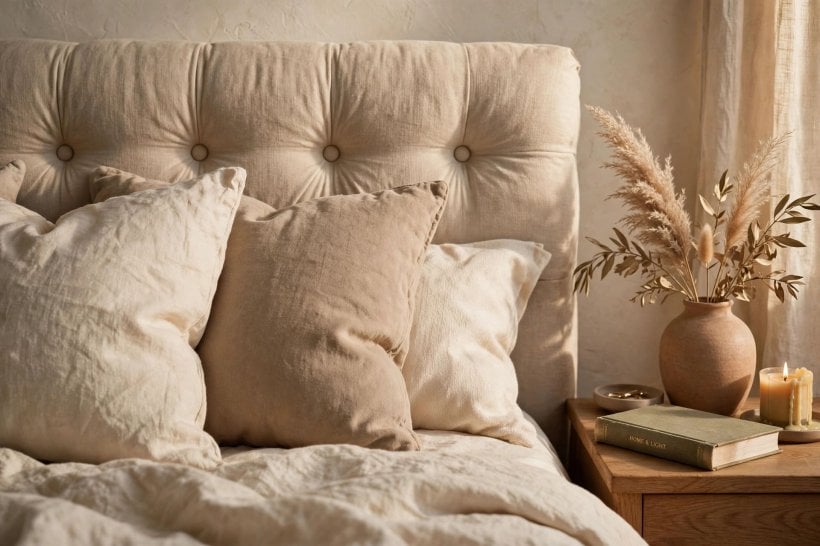
40. Pick handleless wardrobes
Flat, handleless wardrobe doors in a warm neutral read as wall rather than furniture, shrinking their visual footprint dramatically.
41. Paint built-ins to match walls
When alcove cupboards share the wall colour, storage melts into the architecture and the room feels bigger and quieter.
42. Use under-bed drawers
Drawers on runners under the bed swallow spare bedding and seasonal clothes without stealing a single centimetre of floor.
43. Choose closed bedside tables
Bedside drawers hide chargers, books and clutter that open shelves would display, keeping the sleep zone visually silent.
44. Add woven baskets for soft storage
Lidded baskets in seagrass or rattan corral throws and chargers while adding the natural texture neutral rooms thrive on.
45. Build a window seat with storage
A low seat beneath the window with a lift-up lid gives reading space and deep storage in the same footprint.
46. Keep surfaces two-thirds empty
Editing dresser and shelf surfaces until most of the plane is clear is the cheapest calm upgrade there is.
47. Decant into matching boxes
Uniform fabric or timber boxes on open shelves turn visual chaos into a tidy, tonal rhythm in minutes.
7. Lighting for a Soft Glow
Lighting decides whether beige reads golden or grey. Warm bulbs, multiple low sources and soft shades keep the palette glowing after dark. The calm-first approach in our zen interior design ideas is a good companion here.
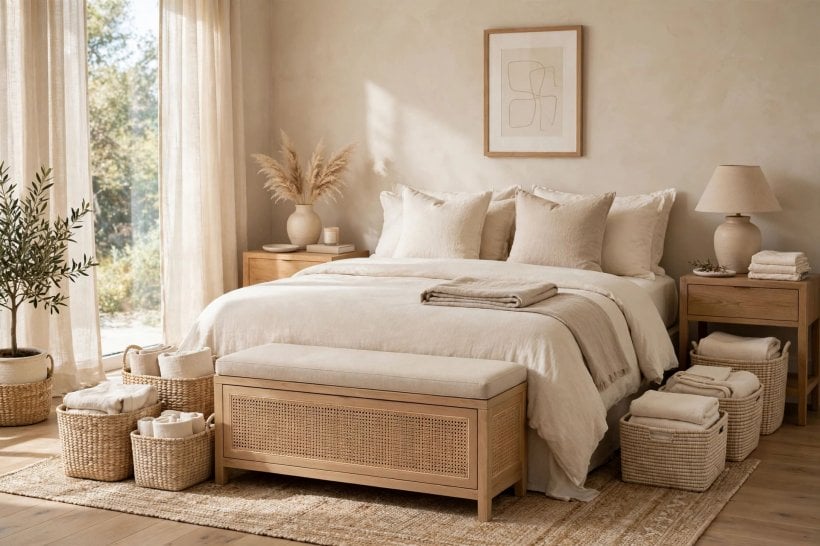
48. Use warm bulbs everywhere
Warm white bulbs in the softer range flatter beige beautifully, while cool daylight bulbs can turn it cold and greenish.
49. Layer three light levels
Combine ceiling light, bedside lamps and one low accent source so you can tune the mood from bright to barely-there.
50. Choose linen lamp shades
Natural linen shades diffuse light into a soft pool and add yet another layer of neutral texture to the room.
51. Add dimmers to main lights
Dimming the overhead light in the evening shifts the room into rest mode and makes pale walls glow rather than glare.
52. Hang pendants over bedside tables
Low pendants free up table surface, draw the eye upward, and frame the bed with a soft architectural symmetry.
53. Hide LED strips behind the headboard
A concealed strip washing the wall behind the bed gives a gentle halo that feels like a boutique hotel.
54. Keep metal finishes warm
Brushed brass, aged bronze or matte black fittings sit comfortably with beige; shiny chrome tends to feel cold beside it.
8. Windows, Curtains and Privacy
Window treatments are where neutral rooms gain their softness. Long, full curtains in natural fabrics filter light, muffle sound and make ceilings feel taller. For wider small-space context, browse our complete guide to tiny house and small-space interior design.
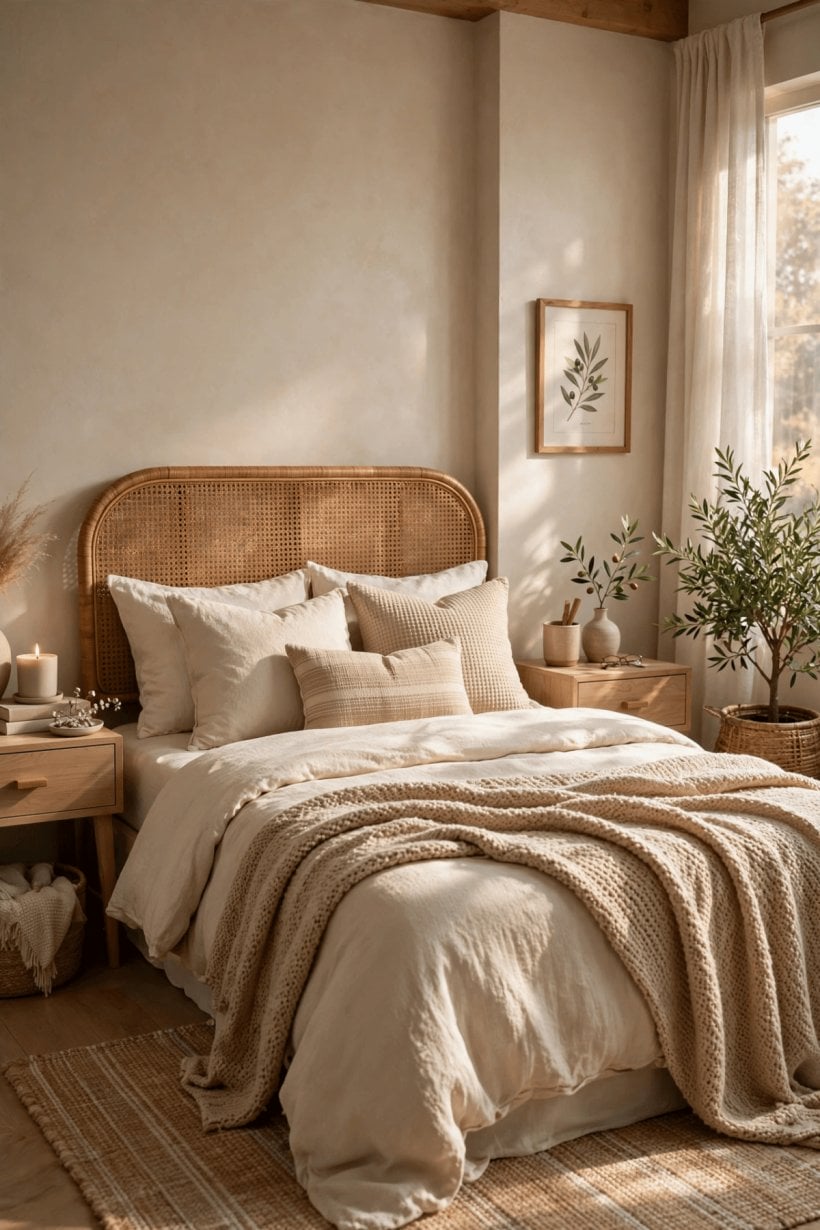
55. Hang curtains high and wide
Mounting the pole close to the ceiling and beyond the frame makes windows feel larger and lets in maximum daylight.
56. Choose unlined linen for daytime softness
Sheer or unlined linen panels filter harsh sun into a gentle glow while preserving privacy in overlooked rooms.
57. Layer sheers with blackout panels
Pairing a soft sheer with a heavier neutral blackout curtain gives you filtered days and properly dark, restful nights.
58. Let curtains just kiss the floor
Fabric that skims the floor looks tailored and elegant; curtains that stop short can make the whole wall feel awkward.
59. Match curtain tone to the walls
Curtains within a shade or two of the wall colour create a continuous, cocooning backdrop behind the bed.
60. Use woven blinds for texture
Roman blinds in woven grasscloth or textured cotton add an organic layer when full curtains would overwhelm a small window.
61. Keep tiebacks and poles simple
Slim matte black or brushed metal hardware disappears quietly, letting fabric and light remain the focus of the window wall.
9. Texture, Pattern and Finishing Touches
With colour restrained, texture becomes your decoration. This is the layer that stops neutral rooms feeling like show homes and starts them feeling lived in and loved. Even a bold scheme like a blue and white tiny house interior relies on the same layering principles.
62. Mix at least four textures
Linen, wool, timber and rattan together give the eye plenty to explore while the colour palette stays completely calm.
63. Add a bouclé cushion or stool
Looped bouclé fabric is practically the mascot of the modern neutral bedroom, adding cloud-like texture in a single piece.
64. Bring in one vintage piece
An old timber stool, worn leather cushion or antique mirror adds history and stops the scheme feeling catalogue-perfect.
65. Use greenery sparingly
One olive branch in a stoneware vase or a single leafy plant gives life and a soft green note beige loves.
66. Style a simple bedside stack
Two books, a small clock and a carafe on the nightstand look thoughtful; anything more starts to read as clutter.
67. Choose stoneware and ceramic accents
Handmade vases, bowls and lamps in matte stone glazes add weight and craft to shelves and tables.
68. Add a soft scent ritual
A candle or reed diffuser in a warm, woody scent completes the sensory picture of rest that the visuals begin.
10. Small Rooms, Rentals and Budget-Friendly Tweaks
None of this needs a big room or a big budget. The final ideas focus on compact spaces, rented homes and the inexpensive changes with the largest calming payoff.
69. Shrink the palette further in tiny rooms
In a very small room, two tones instead of five keeps things airy and stops the scheme fragmenting the space.
70. Swap curtains before painting walls
Rental-friendly long linen curtains in a warm neutral transform a room’s feel without touching a single wall surface.
71. Use a large mirror to borrow light
A big mirror opposite the window doubles daylight and makes pale walls work twice as hard in a compact room.
72. Refresh bedding before furniture
New washed-linen bedding in the right tone changes the room more per pound spent than almost any furniture swap.
73. Paint one piece of furniture
A dated dresser painted in the wall colour becomes calm, cohesive storage for the price of a small tin of paint.
74. Edit before you buy anything
Removing three items you do not love will improve a neutral room more than adding three new ones ever could.
75. Keep a one-in, one-out rule
Calm is maintained, not achieved once. Let each new cushion, throw or vase replace something, and the serenity lasts.
Final Considerations
The secret running through all seventy-five ideas is restraint with warmth: few colours, many textures, honest materials and storage that keeps daily life quietly out of sight. Start with the palette, fix the layout, then layer lighting and texture at your own pace. A well-planned beige bedroom never dates, because it was never chasing a trend; it was built around rest, and rest is always in style.
Treat this list as a menu rather than a marathon. Choose the five ideas that answer your room’s biggest frustrations first, live with them, and add more when you are ready. Calm rooms are assembled gradually, and beige rewards patience beautifully.



0 Comments