
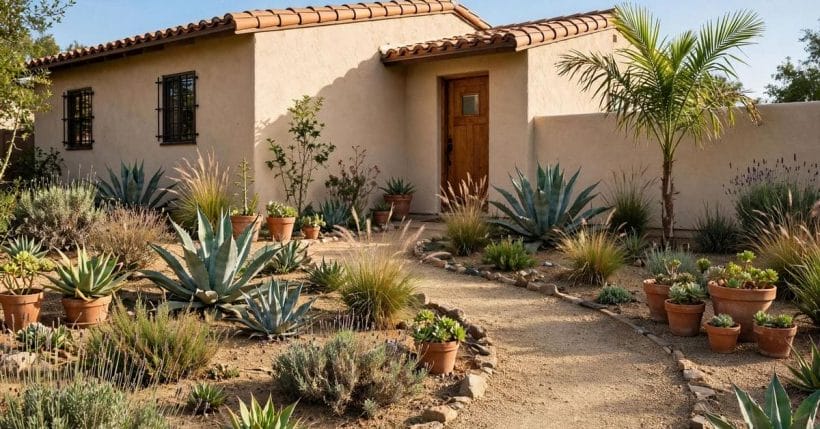
A southern California garden has a look that is hard to mistake: pale stucco, warm timber, gravel underfoot, sculptural leaves, and a sky that stays blue for long stretches of the year. This gallery looks at california landscape design as a southern subject only, from the street view to the back patio, and it treats the garden as a set of linked decisions about sun, shade, paths, ground cover and planting rather than as a single style to copy. Nothing here is a planting manual, and no result is promised, because a garden that settles happily on a sheltered coastal plot may struggle on a windy inland slope, and the same plant may behave quite differently in two gardens a short drive apart.
The photographs move in the order a visitor might walk the ground: the broad front view first, then the entry, the palms, the paths, the ground layer, the planting, the colour, the outdoor rooms, the evening garden and finally the slopes and levels that shape the whole plot. Where a neighbouring subject already has its own survey, this gallery points to it instead of repeating it, so the focus stays on the southern California angle throughout: how a garden in this light and this dry air can feel generous, calm and easy to live with.
1. Reading Sun, Shade and Shelter First
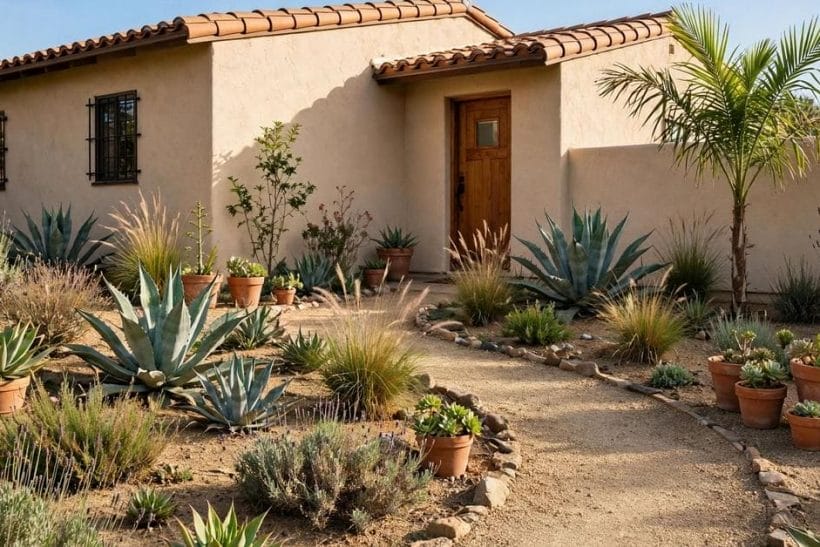
Every southern California plot has its own pattern of sun and shade, and that pattern matters more than any picture pinned to a board. A corner that bakes through the afternoon may sit in cool shadow by evening, while a wall that looks plain at noon can throw a long band of shade that makes a seat usable through the hottest hours. Watching those movements across a day, and again across the seasons as the sun shifts, gives a truer plan than any sketch drawn indoors, and it often decides where paths should run and where sitting spots will actually be used.
Shelter shapes the garden almost as much as sun. A garden open to a steady breeze can feel restless, while a walled corner can hold warmth and stillness that tender planting appreciates. Walls, fences, hedges and the house itself all break the wind and cast shade, and their effect changes with height, direction and the time of day. A low wall may shelter a bed without darkening it, while a tall hedge can turn a sunny corner into a shady one, so the structure around the garden deserves as much thought as the planting inside it.
Soil and drainage deserve the same early attention, described here only in general terms. Ground that drains freely after rain suits a different range of planting from ground that stays damp, and a low corner that holds water may be better kept as a path or a gravel area than as a bed. A walk around the plot after rain tells much of the story, and local nursery advice, suited to the actual site, will always beat general guidance when a planting choice feels uncertain.
2. The Front Approach and the Street View
The front garden is the part of the landscape most people see, and it works best when it reads as one calm composition from the street. A clear path to the door, a simple arrangement of beds on either side, and planting that does not crowd the house usually gives a better first impression than a busy collection of competing features. The house itself sets the tone: warm stucco, a timber door and a tiled roof all sit happily beside gravel, stone and sculptural leaves, while planting that echoes those warm tones keeps the whole frontage feeling settled rather than assembled.
Scale is the quiet discipline of the front garden. A small house can be overwhelmed by planting chosen for its nursery size rather than its mature size, while a wide frontage can look empty if the planting stays low and scattered. Thinking in terms of mature height and spread, and leaving breathing room around doors, windows and paths, keeps the frontage generous over time. For a wider survey of how front gardens are composed from the street, the front yard landscaping ideas collection looks at curb appeal in the same spirit, and this gallery links to it rather than repeating its ground.
Edges and thresholds finish the front approach. A low wall, a stone edge or a simple change from gravel to paving can mark where the public street ends and the private garden begins, and that small gesture makes the entry feel intentional. Keep the threshold clear and easy to walk, with nothing that forces a visitor to step around planting or duck beneath branches, and let the door itself stay visible from the street, framed rather than hidden by what grows beside it.
3. Palms as Vertical Accents
Palms give a southern California garden its vertical lift. Where most garden planting stays low and spreading, a palm draws the eye upward, breaks a long horizontal wall, and marks a corner or an entry with a single graceful gesture. One well placed palm can carry a whole composition, while a loose group can give a larger garden rhythm and shade, and the choice between one and several depends on the size of the plot and the feeling the garden is meant to give.
Placement matters more than number. A palm set where it has room to grow to its mature crown will look settled for years, while one crowded against a wall, a roofline or overhead wires will eventually press against its neighbours and need constant attention. Mature size, not nursery size, is the measure to plan by, and tall work around an established palm belongs to qualified professionals rather than to a ladder and a hopeful afternoon. For the wider subject of palms in garden design, the palm tree backyard ideas gallery covers landscaping with palms in full, and this gallery keeps its own focus on how palms sit within the southern California composition.
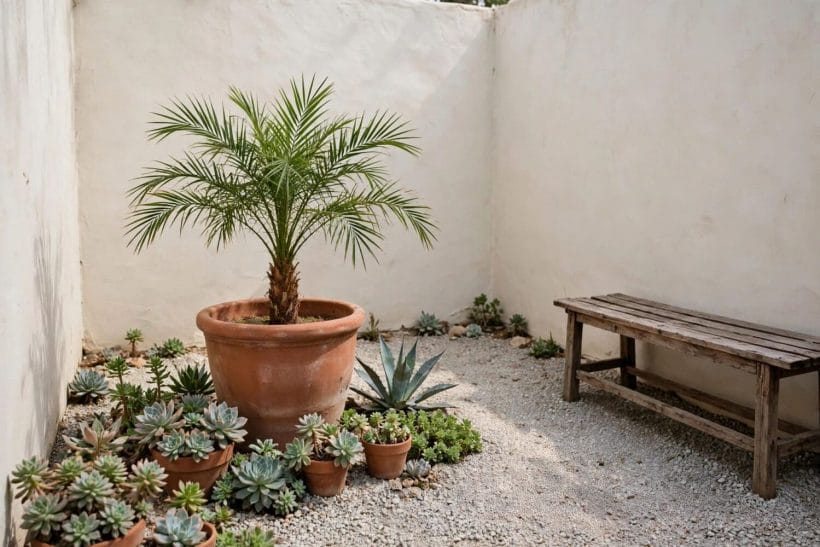
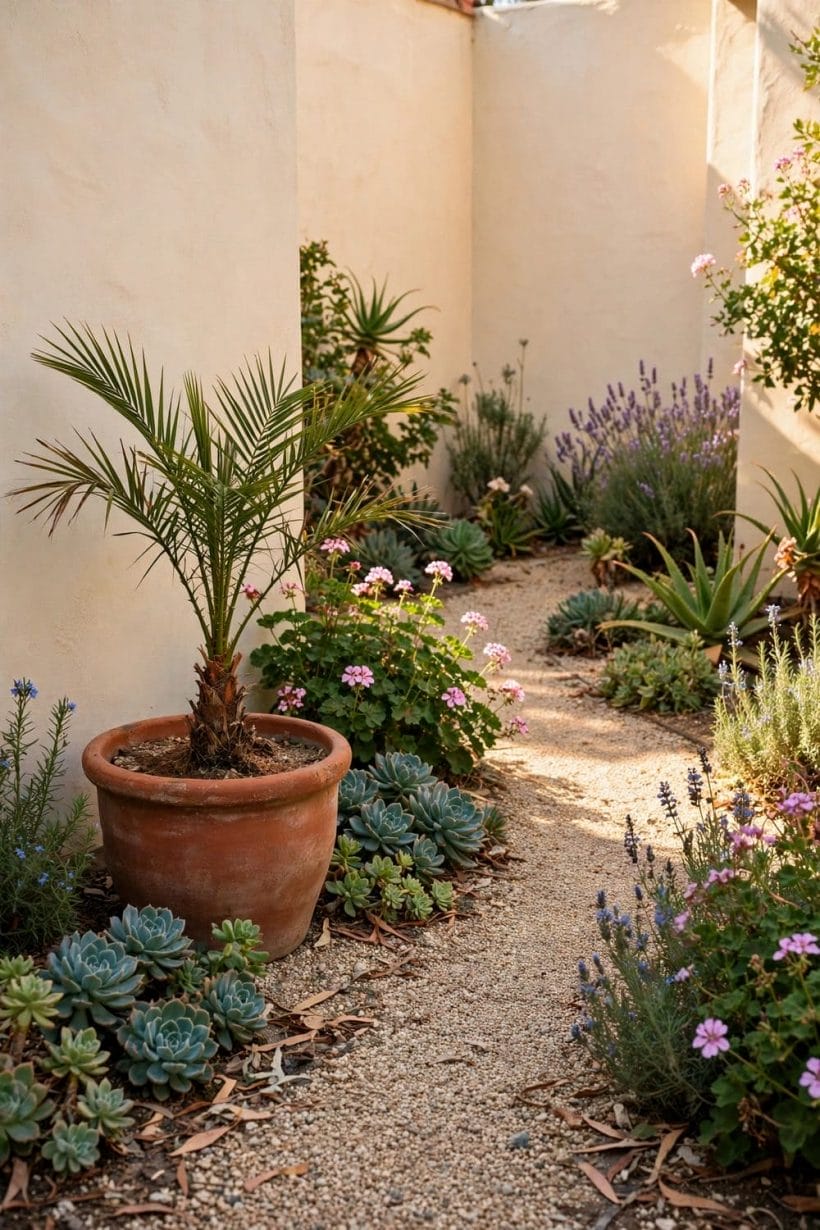
Underplanting around a palm should stay low and calm so the trunk and crown can be read clearly. Gravel, low succulents and rounded shrubs all let a palm stand out, while tall companions can compete with the very feature the planting is meant to show. Colour can come from foliage rather than flowers, with silvery leaves, deep greens and warm bark tones all sitting comfortably against a palm trunk, and a simple ground layer beneath keeps the whole arrangement feeling tended rather than tangled.
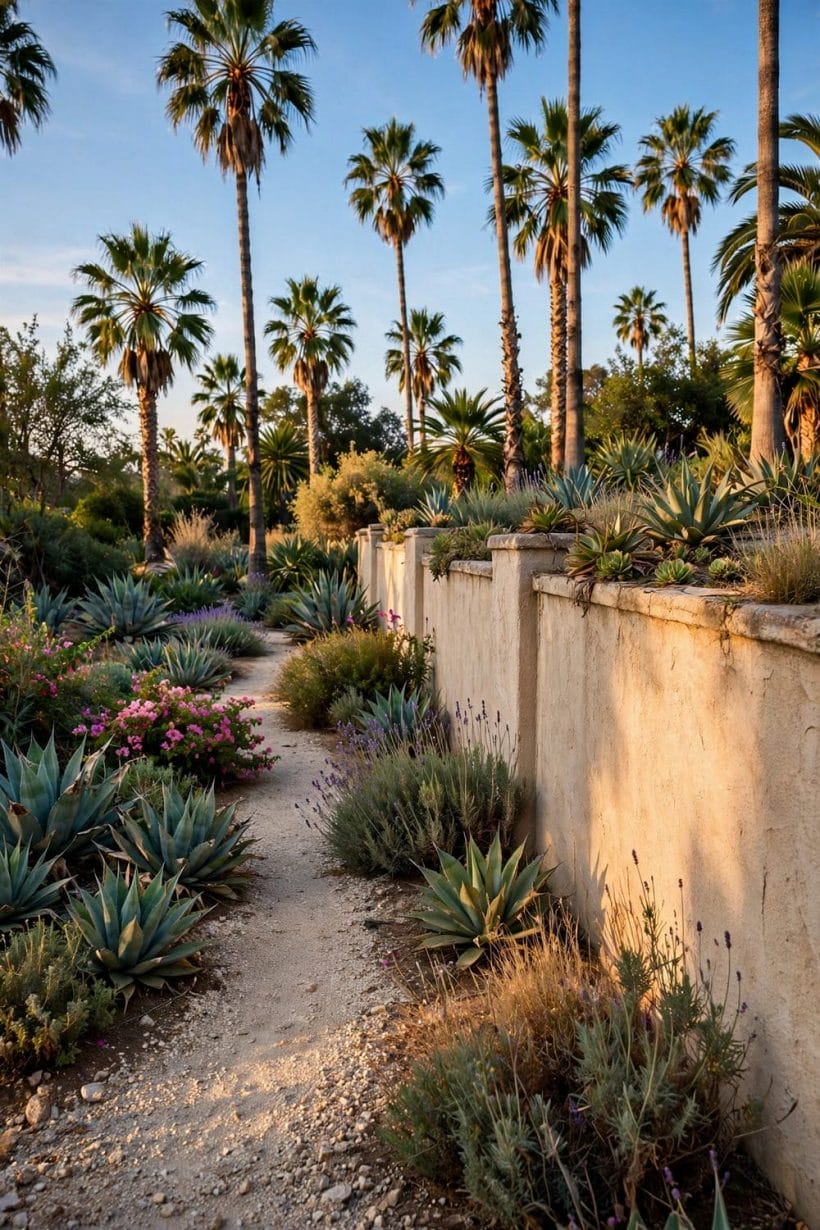
4. Paths, Steps and Easy Movement
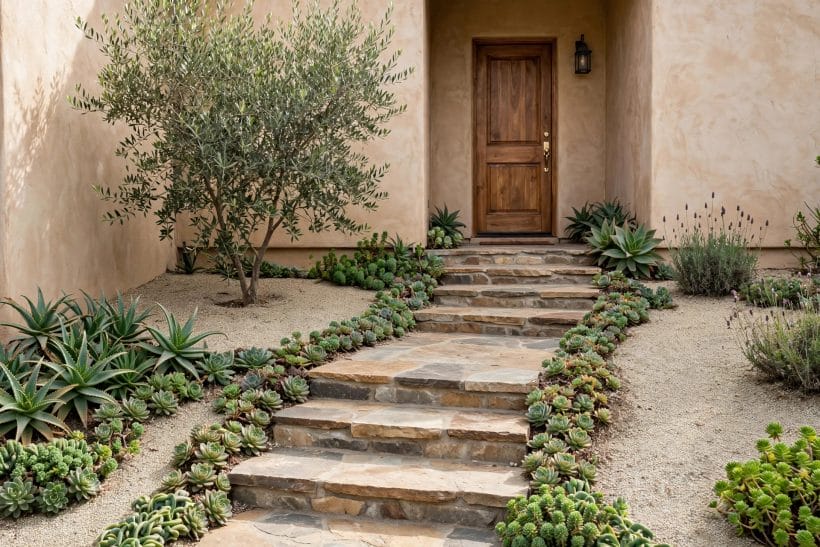
A garden is walked as much as it is looked at, and paths decide whether that walking feels easy or awkward. A generous main path from gate to door, with a firm and even surface, invites use in all weathers, while narrow or uneven routes discourage the very wandering that makes a garden pleasurable. Width matters most where two people might walk side by side, and a gentle curve can make even a short garden feel longer and more interesting than a straight march from one end to the other.
Steps deserve the same care as paths, especially where a garden changes level between street, terrace and back yard. Wide, shallow steps with a steady rhythm feel safer and more graceful than steep or uneven ones, and a handhold or a wall to steady against can make a stepped garden welcoming for every visitor. Edges should stay visible in low light, and planting should be kept clear of the walking line so that nobody has to brush past leaves or step around a pot to climb. For a survey devoted to the walk itself, the garden steps ideas collection covers planting, paths and beds in the same practical spirit.
Secondary paths can be quieter and simpler than the main route. A gravel side path to a back corner, a stepping stone route through a bed, or a narrow walk beside the house all give the garden a sense of depth and discovery without needing the formality of the entry. Keep these routes clear of overhanging growth and loose material that migrates onto the walking surface, and let each one lead somewhere worth reaching, whether that is a seat, a view or simply a sunny corner to pause in.
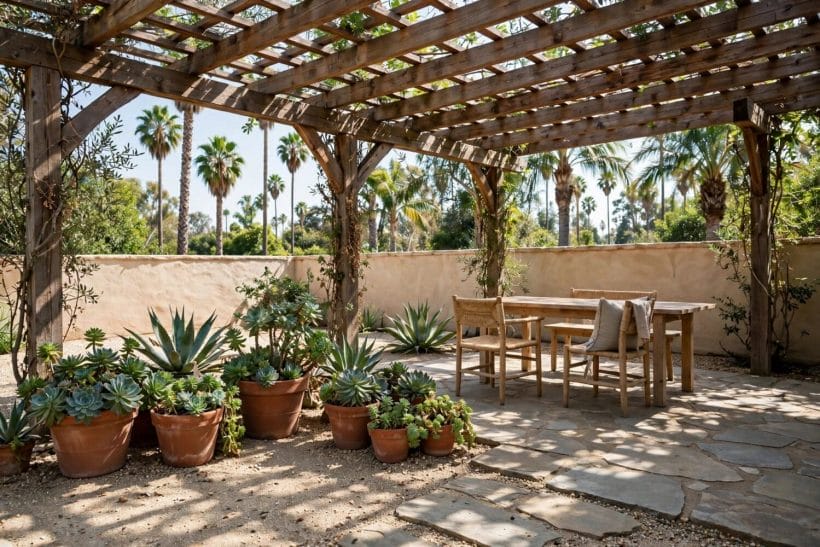
5. The Ground Layer: Gravel, Stone and Mulch
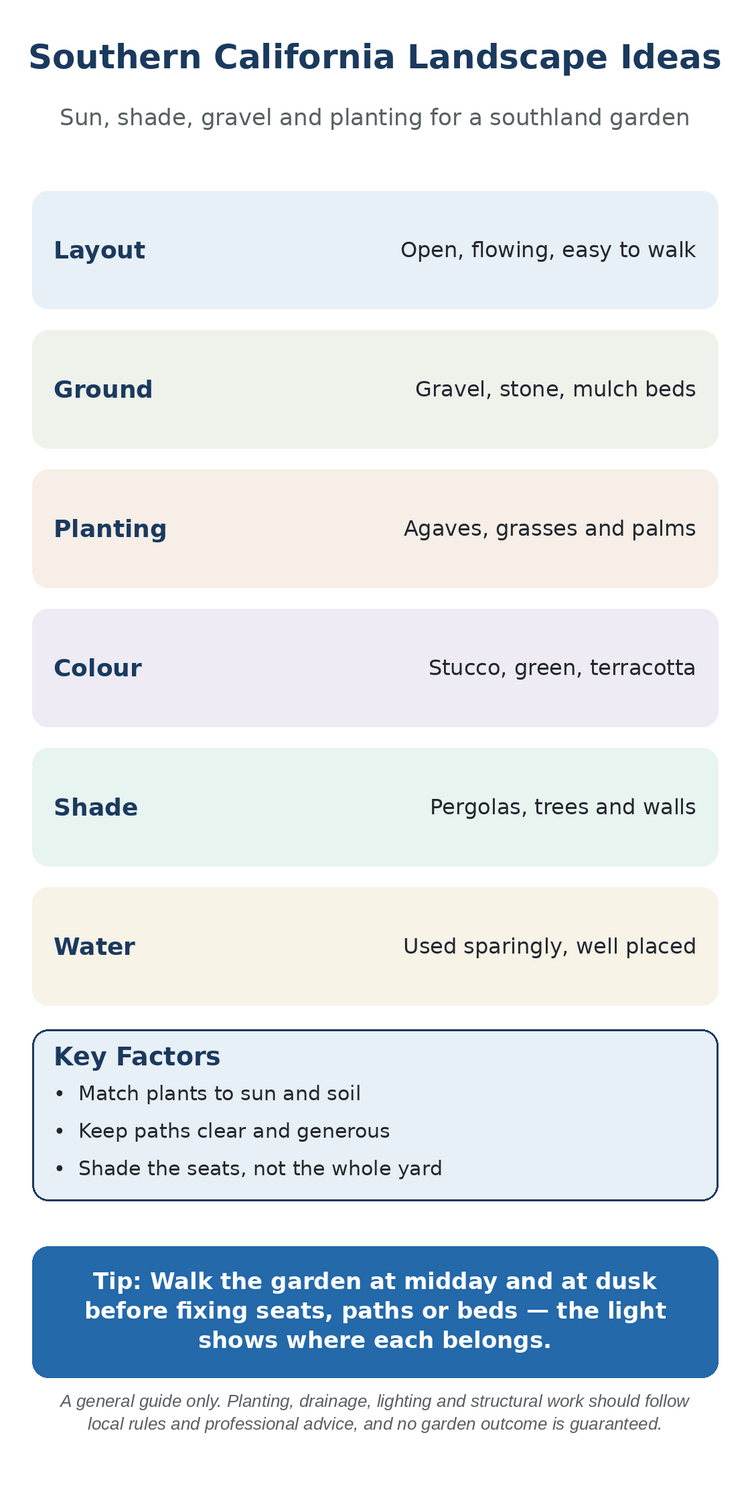
What lies at the foot of the planting does much of the quiet work in a southern California garden. Gravel suits the dry air and the sun, giving beds a pale, even surface that sets green foliage off beautifully, while stone brings weight and permanence to paths, edges and terraces. Mulch gives beds a softer, darker finish and can suit shadier corners where gravel might feel harsh, and lawn, where it is kept, gives a green carpet that suits family gardens where children play. Each surface has its own upkeep rhythm, and the honest choice is the one the household will actually maintain.
Mixing surfaces takes a little judgement. A gravel field with stone edging, a paved terrace beside a mulched bed, or a lawn panel framed by gravel paths can all work, provided the changes of material happen at a clear edge rather than drifting into one another. Edging keeps each material where it belongs, stops gravel from wandering onto paths and lawn from creeping into beds, and gives the whole garden a crisp outline that makes mowing, sweeping and tidying simpler. Keep edges low enough to step over comfortably and set them so they do not trap water against walls or plant stems.
Colour comes from the ground itself as much as from flowers. Warm gravel, pale stone, red-toned mulch and weathered timber each set a different backdrop for green leaves, and the choice changes how the whole garden reads in strong sun. A pale surface bounces light around and can make a shady corner feel brighter, while a dark mulch makes foliage stand out sharply. Trying a small patch of each material in the garden’s own light before committing to the whole plot is a modest step that can prevent a large regret.
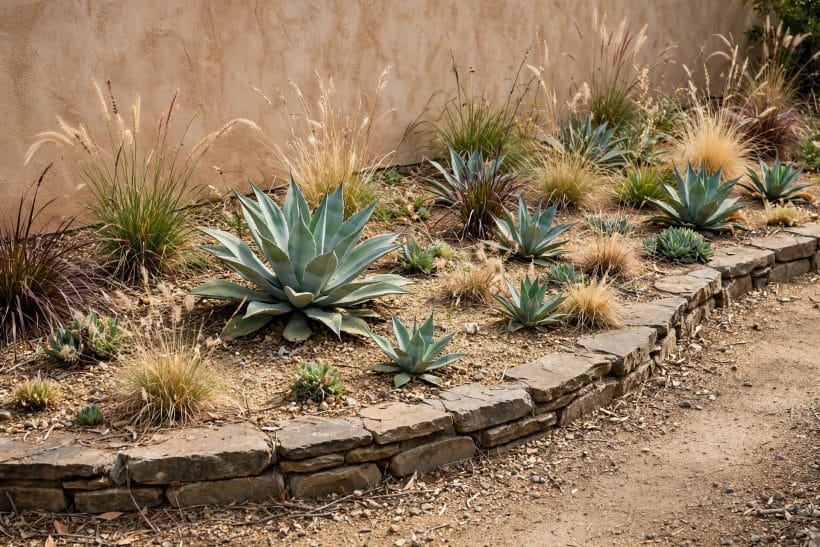
6. Planting for Dry Sun
Planting for a southern California garden starts with the site, not with a shopping list. Sun, shade, wind, soil and drainage all shape what may settle happily, and a plant that thrives in one garden may merely persist in another, so local advice suited to the actual plot is worth seeking before buying. Sculptural leaves, ornamental grasses and palms all suit the look of the region, and they are often chosen because their shapes hold up well in strong light and dry air, but no choice guarantees a result, and patience is part of the bargain, since a new planting may take a while to look like the picture in mind.
Grouping planting by its needs, in general terms, makes care simpler. Plants that enjoy full sun and free-draining ground can share a bed, while plants that prefer shade and shelter can gather in a cooler corner, and keeping those groups apart avoids the awkward compromise of watering one plant too much to suit another. Layers help too: low groundcover at the front, rounded shrubs in the middle, and a tree or palm rising behind can give a bed depth without crowding, and leaving room between plants for their mature spread keeps the bed from looking tangled as it grows.
For companions that suit sun and free-draining ground, the desert southwest plants guide offers planting ideas in the same dry-sun spirit, and this gallery links to it rather than re-teaching its plant survey. The southern California angle here stays on arrangement and effect: how planting masses are shaped, where they sit in relation to paths and walls, and how they change the feeling of the garden through the day as light moves across them.
7. Colour From Walls, Pots and Foliage
Colour in a southern California garden often comes from the house and the containers as much as from flowers. Warm stucco, weathered timber, terracotta pots and pale stone all carry colour through the whole year, while flower colour comes and goes in flushes, so leaning on walls, pots and foliage gives a garden a steadier palette. Silvery leaves, deep greens, bronze tones and variegated foliage can hold their colour through the growing season, and they sit comfortably against warm walls without competing for attention.
Pots are useful for colour because they can be moved with the seasons and the light. A bright pot can sit near the patio through the summer and move to a sheltered spot when the weather turns, while a group of pots at different heights can build a layered corner on a terrace where planting in the ground is not possible. Heavy, stable containers suit taller planting, since a light pot can topple in wind once its crown catches the breeze, and drainage matters, since planting of this kind dislikes sitting in water. Keep pot groups clear of walkways so nobody trips over an edge in the dark.
By contrast, a lush tropical canopy belongs to a different garden mood, and it has its own survey: the tropical landscaping ideas collection covers canopy, big leaves and water in a garden without fences, and this gallery points to it for that angle rather than borrowing it. The southern California palette stays drier and more restrained, with warm walls, dusty greens and terracotta doing the work that bold tropical colour does elsewhere, and that restraint is part of its calm.
8. Patios, Pergolas and Outdoor Rooms
The patio is the outdoor room of a southern California garden, and it works best when it is placed where shade actually falls rather than where it looks tidy on a plan. Watching the shade through a summer day before fixing furniture in place makes the difference between a chair that gets used and one that does not, and a pergola, a tree or a wall can all supply that shade in different ways. Timber, woven and metal furniture all sit well in this setting, and pale cushions keep the look cool and relaxed, while a low table and a lantern or two are often enough, since the garden itself supplies the decoration.
Surfaces for the patio should suit both bare feet and wet weather. Stone, concrete and timber each give a different feeling underfoot, and each pairs differently with gravel paths and planted beds, so the patio surface is worth choosing alongside the paths rather than after them. For hard surfaces that sit well beside planting, the concrete patio ideas collection covers poured and finished surfaces in detail, while the backyard patio ideas collection shows how small outdoor rooms can be arranged from doorstep to garden edge, and both are linked here rather than repeated.
Keep the patio clear of falling leaves and fruit where possible, and site it where dropped material can be swept up without a struggle. Water nearby adds pleasure to a shaded seat, whether a small bird bath or a simple fountain, though any water feature needs its own care and should be kept clear of overhanging growth that drops debris into it. Evening use extends the value of the space, with soft lights, a clear path back to the house, and seating that invites lingering rather than merely looking good from indoors.
9. Evening Light and the Garden After Dark
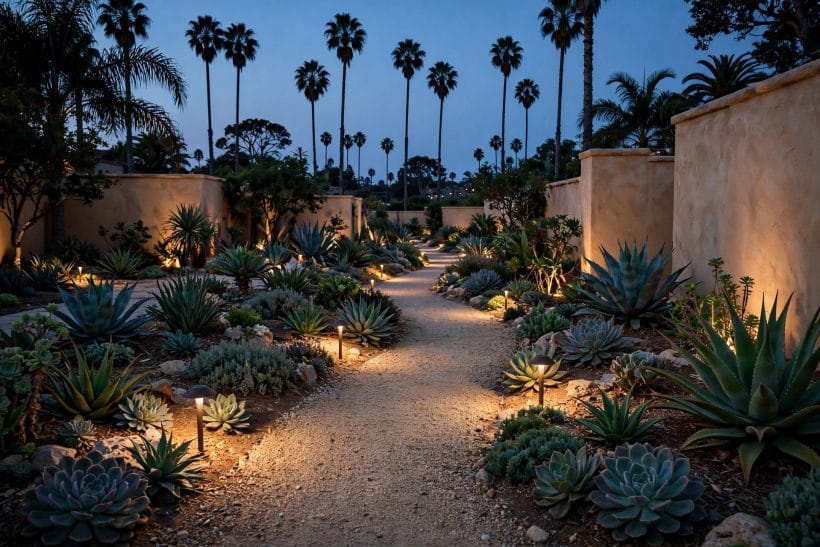
A southern California garden changes character as the sun drops. Long shadows stretch across gravel, stucco walls turn gold, and planting that looked sculptural at noon becomes silhouetted and quiet. That evening hour is often the most used part of the day in a warm climate, and it deserves planning of its own, with seats placed where the last light falls, paths lit gently enough to walk safely, and planting that holds its shape in silhouette rather than dissolving into darkness.
Lighting should stay soft and low. Ground level lights along a path, a lantern on a table, or a wash of light on a wall can all make a garden welcoming after dark without turning it into a floodlit stage, and keeping lights clear of trunks, roots and planting avoids damage and glare. Electrical and lighting work belongs to qualified professionals, and any fitting near water or in a path should be chosen and placed with that professional guidance rather than improvised. The aim is a garden that feels safe to walk and pleasant to sit in, not one that competes with the night sky.
Sound and scent complete the evening garden in quiet ways. Birds visiting a water bowl, leaves moving in a light breeze, and scented planting near a seat can all make an evening outdoors feel generous, though each needs its own care and none should be forced. A seat that faces the last light, a path that leads safely back to the door, and planting that frames rather than blocks the view will usually give more pleasure than any single feature added for effect alone.
10. Hillsides, Levels and Practical Checks
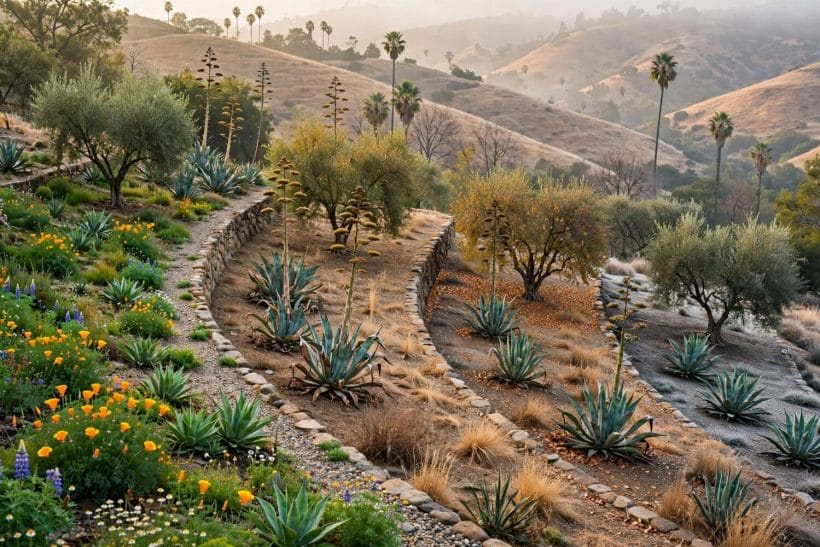
Many southern California gardens sit on slopes, and a hillside changes every decision that follows. Terraces, low retaining walls and stepped paths can turn a steep plot into a series of usable levels, each with its own character, while a single unbroken slope can feel awkward to walk and hard to plant. Structural and retaining work belongs to qualified professionals, and drainage on a slope deserves professional attention too, since water moving downhill can reshape beds and paths if it is not guided with care.
Before anything is planted, a short round of practical checks can save years of compromise. Measure the space at mature size, not at nursery size, and mark the spread of a tree or palm on the ground if it helps to see it. Check for overhead wires, underground services, drains and boundary lines, and keep planting clear of them all, since roots and crowns do not respect plans drawn without them. Check local rules too, since some areas set distances from boundaries or restrict certain plant types, and a quick enquiry is far simpler than a forced removal later.
Buying well matters as much as planting well. Look for planting with healthy, evenly coloured foliage and no signs of damage, and ask the seller about expected size, light needs and cold tolerance in plain terms. Keep the label or note the plant name, since knowing what is planted makes later care and advice far easier, and transport deserves care as well, since leaves bruise easily and a plant tied or bent roughly for the journey may carry the marks for a long time. For anything beyond a small, easily handled plant, professional help with moving and siting is the sensible choice.
Final Considerations
A southern California garden rewards a slow eye and a light hand. The gardens that look best are rarely the ones with the most planting; they are the ones where each plant has room, light and a reason to be where it stands, where the ground layer is calm, the colours sit easily together, and the seating falls where the shade actually lands. Start with the plot as it is, choose planting that suits the site at mature size, and let the garden settle before adding more, because a garden given time usually rewards patience with shade, structure and a green presence that holds the plot together through the seasons.
Keep the hedged view in mind throughout this california landscape survey. Plants may thrive or merely persist depending on climate, soil, water and care, and no outcome is guaranteed by any guide, including this one. Local advice, suited to the actual site, will always beat general guidance, and professional help is the right call for large specimens, tall work, structural changes and anything that feels beyond comfortable reach. With those cautions observed, a southern California garden can be a generous, calming place: a little drier than a lawn, a little calmer than a flower garden, and unmistakably its own kind of outdoor room.

0 Comments