
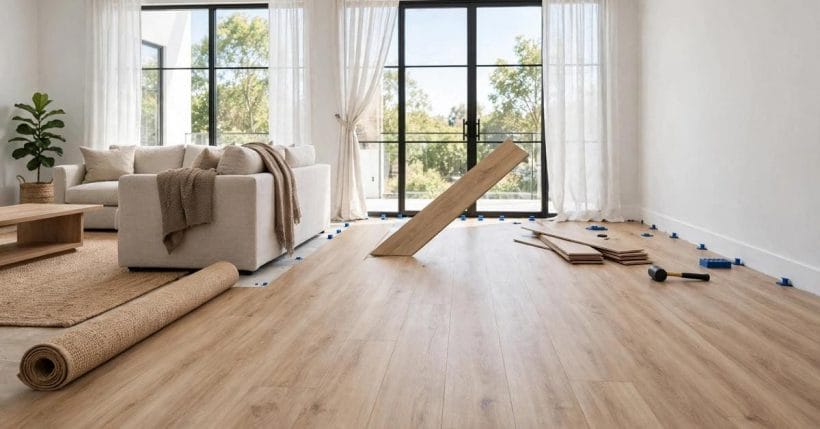
Every vinyl plank box promises the same three things — waterproof, hard-wearing, easy to fit — and every box means something slightly different by each of them. The planks themselves are honest enough; it is the small print around them that decides how a floor actually lives.
This guide reads a vinyl plank the way an inspector would: wear layer first, then the core, the build, the water claims, the warranty and the pattern of what other owners report. No verdicts about any named range — just the checks that separate a good plank from a good photograph.
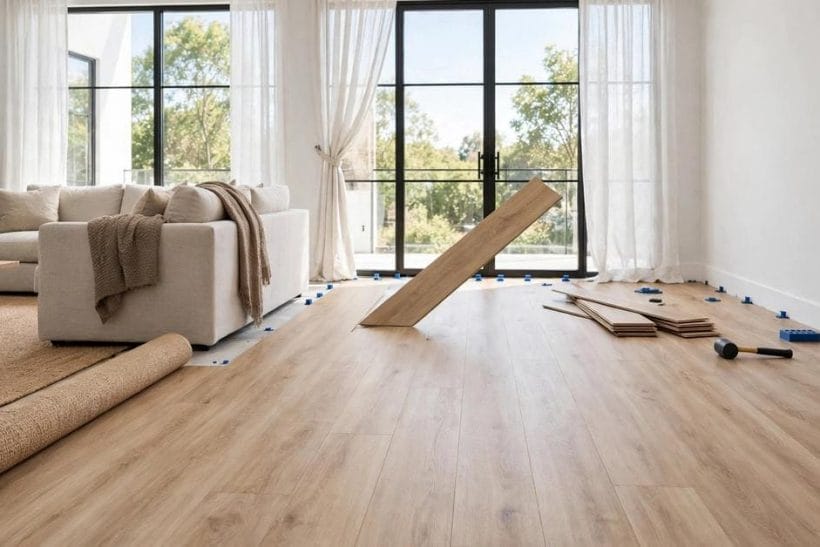
1. Vinyl Plank Flooring at a Glance
Five checks carry most of the decision, and the table below is the whole guide in miniature. Flooring in its full breadth — every material, every room — is gathered in the tiny house flooring ideas collection; this post stays with one material and reads it closely.
| Check | What it is | In a word |
|---|---|---|
| Wear Layer | The skin that takes the traffic | First check |
| Core Types | Rigid or flexible builds | Sets the feel |
| Thickness and Locking | Judge the build as a whole | Build |
| Water Claims | A word to interrogate | Small print |
| Warranty & Reviews | Paper terms and owners’ patterns | Patterns |
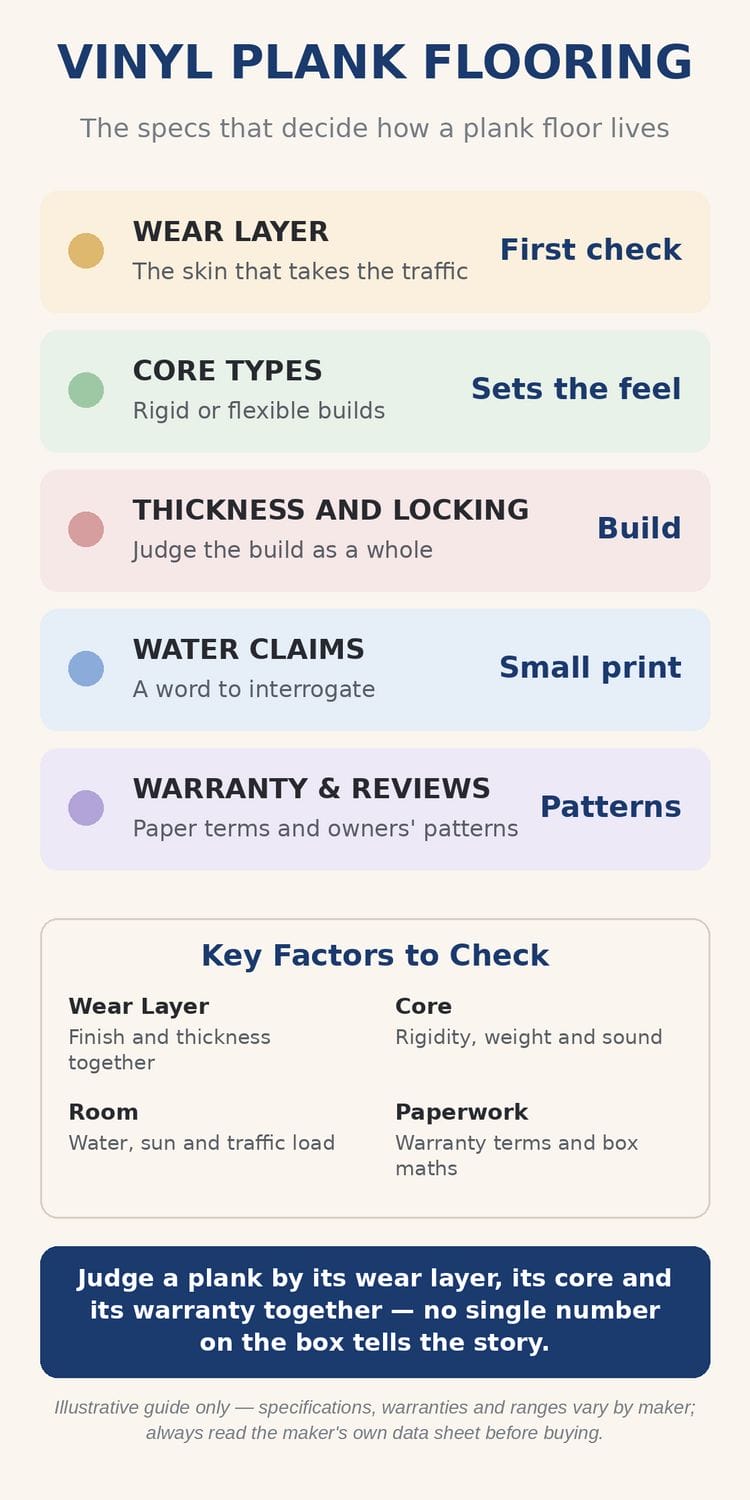
Four factors decide how the checks land in a real room: the wear layer, because finish and thickness work together; the core, because rigidity sets weight, sound and feel underfoot; the room, because water, sun and traffic load a floor unevenly; and the paperwork, because warranty terms and box maths are where promises become specific. The sections below take them in order.
2. The Wear Layer: The Skin That Takes the Traffic
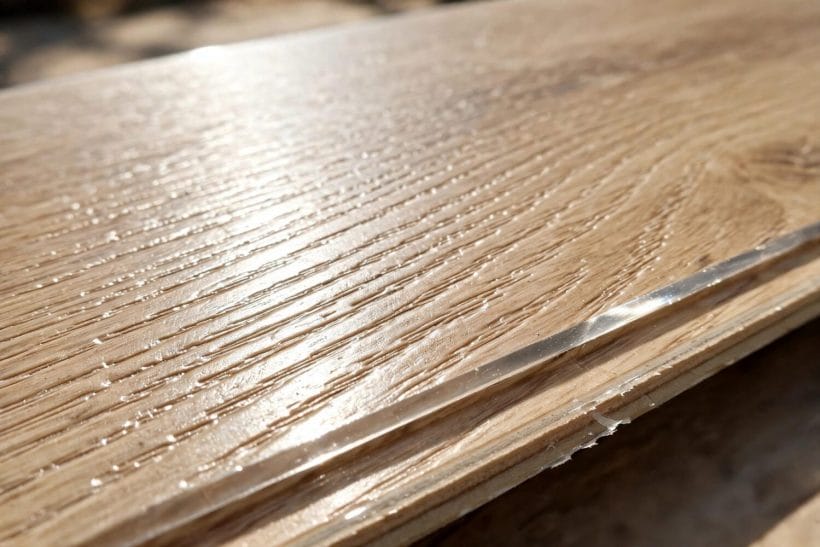
Hold a plank up to the light, as in this photograph, and the top of it is doing two jobs at once: the printed film carries the wood or stone pattern, and above it sits a clear protective skin — the wear layer. Everything a room does to a floor lands on that skin first.
Thickness Is Only Half the Story
Wear layers are sold by thickness, and thicker is generally tougher — but the finish over the print matters just as much. Hardened, textured finishes shrug off grit and chair castors better than soft glossy ones at the same thickness, which is why two planks with matching numbers can age very differently in a hallway. Read the thickness and the finish as one fact, never as two.
What the Wear Layer Cannot Do
The skin protects the print; it does not protect the plank. Dents from heavy furniture, cuts from dragged sharp edges and fading in hard sun are core and chemistry questions, not wear-layer ones. A buyer who understands that division stops asking one number to guarantee the whole floor — and starts reading the rest of the box.
3. Core Types: Rigid and Flexible Planks
The two planks in this portrait tell the family’s story: one bends a little in the hand, the other stays board-stiff. Between them lies the biggest practical choice in vinyl plank — what the plank is built around.
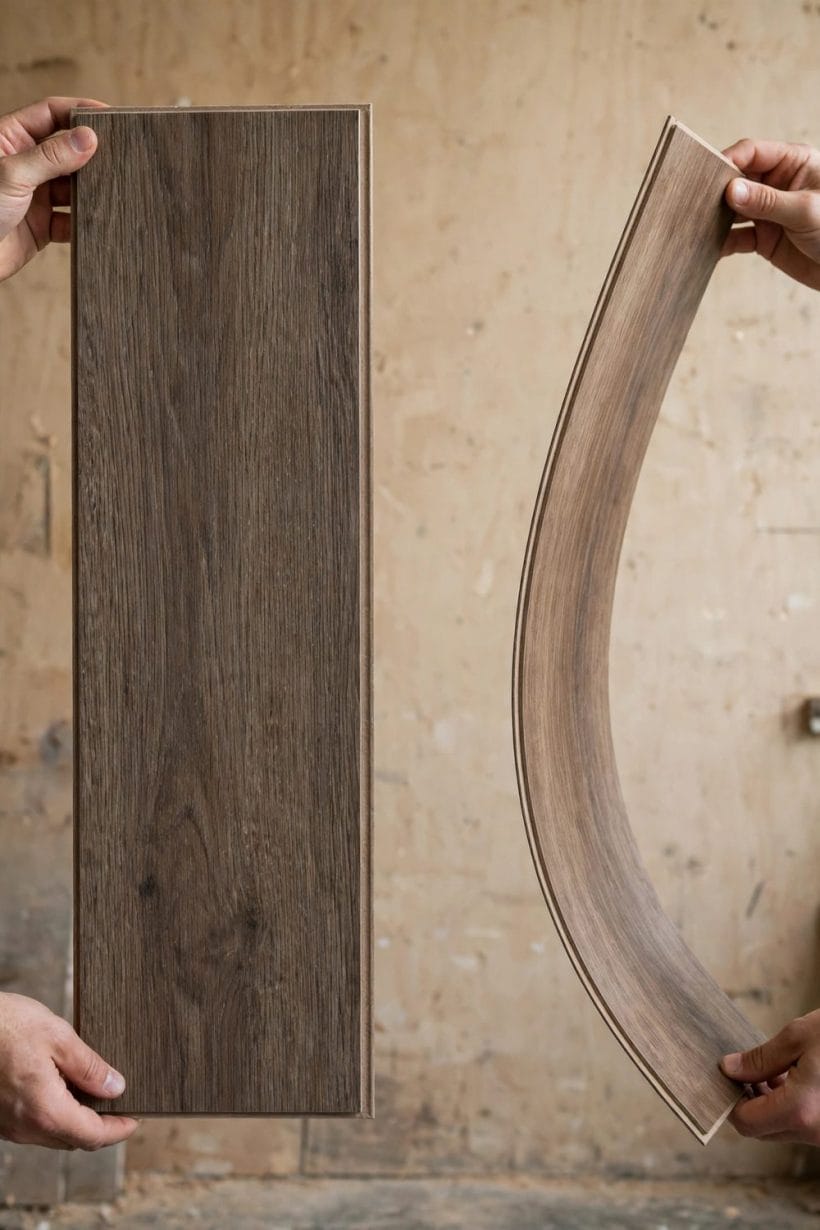
Rigid Cores: Stone-Composite and Wood-Composite Builds
Rigid-core planks are built around a dense composite centre — commonly a stone-and-plastic composite, or a wood-fibre composite in some ranges. They feel solid, stay flat over minor subfloor unevenness, and click together with a reassuring snap. Their weight and hardness are the same fact: a rigid plank forgives a wavy floor and telegraphs a dropped pan.
Flexible Planks: The Traditional Build
Flexible vinyl planks are vinyl through and through — thinner, lighter, warmer and quieter underfoot, and more inclined to follow the shape of whatever lies beneath them. On a smooth, sound subfloor they are lovely; on a rough one they show every ridge. Neither build is the better one. The subfloor you actually have is the referee, and section 7 returns to it.
4. Thickness, Plank Size and the Locking System
The stack in this photograph — planks in several lengths, edges fanned to show their profiles — is the reminder that a floor is a build, not a number. Overall thickness, plank format and the lock between planks work as one system.
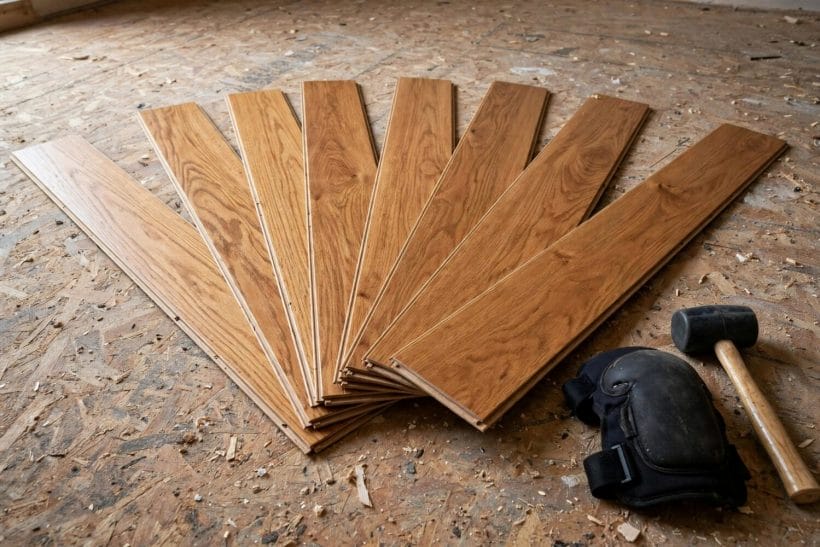
Overall Thickness, Read Whole
A plank’s quoted thickness may or may not include an attached underlay pad, and the difference changes what the figure means. A thinner plank with a pad can feel kinder than a thicker one without. Compare like with like: core plus pad plus wear layer, or do not compare at all.
The Lock Is the Floor’s Skeleton
Click-lock edges are where vinyl floors succeed or fail over years. A deep, crisply moulded profile locks tight and stays tight; a shallow or fragile one opens hairline gaps that collect dirt and catch light. In the shop, click two offcuts together and pull: the joint should resist evenly along its length, and the surface should sit flush with no lip to feel.
Plank Size and the Room
Long, wide planks make small rooms feel calmer and large rooms feel grander, but they ask more of the subfloor’s flatness and show bowing sooner. Shorter, narrower formats are the traditional forgiving choice. Match the format to the room’s dimensions — the same dimensions that drive the layouts in the tiny house floor plans collection — and to the floor’s condition, not to the showroom photograph.
5. Underlay: Attached Pads and Separate Sheets
Two honest answers sit side by side in this photograph: a plank with its cushion already bonded beneath, and a roll of separate underlay waiting to be laid first. Both work. They fail differently, which is what a buyer needs to know.
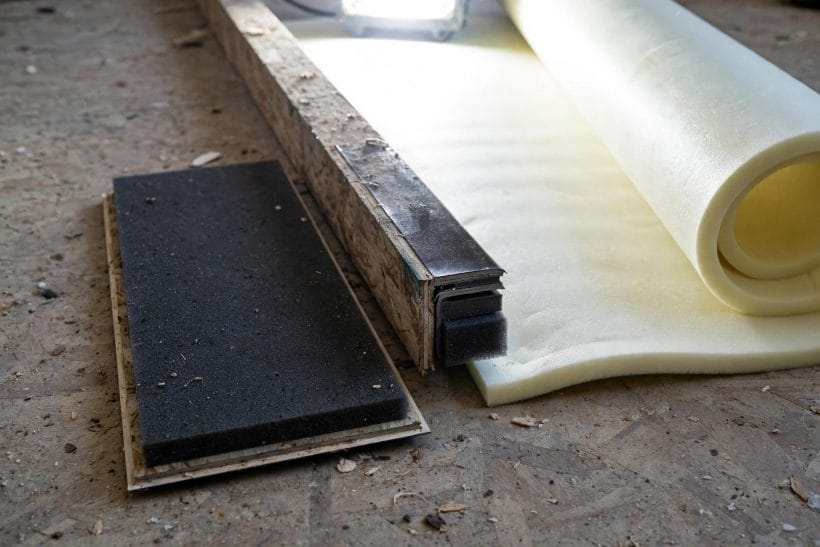
Attached Pads
A bonded pad speeds fitting, guarantees the pad and plank are matched, and removes a decision. It also removes a choice: the pad’s thickness and softness are fixed, and on a floor that needed a specialist membrane — for moisture, or for sound between storeys — the bonded pad may not be the one the room required.
Separate Underlay
A separate sheet lets the buyer match the underlay to the room: moisture barriers over ground-floor slabs, acoustic sheets in flats, simple foam over sound boards. The cost is a second material to buy, lay flat and keep unwrinkled, and a second set of instructions to obey. Either way, check what the plank’s own instructions allow — some locking systems approve only certain pads, and the warranty in section 9 remembers what the buyer forgets.
6. Waterproof, Water-Resistant and Other Water Words
The kitchen in this photograph is where the water words earn their keep: kettles, sinks, pet bowls and the daily tide of small spills. Vinyl’s resistance to that tide is real — and routinely oversold in translation.
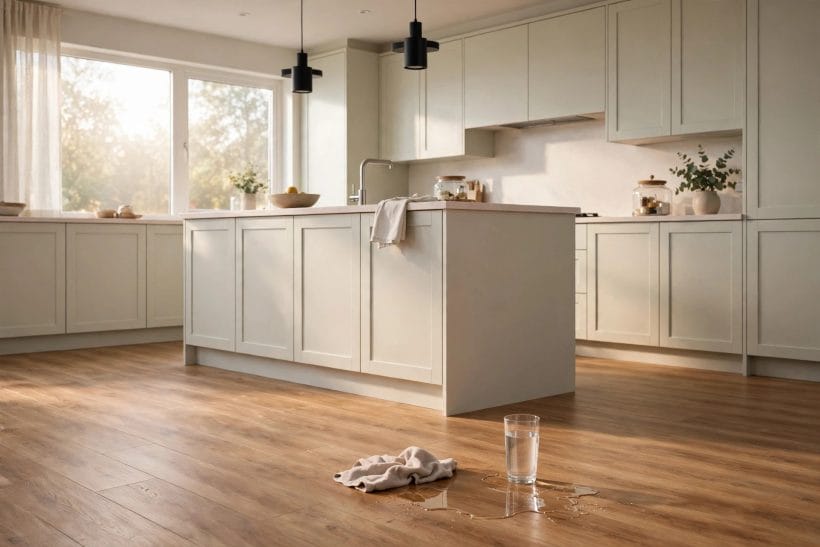
What Waterproof Usually Means
On a vinyl plank box, waterproof almost always describes the plank itself: the board will not swell, warp or rot when wet. It says nothing about the floor as a system. Water that finds the joints can sit beneath the planks, and what suffers then is the subfloor and whatever lives under it — the claim was about the plank, and the plank alone.
The Questions That Cut Through
Ask instead: how long can standing water sit before the maker wants it mopped? Are the joints themselves sealed or merely tight? Is the plank approved for bathrooms and utility rooms by name, or only for kitchens? The answers are in the maker’s own data sheet, in plain sentences — and a range whose sheet answers clearly is worth more than a range whose box only shouts.
7. Acclimatisation and the Subfloor Beneath
The least glamorous photograph in this guide is the most predictive: boxes resting flat in the room they will floor, while the bare subfloor is swept, checked and levelled. Vinyl plank is forgiving of many things. A rushed start is not one of them.
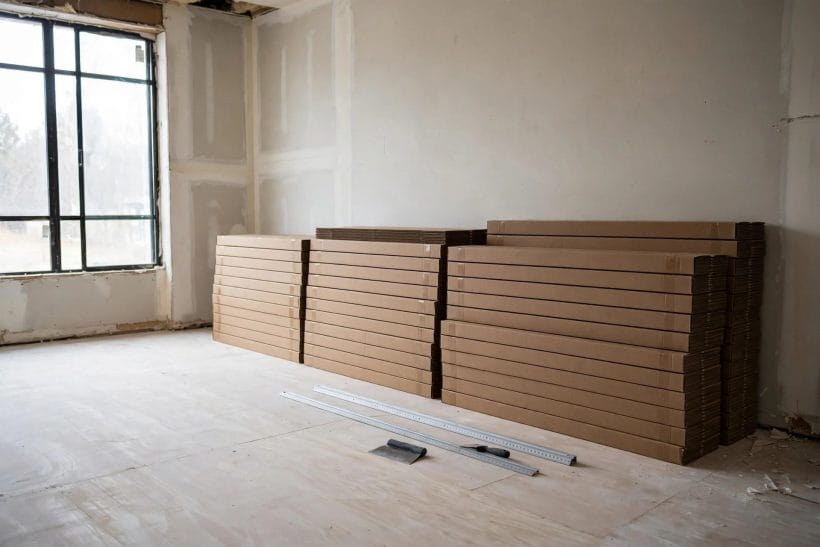
Let the Planks Live in the Room First
Planks expand and settle with temperature, and makers ask for the boxes to rest in the room — flat, unopened, for a stated settling period — before fitting. The period varies by range and is printed in the instructions; honour it. A floor clicked together straight off a cold van carries that cold into every joint.
Flat, Dry and Sound
Three adjectives govern the subfloor. Flat, because rigid planks rock and flexible planks mirror; dry, because trapped moisture migrates; sound, because crumbling screed and springy boards defeat any lock. Heat belongs in the same conversation: homes warming their floors from below should read the pairing guidance in the underfloor heating for tiny houses explainer before choosing a plank, since not every build is approved over heat. The underside has its own version of the same discipline — the tiny house skirting, pipes and insulation guide covers what happens below the boards, where moisture and cold arrive from.
8. Edges: Expansion Gaps, Transitions and Trims
This doorway portrait — plank meeting tile under a slim transition strip — is where a floating floor quietly declares how it works. The planks are not fixed down; they float as one raft, and the edges are where the raft breathes.
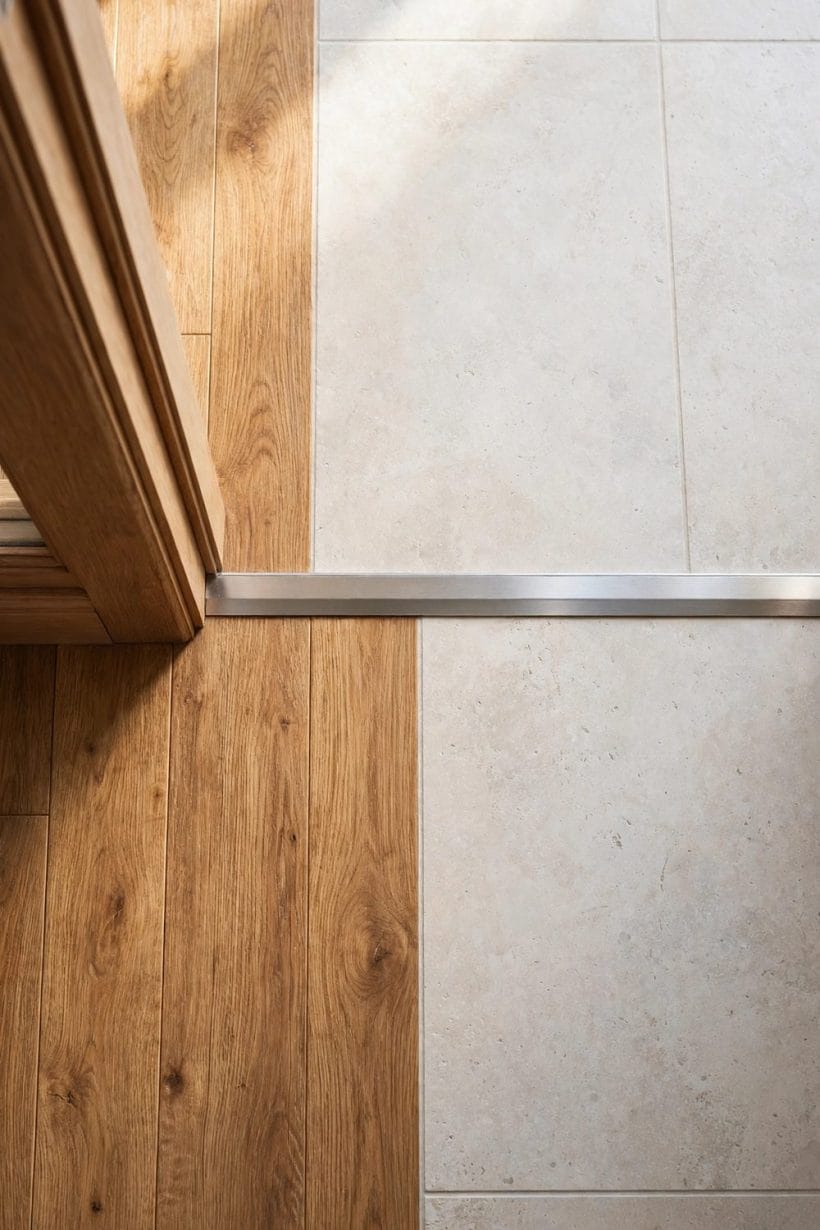
The Gap Is Not a Mistake
A floating floor needs a small expansion gap at every wall and fixed object, hidden under skirting or trim. Pinch that gap — with a tight threshold, a kitchen island fitted over the floor, or cabinets trapping the raft — and the floor answers in the next warm spell by lifting at its weakest joint. When viewing a fitted floor, the trims tell the truth about whether the fitter understood the system.
Transitions Between Rooms and Materials
Where plank meets tile, carpet or a different level, a transition profile bridges the change and protects both edges. Budget and plan for them as part of the floor, not as an afterthought: a beautiful field of planks with raw, chipped doorway edges reads as unfinished from the first day.
9. Reading Reviews Like an Inspector
The sister guides in this family — the luxury vinyl plank checks and the broader LVP flooring guide — deliberately gave no named range a verdict, and this one follows them. That is not a gap in the coverage; it is the method. Star ratings compress a hundred different rooms into one number. Patterns are what survive reading.
Separate the Fitting From the Product
Read any owner’s report and split it in two. Complaints about gaps opening, edges lifting and planks moving are very often the subfloor and the fitting speaking, not the plank. Complaints that repeat across many owners about the same thing — a print wearing pale in a doorway, locks arriving chipped in box after box, colour shifting between batches — are the product speaking, and repetition is what makes them evidence.
Read for Your Room, Not Theirs
A plank that failed in a sun-baked conservatory may live happily in a shaded bedroom, and the five-star floor in a spare room says little about the same plank in a muddy-boot hallway. Match reports to your own water, sun and traffic from section 6, weight the recent and the specific over the old and the vague, and let any single dramatic story — good or bad — count for exactly one room’s worth of evidence.
10. What It Costs: The Drivers
The finished floor in this photograph keeps its own receipt: a spare box kept back, offcuts, a tape measure. The plank’s shelf price is only the first line of what a vinyl floor costs, and the other lines are drivers a buyer can weigh without a single invented figure.
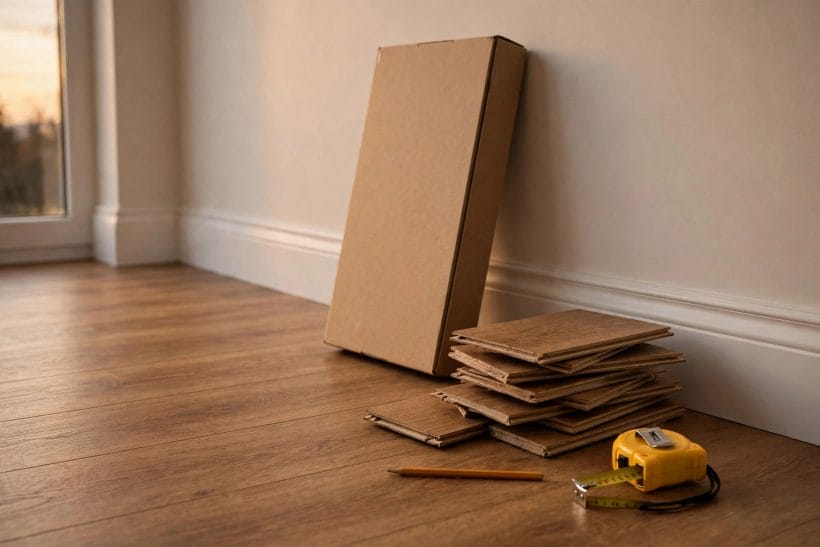
Beyond the Box Price
Underlay, where it is separate; transitions and trims at every doorway; subfloor preparation, which ranges from a sweep to a levelling compound and is the line most often underestimated; and the waste margin — rooms are not plank-shaped, and cuts, mistakes and a kept-back spare box all come out of the same order. Complex rooms with many cuts consume more than open rectangles.
Fitting: Time or Trades
Click-lock vinyl is genuinely fittable by a careful owner, and the saving is real; so is the value of a professional’s speed, flatness checks and guarantee on the labour. The honest comparison is never plank price against plank price — it is finished floor against finished floor, in the same room, with the same edges done properly.
Final Considerations
A vinyl plank floor is a system wearing a wood pattern: a wear layer taking the traffic, a core setting the feel, a lock holding the raft together, and paperwork deciding what happens when something fails. Read those four things on any range — in the data sheet, in the warranty, in the pattern of what owners report — and the box’s three big promises resolve into something a household can actually plan around.




0 Comments