

Some pairings argue; this one settles. A brown couch brings the warmth of leather, timber and earth into a room, and a grey wall brings the calm — put them together and each makes the other look more expensive than it is.
This article stays with that one pairing — gray walls with brown furniture — and works it properly: which browns, which greys, how much of each, and the light, texture and accents that decide whether the room feels balanced or merely brown-and-grey.
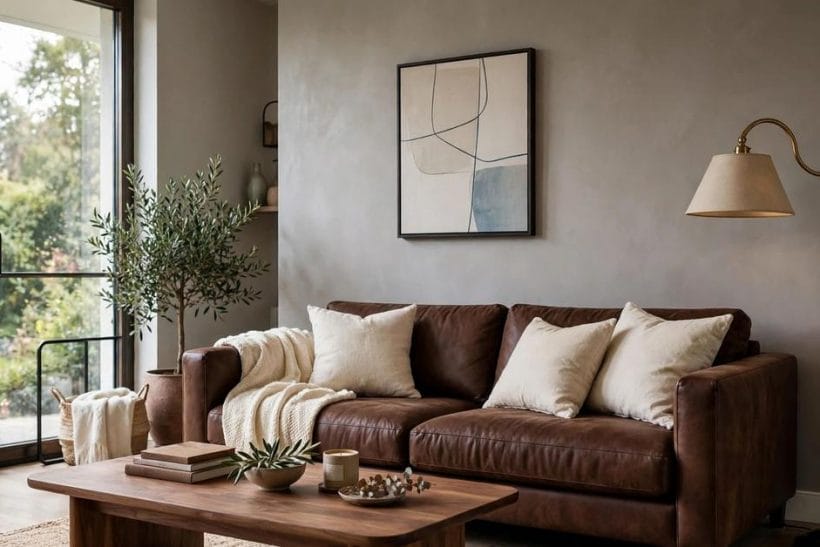
1. Brown Couch and Grey Walls at a Glance
The pairing works because it is a temperature bargain. Brown seating is warm, grounded and forgiving of daily life; grey walls are cool, quiet and happy to sit behind everything else. Five things decide how well the bargain holds in a real room: the warmth of the brown, the undertone of the grey, the light the room actually gets, the textures in play, and the accents that stitch the two colours together.
For the room these choices live in, start with living room ideas.
| Family | Character | What it means |
|---|---|---|
| Warmth | Brown sofa tone | Warm |
| Balance | Grey wall undertone | Balanced |
| Light | Natural daylight feel | Bright |
| Texture | Leather or fabric mix | Rich |
| Accents | Wood and metal touches | Cozy |
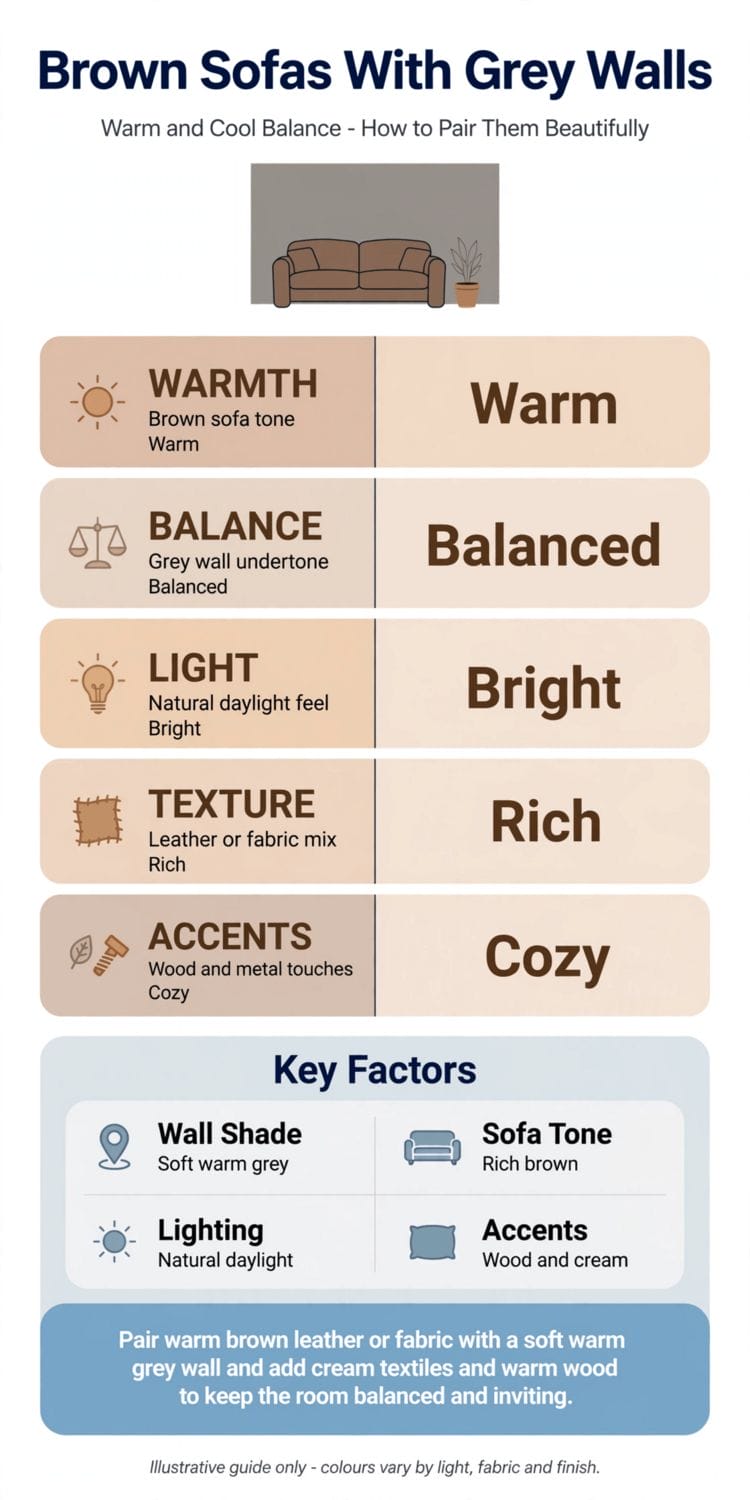
Scope, so the lanes stay clear: grey living room walls owns wall colour across every sofa, and grey living room ideas covers the all-grey room — this article is the pairing itself, the brown seat against the grey wall, and nothing else competing for the frame. It works through the pairing in the order a room is actually decided: the sofa first, the wall second, the proportions between them, and only then the light, texture and accents that finish it.
2. Why the Pairing Works: Warm Against Cool
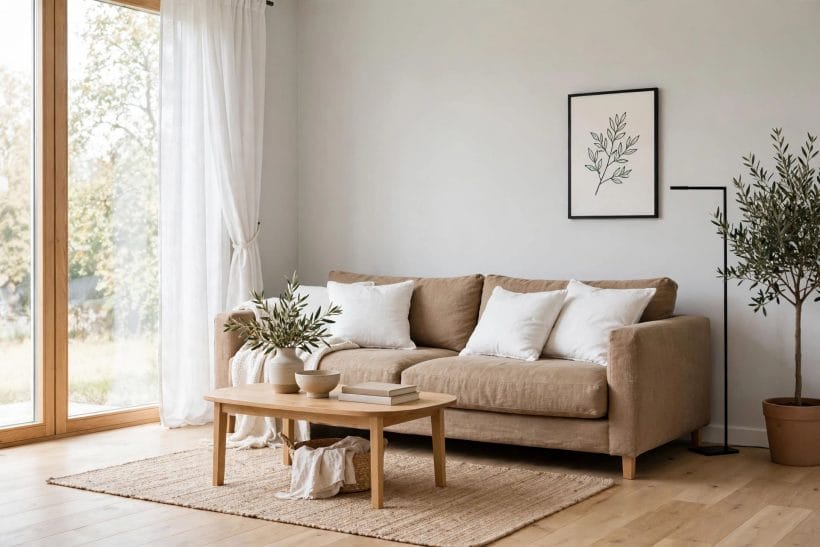
Every successful version of this room is the same quiet negotiation: a warm, heavy anchor of furniture set against a cool, calm field of wall. Get the negotiation right and the room reads as deliberate; get it wrong and it reads as two purchases that never met.
Warmth Needs a Cool Backdrop
Brown is a hungry colour — in a warm room it can swallow the light and turn muddy. A grey wall gives it contrast without competition, the way a grey sky makes autumn trees look richer. The wall does not fight the sofa for attention; it frames it, and the sofa’s warmth becomes the room’s whole personality.
A Study in Opposites, Like the Colour Pairings Nearby
Colour pairings live on managed contrast: yellow and green plays two lively colours against each other, while brown and grey play warm against cool. The lesson transfers — one side leads, the other supports, and a third neutral (here, cream or natural fibre) rests the eye between them.
The Middle Tone That Holds Them Together
Almost every good version of this room has a third, quieter player: cream, oatmeal, undyed linen, pale timber. This middle tone is the pairing’s interpreter — warm enough to belong with the brown, pale enough to lighten the grey. Cushions, throws, rugs and lampshades are its usual carriers, and it is why the room feels layered rather than two-tone.
3. The Brown Side: Sofa Tones and Materials
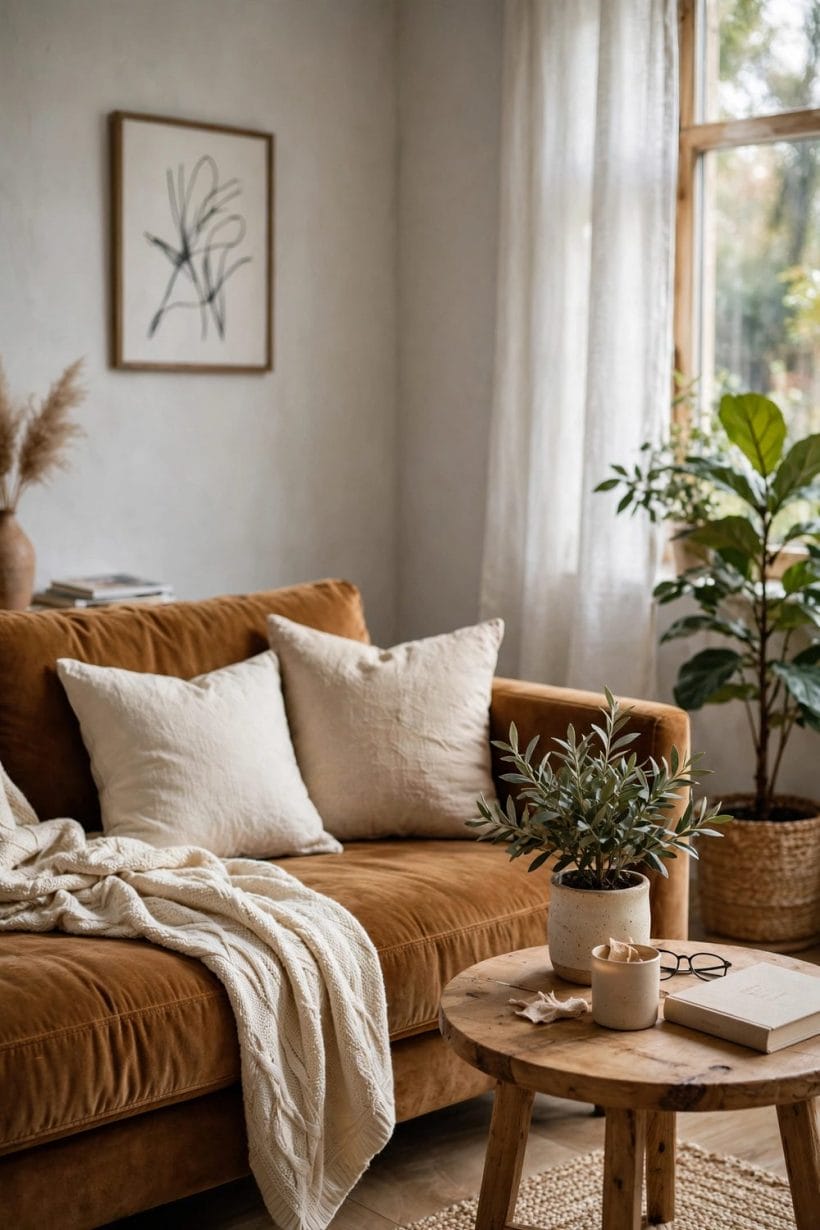
Browns are not interchangeable. The sofa’s exact tone — and whether it is leather, fabric or suede — decides which grey it wants behind it and how formal the room will feel.
Leather Browns: Cognac, Chestnut and Chocolate
Leather carries the deepest, richest browns in the pairing. Cognac and tan leathers glow against mid-grey walls; dark chocolate leather needs a paler grey to keep its edges. Leather also brings shine, which matters: a glossy hide against a matt wall gives the room its contrast of finish as well as colour.
Fabric Browns: Softer, Flatter, Easier to Live With
Fabric sofas in camel, taupe-brown or coffee sit quieter than leather and ask for slightly deeper walls to hold them. Woven browns show texture instead of sheen, so they pair happily with pale, warm greys where a dark leather might look stranded. Suede and nubuck sit between the two — matt like fabric, rich like leather.
Aged Browns and Honest Wear
Brown is the most forgiving sofa colour ever made, which is part of its appeal in this pairing. Leather creases and lightens at the arms; fabric softens and fades a little at the seat. Against a calm grey wall, that patina reads as character rather than wear — one more reason the pairing suits rooms that are lived in rather than looked at.
4. The Grey Side: Wall Shades and Undertones
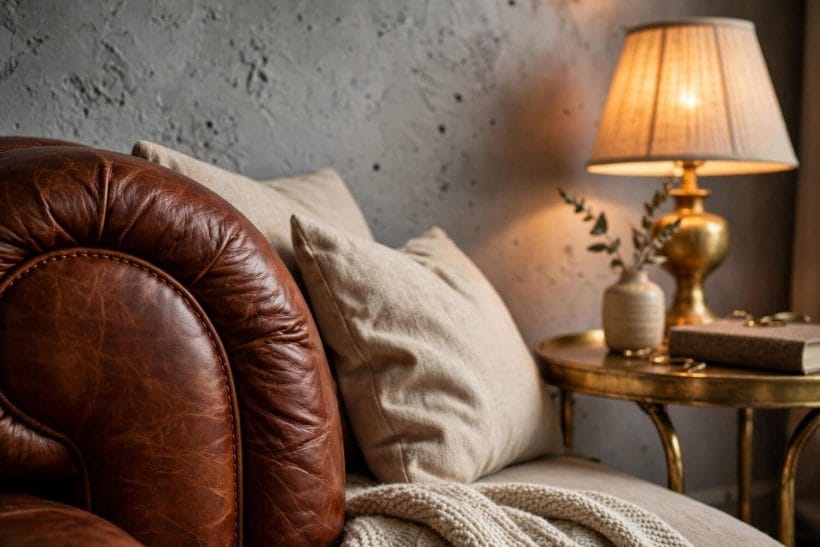
Grey is never just grey. Every grey wall leans warm or cool, and that lean — the undertone — is the single most common reason this pairing succeeds or fails.
Warm Greys Welcome Brown In
A warm grey — the family often called greige — carries a hint of beige or brown inside it, so it meets a brown sofa halfway. The two colours share ancestry, nothing jars, and the room feels wrapped rather than decorated. If your brown is staying and your walls are undecided, this is the safest territory in the whole pairing.
Cool Greys Need a Warmer Brown
Blue-leaning cool greys are crisper and more modern, but against a cool, blue-brown sofa they can turn a room chilly. Pair them with the warmest browns — cognac leather, honeyed fabric — and let cushions and timber repeat the warmth. The science of the lean itself is covered in greige undertones, which is worth reading before any paint is bought.
How Deep Should the Grey Go?
Depth is the third variable. Pale greys keep the room airy and let a dark sofa dominate; mid greys share the stage; deep charcoals reverse the pairing entirely, making the walls the drama and the brown the warmth inside it. All three work — what fails is a depth chosen for the paint chart rather than for the room’s light and the sofa’s tone.
5. Getting the Proportions Right
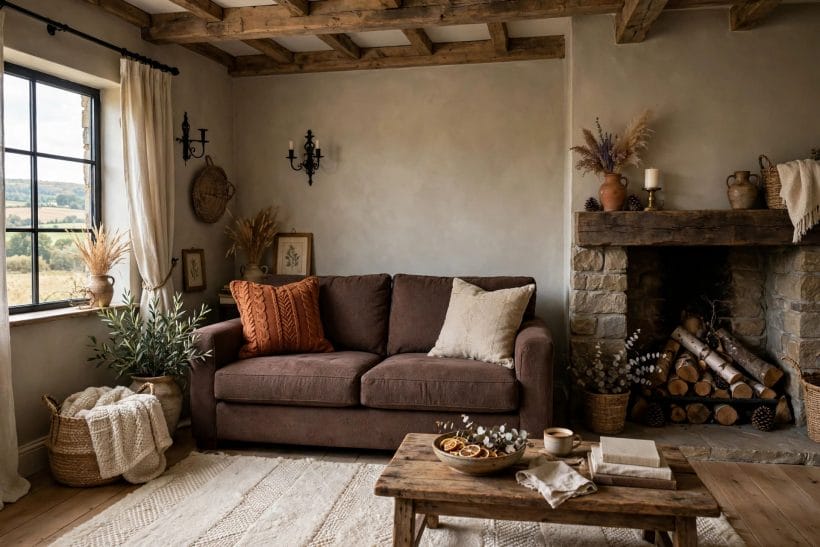
Colour pairing is also arithmetic. The grey is the room’s background field and the brown its main event — the balance between field and event decides whether the room feels calm, bold or top-heavy.
Let the Wall Be the Field, the Sofa the Event
In most rooms the walls carry the larger area and the sofa the larger presence. Keep the grey quieter than the brown is rich: a mid or pale grey behind a deep brown, or a deep grey behind a pale tan. When wall and sofa are equally strong, the room feels like an argument; when one clearly leads, it feels composed.
Repeat Each Colour at Least Twice More
A brown that appears only in the sofa looks like an accident. Repeat it — in a timber table, a leather cushion, a picture frame — and it becomes a decision. The same holds for the grey: curtains, a rug or an armchair in the wall’s family ties the field together and stops the sofa floating in a grey sea.
The Rug Decides the Middle Ground
The floor between wall and sofa is where proportions are won or lost. A pale rug in the middle tone lifts a dark sofa and breaks up the grey; a patterned rug carrying both colours — brown pattern on a grey ground, or the reverse — can marry the two sides in a single piece. Bare timber floors act as a second brown; stone or grey tiles act as a second wall.
6. Light: The Third Ingredient
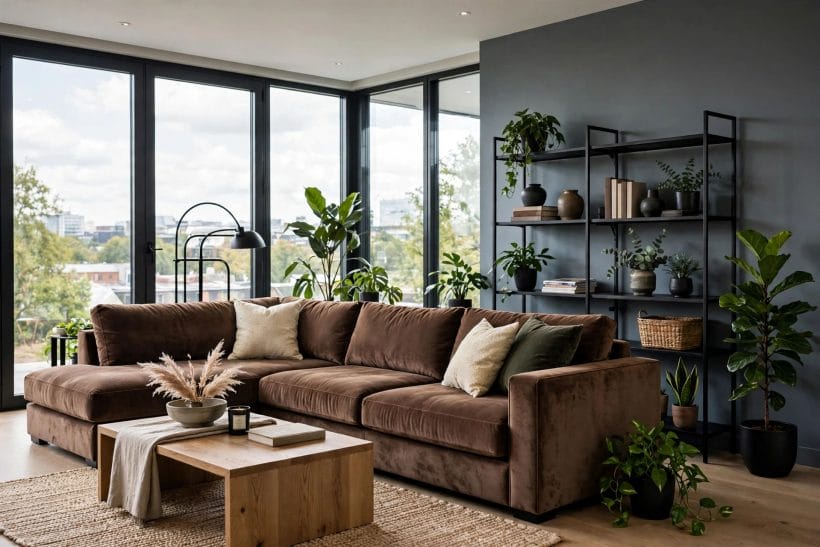
This pairing is unusually honest about light. Grey walls change character completely between a bright morning and a lamplit evening, and brown seating absorbs whatever light the walls reflect.
Bright Rooms Can Take the Deep Version
A room flooded with daylight — glass on two sides, pale floors — can carry the boldest form of the pairing: deep grey walls and a dark brown sectional. The light does the lifting, the colours stay rich rather than heavy, and plants and pale textiles keep the corners awake.
Dim Rooms Should Lighten the Walls, Not the Sofa
In a north-facing or small room, keep the brown you love and lift the walls instead: a pale warm grey returns what little light arrives, while the sofa stays the warm anchor. Add lamps at sofa height — low, warm light flatters brown leather and fabric far more than a bright ceiling light does.
Evening Light Changes the Deal
Judge this pairing after dark before you trust it. Under warm lamplight, grey walls borrow amber and read warmer, and brown seating deepens — most rooms look their best at this hour. Under cool white light the same greys can turn blue and the browns dull. Warm bulbs at sofa height are not a detail here; they are half the scheme.
7. Texture: Where the Pairing Gets Its Richness
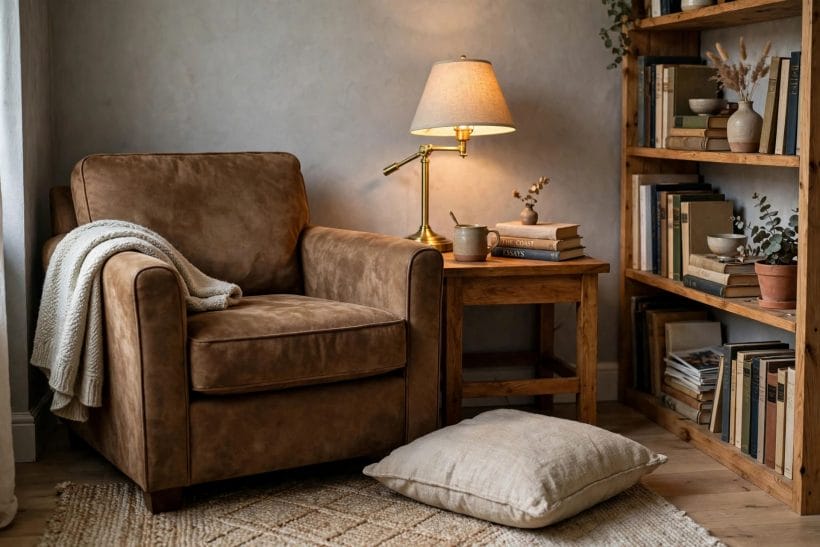
Two flat colours can sit in a room and say very little. This pairing comes alive in its surfaces — the grain of leather, the nap of suede, the weave of a throw — because texture is what stops warm-and-cool becoming plain-and-plainer.
Mix the Browns by Surface, Not Just Shade
A leather sofa with a suede armchair, a timber bookcase and a woven rug can all be ‘brown’ and never match once — that is the point. Varied surfaces in one colour family read as depth; identical surfaces read as a suite. The grey wall stays the calm constant behind the variety.
Soft Layers Against the Grey
Grey walls, especially smooth plaster or panelling, appreciate softness in front of them: linen cushions, a knitted throw, a flat-weave rug. These pale, tactile layers are also the bridge of the pairing — cream and natural tones sit between brown and grey and belong to both.
The Grey Side Has Textures Too
Walls are not condemned to flatness. Limewash and plaster finishes give grey a cloudy, soft movement; panelling gives it shadow lines; a woven wallcovering gives it grain. Each lets a mid-grey behave like a paler one by breaking the light across its surface — useful when the room needs the depth of grey without its full weight.
8. Accents, Wood and Metal
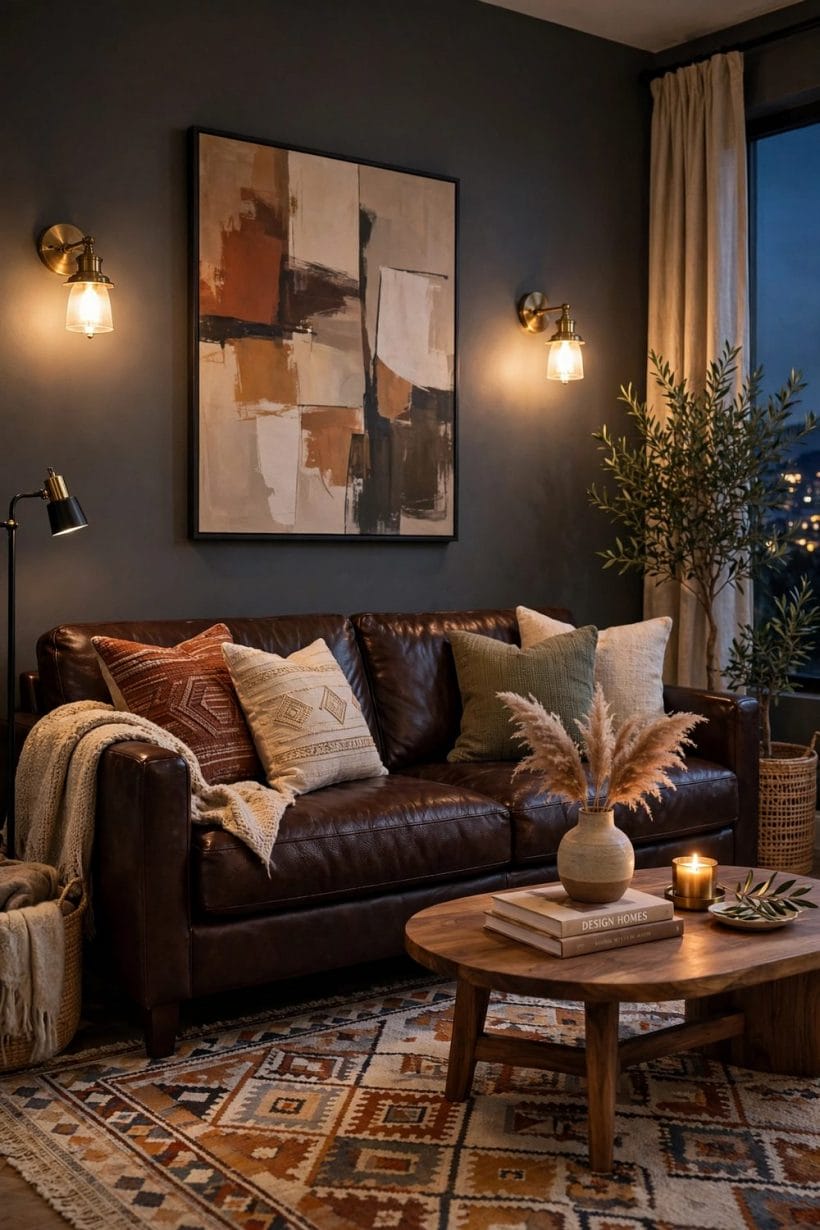
Accents are the pairing’s punctuation. Timber echoes the sofa, dark metal echoes the wall, and one or two living greens keep the whole scheme from feeling staged.
Wood and Brass Warm the Grey
Warm metals — brass, bronze, aged gold — are the natural accent family here: a brass lamp or picture light pulls the sofa’s warmth up the grey wall, and timber tables and shelves repeat the brown at smaller scale. Cool chrome can work in a modern version, but it sides with the wall, not the sofa, so use it sparingly.
Green Is the Pairing’s Best Friend
Plants do something no cushion can: they sit naturally with both colours and prove the room is alive. Other colour families borrow the same trick — brown and green colour combinations builds a whole scheme on it — and a single green chair or cushion can be the accent that finishes this one.
One Bold Accent, Carefully Chosen
The scheme can carry exactly one loud guest: a rust armchair, a mustard cushion, a deep green footstool. Because brown and grey are both well-behaved, a single saturated accent looks deliberate and lifts the whole room. Two competing accents, though, start an argument the pairing cannot referee — choose one and let it be the exclamation mark.
9. Room by Room: Where the Pairing Earns Its Keep
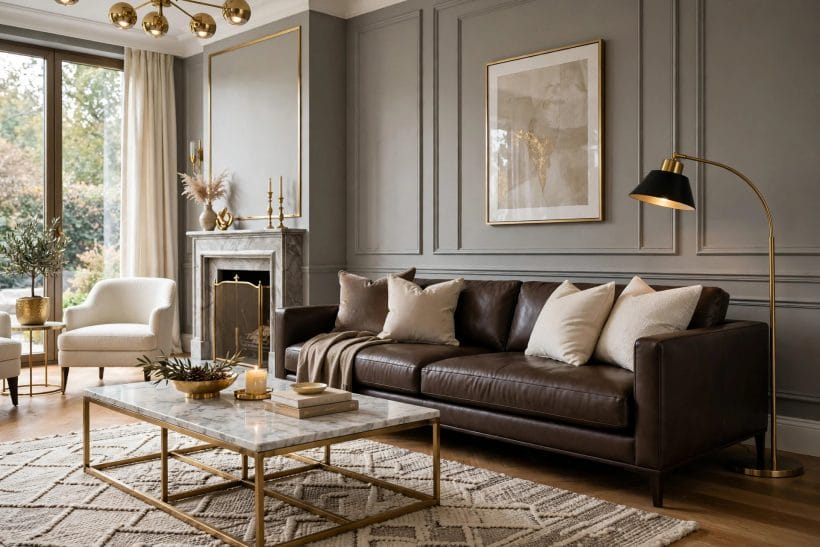
The pairing is at its best in rooms where the sofa is genuinely the main seat and the walls are genuinely a backdrop — living rooms first, but not only living rooms.
The Formal Sitting Room
Panelling, a marble fireplace and a dark leather sofa: in a formal room the pairing turns classical. Mid-grey panelled walls, brass lamps and cream cushions give the brown its most elegant setting, and the room needs very little else — the pairing is the decoration.
Family Rooms, Dens and Reading Corners
In working rooms the pairing is practical as much as pretty: brown seating hides the evidence of family life, grey walls forgive scuffs better than white, and a suede armchair in a book-lined corner may be the pairing’s happiest small form. Choose washable fabrics and let the scheme be lived in.
Small Rooms and Open Plans
In a small room, run the pairing pale: light grey walls, a mid-brown sofa, cream layers — the same negotiation at lower volume. In an open plan, the pairing can zone the space: the brown seating group gathers on its rug as the warm island, while the grey walls run continuously behind dining and kitchen areas and hold the whole plan together.
10. Checks Before You Commit
Before paint or a sofa is ordered, run the pairing through its three honest tests. Swatch the grey on the wall it will cover and live with it through a full day — the undertone you cannot see at noon may be unmistakable by lamplight. Put the sofa’s fabric or leather sample against that swatch, not against a screen, and look at the two together in the morning and again in the evening, because this pairing keeps two different appointments with the light. And decide which colour leads before you buy anything else: every later choice — rug, cushions, lamps, timber — is easier once the wall-versus-sofa leadership is settled. The wider families these colours belong to are mapped in timeless paint colour families, which is the right next read if the grey is still undecided.
Final Considerations
Brown couch, grey walls is not a trend pairing; it is a settlement between warmth and calm that rooms have been making for a century, in leather clubs and cottage parlours alike. Get the undertone right, let one colour lead, and layer the textures — the pairing will look after itself. It also ages gracefully: both colours forgive wear, hide the evidence of ordinary life and accept new accents without demanding a redecoration, which is more than most fashionable schemes can promise.
Start with the wall swatch and the sofa sample side by side in your own light. Everything in this article follows from what those two do to each other in your room, and no photograph — including ours — can decide that for you.

0 Comments