

Ten years ago I signed a lease on a 20-foot yurt in Oregon’s coastal woods — a wood stove, a composting toilet and zero walls — and the first storm taught me that yurts don’t whisper, they sing. A decade of round-home life later, through Colorado blizzards and 30-foot Alaska family reunions, here is the full yurt living pros and cons ledger: seven pros, four cons, and the fixes that decide who thrives.
Yurt Living Pros and Cons: At a Glance
Read the yurt living pros and cons honestly and a pattern emerges: everything on the pro side is about lightness — a kit that costs half a traditional home, a footprint built from renewable materials, a home that relocates in a day — and everything on the con side is about friction with the fixed world: zoning codes that call the yurt temporary, canvas that sweats in humidity, winters that punish thin insulation. None of the cons is a verdict; each has a fix, and this guide gives them in the original’s order — the home itself, the pros, the cons, the state-by-state map, the winter systems, the modern design, the law, and the verdict a decade of living earns.
| Topic | What It Covers | Key Fact or Figure |
|---|---|---|
| 1. What a Yurt Is | Lattice walls, the toono roof wheel, tension bands | 3,000 years of nomad design |
| 2. The Seven Pros | Cost, energy, portability, nature, community | Kit $25k–$40k; 80% less energy |
| 3. The Four Cons | Zoning, thermal limits, moisture, space | The -30°F Alaska struggle |
| 4. Where to Plant: Five States | Oregon, Colorado, Alaska, Florida, Panama | 100+ inches of Oregon rain |
| 5. Three More Climates | Michigan, California, Maui | Rules that vary county by county |
| 6. Winter Insulation | Floor, walls and ceiling, layer by layer | R-10 floor; R-13 wool walls |
| 7. Winter Heating | Rocket mass, propane, passive solar | 1/10th the wood; 12+ hours of heat |
| 8. Designing Your Yurt | Families, solo dwellers, off-grid tech | 800W solar arrays |
| 9. The Legal Landmines | Workarounds and permit must-haves | The “temporary structure” label |
| 10. The Verdict | Who thrives in the round — and who won’t | A catalyst, not a compromise |
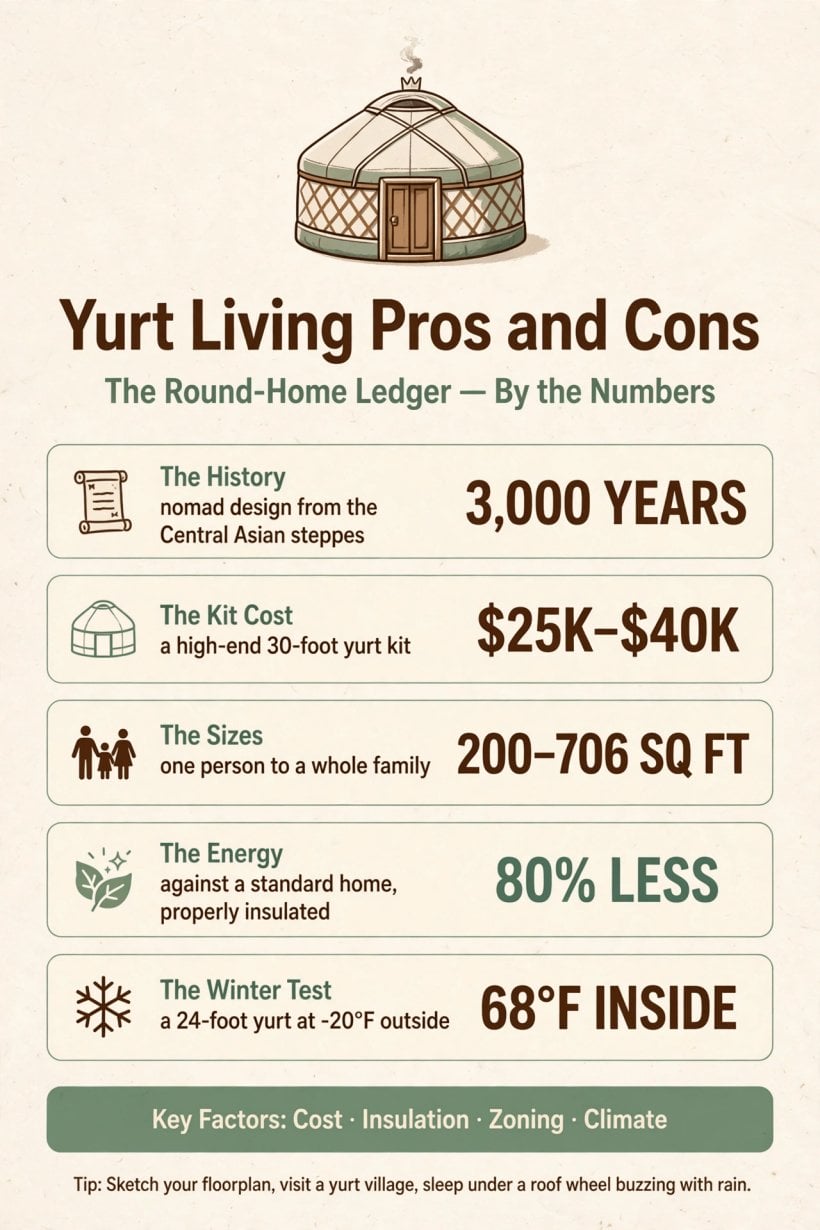
The ledger at a glance: 3,000 years of design, a $25k–$40k kit, 200–706 sq ft of round space, 80% less energy — and the Michigan winter test that proves the fixes work.
1. What a Yurt Is: From Mongolian Steppes to Modern Backyards
A yurt is a portable dwelling with a collapsible wooden frame and a fabric cover, refined over more than 3,000 years among the nomads of Central Asia. The Turkic word “jurt” means homeland, which captures its role exactly: not a tent you visit, but a mobile family hub that moves with the life inside it. Traditional Mongolian gers insulated with felted wool; today’s modern yurts keep the same bones and add solar-ready roofs and marine-grade acrylic canvas.

Three components do the structural work. The wall lattice — flexible wooden slats forming the circle — expands and contracts with temperature shifts instead of fighting them. The roof wheel, the toono, is the central ring that carries the rafters; it is often left open for ventilation or fitted with a clear dome for stargazing. And the fabric tension bands — steel cables cinched around the walls — give the round shape its hurricane resistance. Unlike tiny houses, yurts avoid right angles and use every inch efficiently: a 16-foot yurt offers 200 sq ft, comfortable for one person, while 30-foot models reach 706 sq ft and accommodate families. It belongs to the same portable rural lineage as the shepherd’s huts of the British hills — dwellings designed to shelter a working life, not to impress a street.
Living inside the geometry is the first adjustment, and the original’s first night says it best: rain hammering the canvas, wind humming through the roof’s tension cables, cedar lattice walls creaking like a ship’s hull. A yurt has no corners to swallow sound and no sealed attic to muffle weather, so the home announces the conditions outside — a quality residents either come to love or never forgive, and the honest starting point for everything weighed below.
2. The Seven Pros: Why People Choose the Circle
Cost-efficiency leads the list. A high-end 30-foot yurt kit costs $25k–$40k — half the price of a traditional home. With no foundation required, permitting is simpler in rural zones, and the savings hold from purchase through the build. It is one of the strongest entries in the super-affordable tiny homes conversation. Eco-footprint follows: built with renewable materials — wood, canvas, wool — yurts consume 80% less energy than standard homes when properly insulated.
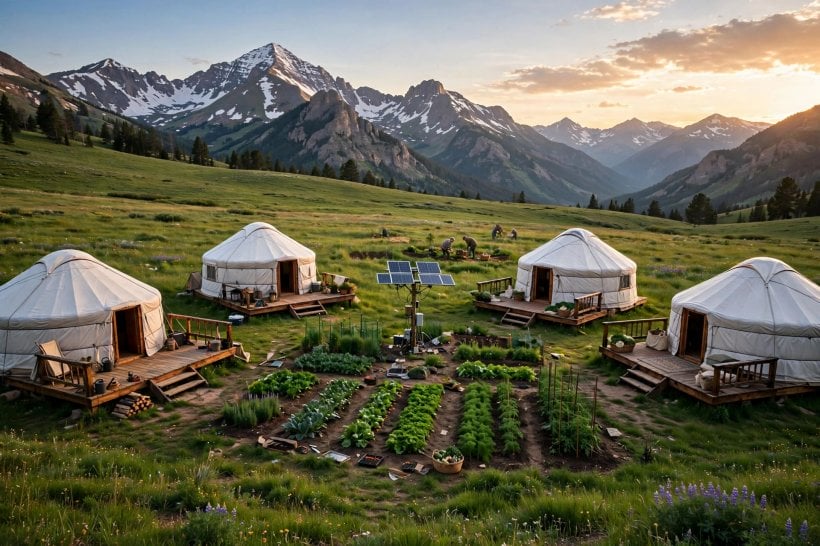
Portability is the pro no fixed house can match: relocate your entire home in a day, ideal for avoiding rising rental costs or chasing seasonal work. Connection to nature is the daily dividend — you wake to sunlight filtering through fabric walls and hear owls, not traffic. Customization keeps the home evolving: add skylights, partition walls or cedar decks as life changes. Community is built into the culture — yurt villages in Oregon and Colorado share gardens and solar grids. And resilience is geometry: the circular shape sheds snow and wind better than rectangular homes, which is why the design survived three millennia of steppe weather.
3. The Four Cons: The Honest Problems
Zoning wars come first, because they can end the project before it starts. Many counties classify yurts as “temporary structures,” banning year-round living outright; the only defence is to check local codes before money moves. Thermal challenges are the second: even insulated yurts struggle in -30°F Alaska winters without supplemental heat, and pretending otherwise is how beginners freeze. Moisture risks follow the humidity — condensation drips off single-layer canvas in humid climates like Florida, though double-wall designs help; our dedicated guide to condensation control in yurts works the felt-and-canvas problem in full.
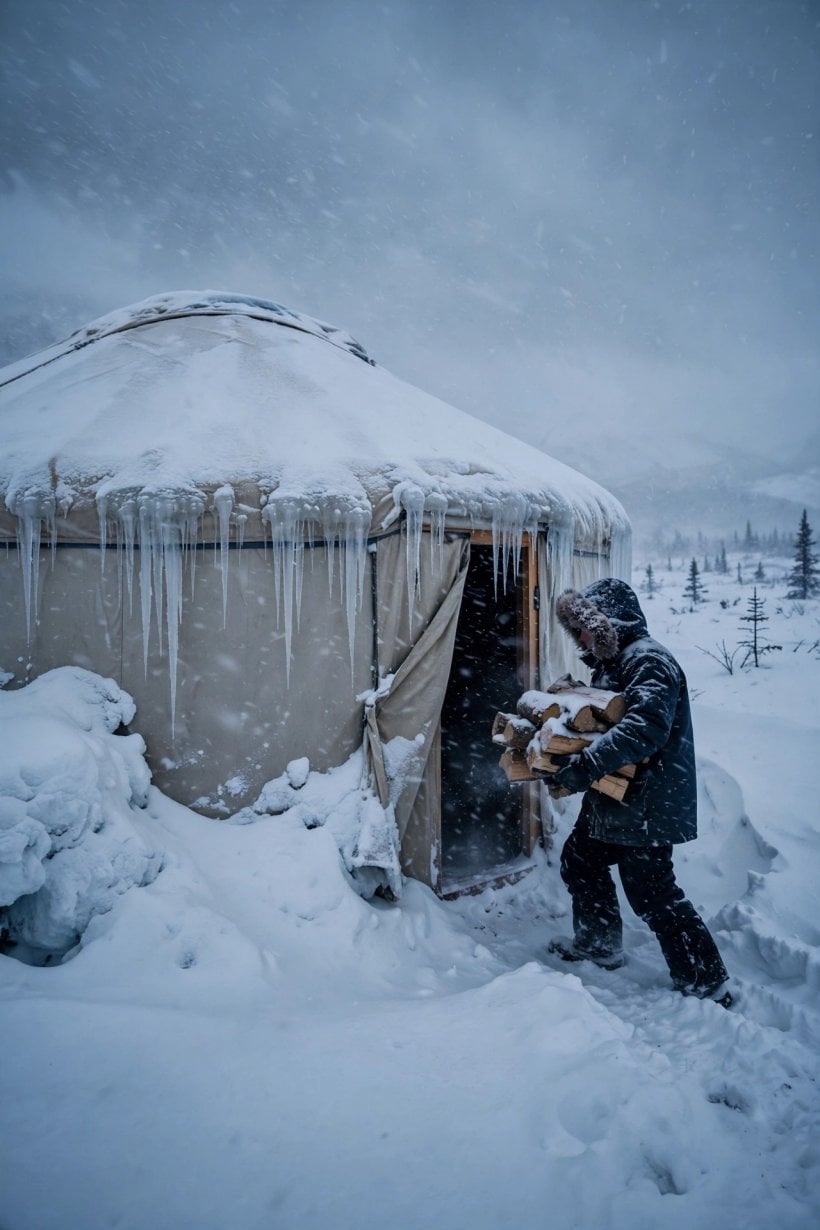
The fourth con is limited space. A round, wall-less floor plan has no spare corners: storing skis, kayaks and holiday decorations demands creativity, and every object kept must justify the floor it stands on. The design answers in section eight — loft beds, fold-down desks, vertical storage — exist precisely because of this con: in a round room, the only direction left to grow is up. Owners who arrive with a minimalist streak call it liberation; owners who arrive with a garage habit call it the deal-breaker. Read together, the four cons share a trait — none is hidden. Zoning can be checked in advance, thermal limits can be engineered around, moisture can be designed out, and space discipline is a skill. The cons punish the unprepared, which is precisely why the rest of this guide exists.
4. Where to Plant Your Yurt: Oregon, Colorado, Alaska, Florida and Panama

Oregon. Yurts are allowed as primary homes in rural zones such as Josephine County. The climate fit is mild winters — but prepare for 100+ inches of annual rain, answered with a raised platform and a metal roof. For community, Breitenbush Hot Springs runs a 27-yurt retreat in the coastal woods. Colorado. Mountain towns like Crestone permit yurts with septic systems. The fit is serious cold: install a wood stove rated for -40°F and triple-layer insulation, and angle your door southeast to catch the morning sun and block the northwest winds.
Alaska. The Unorganized Boroughs have no building codes — yurt freely. Metal yurts with 6-inch foam insulation handle the snow loads best, and the wildlife note is practical: bear-proof storage and motion-activated lights. Florida. Yurts are classified as RVs, limited to 6-month stays. The fit is heat and water: UV-resistant canvas and elevated floors to avoid flooding. Panama. Rural areas like Boquete carry no restrictions. The tropical fit is airflow and insects — mesh walls for ventilation, and copper mesh to deter termites.
Read as a method, the five entries teach the same two-step: legality first, climate kit second. Oregon’s rural primary-home status, Florida’s RV classification with its 6-month ceiling and Alaska’s code-free boroughs are three different legal shapes for the same canvas circle — and the platform, the foam and the mesh are three different answers the same structure gives to rain, snow and heat. Choose the state by the life you want; then build the yurt that state demands.
5. Michigan, California and Maui: Lakes, Redwoods and Tropics
Three more settings stretch the map. Michigan’s Great Lakes region provides a unique backdrop, with lakeside yurts offering a serene escape; considerations for humidity and lake-effect snow are part of the experience there, yet the rewards of living amidst nature are immense — and Michigan supplies this guide’s winter proof, a couple who kept a 24-foot yurt at 68°F through -20°F winters, told in full below. On the yurt living pros and cons ledger, Michigan is where the thermal con meets its documented answer.
California runs from the redwoods to the desert, and its varied terrain suits different yurt designs. Legalities vary by county, but sustainable living communities are emerging, particularly in areas promoting eco-friendly housing. Maui answers a different pressure: yurts offer an alternative to the high cost of conventional housing, nestled amidst tropical landscapes. There, sustainability is the key, with yurts often featuring rainwater collection systems and composting toilets — the same off-grid kit, tuned to trade winds instead of blizzards.
6. Winter Year-Round, Part One: Insulation That Holds the Heat

Year-round living is won or lost in the layers. The floor comes first: lay rigid foam boards under bamboo flooring, for an R-value of 10 between your feet and the frozen ground. The walls follow: staple wool batting — R-13 — between the lattice and the canvas, the modern echo of the felted wool the original gers relied on. The ceiling finishes the envelope: hang a thermal liner to trap rising heat before it escapes through the roof.
Insulation is also where two earlier claims reconcile. The 80% energy saving is real only when properly insulated — the original states the condition plainly — and the -30°F struggle belongs to yurts that skipped these layers. Our step-by-step companion on how to live in a yurt in winter goes deeper on cold-climate setup; the principle to carry is sequence: floor, walls, ceiling, in that order, because heat is lost through whichever layer you leave for later. The small round volume helps the effort: there is simply less air inside a 200–706 sq ft circle than inside a rectangular house, so every layer added shows up quickly in the thermometer — the physical reason a modest stove can hold the whole space once the envelope is closed.
7. Winter Year-Round, Part Two: Heating and the Michigan Test
Three heat sources carry the insulated yurt. Rocket mass heaters consume 1/10th the wood of traditional stoves, radiating heat for 12+ hours from a single burn — the thermal battery of the off-grid world. Propane heaters pair with carbon monoxide detectors, a non-negotiable pairing in a sealed round space. Passive solar does the quiet work: south-facing windows with thermal mass — stone floors, water barrels — store the day’s sun and release it through the night.
The real-life test ties the systems together. In Michigan’s -20°F winters, a couple combined a tiny wood stove, an insulated floor and thermal curtains — and their 24-foot yurt stayed a toasty 68°F. Note what the test does and does not claim: no single miracle device, just insulation from section six, modest active heat, and curtains closing the loop. That is the honest shape of every winter success in this guide: layers plus a small fire, tended by someone who understands both.
8. Designing Your Dream Yurt: Families, Solo Dwellers and Tech

For families, the round floor plan organises vertically: loft beds put kids above, freeing the main floor for living; fold-down desks mount on walls and vanish after homework time; outdoor kitchens keep heat and smells outside, with a cob oven and a stainless counter. For solo dwellers, the moves are about transformation — a Murphy bed/office that flips from sleep to laptop desk, and vertical gardens growing herbs in hanging felt pockets near sunny windows. The layout thinking behind both is the subject of our yurt floor plans guide.
The customization promised in the pros becomes concrete here: skylights fitted around the toono’s light, partition walls that give a family its first real rooms, cedar decks that extend the living space outside the canvas in summer. Because the structure is a kit rather than a fixed build, these are additions, not renovations — the home can be re-planned as children grow, work changes or a solo dweller becomes two, without touching the circle itself.
The tech integrations finish the modern picture. Solar arrays of 800W power fridges and LED lights; composting toilets — air-head models — require no water or plumbing; Starlink internet keeps you connected in remote meadows. Together they make the yurt a complete off-grid system rather than a campsite, the same ambition our tiny house off-grid guide pursues for wheeled homes. The design lesson of 2025 is that the oldest dwelling form on the steppe now ships with satellite internet — and loses none of its soul for it.
9. The Legal Landmines: Zoning Workarounds and Permit Must-Haves
Legality is where the yurt living pros and cons stop being about comfort and start being about permission. The core problem is classification: a dwelling that many codes file as temporary. Three workarounds recur. Agricultural loopholes: many counties allow yurts as “farmworker housing.” RV certification: some manufacturers build to ANSI RV standards, skirting residential codes. Lease land: partner with landowners — vineyards are the classic example — for mutually beneficial setups. Our full legal treatment, is yurt living legal, maps the zoning laws and building codes for fabric structures state by state.

The permit must-haves are fewer than people fear. Septic approval heads the list — and composting toilets often bypass sewer requirements entirely. Electrical inspection follows: even off-grid systems may need certification. The community wisdom is candid about the grey zone: one California user avoided fines by listing their yurt as a “seasonal art studio” — then quietly moved in. Risky, but common. This guide’s position stays boring and safe: the workarounds above are documented routes, the studio manoeuvre is a story, not a strategy.
10. The Verdict: A Catalyst, Not a Compromise
Yurts won’t coddle you. Mice will sneak in during autumn. Winter mornings demand fire-building grit. But for those craving authenticity over square footage, yurts deliver — they are not just homes; they are teachers. You will master resourcefulness, weather patterns, and the art of living lightly, because a round home gives you no corner in which to hide from any of the three. The candid corollary: if you need an urban address the codes will defend, a garage of stored gear, or walls that keep the weather silent, the cons above are not obstacles to engineer around — they are the description of your life, and a rectangular home serves it better.
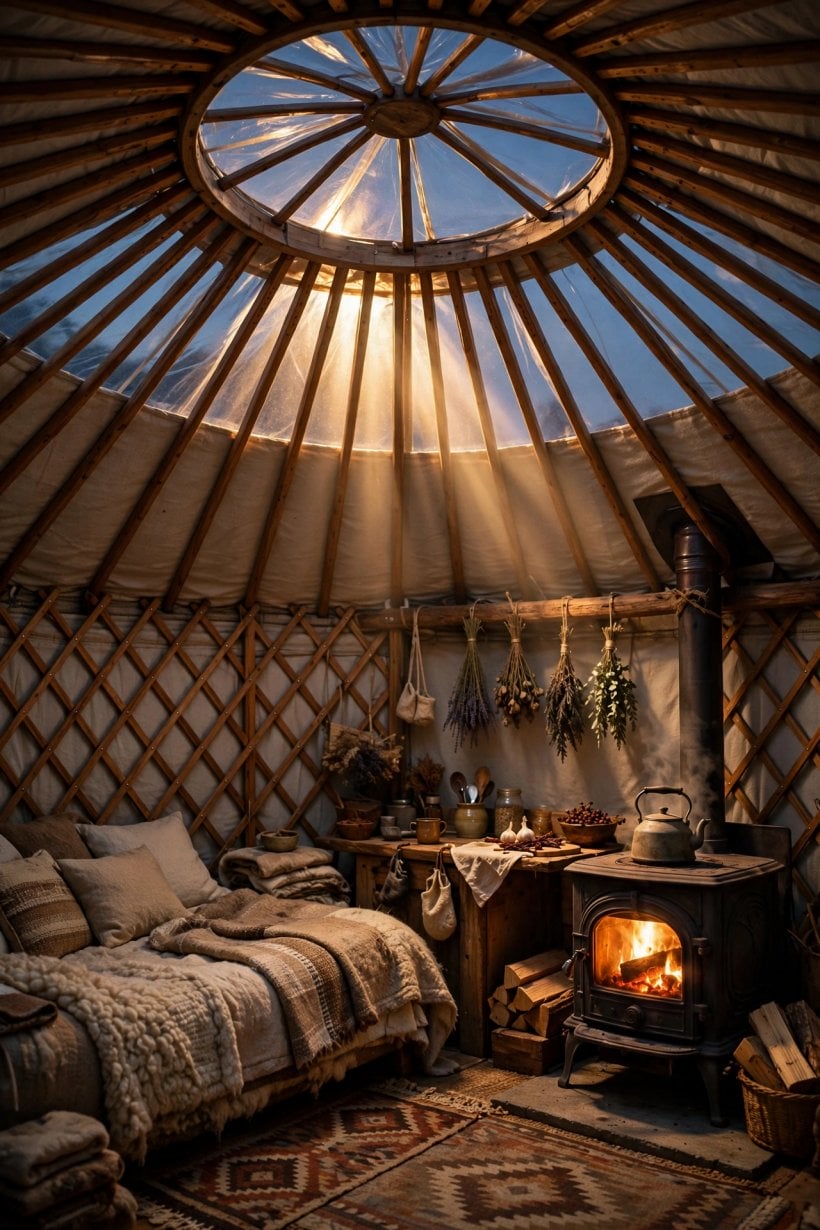
If you are weighing the round life against the wheeled one, our head-to-head on living in a yurt vs a tiny house on wheels compares costs and comfort honestly. The short version from ten years inside the canvas: choose the yurt if you want the lightest possible home on land you love; choose wheels if your life needs the road. Either way, the deciding instrument is a night spent inside — which is where the final word belongs.
Final Considerations
In the end, yurt living isn’t a compromise — it’s a catalyst. Weigh the yurt living pros and cons with your climate, your county and your tolerance for firewood, and the answer usually announces itself. Then do what the original urges: sketch your floorplan, visit a yurt village, sleep under a roof wheel buzzing with rain. You might just find your life expanding as your walls curve inward.


4 Comments