
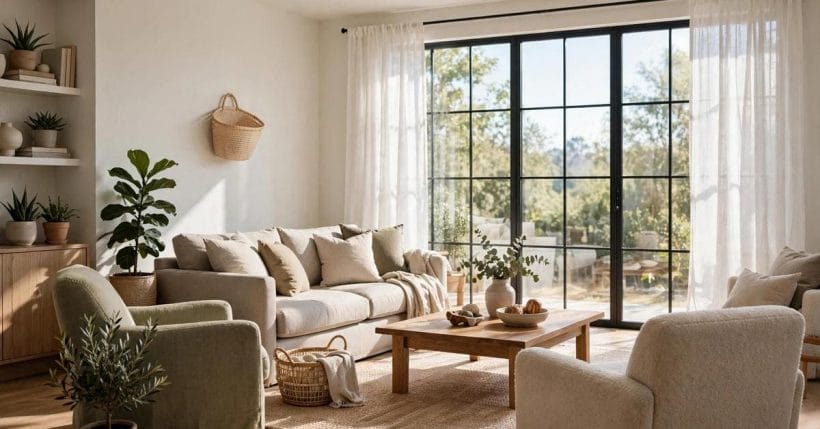
Good rooms rarely happen by accident. Behind the calmest living room or the most welcoming hallway, someone made a string of small decisions in the right order: what the room is for, where the light falls, what stays, what goes, and which details earn their place. The experts whose work fills design books agree on far more than their different styles suggest. They start with how a room is used, they respect daylight, they choose fewer things with more care, and they finish with the layer that makes a room feel alive rather than arranged.
This guide gathers those shared habits into ten practical checks. Each one stands on its own, so you can use a single section for a weekend refresh or work through all ten before a larger change. Nothing here asks for a renovation or a large budget. The ideas work in rented rooms and owned homes alike, and they hold whether your taste runs modern, traditional, or somewhere happily in between.
1. Start With How the Room Is Really Used
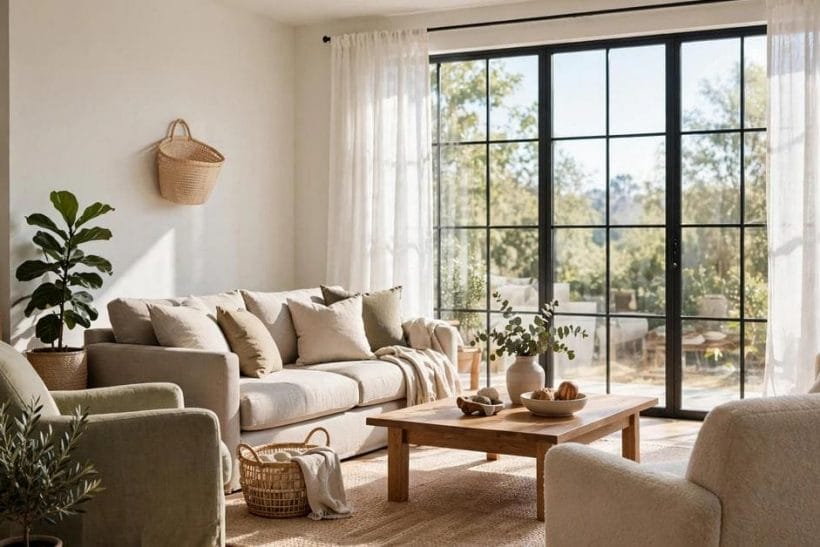
Every good design decision begins with an honest answer to a simple question: what actually happens in this room? A living room that hosts family evenings needs different seating from one used mainly for reading. A dining corner that doubles as a homework station needs a table that survives both meals and schoolbooks. When the use is clear, the furniture plan almost draws itself, and the room stops fighting its occupants.
Watch the room for a few days before changing anything. Notice where people naturally sit, where bags and books land, and which corners stay empty. The paths people walk reveal the layout more truthfully than any floor plan. Keep those paths clear, put the most-used seat where the light is best, and let the room’s real life set the brief for everything that follows.
Shared rooms deserve special attention in this exercise, because two people’s habits rarely match exactly. If one person reads while another watches television, the seating plan must give both activities a fair place, with light and storage suited to each. Compromise here is not a defeat; it is the design working as it should, serving the household rather than a single ideal arrangement.
2. Let Daylight Do the Heavy Work
Designers treat daylight as the room’s first material, not as an afterthought. A room that receives generous daylight feels larger, calmer, and more welcoming than the same room lit only by lamps. Before buying anything, study how light moves through the space across the day: which wall catches the morning sun, where shadows pool in the afternoon, and which window deserves to stay unobstructed.
Keep window treatments light enough to use every day. Heavy curtains that stay closed defeat their own purpose, while a simple sheer or a blind that lifts fully lets you tune the light as the day changes. Place mirrors where they catch and share daylight rather than where they merely decorate a wall, and choose pale, warm wall tones in rooms that receive little direct sun so the light that does arrive travels further.
Window placement matters as much as window size. A window that faces a blank wall opposite gives less than one that opens onto a view, because the eye travels to the view and the room feels larger. If a view is poor, a simple frame of plants on the sill or a sheer that softens the glass can improve it without blocking light. Daylight is free, but only if the room is arranged to receive it.
3. Choose One Focal Point Per Room
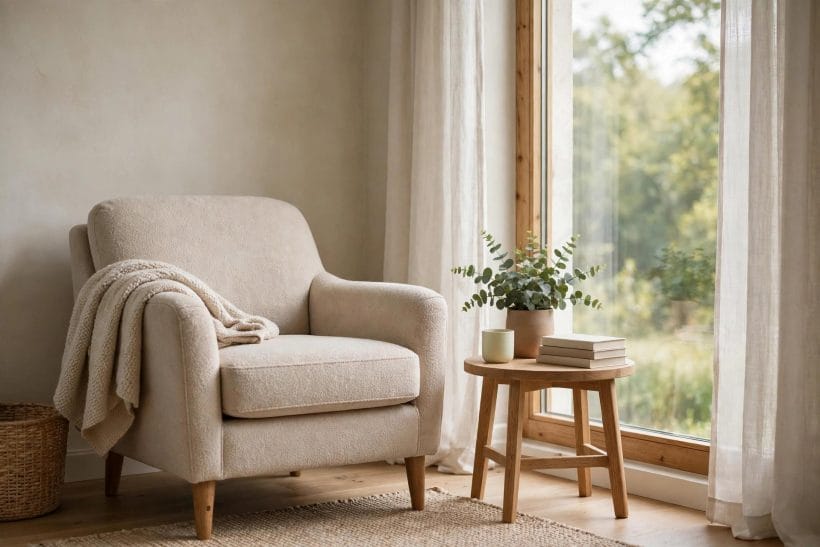
Rooms feel settled when the eye has somewhere to land. A fireplace, a large window, a well-chosen piece of art, or a handsome bookcase can each anchor a room, but two competing anchors create restlessness. Pick the feature that deserves attention, then arrange seating and lighting to support it rather than fight it.
If a room has no natural focal point, create one with scale rather than expense. A large mirror, a generous rug, or a grouping of frames hung as a single composition can all do the job. The trick is commitment: one clear gesture, repeated nowhere else in the room, reads as intentional, while several small gestures scattered about read as indecision.
In open-plan spaces, each zone still needs its own anchor, even though the zones share one room. A dining table can anchor its end of the space while a fireplace anchors the seating end, provided the two zones are separated by enough distance or a change of flooring. The rule is one focal point per visual zone, not per room, and the zones should be readable from the doorway.
4. Get the Rug Size Right
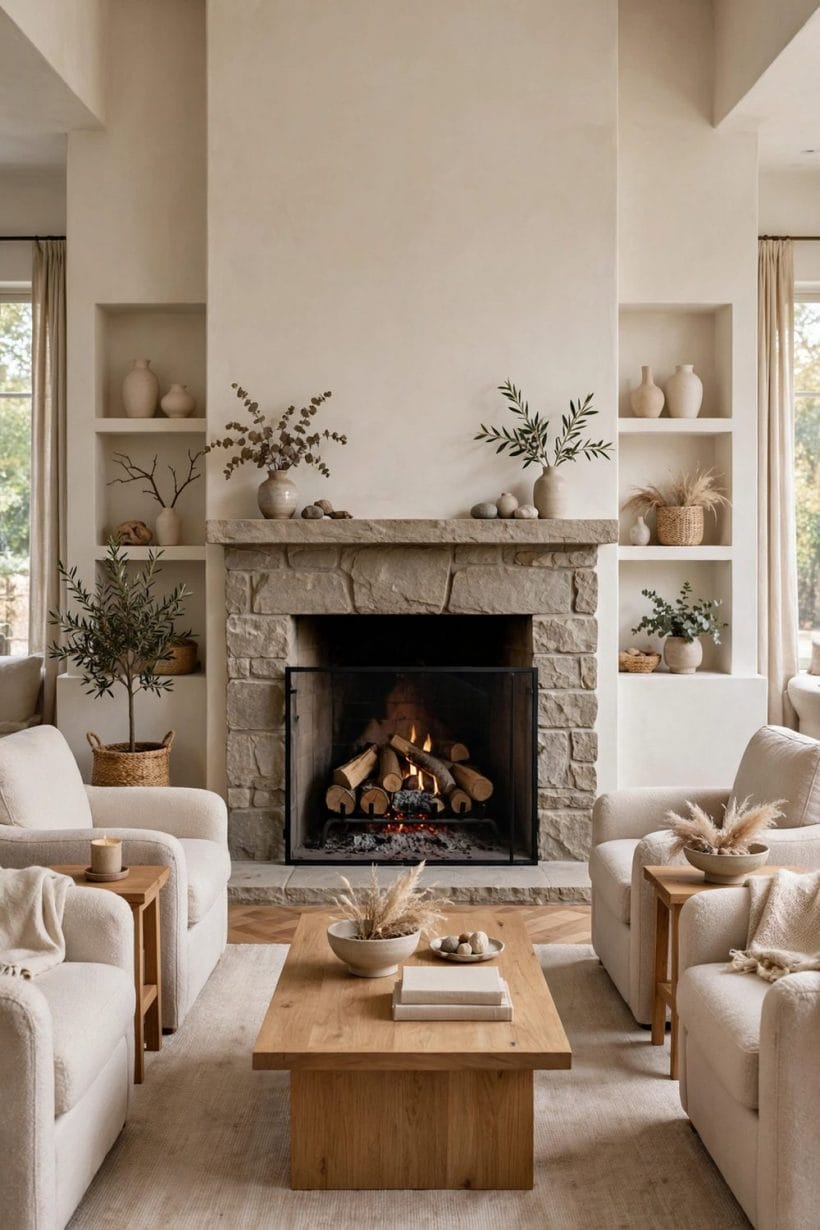
If there is one mistake designers see everywhere, it is a rug that is too small. A rug that floats in the middle of a seating group, touching no furniture at all, chops the room into pieces and makes even generous furniture look lost. The front legs of sofas and chairs should rest on the rug, tying the group together into one conversation area.
Measure before you buy, and measure the furniture group rather than the empty floor. In a bedroom, the rug should extend well beyond the sides of the bed so bare feet meet softness first thing in the morning. When in doubt between two sizes, the larger one almost always looks better, because a rug that grounds the furniture makes the whole room feel considered.
Rug material matters nearly as much as size. A flat-weave rug suits a dining area where chairs slide in and out, while a deeper pile suits a bedroom or a reading corner where bare feet are the point. Darker rugs hide wear in busy rooms, and lighter rugs lift dim ones. Choose the material for the room’s traffic first, and let pattern and colour follow that practical choice.
5. Layer Light Instead of Relying on One Source
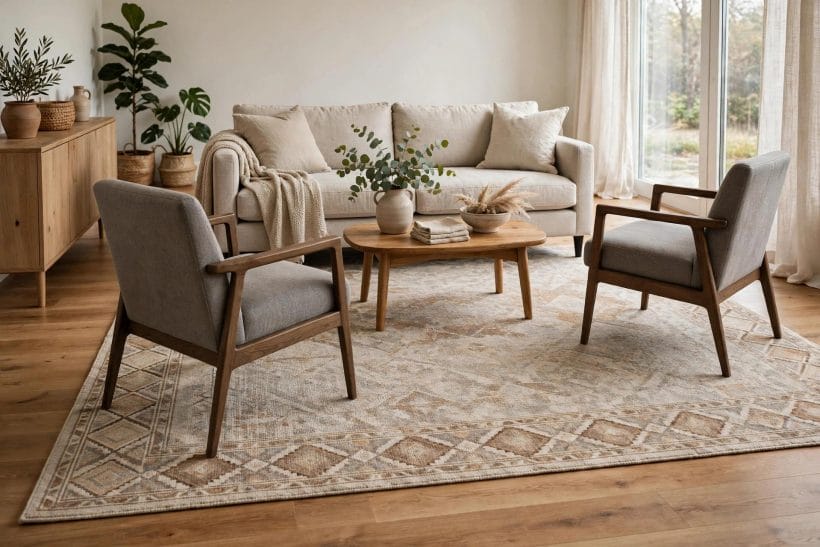
A single ceiling light flattens a room. Designers layer three kinds of light: general light for moving about safely, task light for reading and working, and accent light that draws attention to art, plants, or architectural details. Each layer has its own switch or dimmer, so the room can shift from bright and practical to soft and restful without any furniture moving.
Table lamps and floor lamps do more than illuminate; they create pools of warmth that make a room feel inhabited. Place a lamp near every seat used for reading, keep the light at a comfortable height beside rather than above the reader, and choose warm-toned bulbs for living spaces so evening light feels restful rather than clinical.
Dimmers are the cheapest upgrade in lighting design, and they change a room more than a new fitting often does. A dimmer on the main ceiling light lets the same room serve a children’s homework session and a quiet evening equally well. Where rewiring is not possible, a plug-in dimmer on a floor lamp achieves much of the same flexibility for very little cost.
6. Edit Before You Add
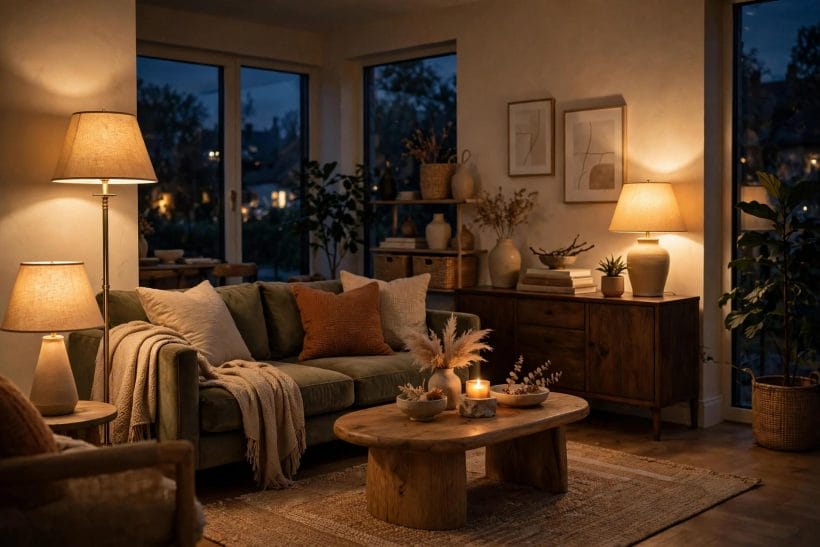
The most transformative design step costs nothing: removing what does not belong. Rooms accumulate objects gradually — gifts, inherited pieces, purchases made for a previous home — until surfaces fill and the room’s character disappears under clutter. Designers regularly remove a third of a room’s objects before adding a single thing, and the room almost always improves.
Try the exercise room by room. Take everything off one surface, clean it, and return only the pieces you genuinely like or use. Box the rest for a month rather than discarding it immediately; if nothing is missed, it can go. The pieces that return will look better for the space around them, and the room will finally show its proportions.
Sentimental objects deserve a different rule from ordinary clutter. Rather than boxing them with everything else, give one or two a place of honour — a shelf, a wall, a table where they can be seen properly. What looks like clutter is often a meaningful object denied proper display. Editing is not about owning less for its own sake; it is about giving what remains the space to be appreciated.
7. Mix Textures to Add Warmth
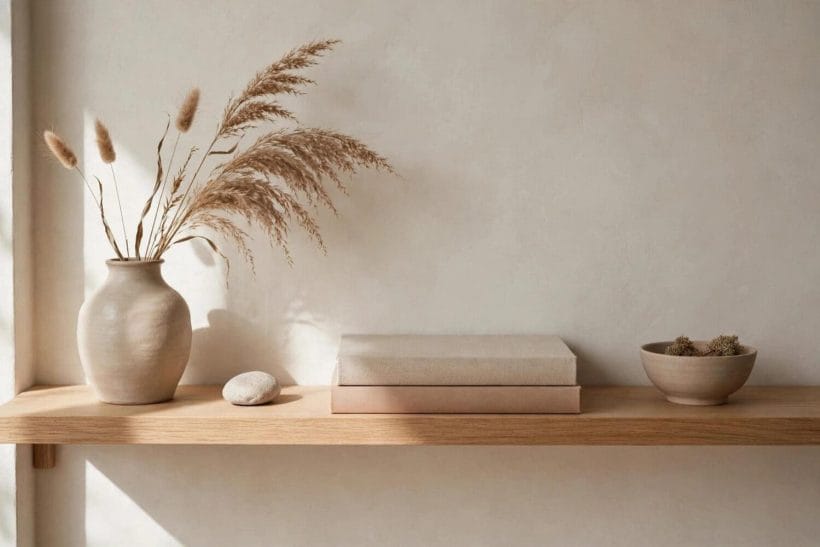
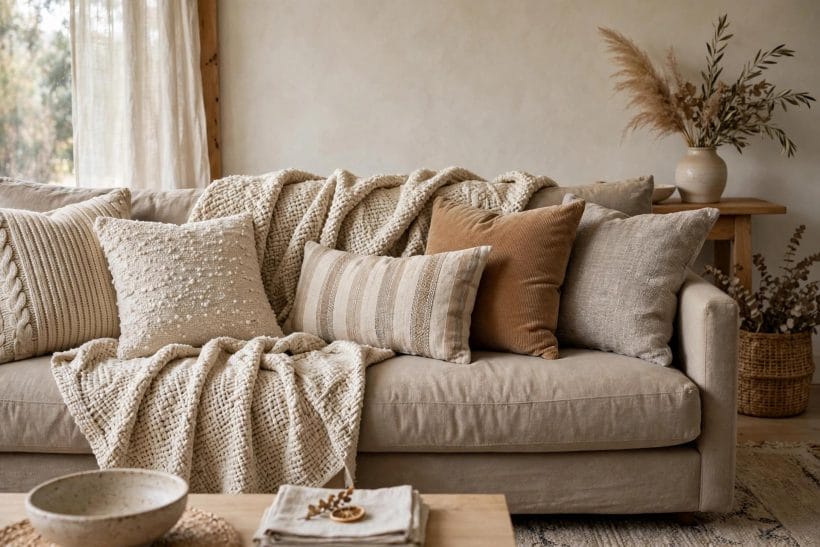
Rooms decorated in a single texture — all smooth, all shiny, all flat — feel cold even in warm colours. Texture is what makes a neutral room inviting: the weave of linen against the grain of timber, the softness of wool beside the coolness of stone or glass. Designers build warmth by combining rough and smooth, matte and sheen, soft and firm in every room.
Start with what you already own. A woven throw over a leather chair, a timber tray on a glass table, or a nubby cushion on a smooth sofa all add tactile interest without changing the colour scheme. The goal is variety the hand can feel, not a display of materials; two or three contrasting textures per seating area are plenty.
Texture also changes how a room sounds. Soft furnishings absorb echoes, which is why a bare room with hard floors can feel harsh even when it looks beautiful. A rug, curtains, and upholstered seating together soften the acoustics noticeably, making conversation easier and the room more comfortable. Warmth, in other words, is not only visual; it is something you hear as well.
8. Hang Art at Eye Level
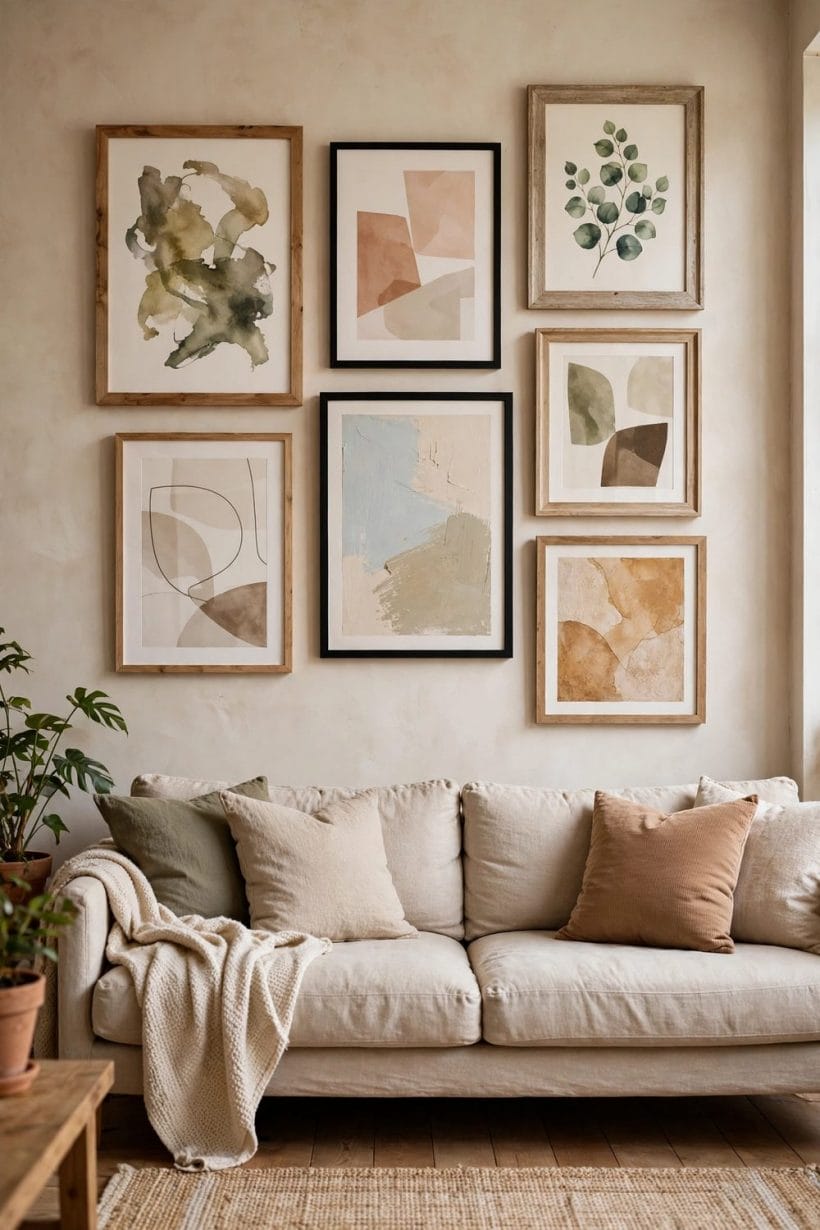
Art hung too high is one of the most common and most easily fixed design errors. Pictures should sit at the eye level of a standing person, with the centre of the piece roughly at standing eye height, so the work can be looked at rather than looked up to. Above a sofa, the bottom of the frame should relate to the furniture below it, not float near the ceiling.
When grouping smaller pieces, treat the whole group as one composition: arrange them on the floor first, keep the spacing even, and hang the group as a single unit centred over the furniture beneath. A large wall needs a large piece or a generous grouping; a scattering of tiny frames on a big wall only emphasises the emptiness.
Leaning large art against a wall, rather than hanging it, is a useful alternative in rented rooms or where walls cannot take fixings. A large framed piece leaned on a console or a sideboard reads as intentional when the frame is substantial and the piece is large enough. Keep the bottom of the frame close to the furniture beneath it, so the composition still relates to the room rather than floating.
9. Bring Plants In for Life and Scale
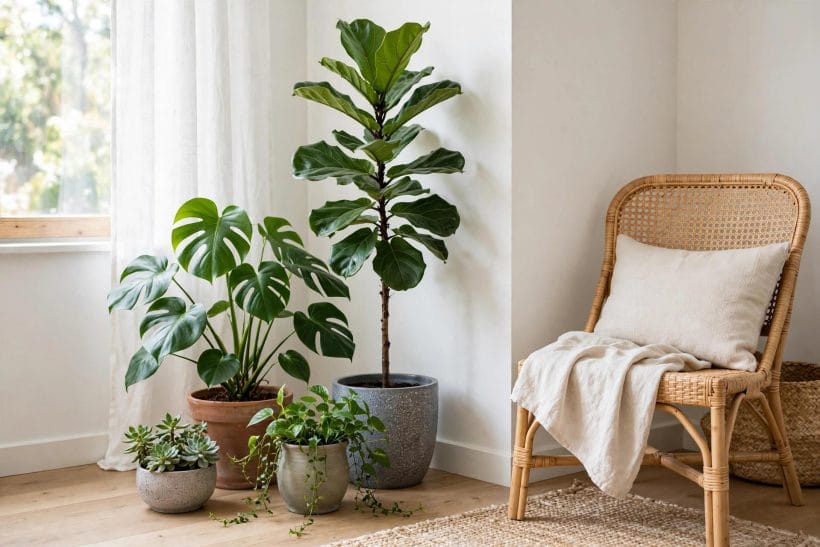
Plants are the quickest way to make a styled room feel lived in. Their organic shapes soften straight furniture lines, their green reads as a colour that pairs with almost any scheme, and their varying heights fill awkward corners that furniture cannot. Designers use plants the way they use lamps: to add life at different heights throughout a room.
Choose plants that suit the light you actually have rather than the light you wish you had, and group them in odd numbers at different heights for a natural look. A tall plant beside a bookcase, a trailing plant on a high shelf, and a small pot on a side table create a rhythm that draws the eye around the room. Keep the pots simple so the plants themselves carry the interest.
Plant care is part of the design decision, not an afterthought. A plant that struggles in low light will look worse than no plant at all, so match the plant to the room’s real conditions and to the owner’s real habits. A hardy plant that thrives on neglect serves the room better than a demanding one that slowly declines. Honest plant choices keep the room looking alive year-round.
10. Finish With the Personal Layer
The final layer of a room is the one no designer can buy for you: the objects that carry memory and meaning. A photograph from a favourite trip, a bowl collected over years, a book that has been read many times — these are what turn a well-arranged room into a home. Without them, even a perfectly styled room feels like a showroom.
Display personal pieces with the same editing eye used elsewhere. Choose the few that genuinely matter, give them space and good light, and rotate them occasionally so the room keeps evolving. A home that shows its owner’s life, lightly and with room to breathe, is the real expert standard — and it is available to every room, at any budget.
Children’s art and family photographs deserve the same care as any other art. A dedicated wall or a rotating display — where pieces change every few months — gives family work a proper place without letting it accumulate on every surface. The personal layer should evolve with the household, gaining new pieces and retiring old ones, so the room reflects the people who live there now.
Final Considerations
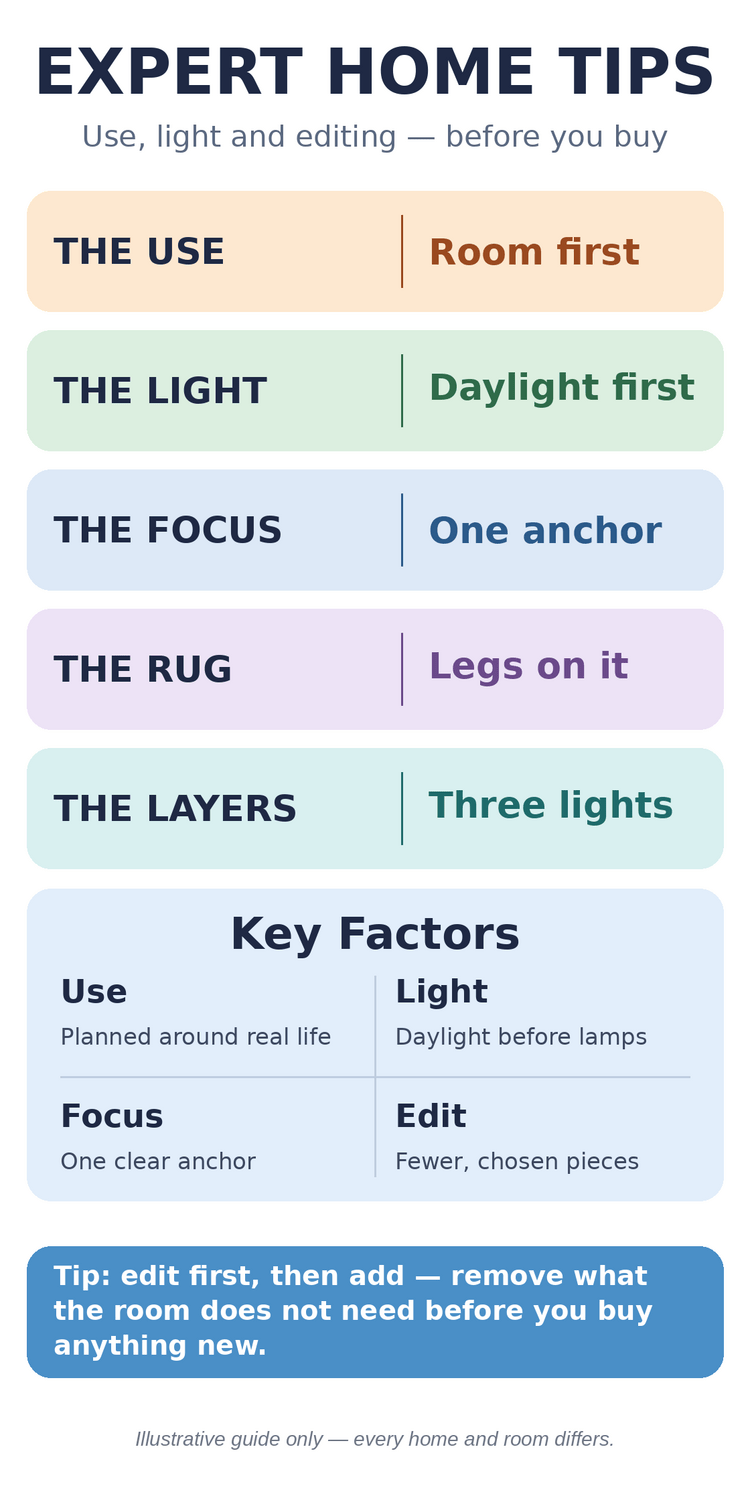
The through-line of expert advice is reassuringly simple: understand the room’s use, respect its light, choose a focal point, size the rug properly, layer the lighting, edit before adding, mix textures, hang art at eye level, bring in plants, and finish with personal meaning. No single step requires expertise; together, they transform how a room feels.
For more on the rooms these ideas shape, see tiny house designs, interior design ideas, blush pink bedroom, daybed ideas, entrance pergola, and craftsman living room ideas. Start with the room you use most, apply one or two checks this week, and let the room teach you what it needs next.


0 Comments