
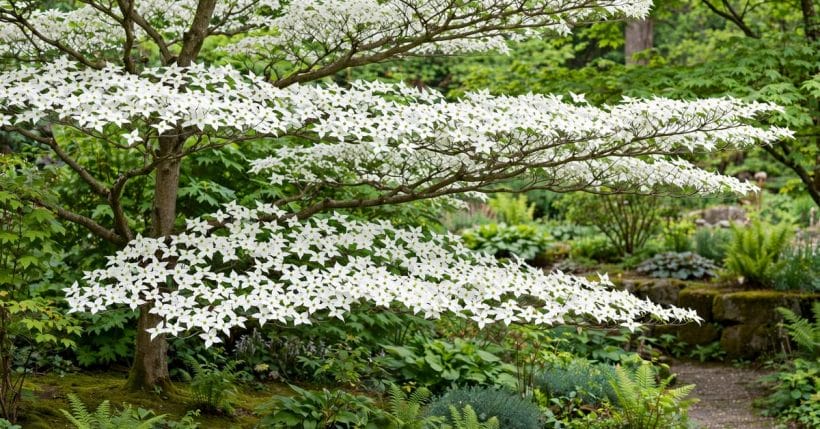
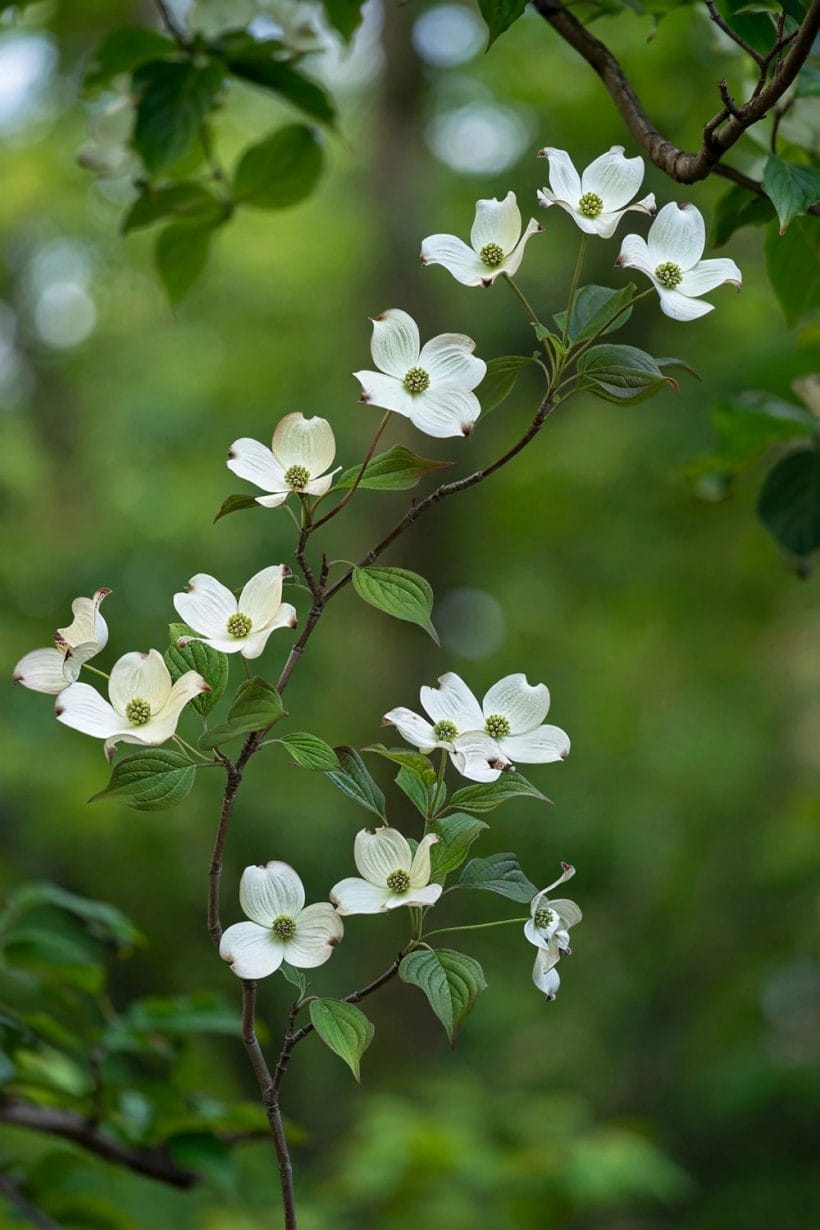
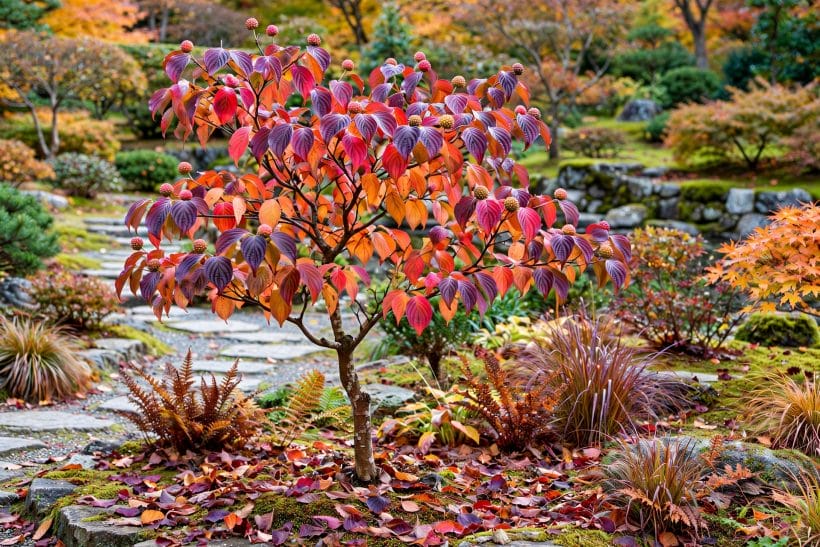
Kousa dogwood is a small flowering tree valued for its layered branches, late-spring flowers and autumn colour, and pruning it well is mostly a matter of timing, restraint and knowing what to leave alone. Unlike some trees that need hard annual cutting, kousa dogwood keeps its best shape with light, thoughtful pruning: removing what is dead, damaged or crossing, and letting the tree’s natural tiered habit do the rest. This guide covers when to prune, what to cut, what to avoid, and when the work belongs to a professional rather than a homeowner with a ladder. Pruning advice here is general guidance only — tree work at height and anything near power lines belongs to qualified arborists, and local rules and conditions always come first.
1. Know the Tree Before You Cut
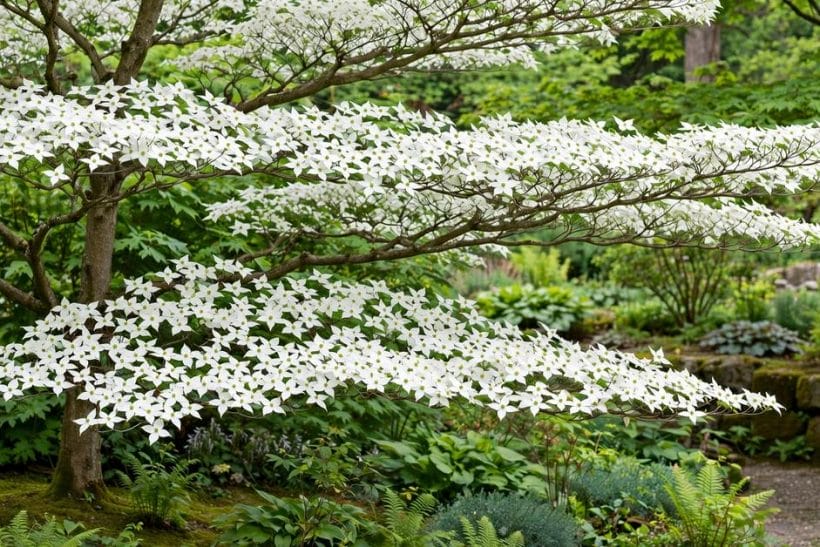
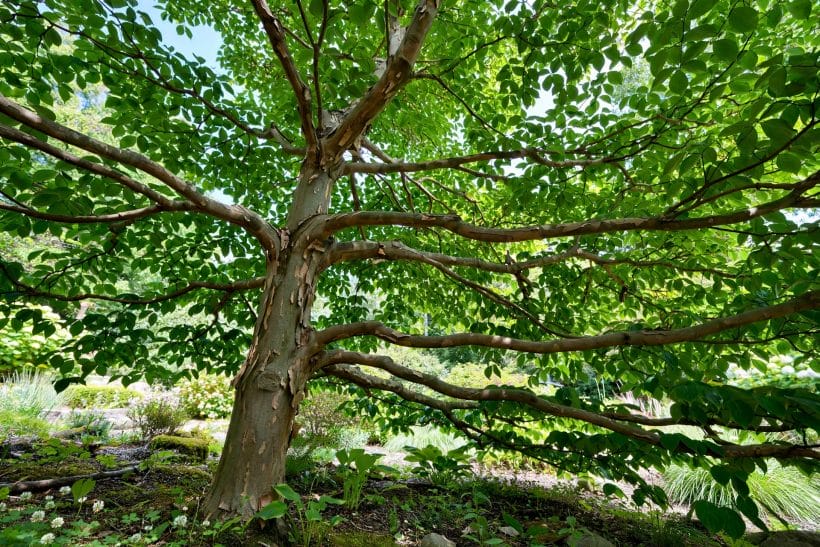
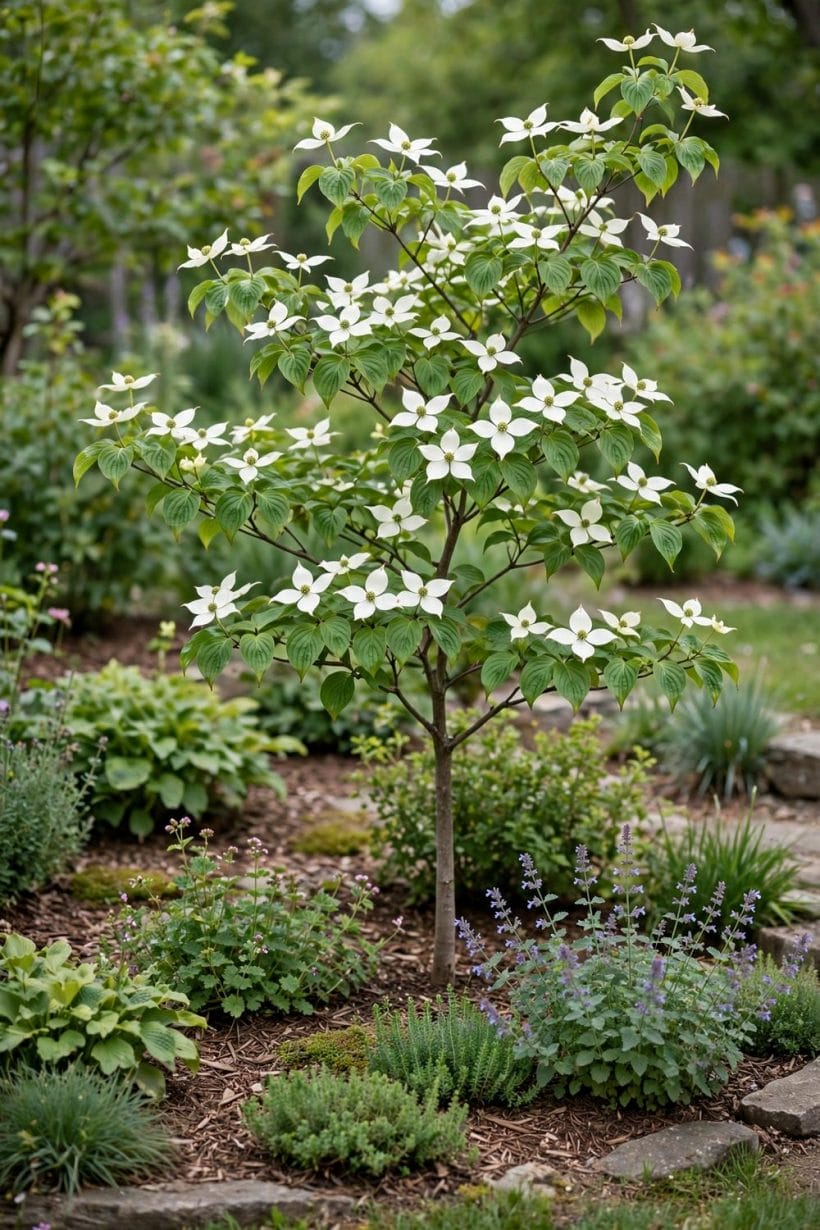
Before any cut, spend time looking at the tree’s natural shape. Kousa dogwood grows with horizontal, layered branches that give it a distinctive tiered silhouette, and the best pruning preserves that habit rather than fighting it. Walk around the tree and note its overall balance, any branches that cross or rub, and any dead or damaged wood. A tree that already has a good shape needs very little: often the right decision is to remove a handful of problem branches and stop.
Also note the tree’s age and size. A young tree needs formative attention to establish a sound structure, while a mature tree mostly needs maintenance — deadwood removal and the occasional thinning. Cutting a mature kousa hard in an attempt to reshape it usually does more harm than good, since the tree recovers slowly and the tiered shape takes years to rebuild. When in doubt, cut less: you can always remove more next year, but you cannot put a branch back.
Learning the shape of a tree also means learning its history. A kousa that was planted in the wrong place, too close to a wall, under power lines or in deep shade, will always fight its position, and no amount of pruning fixes a poor planting choice. If the tree is young and badly placed, moving it while it is still small may serve it better than years of corrective cutting. For a mature tree, accept its position and prune to make the best of it rather than forcing a shape the site will not support.
2. When to Prune
Timing matters more than technique for kousa dogwood. The usual window is late winter or early spring, while the tree is still dormant but before growth resumes, since cuts made then heal as growth starts and the tree’s structure is easy to see without leaves. Avoid pruning in late spring and early summer when the tree is in flower, since you would be cutting off the display you planted it for and the tree is putting its energy into growth and flowering.
Avoid heavy pruning in autumn as well, since fresh cuts made late in the season have little time to heal before winter and can leave the tree exposed. Light deadwood removal can be done at any time of year, since dead wood is dead whenever you find it, but structural work belongs in the dormant window. If you missed the window, it is better to wait for the next one than to force heavy work at the wrong time.
3. The Tools That Make Clean Cuts
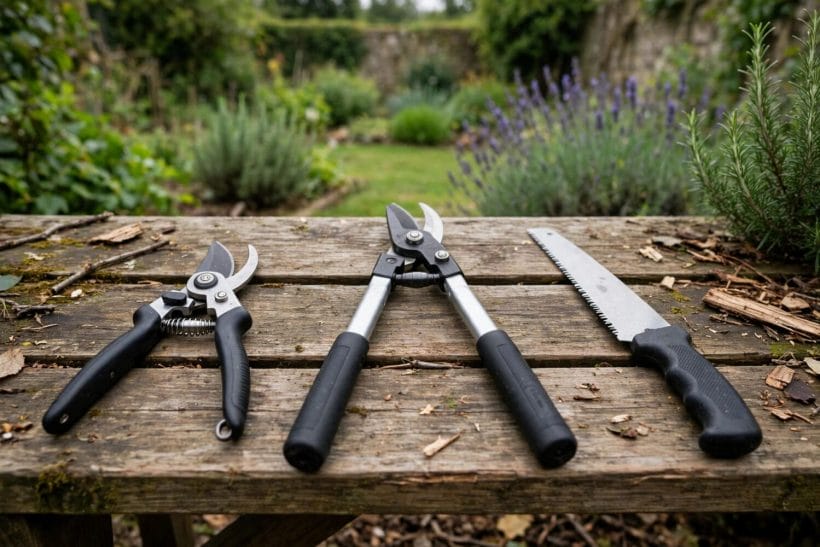
Clean cuts heal better than ragged ones, so sharp, clean tools are not a luxury. Use bypass secateurs for small branches, loppers for branches up to wrist thickness, and a sharp pruning saw for anything larger. Bypass blades cut cleanly past each other, while anvil blades crush stems and leave wounds that heal slowly. Clean your tools before you start and between trees, since dirty blades can carry disease from one plant to another.
Check that your tools are sharp before every session: a blunt blade tears bark and leaves a ragged wound. Keep the tool matched to the branch — forcing small secateurs onto a large branch damages both the tool and the tree. Wear gloves and eye protection, and never work from a ladder with a saw in a way that leaves you unbalanced. If a branch is beyond comfortable reach from the ground, that is the point at which a professional should take over.
Timing also interacts with flowering and fruiting in ways worth remembering. Kousa flowers appear on new growth, so pruning at the wrong time can remove a season of flowers, while pruning in the dormant window lets the tree put its spring energy into the branches you kept. Fruit follows flowers, and the autumn display of berries and colour is part of the charm of the tree, so any pruning plan should protect the flowering wood rather than treating it as expendable. A tree pruned with its flowering cycle in mind rewards you twice: once in spring and once in autumn.
4. What to Remove First
Start every pruning session with the same three removals, in this order: dead wood, damaged wood and diseased wood. Dead branches are brittle, often discoloured and carry no live buds; damaged branches are split, torn or hanging; diseased branches show cankers, unusual discolouration or dieback. Removing these first clears the picture and often reveals that little else needs doing.
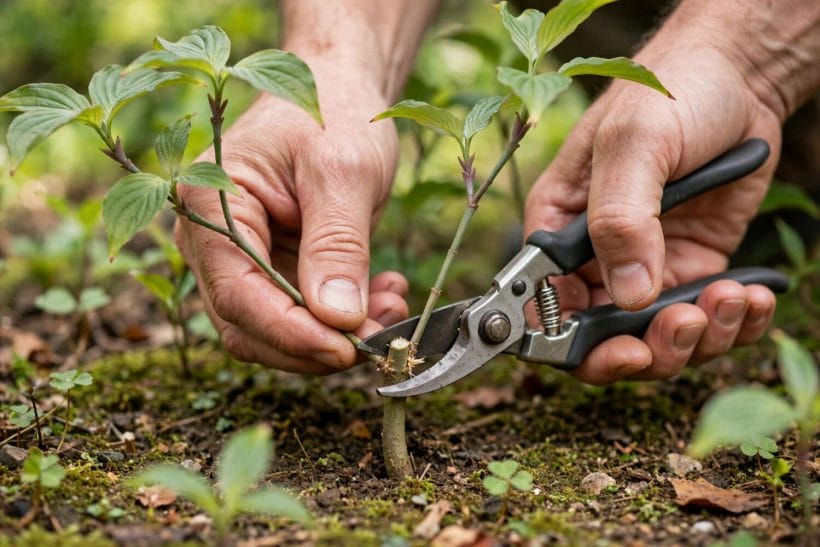
Cut dead and damaged wood back to healthy tissue or to the branch collar, the slight swelling where the branch meets its parent. Never leave long stubs, since stubs die back and invite decay, and never cut flush into the collar itself, since the collar is what seals the wound. If you are unsure whether a branch is dead, scratch a small area of bark: green underneath means life, brown and dry means dead. Remove diseased material carefully and dispose of it away from the garden rather than composting it.
5. Crossing and Rubbing Branches
After deadwood, look for branches that cross or rub against each other. Rubbing bark wounds both branches and creates an entry point for disease, so one of the pair should go — usually the weaker, worse-placed or inward-growing one. Keep the branch that best serves the tree’s overall shape and direction, and remove the other cleanly at its origin.
Also remove branches that grow inward toward the centre of the tree, since they crowd the canopy and block light and air from the interior. A kousa dogwood with an open centre dries faster after rain and shows off its layered shape better. Work gradually: step back after each few cuts and look at the whole tree, since it is easy to remove too much when you are focused on individual branches.
Clean tools deserve a word about storage as well as sharpening. Tools left damp in a shed rust, and rusty blades tear rather than cut, so dry and oil them after use and store them where they stay dry. A small sharpening stone and a bottle of disinfectant kept with the tools make it easy to maintain them as a habit rather than a chore. Well-kept tools last for years and make every cut cleaner, which is a direct benefit to the tree.
6. Thinning for Light and Air
Light thinning improves the health and appearance of a kousa dogwood without changing its character. Remove a small number of crowded branches so light reaches the interior and air moves through the canopy, which helps foliage dry and reduces conditions that favour disease. Aim to remove only a modest proportion of the live canopy in any one year — a light touch repeated over years serves the tree far better than a single heavy session.
Choose branches to thin with the tree’s shape in mind: take from crowded areas, keep the layered tiers intact, and avoid creating gaps that look like holes in the canopy. Stand back frequently and check the silhouette, since the goal is a tree that looks as though it was never pruned at all. If the canopy still looks dense after a light thinning, accept it and revisit next year rather than pushing further.
7. Shaping Without Spoiling the Tiers
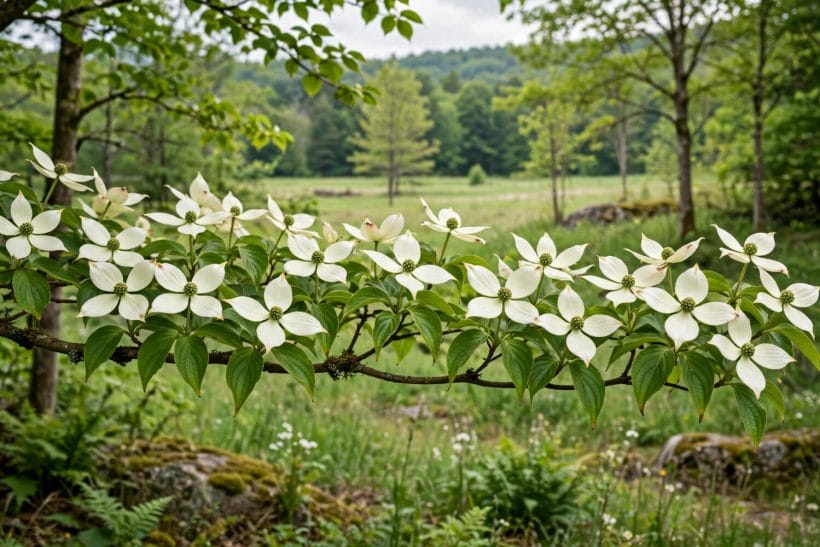
Kousa dogwood’s layered, horizontal branching is its signature, and shaping should protect it. Avoid shearing or rounding the tree into a ball, which destroys the tiers and produces a flush of weak, upright regrowth. Instead, shorten individual branches that extend too far by cutting back to a side branch that continues in a sensible direction, keeping the layered outline intact.
Resist the urge to “tidy” the tree into symmetry. A slightly irregular kousa looks natural and graceful, while a forced symmetry looks strained and usually fails within a season as regrowth breaks the shape. If a branch genuinely spoils the tree’s balance — because it grows strongly in one direction while the rest of the tree is even — reduce it gradually over two seasons rather than removing it outright in one go.
Thinning also raises a question beginners often ask: how do you know when to stop? The answer is to look at the tree from a distance after every few cuts and ask whether it still looks like itself. If the silhouette is intact and light now reaches the interior, stop. If you find yourself cutting branches simply because they are there rather than because they cause a problem, put the secateurs down. Restraint is the hardest pruning skill to learn and the most valuable one for a tree like kousa, whose beauty lies in its natural form.
8. Suckers and Low Growth
Kousa dogwood can produce suckers from the base and low shoots along the trunk. Remove suckers promptly while they are small, cutting them at their point of origin rather than snapping them off, since snapped suckers tend to regrow more vigorously. Low growth on the trunk can be removed gradually to raise the canopy and show off the bark and branch structure, but do this over several years rather than stripping the trunk bare in one session.
Keep the area around the base clear of competing growth and mulch, and check the graft union if the tree is grafted: growth from below the graft is rootstock, not kousa, and should be removed. If suckering is heavy year after year, it can signal stress — check watering, soil and root damage before assuming the tree simply needs more cutting.
9. Aftercare and Watching Recovery
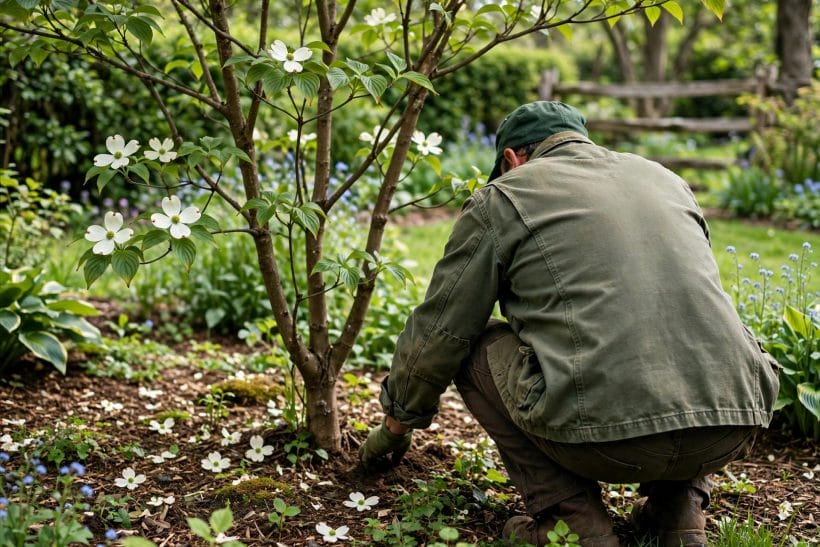
After pruning, the tree needs little intervention: water during dry spells in the following growing season, keep mulch away from direct contact with the trunk, and watch how the tree responds. Healthy regrowth appears as well-placed shoots that extend the existing tiers; weak, whippy vertical shoots in large numbers suggest the pruning was heavier than the tree wanted, and future sessions should be lighter.
Do not paint or seal pruning cuts as a routine measure: kousa dogwood seals its own wounds, and sealants can trap moisture and slow healing. The exception is if local guidance for a specific disease recommends it, in which case follow that guidance. Keep an eye on the tree through the next flowering season: good flowering after pruning is a reassuring sign, while poor flowering or dieback deserves a closer look before the next session.
10. When to Call a Professional
Some kousa work belongs to a professional arborist, and recognising that boundary is part of good tree care. Call one for anything that needs a ladder or climbing, any work near power lines, any large limb removal, and any tree showing significant dieback, fungal fruiting bodies or structural concerns. A professional can also advise when a tree’s problems are beyond pruning — root damage, disease or a poor planting position cannot be fixed with secateurs.
Choosing the right professional matters: look for recognised arboricultural qualifications and insurance, and ask what they propose before work starts. A good arborist will explain the plan, keep cuts minimal and respect the tree’s natural shape. The cost of professional help is small compared with the cost of a damaged tree or an injury, and for a tree as graceful as a kousa, it is money well spent.
Final Considerations
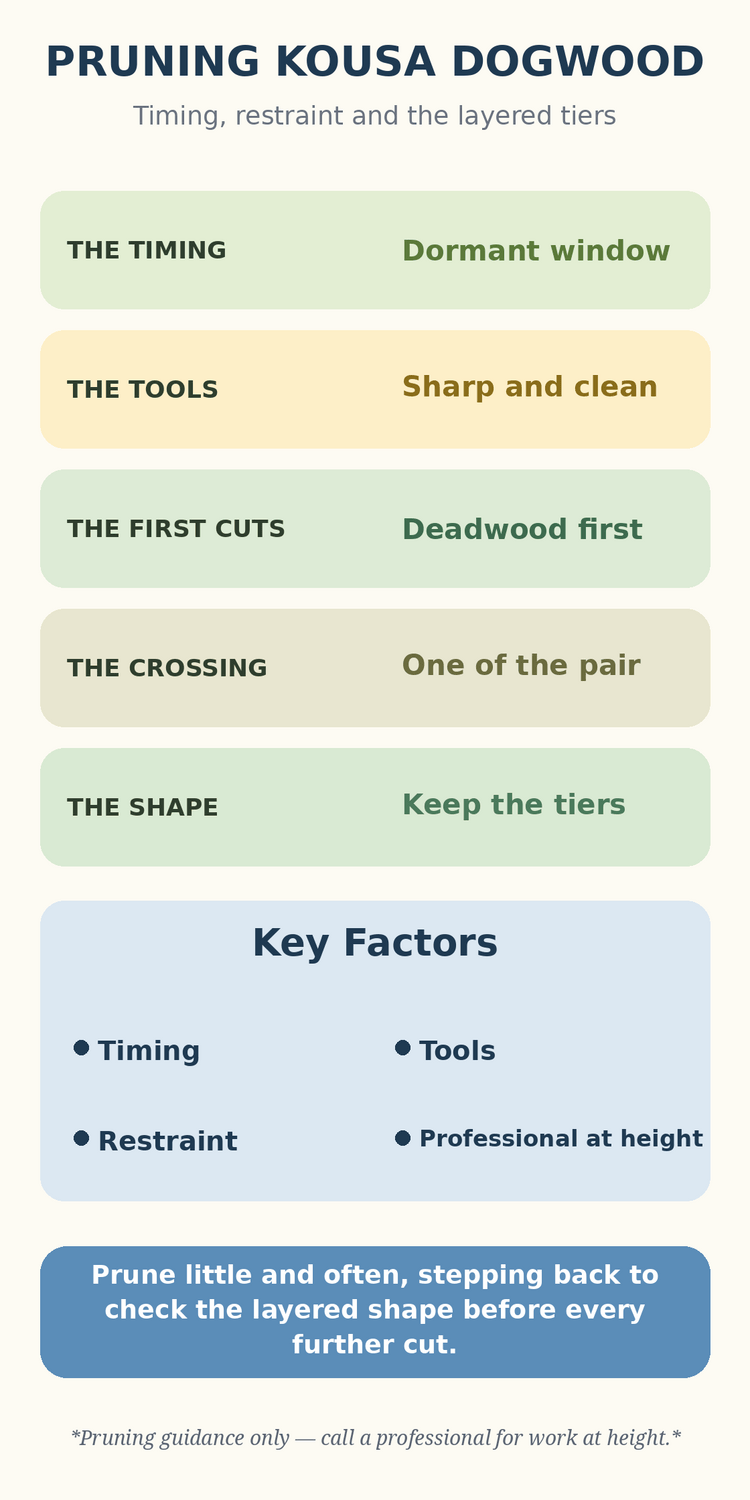
Pruning a kousa dogwood well comes down to timing, restraint and respect for the tree’s natural tiers. Prune in the dormant window, start with dead, damaged and diseased wood, remove crossing branches, thin lightly for light and air, and never shear the tree into a shape it does not want. Keep tools sharp and clean, step back often to judge the whole tree, and hand anything at height or near power lines to a professional. A kousa pruned this way keeps its layered grace, flowers generously and stays healthy for decades — a tree that looks after itself with only a little thoughtful help each year. For more garden ideas, see asian landscaping ideas, southwestern landscaping ideas, blood orange, florida backyard patio, tiny house designs and interior design ideas.




0 Comments