
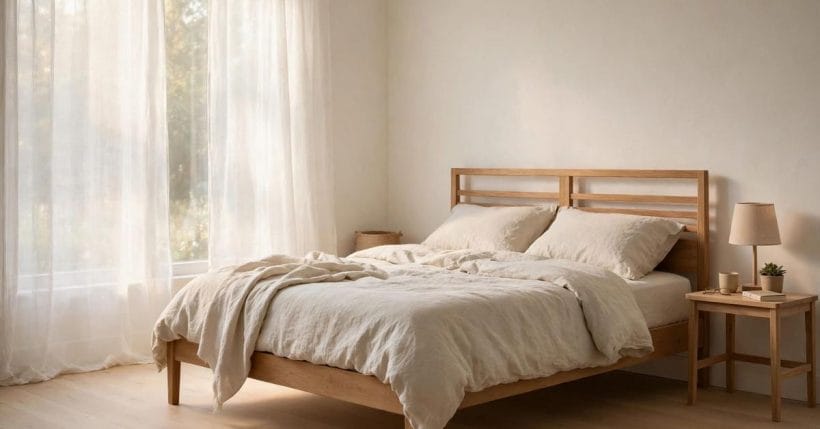
A bedroom with white walls begins with the wall itself, not with the bed or the bedding. The shade of white, the finish on the surface, the way daylight moves across it through the day, and the furniture and fabrics set against it all decide whether the room feels calm or cold, bright or bare. This survey gathers seventy-five ideas that stay strictly with the walls: their colour, their finish, their light, and the pairings that let a white wall do its quiet work.
Readers who want the wider picture can start with the broader pale-room gallery and then return here for the wall alone. What follows treats a white bedroom as a wall project first: choose the white for the light the room actually gets, choose the finish for the life the room actually lives, and let everything set against the wall earn its place by keeping the wall calm.
1. Shades of White for the Walls
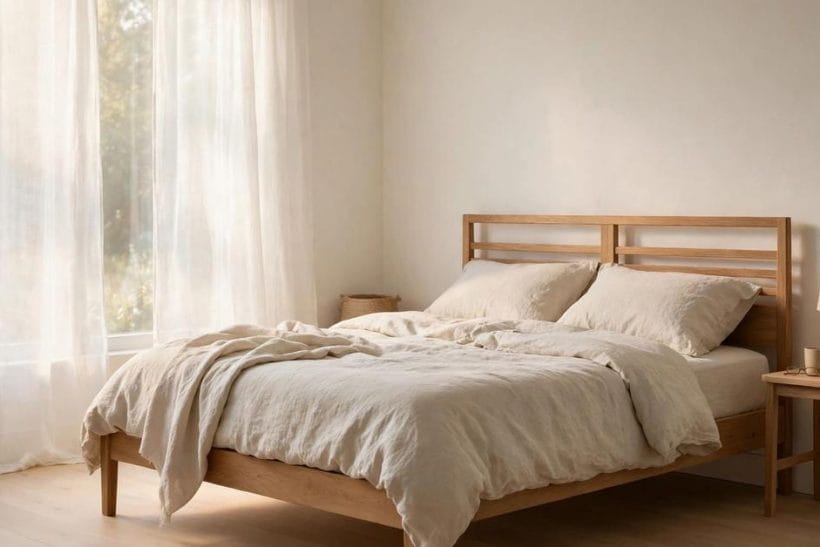
White is not one colour on a wall. A warm white glows under a lamp, a cool white sharpens in daylight, and a chalky white softens every edge it touches. The ideas in this section stay with the shade itself, and with matching the shade to the room rather than to a trend.
| Item | What it is |
|---|---|
| Pure White Walls for a Bright Room | Pure white suits a room that already gets generous daylight, because the light does the warming and the wall simply returns it. |
| Warm Creamy White Walls for Evening Rooms | A warm creamy white flatters a room that is used mostly in the evening, when lamps replace daylight. |
| Cool Blue-White Walls for Sunlit Rooms | A cool white with the faintest blue cast suits a room that faces strong sun, because it keeps the brightness without turning yellow by midday. |
| Soft Grey-White Walls for a Gentle Contrast | Soft grey-white sits between white and grey, giving the wall just enough depth to show the shape of the furniture against it. |
| Chalky White Walls for a Softened Room | Chalky white takes the edge off a room with hard floors and plain furniture, because its soft, powdery surface seems to absorb light rather than bounce it. |
| Linen White Walls for Texture Lovers | Linen white carries the faintest warm grey note, like undyed cloth, and it suits walls that will sit behind linen bedding and woven baskets. |
| Ivory White Walls for a Traditional Room | Ivory white warms a traditional room without turning yellow, because its golden note is gentle rather than strong. |
| Bright White Walls for a Dark Corner Room | Bright white is the honest choice for a room with a single small window, because it returns every bit of light the window offers. |
| Matte White Walls That Hide Small Marks | Matte white is the forgiving finish, because it scatters light and softens the small marks that everyday life leaves on a wall. |
| Eggshell White Walls With a Soft Glow | Eggshell sits between matte and satin, giving the wall a soft glow that shows up best in lamplight. |
| Satin White Walls That Wipe Clean | Satin white suits walls that need regular wiping, because its smooth surface releases marks more easily than a flat finish. |
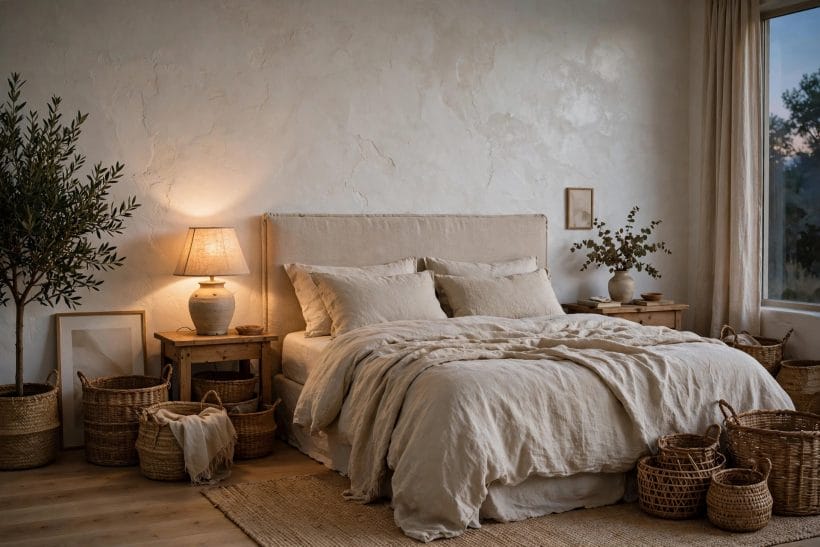
| Limewash White Walls With Gentle Movement | Limewash gives a white wall visible movement, because the wash settles unevenly and leaves soft cloudy patches. |
| Plaster White Walls With a Handmade Feel | A plaster finish leaves the trowel marks faintly visible, so the wall reads as handmade rather than factory smooth. |
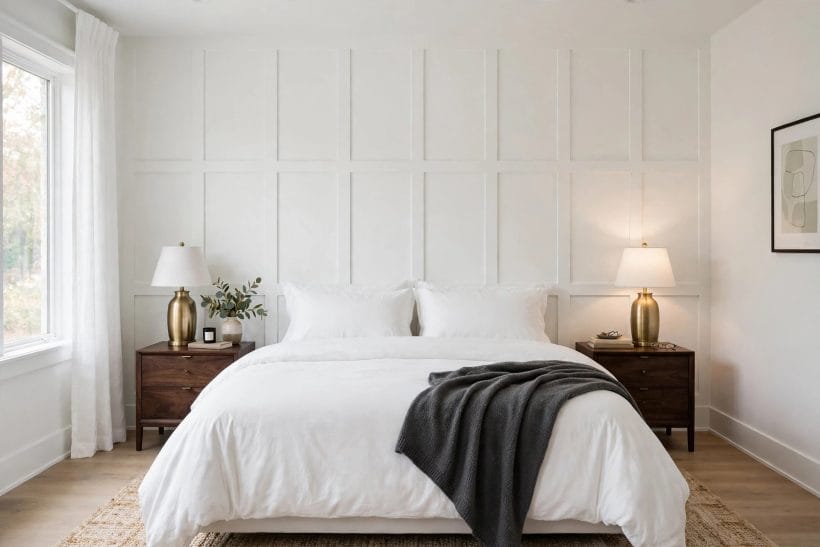
| Flat Panel Moulding Painted White | Flat panel moulding turns a plain white wall into quiet architecture, because the raised rectangles catch light and shadow through the day. |
| Picture-Frame Moulding on White Walls | Picture-frame moulding gives a white wall a tailored rhythm, with each frame offering a place for the eye to rest. |
| White Walls With a Plaster Relief Border | A plaster relief border near the ceiling gives a white wall a finished edge, like a hem on cloth. |
| White Walls in a North-Facing Bedroom | A north-facing room gets cool, steady light, so a warm white keeps the walls from feeling cold. |
| White Walls in a South-Facing Bedroom | A south-facing room gets warm, strong light, so a cool or pure white keeps the brightness balanced. |
| White Walls Opposite a Window | The wall opposite the window does the most work in the room, because it catches the daylight and throws it back. |
| White Walls Beside a Window | Walls beside a window live in changing light, bright at the window edge and softer toward the corner. |
| White Walls With a Tall Mirror | A tall mirror leaning against a white wall doubles the daylight and doubles the wall itself, because the reflection carries the white across the room. |
| White Walls Washed by Bedside Lamps | Bedside lamps wash the wall behind the bed with warm pools of light, and a warm white wall answers that light beautifully. |
| White Walls Under a Central Pendant | A central pendant lights a white wall from above, which can leave the lower wall dim if the shade is too closed. |
| White Walls in a Room With Sheer Curtains | Sheer curtains turn harsh daylight into a soft wash, and a white wall makes the most of that gift. |
| White Walls Behind a Timber Bed Frame | A timber bed frame against a white wall reads as a warm drawing on pale paper, because the wood grain stands out without competing. |
| White Walls With a Rattan Headboard | Rattan against white walls brings a breezy, woven texture that softens the room without adding colour. |
| White Walls With Oak Flooring | Oak flooring warms a white-walled room from below, because the eye travels from the pale wall to the honeyed floor and back. |
| White Walls With a Woven Rug | A woven rug in natural tones anchors a white-walled room, because it gives the floor a texture the walls deliberately lack. |
| White Walls With Wicker Baskets | Wicker baskets against white walls add storage that looks like decoration, because the woven texture contrasts gently with the smooth wall. |
| White Walls With a Timber Bench at the Foot of the Bed | A timber bench at the foot of the bed gives a white wall a companion piece, because the bench echoes the bed frame and completes the room's wooden line. |
| White Walls With Wooden Wall Shelves | Wooden shelves on a white wall display books and small objects against a pale field, so each object reads clearly. |
| White Walls With a Driftwood Mirror Frame | A driftwood or pale timber mirror frame adds a natural edge to a white wall without introducing a new colour. |
| White Walls With All-White Bedding | All-white bedding against white walls creates a single pale field, broken only by texture: crisp cotton, soft linen, a woven throw. |
| White Walls With Cream Bedding | Cream bedding warms a white wall, because the cream reads as a softer white beside the wall's brighter one. |
| White Walls With Grey Bedding | Grey bedding gives a white wall a calm partner, because grey is white with its brightness lowered. |
| White Walls With Sage Bedding | Sage bedding brings a breath of green to white walls without breaking the calm, because sage is a muted, greyed green. |
| White Walls With a Charcoal Throw | A charcoal throw across the foot of the bed gives white walls a single dark accent, which stops the room from feeling washed out. |
| White Walls With a Linen Duvet | A linen duvet wrinkles softly, and that lived-in texture suits a white wall that might otherwise feel too perfect. |
| White Walls With Layered Throws | Layered throws in cream, oatmeal and soft grey give white walls a sense of depth, because each layer is a slightly different pale tone. |
| White Walls With White Bedding and One Colour | White bedding against white walls can carry one colour in a single cushion or throw, and that one colour becomes the room's accent. |
| White Walls With Dark Walnut Bedside Tables | Dark walnut bedside tables give white walls a handsome contrast, because the deep wood reads as furniture rather than decoration. |
| White Walls With White Bedside Tables | White bedside tables blend into white walls, which suits a small room where furniture should not interrupt the wall. |
| White Walls With a Light Oak Dresser | A light oak dresser warms a white wall gently, because the pale wood is close enough to the wall to harmonise and different enough to stand out. |
| White Walls With a Reading Chair | A reading chair in a corner of a white-walled room creates a second place in the room, apart from the bed. |
| White Walls With a Slim Desk | A slim desk against a white wall suits a bedroom that must also serve as a study, because the white wall keeps the work corner feeling open. |
| White Walls With a Freestanding Mirror | A freestanding mirror in a pale frame extends a white wall visually, because it reflects the wall back into the room. |
| White Walls With Low Furniture Only | Low furniture keeps white walls dominant, because the wall rises uninterrupted above the bed, the tables and the dresser. |
| White Walls With One Statement Piece | One statement piece, such as a carved headboard or an antique dresser, earns its place against white walls precisely because the wall is quiet. |
| White Walls With Fitted Wardrobes Painted to Match | Fitted wardrobes painted the same white as the walls disappear into the wall, which is exactly the point. |
| White Walls With Open Shelving for Books | Open shelving on a white wall turns books into decoration, because the coloured spines read as a pattern against the pale field. |
| White Walls With a Hidden Laundry Basket | A laundry basket tucked into a white wardrobe keeps the room's pale calm intact, because laundry is the first thing that breaks it. |
| White Walls With Under-Bed Drawers | Under-bed drawers hide storage where the wall cannot help, because they sit below the eye line and leave the walls untouched. |
| White Walls With a Wall-Mounted Rail | A wall-mounted rail on a white wall offers a place for tomorrow's outfit without a chair draped in clothes. |
| White Walls With Floating Nightstands | Floating nightstands leave the floor clear beneath them, which makes a white wall feel taller and the room feel larger. |
| White Walls With a Recessed Niche | A recessed niche in a white wall offers a display place that does not project into the room, because the shelf sits inside the wall's depth. |
| White Walls With Closed Storage Only | Closed storage is the simplest rule for white walls, because closed doors hide everything and the wall stays a wall. |
| White Walls in a Tiny Bedroom | A tiny bedroom gains breathing room from white walls, because the pale surfaces push the boundaries of the room outward. |
| White Walls in a Bedroom With a Sloped Ceiling | A sloped ceiling painted white disappears upward, because the wall and the ceiling become one surface with no line between them. |
| White Walls in a Bedroom Alcove | An alcove painted white becomes a bed nook rather than a dark corner, because the white carries light into the recess. |
| White Walls in a Narrow Bedroom | A narrow bedroom feels wider when the long walls are white, because the pale surfaces reflect light across the width. |
| White Walls in a Bedroom With No Window | A bedroom with no window depends entirely on its walls for brightness, so bright white and warm lamplight must do the work of daylight. |
| White Walls Around a Dormer Window | A dormer window set into white walls becomes a bright frame, because the white surround carries the window light into the room. |
| White Walls in a Loft Bedroom | A loft bedroom with white walls feels open despite the roofline, because the white unifies the angled surfaces. |
| White Walls in a Shared Bedroom | A shared bedroom stays peaceful with white walls, because the neutral field belongs to neither sleeper and suits both. |
| White Walls With Nothing Hung Above the Bed | Leaving the wall above the bed empty gives the eye a resting place, which suits the last minutes before sleep. |
| White Walls With One Calm Print | One calm print on a white wall gives the room a focal point without noise, because a single image reads as a pause rather than a gallery. |
| White Walls With Blackout Lining Behind Pale Curtains | Blackout lining behind pale curtains gives a white-walled room true darkness at night while keeping the daytime look soft. |
| White Walls With Dimmer Switches | Dimmer switches let a white wall change through the evening, from bright for reading to a soft glow for winding down. |
| White Walls With a Soft Wool Throw | A soft wool throw on the bed adds the tactile comfort that a smooth white wall deliberately lacks, because the hand finds warmth where the eye finds calm. |
| White Walls With No Pattern at All | A room with no pattern anywhere lets the white wall carry the whole mood, because there is nothing to compete with it. |
1. Pure White Walls for a Bright Room
Pure white suits a room that already gets generous daylight, because the light does the warming and the wall simply returns it. Keep the ceiling the same pure white so no line interrupts the brightness, and let the floor carry the only warmth in the room.
2. Warm Creamy White Walls for Evening Rooms
A warm creamy white flatters a room that is used mostly in the evening, when lamps replace daylight. The cream in the wall answers the warmth of the lamp, so the room feels settled rather than stark once the curtains are drawn.
3. Cool Blue-White Walls for Sunlit Rooms
A cool white with the faintest blue cast suits a room that faces strong sun, because it keeps the brightness without turning yellow by midday. Pair it with pale grey bedding so the coolness reads as fresh rather than cold.
4. Soft Grey-White Walls for a Gentle Contrast
Soft grey-white sits between white and grey, giving the wall just enough depth to show the shape of the furniture against it. It suits a room where the bedding is white, because the wall then reads as the darker partner in a quiet pair.
5. Chalky White Walls for a Softened Room
Chalky white takes the edge off a room with hard floors and plain furniture, because its soft, powdery surface seems to absorb light rather than bounce it. It suits a relaxed room where nothing needs to look polished.
6. Linen White Walls for Texture Lovers
Linen white carries the faintest warm grey note, like undyed cloth, and it suits walls that will sit behind linen bedding and woven baskets. The wall and the fabric share a tone, so the room feels made from the same cloth.
7. Ivory White Walls for a Traditional Room
Ivory white warms a traditional room without turning yellow, because its golden note is gentle rather than strong. It suits rooms with timber furniture and classic shapes, where a stark white would feel too modern.
8. Bright White Walls for a Dark Corner Room
Bright white is the honest choice for a room with a single small window, because it returns every bit of light the window offers. Keep the wall uncluttered and the curtains pale, so nothing stands between the light and the wall.
2. Finishes and Textures That Change the Wall
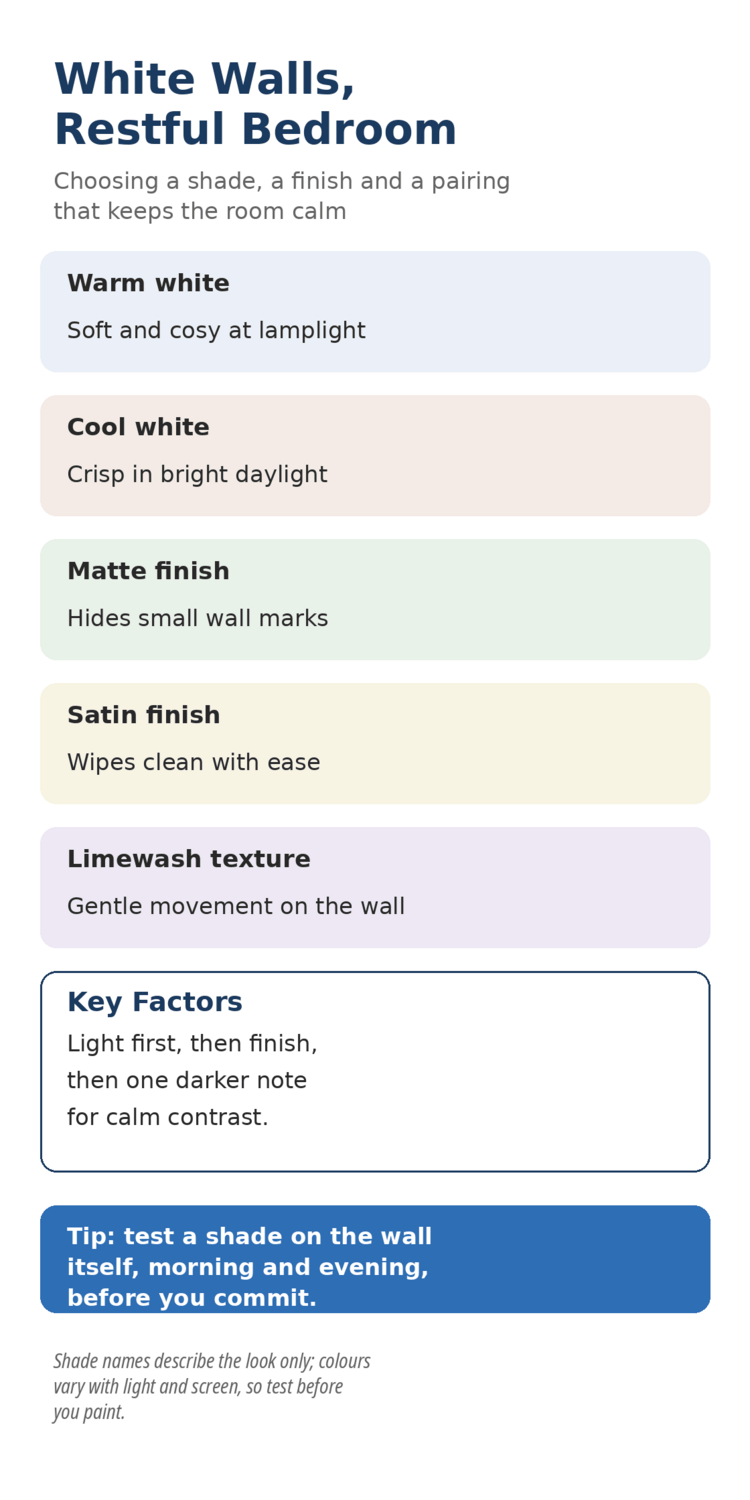
The same shade of white can look entirely different in matte, in satin, or in plaster, because finish decides how light behaves on the surface. A matte wall hides, a satin wall gleams, and a textured wall moves, so finish is a design choice in its own right.
9. Matte White Walls That Hide Small Marks
Matte white is the forgiving finish, because it scatters light and softens the small marks that everyday life leaves on a wall. It suits a well-used bedroom, where the wall should look calm without constant attention.
10. Eggshell White Walls With a Soft Glow
Eggshell sits between matte and satin, giving the wall a soft glow that shows up best in lamplight. It suits the wall behind a bed, where a gentle sheen adds depth without creating glare.
11. Satin White Walls That Wipe Clean
Satin white suits walls that need regular wiping, because its smooth surface releases marks more easily than a flat finish. It suits a room where the lower wall meets daily traffic, and it brings a quiet polish with it.
12. Limewash White Walls With Gentle Movement
Limewash gives a white wall visible movement, because the wash settles unevenly and leaves soft cloudy patches. It suits a room that wants character without colour, since the texture does the decorating.
13. Plaster White Walls With a Handmade Feel
A plaster finish leaves the trowel marks faintly visible, so the wall reads as handmade rather than factory smooth. It suits a room with natural materials, where the wall should feel as honest as the timber and linen around it.
14. Flat Panel Moulding Painted White
Flat panel moulding turns a plain white wall into quiet architecture, because the raised rectangles catch light and shadow through the day. Painted the same white as the wall, the moulding adds shape without adding colour.
15. Picture-Frame Moulding on White Walls
Picture-frame moulding gives a white wall a tailored rhythm, with each frame offering a place for the eye to rest. Keep the frames the same white as the wall so the pattern stays subtle, and let one framed print do the talking.
16. White Walls With a Plaster Relief Border
A plaster relief border near the ceiling gives a white wall a finished edge, like a hem on cloth. It suits a room with generous ceiling height, where the border can sit high and draw the eye gently upward.
3. Walls That Work With the Room’s Light
A white wall is a light instrument before it is a colour choice, because it returns whatever light reaches it. The ideas here follow the light: the direction the window faces, the hour of the day, and the lamps that take over after dark.
17. White Walls in a North-Facing Bedroom
A north-facing room gets cool, steady light, so a warm white keeps the walls from feeling cold. Avoid a blue-cast white here, because the cool light will double the coolness and the room will feel chilly even in summer.
18. White Walls in a South-Facing Bedroom
A south-facing room gets warm, strong light, so a cool or pure white keeps the brightness balanced. The wall will glow by midday, so keep the bedding pale and let the light be the warm note in the room.
19. White Walls Opposite a Window
The wall opposite the window does the most work in the room, because it catches the daylight and throws it back. Keep that wall the brightest white in the room, and keep it clear of heavy furniture so the light can spread.
20. White Walls Beside a Window
Walls beside a window live in changing light, bright at the window edge and softer toward the corner. A warm white evens out that gradient, so the wall reads as one calm surface rather than a bright strip beside a dim one.
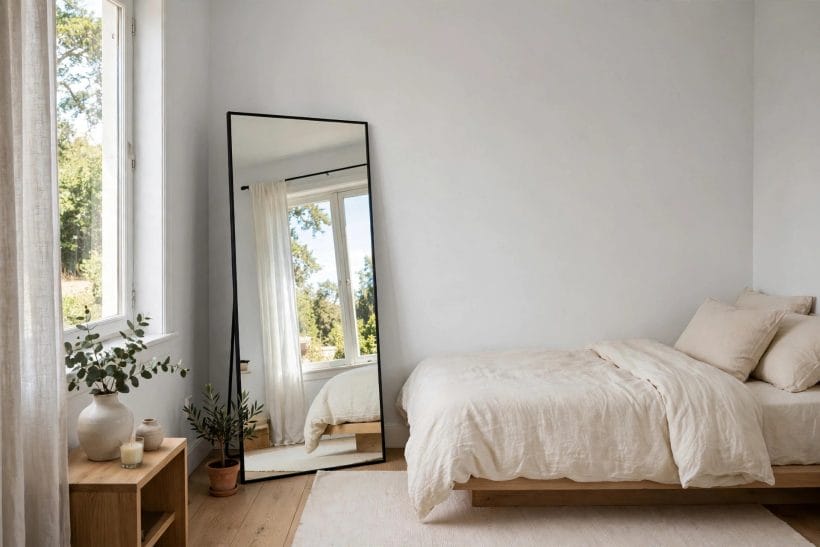
21. White Walls With a Tall Mirror
A tall mirror leaning against a white wall doubles the daylight and doubles the wall itself, because the reflection carries the white across the room. It suits a small room, where the mirror gives the wall a second life.
22. White Walls Washed by Bedside Lamps
Bedside lamps wash the wall behind the bed with warm pools of light, and a warm white wall answers that light beautifully. Choose lamp shades that throw light upward as well as down, so the wall glows rather than glares.
23. White Walls Under a Central Pendant
A central pendant lights a white wall from above, which can leave the lower wall dim if the shade is too closed. Choose an open shade that spills light outward, so the whole wall shares the glow evenly.
24. White Walls in a Room With Sheer Curtains
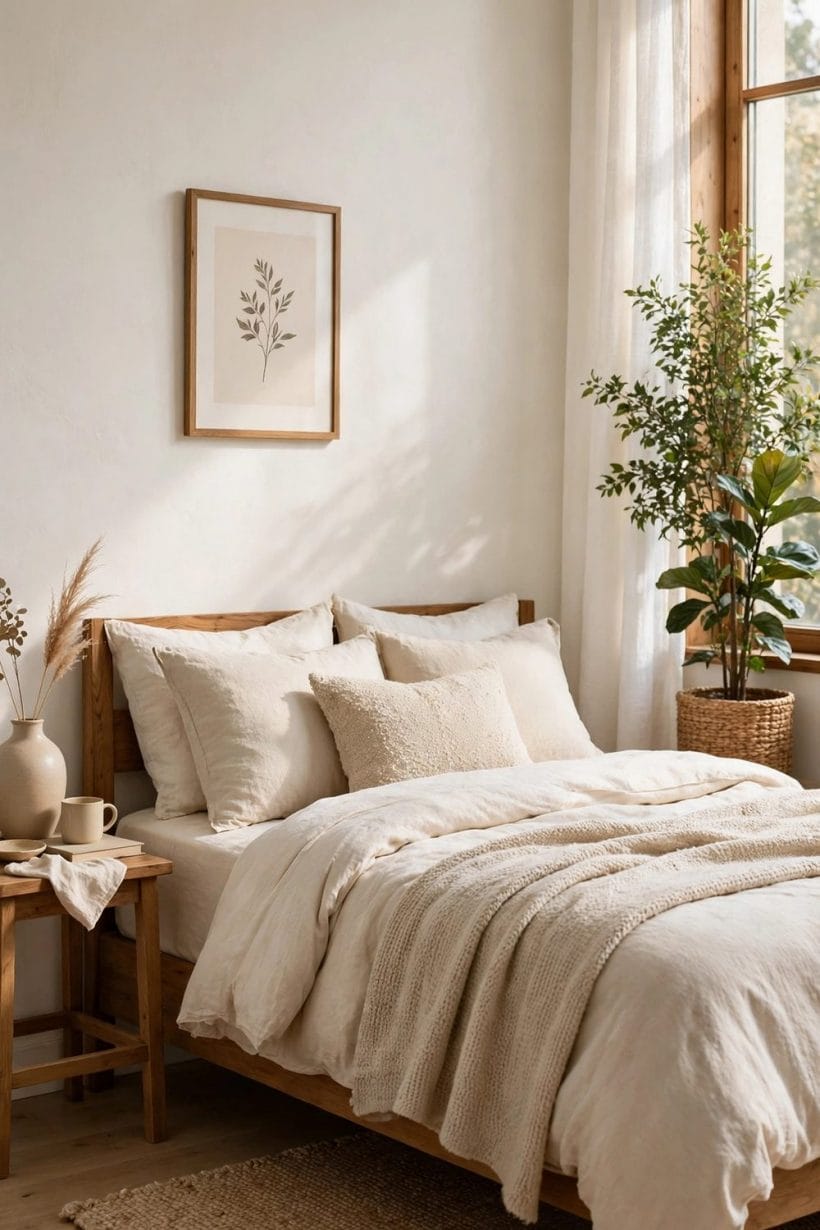
Sheer curtains turn harsh daylight into a soft wash, and a white wall makes the most of that gift. The wall glows gently all day, so the room needs little else: pale bedding, one plant, and quiet.
4. Walls Paired With Timber and Natural Fibre
Timber and fibre are the natural partners of a white wall, because they warm what the white cools. The ideas here keep the wall white and let wood, rattan, wool and linen supply the warmth.
25. White Walls Behind a Timber Bed Frame
A timber bed frame against a white wall reads as a warm drawing on pale paper, because the wood grain stands out without competing. Light oak keeps the room airy, while walnut adds a deeper, quieter note.
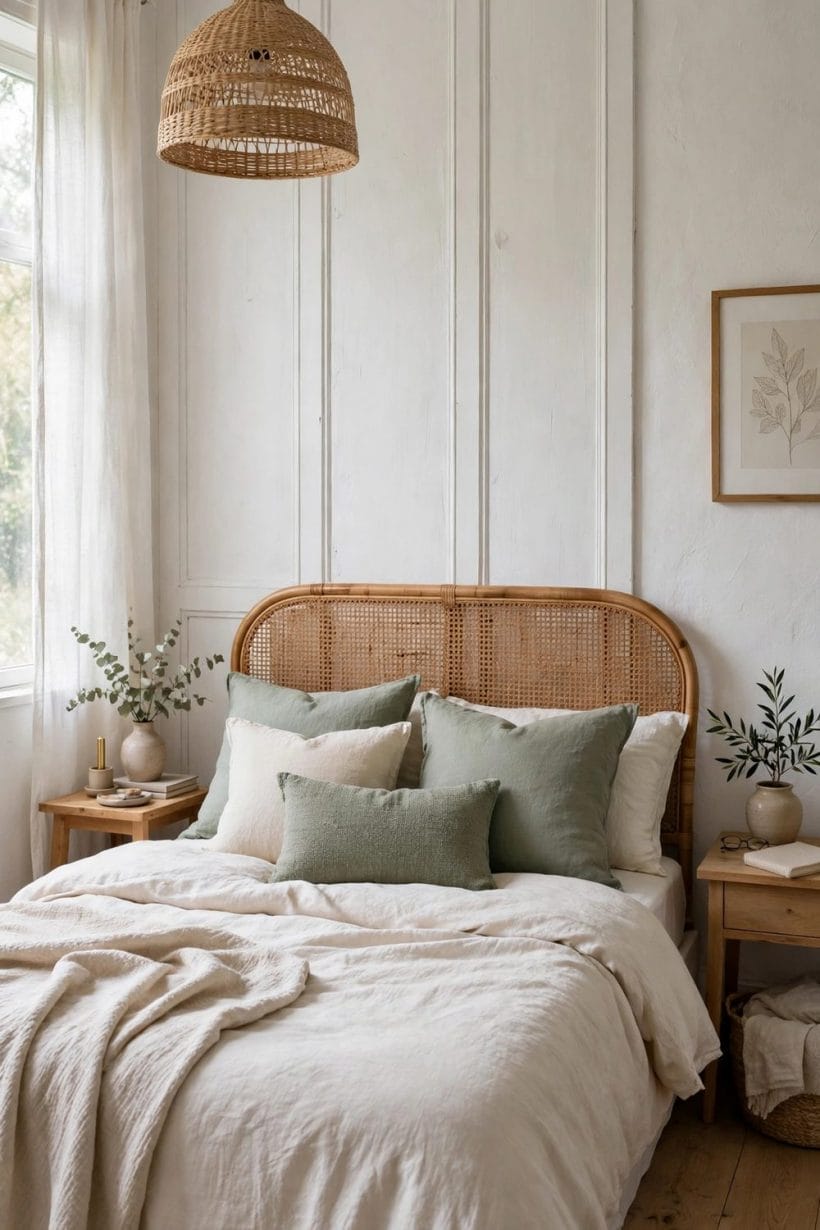
26. White Walls With a Rattan Headboard
Rattan against white walls brings a breezy, woven texture that softens the room without adding colour. The open weave lets the white show through, so the headboard feels light rather than heavy.
27. White Walls With Oak Flooring
Oak flooring warms a white-walled room from below, because the eye travels from the pale wall to the honeyed floor and back. Keep the skirting boards white so the wall and the floor meet cleanly.
28. White Walls With a Woven Rug
A woven rug in natural tones anchors a white-walled room, because it gives the floor a texture the walls deliberately lack. Jute and wool both work, and both keep the palette quiet.
29. White Walls With Wicker Baskets
Wicker baskets against white walls add storage that looks like decoration, because the woven texture contrasts gently with the smooth wall. Use them for blankets and spare bedding, and keep their shapes simple.
30. White Walls With a Timber Bench at the Foot of the Bed
A timber bench at the foot of the bed gives a white wall a companion piece, because the bench echoes the bed frame and completes the room’s wooden line. It also offers a place for tomorrow’s clothes, which keeps the room tidy.
31. White Walls With Wooden Wall Shelves
Wooden shelves on a white wall display books and small objects against a pale field, so each object reads clearly. Keep the shelves shallow and the display sparse, so the wall still dominates.
32. White Walls With a Driftwood Mirror Frame
A driftwood or pale timber mirror frame adds a natural edge to a white wall without introducing a new colour. The weathered wood suits a coastal mood, and the mirror keeps the room bright.
5. Walls Paired With Bedding and Soft Layers
Bedding is the largest soft surface in the room after the walls, so the pairing between wall and bedding sets the mood. The ideas here keep the wall fixed and vary the layers set against it.
33. White Walls With All-White Bedding
All-white bedding against white walls creates a single pale field, broken only by texture: crisp cotton, soft linen, a woven throw. It suits a sleeper who wants the room to feel like fresh air.
34. White Walls With Cream Bedding
Cream bedding warms a white wall, because the cream reads as a softer white beside the wall’s brighter one. The pairing suits a warm white wall, where the two tones blend gently.
35. White Walls With Grey Bedding
Grey bedding gives a white wall a calm partner, because grey is white with its brightness lowered. Light grey keeps the room pale, while a darker grey throw adds one quiet note of contrast.
36. White Walls With Sage Bedding
Sage bedding brings a breath of green to white walls without breaking the calm, because sage is a muted, greyed green. It suits a room with a plant or two, where the green can echo naturally.
37. White Walls With a Charcoal Throw
A charcoal throw across the foot of the bed gives white walls a single dark accent, which stops the room from feeling washed out. One dark note is enough, so keep the rest of the bedding pale.
38. White Walls With a Linen Duvet
A linen duvet wrinkles softly, and that lived-in texture suits a white wall that might otherwise feel too perfect. The pairing says the room is for sleeping, not for showing.
39. White Walls With Layered Throws
Layered throws in cream, oatmeal and soft grey give white walls a sense of depth, because each layer is a slightly different pale tone. Fold them neatly at the foot of the bed so the layers read as intentional.
40. White Walls With White Bedding and One Colour
White bedding against white walls can carry one colour in a single cushion or throw, and that one colour becomes the room’s accent. Choose a colour that appears nowhere else, so it reads as a deliberate note rather than a clash. For a bolder wall colour in another room entirely, see orange walls in a living room, where the wall itself carries the colour.
6. Walls Paired With Furniture
Furniture against a white wall is always on display, because the pale field leaves nothing to hide behind. The ideas here choose furniture that earns that exposure, in shape, in tone, or in both.
41. White Walls With Dark Walnut Bedside Tables
Dark walnut bedside tables give white walls a handsome contrast, because the deep wood reads as furniture rather than decoration. Keep the lamp shades pale, so the tables stay the darkest note in the room.
42. White Walls With White Bedside Tables
White bedside tables blend into white walls, which suits a small room where furniture should not interrupt the wall. Choose tables with a distinct shape, so they read as furniture by silhouette rather than by colour.
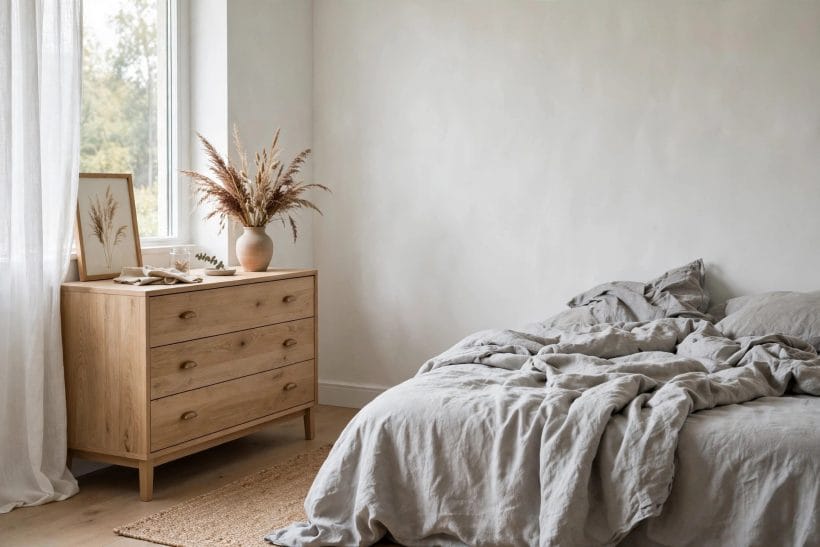
43. White Walls With a Light Oak Dresser
A light oak dresser warms a white wall gently, because the pale wood is close enough to the wall to harmonise and different enough to stand out. It suits a room where the bed frame is also oak, completing a quiet set.
44. White Walls With a Reading Chair
A reading chair in a corner of a white-walled room creates a second place in the room, apart from the bed. Choose an upholstered chair in cream or oatmeal, so the corner feels like a continuation of the bed rather than a rival.
45. White Walls With a Slim Desk
A slim desk against a white wall suits a bedroom that must also serve as a study, because the white wall keeps the work corner feeling open. Keep the desk surface clear, so the wall behind it stays the calm backdrop.
46. White Walls With a Freestanding Mirror
A freestanding mirror in a pale frame extends a white wall visually, because it reflects the wall back into the room. Place it where it catches the window, so the reflection carries daylight rather than shadow.
47. White Walls With Low Furniture Only
Low furniture keeps white walls dominant, because the wall rises uninterrupted above the bed, the tables and the dresser. It suits a room with a low ceiling, where tall furniture would crowd the wall.
48. White Walls With One Statement Piece
One statement piece, such as a carved headboard or an antique dresser, earns its place against white walls precisely because the wall is quiet. Let that piece be the only loud voice, and keep everything else pale and plain. A room built around a different wall material altogether, a bedroom built around a brick wall, shows how the same rule works when the wall itself is the statement.
7. Walls That Carry Storage Without Clutter
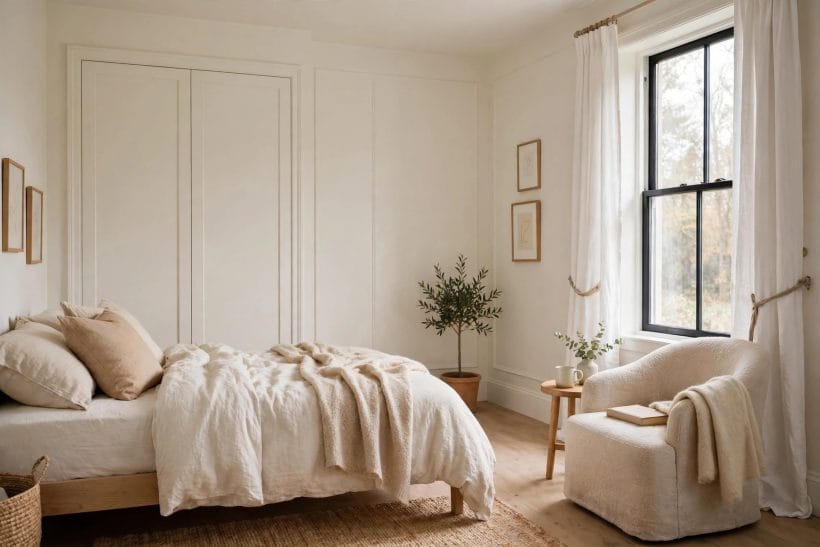
Storage is where white walls either stay calm or surrender, because clutter shows instantly against white. The ideas here make the wall itself carry the storage, so the room stays clear.
49. White Walls With Fitted Wardrobes Painted to Match
Fitted wardrobes painted the same white as the walls disappear into the wall, which is exactly the point. The room gains a full wall of storage while the eye still reads one continuous white surface.
50. White Walls With Open Shelving for Books
Open shelving on a white wall turns books into decoration, because the coloured spines read as a pattern against the pale field. Keep the shelves to one wall, so the pattern stays a feature rather than a takeover.
51. White Walls With a Hidden Laundry Basket
A laundry basket tucked into a white wardrobe keeps the room’s pale calm intact, because laundry is the first thing that breaks it. Choose a basket that fits the wardrobe exactly, so the door closes cleanly.
52. White Walls With Under-Bed Drawers
Under-bed drawers hide storage where the wall cannot help, because they sit below the eye line and leave the walls untouched. They suit spare bedding and out-of-season clothes, keeping the wardrobes free for daily use.
53. White Walls With a Wall-Mounted Rail
A wall-mounted rail on a white wall offers a place for tomorrow’s outfit without a chair draped in clothes. Keep the rail short and the clothes few, so the wall still reads as a wall.
54. White Walls With Floating Nightstands
Floating nightstands leave the floor clear beneath them, which makes a white wall feel taller and the room feel larger. They suit a small room, where every bit of visible floor counts.
55. White Walls With a Recessed Niche
A recessed niche in a white wall offers a display place that does not project into the room, because the shelf sits inside the wall’s depth. Paint the niche the same white, and let one object sit in it.
56. White Walls With Closed Storage Only
Closed storage is the simplest rule for white walls, because closed doors hide everything and the wall stays a wall. If the room must have open storage, confine it to a single shelf and keep the rest behind doors. Readers fitting out compact rooms may also want storage ideas for tiny houses, where the same closed-door discipline matters even more.
8. White Walls in Small and Awkward Bedrooms
Small and awkward rooms benefit most from white walls, because white gives back the space that low ceilings and tight corners take away. The ideas here are wall treatments for rooms that need help.
57. White Walls in a Tiny Bedroom
A tiny bedroom gains breathing room from white walls, because the pale surfaces push the boundaries of the room outward. Keep the furniture low and the bedding pale, so nothing fights the walls. The same small-room logic shapes tiny bedrooms generally, where the wall is the first decision.
58. White Walls in a Bedroom With a Sloped Ceiling
A sloped ceiling painted white disappears upward, because the wall and the ceiling become one surface with no line between them. Keep the slope free of pictures, so the eye slides up the white without stopping.
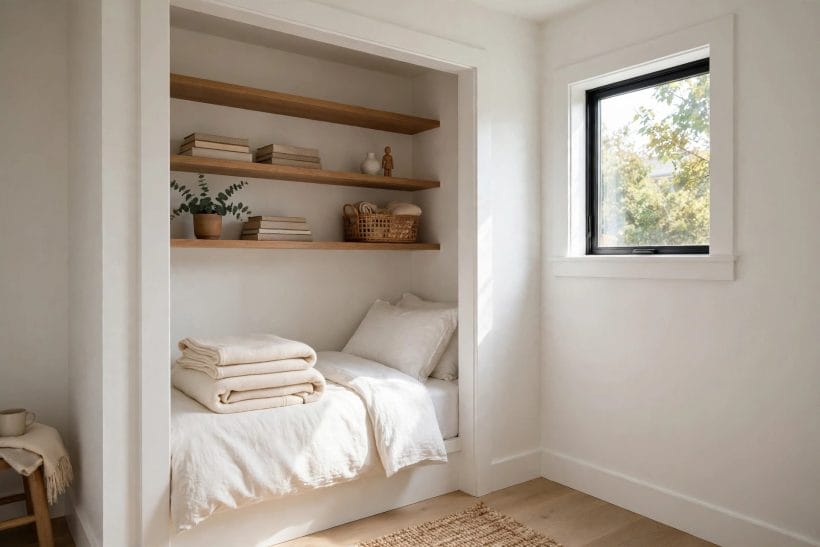
59. White Walls in a Bedroom Alcove
An alcove painted white becomes a bed nook rather than a dark corner, because the white carries light into the recess. Add open shelves above the bed, and the alcove becomes the room’s most useful wall.
60. White Walls in a Narrow Bedroom
A narrow bedroom feels wider when the long walls are white, because the pale surfaces reflect light across the width. Keep the far short wall the same white too, so the room reads as one space rather than a corridor.
61. White Walls in a Bedroom With No Window
A bedroom with no window depends entirely on its walls for brightness, so bright white and warm lamplight must do the work of daylight. Layer the lamps, keep the bedding pale, and let the walls glow.
62. White Walls Around a Dormer Window
A dormer window set into white walls becomes a bright frame, because the white surround carries the window light into the room. Keep the dormer walls the same white, so the light spreads without interruption.
63. White Walls in a Loft Bedroom
A loft bedroom with white walls feels open despite the roofline, because the white unifies the angled surfaces. It suits lofts where the bed sits under the slope, since the white keeps the low side from feeling cramped. Similar thinking guides bedrooms in tiny houses, where every wall must earn its keep.
64. White Walls in a Shared Bedroom
A shared bedroom stays peaceful with white walls, because the neutral field belongs to neither sleeper and suits both. Let each side add its own bedding colour, and let the walls stay the shared calm.
9. Walls for a Restful Night
A restful bedroom is a wall project as much as a bedding project, because the last thing the eye sees before sleep is the wall. The ideas here keep the wall low in contrast, low in pattern, and free of anything that demands attention.
65. White Walls With Nothing Hung Above the Bed
Leaving the wall above the bed empty gives the eye a resting place, which suits the last minutes before sleep. The white itself is the decoration, and the room feels calmer for the restraint.
66. White Walls With One Calm Print
One calm print on a white wall gives the room a focal point without noise, because a single image reads as a pause rather than a gallery. Choose soft tones and a simple frame, and hang it at eye level from the bed.
67. White Walls With Blackout Lining Behind Pale Curtains
Blackout lining behind pale curtains gives a white-walled room true darkness at night while keeping the daytime look soft. The wall stays pale by day and disappears by night, which is exactly what sleep needs.
68. White Walls With Dimmer Switches
Dimmer switches let a white wall change through the evening, from bright for reading to a soft glow for winding down. The wall becomes a lamp in its own right, returning whatever light it is given.
69. White Walls With a Soft Wool Throw
A soft wool throw on the bed adds the tactile comfort that a smooth white wall deliberately lacks, because the hand finds warmth where the eye finds calm. Keep the throw in cream or oatmeal, so the pairing stays quiet.
70. White Walls With No Pattern at All
A room with no pattern anywhere lets the white wall carry the whole mood, because there is nothing to compete with it. It suits a sleeper who finds pattern busy, and it makes the room feel like a deep breath. The same pale treatment in the room next door shapes pale living rooms, where the wall again sets the tone.
10. Keeping White Walls Looking Fresh
White walls show life more honestly than coloured ones, so keeping them fresh is part of the design. The ideas here are small habits and finishes that keep the white white.
71. White Walls Touched Up With Leftover Paint
Keeping a small pot of the wall’s own paint makes touch-ups a five-minute habit rather than a project, because scuffs can be covered as soon as they appear. Label the pot with the room and the wall, and store it somewhere cool.
72. White Walls Protected by a Chair Rail
A chair rail painted white protects the lower wall from chair backs and passing traffic, while adding a tailored line to the room. It suits a room where furniture moves often, and it keeps the upper wall pristine.
73. White Walls Wiped With a Damp Cloth
A regular wipe with a damp cloth keeps a satin white wall fresh, because dust shows on white before it shows anywhere else. Work from the top down, so any drips fall on wall that is still to be cleaned.
74. White Walls With Washable Finish in Busy Spots
A washable finish on the wall behind the bed and beside the door handles the spots that hands and pillows touch most. Keep the rest of the room in matte, so the washable areas blend in.
75. White Walls Refreshed by Rearranging the Art
Moving the art occasionally refreshes a white wall without repainting, because the eye notices the new arrangement before it notices any wear. Patch the old nail holes, touch up the paint, and let the wall feel new again.
Final Considerations
A white wall succeeds when it is chosen for the room it serves: the shade for the light, the finish for the life, and the pairing for the calm. The ideas above all return to that rule, whether the wall is limewashed, panelled, washed by lamplight, or carrying fitted wardrobes that vanish into it. Readers who began with the general survey will recognise this post as its wall-only companion, and a white bedroom understood this way is less a colour scheme than a discipline: keep the wall pale, keep the contrasts few, and let the room stay restful.
Before painting, test the shade on the wall itself and live with it through morning light and lamplight, because a shade that looks perfect on a card can change completely on a full wall. Check the finish against the room’s habits, confirm the furniture earns its place against the pale field, and keep one pot of paint for touch-ups. Done with that care, white walls give a bedroom its calmest possible backdrop, and the room will repay the attention every morning.


0 Comments