

A simple chute turns the most tedious trip in the house, arms full of washing down the stairs, into a ten-second habit. It is a modest idea, but where it starts, falls and lands decides whether it feels brilliant or awkward.
These laundry chute ideas cover layouts, doors, colours, typical cost drivers and the practical details worth settling before anyone cuts a hole.
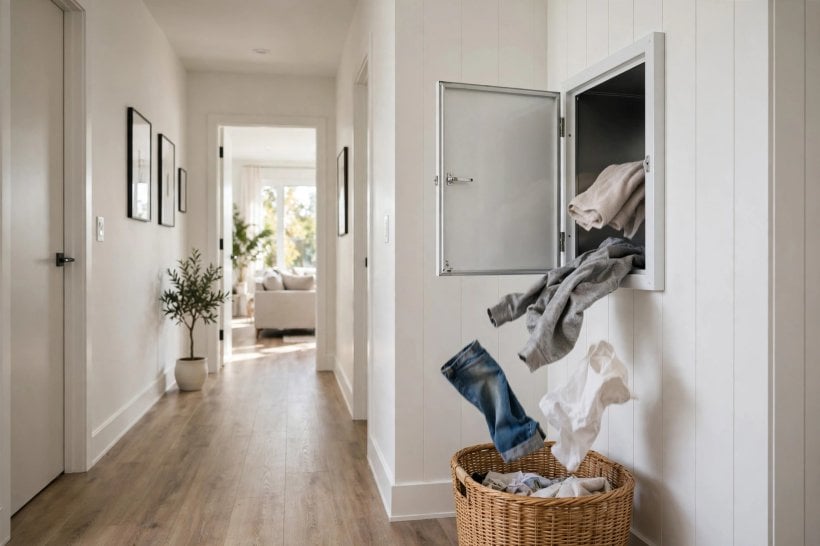
1. Planning the Route: Straight Down Is the Golden Rule
Every good chute design starts with one principle: gravity is the motor, so the straighter and smoother the fall, the better it works. In most homes the ideal route drops from an upstairs bathroom, landing or bedroom corridor directly into the laundry room below, following the stack of the house rather than fighting it. When you plan a laundry chute, walk both floors with that vertical line in mind, checking what already lives inside the walls and floors on the way down, such as pipes, wiring and heating ducts, and choose a route that avoids them rather than weaving between them. Homes with bathrooms stacked above utility spaces have a head start, in the same way the layouts in our guide to how to build your own tiny house stack wet rooms to keep plumbing short and simple.
| Decision | Sensible starting point |
|---|---|
| Best location | An upstairs bathroom, landing or hallway cupboard that the whole household passes daily. |
| Route | As straight and vertical as the house allows, landing inside the laundry space below. |
| Door position | High enough to use comfortably, with a door that closes securely after every use. |
| Tube material | Smooth inside, rigid and free of ledges or screws that could snag fabric. |
| Collection point | A basket, cart or cupboard directly under the drop, sized for a full family load. |
| Safety habit | Self-closing or firmly latching doors, and a quick check of local code before building. |
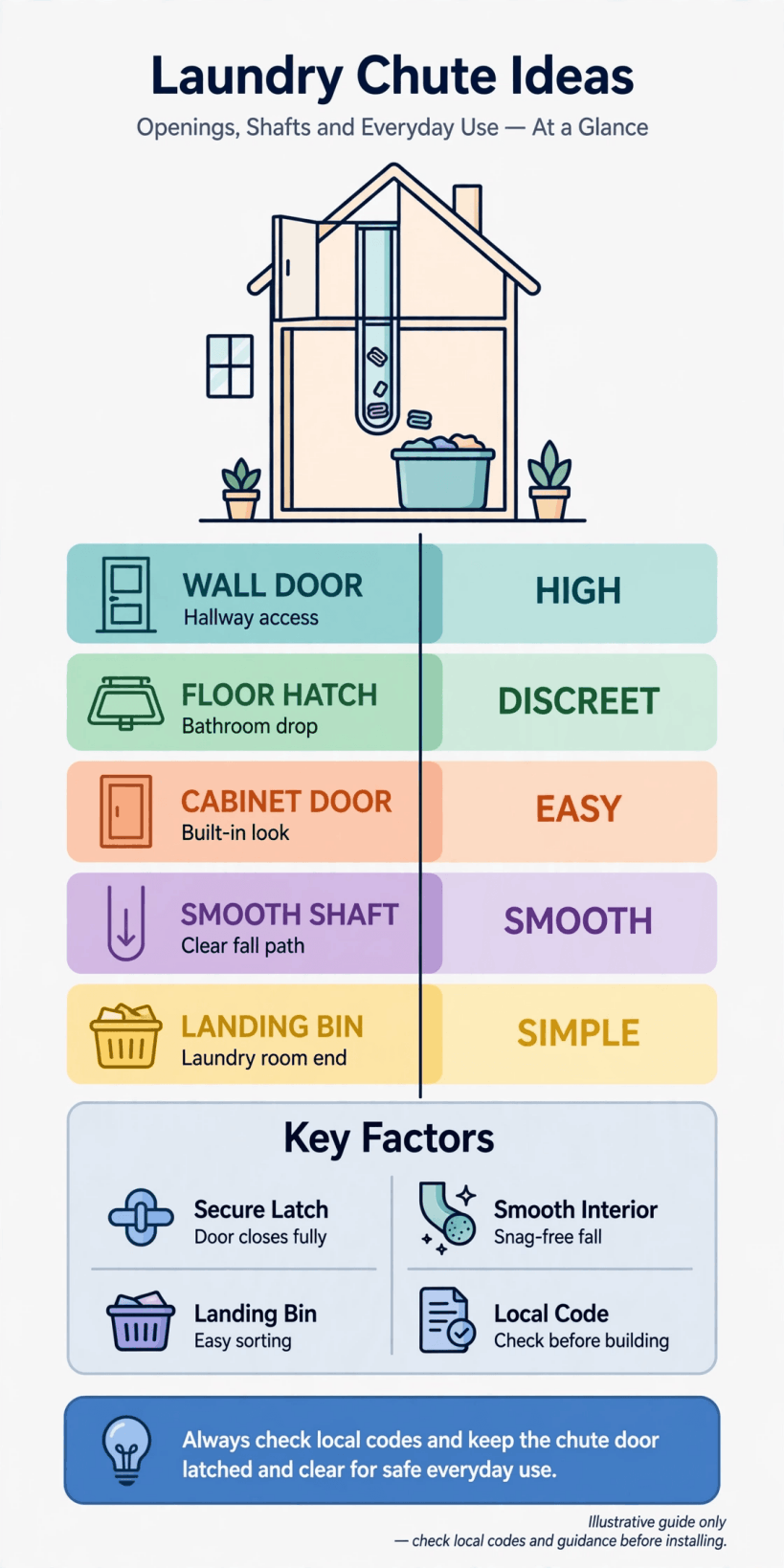
A quick visual summary of route, door, tube and collection-point decisions to make before you build.
2. Layouts: Straight Drops From Bathrooms, Landings and Cupboards
The classic layout puts the opening in the family bathroom, close to the laundry basket it replaces, and drops straight into the utility room beneath. It works because bathrooms generate a large share of household laundry, towels, bath mats and bedding on changeover day, and because the trip from basket to opening is a few steps. A landing or hallway opening is the most democratic option: every bedroom feeds into it equally, nobody has to enter someone else’s bathroom, and a small cupboard door on the landing can hide the opening completely. Bedroom and dressing-area openings suit homes where one room produces most of the washing, or where a guest suite needs to serve itself.
Two-storey drops and routes serving more than one opening are possible, but each added doorway adds planning: the lower opening must not let laundry from above land on hands, and every extra bend slows the fall. Keep to one opening per floor on a shared shaft, align them carefully, and think about where the collection point sits in relation to the washing machine, so sorted laundry lands within a step or two of its next destination. The calm, route-first thinking here mirrors the way tiny house kitchen design places storage and appliances around the cook’s actual path rather than around a showroom photograph.
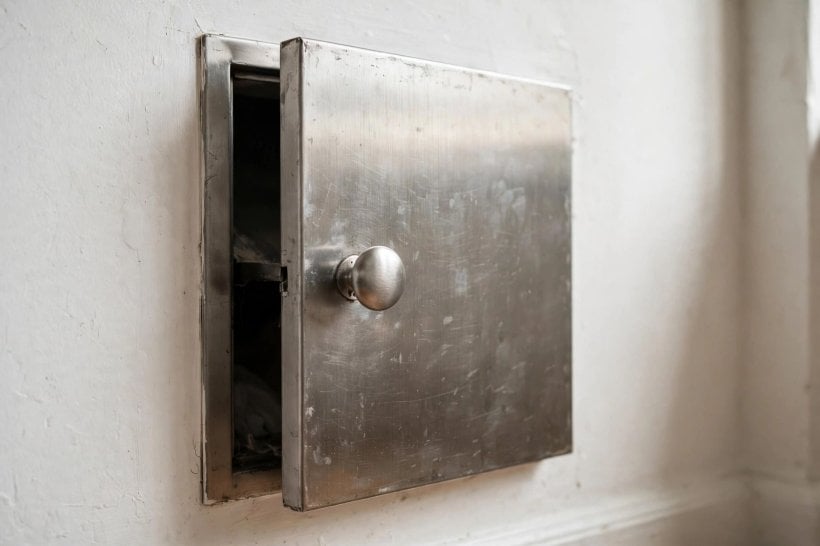
3. Doors and Openings: Where the Chute Begins
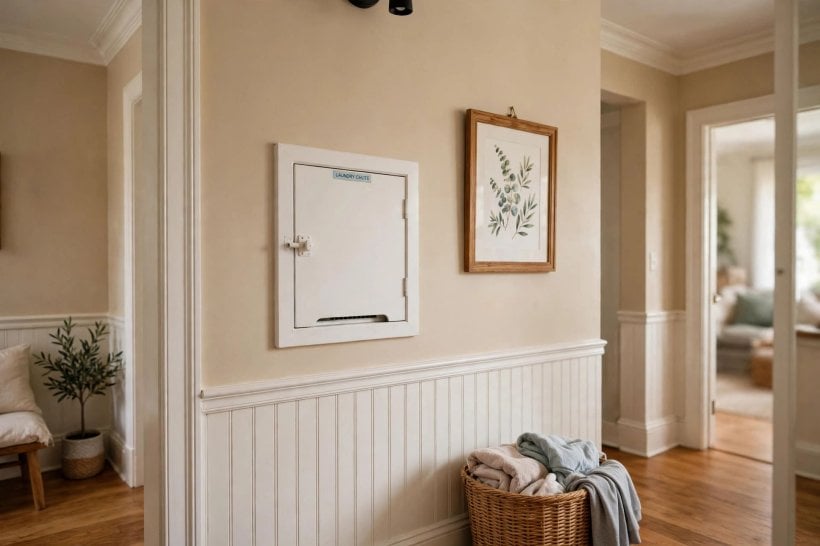
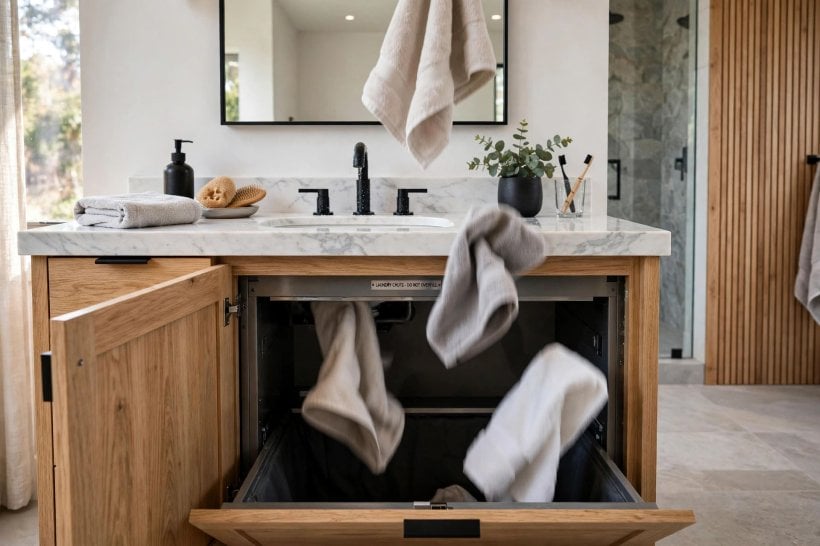
The door is the part everyone touches, so it deserves more thought than the tube. Wall-mounted doors at a comfortable reaching height are the most common choice: they open flat, can be painted to match the room, and keep the floor clear. Floor-level openings with a lift-up lid suit landings and cupboards where wall space is taken, but they ask everyone to bend, and lids must sit flush so they never trip anyone or catch a heel. Whichever style you choose, the door should close by itself or latch with a definite click. A door that drifts open is a draught, a noise path and an invitation to curious toddlers all at once.
Size the opening generously enough for the bulkiest regular load, typically bedding and towels, without making it so large that it dominates a small bathroom wall. Smooth, rounded edges around the opening protect both fabric and fingers, and a shallow lip or frame keeps the door sitting neatly in its reveal. Think, too, about whose hands will use it: a handle or finger pull that a child carrying a towel can manage, placed so the door never swings into a mirror, a towel rail or the person standing at the basin. These small ergonomic checks are what separate a charming feature from a daily irritation.
4. Colours and Finishes for Doors, Frames and Surrounds
Because the door is small, it can either disappear or become a deliberate detail. Painting it to match the surrounding wall or woodwork is the quiet option, and it suits bathrooms and landings where calm matters more than character. A contrasting colour, deep green in a white hallway, warm timber in a pale bathroom, turns the door into a small piece of furniture and makes the opening easy for guests and children to find without a word of instruction. Metal finishes, brushed or matt rather than mirror-shiny, shrug off fingerprints and suit laundry spaces that already use similar handles and rails.
Whatever finish you choose, pick one that tolerates damp air and frequent touching, and that can be wiped clean, because chute doors live near steam, toothpaste and sunscreen. Inside the opening, a light colour helps you see that the way down is clear before you drop a bundle, a humble detail borrowed from the bright, practical interiors in these bathroom interior design ideas for tiny houses. If the shaft lands in a visible part of the laundry room, echo the door colour on the collection cupboard below, so the two ends of the system read as one designed idea rather than two accidents.
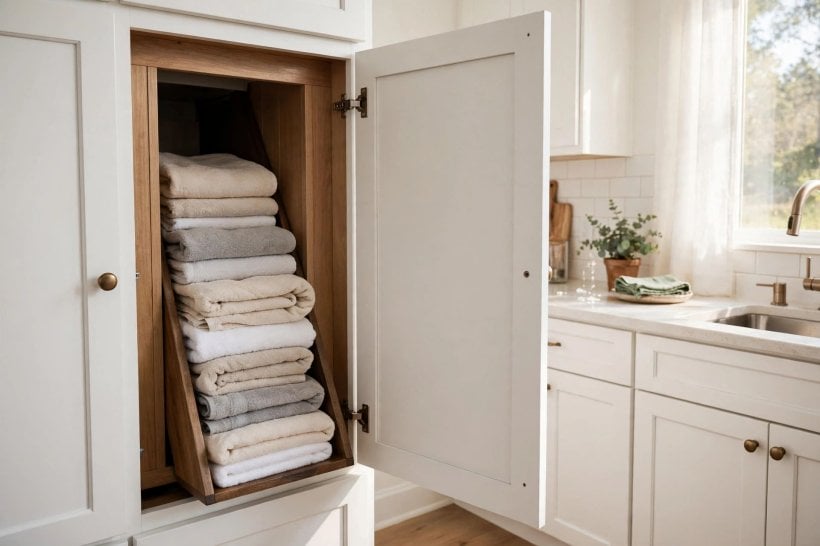
5. The Tube: Materials, Smooth Interiors and Quiet Falls
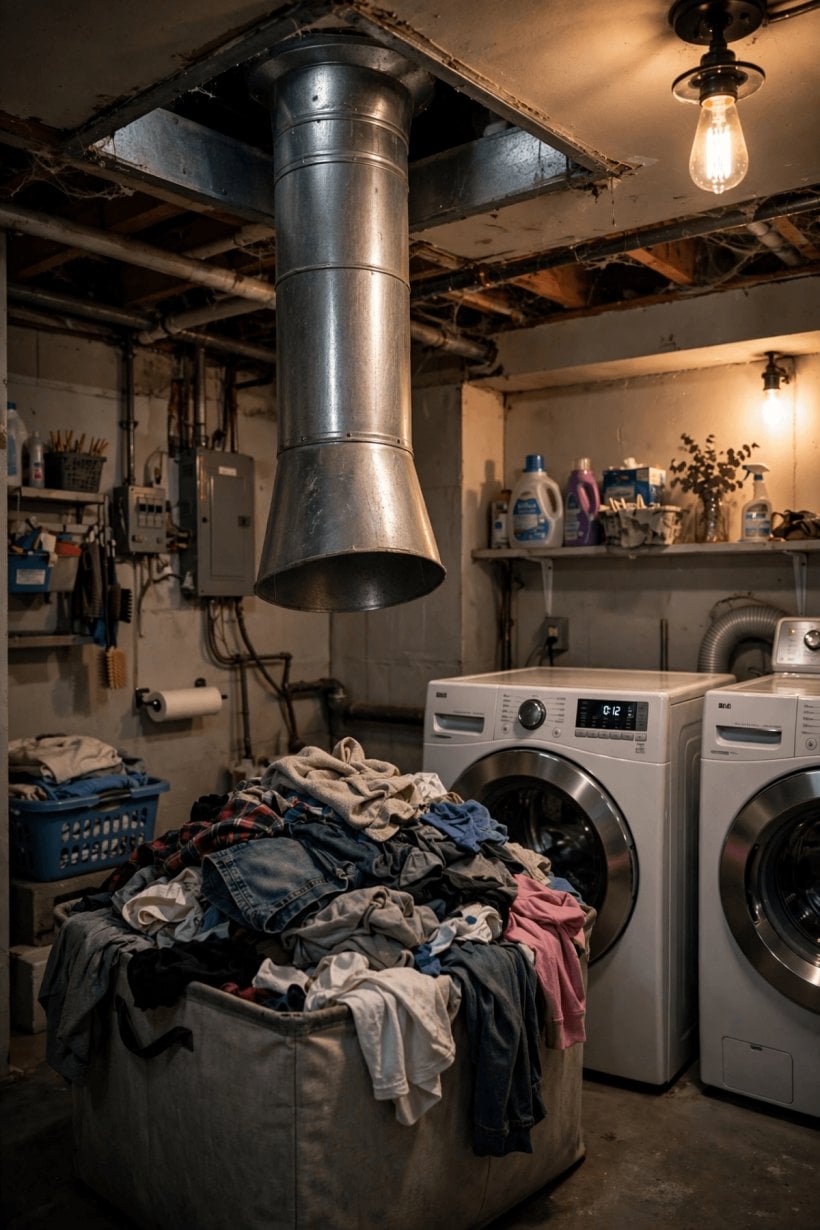
Inside the wall, the tube’s job is to be boring: smooth, rigid and uninterrupted. Purpose-made metal ducting, smooth plastic tube and carefully built timber-lined shafts are all used, and each can work well when its interior is free of steps, sharp joints and protruding fixings. Joints should overlap in the direction laundry travels, so a falling bundle never meets a lip facing it, and any bend that the route truly needs should be gentle and wide rather than a sharp elbow. The wider and smoother the path, the less often anything hesitates on the way down.
Noise is the tube’s other consideration. Laundry itself is soft, but zips, buttons and the occasional forgotten coin can ring against metal, and a shaft inside a bedroom wall will announce every late-night drop. Lining choices, the shaft’s position relative to beds, and a soft landing at the bottom all soften the soundtrack. Site the shaft in a bathroom or landing wall where possible, the same instinct that puts noisy appliances away from beds in small bedroom interior design ideas, and test the route with a bundle of towels before closing the walls: a dry run now is worth ten repairs later.
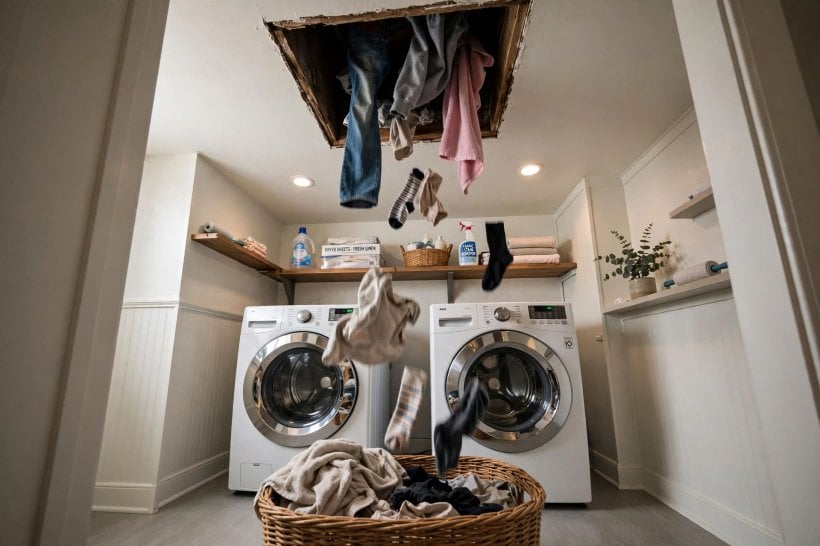
6. The Collection Point: Baskets, Carts and Laundry Room Landings
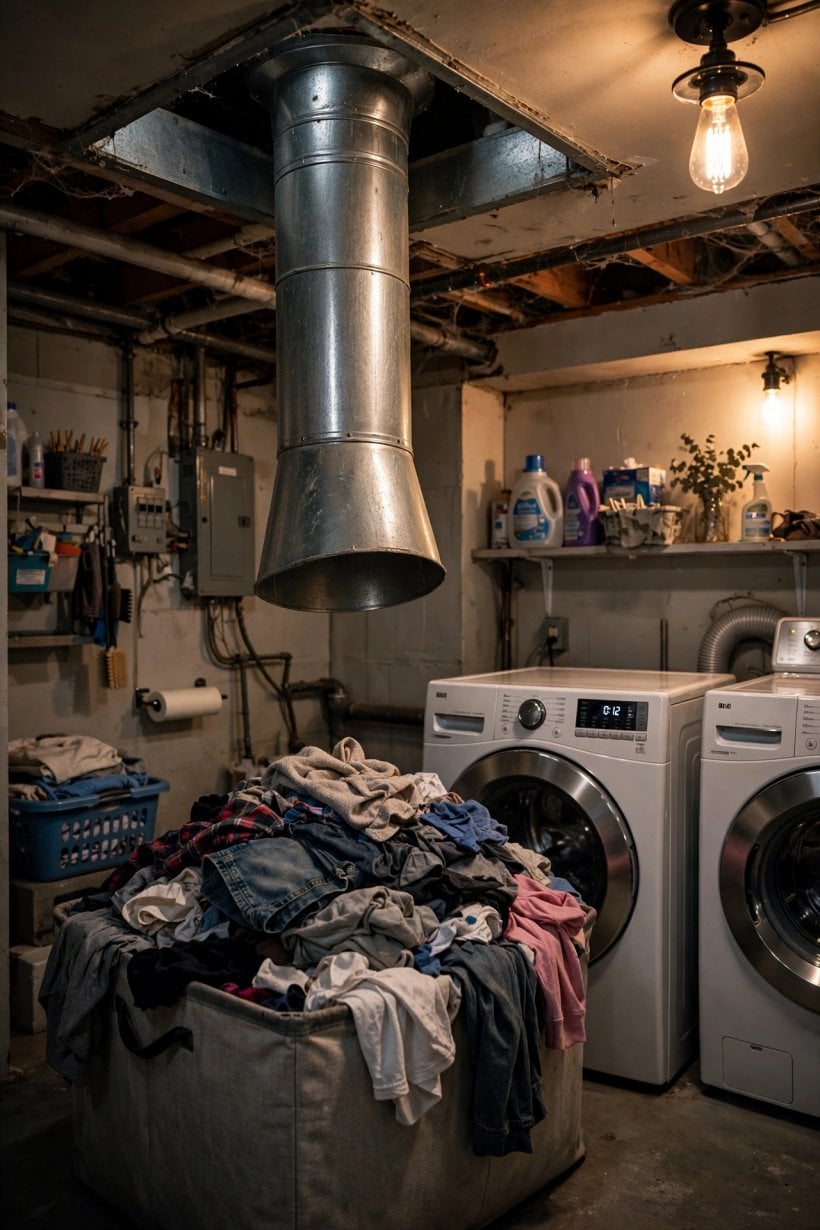
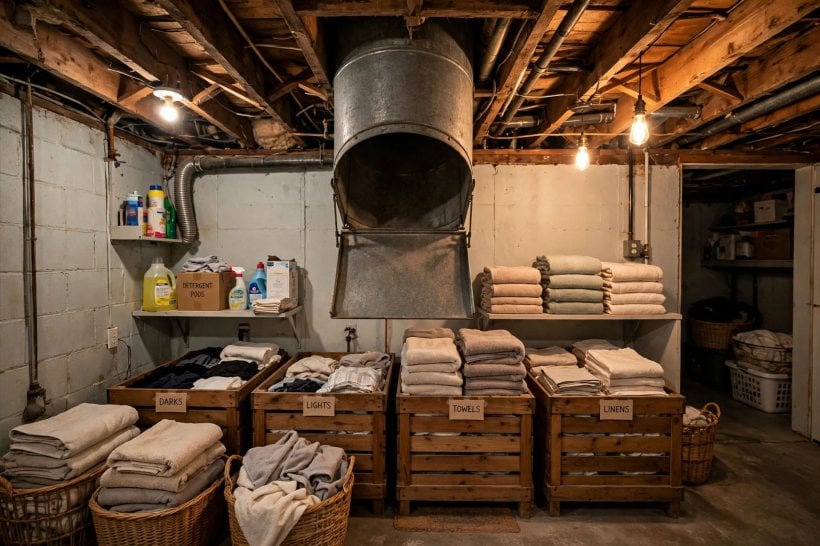
A chute is only as good as where the laundry lands. The simplest collection point is a sturdy basket or wheeled cart placed directly under the drop, sized to hold the household’s typical load without overflowing between wash days. A built-in cupboard or receiving box under the drop looks neater, hides the pile from view and can include a door at standing height, so nobody bends into a dark box to retrieve socks. Leave a little headroom above the container: laundry arrives with momentum and fluffs upward, and a basket crammed tight against the tube mouth will jam the system from below.
Position the landing zone for sorting, not just storage. A counter or shelf beside the collection point, room for two or three sorting baskets, and a clear path to the machine turn wash day into a flow instead of a shuffle. In compact utility rooms, the vertical thinking from small living room interior design ideas applies just as well downstairs: use the wall above the collection point for shelves and hooks, and let the floor stay clear for baskets and feet. A washable mat under the landing zone catches the small debris that travels down with laundry and protects the floor from damp bundles waiting their turn.
7. Costs: Where the Money Goes and How To Keep It Sensible
Chute projects divide into two broad cost families. A simple, straight drop installed during a renovation, when walls and floors are already open, is mainly the price of the door, a length of smooth tube and a few hours of careful carpentry and making good, which keeps it firmly in the modest home-improvement bracket for most households. A retrofit into finished rooms costs more in labour than in parts: opening walls, rerouting around anything found inside them, re-plastering and redecorating two rooms is where quotes grow, and that is worth knowing before the first hole is cut.
Keep costs sensible with the same habits that work on any project, like those in how to make a tiny house for cheap: choose the straightest route even if it is not the theoretically perfect one, do the work while other jobs have the walls open, and spend on the parts fingers touch daily, the door, its latch and the collection cupboard, rather than on hidden upgrades nobody will ever see. Get itemised quotes that separate materials, labour and making good, and ask each installer what their price assumes about what is inside your walls. Surprises inside wall cavities are the classic budget risk on a job like this, and a quote that names that risk honestly is usually the trustworthy one.
8. Safety, Children and Checking Local Code
A chute is a hole between floors, so treat safety as part of the design rather than an afterthought. Doors that close securely and latch are the first line, sized and positioned so small children cannot climb in or post themselves downstairs, and households with toddlers often add a simple additional catch they can work one-handed. Nothing except laundry should ever travel down the tube: no tools, no toys, no rubbish, and never anything liquid. Make that a house rule from day one, written nowhere but understood by everyone, including guests and babysitters.
On rules and permissions, keep it general and local: building codes and fire-safety requirements for openings between floors vary by place and by the type of home, and they can affect where a shaft may run, how it is built and what kind of door is acceptable. So check local code and, where your area requires it, talk to the local building department or a qualified installer before building, rather than relying on anything you read online, including this article. The same applies to insurance and to work in flats, rentals and listed or protected buildings, where permission may be needed from a landlord, freeholder or authority. A short conversation at the start protects the whole project, and reputable installers will expect the question.
9. Cleaning, Blockages and Everyday Maintenance
Chutes ask for very little care, but the little they ask for matters. Every few months, look down the shaft with a torch from the top and up from the bottom, checking for anything lodged, lint build-up at joints or damage where bundles land. A long, soft brush or a vacuum hose run gently through the tube keeps the interior smooth and sweet-smelling, and a wipe of the door and frame with ordinary household cleaner handles the fingerprints and bathroom steam. Shake out laundry before dropping it: the coins, tissues and hair grips you catch at the top are the ones that never jam the bottom.
If something does stick, gravity and patience beat force. Drop a soft, heavy-ish bundle, such as towels, to nudge it, or work from the collection end with a soft brush; never poke metal tools down a smooth tube you cannot see into, and never send water down to flush a blockage. Most sticking is caused by one oversized item, a duvet wedged sideways, so fold the bulkiest bedding once before it travels. Keep a simple note of any recurring snag point. A shaft that sticks in the same place twice is telling you about a lip or joint inside, and a calm hour spent smoothing that joint ends the problem for good.
10. Retrofitting an Older Home vs Planning Into a New Build
In a new build or a full renovation, a chute is one of the easiest luxuries to include: the route is drawn while walls are lines on a plan, bathrooms can be nudged to stack over the laundry room, and the shaft is built once, neatly, with everything else. If you are at that stage, decide the two endpoints first and let a few other decisions, cupboard positions, a landing niche, the laundry room’s counter run, arrange themselves around it. Photograph the open shaft before it is closed, and keep those pictures with your house documents; future owners and future plumbers will thank you.
Retrofitting asks for detective work first. Find out what your walls and floors already contain by studying the rooms above and below, lifting a floorboard or using an existing access point where you sensibly can, and expect to adjust the dream route to the house you actually have. A landing cupboard that already exists is often the retrofit’s best friend, giving both the opening and the disguise in one move, and the calm, layered look of the finished result can borrow confidence from modern tiny house bedroom projects, where built-in elements earn their place by serving two purposes at once. Judged honestly, a slightly imperfect route that exists beats a perfect vertical one that would have meant rebuilding half a bathroom.
Final Considerations
A good chute succeeds on simple virtues: a straight, smooth route, a door that closes with a click, a landing place that makes sorting easy, and a household that treats it as laundry-only. Keep code questions local, costs itemised and expectations modest, and this small piece of old-fashioned common sense will quietly save you thousands of laden trips down the stairs over the life of your home.




0 Comments