

A patio can hold beautiful furniture and still feel awkward if chairs block doors, shade lands in the wrong place, or conversation faces a fence. Placement is what turns pieces into a place.
These deck furniture ideas cover layouts for dining, lounging and small spaces, plus shade, lighting and the small details that make outdoor living easy.
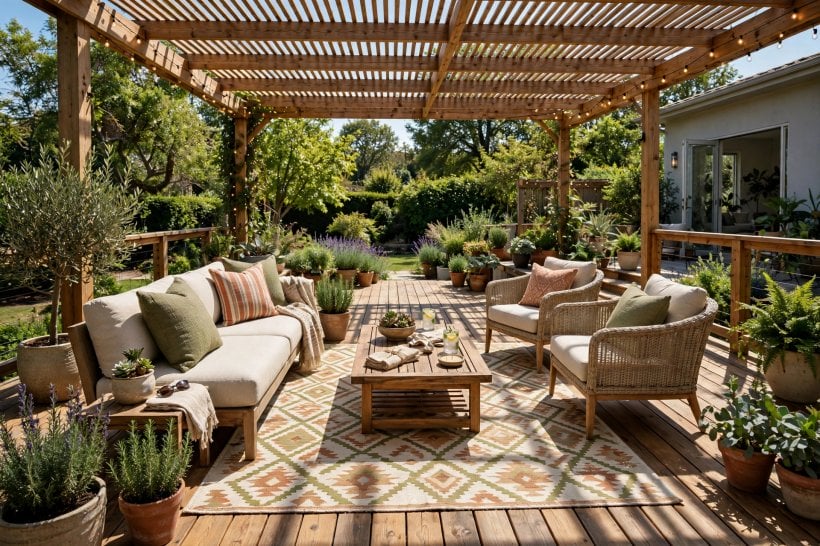
1. Start With Zones, Shade and the Way People Move
Before moving a single chair, stand at the back door and read your patio like a floor plan. Every successful layout answers three questions: what happens here, where does the shade fall when you actually sit outside, and how do people cross the space without squeezing past chair backs? The most useful deck furniture ideas begin with zones, typically one for eating, one for lounging and a clear route between the house, the garden and any gate. Mark zones loosely with rugs, planters or the direction chairs face, rather than with anything fixed, so you can adjust as seasons and habits change. If your outdoor space serves a compact home, plan it with the same discipline used in small living room interior design ideas, where every zone earns its footprint and nothing blocks the route through.
| Check | What good looks like |
|---|---|
| Zones | Distinct areas for dining, lounging and quiet sitting, each with a clear purpose and edge. |
| Walkways | Routes from door to garden that stay open, with room to pass behind seated people. |
| Shade | Cover where people sit at the times they sit, checked in the morning, midday and evening. |
| Sun | A deliberately sunny spot kept open for cool mornings and early spring lunches. |
| Views | Main seats facing planting, sky or a feature, not a wall, bins or storage corner. |
| Flexibility | At least some pieces light enough to move as groups, weather and occasions change. |
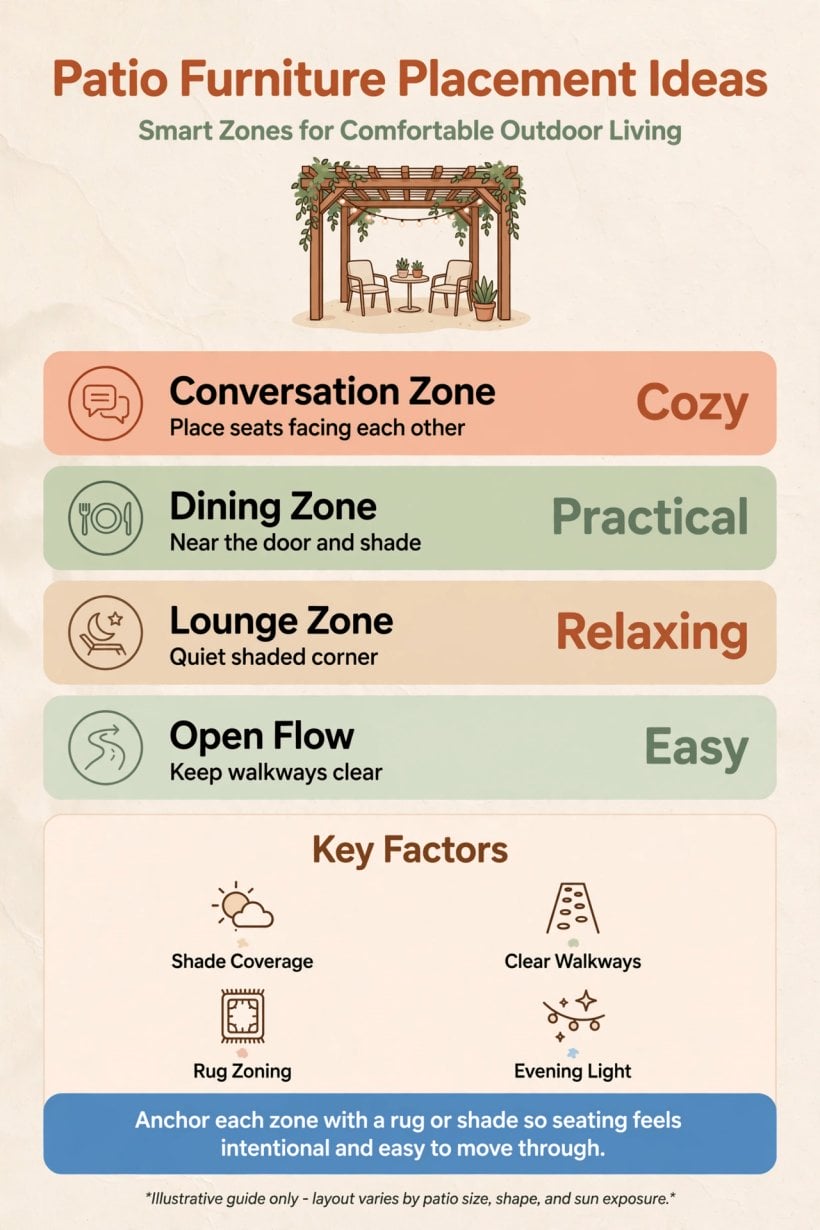
A quick visual guide to zoning a patio, keeping walkways clear and placing seats where the shade actually falls.
2. Dining Layouts That Fit the Table and the People
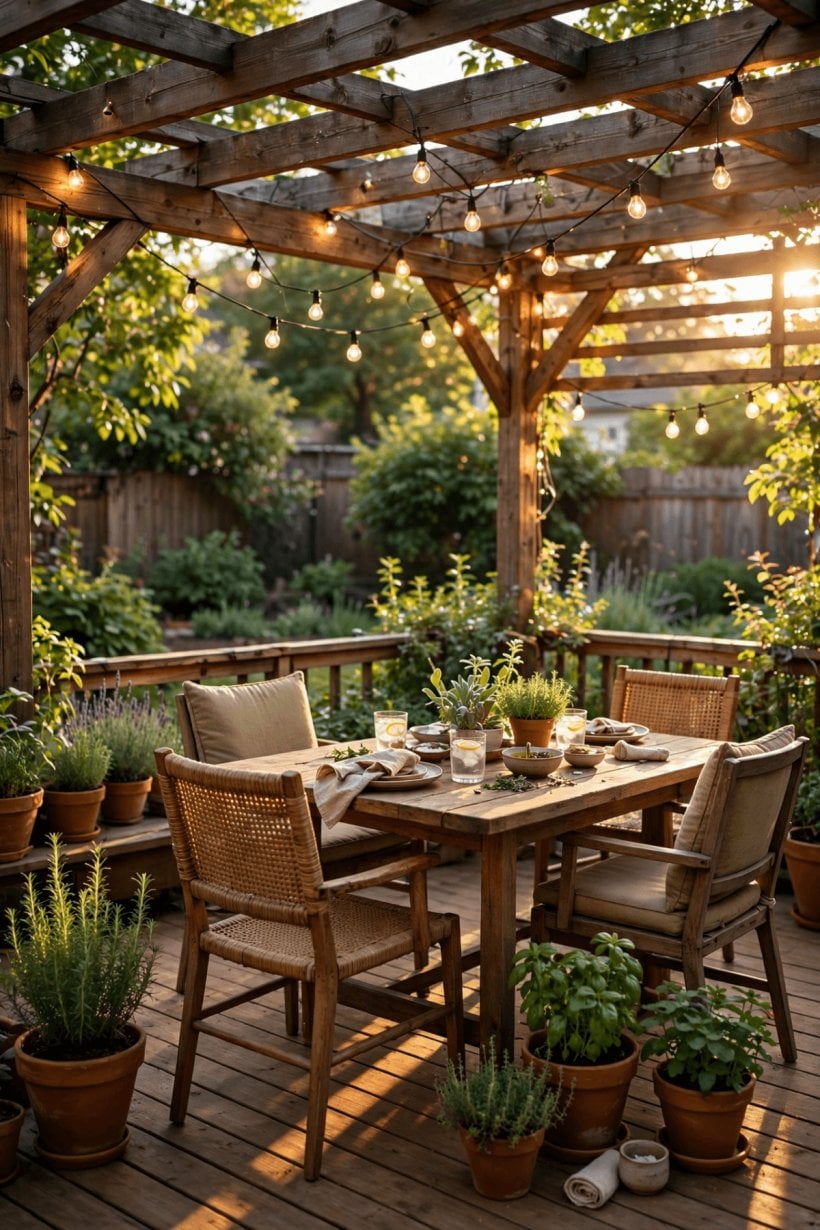
Dining areas fail most often on elbow room. Allow enough space around the table for chairs to pull out and for someone to walk behind seated diners carrying a dish, and place the table where serving trips from the kitchen are short and level. A rectangular table suits long, narrow patios and larger groups; a round table softens square spaces, improves conversation and removes sharp corners from tight routes. Benches along one side save depth and tuck away neatly, while individual chairs give guests of different sizes more comfort and make it easier to add or remove a place setting.
Think about what the dining zone overlooks and shelters from. A table pushed against a sunny wall may be delightful in spring and punishing in high summer, while a table under a tree gains dappled shade but collects leaves and drips after rain. Position for the season you dine most, then solve the other seasons with movable shade and seat cushions you can store. Keep the barbecue or outdoor cooking spot close enough for the cook to join the conversation, but far enough that smoke drifts away from faces and open doors.
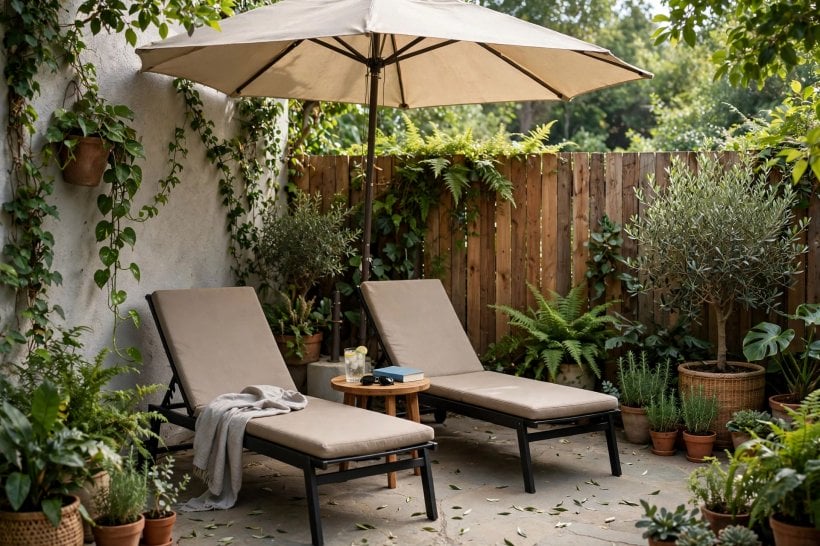
3. Lounging Layouts Built Around Conversation
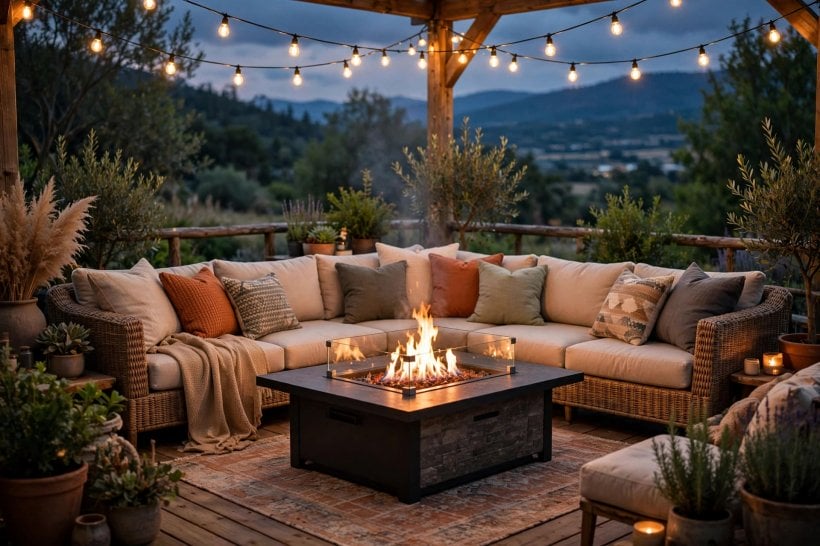
Lounging furniture works best when it behaves like a living room: seats arranged to face each other at a comfortable talking distance, a shared surface in the middle for drinks and books, and a focal point to gather around, whether that is a fire bowl, a planted corner or a view. An L-shaped arrangement in a corner is the classic space-saver, giving generous seating without filling the middle of the patio, and it leaves the opposite corner free for dining or plants. Two chairs angled toward each other with a small table between them create the most-used seats in many gardens, because they suit one person with coffee just as well as two people talking.
Watch the orientation through the day. A sofa that faces the evening sun will be abandoned at exactly the hour you want it most, while seats backed to a wall or hedge feel more sheltered and secure. Add side tables at arm height rather than one low central table only; people settle longer when a drink has an obvious home. The same comfort logic runs through modern tiny house bedroom design, where the position of a bed relative to light and walls decides how restful the room feels, whatever furniture you buy.
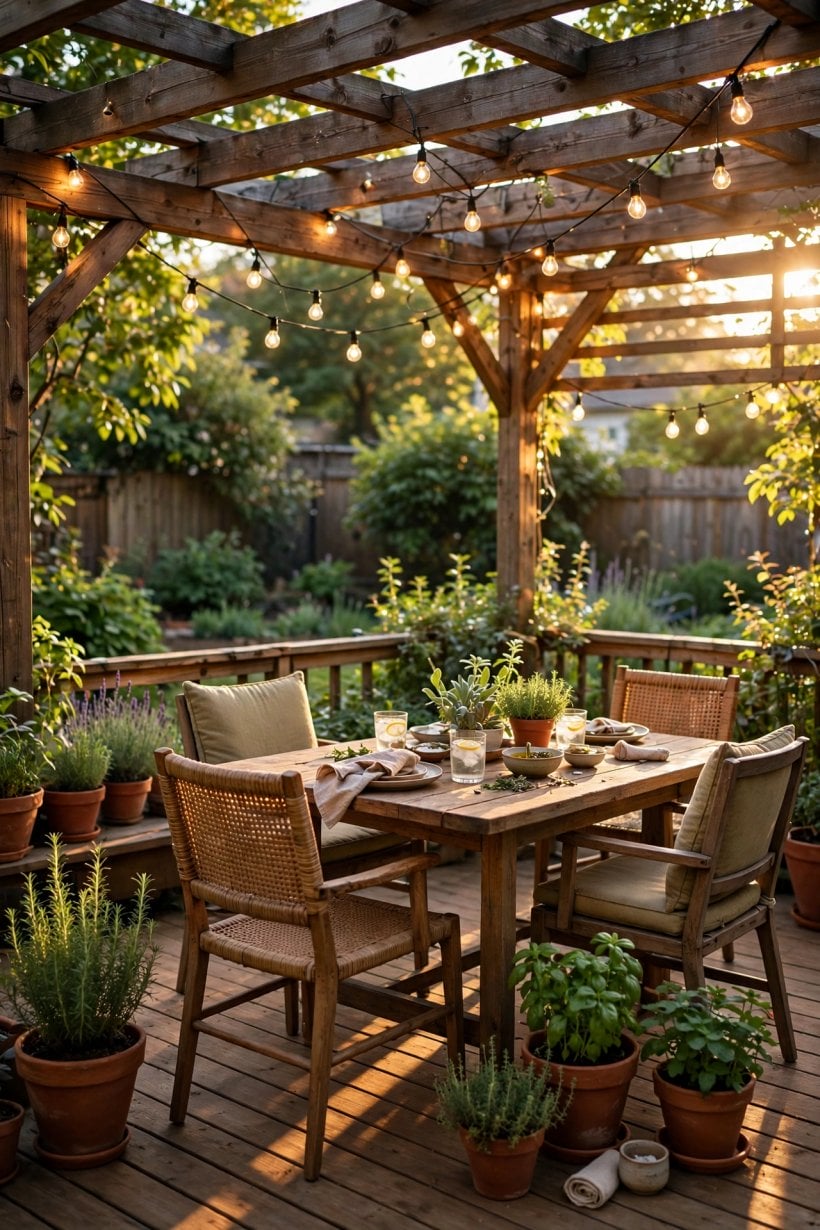
4. Small Patios and Balconies: Less, But Better Placed
On a small patio, placement matters more than quantity. Choose one primary use, dining for two or lounging for two, and let everything else support it, because two compromised zones satisfy nobody. Folding and stacking pieces earn their keep here: a small round table with two good chairs, a storage bench that doubles as seating, and planters used as the zone’s edge rather than furniture pushed against every wall. Keep the centre of the space visibly open; a clear middle is what makes a compact patio feel like a room rather than storage for furniture.
Use vertical surfaces to finish the job. Wall-mounted shelves, hooks for cushions, and climbers on a trellis give a small space the layered feel of a larger garden without consuming floor area, a trick borrowed from tiny house kitchen design, where walls carry storage so counters stay clear. Choose lighter-looking pieces with open legs and slimmer profiles, and keep the palette tight: one material family and one cushion colour family will make mixed pieces look like a set. Finally, measure the route from door to seat with the furniture in place, at night, carrying something; if that trip is awkward, the layout is wrong, however pretty it photographs.
5. Shade Where People Actually Sit
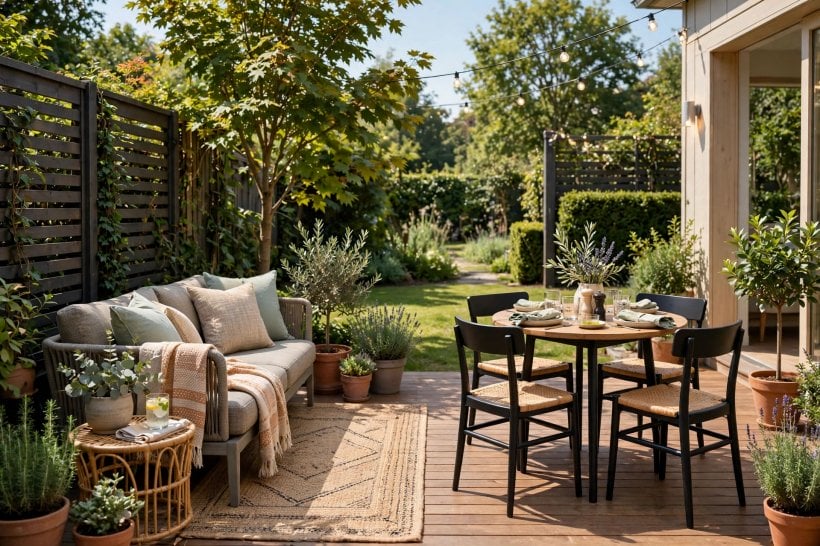
Shade is a placement tool, not an accessory. Track the sun across your patio at the hours you use it, and put fixed shade, such as a pergola, awning or planted canopy, where the seats already are, rather than moving seats to wherever a structure happens to fit. A parasol works hardest when its base sits outside the walking route and its canopy can tilt as the sun moves; centre-pole designs suit dining tables with a fitting hole, while cantilever designs free the space beneath for loungers and conversation sets. Planting gives the softest shade of all: a small tree, tall grasses or a pergola with climbers filter light and cool the air, though they take seasons to mature, so pair them with a movable option meanwhile.
Remember that shade needs change with the calendar. Low spring and autumn sun slips under structures that work perfectly in June, so keep at least one flexible answer, such as a movable parasol, a shade sail you can reposition, or chairs light enough to chase the shade. Heat matters as well as light: dark paving and walls store warmth, so a shaded seat against a sun-baked wall may still feel hot at dusk. Where you can, combine canopy shade with a planted backdrop, which cools the sitting area more kindly than hard surfaces alone.
6. Rugs, Levels and Surfaces That Define Each Zone
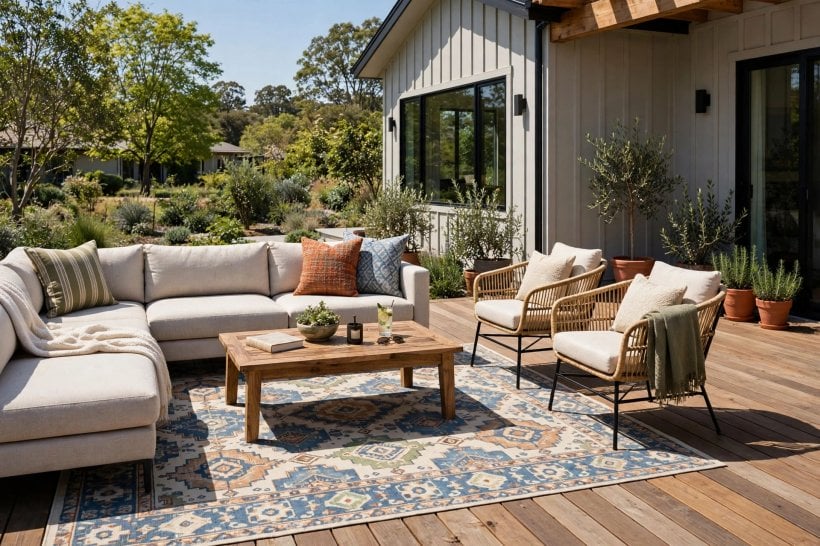
An outdoor rug is the fastest way to tell the eye where one zone ends and another begins. Size it generously enough that the front legs of sofas and chairs sit on it; a rug that floats in the middle of a seating group makes well-chosen furniture look lost. On decking, rugs also soften sound, protect boards from chair feet and add the colour that ties cushions, planters and the house wall together. Choose materials made for outdoor use, lift and dry them after long wet spells, and accept a rug as a seasonal layer rather than a permanent fixture in exposed spots.
Levels do similar work. A single step between a dining terrace and a lower lounge area creates two rooms without a wall, but keep steps obvious, evenly lit and free of planters that narrow the tread. Where the patio is one flat slab, a change of surface, gravel beside paving, or boards running in a different direction, gives the same zoning effect. Gardeners planning the whole plot can take the long view from our guide to how to build your own tiny house, where paths, levels and outdoor rooms are settled before furniture ever arrives, and from these colourful tiny house interiors, where a tight, repeated palette makes separate zones feel like one considered home.
7. Fire, Heat and Evening Comfort
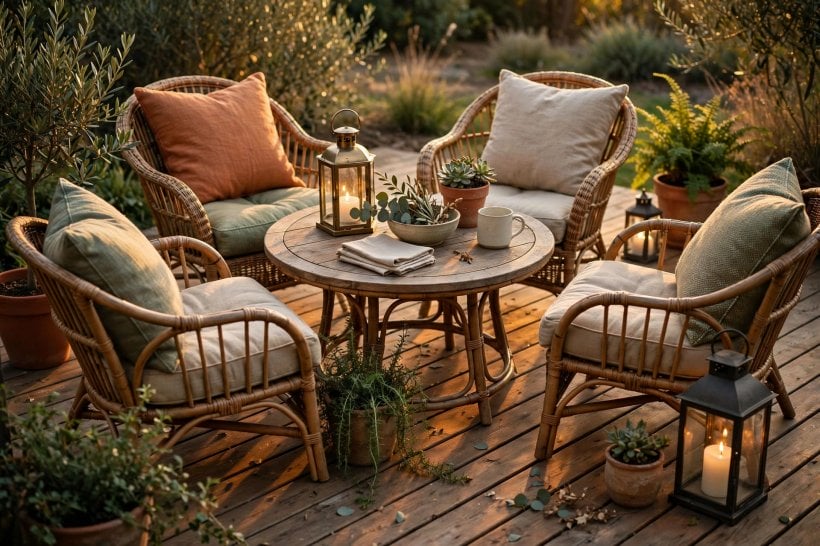
A heat source extends patio life by months, but only if furniture is placed for it. Arrange seats in a loose arc or circle at a comfortable distance from a fire bowl or heater, close enough to feel warmth on faces and hands, far enough that cushions and throws stay safe and guests can lean back without overheating. Keep the route to the fire clear for carrying fuel, and never let a cosy rearrangement block the main path from the house. Fixed heaters above a dining table give even, hands-free warmth for eating; movable options suit lounge zones that reconfigure through the year.
Evenings reward a little planning elsewhere too. Put a flat, stable surface within reach of every seat, keep a basket or storage bench for blankets where the lounging happens, and make sure anyone can get up and go indoors without moving someone else’s chair. These small courtesies are what guests remember. They also mirror the thinking in small bedroom interior design ideas, where comfort comes from clear routes, reachable surfaces and storage placed exactly where the activity happens.
8. Lighting, Planting and the Finishing Details
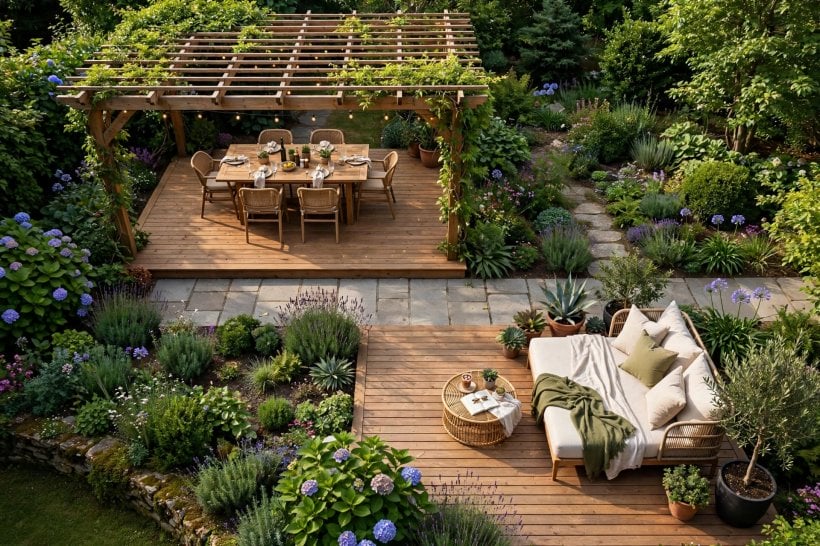
Lighting decides whether a well-placed patio works after dark. Aim light downward and outward from the house for the dining zone, add low, warm points of light to mark steps and edges, and use one or two portable lanterns to finish the lounge area rather than flooding everything evenly. Solar lights suit planters and path edges where wiring is impractical; whatever you choose, test the layout at night from a seated position, because glare invisible while standing can be miserable at chair height.
Planting is the other finishing layer. Tall pots at the back of a seating zone give privacy and shelter from light winds; herbs near the kitchen door and dining table earn their place daily; and a repeated plant, in matching pots at each zone’s edge, ties the whole patio together. Keep one clear home for cushions, ideally a storage box that doubles as a side table inside the lounge zone, so the nightly tidy-up takes minutes. Details like these, repeated calmly, are what make placed furniture feel like outdoor living rather than storage with chairs.
9. Storage, Covers and Keeping the Layout Working
Every good layout quietly depends on storage. If cushions live in the lounge zone, covers live near the dining set and spare chairs stack where they are used, the patio returns to order in minutes and the placement you designed survives real life. Choose storage that serves the layout twice: a bench that seats two and swallows cushions, a deck box that works as a serving surface during parties, or a slim cabinet against the house wall for tools, candles and games. Keep heavy or awkward pieces nearest their storage point, because distance is what turns tidying into a chore that gets skipped.
Plan the winter version of the patio too. Know which pieces stack, which fold, which stay out under covers, and where each group goes, before the first storm makes the decision for you. Leave air gaps under covers, raise cushions indoors where damp lingers, and check that stored arrangements do not block drains, vents or access panels. A layout that has a planned off-season is far more likely to reappear, unchanged and ready, each spring, which is the quiet test of whether the design really worked.
10. A Simple Routine To Test and Adjust Your Layout
Treat your first arrangement as a draft. Live with it for two weeks of ordinary use, then adjust one thing at a time: move the lounge chairs a little toward the evening shade, swap the dining and quiet zones, widen the route behind the table, or angle the sofa to catch a better view. Photograph the patio from the back door each time you change it. Pictures show pinch points, stray storage and chairs nobody sits in far more honestly than memory does, and they stop you undoing an improvement by accident.
Ask the people who use the space what feels awkward, and watch where cushions, drinks and toys actually end up; real habits are better data than any plan. Make the final call with the same thrift that guides how to make a tiny house for cheap: move and reuse what you own before buying anything new, because most placement problems are solved by position, not purchases. When the routes are clear, the shade lands on the seats and every chair gets used, stop adjusting and enjoy it.
Final Considerations
Good patio placement is mostly observation: where the sun falls, how people move, what each corner is really for. Zone the space, keep walkways generous, place shade over seats rather than beside them, and let storage live where life happens. Do that, and ordinary furniture starts to feel like an outdoor room, one that welcomes slow mornings, long dinners and quiet evenings in equal measure.

0 Comments