
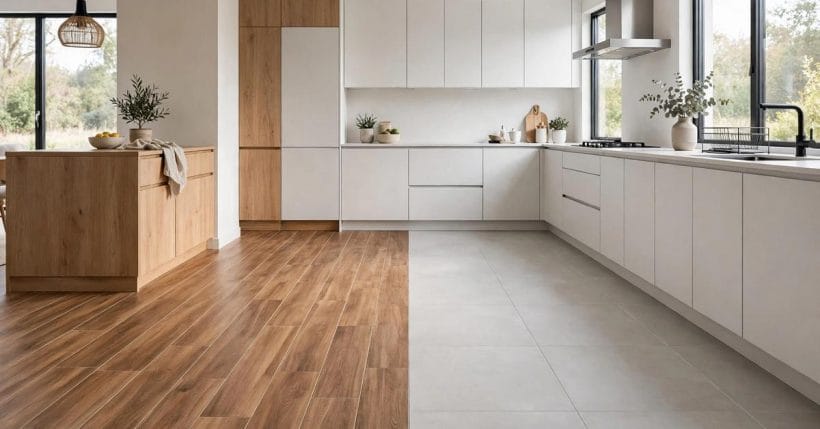
One floor is a stack of printed layers pressed into a plank; the other is clay, glazed and fired in a kiln until it turns to stone. They can wear the same wood grain or the same marble veins, and they could hardly be built more differently — which is exactly why choosing between them rewards a careful look.
This guide compares luxury vinyl tile and ceramic tile the honest way: how each is made, how the surface wears, how each handles water, warmth, damage and repair — stated generally, with no brand names and no invented figures, ending in a clear who-should-pick-which.
1. The Two Tiles at a Glance
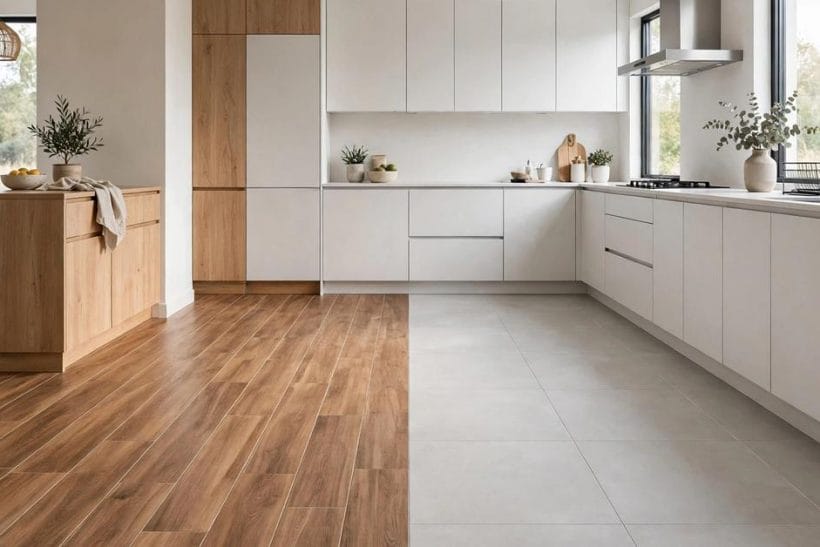
The central entity is the hard tile floor, and it comes in two families. Luxury vinyl tile — LVT for short — is a manufactured plank or tile built in layers around a printed design. Ceramic tile is a natural material given a manufactured finish: a clay body with a glaze fired onto its face. Almost every difference that matters in daily life flows from that single distinction, and the wider vinyl family is surveyed in our vinyl plank checks guide for readers comparing plank formats too.
| Aspect | What differs | In a word |
|---|---|---|
| The Body | Layered vinyl vs fired clay | Build |
| The Surface | Print film vs glaze fired on | Finish |
| The Water | Waterproof core vs grout lines | Moisture |
| The Feel | Warm and soft vs cool and hard | Comfort |
| The Repair | Swap a plank vs chip out a tile | Upkeep |
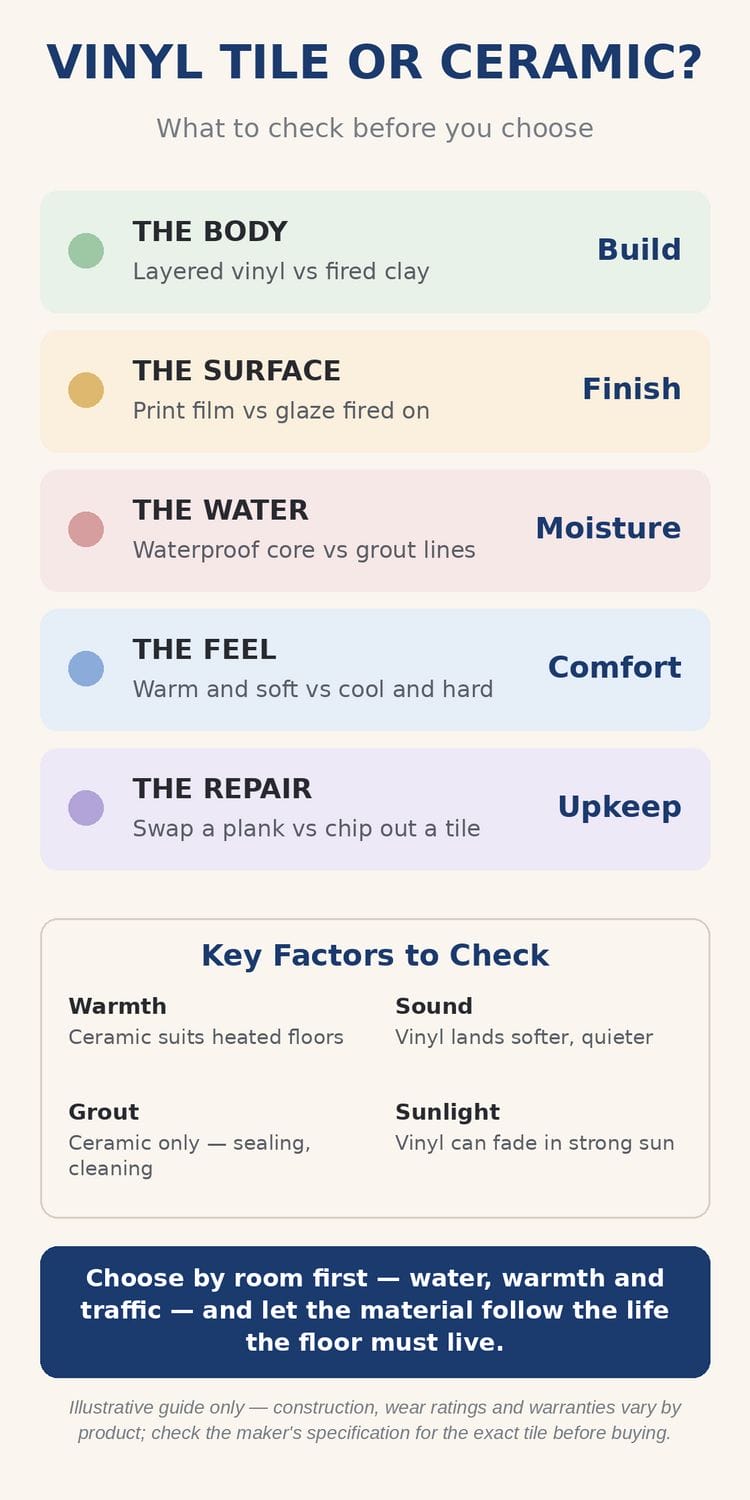
Choose by room first — water, warmth and traffic — and let the material follow the life the floor must live. A floor is not bought for the day it is fitted; it is bought for the ten thousand ordinary days after, and the sections below test each family against those days: the making, the wearing, the wetting, the warming, the breaking and the mending.
A note on method: everything here is stated in general terms because products vary enormously inside each family. Wear ratings, constructions and warranties differ from range to range, so treat this post as the questions to ask — the exact answers live in the maker’s specification for the exact tile you are considering.
2. How Each Tile Is Made
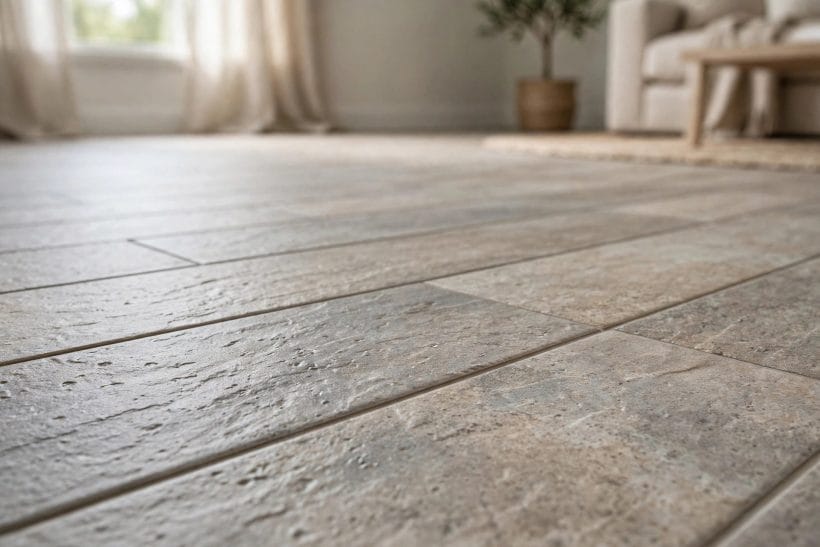
The floor in this photograph — stone-look vinyl planks with a soft, warm grain — is a sandwich pretending to be a quarry. Luxury vinyl tile is a manufactured plank or tile built in layers: a backing, a core (flexible in standard LVT, rigid in the stone-composite cores now common), a printed film carrying the design, and a clear wear layer on top doing the protecting. Ceramic tile does not pretend, and it does not bend: it is a single body of clay, pressed, glazed and fired, hard all the way through.
That layered build is why vinyl can imitate almost anything — the design is a photograph, printed. It is also why the wear layer matters so much: once the print is worn through, the picture is gone, which is why our vinyl flooring wear layer guide treats that top film as the number to understand before anything else. Ceramic’s design, by contrast, sits in or under a glaze that is part of the tile itself; the body beneath is the same honest clay throughout, so a chipped edge shows clay colour, not a ruined picture.
Porcelain belongs in this conversation as ceramic’s denser cousin — fired hotter, less absorbent, often coloured through the body. Where this post says ceramic, read the mainstream glazed floor tile most homes buy; where a difference between ceramic and porcelain matters, it is the water story in section 4 that separates them.
3. Surfaces and Wear
A floor’s surface is where its life happens. Vinyl’s wear layer is a clear coat of a stated thickness, and in general terms a thicker wear layer shrugs off grit, chair legs and pet claws for longer; the soft body beneath also forgives dropped objects, which often bounce where they would chip a harder floor. Ceramic’s glaze is glass — very hard, resistant to scratching and staining, and indifferent to sunlight — but hardness cuts both ways: a heavy pan dropped on ceramic can crack the tile, while the same drop on vinyl usually leaves no mark at all.
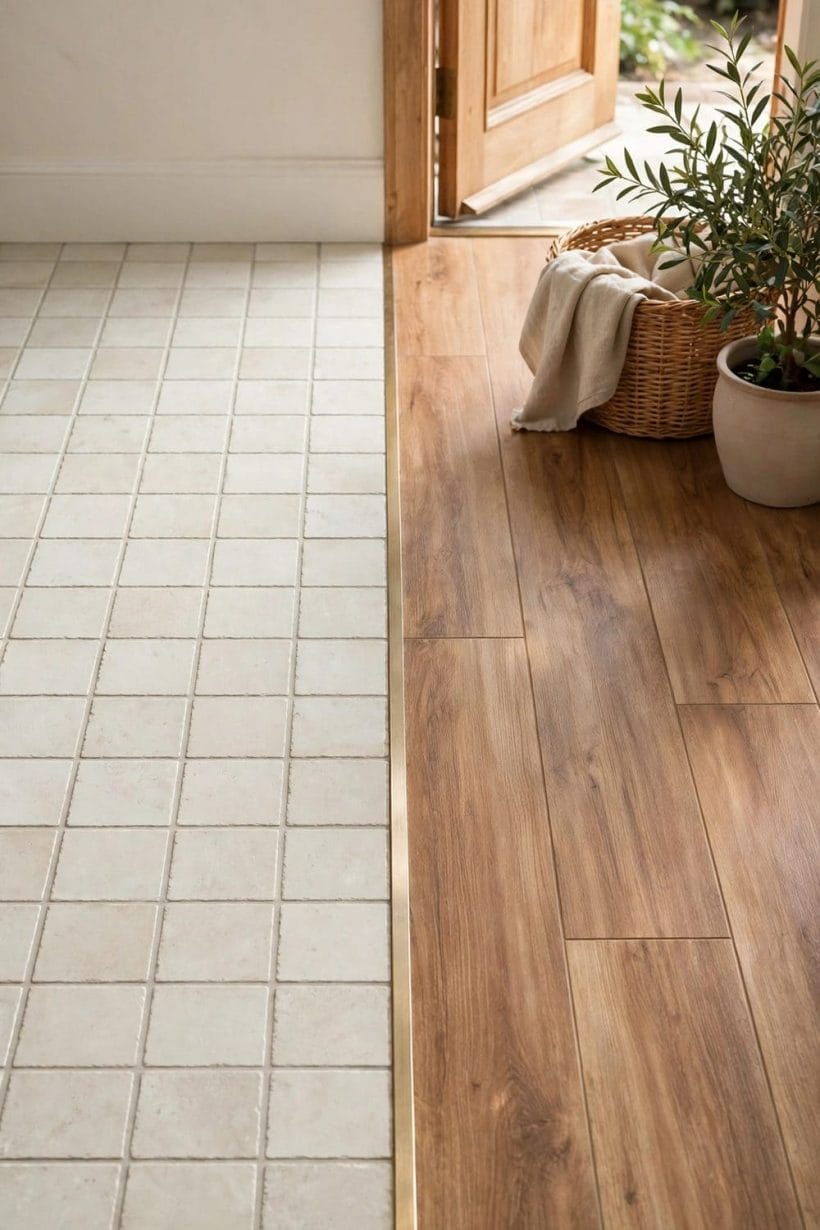
Sunlight deserves its own sentence. Strong, sustained sun can fade some vinyl prints over the years, while a fired glaze is essentially colourfast for the life of the floor. Traffic tells the opposite story in one respect: vinyl hides micro-scratches in its textured print, whereas a glossy ceramic glaze can show wear lanes in the busiest paths. Our luxury vinyl plank checks run through the surface questions in buying order for the plank side of the family.
Neither surface is maintenance-free, but they ask for different things: vinyl wants protection from grit and harsh abrasives that dull its coat; ceramic wants its grout looked after, because the grout — not the tile — is the porous, stainable part of a ceramic floor. Section 7 returns to what happens when either surface finally loses an argument.
4. Water and Wet Rooms
Water is the sharpest dividing line between the two families, and this sage-green bathroom shows the traditional answer: ceramic on walls and floor, at home with steam and splashes for as long as houses have had bathrooms. A ceramic tile itself is glazed and waterproof on its face — but the floor as a system is only as dry as its grout lines and the layer beneath, and grout is porous unless sealed and kept sealed.
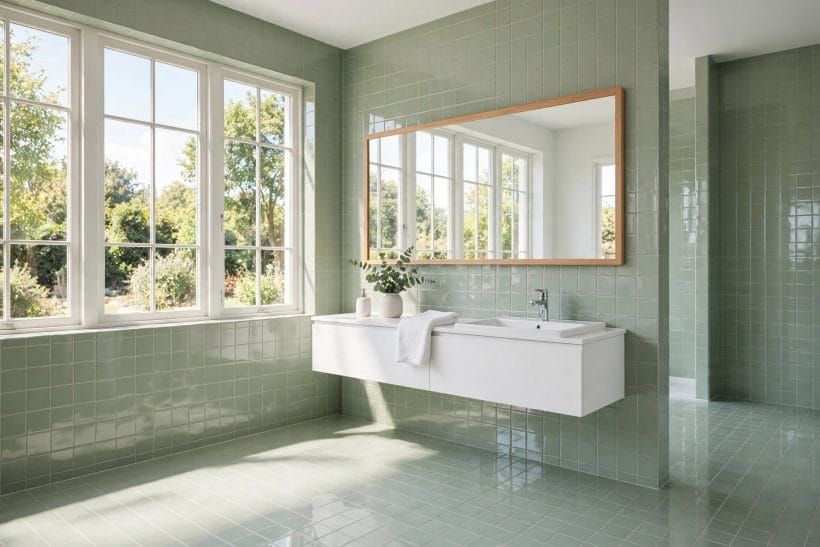
Vinyl tile flips the arrangement: the tile and its rigid core are waterproof through their whole thickness, and a clicked floor has no grout to seal at all. That is why vinyl has become the default suggestion for busy family bathrooms, laundry rooms and kitchens where water lands daily — the photograph in section 7 shows exactly that life. The honest caveat is the edges: water that finds its way under a floating floor through a badly sealed perimeter can sit unseen, so the fitting around baths, showers and doorways matters as much as the tile itself.
For genuinely wet zones — inside a shower enclosure, around a bath that children treat as a swimming pool — ceramic over a properly tanked, waterproofed base remains the conservative choice, because the whole system is designed to be wet. Our bathroom flooring ideas survey the full field of bathroom floor materials room by room. In ordinary splash zones rather than soaking zones, either family performs — the difference is how much sealing and vigilance each asks of you.
5. Warmth, Sound and Feel Underfoot
Bare feet deliver the verdict fastest. Ceramic is cool and hard: lovely in a hot climate or over underfloor heating, where its dense body stores warmth and releases it slowly and evenly — tile and gentle heat are old partners. Without heating, that same density feels cold in winter and unyielding always; a dropped glass rarely survives, and long standing at a stove can tire legs. The two samples photographed here — the vinyl sheet curling in a bend, the ceramic tile sitting rigid — are that difference in miniature.
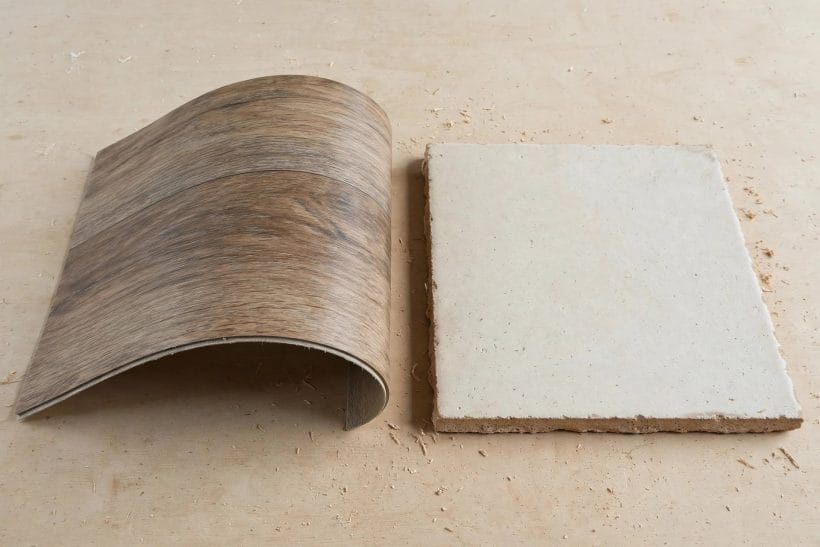
Vinyl feels warmer to the touch because it conducts heat away from the foot more slowly, and its slight give makes it kinder to stand on, quieter to walk on and softer for toddlers, older knees and dropped crockery alike. Sound follows the same line: a vinyl floor lands footsteps softly, while ceramic returns a harder, brighter note that rugs usually end up softening.
Underfloor heating needs a check rather than an assumption on the vinyl side: many ranges are approved for it, some are not, and the maker’s stated limits govern — another entry for the specification checklist. Ceramic asks nothing here; it simply conducts. If the room is a kitchen where someone cooks for hours, or a hallway that takes the whole household’s traffic in socks, this section may quietly decide the whole comparison for you.
6. Fitting: Click, Glue and Mortar
The two families arrive on the floor by different roads, and the hallway in this photograph makes the practical point: what matters is less the road than the ground it is laid on. Vinyl tiles and planks either click together as a floating floor over an underlay, or glue down; both demand a flat, smooth, dry subfloor, because the flexible material telegraphs every bump and hollow beneath it into the finished surface.
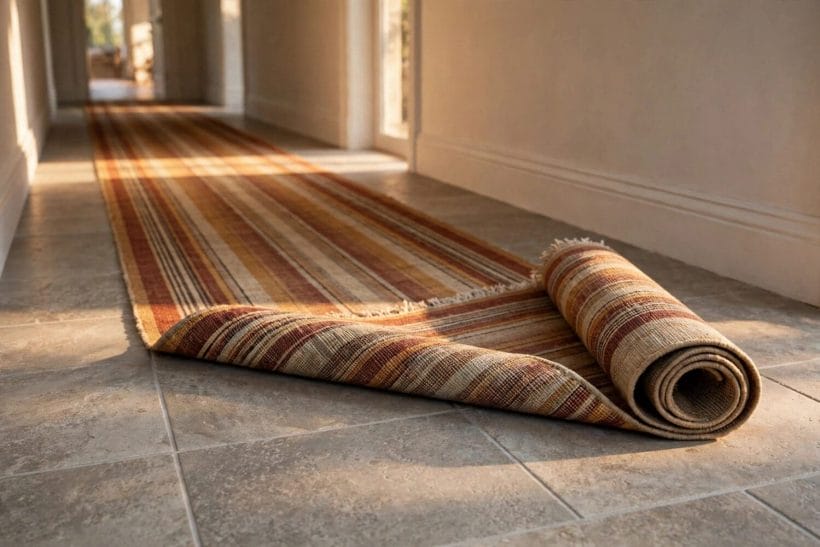
Ceramic is bedded in mortar over a suitable board or screed, then grouted — a slower, wetter trade that raises the finished floor height by more than a floating vinyl floor does, which is why door clearances and thresholds need planning, as the doorway photograph later in this post shows. Ceramic fitting is generally the less forgiving of the two: cuts are harder, mistakes are set in stone, and most households hand it to a professional tiler. Vinyl’s click systems are the more approachable end of flooring, though approachable is not the same as careless — expansion gaps, acclimatisation and perimeter sealing are where vinyl floors succeed or fail.
One shared warning covers both: a floor can only be as good as the flatness and dryness underneath it. And because ranges change, anyone replacing a discontinued line years later faces the hunt our matching discontinued tile guide works through — a reason to keep spare tiles from the original batch, whichever family you choose.
7. Damage and Repair
Sooner or later every floor meets the thing that damages it, and the repair stories could not be more different. This laundry room shows vinyl in its natural habitat — water beading on the surface, machine vibrations, baskets dragged — and when a plank or tile in such a room is gouged or stained beyond help, the repair is a swap: lift the damaged piece (easiest in a clicked floor with access from an edge, trickier glued down or mid-room) and fit a spare from the attic box.
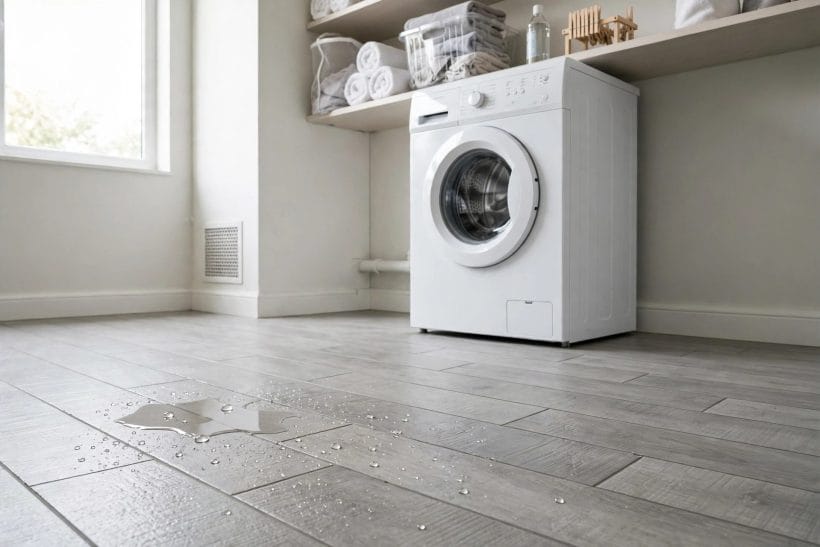
Ceramic repair is surgery rather than a swap: the cracked tile is cut out, the bed cleaned, a replacement set and grouted to match — a small job for a tiler, provided a matching spare exists, and a colour-matching exercise if it does not. Grout itself is ceramic’s renewable part: tired grout can be raked out and renewed, or recoloured, refreshing the whole floor without touching a tile — vinyl has no equivalent ritual, but also no grout to tire.
The everyday ledger matters too. Vinyl asks for door mats, felt pads and prompt attention to grit; ceramic asks for sealed grout and a soft hand with dropped cast iron. Neither list is long. What differs is the failure style: vinyl tends to wear gradually and visibly in its busiest lanes, ceramic tends to stay immaculate until a single accident writes one tile off. Households that are hard on floors in the slow, grinding way usually prefer the gradual failure; households that fear the single accident usually prefer the forgiving surface.
8. Looks: Wood, Stone and Pattern
Design is where the two families genuinely tie — and where the choice becomes about texture rather than pictures. Vinyl’s printed designs are now extremely convincing at standing distance: wood grains with knots and saw marks, stone with veining, terrazzo, checkerboard. The giveaway is repetition and touch — the same plank pattern returns across the floor, and the surface feels uniformly smooth where real timber would vary. Ceramic counters with depth: a glaze has a lustre and a slight irregularity that print cannot quite counterfeit, and real grout lines give a ceramic floor a rhythm and shadow-gap that clicked vinyl seams only imitate.
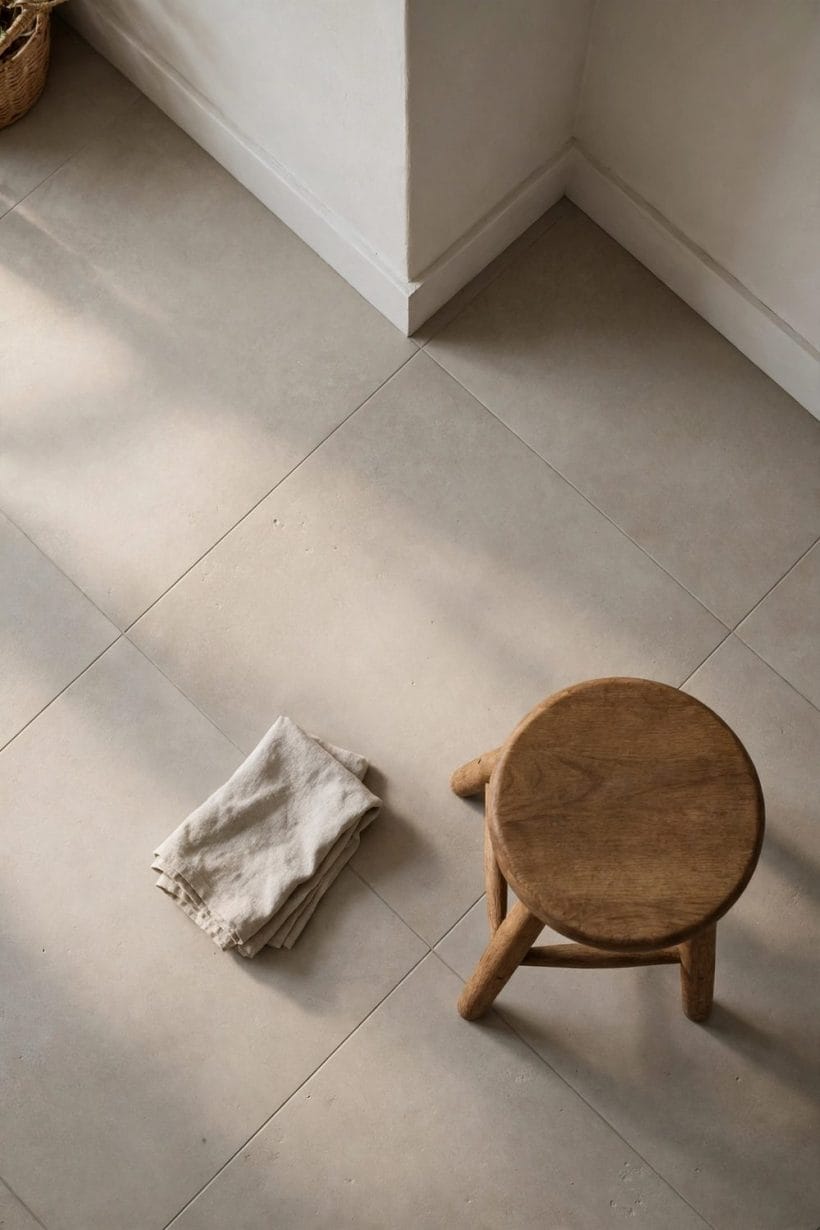
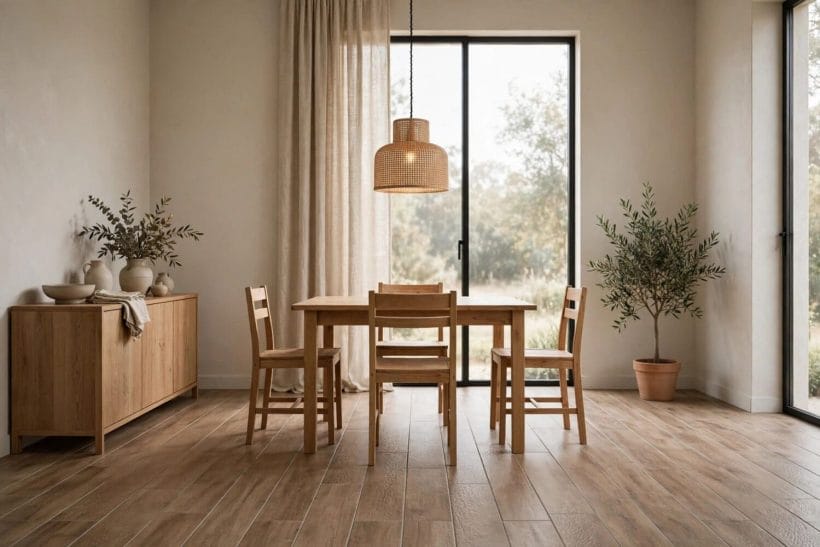
Room by room, the pattern of choices usually runs like this. Kitchens take both gladly — vinyl for comfort underfoot during long cooking, ceramic for its indifference to heat and spills around the stove. Living rooms lean vinyl for warmth and quiet, as the dining room closing this post shows, though our ceramic tile living room ideas make the Mediterranean case for tile beautifully. Entrances and hallways take both, with ceramic ahead where wet boots and grit are the daily weather.
One honest design note: vinyl’s realism is strongest in wood effects, where the original material is itself variable, and weakest in large polished-stone effects, where glaze depth is the whole point. Ceramic’s realism problem is the reverse — it is the real thing, but real stone effects in ceramic can look harder and colder than the rooms around them expect. Stand in the room, at the room’s light, with full-size samples of both before deciding; a sample board by the window settles more arguments than any photograph.
9. Costs in General Terms
This post prints no prices, deliberately: ranges, regions and years move them too much for any figure to stay honest. What can be stated generally is where the money sits. With vinyl, the tile itself is usually the moderate part of the bill — subfloor preparation is the swing item, because a floating floor over a poor surface fails expensively, and a meticulous preparation day costs what it costs.
With ceramic, the fitting labour is usually the larger share — cutting, bedding and grouting are slow trades — and the finished height can add door-trimming and threshold work to the same invoice. Across a whole floor, the two totals often land closer than the tile prices alone suggest, which is why quotes should always be compared fitted, not per box. Our ceramic tile bathroom guide shows how the ceramic side of the bill builds up in the room where it is most often chosen.
The lifetime ledger tilts by section 7’s story: vinyl may ask for an earlier full replacement in a hard-worked room; ceramic may ask for a tiler’s day-rate after an accident and grout renewal along the way. Warranties reflect this — read them as the maker describing the wear layer or the glaze, in the maker’s own terms, and compare the terms rather than the headline years, which are not measured the same way across the two families.
10. Who Should Pick Which
The verdict this format demands, stated as plainly as the evidence allows. Pick luxury vinyl tile if your life is wet, busy and barefoot: young children and dogs, a laundry or family bathroom, long hours standing in the kitchen, a wish for warmth and quiet without rugs, or a floor that may need one piece swapped some day without a tradesperson. Its conditions are honest ones — respect the sun in glassy rooms, prepare the subfloor properly, and buy the wear layer as thick as the room’s traffic deserves.
Pick ceramic tile if permanence is the point: a floor laid for decades, underfloor heating ticking beneath it, a pattern in real glaze that will look the same in twenty years, an entrance that takes the weather in, or a wet zone proper — the shower floor, the bath surround — where the whole system is built to be soaked. Its conditions are equally honest: grout is a maintenance item, drops can crack it, and fitting belongs to skilled hands.
And the large middle ground — hallways, dining rooms, spare bedrooms, most kitchens — is genuinely contested territory where either floor will serve well. There, decide on the feel underfoot in January and the sound of the room at night. Floors are lived on, not looked at, and the right answer is the one your feet would give.
Final Considerations
Luxury vinyl tile and ceramic tile are not rivals so much as two answers to two different questions: vinyl answers the question of comfort and water in a busy everyday house; ceramic answers the question of permanence and heat in a house being finished for the long term. Work through the checks in order — body, surface, water, feel, fitting, repair, looks, cost — against the actual room in front of you, verify every product-specific claim against the maker’s specification for the exact tile, and keep a box of spares from the original batch whichever way you land. Do that, and either floor will repay the choosing.


0 Comments