

A red bedroom can feel bold, warm and deeply restful all at once, as long as the shade, the light and the layout are planned together rather than left to chance.
This guide gathers 75 ideas across ten clear sections, from first layouts and colour pairings to storage, lighting and finishing touches, so you can build a scarlet scheme that still lets you switch off and sleep.
1. Red Bedroom at a Glance
| Best for | Anyone who wants a sleeping space with warmth, drama and personality, in a main suite, a guest room or a compact tiny home. |
|---|---|
| Core shades | Burgundy, crimson, garnet, brick, oxblood, cherry and softer terracotta-leaning tones for a calmer feel. |
| Pairs well with | Warm white, cream, natural oak, walnut, linen, rattan, aged brass, matte black and deep green accents. |
| Watch out for | Too many competing brights, cold blue-toned lighting, and glossy finishes on every surface at once. |
| Start with | One anchor: bedding, a headboard wall, curtains or a rug, then layer supporting tones around it. |
| Budget approach | Paint and textiles first, since they change the mood fastest; upgrade furniture and lighting later. |
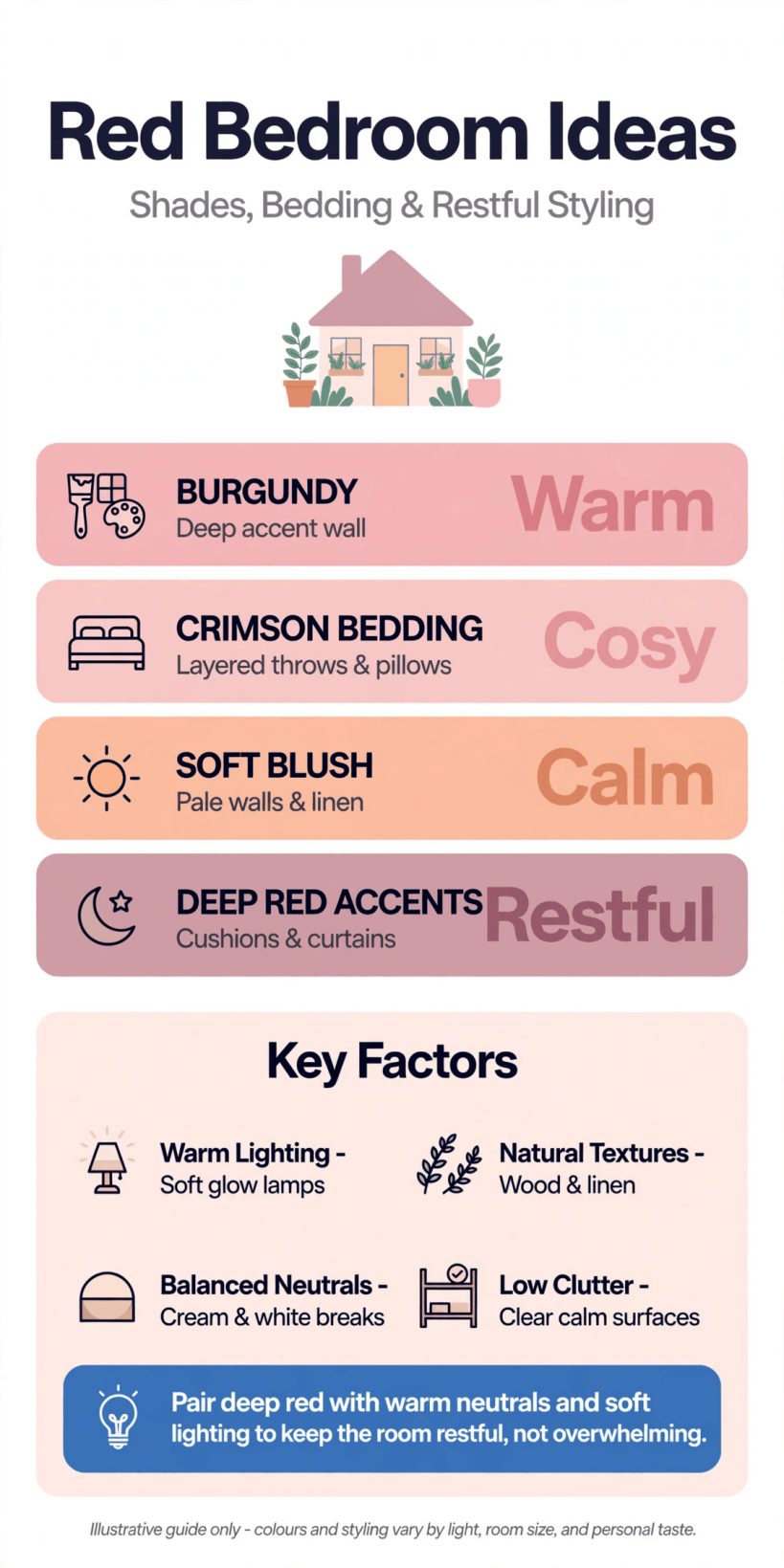
A quick visual summary of the shades, pairings and layout choices covered in this guide, from first anchor pieces to restful finishing touches.
Think of the table above as your shortcut. Strong colour works best when it has a clear job: warming a north-facing room, anchoring the bed wall, or adding depth to a plain box of a room. Decide the job first, then choose the shade, the finish and the amount of wall it covers.
Throughout the sections that follow, the same pattern repeats: one confident element carries the colour, neutrals and natural textures calm it down, and lighting is warm enough to keep deeper tones rich rather than murky. Keep that rhythm and almost any of the 75 ideas will sit comfortably in a real home.
2. Layouts That Give Bold Colour Room to Breathe
Start with the bed, because in a colour-led room the bed is the visual anchor everything else orbits. Centring the bed on the main wall, with a bedside table and lamp on each side, creates the symmetry that stops a strong wall colour from feeling chaotic. Leave clear walking space at the foot of the bed, keep tall furniture on the wall opposite the window where it will not block light, and avoid pushing every piece against the walls, which can make saturated colour close in.
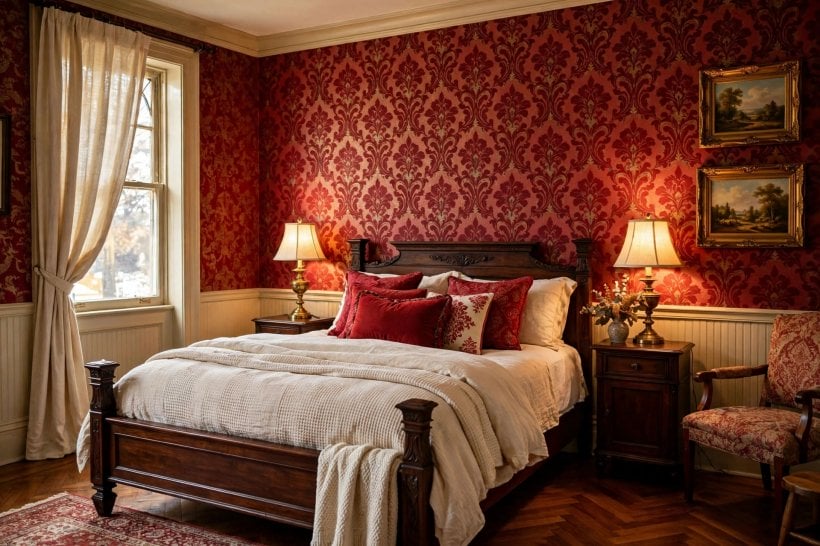
In longer rooms, a low bench or a slim trunk at the foot of the bed gives the eye a resting point and adds useful storage. In square rooms, angle nothing: a straight, calm layout lets the colour do the talking. If you are planning a compact sleeping space from scratch, the layout lessons in these tiny house bedroom ideas translate well, because they focus on clearances, proportion and furniture that earns its place.
Finally, plan the view from the doorway. The first thing you see sets the tone, so compose that sightline: bed made, one warm lamp glowing, and clutter out of sight. A bold scheme looks intentional when the layout is calm, and messy when the layout is random, whatever shade you choose.
3. Choosing Your Shade: Crimson, Burgundy, Garnet and Brick
Not every strong shade behaves the same way. Bright cherry and scarlet feel energetic and suit accents, cushions and a single statement piece. Crimson sits in the middle: rich, classic and easier to live with on a full wall. Burgundy and oxblood lean brown and purple respectively, and both read as calm, cocooning choices for sleep. Garnet has a jewel depth that loves brass and velvet, while brick and terracotta tones bring an earthy softness that pairs naturally with timber and woven textures.
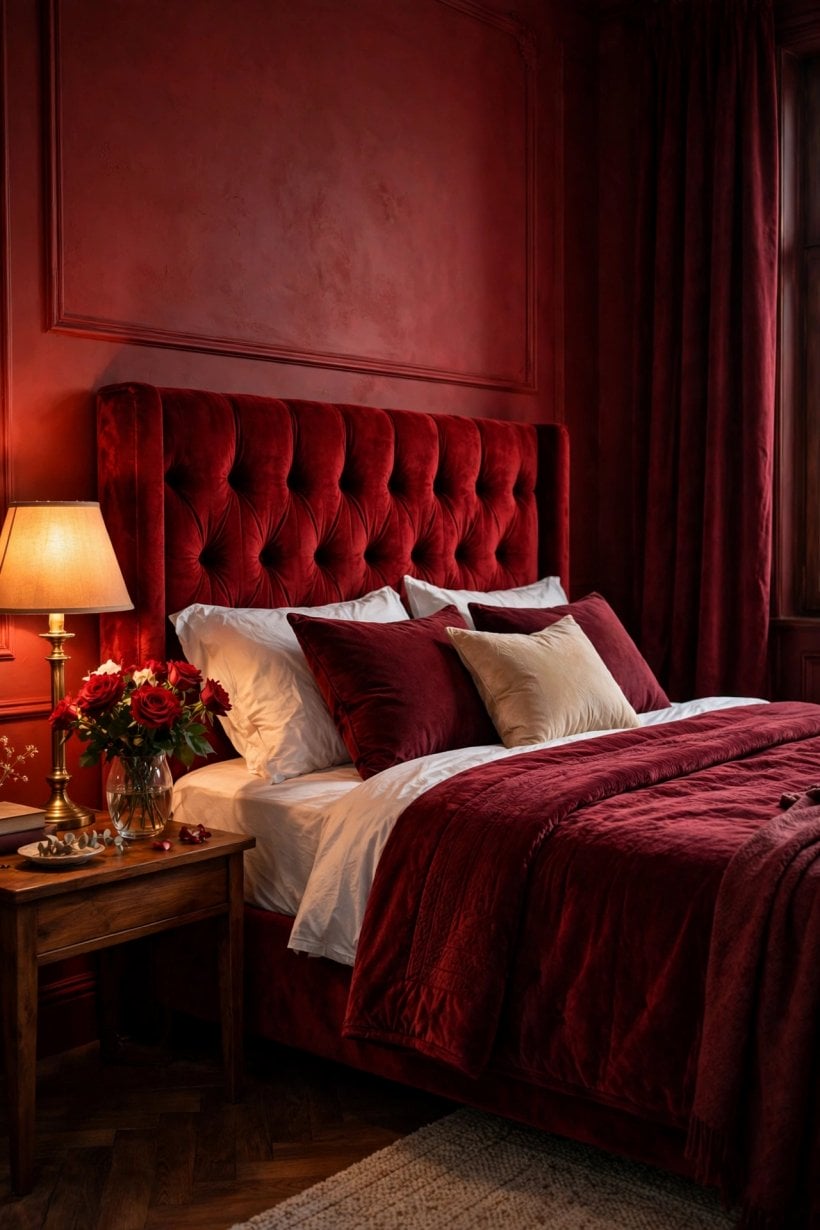
Light changes everything, so test before you commit. A shade that looks plush in a south-facing room can turn dull in a north-facing one, where cooler daylight greys it out; there, warmer, more orange-leaning tones usually hold up better. Paint large swatches on two walls, live with them for a couple of days, and check them morning and evening under your actual lamps.
Finish matters too. Matte and eggshell paints soften saturated colour and hide minor wall imperfections, while satin adds a gentle sheen that can feel glamorous on woodwork. If you are drawn to the sleek palettes in this tour of a modern tiny house bedroom, notice how restrained the background stays: one deep tone, repeated quietly, rather than five competing brights.
4. Pairing Scarlet Walls With Neutrals, Wood and Metal
Strong colour needs quiet company. Warm whites and creams keep a crimson wall feeling fresh instead of heavy, and they give bedding a crisp edge. Natural woods, especially oak, walnut and reclaimed pine, add the organic warmth that stops the scheme from feeling like a stage set. Linen, cotton and wool in oatmeal, stone and soft grey tones layer in texture without adding more colour noise.
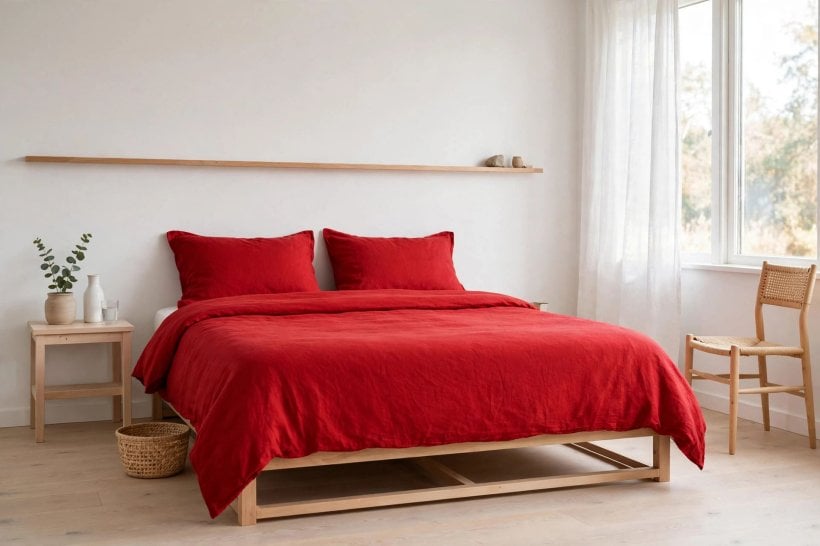
Metals are your jewellery. Aged brass and brushed gold echo the warmth of burgundy and garnet, matte black sharpens brighter scarlet schemes and gives them a modern edge, and chrome or nickel cool things down, so use them sparingly where the room already gets plenty of warm light. Pick one main metal finish and repeat it at least three times, on lamp bases, handles and a mirror frame, so it reads as a decision rather than an accident.
For paint-pairing confidence, it helps to study how colour behaves in other rooms too; these living room paint ideas for tiny houses show the same warm-neutral balancing act at work. The rule of thumb holds everywhere: roughly sixty per cent neutral, thirty per cent your main colour family, and ten per cent accent, adjusted until the room feels settled to your eye.
5. Beds, Headboards and Bedding Layers
The bed is where this colour story either settles or shouts. An upholstered headboard in burgundy velvet, garnet linen or a deep brick weave makes a confident anchor and softens acoustics in a hard-surfaced room. A timber headboard in walnut or oak does the opposite job: it calms a painted wall and adds grain and warmth. Tall headboards suit high ceilings; low, wide ones suit small rooms where you want width rather than height.
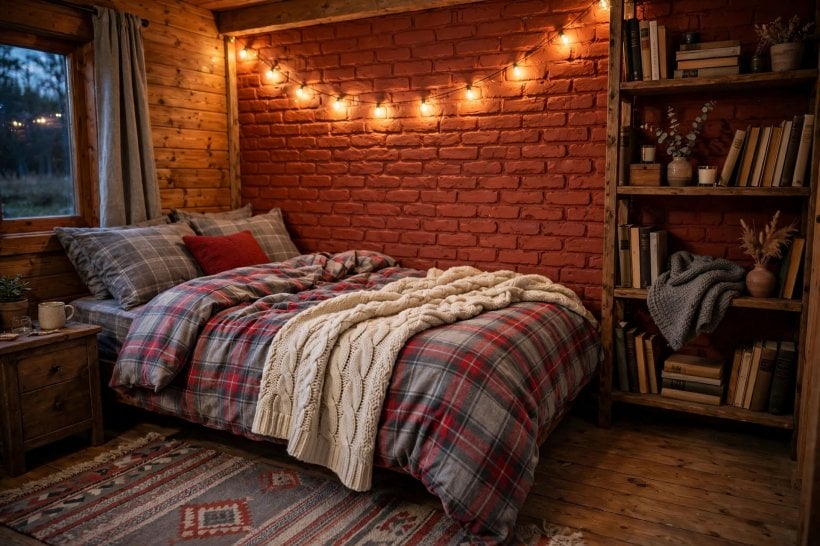
Layer bedding like a stylist: a calm base of white or cream sheets, a main cover in your chosen deep tone or a soft neutral, then one or two accent cushions and a throw that repeat the wall colour in a smaller dose. Natural fibres, cotton, linen and wool, breathe better and read more luxurious than shiny synthetics, which can make strong colours look cheap under lamplight.
Rotation keeps the scheme flexible. In summer, strip back to pale layers with a single crimson throw; in winter, add the full duvet in a deeper tone and extra cushions. For more layering tricks that work in compact spaces, browse these tiny house bedroom decor ideas and steal the ones that fit your palette.
6. Storage That Keeps Strong Colour Calm
Bold rooms forgive clutter least, because every stray object stands out against a saturated background. Build storage around closed fronts wherever you can: wardrobes with flat doors, drawers under the bed, lidded baskets for chargers and books, and a bedside drawer for the nightly handful of small things. Open shelves are fine for a short, edited row of books and one plant, but they should never become the default landing strip.
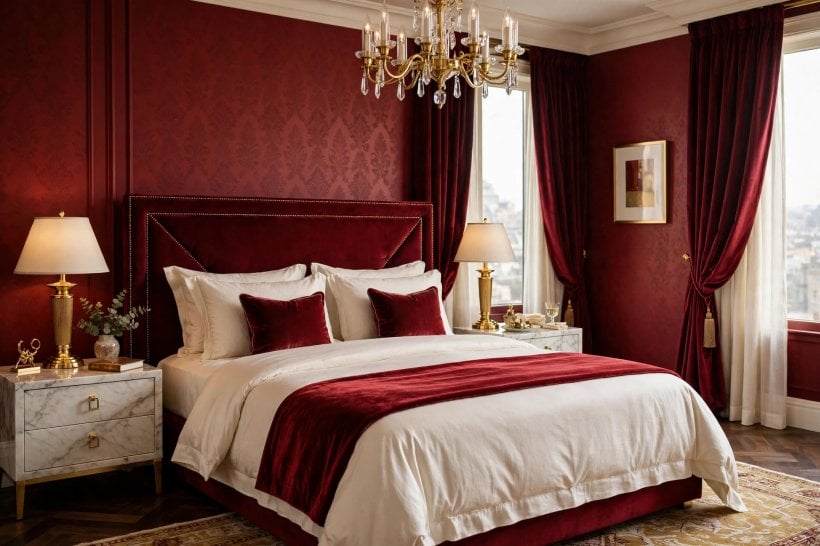
Colour-code your storage to the scheme. Wardrobes painted in the same tone as the walls disappear into the architecture, an especially useful trick in small rooms. Baskets and boxes in natural fibres echo the wood tones elsewhere, and a single set of matching hangers instantly makes an open rail look deliberate. Inside drawers, simple dividers keep categories apart so tidying takes minutes rather than a weekend.
Think vertically as well. A tall, narrow dresser uses less floor than a wide one, hooks behind the door hold robes and tomorrow’s outfit, and the space above the wardrobe fits lidded boxes for out-of-season bedding. When everything has a home, the room keeps the calm, gallery-like backdrop that lets a confident colour scheme feel restful instead of busy.
7. Lighting for Warmth Without Glare
Lighting decides whether deep colour looks rich or muddy. Aim for layered light at three heights: a soft ceiling source for general glow, bedside lamps at shoulder height for reading, and a low accent, perhaps a small lamp on a dresser or a candle-style sconce, for evening atmosphere. Warm-toned bulbs are essential with burgundy, garnet and crimson; cool daylight bulbs will fight the palette and can turn plush tones grey and tired.
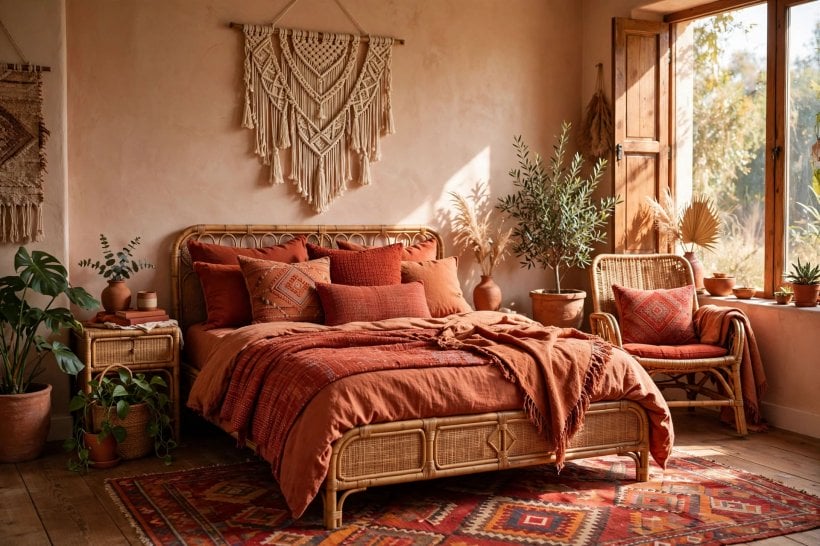
Dimmers earn their keep in a sleeping space. Bright for dressing and cleaning, low and golden for the last hour of the day, they let one room do both jobs. Lampshades in linen or warm white diffuse light kindly; clear glass and exposed filament bulbs look striking but can glare against dark walls, so position them away from the direct view of the bed.
Do not forget daylight control. Blackout-lined curtains or a layered blind-and-curtain pairing protect sleep, and curtains in a deep tone, hung wide and high, become part of the colour story rather than an afterthought. The styling guides among these tiny house decorating ideas return to the same point: light first, decoration second, because light is what you actually see the decoration by.
8. Small Rooms and Tiny Homes: Making Intensity Feel Spacious
Conventional advice says small rooms must be pale, but a well-judged deep colour can make a compact sleeping space feel intentional and cocooning rather than cramped. The trick is commitment: painting all four walls, and sometimes the ceiling, in one enveloping tone removes the visual chop of a single feature wall and lets the corners recede. Keep flooring pale or warm-toned, choose furniture with legs so floor stays visible, and use mirrors to bounce light and double the sense of depth.
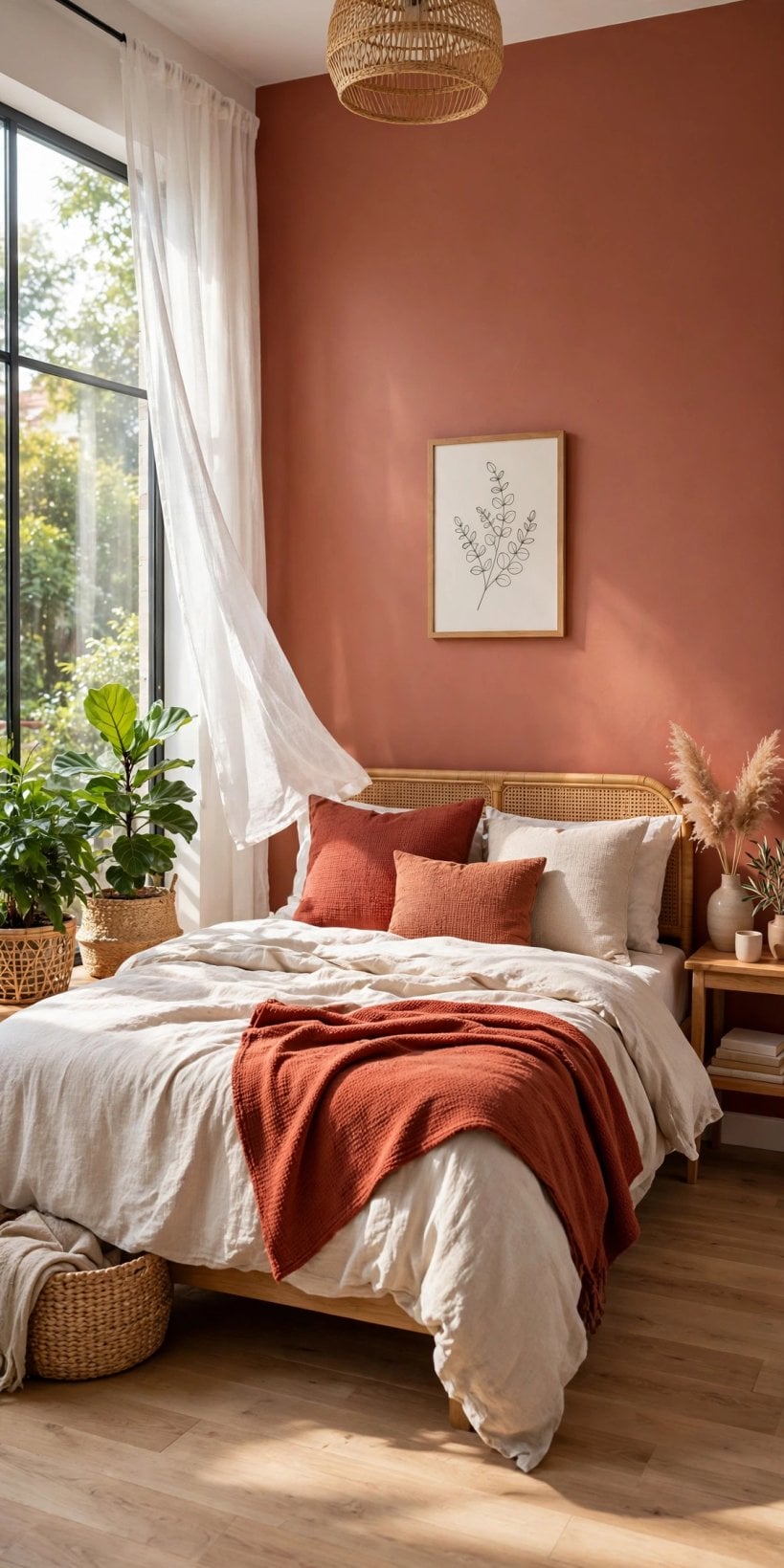
Scale is your friend. A slightly smaller bed with a low headboard, slim bedside ledges instead of full tables, and wall-mounted lamps free up precious centimetres. Built-in joinery, a window seat with drawers, a wardrobe run that fills one wall exactly, makes a tiny room work harder than loose furniture ever will, and painting that joinery to match the walls keeps the look seamless.
In a sleeping loft or a compact cabin, carry one accent of your main colour into the space beyond, a cushion, a throw, a painted stool, so the room feels connected to the home rather than boxed off from it. Restraint in everything except the colour itself is what makes small, saturated rooms feel designed instead of accidental.
9. Patterns, Art and Textiles That Soften the Scheme
Pattern is how you stop a colour-led room from feeling flat. Start with textiles: a rug that mixes your main tone with cream and a touch of charcoal grounds the bed and adds softness underfoot. Striped or checked cushions in the same family add order, while one floral or botanical print, used once, brings the organic note that strong schemes need. Keep the scale varied: one large pattern, one medium, one small, and the room reads layered rather than loud.
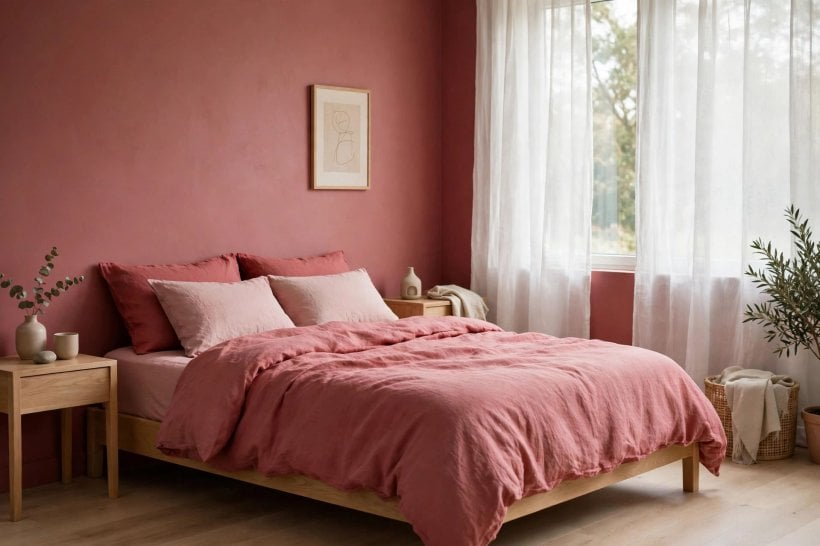
Artwork deserves wall space to breathe. One large piece above the bed, or a calm grid of smaller frames with generous mounts, works better than a scattered gallery. Look for prints with warmth in them, sepia photography, landscapes with autumn tones, line drawings in warm charcoal, so the art converses with the walls instead of arguing. If you are planning the architecture of a small home around rooms like this, the proportions discussed in these tiny house building design ideas are a useful reference.
Curtains, upholstery and throws are your changeable layer. Swap them seasonally and the same room can feel bright and summery or deep and wintry without repainting. Natural textures, wool, jute, cane and raw linen, keep saturated colour grounded and touchable, which is exactly what a room designed for rest should be.
10. Restful Finishing Touches and Everyday Care
The last ten per cent of the work delivers most of the calm. Clear the bedside surface down to a lamp, a book and a small dish for jewellery or glasses. Add one living plant for softness and cleaner-feeling air, choosing a variety that tolerates your light level rather than the one that merely looks good in photos. Keep a lidded basket for the day’s clothes so they never colonise a chair, and make the bed properly each morning: in a colour-led room, a made bed is half the styling.
Scent and sound complete the restfulness. A candle or linen spray in warm, woody notes suits the palette far better than sharp citrus, and thick rugs and curtains naturally muffle sound. If traffic or neighbours intrude, a small sound machine or a fan’s low hum
One last check before you call the room finished: stand in the doorway at dusk with only the bedside lamps on. If the colour glows rather than glares, the bed looks inviting, and every surface has room to breathe, the scheme is working, and you can simply enjoy it.
can smooth the edges of the night. For the bigger picture of creating a home that supports slow evenings, the step-by-step approach in this guide on how to build your own tiny house shows how much of comfort is planned long before decoration begins.
Care is simple but regular. Saturated fabrics fade unevenly in strong sun, so rotate cushions and throws now and then, and line curtains. Keep a small amount of touch-up paint for scuffs on deep-toned walls, since marks show more readily than on pale ones, and vacuum upholstery with a soft brush to keep velvet and linen looking plush rather than dusty.
Final Considerations
A confident colour scheme succeeds when it is planned as a system: layout first, shade second, pairings and lighting next, and storage and finishing touches holding the whole thing calm. None of the 75 ideas in this guide needs to happen at once. Paint or dress the bed wall, live with it, then layer storage, pattern and art as budget and time allow, checking each addition against the at-a-glance table in the first section.
Above all, judge the room at the hour you use it most. A sleeping space that feels warm, ordered and quietly dramatic at bedtime has done its job, whatever the shade card promised. Trust warm light, natural texture and clear surfaces to carry the colour, and your scheme will feel less like a brave experiment and more like the most restful room in the house.

0 Comments