
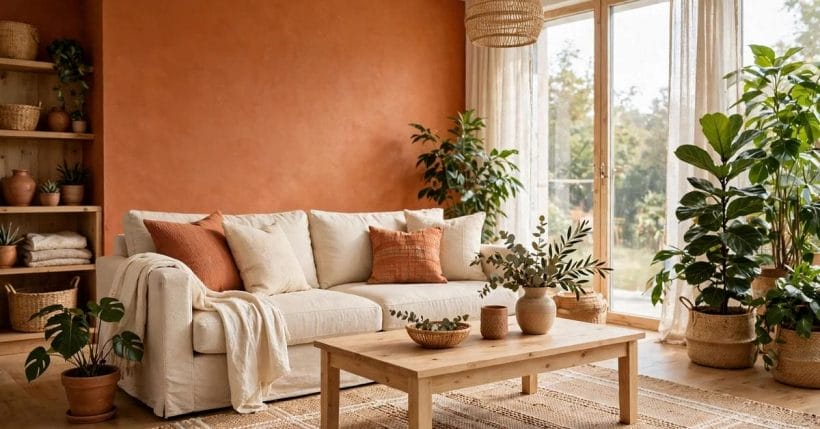
Orange brings warmth, energy and a welcoming glow to a living room, but it rewards a steady hand. Used on every surface at once, it can overwhelm a room; used with one clear anchor and calm companions, it makes the room feel sunny in every season. This guide gathers seventy-five ideas for an orange living room, covering layouts, sofas, colours and layered lighting, so you can choose the amount of orange that suits your home and your household. Whether you are starting from a single rust chair or planning a whole room around burnt-orange walls, the ideas below keep the colour liveable, balanced and easy to enjoy, from the first shade test to the last lamp switched on in the evening.
1. Choosing the Orange
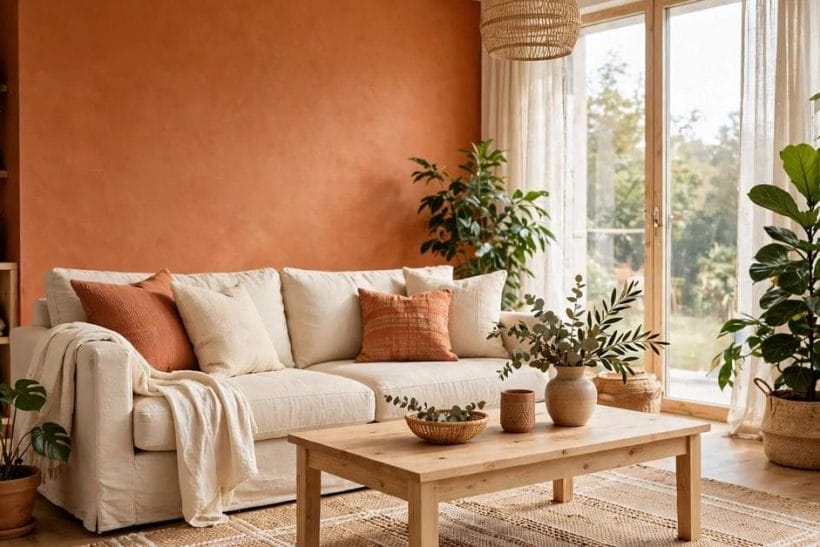
Every orange room starts with shade, because orange ranges from a soft peach wash to a deep rust glow, and each end of that range asks for different companions. Test swatches on the wall you will actually look at, watch them in daylight and lamplight, and let the room’s size and window direction narrow the choice before you commit. The ideas in this section help you pick a shade that flatters your sofa, your wood and your light, rather than fighting them.
| Item | What it is |
|---|---|
| A burnt-orange anchor wall | Let one burnt-orange wall carry the room and keep the rest of the walls calm and pale. |
| A soft peach wash all over | A soft peach wash suits rooms where a bold wall would feel too strong, because it warms the whole space without dominating it. |
| Terracotta depth for cosy rooms | Terracotta brings an earthy depth that suits cosy rooms, reading rooms and rooms with a fireplace. |
| Apricot glow in a bright room | Apricot is a lighter, sunnier orange that works well in bright rooms with generous windows. |
| Rust for a grounded, autumnal feel | Rust is orange at its most grounded, close to autumn leaves and worn leather, and it suits rooms that should feel settled and calm. |
| Ochre warmth with earthy companions | Ochre leans towards gold and earth, giving a room warmth without the punch of a brighter orange. |
| A coral lift for a cheerful room | Coral lifts a room with a cheerful, pink-tinged warmth that feels friendly and light. |
| Amber tones for evening rooms | Amber shades come alive in the evening, when lamplight deepens them into a honeyed glow. |
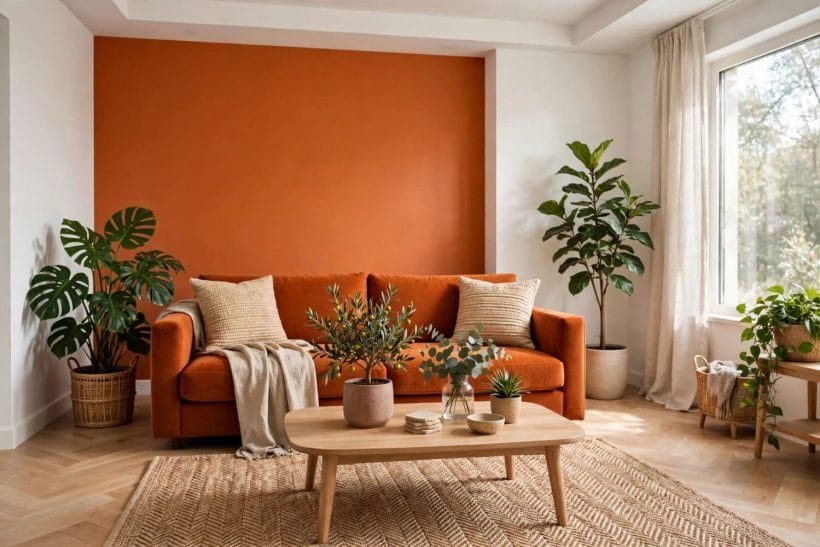
| The wall behind the sofa | Painting the wall behind the sofa is the most reliable feature-wall move, because the sofa frames the colour and the eye lands on it the moment you enter. |
| The fireplace wall in orange | An orange fireplace wall turns the hearth into the natural focus of the room, especially when the mantel is kept pale or in natural wood. |
| Framing the window wall | An orange window wall sounds bold, yet it works when the window itself breaks up the colour with daylight and a view. |
| Panelled orange for structure | Panelling gives an orange wall structure, breaking a large flat colour into panels that catch light and shadow. |
| A textured limewash finish | A limewash or mineral finish adds movement to an orange wall, with soft variations that make the colour feel hand-made rather than flat. |
| An orange alcove or niche | Painting a single alcove or niche orange is a gentle way to try the colour, and it turns an awkward recess into a feature. |
| Orange below the dado line | Orange below a dado rail, with a pale shade above, gives a room warmth at seating level while keeping the upper walls light and airy. |
| A gallery wall on orange | A gallery wall on an orange background looks striking when the frames are kept consistent, in pale wood, black or cream, and the artwork itself stays calm. |
| A cream sofa against orange walls | A cream sofa is the calmest partner for orange walls, because it gives the eye a restful place to land and keeps the room feeling bright. |
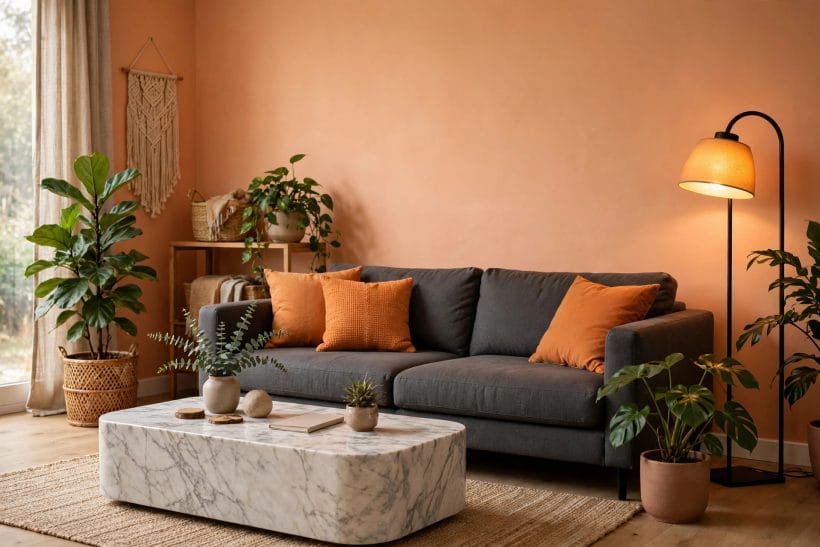
| A charcoal sofa with orange cushions | A charcoal sofa grounds an orange room beautifully, because the cool dark grey steadies the warmth of the walls. |
| A rust velvet sofa as the hero | A rust velvet sofa is a hero piece, rich in colour and texture, and it earns a calm room around it. |
| A burnt-orange sofa in a pale room | A burnt-orange sofa in a pale room works like a sunset in a clear sky, giving the room a warm centre without painting a single wall. |
| Tan leather with orange walls | Tan leather sits naturally beside orange walls, because both share warm, earthy undertones and an aged, lived-in character. |
| A pair of orange loveseats facing each other | Two loveseats facing each other across a coffee table create a conversation room, and in orange they make the seating itself the feature. |
| A corner sofa in warm terracotta | A corner sofa in warm terracotta anchors a family room, giving everyone a place to stretch out while the colour stays contained in one large piece. |
| One orange armchair as an accent | A single orange armchair is the gentlest way into the colour, perfect for a reading corner or beside a fireplace. |
| Orange with cream throughout | Orange with cream is the safest and often the most beautiful pairing, because cream cools nothing and warms everything. |
| Orange with warm white trims | Warm white trims keep an orange room feeling finished without the stark edge that brilliant white can create. |
| Orange with charcoal accents | Charcoal accents give orange rooms a modern edge, in a dark sofa, a black metal lamp or charcoal picture frames. |
| Orange with sage and olive green | Sage and olive greens are orange's natural neighbours, echoing the foliage that always looks good against terracotta and clay. |
| Orange with a navy accent | A navy accent, in a single chair, a rug border or a set of cushions, deepens an orange room and gives it a classic, almost coastal confidence. |
| Orange with natural wood tones | Natural wood is orange's most forgiving partner, because timber shares its warmth while adding grain and texture. |
| Orange with brass and black metal | Brass warms an orange room further, in lamp bases, picture frames and curtain rods, while black metal adds definition in slim lines. |
| Seating facing the fireplace | Facing seating towards the fireplace suits an orange room perfectly, because firelight and orange walls share the same warmth. |
| A conversation circle around a rug | A rug-centred conversation circle works when the sofa, chairs and coffee table all sit with their front legs on one large rug. |
| Open-plan living without barriers | In an open-plan room, orange can define the living zone without walls or screens, simply by colouring one wall or one sofa. |
| A reading corner by the window | A reading corner by the window pairs an orange armchair with daylight, a floor lamp and a small table for books and tea. |
| A television wall that stays calm | A television wall in a warm room needs restraint, because a dark screen on an orange wall can dominate the space. |
| Bay window seating in warm tones | Bay window seating dressed in warm tones turns a window into a room within a room, with orange cushions, a cream seat pad and a view beyond. |
| An L-shaped flow for family rooms | An L-shaped arrangement, with a sofa along one wall and chairs along the next, suits family rooms where people come and go. |
| Small-group seating for talk | Small-group seating, with two chairs and a sofa arranged closely around a small table, suits households that value conversation over screen time. |
| A woven rug underfoot | A woven rug in jute, sisal or wool grounds an orange room with natural texture underfoot. |
| Linen curtains that soften light | Linen curtains soften both light and colour, filtering daylight through a gentle weave that flatters orange walls. |
| Wool throws for every seat | Wool throws in cream, rust and warm gold make an orange room feel cared for, because every seat gains a soft layer. |
| Velvet cushions for evening richness | Velvet cushions bring evening richness to an orange room, catching lamplight with a soft sheen that flat cotton cannot match. |
| Wood grain as a warm neutral | Wood grain acts as a warm neutral in an orange room, adding pattern without colour competition. |
| Rattan and cane for lightness | Rattan and cane lighten an orange room, because their open weave and pale tone contrast with solid colour and heavy upholstery. |
| Stone and ceramic accents | Stone and ceramic accents, in vases, bowls and lamp bases, add cool, hard surfaces that balance orange's warmth. |
| Ceiling light as a gentle base | Ceiling light should supply a gentle base, not a harsh spotlight, so choose a warm bulb and a shade that spreads light softly. |
| Table lamps for warm pools | Table lamps create warm pools of light beside sofas and chairs, and they are the single most flattering light for orange walls. |
| A floor lamp for the reading chair | A floor lamp beside a reading chair gives focused light exactly where it is needed, and its height adds a vertical line that balances a low sofa. |
| Wall washers to soften a bold wall | Wall washers, whether picture lights or slim uplights, soften a bold orange wall by spreading light evenly across it. |
| Candlelight for the lowest glow | Candlelight gives an orange room its lowest, warmest glow, and a few candles on a mantel or coffee table transform an ordinary evening. |
| A picture light over artwork | A picture light over artwork on an orange wall draws the eye to the art and adds a focused layer of warmth. |
| Dimmers for every layer | Dimmers on every layer let you tune an orange room through the day, from bright and practical in the morning to soft and intimate at night. |
| Daylight control with sheers | Sheer curtains control daylight without blocking it, softening strong sun that would bleach orange walls by day and glare off screens. |
| One orange wall only | In a small room, paint one orange wall only, and keep the other walls, ceiling and floor pale. |
| A mirror opposite the orange wall | A mirror opposite the orange wall doubles the colour's glow while also doubling the sense of space, because it reflects both light and the warm wall. |
| A pale sofa with orange cushions | A pale sofa with orange cushions is the small-room compromise that loses nothing, giving warmth through textiles rather than paint or upholstery. |
| Leggy furniture for a light footprint | Leggy furniture, with visible legs and space beneath, makes a small orange room feel lighter, because the eye travels under chairs and tables to the floor beyond. |
| Vertical storage to free the floor | Vertical storage, in tall shelving and wall-mounted cabinets, frees floor space in a small orange room while drawing the eye upwards. |
| A foldaway bed for guests | A foldaway bed lets a small living room host guests without surrendering to a permanent bed, and it suits studio homes and family rooms alike. |
| A pale floor to lift the colour | A pale floor lifts an orange room, reflecting light and giving the warm walls a bright base to stand on. |
| Spring greens against orange | Spring greens against orange feel like new growth beside warm earth, and they lift a room after winter. |
| Summer linen and bare floors | Summer calls for linen and bare floors, with light curtains, a cotton throw and the rug rolled back or swapped for a flat weave. |
| Autumn rusts layered deep | Autumn is orange's home season, when rust, ochre and deep terracotta layers feel entirely natural. |
| Winter wool and warm light | Winter wool, in thick throws, heavy curtains and a deep-pile rug, turns an orange room into a refuge from cold weather. |
| Festive touches without clutter | Festive touches in an orange room need restraint, because the walls already supply warmth and celebration. |
| Fresh flowers all year | Fresh flowers all year keep an orange room feeling alive, and their colours can steer the room's mood week by week. |
| Swapping cushions with the seasons | Swapping cushions with the seasons is the cheapest refresh an orange room offers, because cushion covers store flat and change the palette in minutes. |
| Artwork that calms the wall | Artwork that calms the wall, in landscapes, abstracts or botanical prints with cream and green, gives an orange wall a restful focus. |
| Plants as living contrast | Plants are living contrast in an orange room, because green foliage against terracotta and rust is one of nature's happiest pairings. |
| Books and shelves with breathing space | Books and shelves with breathing space make an orange room feel lived in without feeling cluttered, because the spines add colour in small, varied doses. |
| Trays that tidy the coffee table | Trays tidy the coffee table, gathering candles, a small plant and a book into one composed group. |
| Baskets for throws and toys | Baskets for throws and toys keep an orange family room tidy while adding woven texture that flatters the walls. |
| Styling the mantel simply | Styling the mantel simply suits an orange fireplace wall, because the colour already draws the eye and the mantel needs only a few quiet objects. |
| A final scent and textile check | A final scent and textile check completes the room in ways visitors notice without seeing, because a softly scented candle and freshly laundered throws make orange feel welcoming. |
1. A burnt-orange anchor wall
Let one burnt-orange wall carry the room and keep the rest of the walls calm and pale. The deep shade reads as a deliberate choice, especially behind a cream or charcoal sofa, and it gives artwork, shelving and lamps a warm backdrop. Keep the rug plain and the curtains simple so the colour has room to breathe, and add cushions in cream and rust so the wall feels layered rather than flat.
2. A soft peach wash all over
A soft peach wash suits rooms where a bold wall would feel too strong, because it warms the whole space without dominating it. Peach pairs happily with pale wood, cream linen and green plants, and it glows gently in morning light. Keep trims warm white rather than brilliant white so the edges feel soft, and let one deeper cushion or throw supply the contrast.
3. Terracotta depth for cosy rooms
Terracotta brings an earthy depth that suits cosy rooms, reading rooms and rooms with a fireplace. Its muted warmth sits well beside dark wood, woven textures and brass, and it makes evening lamplight feel richer. Balance it with cream upholstery and a plain rug, and avoid piling on competing warm patterns that would push the room from cosy into busy.
4. Apricot glow in a bright room
Apricot is a lighter, sunnier orange that works well in bright rooms with generous windows. It lifts pale furniture and light floors, and it keeps a north-facing room from feeling cold without darkening it. Pair apricot walls with cream sofas, pale wood and a touch of sage or olive in plants and cushions, and the room stays fresh rather than sugary.
5. Rust for a grounded, autumnal feel
Rust is orange at its most grounded, close to autumn leaves and worn leather, and it suits rooms that should feel settled and calm. It partners beautifully with charcoal, deep green and natural wood, and it looks at home beside books, baskets and wool throws. Use rust on one wall or one large sofa, and let cream and warm neutrals carry the rest of the room.
6. Ochre warmth with earthy companions
Ochre leans towards gold and earth, giving a room warmth without the punch of a brighter orange. It works well with timber, leather, woven baskets and cream linen, and it suits both traditional rooms and relaxed modern rooms. Keep metals warm, with brass or aged bronze, and avoid cool chrome details that would clash with the golden undertone.
7. A coral lift for a cheerful room
Coral lifts a room with a cheerful, pink-tinged warmth that feels friendly and light. It suits family rooms and rooms used mostly in daylight, especially when paired with cream, pale wood and soft green plants. Use coral on a single wall or in cushions and a throw, and keep the rest of the palette pale so the cheerful note stays a highlight rather than a shout.
8. Amber tones for evening rooms
Amber shades come alive in the evening, when lamplight deepens them into a honeyed glow. They suit rooms used most after dark, such as a television room or a winter sitting room, and they pair well with dark wood, cream wool and brass lamps. Test amber under your own lamps before committing, because the same shade can look quite different under warm and cool bulbs.
2. One Feature Wall
A feature wall lets orange make its statement in one place while the rest of the room stays calm. The wall you choose matters as much as the shade: the wall behind the sofa, the fireplace wall and the wall you face from the doorway each give a different effect. The ideas in this section show how to place, frame and finish a single orange wall so it anchors the room instead of crowding it.
9. The wall behind the sofa
Painting the wall behind the sofa is the most reliable feature-wall move, because the sofa frames the colour and the eye lands on it the moment you enter. Keep the sofa itself calm, in cream, charcoal or pale grey, and let orange cushions echo the wall without matching it exactly. A pair of lamps or a row of framed prints on the orange wall adds structure and stops the colour from feeling like an empty block.
10. The fireplace wall in orange
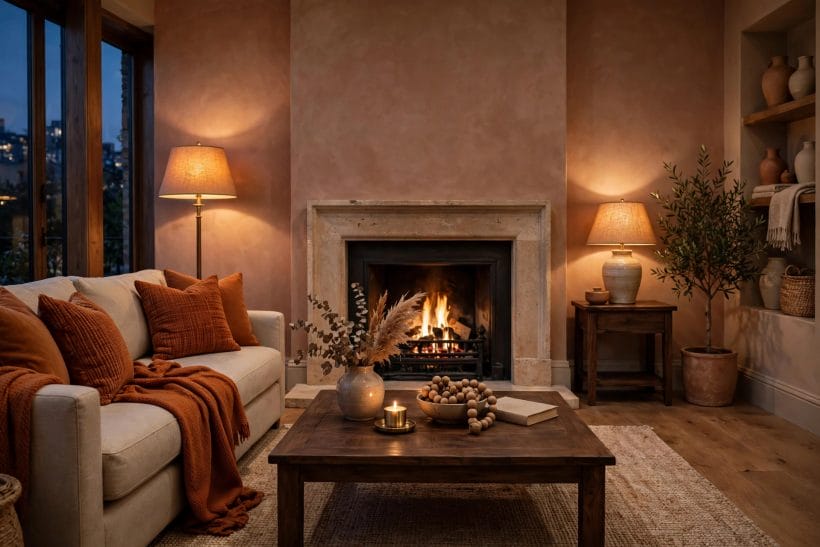
An orange fireplace wall turns the hearth into the natural focus of the room, especially when the mantel is kept pale or in natural wood. The warmth of the wall and the warmth of the fire reinforce each other, so keep the surround simple and the hearth clear. Arrange seating to face the fireplace rather than the television, and the room gains a gathering point that works even when the fire is unlit.
11. Framing the window wall
An orange window wall sounds bold, yet it works when the window itself breaks up the colour with daylight and a view. Keep curtains pale and light, in linen or sheer cotton, so the window stays bright and the orange reads as a frame rather than a barrier. Plants on the sill soften the edges, and a pale window seat cushion keeps the arrangement comfortable and calm.
12. Panelled orange for structure
Panelling gives an orange wall structure, breaking a large flat colour into panels that catch light and shadow. Paint the panels and the mouldings in the same shade for a calm, tailored look, or keep the mouldings a shade lighter for gentle definition. Panelled orange suits traditional rooms and hallway-facing walls, where the rhythm of the panels keeps the colour feeling architectural rather than painted on.
13. A textured limewash finish
A limewash or mineral finish adds movement to an orange wall, with soft variations that make the colour feel hand-made rather than flat. The texture suits relaxed, Mediterranean-style rooms and rooms with natural wood and linen, and it softens strong daylight. Keep furniture simple against a textured wall, because the wall already supplies the visual interest, and let plain cushions and a plain rug do the quiet work.
14. An orange alcove or niche
Painting a single alcove or niche orange is a gentle way to try the colour, and it turns an awkward recess into a feature. A niche painted in burnt orange makes books, ceramics or a small lamp glow, especially with a picture light or a candle-style lamp inside. Keep the surrounding walls pale so the alcove reads as a jewel box, and avoid filling it so full that the colour disappears behind objects.
15. Orange below the dado line
Orange below a dado rail, with a pale shade above, gives a room warmth at seating level while keeping the upper walls light and airy. The split suits rooms with lower ceilings and traditional details, and the rail itself can be painted cream or left in natural wood. Keep the lower colour muted, in terracotta or rust, so the division feels calm, and hang artwork across the line only where it genuinely suits the arrangement.
16. A gallery wall on orange
A gallery wall on an orange background looks striking when the frames are kept consistent, in pale wood, black or cream, and the artwork itself stays calm. Space the frames generously so the orange shows between them, and mix photographs, prints and one textile piece for texture. Avoid gilt-heavy frames that compete with the warmth of the wall, and let one larger piece anchor the arrangement at eye level.
3. Sofa First
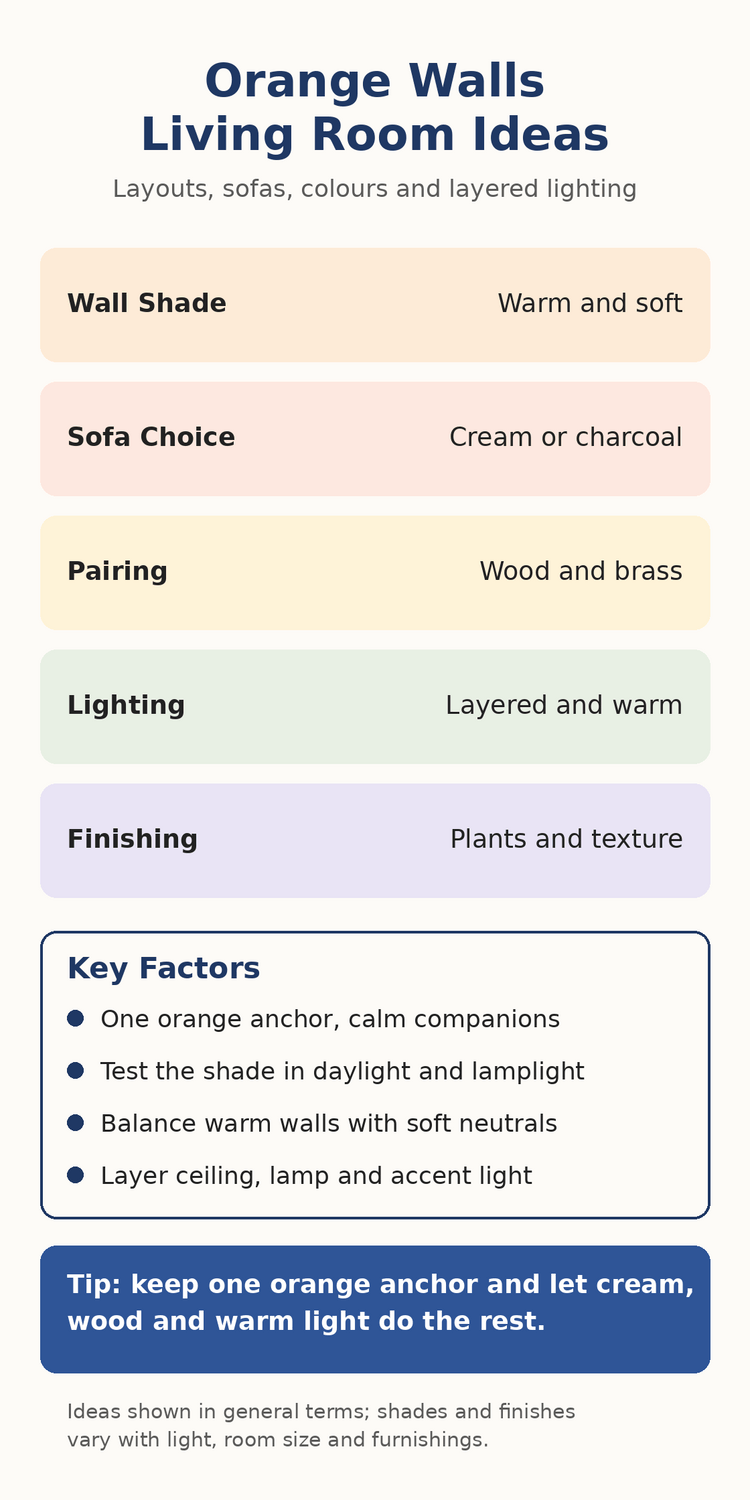
When the walls stay pale, the sofa can carry the orange instead, and this route suits renters, cautious decorators and anyone who likes to change a room with cushions rather than paint. A single orange sofa, a pair of rust chairs or one burnt-orange loveseat sets the tone, and everything else in the room can stay neutral. The ideas in this section show how to choose, place and dress an orange seat so it feels intentional rather than accidental.
17. A cream sofa against orange walls
A cream sofa is the calmest partner for orange walls, because it gives the eye a restful place to land and keeps the room feeling bright. Choose a washable or forgiving fabric if the room is used daily, and layer it with cushions in rust, terracotta and cream so the sofa connects with the walls. A pale rug underneath extends the calm, and the whole arrangement stays fresh even in a small room.
18. A charcoal sofa with orange cushions
A charcoal sofa grounds an orange room beautifully, because the cool dark grey steadies the warmth of the walls. Orange cushions, a rust throw and a warm lamp tie the two together, and the contrast keeps the room from feeling either too hot or too dark. Keep the rug mid-toned and the curtains pale, and the charcoal reads as sophisticated rather than heavy.
19. A rust velvet sofa as the hero
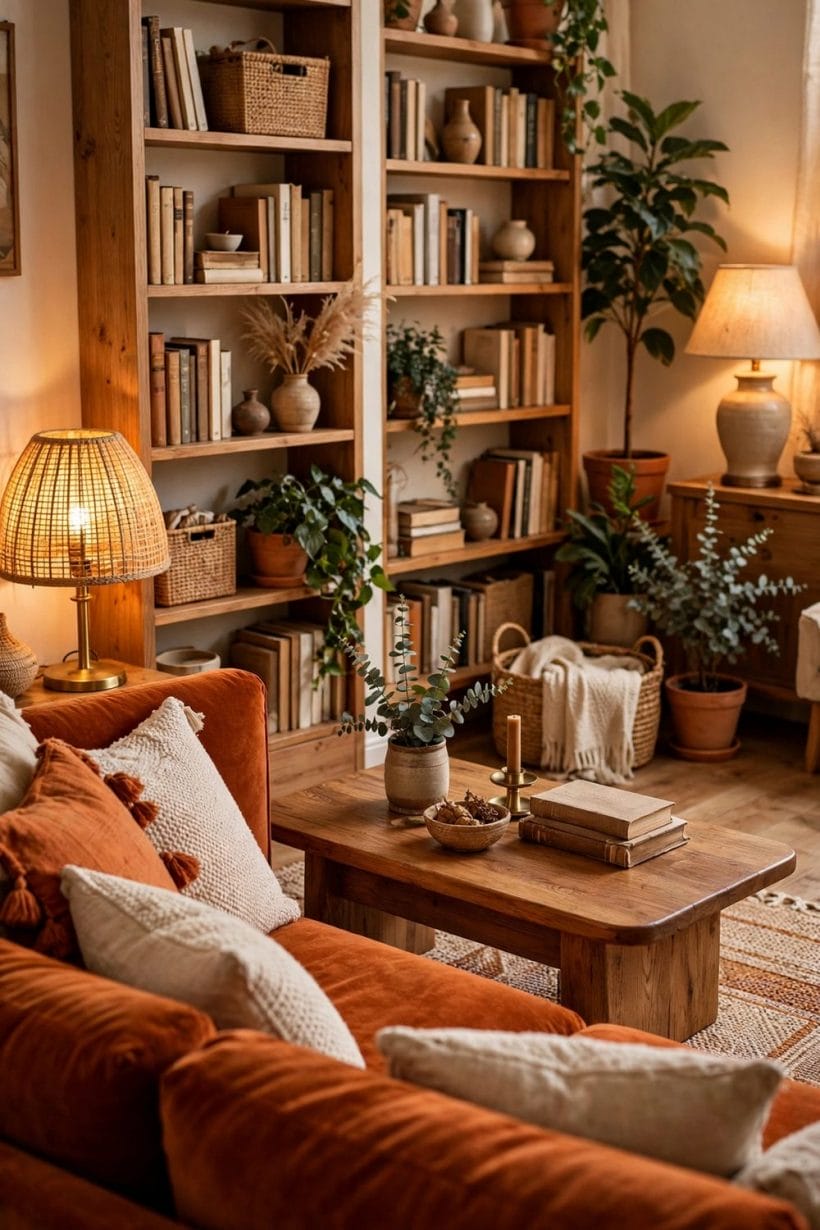
A rust velvet sofa is a hero piece, rich in colour and texture, and it earns a calm room around it. Pair it with cream walls, a pale rug and simple wooden furniture, and let the velvet supply the luxury. Add cushions in cream and warm gold rather than competing patterns, and keep the lighting warm so the velvet glows in the evening without looking flat in daylight.
20. A burnt-orange sofa in a pale room
A burnt-orange sofa in a pale room works like a sunset in a clear sky, giving the room a warm centre without painting a single wall. Pale walls, light wood floors and cream curtains keep the arrangement airy, while plants and woven textures stop it from feeling stark. This is the easiest orange room to refresh, because swapping cushions and throws changes the mood without touching the sofa.
21. Tan leather with orange walls
Tan leather sits naturally beside orange walls, because both share warm, earthy undertones and an aged, lived-in character. The leather adds a masculine, durable note that suits family rooms and reading rooms, and it improves with wear. Keep the rug plain and the cushions soft, in cream wool or rust linen, so the room balances leather’s firmness with textile warmth.
22. A pair of orange loveseats facing each other
Two loveseats facing each other across a coffee table create a conversation room, and in orange they make the seating itself the feature. Keep the walls pale and the rug neutral so the pair does not overwhelm the space, and place a floor lamp at each end for balanced evening light. This layout suits larger rooms and households that gather to talk, play games or read together.
23. A corner sofa in warm terracotta
A corner sofa in warm terracotta anchors a family room, giving everyone a place to stretch out while the colour stays contained in one large piece. Dress it with cream and sage cushions, a plain rug and a wooden coffee table, and keep the walls pale so the room still feels open. A corner sofa also defines an open-plan living zone without walls or screens.
24. One orange armchair as an accent
A single orange armchair is the gentlest way into the colour, perfect for a reading corner or beside a fireplace. Choose a comfortable, well-shaped chair in rust or burnt orange, and pair it with a floor lamp, a small side table and a soft throw. The chair becomes a destination within the room, and if the colour ever tires, moving one chair is far simpler than repainting a wall.
4. Pairing Colours
Orange rarely works alone, and its companions decide whether the room feels calm, bold or chaotic. Cream and warm white soften it, charcoal steadies it, green cools it and navy deepens it, while wood and brass warm it further. The ideas in this section pair orange with one companion at a time, so you can build a palette in stages and stop when the room feels right. For a cooler-walled counterpart, see our guide to blue walls in the living room, which uses the same one-anchor discipline with a very different temperature.
25. Orange with cream throughout
Orange with cream is the safest and often the most beautiful pairing, because cream cools nothing and warms everything. Use cream on the sofa, the rug and the curtains, and let orange appear on walls, cushions and one chair. The result feels sunny and spacious, and it suits rooms of every size, from compact flats to large family rooms.
26. Orange with warm white trims
Warm white trims keep an orange room feeling finished without the stark edge that brilliant white can create. Paint skirting, door frames and ceiling roses in a soft warm white, and the orange walls sit comfortably against them. This small choice matters more than it sounds, because cool white next to warm orange can make both colours look unsettled.
27. Orange with charcoal accents
Charcoal accents give orange rooms a modern edge, in a dark sofa, a black metal lamp or charcoal picture frames. The dark tone steadies the warmth and adds depth, especially in rooms with large windows and pale floors. Use charcoal sparingly, as an accent rather than a second wall colour, so the room stays warm rather than turning moody.
28. Orange with sage and olive green
Sage and olive greens are orange’s natural neighbours, echoing the foliage that always looks good against terracotta and clay. Green cushions, plants and a sage throw cool the room gently, and the combination feels earthy and relaxed. Keep the greens muted rather than bright, because a vivid green beside orange can turn the room into a loud contrast.
29. Orange with a navy accent
A navy accent, in a single chair, a rug border or a set of cushions, deepens an orange room and gives it a classic, almost coastal confidence. Navy and orange are complementary colours, so the pairing is naturally lively, but it needs calm cream around it to stay liveable. Use navy in small, deliberate doses, and the room gains drama without losing warmth.
30. Orange with natural wood tones
Natural wood is orange’s most forgiving partner, because timber shares its warmth while adding grain and texture. Light oak keeps the room bright, walnut adds depth, and weathered wood brings a relaxed, coastal note. Let wooden furniture, floors and shelving carry much of the room, and the orange becomes one warm layer among several rather than a solitary shout.
31. Orange with brass and black metal
Brass warms an orange room further, in lamp bases, picture frames and curtain rods, while black metal adds definition in slim lines. The two metals together suit both traditional and modern rooms, and they stop orange from feeling flat by catching light at different points. Keep metal finishes consistent within one room, and avoid mixing brass, chrome and copper in the same arrangement.
5. Layouts That Work
Layout decides whether an orange room feels welcoming or overwhelming, because colour draws the eye and seating must follow where the eye lands. Face seating towards the orange anchor, leave clear paths through the room, and give every seat a lamp and a surface within reach. The ideas in this section arrange furniture around orange walls and orange sofas so the room works for conversation, reading and quiet evenings alike. Built-in storage along one wall can calm a bold colour scheme; a grey wall with white cabinets shows how pale storage keeps a strong room feeling orderly.
32. Seating facing the fireplace
Facing seating towards the fireplace suits an orange room perfectly, because firelight and orange walls share the same warmth. Place the sofa opposite the hearth, with chairs angled inwards, and keep the coffee table low so the fire stays visible. This layout encourages conversation and makes the room feel gathered, especially on cold evenings when the fire is lit.
33. A conversation circle around a rug
A rug-centred conversation circle works when the sofa, chairs and coffee table all sit with their front legs on one large rug. The rug defines the zone, the orange wall or sofa supplies the colour, and the circle keeps talk easy. Choose a rug large enough that no chair feels stranded outside it, and keep its pattern plain so the orange remains the room’s main event.
34. Open-plan living without barriers
In an open-plan room, orange can define the living zone without walls or screens, simply by colouring one wall or one sofa. Keep the dining and kitchen zones paler, and repeat one orange cushion or artwork near the boundary so the zones feel connected. Leave the floor finish continuous through the space, and the orange zone reads as a warm room within a larger room.
35. A reading corner by the window
A reading corner by the window pairs an orange armchair with daylight, a floor lamp and a small table for books and tea. The window light keeps the orange fresh by day, and the lamp takes over in the evening, so the corner works around the clock. Add a soft throw and a basket for books, and the corner becomes the most-used seat in the house.
36. A television wall that stays calm
A television wall in a warm room needs restraint, because a dark screen on an orange wall can dominate the space. Keep the television wall pale, or mount the screen on a simple wooden unit, and let the orange live on the opposite wall where it can be enjoyed while watching. Conceal cables, keep shelving tidy, and the room stays a living room first and a media room second.
37. Bay window seating in warm tones
Bay window seating dressed in warm tones turns a window into a room within a room, with orange cushions, a cream seat pad and a view beyond. The bay’s light keeps orange fresh, and the enclosed shape makes the colour feel cosy rather than bold. Add a small shelf for books and a plant on the sill, and the bay becomes a favourite spot for morning coffee and evening reading.
38. An L-shaped flow for family rooms
An L-shaped arrangement, with a sofa along one wall and chairs along the next, suits family rooms where people come and go. The shape leaves a clear path through the room, keeps the television visible from most seats, and lets the orange wall anchor the longer side. Keep the shorter side light, with a pale chair and a floor lamp, so the room does not feel closed in.
39. Small-group seating for talk
Small-group seating, with two chairs and a sofa arranged closely around a small table, suits households that value conversation over screen time. Orange cushions and a warm rug make the group feel intimate, and the close arrangement means lamps can be low and soft. This layout also works in a corner of a larger room, creating a sitting area within the wider space.
6. Texture and Layers
Texture is what stops an orange room from looking flat, because a single colour in a single finish can feel painted rather than lived in. Linen, wool, velvet, wood, rattan and woven rugs each catch light differently, and together they make orange feel rich and touchable. The ideas in this section layer textures gradually, so the room gains depth without gaining clutter. A rougher wall finish can add the same depth; brick wall designs show how a textured surface changes the way a warm colour reads, even in a different room.
40. A woven rug underfoot
A woven rug in jute, sisal or wool grounds an orange room with natural texture underfoot. Choose a plain or subtly patterned weave in cream or warm beige, large enough to sit under the front legs of the seating, and the rug will soften both the colour and the acoustics. A woven rug also forgives daily wear, which matters in a room used by the whole household.
41. Linen curtains that soften light
Linen curtains soften both light and colour, filtering daylight through a gentle weave that flatters orange walls. Hang them high and wide so the window feels generous, in cream or pale oatmeal, and let them puddle slightly or just brush the floor. Linen’s natural creases suit a relaxed room, and its texture contrasts beautifully with smooth painted walls.
42. Wool throws for every seat
Wool throws in cream, rust and warm gold make an orange room feel cared for, because every seat gains a soft layer. Drape throws casually rather than folding them into stiff rectangles, and choose washable wool or a wool blend for everyday use. Throws also let you shift the room’s temperature with the seasons, adding deeper shades in winter and lighter ones in spring.
43. Velvet cushions for evening richness
Velvet cushions bring evening richness to an orange room, catching lamplight with a soft sheen that flat cotton cannot match. Mix velvet with linen and wool cushions so the arrangement feels layered rather than uniform, and keep the velvet colours close to the room’s palette. A few velvet cushions go a long way, and they are easy to swap when the mood changes.
44. Wood grain as a warm neutral
Wood grain acts as a warm neutral in an orange room, adding pattern without colour competition. A wooden coffee table, shelving or floor supplies lines and knots that break up flat colour, and the timber’s tone can steer the room lighter or darker. Keep wood finishes consistent in warmth, and avoid pairing very pale and very dark woods in the same small arrangement.
45. Rattan and cane for lightness
Rattan and cane lighten an orange room, because their open weave and pale tone contrast with solid colour and heavy upholstery. A rattan chair, a cane-fronted cabinet or woven pendant lights add a breezy, coastal note, and they suit rooms used mostly in daylight. Balance rattan with at least one solid, comfortable seat, so the room stays inviting rather than decorative.
46. Stone and ceramic accents
Stone and ceramic accents, in vases, bowls and lamp bases, add cool, hard surfaces that balance orange’s warmth. Cream ceramics, terracotta pots and a stone-topped side table each bring a handmade quality, and their weight grounds lighter textiles. Group ceramics in odd numbers on a shelf or mantel, and leave space around them so each piece can be seen.
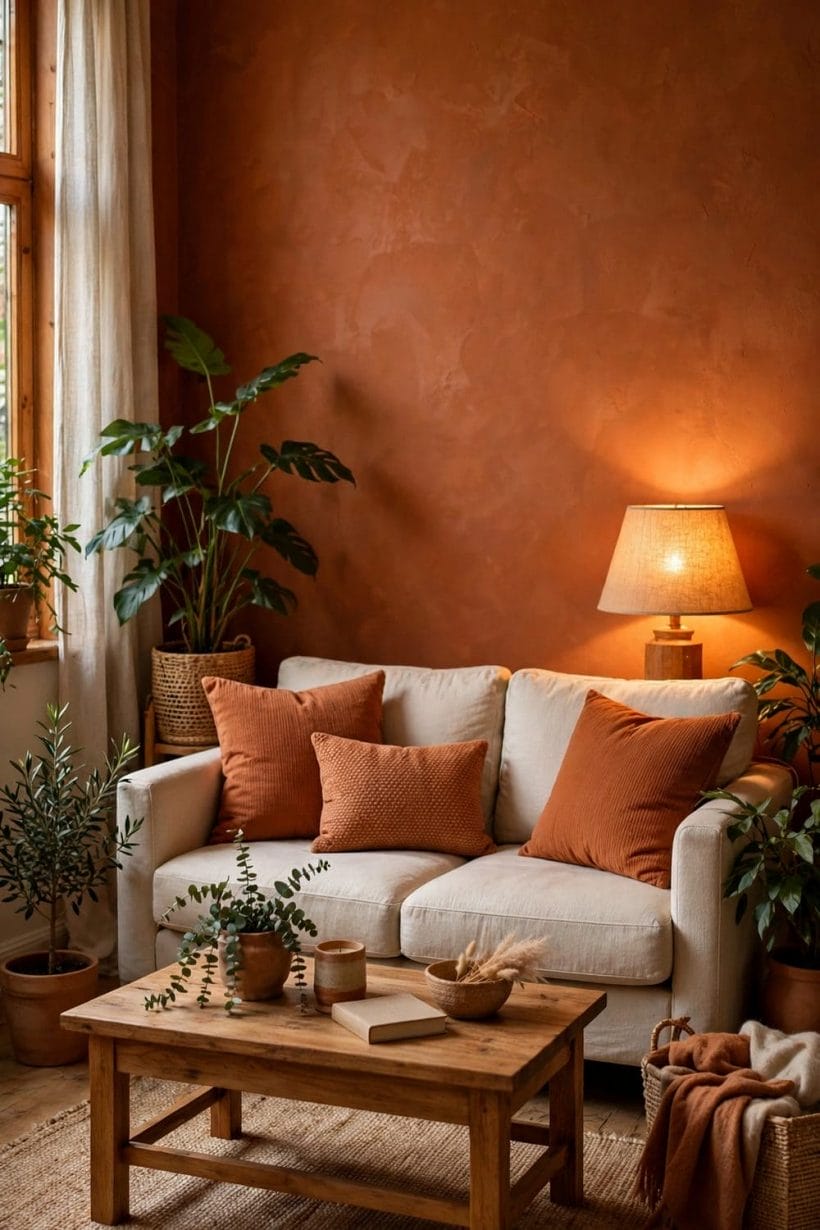
7. Layered Lighting
Lighting makes or breaks an orange room, because warm walls change dramatically between daylight, lamplight and evening shadow. One ceiling light alone leaves corners dark and colour patchy, while layers of ceiling, table, floor and accent light let orange glow evenly. The ideas in this section build lighting in layers, so the room looks good at midday, at dusk and late at night, and the orange never turns harsh or muddy.
47. Ceiling light as a gentle base
Ceiling light should supply a gentle base, not a harsh spotlight, so choose a warm bulb and a shade that spreads light softly. A central pendant in rattan, linen or frosted glass diffuses the light, and a dimmer lets you lower it once lamps take over. Keep the ceiling itself pale, so the light reflects warmly without tinting the whole room orange.
48. Table lamps for warm pools
Table lamps create warm pools of light beside sofas and chairs, and they are the single most flattering light for orange walls. Place a lamp at each end of the sofa or beside each reading chair, with cream or linen shades that glow rather than glare. Matching lamps give a formal feel, while varied lamps in the same warmth suit a relaxed, collected room.
49. A floor lamp for the reading chair
A floor lamp beside a reading chair gives focused light exactly where it is needed, and its height adds a vertical line that balances a low sofa. Choose an adjustable head or a shade that directs light downwards, and keep the lamp’s base clear of trailing cables. A brass or wooden floor lamp also adds a warm material to the room, echoing the orange rather than competing with it.
50. Wall washers to soften a bold wall
Wall washers, whether picture lights or slim uplights, soften a bold orange wall by spreading light evenly across it. Even lighting stops the wall from looking patchy in the evening and shows off texture, panelling or artwork to advantage. Keep the light warm and indirect, aimed at the wall rather than into the room, so the glow feels architectural rather than theatrical.
51. Candlelight for the lowest glow
Candlelight gives an orange room its lowest, warmest glow, and a few candles on a mantel or coffee table transform an ordinary evening. Use sturdy holders, keep candles away from curtains and throws, and never leave them burning unattended. Battery candles in lanterns offer a similar glow where real flames are impractical, especially in households with small children or pets.
52. A picture light over artwork
A picture light over artwork on an orange wall draws the eye to the art and adds a focused layer of warmth. Choose a slim, warm light that covers the frame evenly, and keep the artwork itself calm so the lit piece does not fight the wall. One lit artwork is usually enough; lighting every frame in a gallery wall can make the room feel like a shop display.
53. Dimmers for every layer
Dimmers on every layer let you tune an orange room through the day, from bright and practical in the morning to soft and intimate at night. Dim the ceiling light first as evening arrives, then let table and floor lamps carry the room, and finally lower those too for late-night conversation. Dimmers also protect the colour, because orange under full brightness can feel louder than intended.
54. Daylight control with sheers
Sheer curtains control daylight without blocking it, softening strong sun that would bleach orange walls by day and glare off screens. Layer sheers under heavier curtains so you can adjust privacy and brightness separately, and keep the sheers pale so they do not tint the light. In a sunny room, sheers also protect fabrics and artwork from fading over time.
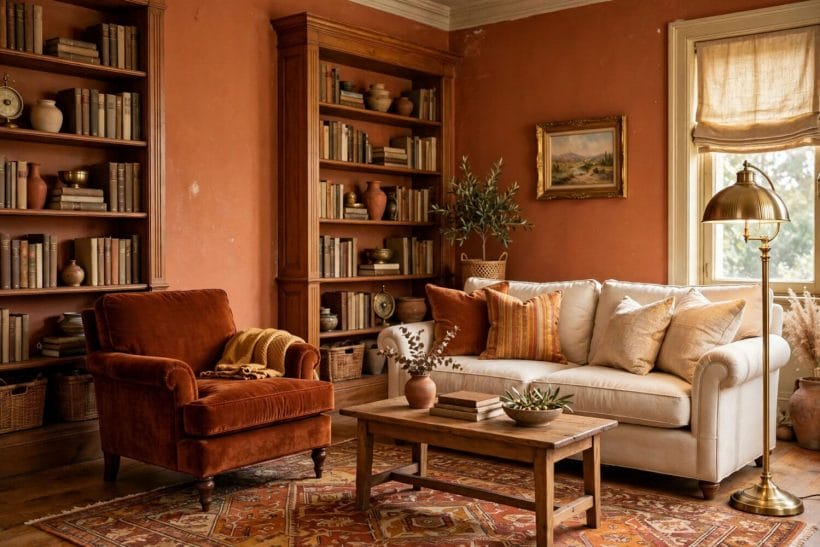
8. Small Living Rooms
Orange in a small living room needs discipline, because a strong colour in a tight space can close the room in if it covers too much. One orange wall, one orange sofa or a set of orange accents gives the warmth without the weight, and pale companions do the rest. The ideas in this section keep small orange rooms bright, legible and comfortable, with storage and seating chosen to earn their floor space. For more compact-room thinking, see our guides to tiny living room ideas and small living room ideas, and for a bed that folds away when guests arrive, murphy bed ideas show how one piece can free a whole wall.
55. One orange wall only
In a small room, paint one orange wall only, and keep the other walls, ceiling and floor pale. The single wall gives the room a warm focus without shrinking it, especially when it is the wall you face from the doorway. Keep furniture against the pale walls where possible, so the orange wall stays visible and the room feels open around it.
56. A mirror opposite the orange wall
A mirror opposite the orange wall doubles the colour’s glow while also doubling the sense of space, because it reflects both light and the warm wall. Hang the mirror at eye level, large enough to reflect a window or a lamp, and keep its frame simple in wood or slim metal. Avoid placing a mirror where it reflects clutter, since a small room shows every reflection clearly.
57. A pale sofa with orange cushions
A pale sofa with orange cushions is the small-room compromise that loses nothing, giving warmth through textiles rather than paint or upholstery. Cream, oatmeal or pale grey sofas keep the room bright, and orange cushions can be swapped seasonally or when tastes change. This route also suits rented homes, where painting may not be possible.
58. Leggy furniture for a light footprint
Leggy furniture, with visible legs and space beneath, makes a small orange room feel lighter, because the eye travels under chairs and tables to the floor beyond. Choose sofas and chairs on tapered wooden legs, and a coffee table with an open lower shelf rather than a solid base. The visible floor extends the room visually, even when the furniture itself is generously sized.
59. Vertical storage to free the floor
Vertical storage, in tall shelving and wall-mounted cabinets, frees floor space in a small orange room while drawing the eye upwards. Paint shelving the same pale shade as the walls so it recedes, and keep the orange for cushions, art and one chair. Tidy shelves matter more in a small room, so edit ruthlessly and leave breathing space on every shelf.
60. A foldaway bed for guests
A foldaway bed lets a small living room host guests without surrendering to a permanent bed, and it suits studio homes and family rooms alike. By day the room stays a living room, with orange cushions and a sofa for sitting, and by night it converts with minimal rearrangement. Keep bedding stored nearby in a basket or ottoman, so the changeover stays quick and calm.
61. A pale floor to lift the colour
A pale floor lifts an orange room, reflecting light and giving the warm walls a bright base to stand on. Light wood, pale tiles or a large cream rug all work, and they keep a small room from feeling bottom-heavy. If the floor itself is dark, a large pale rug under the seating achieves much of the same lift without any renovation.
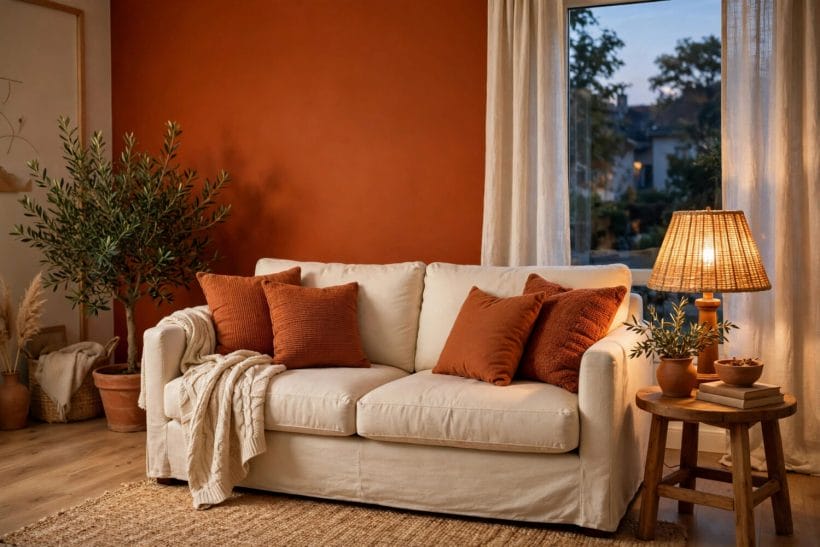
9. Seasonal Shifts
Orange is one of the few colours that suits every season, shifting from fresh and light in spring to deep and cosy in winter with only textile changes. The walls can stay the same while cushions, throws and plants change around them, which makes an orange room economical as well as beautiful. The ideas in this section move the room through the year, so it never feels stuck in one season.
62. Spring greens against orange
Spring greens against orange feel like new growth beside warm earth, and they lift a room after winter. Add green cushions, fresh stems in a vase and a lighter throw, and the orange walls suddenly feel sunny rather than heavy. Keep the greens fresh and clear, in sage, leaf and eucalyptus tones, and the room wakes up without repainting.
63. Summer linen and bare floors
Summer calls for linen and bare floors, with light curtains, a cotton throw and the rug rolled back or swapped for a flat weave. Orange walls glow in summer daylight, especially with windows open and plants thriving, and the room feels Mediterranean rather than enclosed. Store heavy wool throws out of sight for the season, so the room breathes.
64. Autumn rusts layered deep
Autumn is orange’s home season, when rust, ochre and deep terracotta layers feel entirely natural. Add a wool throw, deeper cushions and a basket of dried stems, and the room matches the season outside without any effort. Candlelight and lamplight suit autumn evenings, and the orange walls make the darker evenings feel warm rather than gloomy.
65. Winter wool and warm light
Winter wool, in thick throws, heavy curtains and a deep-pile rug, turns an orange room into a refuge from cold weather. Layer lighting low and warm, keep a basket of throws by the sofa, and let the fireplace or its equivalent become the evening focus. Orange walls are at their best in winter, when their warmth compensates for short days and grey skies.
66. Festive touches without clutter
Festive touches in an orange room need restraint, because the walls already supply warmth and celebration. A simple garland, a bowl of seasonal fruit and a few candles give a festive feel without competing decorations, and natural materials suit orange better than glittering ones. After the festivities, removing a few items restores the room instantly, because the base scheme never changed.
67. Fresh flowers all year
Fresh flowers all year keep an orange room feeling alive, and their colours can steer the room’s mood week by week. Cream and white flowers calm the scheme, while deep reds and pinks deepen it, and green foliage always flatters terracotta and rust. A single generous bunch in a simple vase beats several small fussy arrangements, especially on a coffee table or mantel.
68. Swapping cushions with the seasons
Swapping cushions with the seasons is the cheapest refresh an orange room offers, because cushion covers store flat and change the palette in minutes. Keep a small set of covers in spring green, summer cream, autumn rust and winter wool, and rotate them as the light changes. The orange walls stay constant, and the room feels considered rather than static.
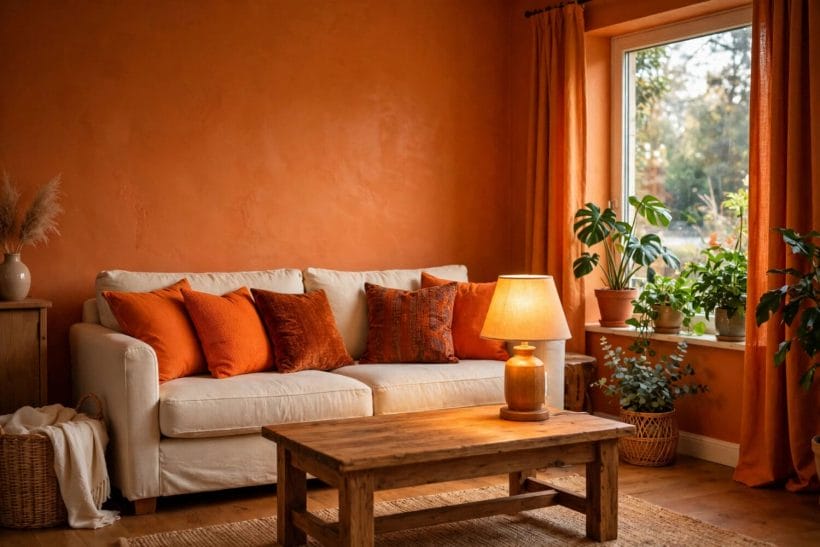
10. Finishing Touches
Finishing touches decide whether an orange room feels styled or merely painted, because the last layer of art, plants, books and objects gives the colour a home. Choose fewer, better pieces, leave space around them, and let each one earn its place by colour, texture or memory. The ideas in this section complete the room gently, without piling on decoration that would bury the orange. A relaxed, farmhouse-leaning finish suits many orange rooms; modern farmhouse style shows how pale wood, simple lines and natural textures calm a warm palette.
69. Artwork that calms the wall
Artwork that calms the wall, in landscapes, abstracts or botanical prints with cream and green, gives an orange wall a restful focus. Choose frames in pale wood or slim black, hang the main piece at eye level, and leave generous wall space around it. One strong piece usually beats a crowded wall, because the orange itself already supplies plenty of visual energy.
70. Plants as living contrast
Plants are living contrast in an orange room, because green foliage against terracotta and rust is one of nature’s happiest pairings. A tall fiddle-leaf plant, trailing pothos or a group of potted herbs softens corners and cleans the air of visual harshness. Choose plants that suit your light, water them consistently, and let their pots echo the room in cream, terracotta or natural clay.
71. Books and shelves with breathing space
Books and shelves with breathing space make an orange room feel lived in without feeling cluttered, because the spines add colour in small, varied doses. Arrange books in groups with gaps for ceramics or plants, and keep the shelf colour pale so the books stand out. A shelf that is slightly under-filled always looks more intentional than one packed to the edges.
72. Trays that tidy the coffee table
Trays tidy the coffee table, gathering candles, a small plant and a book into one composed group. A wooden or woven tray suits an orange room, and its edges stop small objects from drifting across the table. Leave part of the table surface clear, so there is room for cups and everyday use, and the tray reads as care rather than clutter.
73. Baskets for throws and toys
Baskets for throws and toys keep an orange family room tidy while adding woven texture that flatters the walls. A large basket by the sofa holds throws, a smaller one corrals children’s toys or pet belongings, and both can be moved easily when the room needs clearing. Choose natural seagrass or wicker baskets, and avoid plastic storage that would jar against the room’s warm materials.
74. Styling the mantel simply
Styling the mantel simply suits an orange fireplace wall, because the colour already draws the eye and the mantel needs only a few quiet objects. A pair of candlesticks, one vase and a small framed print give balance without busyness, and the arrangement can change with the seasons. Keep the mantel’s centre clear of tall objects that would block artwork or a mirror above it.
75. A final scent and textile check
A final scent and textile check completes the room in ways visitors notice without seeing, because a softly scented candle and freshly laundered throws make orange feel welcoming. Walk the room at dusk with the lamps on, straighten cushions, fluff throws and check that every seat has light and a surface nearby. The room is finished when it feels warm, calm and ready to sit in, not when every surface is decorated.
Final Considerations
An orange living room succeeds when one warm anchor leads and everything else supports it, whether that anchor is a painted wall, a velvet sofa or a single rust chair. Start with the shade you love in your own light, pair it with cream, wood and green, layer the lighting from ceiling to candle, and let texture do the quiet work of making colour feel like home. Change cushions and throws with the seasons, keep the room tidy enough that the colour can breathe, and the warmth that first attracted you to orange will still feel fresh years later. If you are still deciding between a painted wall and an upholstered anchor, try the chair first: it costs less, moves easily and tells you honestly whether orange belongs at the centre of your living room or as its warmest accent.

0 Comments