

Peach is one of the kindest colours a bedroom can wear. It is warm without being loud, soft without being dull, and it has a gentle way of making a room feel sunny even on a grey morning. That is exactly why it is also easy to get wrong: a peach that looks delicate on a paint chart can turn sugary on four walls, and a room full of peach can feel restless instead of restful. The difference between the two outcomes is rarely about taste or budget. It comes from a handful of simple choices about shade, balance, light, and restraint.
This guide keeps the count honest. It covers eight rules for peach in the bedroom: four things worth embracing and four things worth avoiding. Each rule is explained on its own, with the reasoning behind it, so you can adapt it to your own room rather than copying a look that was made for someone else. The advice here is for bedrooms only, and it suits rooms of every size, from a generous main bedroom to the smallest tiny bedroom where every colour choice shows.
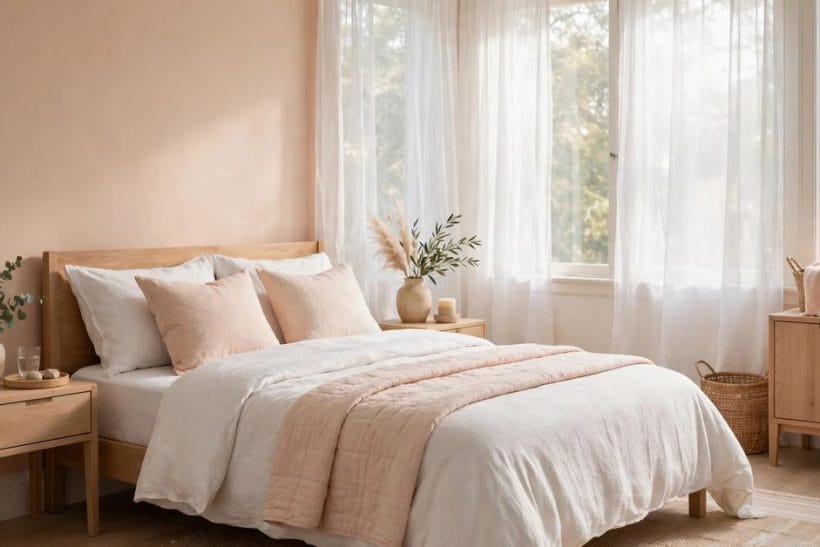
1. Do: Choose a Soft, Muted Peach for the Walls
The single most important choice in a peach bedroom is the shade itself, and the safest direction is always softer and more muted than you first think. Peach sits between pink and orange, and the versions that work best in a bedroom lean towards the gentle, dusty end of that range, with plenty of warmth but very little glare. A soft peach reads as a warm glow on the wall rather than a colour shouting for attention, which is exactly what a room meant for rest needs. When you look at samples, hold them against a white sheet of paper and in different corners of the room, because a shade that looks calm in the shop can sharpen considerably once it covers a whole wall.
Muted peach also gives you far more freedom with everything else in the room. Bedding, curtains, art, and wooden furniture all sit comfortably against it, whereas a strong peach forces every other choice to compete or retreat. If you fall in love with a bolder peach, keep it for a cushion, a throw, or a single piece of art, and let a quieter version carry the walls. The wall colour is the largest surface in the room and the one you will live with every day, so it should be the calmest peach you genuinely like, not the brightest one that caught your eye. A gentle shade also ages gracefully: it still feels fresh when the seasons change and the light shifts, while a loud peach can start to feel tiring within weeks.
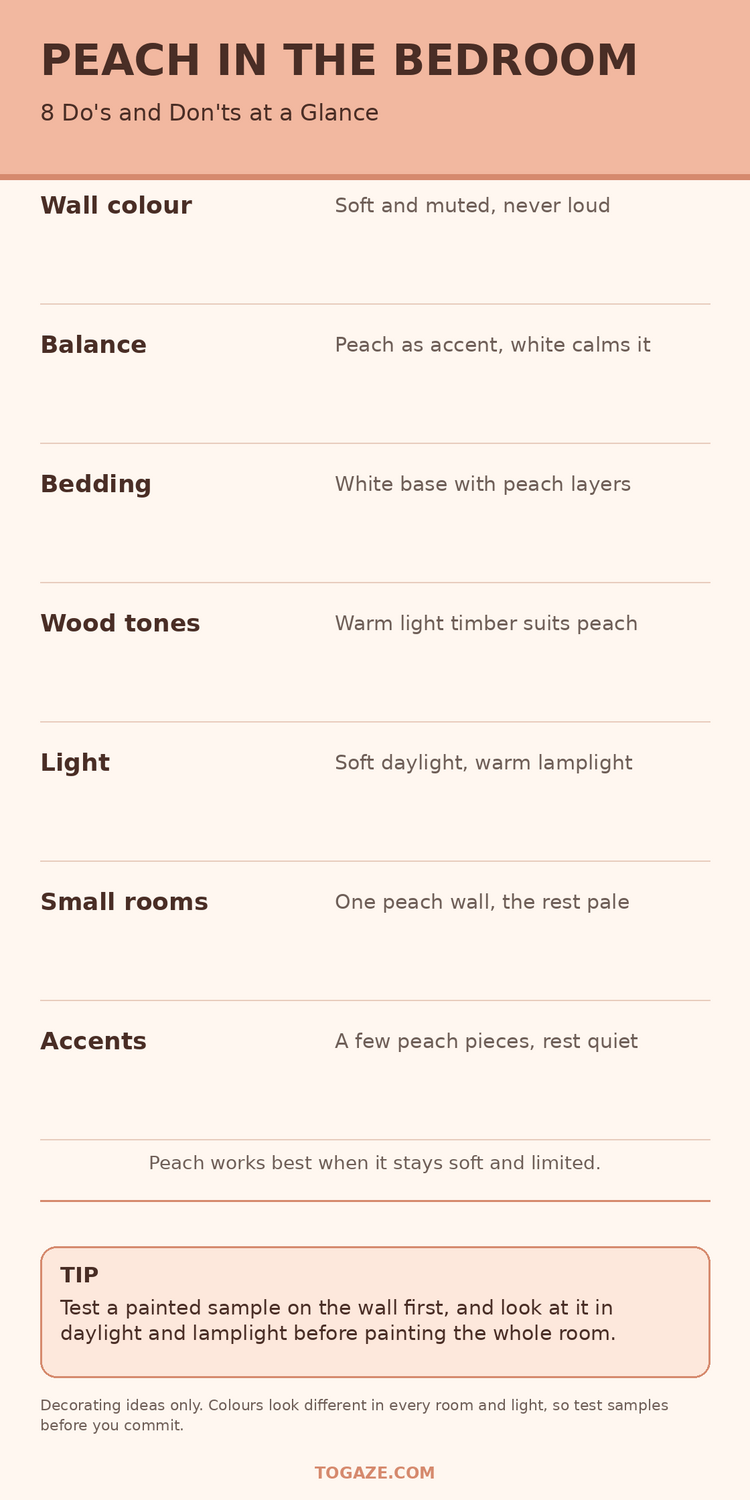
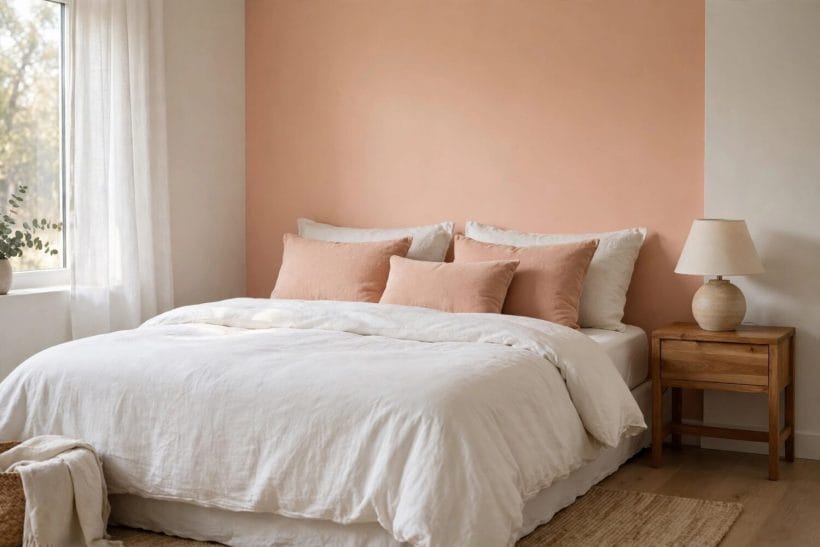
2. Do: Balance Peach with Plenty of White
Peach needs breathing room, and white is the partner that gives it to the room most generously. Crisp white bedding, white ceilings, white woodwork, and pale curtains stop peach from feeling heavy, and they keep the room bright even when the peach covers a large wall. Think of white as the pause between notes of peach: without it, the colour has nowhere to rest, and the room can start to feel warm in the sticky sense rather than the welcoming one. A white duvet against a peach wall is the classic combination for a reason, and it works because the eye moves easily between the two instead of being held by a single unbroken wash of colour.
Balance is not about splitting the room evenly, and you certainly should not feel obliged to keep peach and white in equal measure. The point is simply that white should be visible from wherever you stand: the bed dressed in white, the ceiling kept pale, the frames and skirting in a clean white, and perhaps a white lamp or a white chair. If peach ever starts to feel too sweet, the answer is almost always more white, not less peach elsewhere. This pairing also makes it easy to change the mood of the room later, since swapping a throw or a set of cushions is simple when the bones of the room are calm. Readers weighing peach against its closest cousin may enjoy comparing it with blush pink bedroom ideas, where the same white balance keeps a pinker palette gentle.
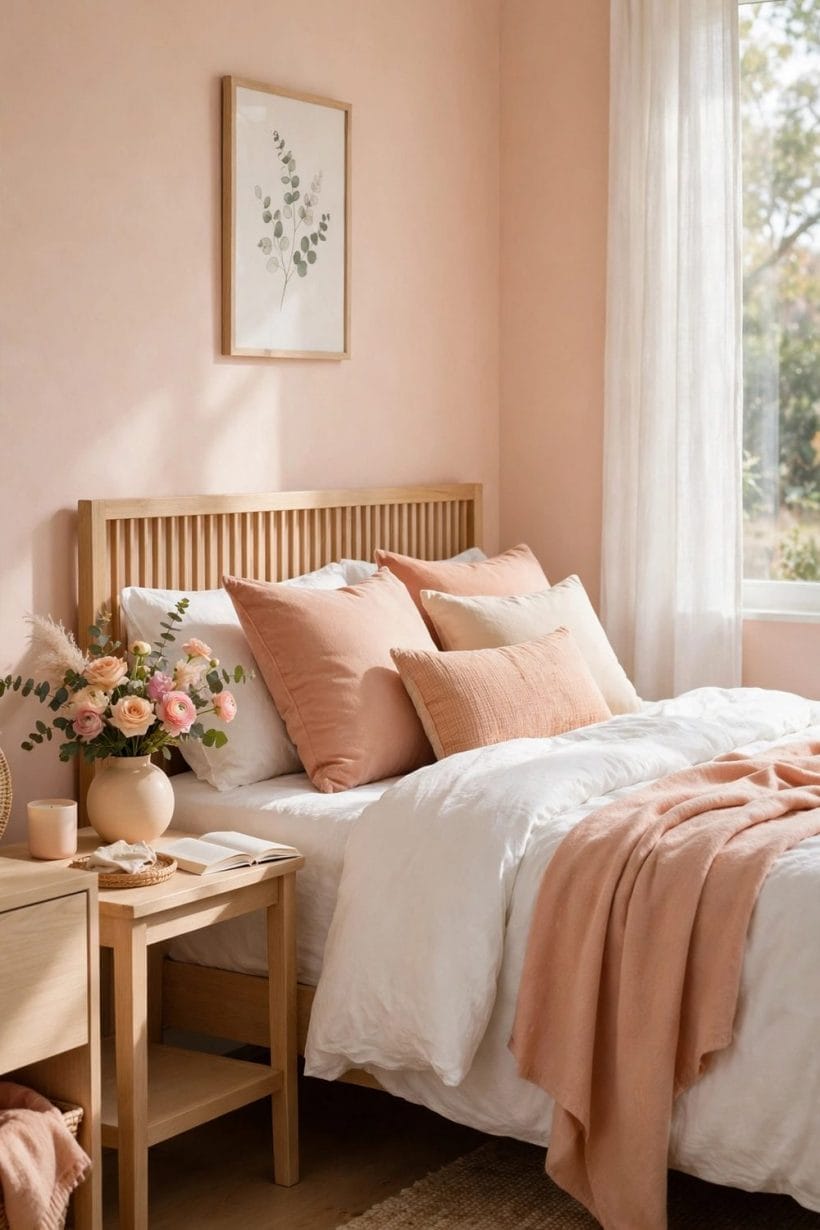
3. Do: Layer Peach Through Bedding and Cushions
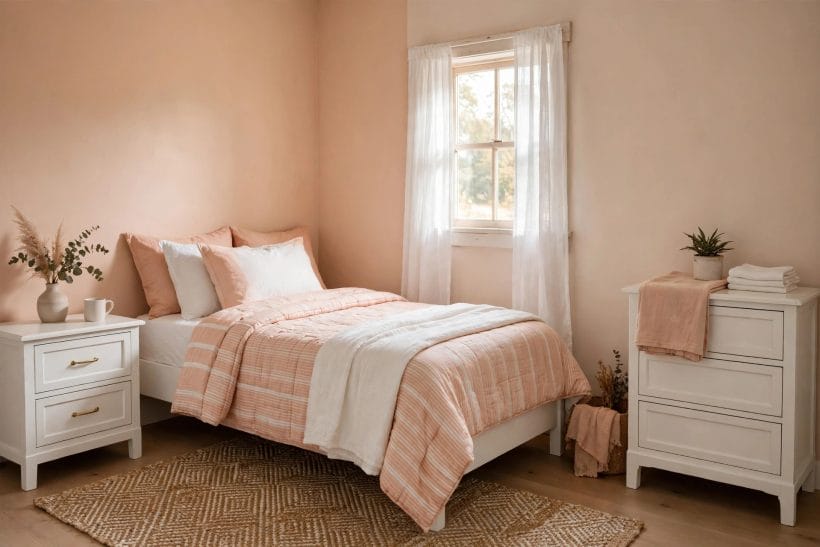
Bedding is the kindest place to enjoy peach, because it is soft, changeable, and close to where you actually rest. A white duvet with a peach throw folded across the foot of the bed, a pair of peach cushions in front of white pillows, or a peach blanket layered over cream linen gives the room its warmth without committing the walls to anything. Layers also add texture, which matters more than most people expect: linen, cotton, and a softly woven throw catch the light differently, so the peach feels rich and varied rather than flat. Start with the largest layer in the palest tone and add deeper peach only in the smallest pieces, and the bed will look inviting rather than decorated to within an inch of its life.
There is a practical advantage here too. Bedding is the easiest part of a bedroom to change with the seasons or with your mood, so peach in the bedding lets you test the colour properly before you paint anything. Live with a peach throw for a few weeks and notice whether you reach for it happily or start to tire of it; that feeling is a far better guide than any chart. Layering also forgives mistakes, since a cushion that turns out to be slightly too strong can be moved to a chair or swapped out in a moment. Keep the layers relaxed rather than arranged, with a throw casually folded and cushions plumped rather than lined up like soldiers, and the bed will invite rest instead of looking like a display.
4. Do: Pair Peach with Warm, Light Timber
Peach and warm, light timber are natural companions, and the pairing is one of the easiest ways to make a peach bedroom feel grounded. Pale oak, ash, rattan, and light beech all share peach’s warmth without competing with it, and they add a natural texture that stops the room from feeling too soft or sugary. A light wooden bed frame, a pair of bedside tables in a honeyed finish, or a woven basket or two gives the eye something solid to rest on, and the room gains a calm, organic feeling that painted furniture alone rarely achieves. The key is to keep the timber light: very dark, heavy wood can make peach look garish by contrast, while pale timber lets the colour breathe.
This combination also travels well through a small home, since the same warm timber that calms a peach bedroom suits a tiny living room just as gracefully, giving the whole home a quiet sense of connection. In the bedroom itself, let the timber appear in a few honest places rather than everywhere: the bed frame, one or two tables, perhaps a mirror frame or a woven laundry basket. Natural fibres belong in the same family, so a jute rug, a linen curtain, or a cotton throw will strengthen the effect without adding another colour to juggle. Avoid the temptation to paint the timber peach as well; wood does its best work in a peach room by staying wood, warm and plain, and letting the peach provide the colour.

5. Don’t: Paint Every Wall in a Strong Peach
Covering all four walls in a strong peach is the fastest way to spoil an otherwise lovely idea. Peach is a warm colour with a lot of presence, and when it surrounds you on every side it can feel enclosing rather than cosy, especially in the evening when lamplight deepens every warm tone. The room can also start to tint everything in it: white bedding looks cream, skin tones look flushed in the mirror, and art on the walls loses its own colours to the peach glow. None of this means peach belongs nowhere on the walls, only that restraint serves it better than total coverage, and a single peach wall or a soft peach on all walls will almost always please you for longer.
The safest approach is to begin with one wall, usually the wall behind the bed, and live with it before deciding whether the colour should travel further. In a small bedroom, a single peach wall is often the whole answer, since it gives the room its character while the remaining pale walls keep it feeling open. If you have already painted every wall and the result feels too much, you have not ruined the room: repainting the wall opposite the bed in a soft white will usually restore the balance at once, and the remaining peach will suddenly look intentional rather than overwhelming. Peach rewards a light hand, and the rooms that wear it best are the ones where the colour is a guest, not the landlord.
6. Don’t: Match Peach with Harsh, Clashing Colour
Peach is a sociable colour, but it has firm limits, and harsh or clashing partners are the quickest way to unsettle a bedroom. Very bright reds, electric blues, acid greens, and stark black-and-white graphic patterns all fight peach rather than supporting it, and the result is a room that feels busy when it should feel calm. The clash is not just a matter of taste: strong contrasting colours keep the eye moving and make it harder for the room to settle, which is the opposite of what a bedroom is for. If a colour makes you squint slightly when you hold it next to peach, trust that instinct and leave it out of the bedroom, however much you might enjoy it in another room.
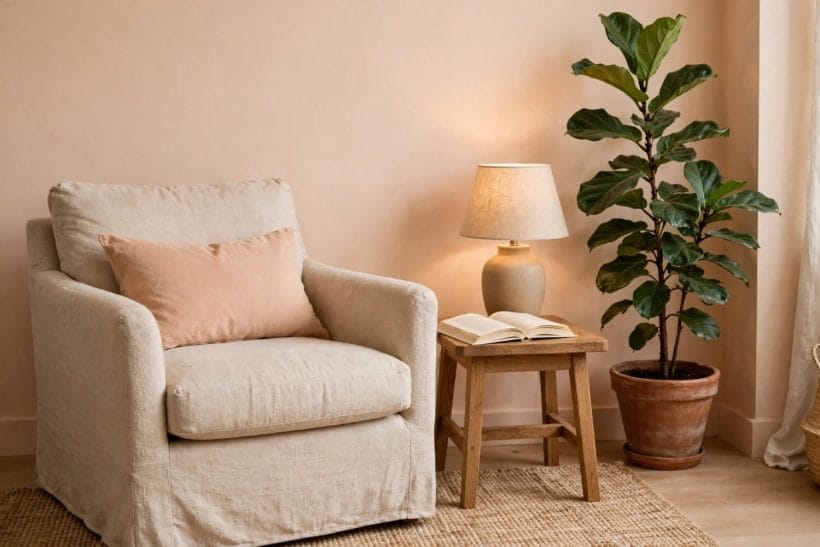
The colours that keep peach company best are the quiet ones: white, cream, soft sage, gentle grey, warm sand, and the pale timber tones already mentioned. These let peach remain the warm heart of the room without turning it into a contest. That does not mean the room must be pale from corner to corner; a deep, muted green plant, a terracotta pot, or a piece of art with earthy tones can add depth without clashing, because their warmth is in the same family as peach. The test is simple: stand in the doorway and notice where your eye lands. In a well-judged peach bedroom it should land on the bed and then wander gently around the room, not get snagged by one loud, unrelated colour demanding attention.
7. Don’t: Fill the Room with Peach on Everything
When people fall for peach, the temptation is to spread it everywhere: peach walls, peach curtains, peach bedding, peach rug, peach art, peach cushions, and before long the room is a single note played at full volume. A colour used on every surface stops reading as a colour at all and becomes a kind of visual noise, and the bedroom loses the contrast that makes any colour beautiful. Peach is at its loveliest when it appears in a few well-chosen places and the rest of the room stays quiet, because the quiet areas are what allow the peach to shine. Think of it as seasoning: the right amount transforms the dish, and twice the right amount ruins it.
A useful discipline is to choose a small number of places for peach and to let the rest of the room stay neutral. The wall behind the bed and the bedding might carry the colour, while the curtains stay white, the rug stays natural, and the furniture stays timber. Or the walls stay pale and peach lives only in the textiles and a single piece of art. Either approach works, and both leave you room to add a peach accent later if the room starts to feel too plain. If your room already has peach in too many places, removing it from just one large surface, such as swapping peach curtains for sheer white ones, will usually restore the balance immediately. Restraint is not the enemy of a colourful room; it is what makes colour feel deliberate.
8. Don’t: Forget Lighting When Choosing Peach
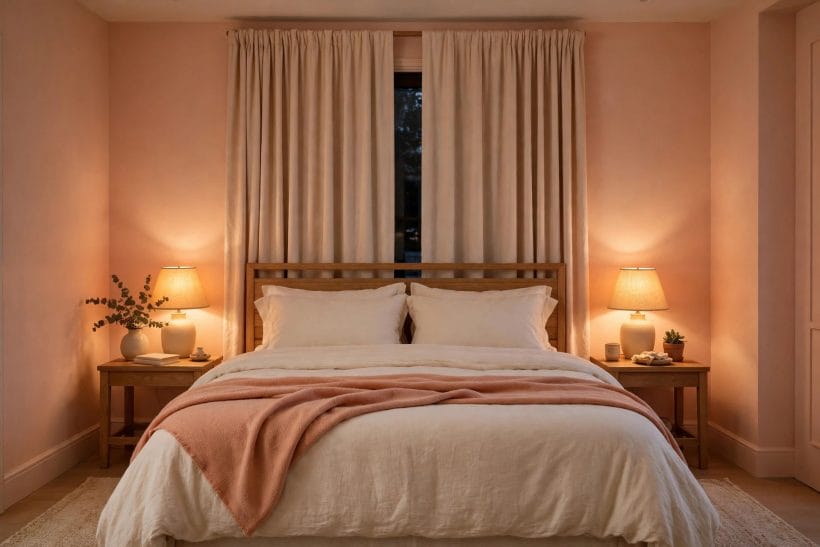
Peach is unusually sensitive to light, and a shade chosen under one kind of light can look like a different colour under another. Morning daylight tends to keep peach fresh and gentle, while warm evening lamplight deepens it and can push it towards orange, and cool overhead lighting can drain its warmth and leave it looking flat or slightly grey. Choosing peach without considering the room’s light is therefore one of the commonest causes of disappointment, and it is entirely avoidable. Before committing, look at your sample in the morning, at midday, and in the evening with the lamps on, and pay particular attention to the wall opposite the window, which receives the least direct light and shows the shade at its deepest.
Lighting is also part of the design, not just a test for it. Soft, warm lamps at bedside height flatter peach beautifully, and a dimmer lets you tune the warmth in the evening so the room glows rather than glares. Sheer curtains are worth their weight here, since they soften strong daylight and spread it evenly, preventing one bright patch of wall from looking far stronger than the rest. Avoid a single harsh overhead light as the room’s only source, because it flattens every colour and makes peach look tired. Layer the light the way you layer the bedding, with a gentle general glow plus warm pools of lamplight, and the peach will repay you by looking good at every hour rather than only in the morning.
9. Putting the Eight Rules Together in One Room
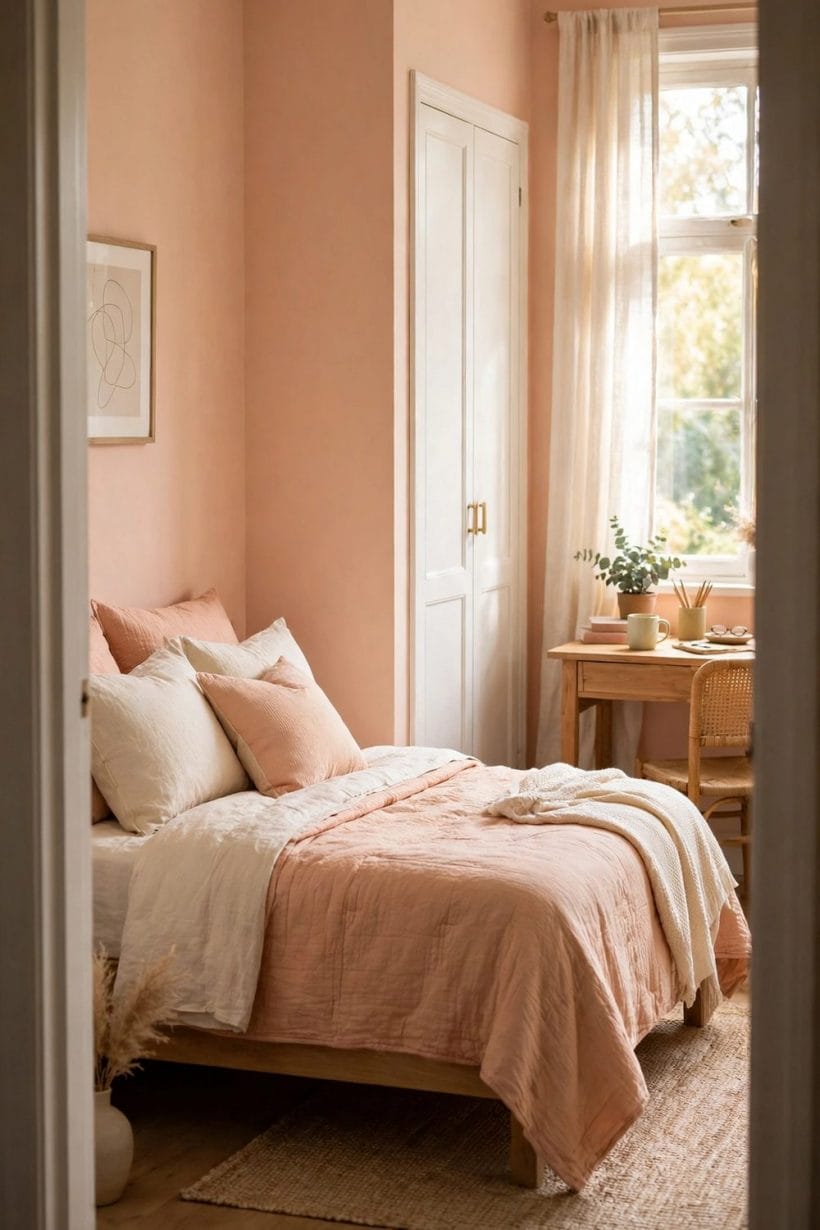
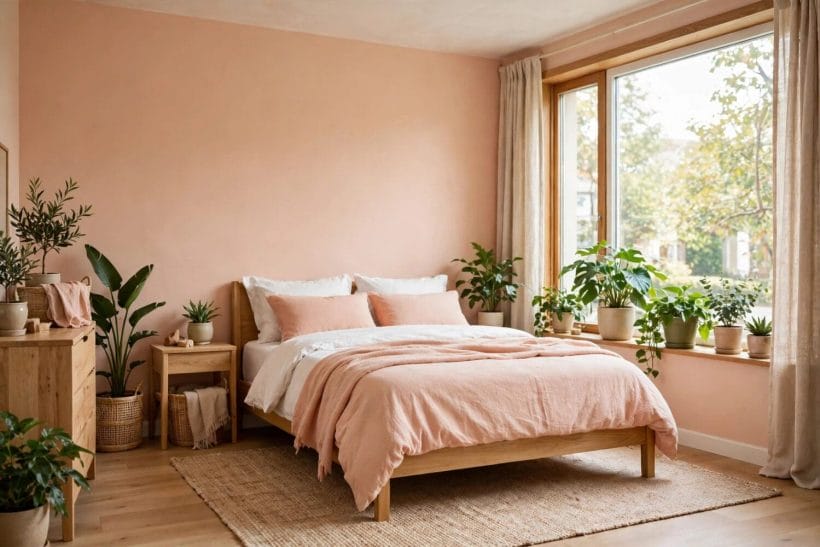
Imagine the rules working together in a single bedroom, and the picture becomes clear at once. The walls carry a soft, muted peach on the wall behind the bed, while the remaining walls stay a gentle white. The bed is dressed in white linen with a peach throw and a few peach cushions, and the furniture is warm, light timber: a simple bed frame, two bedside tables, and a woven basket. Sheer white curtains soften the daylight, warm lamps glow at bedside height in the evening, and the only other colours in the room are quiet ones, such as cream, soft sage from a plant, and the natural tones of wood and fibre. Nothing shouts, nothing clashes, and the peach feels like warmth itself rather than a colour applied to a room.
The same calm thinking extends naturally beyond the bedroom door, and readers planning the rest of a small home may find the site’s small living room ideas useful for carrying a gentle palette into shared spaces without repeating the bedroom exactly. The lesson of the eight rules is not that peach must be used timidly, but that it should be used deliberately: one strong decision, such as the wall behind the bed, supported by quiet choices everywhere else. When every element has a reason for being there, the room feels collected rather than assembled, and it will still feel right when trends move on. That staying power is the real reward for getting peach right, and it costs nothing more than a little patience at the start.
10. Living with Peach: Small Changes That Keep It Calm
A peach bedroom is not a finished object but a room you live in, and a few small habits will keep it feeling calm over time. Refresh the white elements regularly, since white bedding and curtains are what keep peach bright, and they show wear sooner than the walls. Rotate the peach accents with the seasons if you like: a lighter throw in warm months and a slightly deeper one when the evenings draw in will keep the room feeling current without any redecorating. Plants are a quiet ally here, because green foliage cools peach visually and stops it from feeling too sweet, and a single healthy plant on a bedside table or a windowsill often does more for the room than another decorative object.
When something starts to feel off, resist the urge to add more colour, and look first for what can be simplified. A room that once felt serene can drift towards clutter as new cushions, pictures, and small objects accumulate, and peach, being warm and present, shows that clutter more readily than a cooler palette. Removing one or two items and letting the walls breathe will usually restore the calm at once. The same goes for lighting: a bulb replaced with a cooler one can quietly change how the whole room feels, so keep the lamps warm and soft. A peach bedroom cared for in this gentle way tends to age into a favourite room, the one guests admire and you return to with relief at the end of the day.
Final Considerations
Peach earns its place in a bedroom by being warm, forgiving, and quietly cheerful, and the eight rules in this guide all serve one idea: let peach be the warmth of the room, not the whole of it. Choose a soft shade, give it plenty of white, layer it through bedding, pair it with light timber, and keep it off every surface, away from clashing partners, and always tested in your own light. A room built on those choices will feel sunny in the morning, restful in the evening, and easy to live with for years. If the calm of a peach bedroom has you thinking about the welcome a visitor receives, a gentle palette at the tiny house porch can echo the same feeling outdoors without copying the bedroom. Start with one wall, live with it, and let the room teach you how much peach it wants.




0 Comments