

A bohemian bedroom does not arrive fully formed from a single shopping trip. It grows, layer by layer, from a bed dressed in soft linen, a rug found on travels, a plant that thrives in a sunny corner, and a wall of pictures gathered over years. The result feels collected rather than decorated, relaxed rather than staged, and deeply personal in a way no matched set can imitate.
That collected feeling is exactly what many people mean when they search for a gypsy bedroom look: a room that is warm, free-spirited, and full of texture, colour, and stories. This guide breaks the process into ten honest steps, in the order that makes building the room easiest, from the bed outward to the finishing touches that let the room keep evolving.
Step 1: Start with the Bed as the Anchor
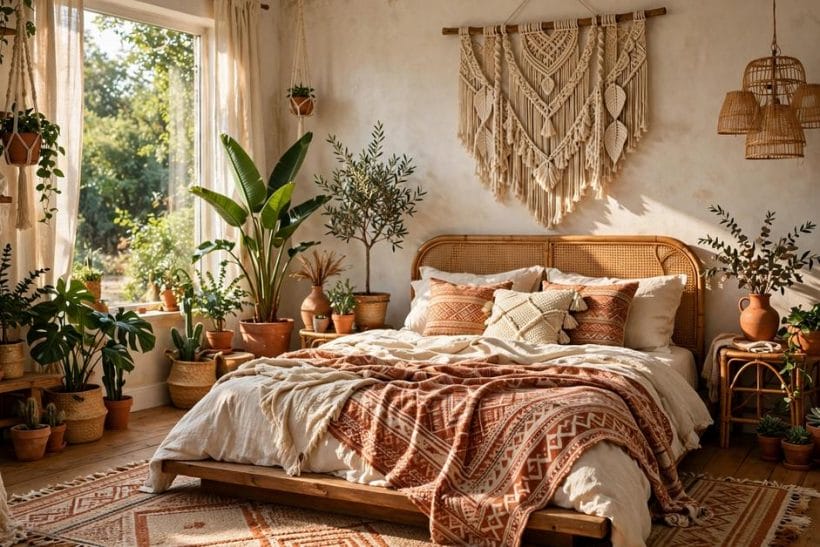
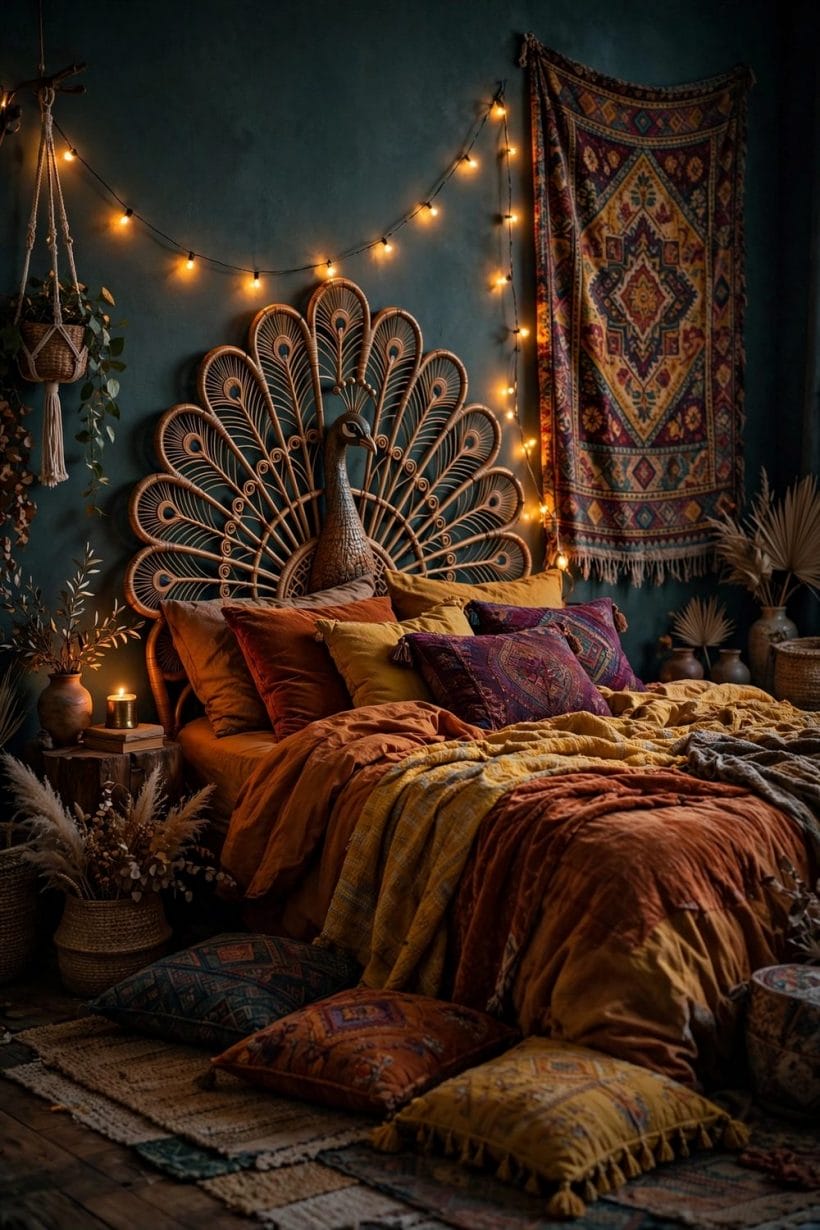
Every bohemian bedroom begins with the bed, because the bed is the largest piece of furniture in the room and the surface your eye lands on first. Choose a frame that feels warm and natural rather than sleek and formal: timber in a soft finish, rattan or cane, a low platform, or even a simple frame softened by a pile of cushions. The frame sets the room’s tone, so a heavy, dark, highly polished piece will fight the relaxed feeling you are building, while a lighter, more natural frame lets textiles and colour do the talking.
Position the bed where it feels most restful, usually against the longest wall, with space to move around it comfortably. If the room is small, pushing the bed into a corner can actually suit the bohemian look, turning it into a daybed-like nook piled with cushions that works for both sleeping and reading. In a larger room, pulling the bed slightly away from the wall and dressing the space behind it with a headboard, a hanging textile, or a cluster of framed prints gives the bed a sense of occasion.
Keep the bedding palette in mind from this first step, because everything else in the room will answer to it. A warm white, soft cream, or natural linen base gives you the freedom to add colour through throws, cushions, and rugs without the room turning chaotic. The bed is the anchor, not the whole story, so dress it well and let the rest of the room build around it at its own pace.
Step 2: Choose a Warm, Earthy Colour Palette
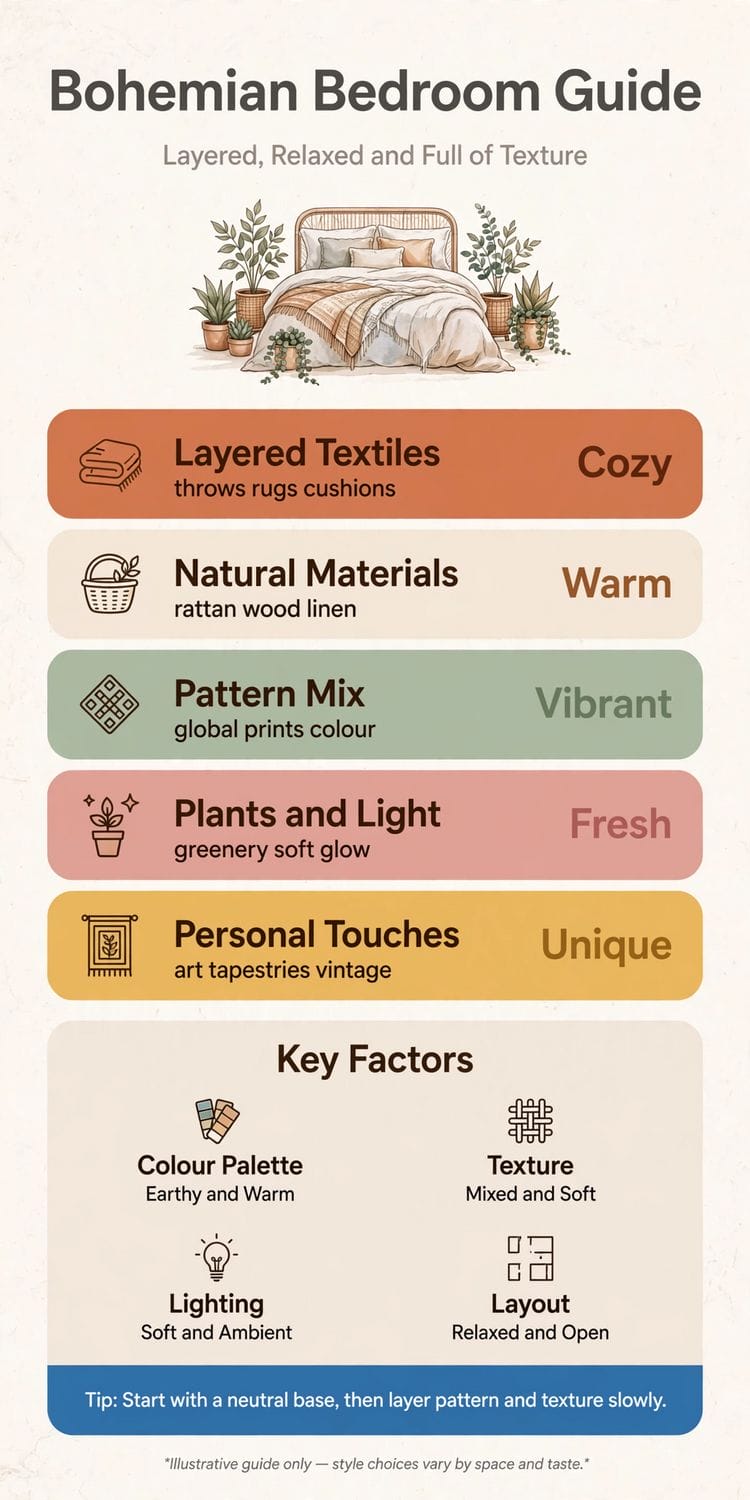
Colour is what makes a bohemian bedroom feel warm rather than merely eclectic. Start with earthy, sun-warmed tones: terracotta, ochre, rust, warm sand, olive, and deep, muted greens. These colours echo natural dyes and sun-baked landscapes, and they sit comfortably together in a way that cooler, sharper colours rarely do. A palette drawn from earth and plants gives the room a grounded feeling even when the patterns and textures are bold.
Apply the palette in layers rather than all at once. Walls can stay pale and warm — a soft white, warm plaster tone, or gentle clay wash — while the colour arrives through bedding, cushions, rugs, and art. This keeps the room feeling bright and restful, and it means you can shift the mood with the seasons simply by swapping a throw or a set of cushion covers. If you love a deep colour, try it on one wall, on bedding, or on a large textile before committing a whole room to it.
Balance is the skill that keeps a warm palette from turning heavy. Pair deep terracotta with cream, rust with soft sage, and ochre with natural timber, so every strong colour has a quiet neighbour. A blush pink bedroom shows how a single soft colour can warm a room without overwhelming it, and the same restraint works here: let one or two colours lead, and let the rest support them. The goal is a room that feels sunlit and inviting, not one that shouts from every surface.
Step 3: Layer the Bedding for Softness and Depth
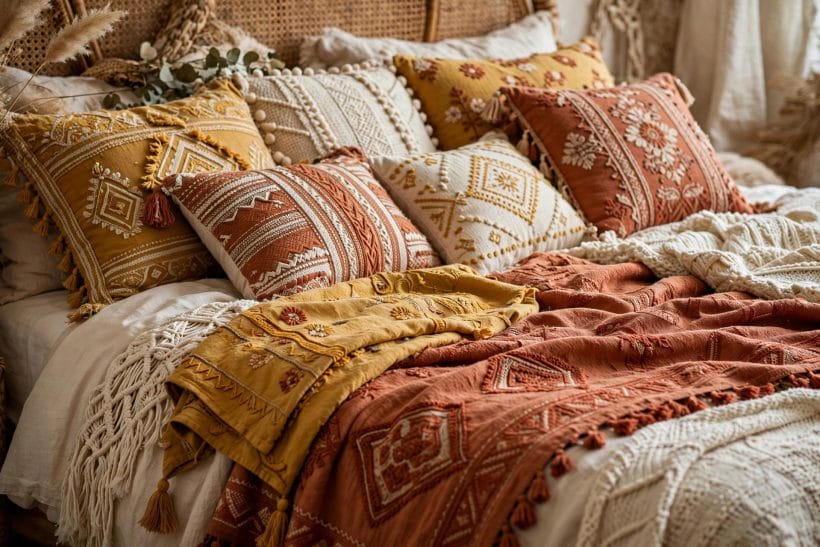
Layering is the heart of bohemian bedding, and it is also the step that makes the bed look inviting rather than merely made. Start with a fitted sheet and a soft duvet or quilt in a natural fabric, then add a second layer: a lighter coverlet, a woven throw, or a quilt in a contrasting pattern folded across the foot of the bed. Each layer adds softness and visual depth, and the slightly undone, rumpled finish is part of the look, so resist the urge to smooth everything into hotel-perfect lines.
Cushions finish the layering, but they work best when they vary in size, texture, and pattern rather than matching exactly. Combine a couple of large sleeping cushions with smaller squares and a long lumbar cushion, mixing linen, cotton, velvet, and woven textures. The mix should feel gathered over time, so a cushion from a market stall can sit happily beside one from a favourite shop, united by the room’s warm palette rather than by a matching set.
Choose natural fabrics wherever you can, because they breathe, soften with washing, and develop character over time. Linen, cotton, and wool all suit the bohemian bedroom, and each brings a different texture to the bed. A tiny bedroom benefits from this same layering, since soft, varied bedding makes a small room feel generous and cocooning rather than cramped.
Step 4: Bring in Texture through Rugs and Throws
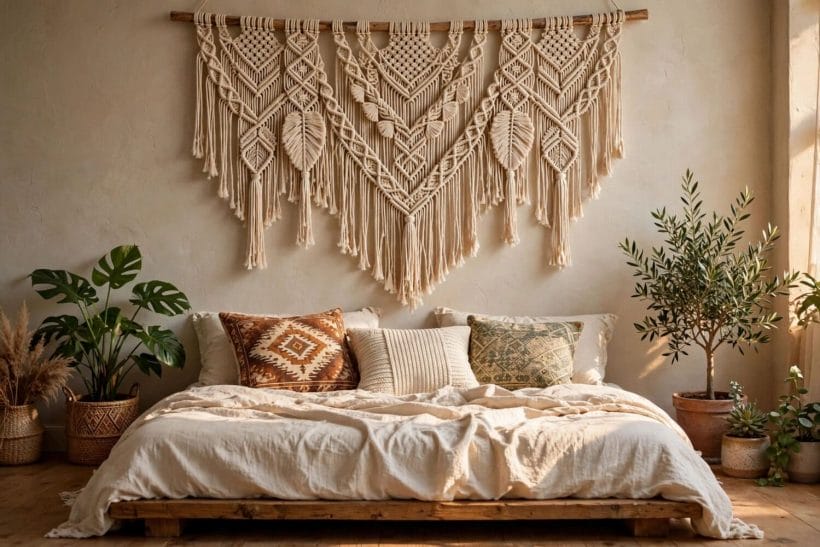
Once the bed is layered, texture is what makes the room feel touchable. Rugs are the most powerful tool here, because they warm a bare floor, define the sleeping area, and add pattern at ground level. A large rug that extends beyond the bed on both sides grounds the room, while layering a smaller, patterned rug over a larger plain one adds the collected, travelled feeling that defines the style. Wool, cotton, and jute all work, and a slightly worn or handwoven look suits the room better than a stiff, pristine finish.
Throws extend that texture up onto the bed and chairs. Drape one across the foot of the bed, fold another over a chair back, and keep a soft blanket within reach of a reading corner. The point is not to display throws as decoration but to have softness wherever you actually sit or lie, so the room feels used and welcoming rather than arranged for a photograph.
Texture also arrives through baskets, woven storage, and natural materials underfoot and at hand. A seagrass basket for spare blankets, a woven laundry hamper, and a rattan tray on a bedside table all add the same handcrafted warmth. Keep the textures varied — smooth linen beside nubby wool, cool cotton beside rough jute — because contrast between textures is what stops a warm palette from feeling flat.
Step 5: Mix Patterns with a Light Hand
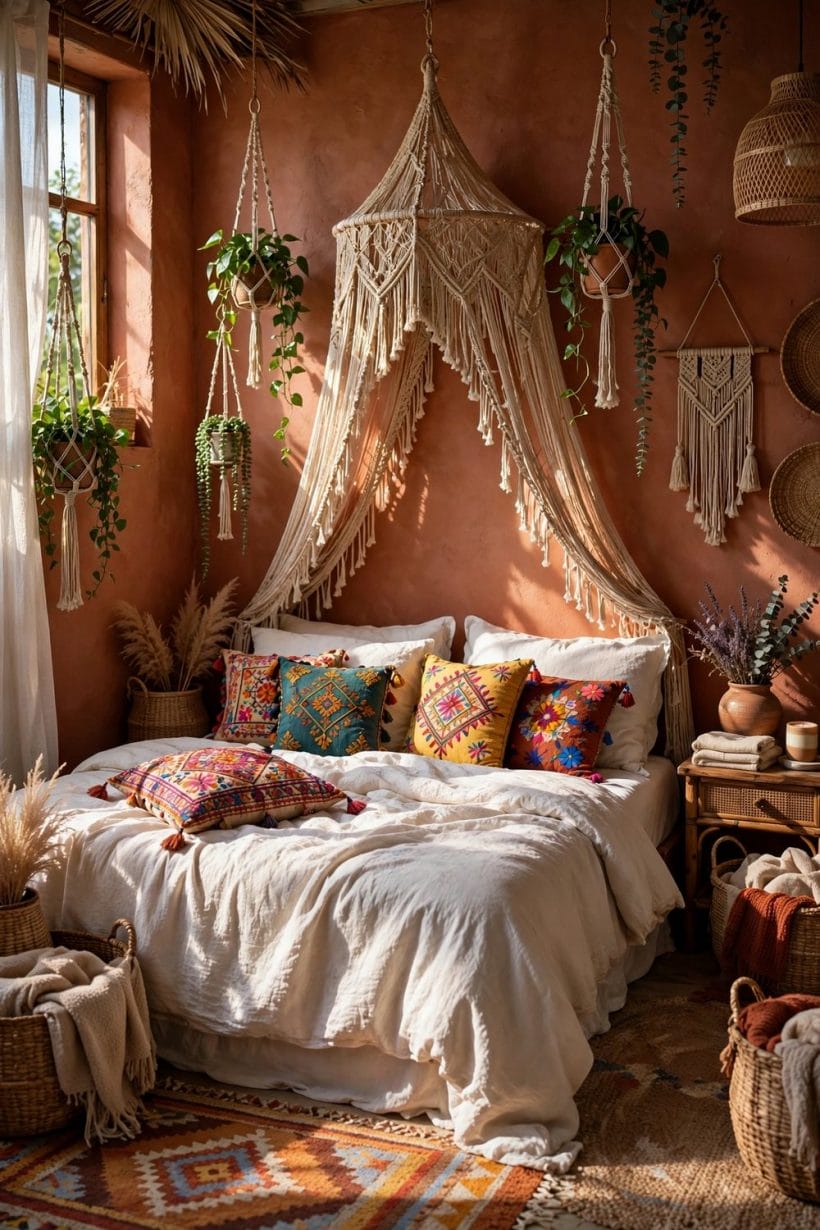
Pattern is where bohemian rooms earn their reputation for boldness, and it is also where they most often go wrong. The trick is to mix patterns that share a colour or a feeling rather than patterns that compete for attention. A floral cushion, a geometric throw, and a striped rug can live happily together when they share warm tones, while three large, unrelated patterns in clashing colours will make the room feel restless.
Vary the scale of the patterns you combine. A large, bold pattern on a rug or a wall hanging can anchor the room, while smaller patterns on cushions and throws add detail without fighting it. Leave breathing room too: a plain stretch of linen bedding, a bare patch of wall, or a solid-coloured cushion gives the eye somewhere to rest, and that rest is what lets the patterns shine instead of overwhelm.
Start with one pattern you truly love and build around it, adding a second and then a third only when the room still feels calm. If a combination feels noisy, remove one element rather than adding another to fix it. Bohemian style celebrates abundance, but the most beautiful bohemian bedrooms are abundant in texture and feeling, not crowded with competing prints. Let each pattern earn its place.
Step 6: Add Plants and Natural Materials
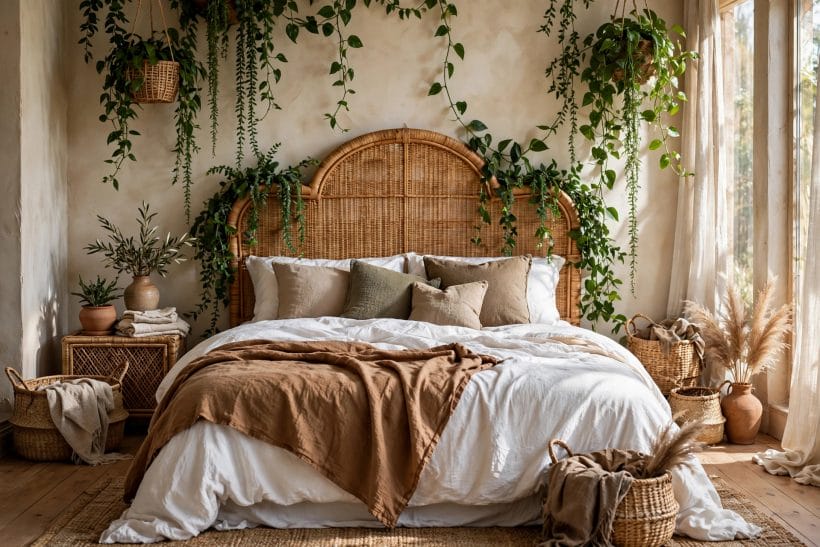
Plants are almost non-negotiable in a bohemian bedroom, because living greenery softens hard edges, adds a natural colour that no dye quite matches, and makes the room feel alive. A trailing plant on a high shelf, a leafy plant in a woven basket on the floor, and a small potted plant on a bedside table together create greenery at different heights, which is far more effective than a single plant in a corner. Choose plants that suit your room’s light and your willingness to care for them, and let them grow a little wild rather than pruning them into rigid shapes.
Natural materials extend the same feeling beyond plants. Timber, rattan, cane, jute, clay, and stone all bring an organic warmth that manufactured finishes struggle to match. A timber bedside table, a cane chair, a clay vase, and a stone-topped dresser each add a different natural note, and together they keep the room feeling grounded. Macrame hangings, woven wall pieces, and handmade ceramics add the handcrafted layer that makes the room feel personal rather than purchased as a set.
Keep plant care practical: group plants near light, use pots with drainage, and place saucers or trays under them to protect floors and furniture. A plant that thrives looks far better than a dramatic plant that struggles, so match plants to your room honestly. The greenery should feel like part of daily life in the room, not a styling burden, and a few healthy plants will always beat a jungle that nobody can maintain.
Step 7: Layer the Lighting Low and Warm
Lighting decides whether a bohemian bedroom feels cosy or clinical, and the rule is simple: keep it low, warm, and layered. A single bright ceiling light flattens the textures you have built so carefully, while several smaller sources at different heights — bedside lamps, a floor lamp in a corner, candles or fairy lights along a shelf — create pools of warm light that make the room glow. Warm-toned bulbs suit the earthy palette far better than cool white ones, which can make terracotta and ochre look harsh.
Bedside lighting deserves particular care, because it shapes the last hour of the day. A lamp with a fabric or woven shade softens light beautifully, and a dimmer, where practical, lets you lower the light as evening deepens. If the ceiling light is unavoidable, fit it with a warm bulb and use it only for cleaning or dressing, switching to lamps for evenings. The difference between a room lit from above and a room lit from beside the bed is the difference between a showroom and a sanctuary.
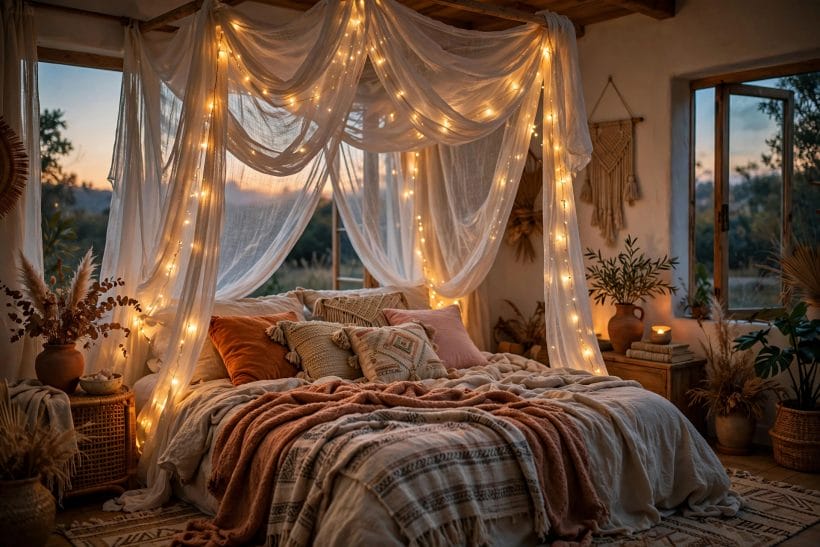
Decorative light adds the final layer: a string of warm fairy lights woven along a headboard or shelf, a lantern on a dresser, or candles in safe holders on a tray. Used with care — never left burning unattended — these small lights give the room its evening magic. A vaulted ceiling bedroom faces the same lighting challenge on a grander scale, and the same answer applies: light the room from several low points rather than from one bright source overhead.
Step 8: Dress the Walls with Collected Art and Textiles
Walls are where a bohemian bedroom tells its story, and the best walls look collected rather than curated in a single afternoon. Hang a mix of framed prints, photographs, small mirrors, woven hangings, and textiles, varying the sizes and frames rather than matching them. A large textile or wall hanging can anchor one wall, while smaller pieces cluster around it in a loose gallery that grows as you find new pieces worth hanging.
Let the wall display reflect real interests and memories: travel photographs, prints by artists you love, a textile from a market, a mirror found in a secondhand shop. The mix of sources is what makes the wall feel personal, and it is also what separates a bohemian bedroom from a themed hotel room. If a wall starts to feel crowded, leave a gap of bare wall; negative space is part of the composition, not a failure to fill it.
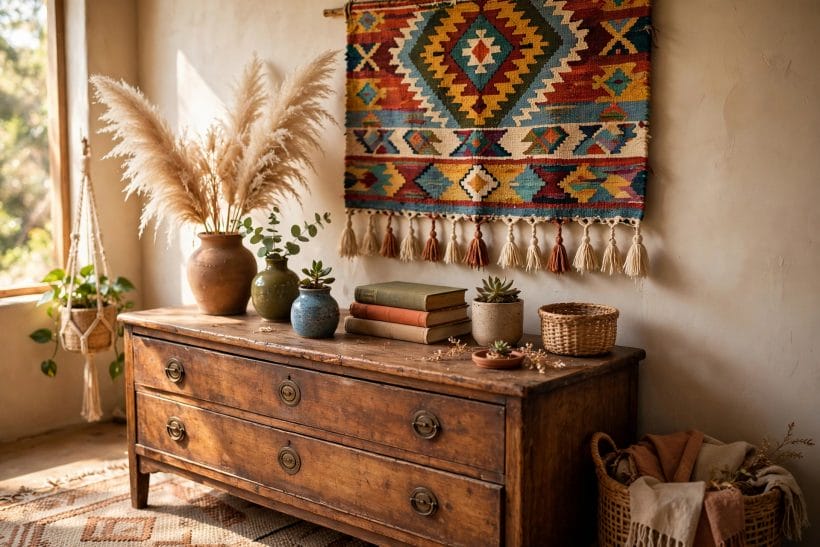
Textiles on walls deserve the same care as textiles on the bed. A woven hanging, a lightweight tapestry, or a length of patterned fabric adds softness and sound absorption that framed prints alone cannot give, and it echoes the bedding and rugs to tie the room together. Hang textiles where they will not fade in harsh direct sun, and choose pieces you enjoy looking at daily, since bedroom walls are the last thing you see at night and the first thing you see in the morning.
Step 9: Create a Cosy Corner for Reading and Rest
A bohemian bedroom earns its reputation as a retreat when it offers somewhere to sit that is not the bed. A reading corner — a comfortable chair, a small side table, a lamp, and a soft throw — turns the bedroom from a place you only sleep in into a place you genuinely spend time. A rattan or upholstered chair with a cushion, tucked near a window or into an unused corner, is all it takes, and the corner quickly becomes the room’s most loved spot.
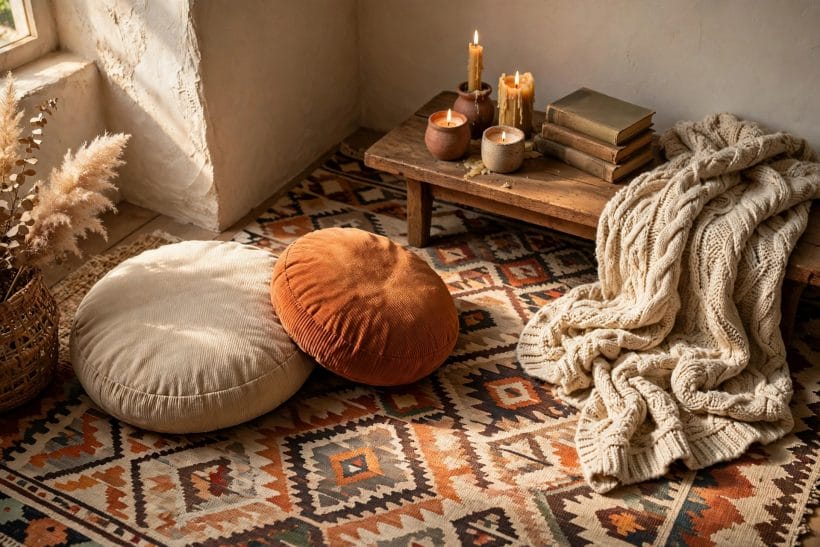
Keep the corner simple and genuinely comfortable rather than staged. A chair that looks beautiful but nobody sits in is decoration, while a chair with a soft cushion, a throw over its arm, and a book on its table is an invitation. If space is tight, a floor cushion and a low table beside a window can serve the same purpose, and a window seat dressed with cushions and a throw makes a natural reading nook in a small room.
The corner also gives the room’s smaller treasures a home: a stack of books, a candle, a small plant, a favourite mug. These everyday objects, gathered where you actually use them, add more authentic character than any styled display. A small living room uses the same principle, carving a comfortable seat out of limited space, and the bedroom corner repays the same attention: comfort first, and the look follows.
Step 10: Edit, Live with It, and Let It Evolve
The final step is the one that never truly ends, and it is what keeps a bohemian bedroom feeling alive rather than finished. Live with the room for a while before deciding what it still needs, because a room that looks perfect on the day it is decorated often reveals its gaps only through daily use: a missing bedside surface, a dark corner that needs a lamp, a throw that never gets reached for. Let use, not a checklist, decide the next change.
Edit with the same honesty. If a cushion, print, or object no longer pleases you, move it to another room or pass it on rather than keeping it out of obligation. Bohemian style is sometimes mistaken for keeping everything, but the rooms that work best are edited: every object earns its place by being beautiful, useful, or meaningful, and often all three. Removing one tired piece can do more for a room than adding three new ones.
Finally, let the room keep evolving. A textile found on a trip, a plant cutting from a friend, a print discovered at a market — these slow additions are the soul of the style, and they cannot be rushed. A bohemian bedroom built in ten deliberate steps, then allowed to grow, will always feel more personal than a room bought whole in a weekend. That slow, collected growth is the real destination, and it is why the style never goes out of fashion: it is not a look you buy, but a room you live into.
Final Considerations
Building a bohemian bedroom is a process of layering, not a single purchase, and the ten steps above work best in order: bed first, then colour, then bedding, texture, pattern, plants, lighting, walls, a reading corner, and finally the ongoing edit. Skipping ahead is possible, but the order saves you from the most common mistake, which is buying decorative pieces before the room’s foundations are settled.
Keep the practicalities in view alongside the style. Natural fabrics need washing, plants need light and water, candles need care, and rugs need cleaning, so choose materials and objects you will genuinely maintain. A room that is easy to live with stays beautiful far longer than a room that demands constant upkeep, and the relaxed feeling at the heart of this style depends on the room being comfortable, not precious.
If your room has an existing feature worth celebrating — a brick wall, a beamed ceiling, or generous windows — let the bohemian layers work with it rather than covering it. A brick wall bedroom gains warmth from layered textiles and plants without hiding the brick, and a beadboard ceiling pairs beautifully with woven textures and warm lamplight. The style is adaptable by nature, so bend it to your room, your budget, and your life, and the result will be a bedroom that feels unmistakably yours. For colour inspiration beyond the bedroom, dusty rose shows how one muted, warm colour can soften a whole palette, and that same softening touch is what turns a collection of objects into a restful room.

0 Comments