
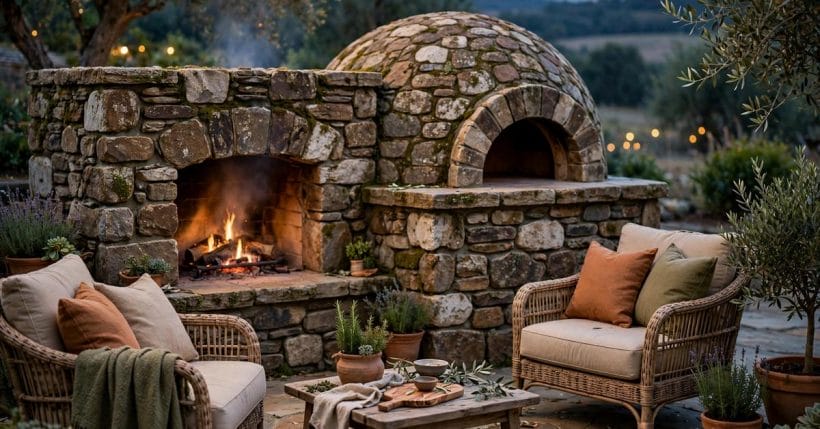
A pizza oven combo with an outdoor fireplace brings two pleasures into a single garden structure: a fire to sit beside and an oven to cook from. The pairing works best when it is planned as one piece of outdoor furniture rather than as two separate features pushed together. The fireplace gives the arrangement its warmth and its focal point, while the oven gives it a reason to gather, and the space between them becomes the natural centre of the patio. This guide looks at the combo form only, from surrounds and mantels to materials and cosy styling, with the practical checks that keep such a structure enjoyable and safe to live with.
The appeal of the combination lies in how it shapes an evening outdoors. Guests drift toward the fire while food comes from the oven, and the host stays part of the conversation instead of disappearing indoors. A well-planned combo keeps the cooking side and the sitting side in easy reach of each other without crowding either one, so the patio feels generous even when it is full. The rest of this guide works through each element in turn, so the finished structure reads as a considered part of the garden rather than an afterthought.
1. The Combo, Side by Side
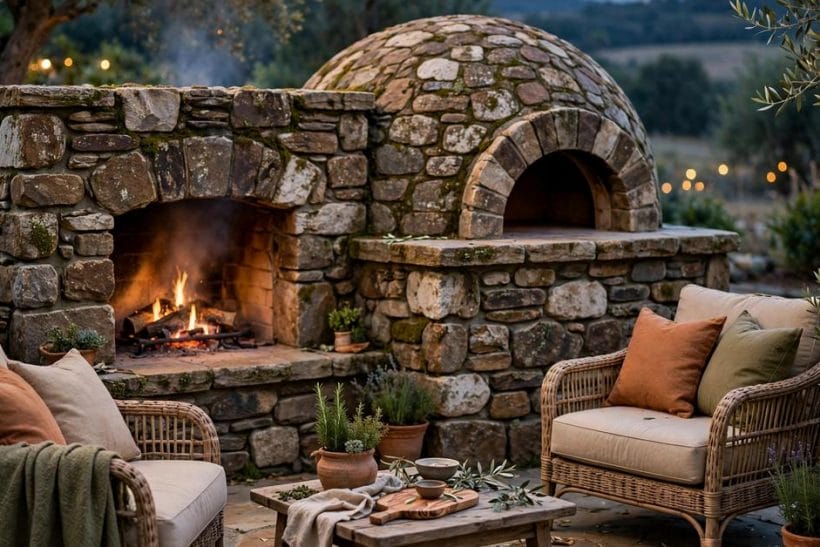
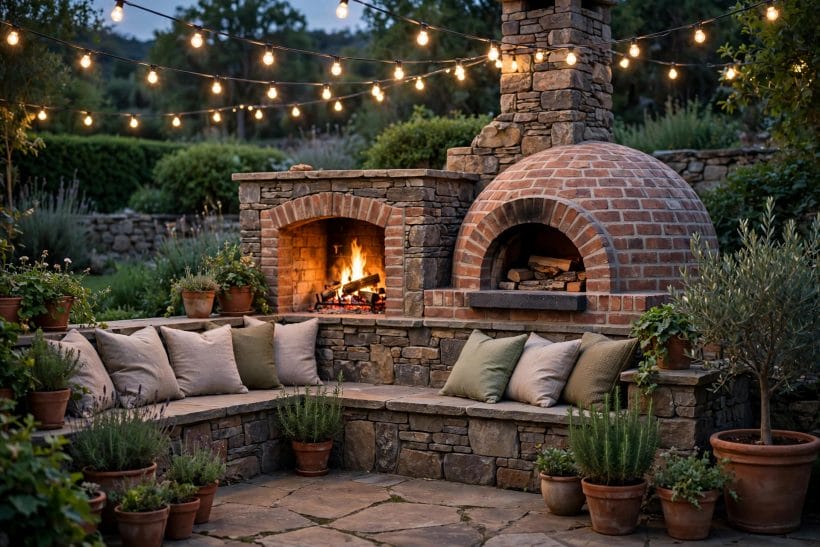
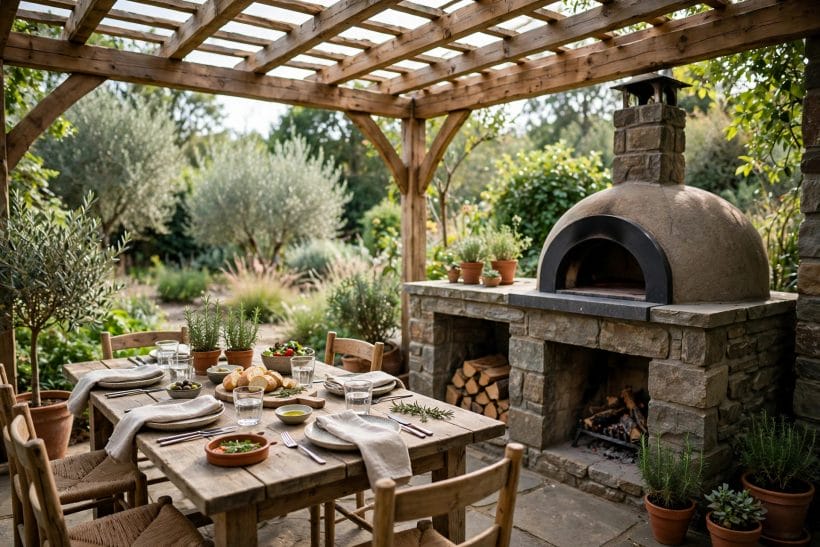
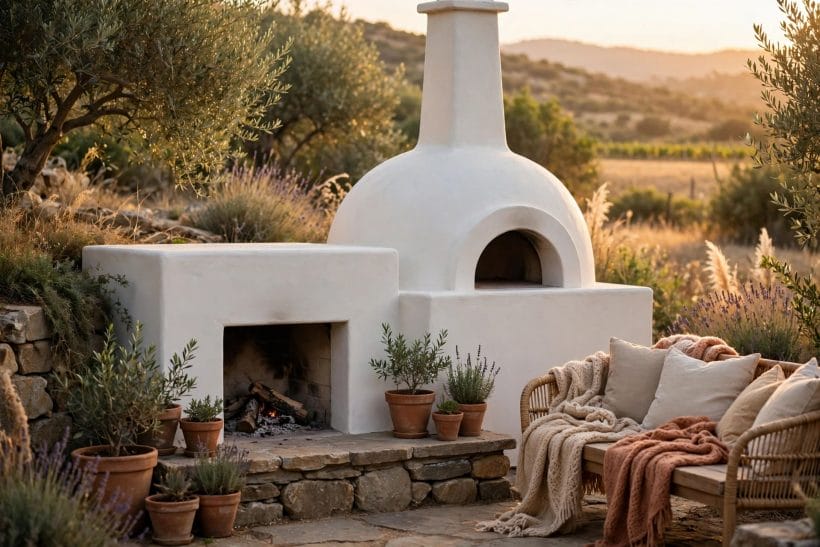
The most common arrangement places the fireplace and the oven side by side in a single run of masonry, sharing a visual language of stone or brick so the pair reads as one structure. The fireplace opening usually faces the seating, while the oven mouth faces the worktop where food is prepared, which keeps the two activities from getting in each other’s way. When the two openings face the same direction, the seating needs to sit far enough back that the cooking area does not feel like part of the audience, and a low wall or a change in floor level can mark the boundary gently.
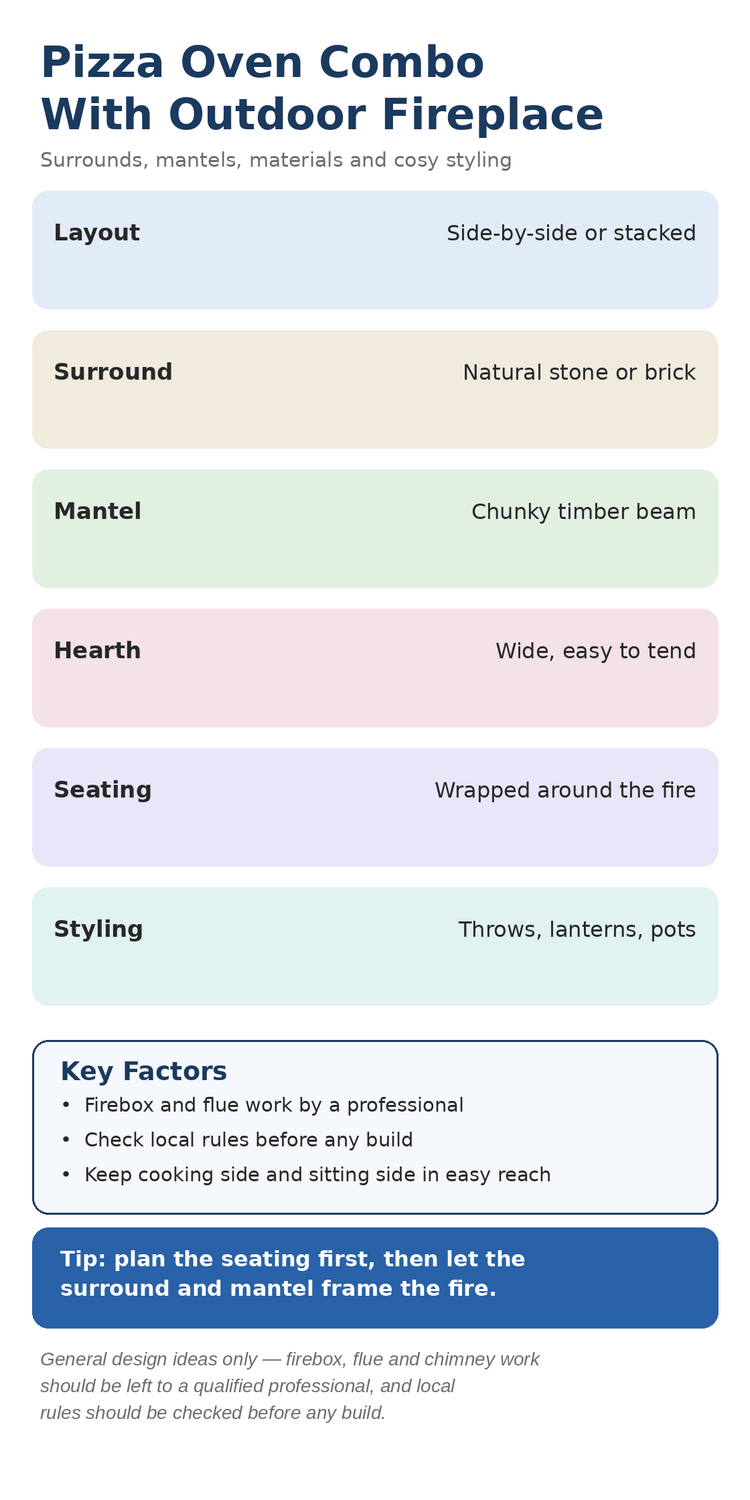
A stacked arrangement, with the oven above and the firebox below, suits a tighter corner where width is limited, though it asks more of the structure and of the people who will use it. Reaching an oven mouth set high above a firebox is less comfortable than working at a worktop, so the stacked form suits occasional cooking better than regular entertaining. Whichever arrangement is chosen, the chimney and flue belong to the professional side of the project: firebox, flue and chimney work should be left to a qualified professional, and local rules should be checked before any build begins. The design choices in this guide sit around that professional core, never in place of it.
Thinking about outdoor fireplace kits with pizza oven combinations in general terms helps at the planning stage, because the kit or masonry form sets the footprint, the height and the materials, and those decisions shape everything from seating distance to planting. A compact combo suits a small patio where a single structure must do a lot of work, while a generous run of masonry suits a larger garden where the structure can anchor an outdoor room. Either way, the combo should relate to the house in scale and material, echoing the garden walls or the patio surface so it feels rooted rather than imported.
2. Reading the Surround
The surround is the face the combo shows to the garden, and it carries most of the visual weight. A surround that runs unbroken across both the fireplace and the oven ties the pair together, while a surround that changes material halfway can make the structure look like two unrelated features. The eye reads the surround first, so its texture and tone set the mood of the whole patio: rough stone feels rustic and relaxed, smooth render feels calm and contemporary, and brick brings a warmth that suits cottage gardens and traditional houses alike.
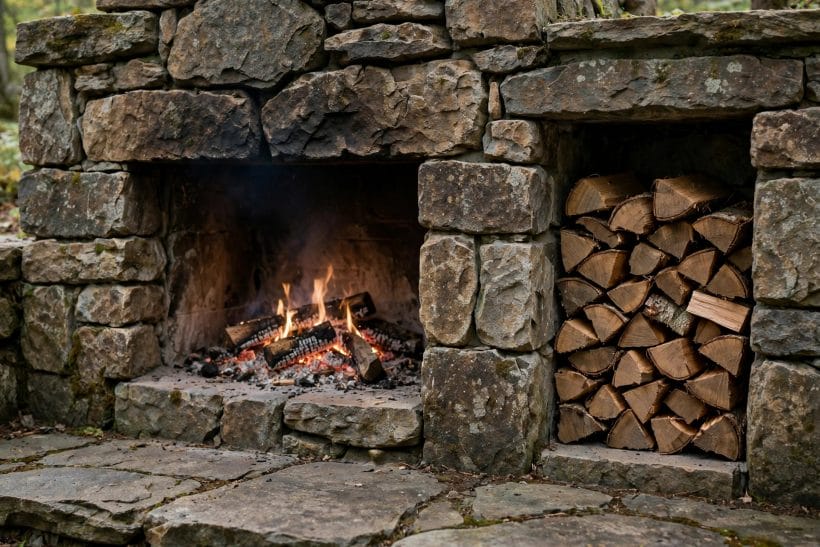
Detail at the surround rewards a slow look. A slightly projecting hearth ledge gives a place to rest a lantern or a pot, a recessed log niche keeps fuel tidy and close at hand, and a coping stone along the top edge finishes the structure and protects it from weather. These details should be chosen for how they will look after seasons of use, not only on the day the structure is finished, since soot, rain and heat all leave their mark. Materials that age gracefully, showing gentle weathering rather than staining or cracking, keep the combo looking loved rather than tired.
3. Stone That Suits the Garden
Natural stone is the classic surround material for an outdoor fireplace, and it suits the pizza oven combo because it handles the garden setting so naturally. Roughly dressed stone with visible variation in tone gives a hand-built character, while more regular cut stone reads tidier and more formal. The choice should follow the garden around it: stone that echoes a nearby garden wall, a stone patio or the house itself will sit more comfortably than a stone chosen in isolation, however attractive it looks on its own.
Stone also brings practical qualities worth weighing. It holds warmth after the fire dies down, which extends the pleasure of an evening, and it weathers outdoors without demanding constant attention. Joints and pointing deserve a look during planning, since wide joints suit a rustic structure and narrow joints suit a neater one, and the mortar tone can either blend quietly or pick out each stone. A stone surround pairs happily with timber, terracotta and planting, which makes the styling that follows much easier to get right.
4. Brick Warmth and Rendered Calm
Brick gives a combo a different kind of warmth from stone, with a regular rhythm and a colour range that runs from deep red to soft pale tones. A brick oven dome beside a brick fireplace arch has a pleasing symmetry, and brick suits gardens where the house itself is brick, tying the outdoor structure back to the building. Brick also takes kindly to being paired with a stone hearth or a timber mantel, so a mixed-material combo can feel deliberate rather than patched together when one material leads and the other accents.
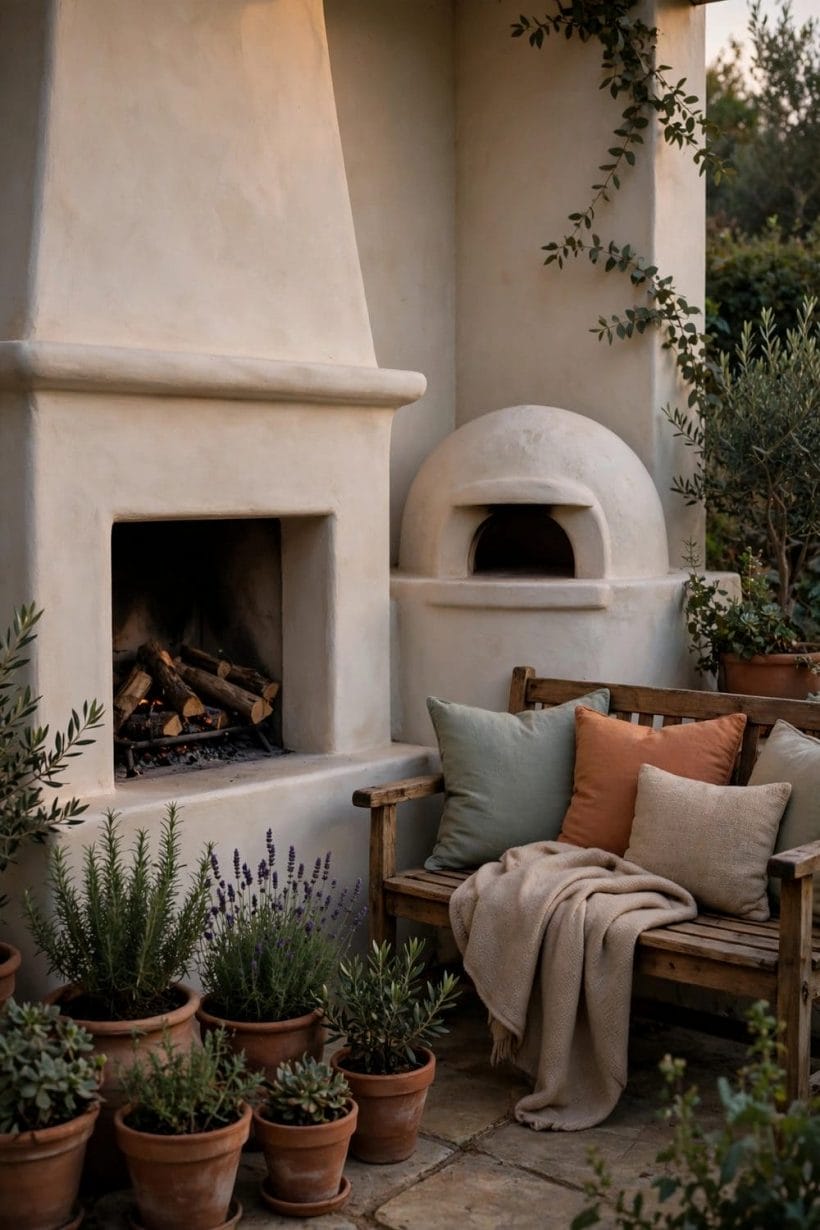
Rendered plaster offers the calmest face of all, smoothing the combo into a single sculptural form that suits warm-climate gardens and contemporary patios. A pale render glows in evening light and makes the firelight the star, while a tinted render can pick up the colours of the house or the planting. Render asks for a sound structure beneath it and for professional attention to the firebox and flue, as with every form in this guide, and it rewards careful detailing at edges and openings where a crisp line makes all the difference. For a different fireplace form altogether, the guide to ventless gas logs in a wood-burning fireplace covers that separate subject.
5. The Mantel as the Room’s Shelf
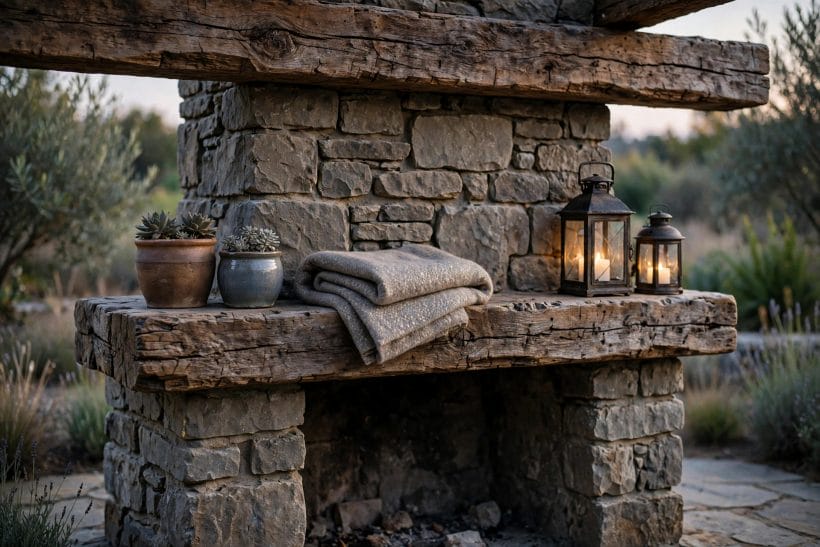
Outdoors, the mantel behaves like a shelf for the garden room, and it deserves the same thought as an indoor mantel. A chunky timber beam brings instant warmth and a rustic note, and it gives the combo a horizontal line that balances the vertical chimney. Timber near a fire needs professional judgement about placement and protection, so the beam’s position and fixings belong in the professional conversation, not in guesswork. When the beam is set well, it frames the fire beautifully and gives the eye a place to rest.
Stone and concrete mantels offer a quieter alternative, continuing the surround material in a single shelf that feels carved from the structure itself. A stone mantel suits a formal surround and needs little dressing, while a timber mantel invites styling: pots, lanterns and a folded throw all sit happily along it. Whatever the material, the mantel should stay uncluttered, with a few well-chosen objects rather than a crowded display, since heat, weather and soot will find anything left too close to the fire. Keeping the mantel simple also keeps attention where it belongs, on the flames below and the garden beyond.
6. The Oven Mouth and the Worktop
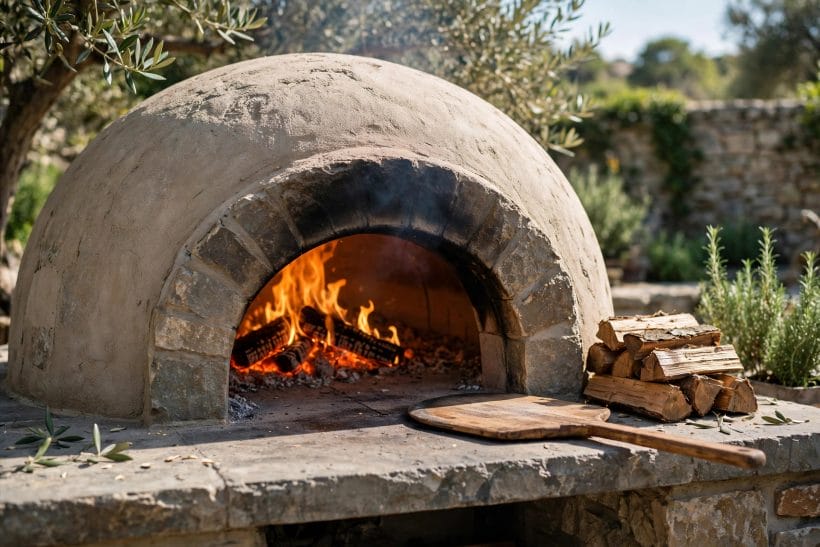
The oven is the working half of the combo, and its mouth and worktop decide how pleasant cooking outdoors will feel. A generous worktop beside the oven mouth gives space for a peel, a board and the dishes coming out of the oven, and it keeps the cook from juggling hot things at arm’s length. The worktop material should shrug off heat and weather, and it should sit at a comfortable working height so an evening of cooking does not become a chore. Stone worktops pair naturally with stone surrounds, while a timber-topped preparation area adds warmth away from the heat.
Storage near the oven keeps the cooking side tidy: a niche for firewood, a shelf for peels and boards, and a dry corner for the things that should stay out of the rain. These practical pockets are best planned into the structure rather than added afterwards, since a niche built into the masonry looks intentional and keeps the worktop clear. The oven mouth itself should face away from the main seating where possible, so smoke and heat drift past rather than through the conversation, and the cook can work without an audience standing in the way.
7. The Hearth Underfoot
The hearth is the ground the combo stands on, and it shapes how the whole patio feels underfoot. A wide hearth apron in front of the fireplace gives a safe, clear zone and a place to set a log basket or a pair of boots, while the patio surface beyond it carries the seating. Stone flags, brick pavers and concrete all suit the hearth area, and the choice should follow the patio so the combo does not sit on an island of unrelated material. A level, well-drained surface matters more than any decorative flourish, since a patio that puddles or tilts will spoil the pleasure of the fire.
Edging and planting soften the hearth without crowding it. Low pots of herbs near the cooking side are handy as well as pretty, while a gravel margin or a planted border gives the structure a finished edge. Anything flammable should be kept well clear of the firebox opening, and soft furnishings should sit back from the heat, which is another reason to plan seating distance at the design stage rather than discovering it on the first evening. The hearth, in short, is where the structure meets daily life, and it should be planned for muddy shoes, dropped logs and busy evenings as much as for photographs.
8. Seating That Faces the Fire
Seating makes or breaks a fireplace combo, since a beautiful structure with nowhere comfortable to sit will stand unused. Chairs and benches should face the fire at a distance that feels warm without feeling scorched, and they should angle slightly toward each other so conversation flows as easily as the view. A built-in seating wall curving around the hearth gives a generous, sociable arrangement and doubles as a perch for pots and lanterns, while loose armchairs offer flexibility for different group sizes and seasons.
Cushions and throws turn a fire-side seat into a place people linger, and outdoor fabrics in natural tones keep the palette calm. Deep seats with room to tuck feet up suit long evenings, while a small side table within reach holds drinks without anyone having to get up. Shade and shelter shape seating comfort too: a partially covered setting keeps the worst of the sun and rain off the gathering, as explored in the guide to partially covered decks, and the same thinking applies to a patio arranged around a fireplace combo. The aim throughout is a seat that people choose without thinking, evening after evening.
9. Cosy Styling Without Clutter
Cosy styling is the layer that turns masonry into a room, and restraint is what keeps it cosy rather than cluttered. A few woollen throws folded over chair arms, lanterns along the mantel and hearth, and terracotta pots of lavender or rosemary give warmth and scent without competing with the fire. Colour should stay close to the garden: sage, rust, cream and timber tones sit happily beside stone and brick, while a single accent colour in cushions can lift the whole arrangement without shouting.
Lighting beyond the fire deserves its own thought. String lights overhead soften the patio after dusk and make the combo feel like a room, while lanterns at ground level pool light where people sit. Planting completes the styling: climbers on a nearby wall, pots flanking the structure and a herb bed near the cooking side all tie the combo into the garden. The test of good styling is simple: remove any single object and see whether the patio misses it, and if it does not, the patio was better without it. What remains should feel gathered over time, not arranged for a photograph.
10. Living With the Combo Through the Seasons
A combo earns its keep across the seasons when it is planned for more than summer evenings. In spring, the fireplace takes the chill off a cool night and the oven suits the first outdoor meals of the year, while in autumn the fire becomes the main event and the oven a bonus. Winter use depends on shelter and on how exposed the patio is, and a combo tucked against a wall or under a light cover will see far more use than one standing alone in an open lawn. Covers and cushions stored nearby make spontaneous evenings possible, which is when a fireplace combo truly proves its worth.
Care through the year stays light when the structure is well chosen. Ash and soot need clearing, cushions need a dry store, and planting around the hearth needs trimming back so it does not crowd the fire. Anything to do with the firebox, flue or chimney stays professional work, and any change to the structure or its venting should go through a qualified professional with local rules checked first. The landscape around the combo matters as well: the planting and layout ideas in the guide to Southern California landscape design show how a garden setting can frame an outdoor structure, and the same framing instinct suits any climate when adapted to local planting. A combo that is easy to tend and easy to sit beside will be used often, and use is the best measure of a good garden structure.
Final Considerations
Before committing to a pizza oven combo with an outdoor fireplace, it helps to walk the patio and imagine a full evening around it: where guests will stand with a drink, where the cook will work, where the firelight will fall, and where the smoke will drift. Sketching the arrangement at full scale, even roughly, reveals crowding and awkward corners before masonry makes them permanent. The structure should suit the household that will use it, not an imagined lifestyle, so a household that cooks outdoors often should weight the oven side, while a household that gathers for conversation should weight the seating side.
Professional advice belongs at the start of the project, not at the end. Firebox, flue and chimney work should be left to a qualified professional, local rules should be checked before any build, and any kit or masonry form should be judged on whether it suits the site rather than on how it looks in isolation. Related outdoor living ideas can sharpen the plan: the guide to cottage exteriors shows how a small house and its garden can share one language, the guide to tropical pools shows how water and planting frame a patio, and the guide to pool retaining walls covers the structural garden walls that often border such a patio. A covered overhead, like the sunroom ceilings explored in the guide to sunrooms with cathedral ceilings, can also inspire the shelter over an outdoor room, adapted to open air. With the professional core settled and the styling kept simple, a pizza oven combo with an outdoor fireplace becomes the warm heart of the garden, a place for cooking, conversation and quiet evenings alike.

0 Comments