
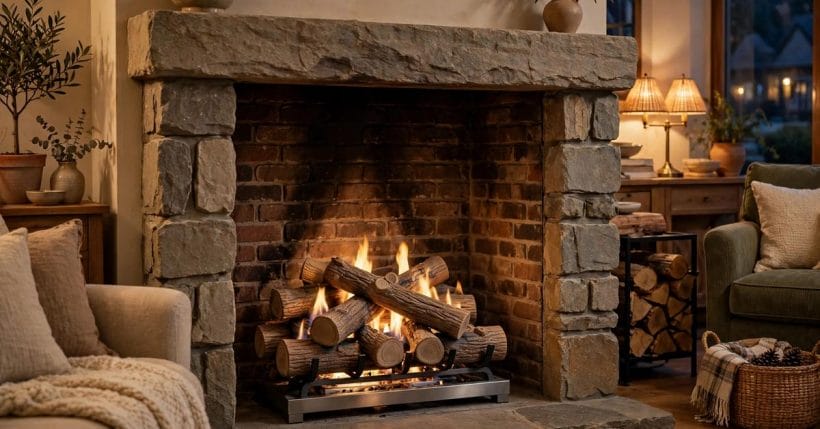
A wood-burning fireplace has a presence that few other features in a home can match. The deep opening, the masonry around it and the chair pulled close on a cold evening all belong to a familiar picture of home life. Yet burning wood every time the fire is wanted is not always practical. There is wood to store and carry, ash to clear and a fire to tend, and some households simply want the look of a fire with less daily work. That is where a ventless gas log set enters the conversation, offering flames over shaped logs without a wood fire underneath.
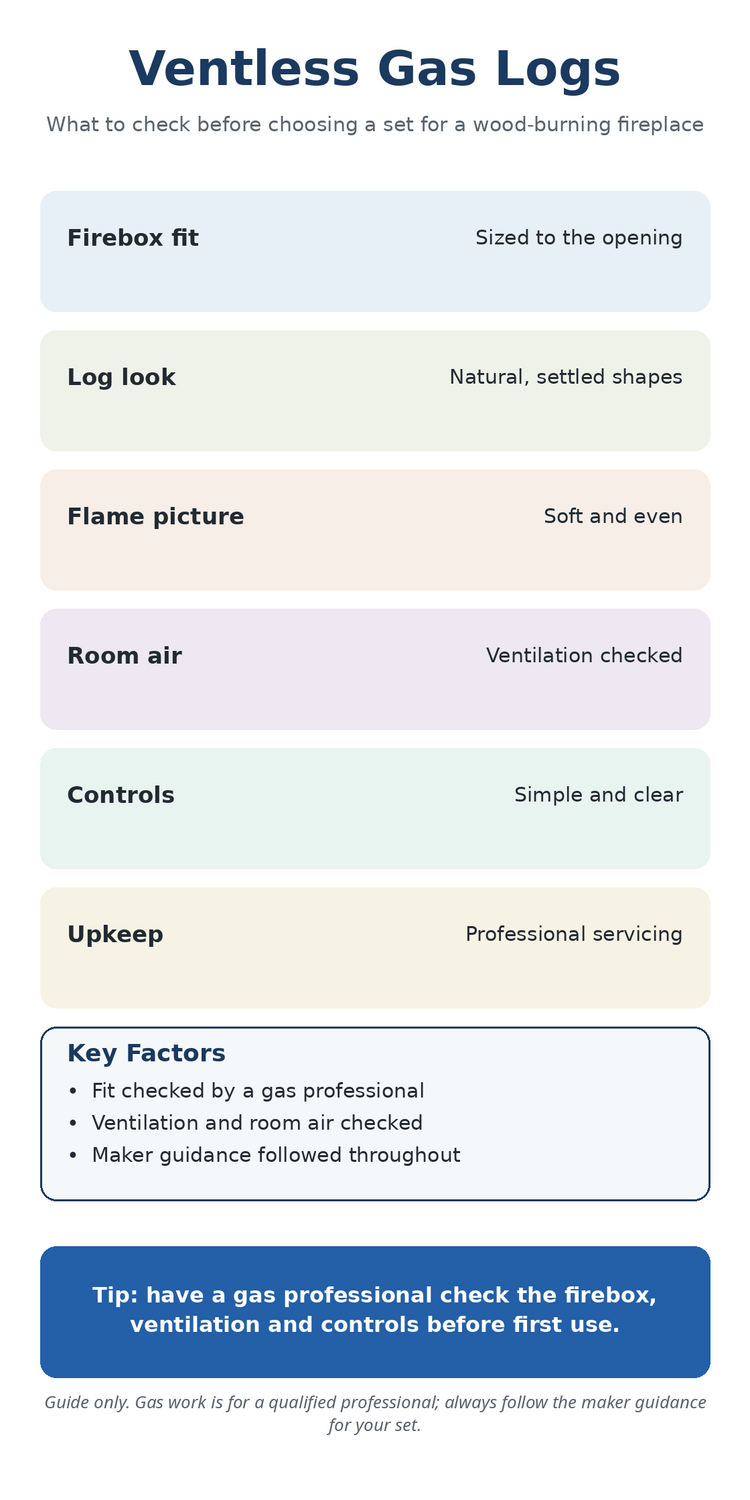
This guide looks at ventless gas logs used in a wood-burning fireplace in general terms: what the set is, what to look at in the firebox, how the flame and the room around it should be judged, and which questions belong to a gas professional. It is a what-to-check guide, not a fitting guide. Gas work is for a qualified gas professional only, and nothing here describes connecting, adjusting or altering any gas part. Where this guide mentions a check, it means something to notice, ask about or have a professional confirm. A vent free gas fireplace insert with logs is one way of describing this kind of set in search terms, and the rest of this guide uses the plainer phrase ventless gas logs.
1. What a Ventless Gas Log Set Is
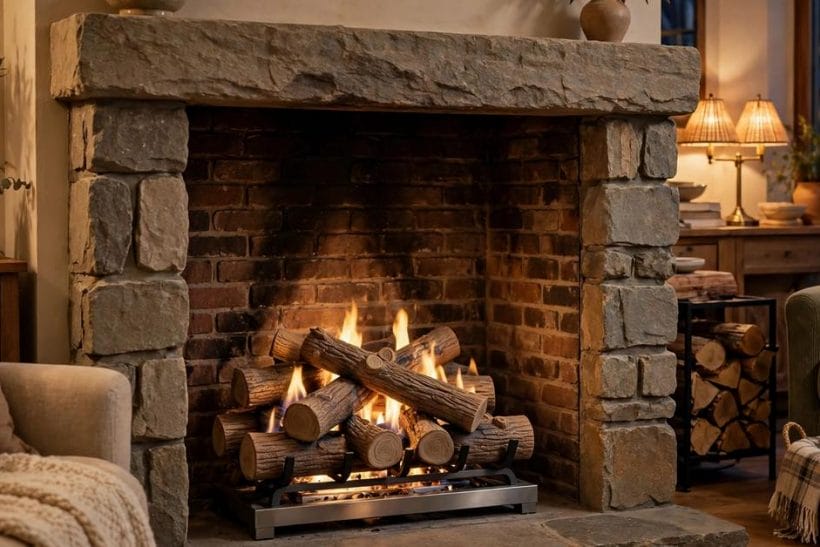
A ventless gas log set is a manufactured set of shaped logs, usually made to look like real logs, arranged over a gas burner inside a fireplace opening. When lit, flames play over and between the logs, giving the impression of a wood fire while the fuel is gas. The word ventless describes the form of the set: it is designed to be used without relying on a chimney draught to carry the products of burning away, unlike a traditional wood fire that depends on the chimney. That single difference shapes almost every check that follows, from the room around the fireplace to the advice a professional gives before any set is chosen.
It helps to keep the parts of the subject separate. The logs give the look. The burner gives the flame. The firebox gives the setting, and the room gives the air the fire burns in. A set that looks handsome in a showroom photograph may sit awkwardly in a shallow opening, and a flame that looks full in one room may feel wrong in another. Judging the set as a whole, rather than falling for the logs alone, is the habit this guide encourages. The maker guidance that comes with any set is part of that whole too, since it describes the conditions the set was made for.
Another point worth settling early is that a ventless gas log set is not the same thing as a vented gas log set, and the two should never be confused. Vented sets are made to work with a chimney in use, while ventless sets are made for a different arrangement. The distinction matters because the checks for one do not simply transfer to the other. Anyone unsure which form suits a particular fireplace should ask a gas professional rather than guessing from appearance, since the two forms can look alike while needing different conditions around them.
2. The Firebox in Front of You
Every useful check starts with the firebox already in the home. Look at its shape with fresh eyes: how wide the opening is, how deep the chamber runs, how the back wall sits, and whether the floor of the firebox is level and sound. Notice the masonry or lining too, and whether there are cracks, stains, loose material or signs of past heat damage. None of this is a diagnosis, and a homeowner is not expected to judge the condition of masonry. It is simply a way of gathering what a professional will want to know, and of spotting anything that clearly needs a professional look before any further step is taken.
The history of the fireplace matters as well. A fireplace that has burned wood for years carries soot, ash and wear that a new set will sit among, while a fireplace that has stood unused for a long time may hide damp, debris or a blocked passage. A professional can advise on cleaning and inspection, and on whether the firebox is suitable for a gas log set at all. That advice comes before choosing logs, not after, because a set chosen for a firebox that turns out to be unsuitable is a purchase made in the wrong order. Brick fireplaces are a common setting for this kind of change, and the brick fireplace living room ideas survey shows how brick openings sit within a whole room, which helps when picturing a set in place.
3. Fit and the Shape of the Opening
Fit is the first practical test of any set, and it is a visual test before it is anything else. A log set should sit inside the opening with room to spare around it, not wedged against the sides or poking forward past the face of the fireplace. Logs that crowd the opening look wrong at once, and a set that sits too far back can look lost in a deep chamber. The depth of the firebox matters as much as its width, because a set needs enough depth to sit naturally rather than perched at the front edge. Standing back and looking at the whole opening, rather than measuring with a hopeful eye, usually shows whether a set belongs there.
Stone surrounds change the picture again, since a chunky stone face can make an opening feel smaller than it is, while a slim surround can leave a set looking exposed. The stone fireplace ideas collection gives a sense of how different surrounds frame an opening, and that sense of proportion is worth carrying into any viewing. A professional confirms the actual fit, including clearances and any conditions in the maker guidance, and that confirmation is what turns a good-looking choice into a sound one. Until that confirmation exists, fit remains a question, not a conclusion.
4. The Look of the Logs and the Flame
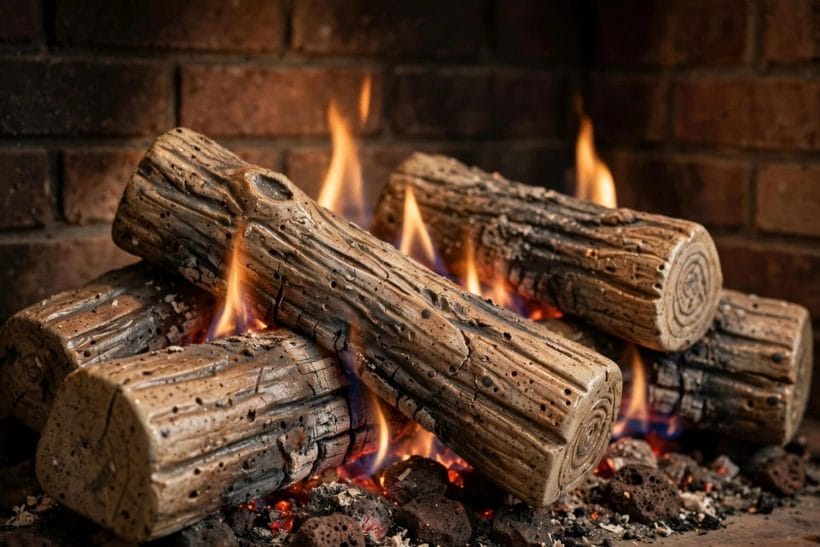
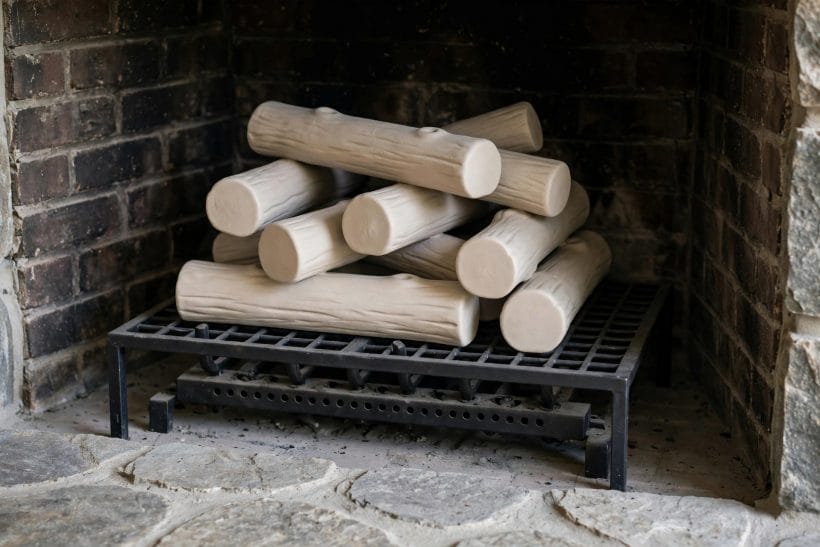
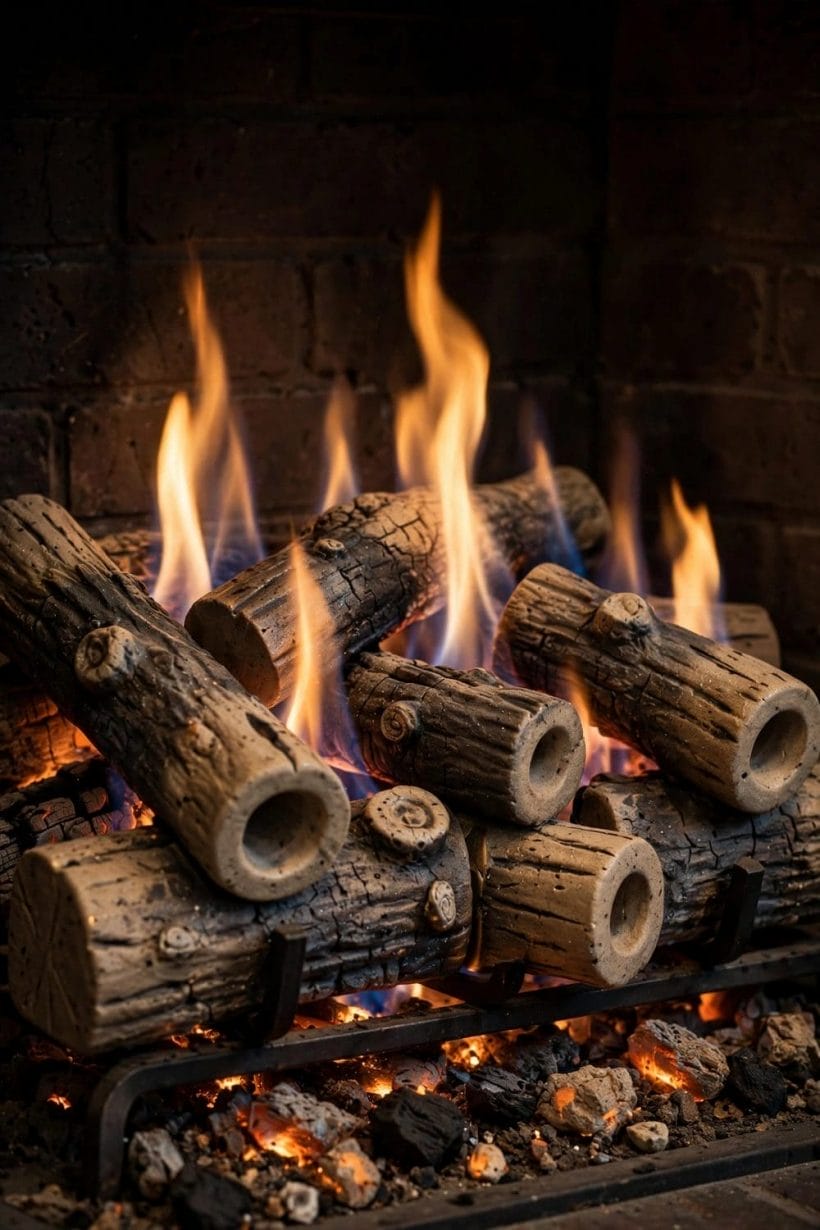
The logs themselves deserve a slow look, because they carry the whole illusion. Good log shapes have the uneven character of real logs: varied thickness, natural-looking bark texture, ends that read as cut wood, and an arrangement that looks settled rather than stacked like a display. A set where every log looks identical, or where the arrangement looks stiff and symmetrical, will draw the eye for the wrong reason. Colour matters too, with natural wood tones sitting more quietly in a room than logs that look painted or unnaturally dark. The aim is a fire that invites a glance and then lets the room take over, not a fire that demands constant attention.
The flame is the other half of the picture. With the set lit, flames should rise softly and evenly across the logs, with movement that feels natural rather than fierce in one place and thin in another. A flame picture that is patchy, harsh or uneven is something to mention to a professional, not something to adjust at home. The room light changes the flame as well: a set viewed in a bright showroom can look quite different in a dim living room in the evening, so it is worth picturing the flame in the light the room actually has. Soot marks on logs or around the opening, if any appear over time, are also a matter for a professional, never for home adjustment.
5. Room Air and Ventilation Checks
Because a ventless set does not rely on a chimney draught, the room itself becomes part of the subject. Think about the size of the room, how air moves through it, whether doors and windows are usually kept closed, and whether the room connects openly to other spaces. A small, tightly closed room and a large, open-plan space are different settings, and a professional can advise on what suits each. This is not a matter of guessing or of applying a rule remembered from elsewhere, since rooms differ and the maker guidance for a particular set describes the conditions it was made for.
There are also household routines to consider. A room that is used for long, settled evenings is different from a room passed through briefly, and a home with people sensitive to air quality deserves extra care in asking questions. A professional can advise on room-air checks and on any alarms or monitors suited to the home, and on how often such things should be looked at. The safe habit is to treat every room-air question as a professional question: notice the room, describe it honestly, and let the professional judge what it needs. No guide can settle room air for a particular home from a distance, and this one does not try.
6. Controls and Everyday Operation
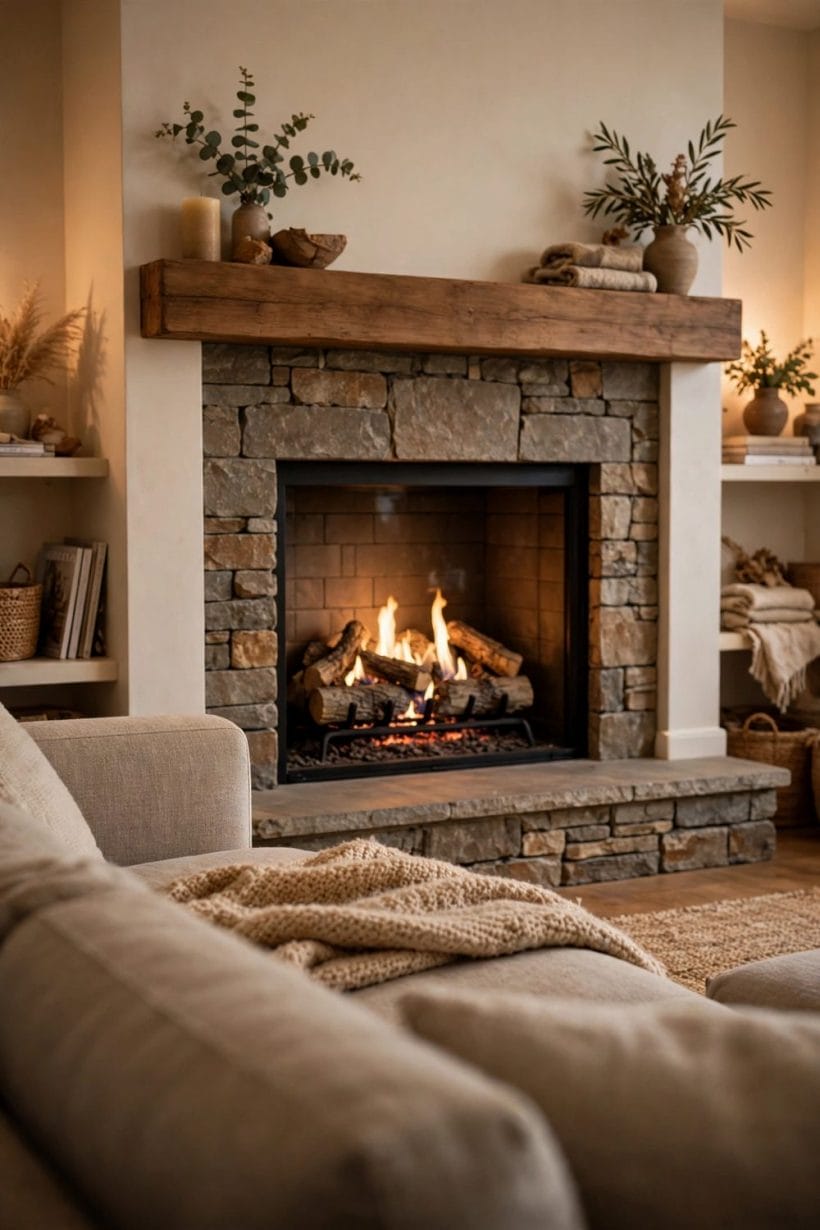
Controls are easy to overlook when the logs look good, yet they shape every evening with the fire. Look for controls that are simple to understand, clearly marked and reachable without awkward stretching or crouching. A control that needs a manual at hand every time is a control that will irritate, and a control hidden awkwardly behind the set is one that will be dreaded. Ask how the set is lit, how it is turned off, and what happens if the flame goes out, and be satisfied with the answers before choosing. The answers should come from the maker guidance and the professional, not from guesswork.
Everyday operation also means knowing what normal use looks like. How long the fire is usually lit, whether it is a background glow for an evening or the main focus of the room, and who in the household will operate it all shape the choice. A set that suits a household where one confident adult runs the fire may not suit a home where several people, including guests, might reach for the controls. Simplicity is a virtue here: the fewer steps between wanting a fire and having one safely lit, the better the set fits daily life, provided every step remains within the maker guidance.
7. The Surround, Hearth and Room Around the Fire
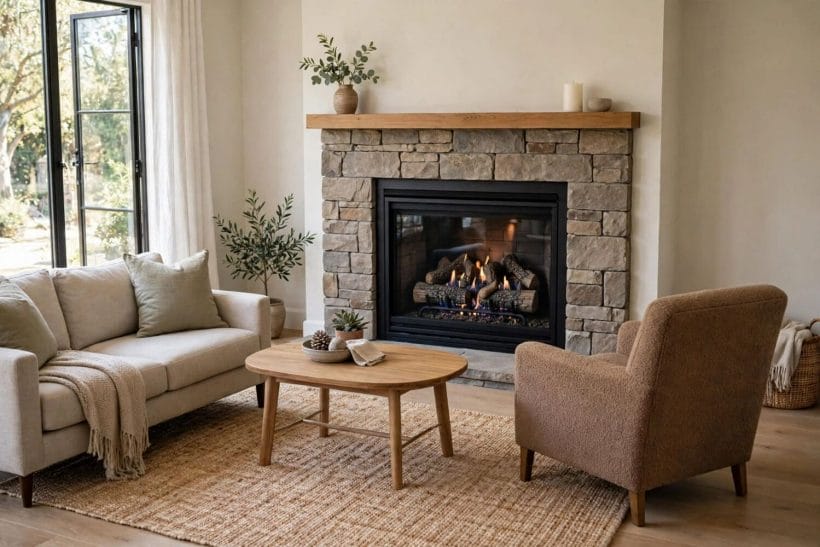
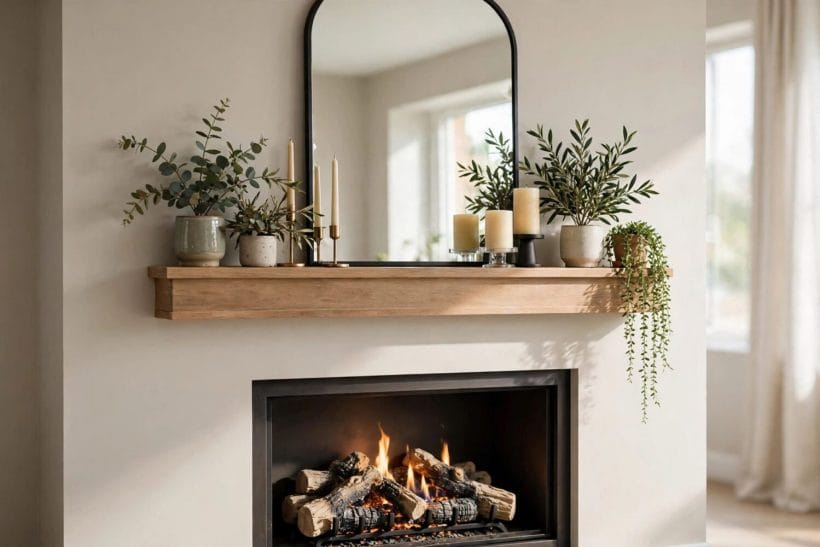
A fireplace never stands alone, and a gas log set should be judged with its surroundings. The mantel above, the hearth below and the wall around the opening all frame the fire, and they all feel its warmth over time. Look at what sits on the mantel and how close it stands to the opening, and consider whether anything there would need moving. The fireplace mantel ideas survey shows how mantels are dressed, and it is a useful reminder that a mantel is a display shelf as well as a frame. Anything placed there should suit the warmth and the setting, and a professional can advise where doubt exists.
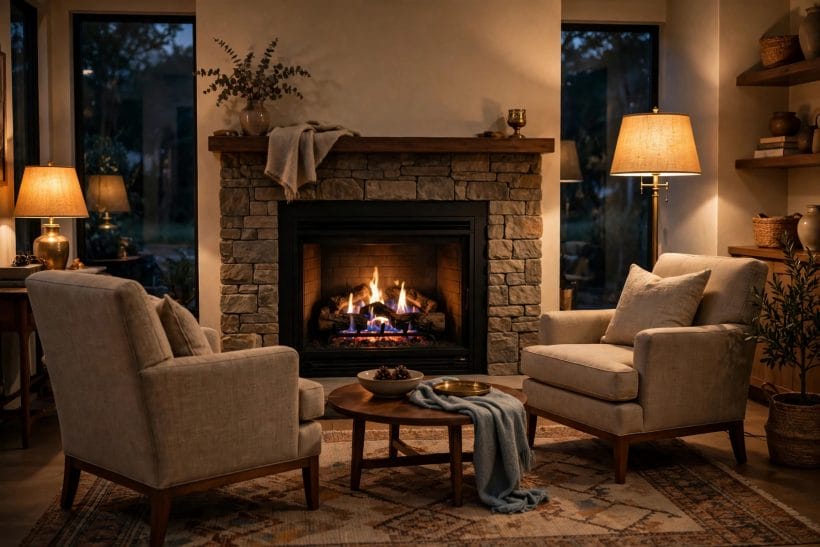
The hearth deserves the same attention. It is the apron in front of the fire, the place where feet, pets and furniture edges all gather, and it should be sound, level and easy to keep clear. The fireplace hearth ideas collection shows hearths in many materials and shapes, which helps when judging whether a hearth suits daily life or fights it. Seating belongs in this picture too: chairs and sofas should face the fire comfortably without crowding it, and the fireplace living room ideas survey shows seating arranged around the fire as the centre of the room. Built-in joinery nearby should be considered as well, since shelves and cupboards beside a fireplace change how the whole wall works, as the built-ins around fireplace ideas collection illustrates.
Corner fireplaces raise their own questions, because the fire is seen from an angle and the seating must work around two walls rather than one. The corner fireplace ideas survey shows how such rooms are arranged, and it is worth studying before settling a set into a corner opening. In every case the principle is the same: judge the fire as part of the room, not as an object on its own, and let the room’s shape, light and daily use guide the choice as much as the logs themselves.
8. Living With the Set Through the Seasons
A gas log set is not a decision for one evening but for many seasons, so it is worth picturing life with it across the year. In cold months the fire may be lit often, becoming part of the evening routine, while in warmer months it may sit unlit for long stretches, becoming part of the room’s furniture. Dust settles on unlit logs, rooms are rearranged, and mantel displays change with the seasons. A set that looks good only when lit, and awkward when unlit, will spend much of the year disappointing, so the unlit look matters as much as the flame.
Care through the seasons is mostly a matter of gentle attention and professional servicing. Dusting around the opening, keeping the hearth clear and noticing any change in the flame or the logs are household habits, while anything involving gas parts, burners or controls belongs to a professional. It is worth asking, before choosing, how often servicing is advised and what it covers, so that upkeep is planned rather than discovered. A set with a clear, simple care routine will age more gracefully than one whose upkeep is vague, and the maker guidance is the place where that routine is described.
9. Questions to Ask a Gas Professional
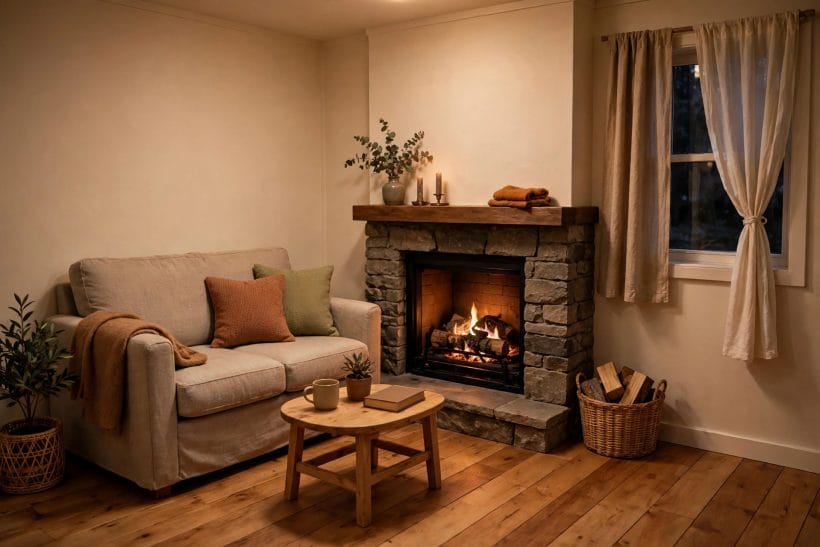
The most useful part of this guide may be the shortest: a list of questions to carry to a gas professional. Is this firebox suitable for a ventless set at all, and what would inspection need to confirm? Does the set fit this opening with the clearances its maker guidance requires? What does the room need in terms of air and ventilation, and are there any alarms or monitors the professional advises for this home? How are the controls operated, and what should the household do if the flame behaves unexpectedly? Each question is simple, and each one deserves a direct answer before any purchase is made.
Rules and permissions vary by place, so a further question belongs on the list: are there local rules, permissions or inspections that apply to this kind of change in this home? A local professional can confirm what applies, and that confirmation is worth more than any general statement. It is also worth asking what the professional would check at a servicing visit, and how often such visits are advised, so that the household knows what ongoing care looks like. A professional who welcomes these questions, answers them plainly and points to the maker guidance is a good sign, and a hurried answer to any of them is a reason to pause.
10. A Shortlist Before Choosing
With the checks above in mind, a shortlist can be drawn up without rushing. First, the firebox: its shape, condition and history, as a professional describes them. Second, the fit: a set that sits naturally in the opening with room to spare. Third, the look: logs and flame that read as a natural fire in the room’s own light. Fourth, the room: its size, air movement and daily use, as a professional judges them. Fifth, the controls: simple, clear and reachable. Sixth, the surroundings: mantel, hearth, seating and joinery working as one picture. Seventh, the care: a servicing routine that is clear before purchase.
Carrying this shortlist to viewings changes how sets are seen. Instead of choosing the most dramatic flame or the most realistic single log, the eye settles on the whole arrangement and the room around it. Sets that fail on fit or on room air fall away early, however handsome they look, and sets that pass every check earn their place. That discipline is the point of a what-to-check guide: not to make the choice, but to make the choice a considered one, with a professional’s judgement at the centre of it.
Final Considerations
A ventless gas log set in a wood-burning fireplace can bring the look of a fire with less daily work, but it is a change that deserves patience. The firebox, the fit, the flame, the room air, the controls and the surroundings all have a say, and a gas professional has the deciding voice on the matters that involve gas, ventilation and safety. Nothing in this guide replaces that voice, and no part of choosing, fitting or servicing a gas set should be treated as a home project. The household’s part is to look carefully, ask directly and follow the maker guidance and the professional’s advice.
Seen that way, the decision becomes calmer. There is no need to rush toward the first handsome set, and no need to be swayed by a flame seen in unfamiliar light. Take time with the firebox, picture the set in the room through every season, and let the shortlist do its work. A fire chosen this way is more likely to settle into the home quietly, giving warmth and light in the evenings without fuss, and that quiet settling is the best outcome any fireplace change can hope for.



0 Comments