
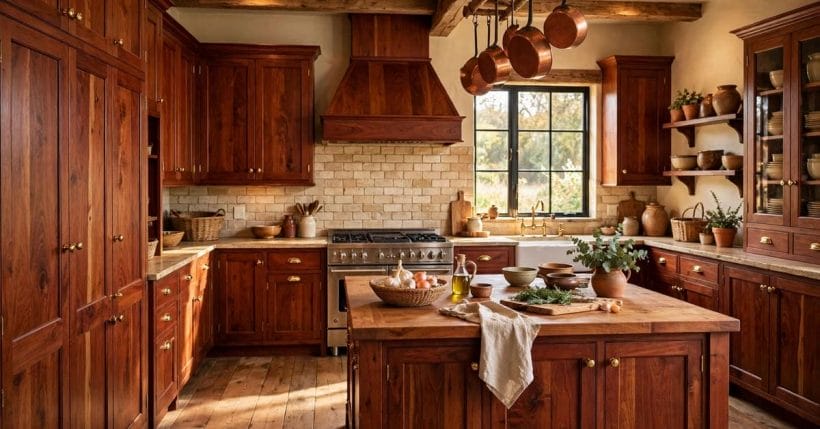
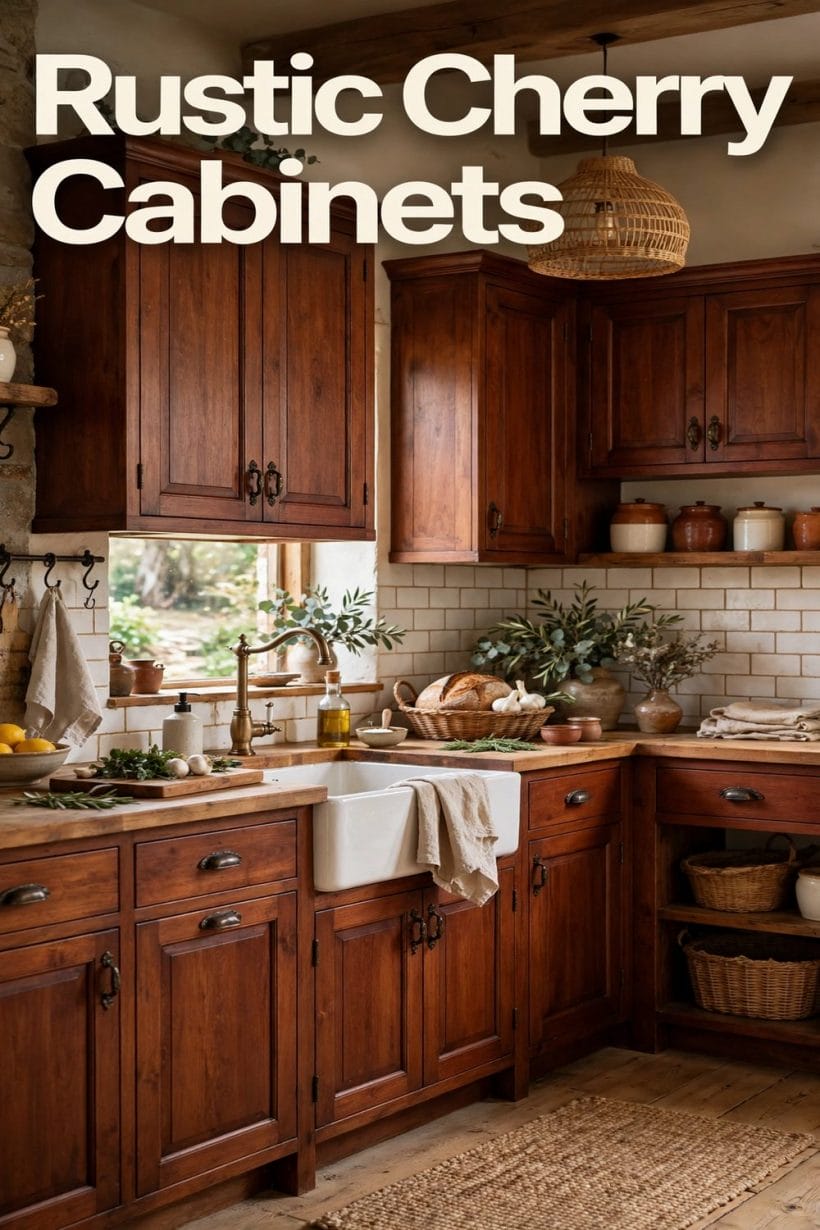
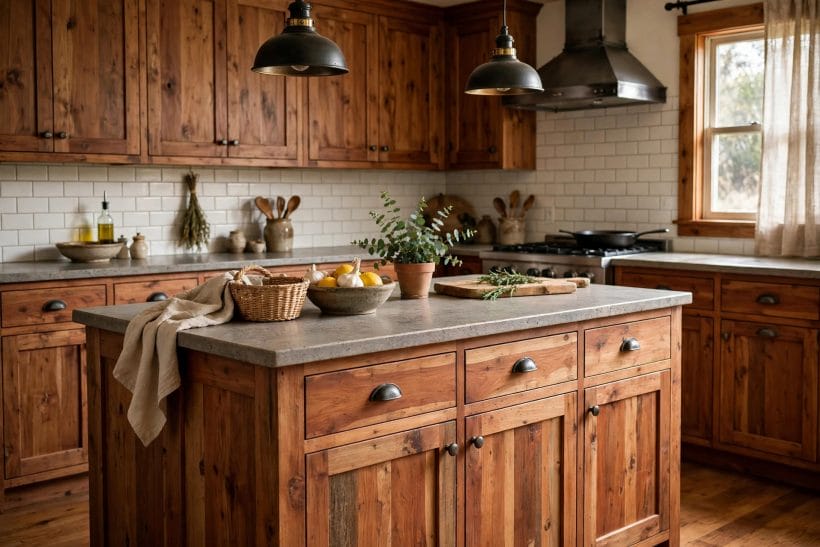
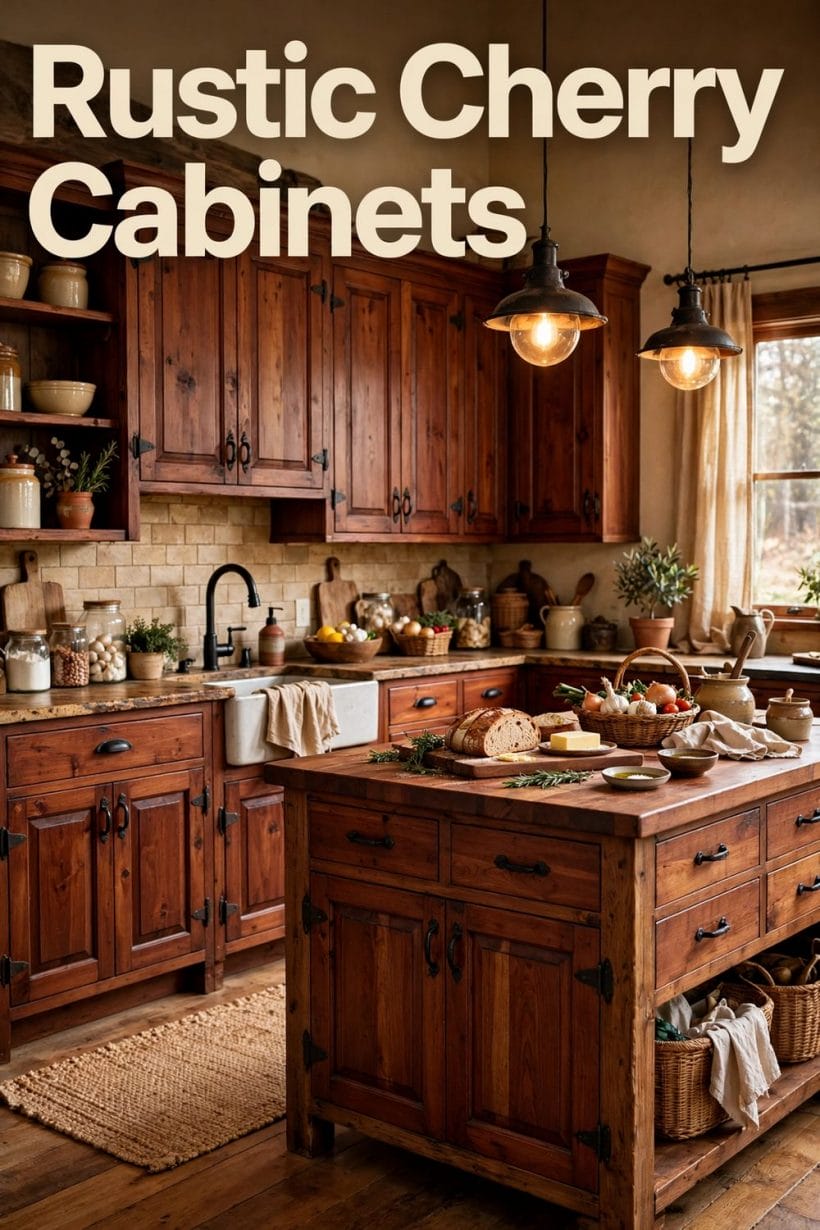
Cherry wood has warmed kitchens for generations. Its colour deepens, its grain stays visible, and a rustic treatment lets the timber look honest rather than polished to a shine. Rustic cherry cabinets suit kitchens that want warmth without fuss: real wood, simple doors, and hardware that does not compete with the grain.
This guide covers what to look for in rustic cherry cabinets: the wood itself, the finish, the layout, the light, and the care. No prices, no invented figures, and no paint codes appear here. Cabinet fitting and any electrical or plumbing work around them belongs to qualified tradespeople.
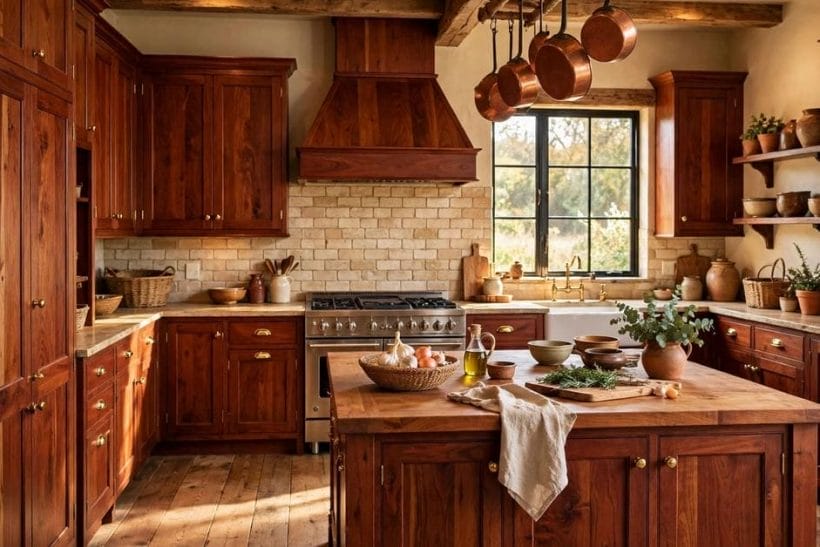
1. The Wood Itself
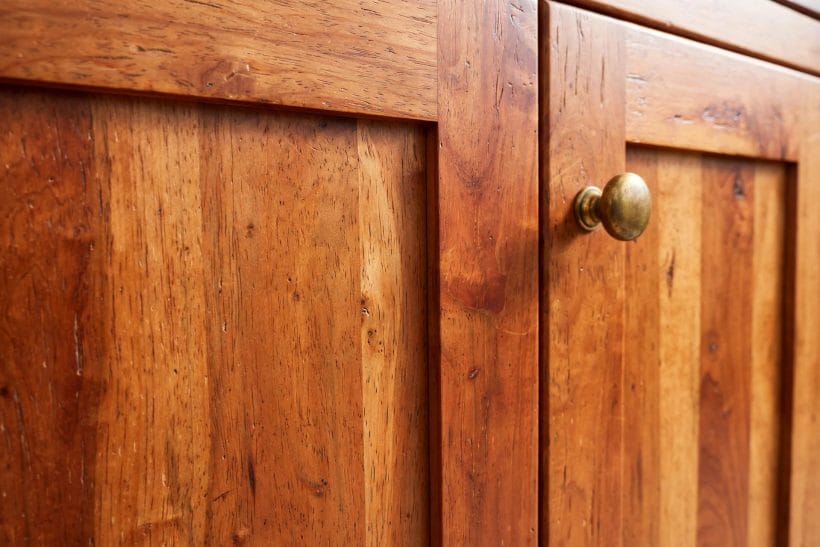
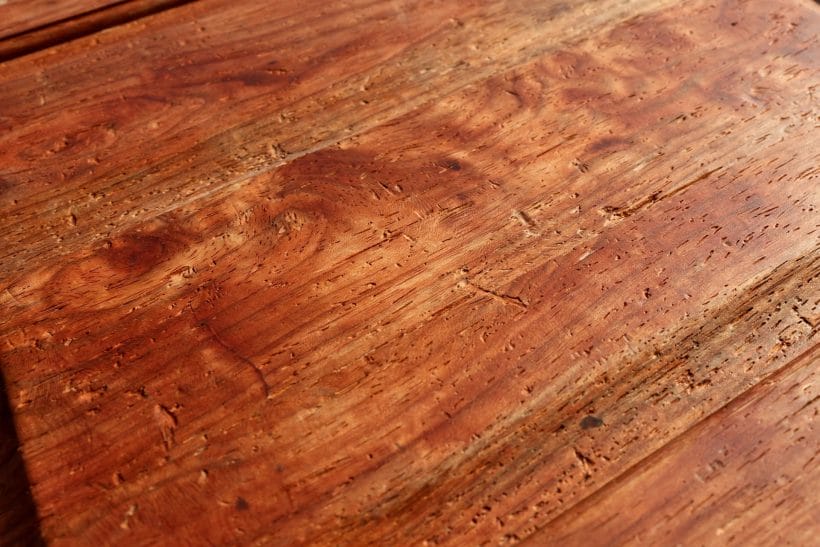
Cherry is a hardwood with a warm tone and a fine, flowing grain. Rustic cherry keeps more of the timber’s natural character than a formal grade: colour variation between boards, visible grain movement, and small natural marks are part of the look rather than flaws to hide.
Look at several doors together before judging the timber. One door alone can mislead, because cherry varies from board to board. A good set shows variation that feels natural across the run, not one board that jars against the rest.
Ask what the cabinets are made of beneath the face. Solid doors, veneered panels, and mixed construction all behave differently over time. The supplier should explain the construction plainly so you know what you are buying.
Sourcing matters for cherry as much as for any timber. Ask where the wood comes from and whether it is certified as sustainably harvested, since responsible forestry keeps cherry available for future kitchens as well as this one. Domestic cherry and imported cherry can differ in colour and grain, so the origin is worth knowing before ordering. A supplier who can explain the timber’s source, its grade, and why that grade suits a kitchen is giving you the information you need to judge value, while a supplier who cannot may be selling on appearance alone. Keep the timber’s details with your order paperwork for future repairs or matching.
2. Grain and Colour Variation
Cherry’s colour changes with light and age. New cherry can look lighter than expected, and it deepens over months and years, especially where sunlight falls. This is normal for the timber, not a defect.
Plan for that change. A finish that looks right on the day of fitting will warm up over time, and rooms with strong sunlight will change faster than shaded ones. If even colour matters more to you than character, say so before ordering, because rustic cherry is chosen for variation, not uniformity.
Pair the cabinets with colours that tolerate that drift. Warm neutrals, soft whites, and muted greens sit well with cherry at every stage of its colour journey. Very cool greys can fight the warmth, so test swatches beside a real door in your own light.
Sunlight management protects cherry’s colour from changing unevenly. A cabinet door that sits in a daily sunbeam will deepen faster than its neighbours, leaving a visible patchwork over time. Window treatments, UV-filtering glass, or simply arranging the layout so no single door takes the full brunt of the sun all help the colour age evenly. If uneven change has already happened, it often evens out over time as the paler boards catch up, though patience is required. Accepting cherry’s living colour, rather than fighting it, is part of choosing the timber in the first place.
3. The Finish
Finish decides how the cabinets feel and how they age. A clear finish protects the wood while letting the grain show. A stained finish evens the colour out and can push it darker. A distressed or hand-rubbed finish leans further into the rustic character.
Think about the kitchen’s working life. Cabinets near the cooker and sink meet steam, splashes, and greasy hands daily. A finish that seals well and wipes clean will look better for longer than one chosen for looks alone.
Ask how the finish can be repaired. Small marks are inevitable in a working kitchen, and a finish that accepts a local touch-up is more forgiving than one that needs a whole door refinished. Keep a note of the finish type for future repairs.
Sheen changes how a finish reads in a kitchen. A matte finish hides small marks and feels soft and natural, while a satin finish reflects a little more light and wipes clean slightly more easily. A high-gloss finish on cherry can look striking but shows every fingerprint and scratch, which is a demanding choice in a working kitchen. Sample boards in different sheens, viewed in your own kitchen’s light, settle the question better than any description. Remember that sheen also affects how the grain appears: lower sheens let the timber’s texture show, while higher sheens emphasise its colour and figure.
4. Door Styles That Suit Rustic Cherry
Simple door styles suit rustic cherry best. Shaker-style frames, flat panels with a soft edge, and lightly arched tops all let the timber do the talking. Fussy mouldings fight the rustic character and collect grease in their corners.
Keep the proportions calm. Very tall doors on short runs can look top-heavy, and tiny doors chopped up by fillers look fussy. A good designer balances door sizes across the run so the grain reads as one calm surface.
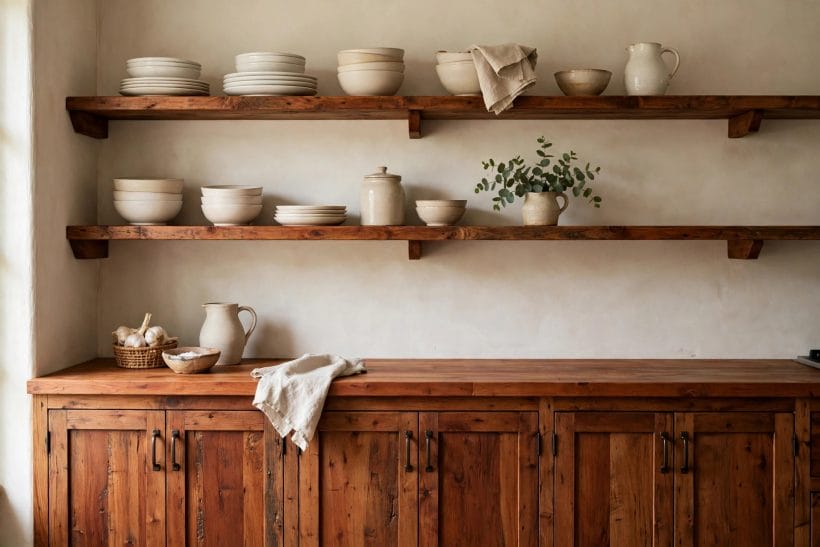
Open shelving can break up a long run of cherry without fighting it. A couple of open shelves for everyday pieces lighten the wall and give the eye somewhere to rest. Too much open shelving, though, turns storage into display duty.
Construction style shapes both looks and price. Framed cabinets carry a face frame that gives a traditional, furniture-like appearance, while frameless cabinets offer slightly more interior space and a cleaner, more contemporary line. Inset doors sit flush within the frame for a crafted, bespoke feel, while overlay doors cover the frame for a simpler, more forgiving fit. Each style suits rustic cherry differently: framed and inset construction echo traditional cabinetry, while frameless suits a cleaner rustic-modern blend. Ask the supplier to show you the construction, not just the door front, before deciding.
5. Layout and Workflow
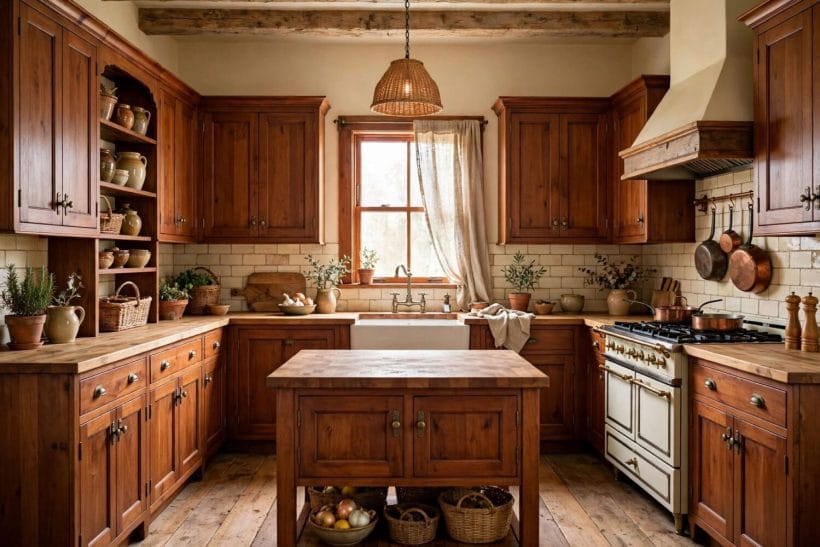
Layout matters more than any single cabinet. The cooker, sink, and storage should sit in a comfortable working triangle, with prep space beside the cooker and landing space beside the sink. Cherry looks its best when the kitchen works well, because a calm layout lets the timber breathe.
Plan storage by use, not by habit. Everyday plates and pans belong near the cooker and dishwasher. Occasional pieces can live higher or further away. Deep drawers for pots beat deep cupboards that swallow things at the back.
Leave room for the details that make a kitchen usable: a bin close to prep, a drawer for utensils beside the cooker, and a spot for trays and boards. These small decisions shape daily life more than the choice of handles.
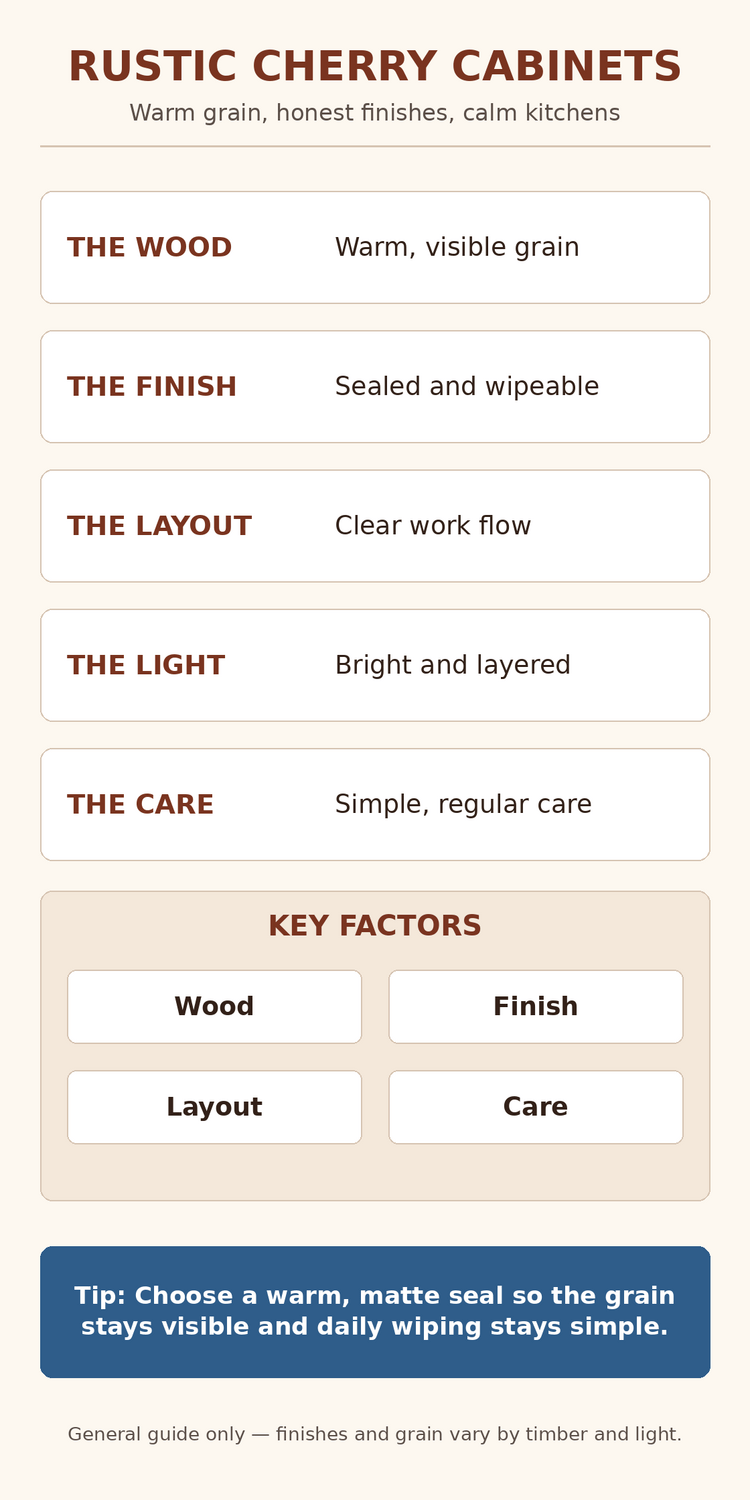
Traffic flow deserves as much thought as the work triangle. A kitchen with an island needs comfortable passing space on all sides, and a kitchen used by several cooks at once needs room for people to pass without collisions. Seating at an island or peninsula should allow diners to sit without blocking the cook’s path, and the dishwasher door, when open, should not bar the route to the sink. Sketch the busiest moments, such as a family breakfast or a dinner party, and walk through them mentally before fixing the layout. A layout that works on paper but fails at breakfast will annoy daily.
6. Light and Colour Pairing
Light changes cherry more than most timbers. Daylight warms it, evening light deepens it, and under-cabinet lighting brings the grain forward after dark. Plan the lighting with the cabinets, not after them.
Worktops should calm the scheme rather than compete with it. Pale stone, warm butcher block, and muted solid surfaces all sit well with cherry. Very busy patterns fight the grain, so let one surface lead and the other support.
Walls and floors follow the same rule. Warm whites, soft creams, and natural floor tones keep the kitchen feeling warm without turning it orange. Test everything beside a real cherry door in the room’s own light before committing.
Lighting colour temperature changes cherry’s appearance as much as daylight does. Warm light deepens cherry’s red tones and makes the kitchen feel cosy, while cool light flattens the warmth and can make the timber look duller. Under-cabinet lighting in a warm tone suits cherry best, and dimmers let the same lights serve both food preparation and evening atmosphere. Test the lighting with a real cherry door in place, since showroom lighting flatters everything and your kitchen’s combination of daylight and lamps is the only one that matters.
7. Hardware and Details
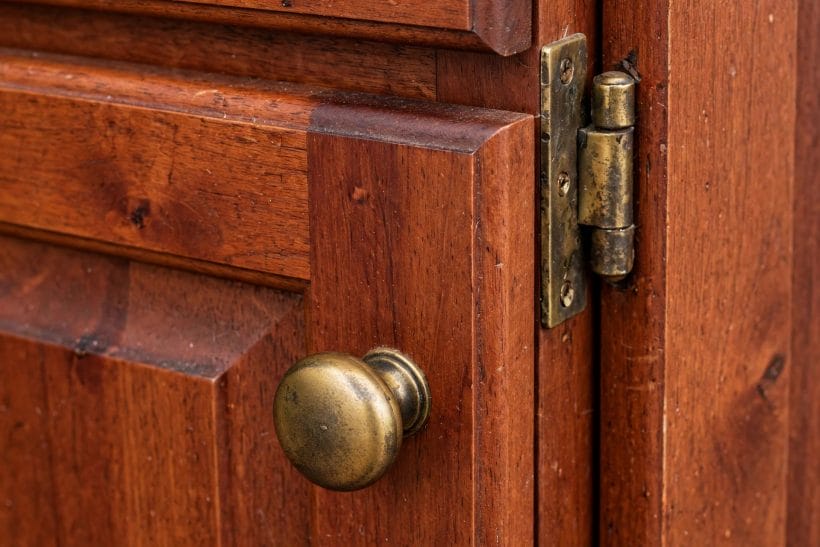
Hardware should feel like it belongs to the timber. Oil-rubbed bronze, aged brass, and blackened iron all sit comfortably with rustic cherry. Bright chrome can look too sharp against warm grain, though a few well-chosen pieces can still work.
Choose handles you enjoy using. A handle that looks right but digs into the hand will annoy daily. Try the size and shape in your hand, and check that drawers open fully without handles catching each other.
Hinges and runners deserve the same attention as handles. Soft-close hinges and full-extension runners make heavy drawers usable, and they protect the cabinets from slamming. Ask what hardware is included and what it is made of.
Handle placement is a small decision with daily consequences. Knobs suit doors, pulls suit drawers, and the two can mix if the finish matches and the scale is consistent. Placement should follow the hand’s natural reach: upper doors near the bottom edge, lower doors near the top edge, and drawers centred. Mixing metals across a kitchen can work when one metal clearly leads and the other accents, but two equally strong metals usually fight. Choose the leading metal first, then let hinges, taps, and lighting follow it quietly.
8. Pairing With Other Materials
Cherry pairs well with natural materials. Stone, timber, linen, and handmade tiles all share its warmth. Glass fronts on a few wall cabinets can lighten a run, and a timber mantel over the cooker ties the scheme together.
Keep the palette short. Two or three materials besides the cherry is plenty. Every extra material is another voice in the room, and a kitchen with too many voices feels restless rather than rich.
Think about the floor last, not first. The floor covers more area than the cabinets, and a floor that fights the cherry will dominate the room. Warm timber, muted tile, and natural stone all support cherry rather than competing with it.
Splashbacks and sinks complete the cabinet story. A simple tile, stone, or timber splashback protects the wall behind the cooker and sink without competing with the cherry, while a busy patterned splashback can steal the room’s attention. Sinks in fireclay, stainless steel, or composite each bring a different character: fireclay feels traditional and warm, steel feels practical and crisp, and composite sits quietly in between. Keep the sink and splashback calm so the cherry remains the room’s leading material, and let one detail, such as a handmade tile border, provide the accent.
9. Care Through the Years
Daily care is simple: wipe spills promptly, use a soft cloth, and avoid harsh cleaners that strip finishes. Water left standing on timber is the enemy, especially around the sink and dishwasher.
Seasonal care takes a little longer. Check hinges and runners, tighten anything loose, and look for wear on the most-used doors. Catching wear early keeps small jobs small.
Cherry ages gracefully when it is looked after. The colour deepens, the grain settles, and the kitchen gains the patina that makes rustic timber appealing in the first place. That slow change is the point of choosing cherry.
Humidity affects timber cabinets through the seasons. Kitchens swing between steamy cooking and dry winter heating, and timber responds by expanding and contracting slightly. Small gaps that appear in dry months and close in humid ones are normal for solid timber, and a stable indoor climate reduces the movement. Avoid placing cabinets hard against steam sources such as kettles and dishwashers without ventilation, and wipe condensation from cabinet faces promptly. A dehumidifier or good extraction helps the whole kitchen, not just the cabinets, and it protects the finish as well as the timber beneath.
10. Choosing With Confidence
Before ordering, see a real door in your own home if you can. Showroom light flatters everything, and your kitchen’s light is the only one that matters. Live with the sample for a few days, in daylight and lamplight.
Ask the supplier plain questions: what the cabinets are made of, what finish is used, how it can be repaired, and what the guarantee covers. Clear answers are a good sign. Vague ones are a reason to pause.
Finally, trust the timber. Rustic cherry is not trying to look perfect, and a kitchen that embraces that will age better than one that fights it. Choose the variation, plan the layout well, and let the wood do its work.
Comparing quotes fairly means comparing like with like. One quote may include soft-close hinges, full-extension runners, and installation, while another lists the cabinets alone, so read the inclusions before judging the price. Lead times vary with timber availability and the maker’s order book, so agree a realistic schedule and what happens if it slips. Guarantees should cover the cabinets, the finish, and the hardware separately if they differ, and the terms should be in writing. A supplier who answers these questions plainly is usually a supplier who will answer the phone after installation too.
Final Considerations
Rustic cherry cabinets bring warmth, grain, and character to a kitchen that wants to feel lived in rather than showroom perfect. Choose the timber for its variation, finish it for real kitchen life, lay the room out well, and care for it simply. The result is a kitchen that grows more comfortable with age.
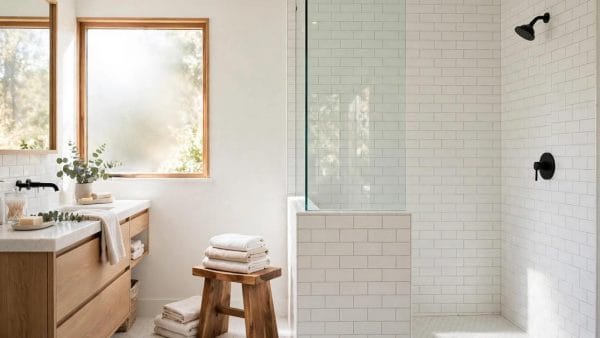
For more kitchen reading, see kitchen ideas, knotty alder cabinets, and knotty pine cabinets for other timber cabinet stories. black cabinet bathroom ideas and craftsman living room ideas carry the same warm-timber thinking into other rooms, and tiny house porch ideas shows how timber warms small spaces too.

0 Comments