

Alabama pairs rich history and warm hospitality with a quietly growing tiny movement. Eight tiny house communities in Alabama anchor this guide — from a lakeside retreat in Mentone to a social village in Birmingham — each blending simplicity, sustainability and real neighborliness. Here is the full tour: the villages, what they offer, and how to choose yours.
Tiny House Communities in Alabama: At a Glance
The best tiny house communities in Alabama share three things: shared amenities that make small homes live large, eco-friendly features such as solar power, rainwater harvesting and composting, and regular events that turn neighbors into friends. This guide walks the state in the order a mover meets it — the benefits first, then all eight villages town by town, then the choosing work: community type, amenities, location, home design, financing and rules. The map runs from Troy in the south to Mentone in the mountain northeast, with Birmingham’s city village in between. The rain-country version of the same idea is mapped in our guide to tiny house communities in Washington state, where the villages grew up around evergreens instead of magnolias.
| Topic | What It Covers | Key Fact or Figure |
|---|---|---|
| 1. Why Alabama | History, natural beauty and warm hospitality | The Heart of Dixie setting |
| 2. The Benefits | Affordability, belonging, footprint and simplicity | Four gains from one move |
| 3. Troy and Birmingham | Eagle Homes On Olive and the Birmingham community | The quiet town, the social city |
| 4. Eastern Lake and Jasper | The Cottages Of Eastern Lake and The Hideaway | Lake luxury, pet-friendly calm |
| 5. Mentone | The Retreat At Deer Lick Falls and The Shire Village | Two villages, one mountain town |
| 6. Arley and Pell City | The Retreat At Arley and The Village At Collie Brook | Hot tubs, fireplaces, lake country |
| 7. Community Type | Resort-style settings or rural ground | Match the setting to the life |
| 8. Amenities, Location and Design | Pools, gardens and spas; materials and efficiency | Judge the home, not just the village |
| 9. Financing and the Rules | Rent or mortgage payments; rules and regulations | Budget before you fall in love |
| 10. The Payoff | Simplicity, freedom and connection | The intentional life, daily |
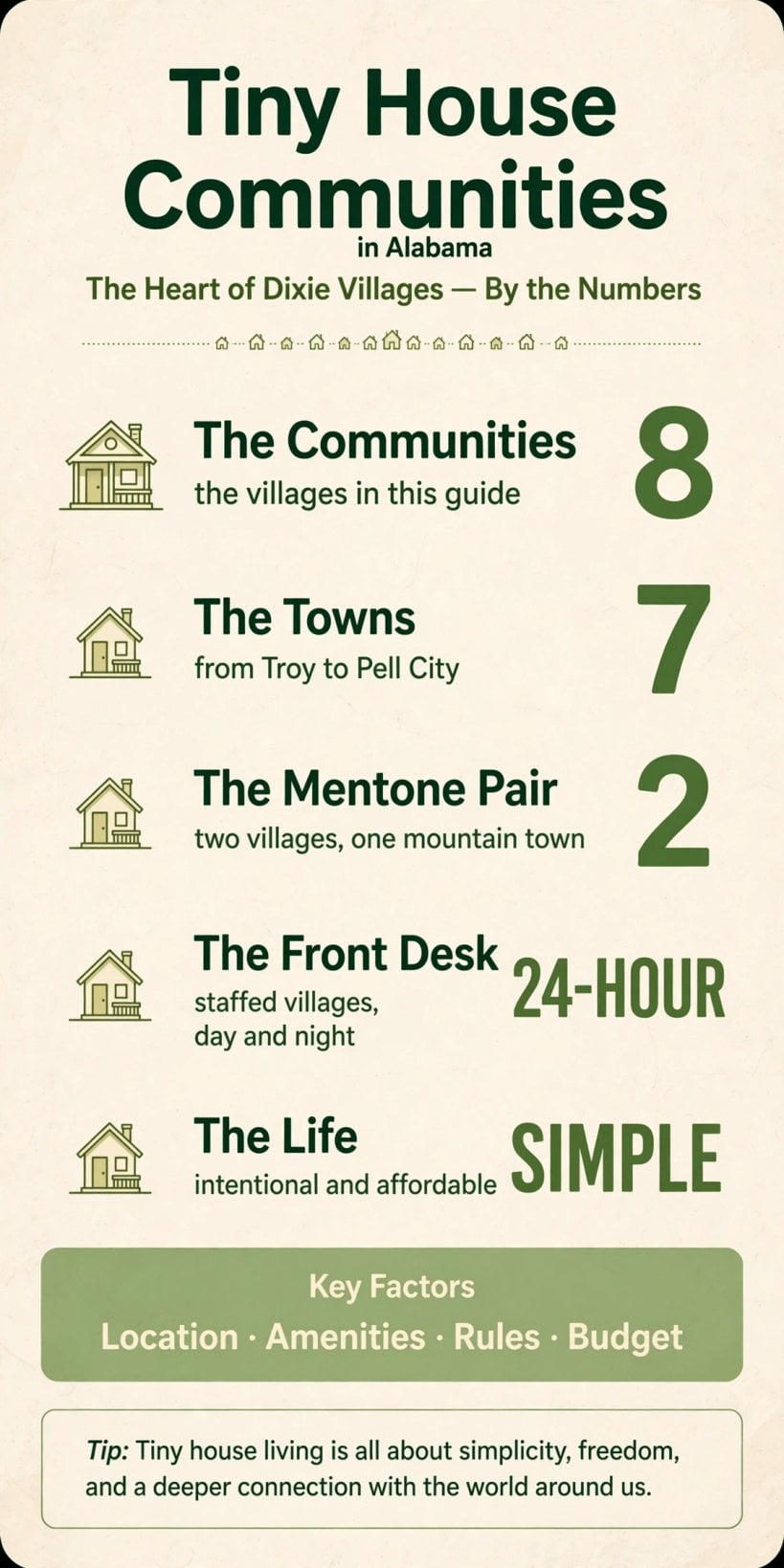
Alabama by the numbers: eight villages across seven towns, two of them sharing one mountain town, staffed desks running 24 hours — and a simpler life at the end of the tour.
1. Why Alabama: History, Hospitality and the Tiny Movement
Start with the state itself, because in Alabama the state is the argument. The history is rich, the natural beauty is stunning, and the hospitality is warm — and onto that ground a growing trend has landed: tiny house communities. These are neighborhoods where people live in small, portable homes, designed to be eco-friendly and built around shared amenities like community gardens, swimming pools and clubhouses, so connection among residents is part of the design rather than an accident of address.
The villages cater to a diverse range of people, from retirees seeking a more relaxed lifestyle to young professionals looking for an affordable and sustainable living option. Community engagement is prioritized — regular events and activities encourage residents to connect and build relationships. Alabama is a great place to join the movement, with one honest caveat worth stating plainly: before anything else, check whether you can live in a tiny house where you plan to put it. The villages in this guide are the established answer to that check — places where the tiny life is the point of the place.
That range of residents matters more than it first appears. A retiree downshifting from a family house and a young professional escaping rent both want the same four things — lower costs, less upkeep, real neighbors and a smaller footprint — but they weight them differently, and Alabama’s villages answer in different proportions. Some lean serviced and social, some lean quiet and self-reliant. Reading the eight profiles below with your own weighting in hand is what turns a long list into a short one, and it is why this guide profiles them one by one, town by town, instead of ranking them: the best village in the state is the one whose mix matches the life you are actually moving toward.
2. The Benefits: Affordability, Belonging, Footprint and Simplicity
The benefits of tiny house communities in Alabama start with the wallet and end with the calendar. Increased affordability comes first: a cost-effective alternative to traditional housing, with lower rent or mortgage payments, reduced utility bills and minimal maintenance costs. A small home on shared ground simply costs less to run, month after month, and the difference compounds into freedom.
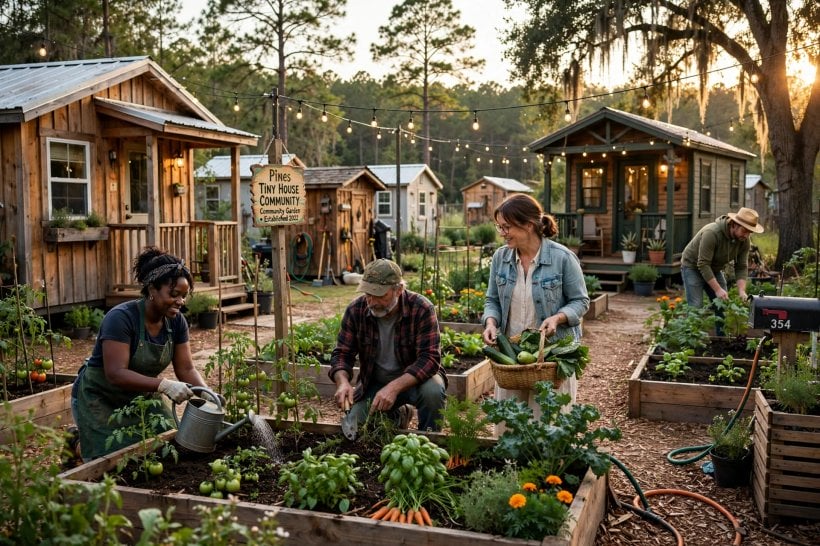
The sense of community and belonging is the second gain, and the one residents talk about most: shared amenities and regular events foster connections and friendships, so the village becomes a social life rather than just an address. The reduced environmental impact is the third: eco-friendly features and sustainable living practices contribute to a healthier environment and a reduced carbon footprint. And simplified living ties the four together — a more streamlined lifestyle, free from the burdens of excessive material possessions and high maintenance costs. Join a community that shares your values and priorities, and the effect on overall well-being is the real product being sold here.
3. Troy and Birmingham: Eagle Homes On Olive and the City Community
Eagle Homes On Olive, in Troy, is the convenience-first village of the eight. The amenities run long: free Wi-Fi, parking, and air conditioning and heating; a fully equipped kitchen, washer/dryer, and TV with cable. The living experience is designed to be comfortable and convenient — essentials like towels, bed sheets, soap and toilet paper are provided — and the safety details are covered with a smoke detector and a first aid kit, plus a laptop-friendly workspace for the working resident. It is a quiet area of Troy with easy access to local amenities and attractions: the peaceful end of the Alabama spectrum.

Birmingham’s community — named, simply, Tiny House Community — is the social opposite and the urban proof of the concept. Free Wi-Fi, a community kitchen and shared laundry facilities anchor the practical side; outdoor BBQ areas, community gardens and bicycle storage anchor the shared life. The design intent is stated openly: a sense of community and connection among residents, built on shared living spaces and amenities, backed by 24/7 security, a fitness center and recycling services. It sits in a convenient location with easy access to the city around it. The big-city version of village life at full scale is covered in our Dallas tiny house community guide; Birmingham shows the same energy at Alabama size.

4. Eastern Lake and Jasper: The Cottages and The Hideaway
The Cottages Of Eastern Lake is the luxury lakeside entry. The amenity list reads like a small resort: a swimming pool, free parking and fully equipped kitchens; private balconies, BBQ grills and outdoor dining areas. The experience is designed to be relaxing and rejuvenating, with a focus on outdoor recreational activities — lake views, bicycle rental and boat dock access — and a fitness center, hot tub and 24/7 security for convenience and safety. It is set in a beautiful lakeside setting with easy access to local amenities and attractions, and it is the clearest example in this guide of the resort-style end of tiny living.

The Hideaway, in Jasper, answers with calm. Free Wi-Fi, parking and non-smoking rooms; family rooms, pet-friendly facilities and 24-hour front desk service; daily housekeeping and laundry service for the convenience side; a fully equipped kitchen, flat-screen TV and coffee/tea maker inside the home. The design goal is a comfortable and convenient living experience in a quiet area of Jasper, with easy access to local amenities and attractions. For a mover traveling with a pet and wanting the housekeeping handled, The Hideaway is the shortlist of one.

5. Mentone: The Retreat At Deer Lick Falls and The Shire Village
Mentone, in the mountain northeast, holds two of the tiny house communities in Alabama — and they are the two most amenity-loaded villages in this guide. The Retreat At Deer Lick Falls leads with the luxurious set: a swimming pool, fitness center and spa, plus a restaurant, bar and coffee shop on site. The experience is relaxing and rejuvenating, focused on outdoor recreational activities — hiking, bicycle rental and fishing, as well as horse riding. The natural setting does the rest.

The Shire Village, also in Mentone, is the serviced counterpart: free Wi-Fi, parking and 24-hour front desk service; a fitness center, swimming pool and spa on site; daily housekeeping and laundry service; and a working traveler’s toolkit — meeting/banquet facilities, a business center and concierge service. It sits in a quiet area of Mentone with easy access to local amenities and attractions. Two villages, one small mountain town: a mover can tour both in a single afternoon and feel the difference between the retreat model and the serviced model. Mountain-town tiny living at larger scale is mapped in our guide to tiny house communities near Asheville NC.

6. Arley and Pell City: The Retreat At Arley and The Village At Collie Brook
The Retreat At Arley is the fireplace entry of the eight: free Wi-Fi, a swimming pool and a hot tub; BBQ facilities, outdoor dining areas and a fireplace; a fully equipped kitchen, washer/dryer and a television with DVD player inside. The experience is designed to be relaxing and rejuvenating, with a focus on outdoor recreational activities, in a beautiful natural setting with easy access to local amenities and attractions. It is the cozy, unhurried option — the village for slow evenings.
The Village At Collie Brook, in Pell City, closes the tour at the social end: free Wi-Fi, a swimming pool and a fitness center; pet-friendly facilities, on-site parking and 24-hour front desk service; laundry service and room service among the extras; and a restaurant, bar and spa on site. The design goal is a comfortable and convenient living experience in a convenient location, and the overall feel is vibrant and social. Between Arley’s fireplace and Collie Brook’s bar and spa, the last two villages prove the range of the whole list: there is a version of this life for nearly every temperament in Alabama.
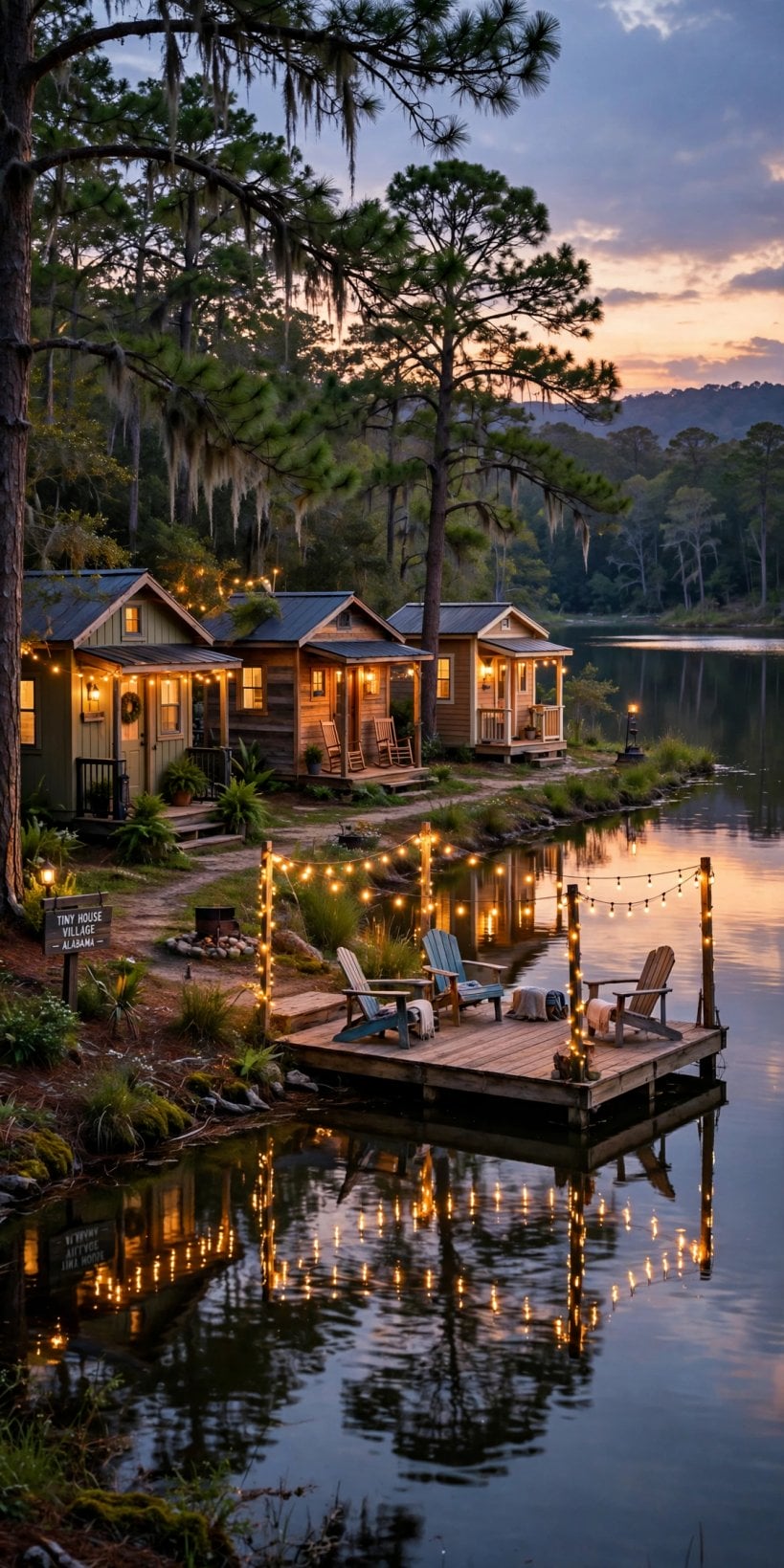
7. Choosing Your Community Type: Resort-Style or Rural
With the eight toured, the choosing work begins — and the first factor is community type. Think about the type of community you want to live in, whether it is a resort-style setting or a more rural environment. The Cottages Of Eastern Lake and the Mentone retreats sit at one pole; Eagle Homes On Olive and The Hideaway, in their quiet areas, sit at the other; Birmingham and Collie Brook prove a village can also be urban and social. Neither pole is better — the question is which daily texture matches the life you are actually moving toward.
With so many options available, the choice can feel overwhelming — the original says so openly — which is exactly why the factors are worked in order here: type first, because it narrows the field fastest, then amenities, location and design, then the money and the rules. A resort-style setting bundles services into the stay and asks little of the resident beyond showing up; a rural setting hands back space, quiet and control, and asks more self-reliance in exchange. Touring both poles before deciding is the cheapest research a mover can do: one weekend at a lakeside retreat and one in a quiet rural village will teach your preferences faster than a month of reading, and every profile in this guide names the pole its village leans toward.
The type decision also decides what you bring. Some villages are stay-and-live settings with homes and services in place; others are ground and community for your own tiny house. If your plan is to arrive with a house of your own, the designs in our DIY-friendly tiny house plans guide are the starting point — then the community-type question becomes a siting question: which village’s rules and setting fit the home you have built.
8. Amenities, Location and Home Design
Amenities are the second factor: consider what is offered, such as swimming pools, fitness centers and community gardens — and read the eight profiles above as one comparison table. Location is the third: think about the community’s proximity to local attractions, such as parks, restaurants and cultural events, and to the daily necessities. Every village in this guide promises easy access to local amenities and attractions; the mover’s job is to verify that promise against their own map — the commute, the grocery run, the hospital, the people they visit.
Home design is the factor movers underrate. Evaluate the design and quality of the tiny homes, considering factors like materials, energy efficiency and construction. A beautiful village around a poorly built home is a bad bargain; the inspection discipline in our guide to how to inspect a used tiny home before buying applies to village homes exactly as it does to private purchases. Walk the actual home you would live in, in the heat of the day, and let the build quality argue for itself.
9. Financing and the Rules: Budgeting the Move
Financing is the fourth factor: research the financing options available, including rent or mortgage payments, and ensure the community is affordable for your budget. The affordability benefit only counts if the specific village’s numbers fit your specific budget — the honest total includes the payment, the utilities the village does not cover, and the services you will actually use. The cost structure behind any tiny purchase is broken down in our true cost: prefab vs DIY guide, and the budget end of the whole market is toured in our super-affordable tiny homes guide.
Community rules and regulations are the fifth factor, and they are read before signing, not after: what the village allows, what it requires, and how it handles the practicalities of small homes on shared ground. Rules sit on top of law — and the state-level legality picture for Alabama specifically, zoning included, is covered in our guide to how to buy a tiny house in Alabama. A village whose rules you have read and liked is a home; a village whose rules surprise you in month two is a lesson.
10. The Payoff: Simplicity, Freedom and Connection
The payoff of the tiny house communities in Alabama is the one the original names at the end: tiny house living is all about simplicity, freedom, and a deeper connection with the world around us. Each of the eight villages delivers a version of it — the quiet Troy mornings, the Birmingham gardens, the Eastern Lake dock, the Mentone trails, the Arley fireplace — surrounded by like-minded individuals who share your values. Whether you are looking for a peaceful rural setting or a vibrant urban environment, there is a village in this state that fits. The sunshine-state take on the same payoff, at village scale, is toured in our guide to tiny house communities in Florida.
Final Considerations
Whichever of the tiny house communities in Alabama you choose, choose it visited: tour the village, walk the home, read the rules, run your own budget. Amenities, services and availability change — verify the current details directly with each community before you commit. This is not legal or financial advice.


0 Comments