

Black frames change a pale facade completely. They turn soft openings into clear outlines, make glass read deeper, and give even a simple rectangular house a finished, deliberate edge from the street.
The appeal is not just contrast. Proportion, grid pattern, trim and roof colour decide whether the result feels farmhouse-warm, crisply modern or quietly traditional — and small choices early on prevent expensive regrets later.
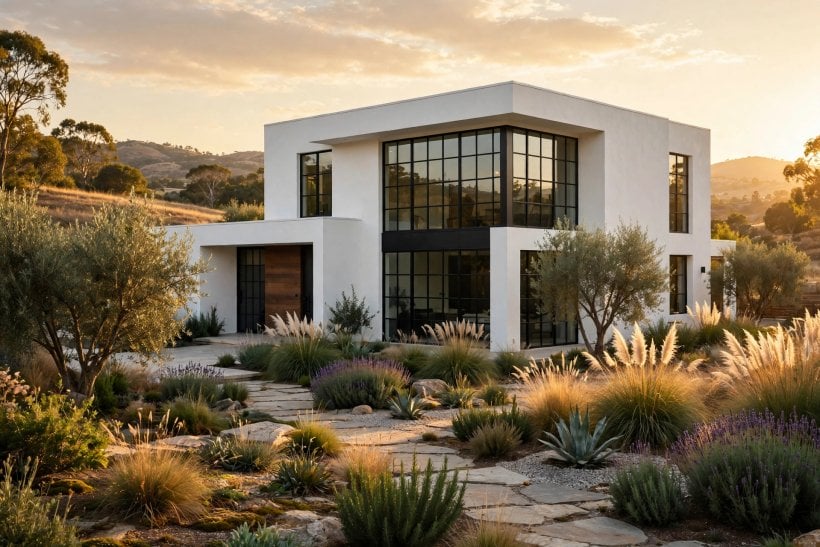
1. White Houses With Black Windows at a Glance
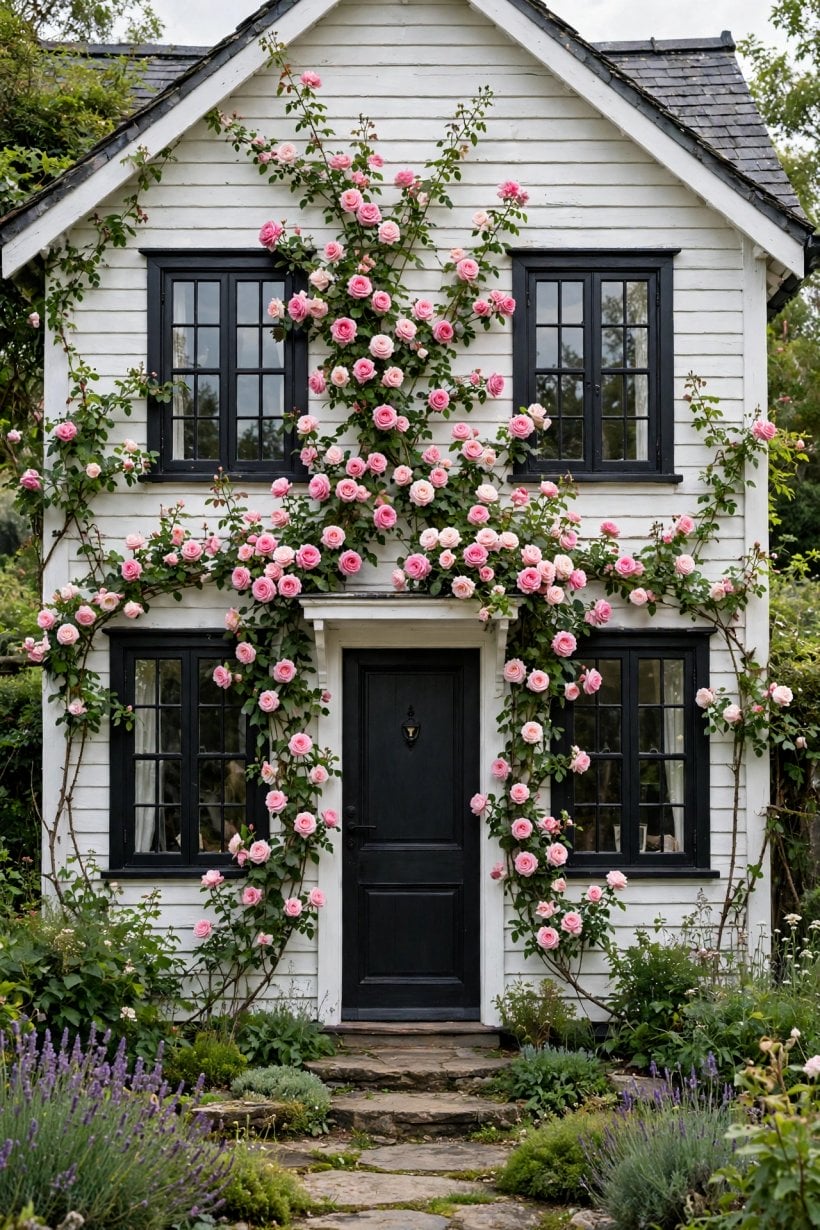
At its core, a white house black windows scheme is a high-contrast exterior system: white or light cladding and trim paired with black window frames and sashes, so every opening reads as a deliberate shape rather than a pale hole in the wall. Its defining attributes are contrast itself, the way dark frames emphasise the grid and rhythm of the facade, and a register that shifts easily from modern farmhouse and cottage to colonial, traditional and minimalist modern depending on profile, muntins and trim.
| Question | Short Answer |
|---|---|
| What defines the look? | Light walls, dark frames and sashes, and enough repetition across the facade for the contrast to feel intentional rather than accidental. |
| Which styles suit it best? | Modern farmhouse, colonial, cottage, traditional and minimalist modern homes, with the frame profile and grid pattern setting the tone. |
| Which frame materials work? | Fibreglass, aluminium or aluminium-clad, vinyl and painted wood, each trading crispness, upkeep and period character differently. |
| What matters most besides colour? | White shade, trim width, roof colour, grid pattern, glazing performance and how the frames behave in strong sun. |
| Is it only a curb-appeal choice? | No. The same frames shape interior views, daylight, cleaning routines and long-term maintenance, so both sides deserve a decision. |
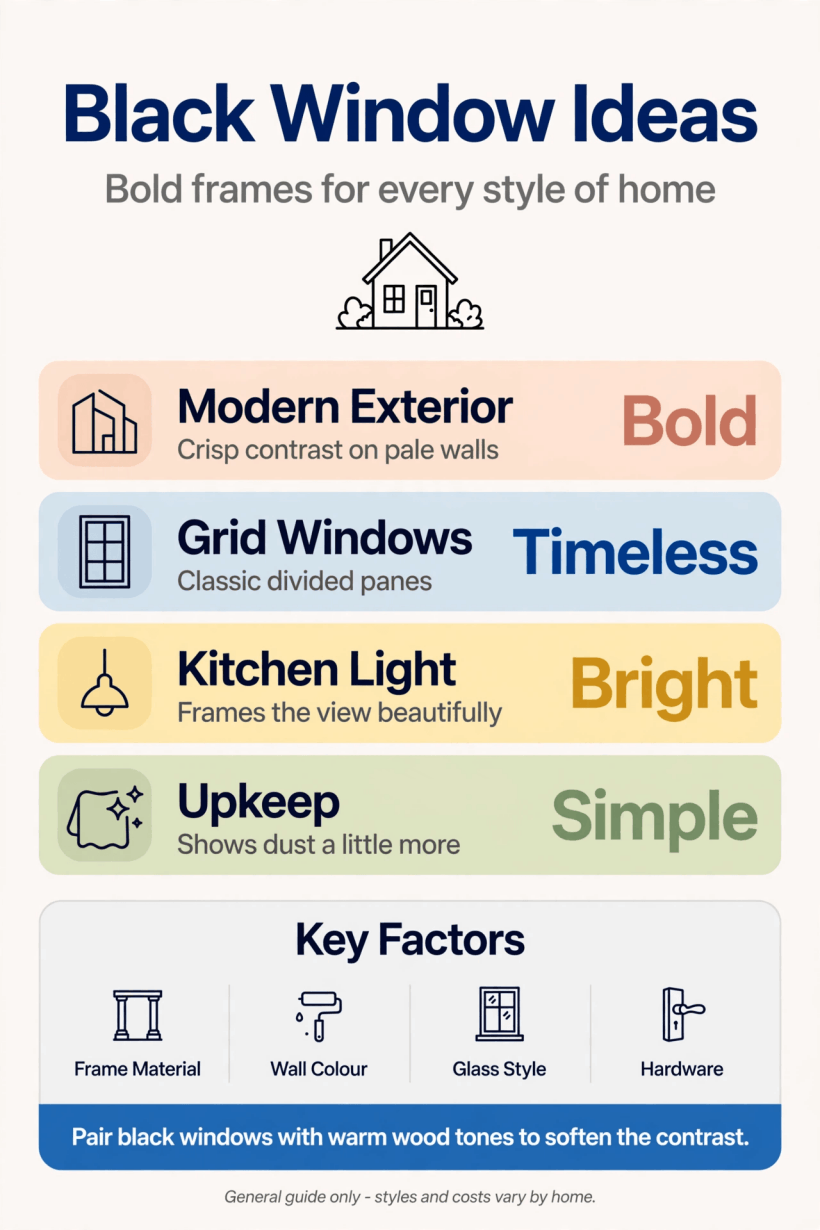
At a glance: light cladding does the quiet work, black frames draw the outline, and grids, trim, roof and door colour decide the register.
2. Registers: Five Ways the Look Changes Character
The same two colours can produce five quite different houses. Register comes from silhouette, siding texture, window proportion and detail density, not from paint alone. A steep gable with board-and-batten reads rural, a symmetrical facade reads formal, and a flat-roofed box with floor-to-ceiling glass reads gallery-calm. Start by naming the register you want, then let every later choice support it. For broader facade planning, these new home exterior design ideas for a tiny house show how roofline, cladding and openings work as one composition.
1. Modern Farmhouse With Vertical Board-and-Batten
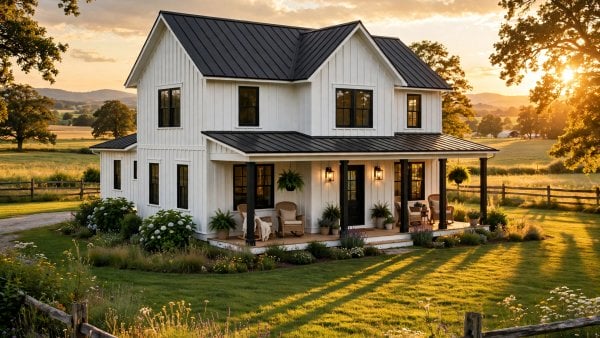
Vertical board-and-batten in a warm white, simple gables and black frames with modest grids is the most recognisable version of the look. Keep the trim plain, the porch structure chunky and the landscaping loose. The dark frames supply the sharpness, so avoid adding fussy ornament elsewhere. A black front door and simple black lanterns are usually enough supporting detail to make the farmhouse register feel complete.
2. Colonial Symmetry With Black Sashes
On a colonial, symmetry does the heavy lifting. Matched windows either side of a centred door, traditional divided lites and black sashes against bright white clapboard give formality without heaviness. Keep shutters, if used, in the same black and sized honestly for the openings. The result reads historic but refreshed, because the dark sash sharpens mouldings and proportions that pale frames would let blur together.
3. Cottage Charm With Divided Lites and Soft White
For a cottage, soften everything except the frame colour. Choose a creamy warm white, smaller panes, divided lites and a slightly thicker frame profile that suits a hand-built feel. Black still works here because it echoes old iron and painted timber windows. Pair it with planting close to the walls, a coloured or black cottage door and an unpretentious path, and the contrast feels storybook rather than stark.
4. Minimalist Modern With Clean Picture Glass
Minimalist modern versions drop grids entirely. Large picture panes, thin black profiles and flat or low-pitch roofs turn windows into dark glass planes by day and warm rectangles of light by night. The cladding should stay smooth and quiet — smooth render, large panels or fine vertical boards in a bright, neutral white. Any visible clutter, mixed trim colours or fussy hardware will weaken the calm this register depends on.
5. Traditional With Black Sashes and Classic Trim
Traditional homes sit between colonial formality and cottage softness. Black sashes with classic casing, a defined lintel line and moderate grids respect older proportions while updating the facade. This register suits brick-and-white or part-rendered houses where black ties together existing dark details such as railings, gutters or a slate roof. Keep the white warm rather than blue-bright so the house feels settled, not newly plastic.
3. Whites, Trim and Frame Materials
White is never just white, and black frames expose the difference. A warm white with a creamy undertone softens contrast and suits farmhouse, cottage and traditional registers, while a bright white gives modern and colonial facades a crisper, cooler edge — but can look stark in harsh midday light. Always view large swatches beside the actual frame sample outdoors, at morning and late afternoon. Your cladding choice matters too, and these tiny house siding options in cedar, metal and composite affect how smooth or textured that white field will read.
6. Warm White Cladding With Matte Black Frames
Warm white plus matte black is the forgiving combination. The cream in the paint takes the glare off the contrast, and a matte frame finish hides dust and minor marks better than gloss. This pairing suits north-facing or tree-shaded plots where a bright white might turn grey anyway. Test it against your roof colour: warm whites sit happily with weathered grey, brown-black and soft charcoal roofing.
7. Bright White With Crisp Black for Maximum Contrast
Bright white and a clean, satin black produce the graphic, high-contrast version seen on modern farmhouses and minimalist builds. It photographs beautifully and reads clearly from a distance, which helps curb appeal. The trade-off is honesty: dirt, algae streaks and imperfect caulk lines all show sooner on bright white. Choose this pairing if you enjoy a sharp finish and accept a slightly more attentive cleaning routine.
8. Fibreglass Frames for Crisp Lines That Hold
Fibreglass frames hold a factory black finish well, keep slim, straight profiles and suit both gridded and clean-glass designs. Qualitatively, they are a strong choice where you want the black to stay black with modest upkeep, and where larger panes need a frame that feels rigid and composed. They pair especially well with warm whites, because the frame line stays precise even as the wall colour softens around it.
9. Aluminium and Aluminium-Clad Frames for Slim Profiles
Aluminium offers the thinnest sightlines, which is why minimalist modern designs favour it: more glass, less frame, and a black edge that reads like a drawn line. Aluminium-clad options combine that slim exterior with a warmer interior face. In strong sun, discuss heat behaviour and finish durability with your supplier in qualitative terms — placement, shading and specification matter more than colour slogans, and south-facing walls deserve the most careful conversation.
10. Vinyl and Painted Wood: The Practical Extremes
Vinyl frames are the low-maintenance, budget-friendlier route, with black available as a through-colour or applied finish depending on the range — ask which, because applied finishes and dark colours in hot sun need an honest discussion. Painted wood sits at the other extreme: the most period-authentic, repairable and repaintable option for traditional and cottage homes, in exchange for periodic repainting. Neither is wrong; they simply ask for different kinds of care.
4. Grids, Muntins and Picture Glass
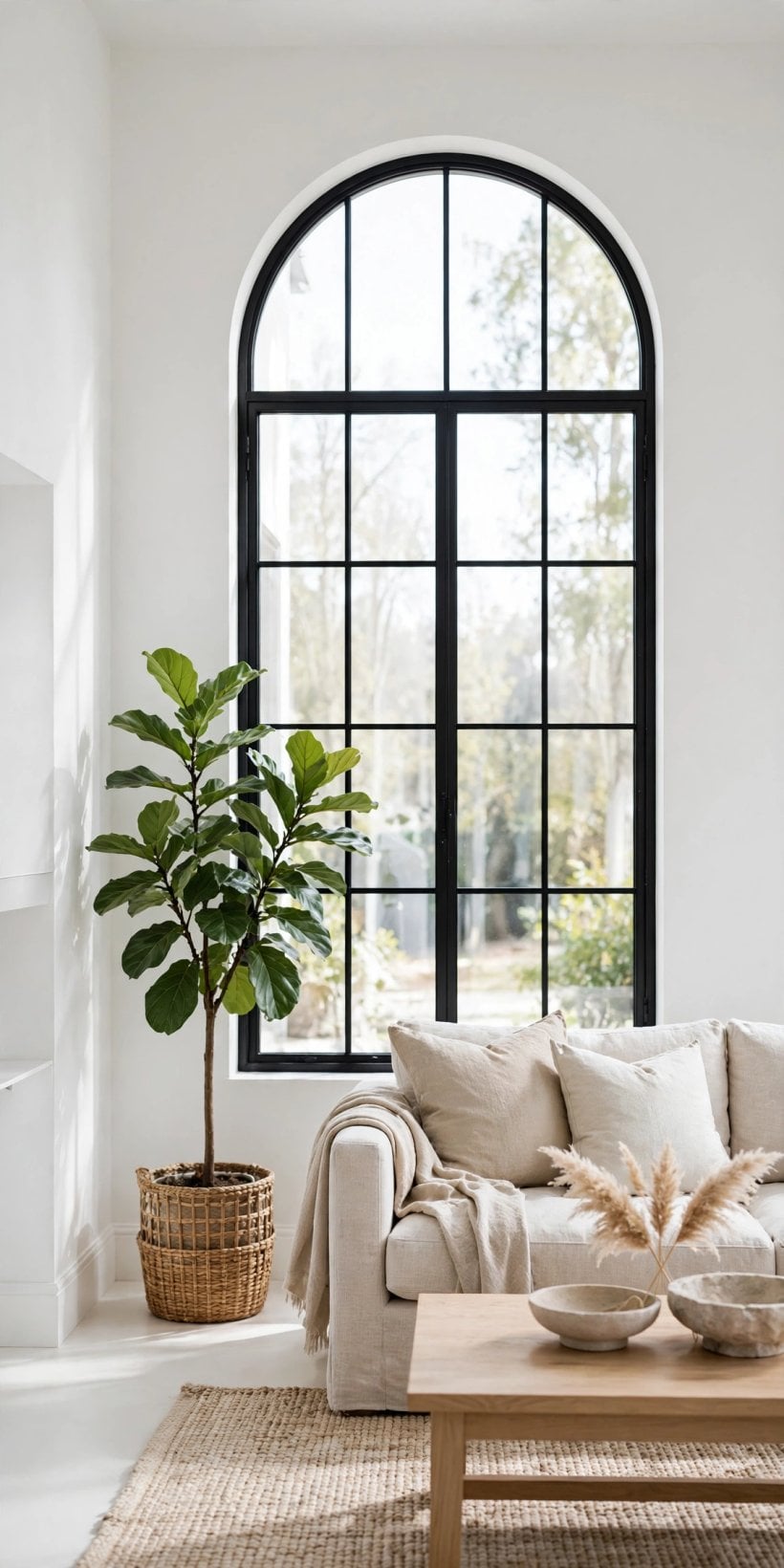
Grid pattern is the fastest way to change register without changing colour. Muntins divide glass into a rhythm that suits older styles and smaller windows, while clean picture glass suits wide views and modern plans. Mixed approaches often work best: grids where the street sees them, clear glass where you live with the view. High openings follow their own logic, as shown in these clerestory window ideas for tiny house layouts, where black frames turn a high band of glass into a clean architectural line.
11. Full Grids for Classic Rhythm
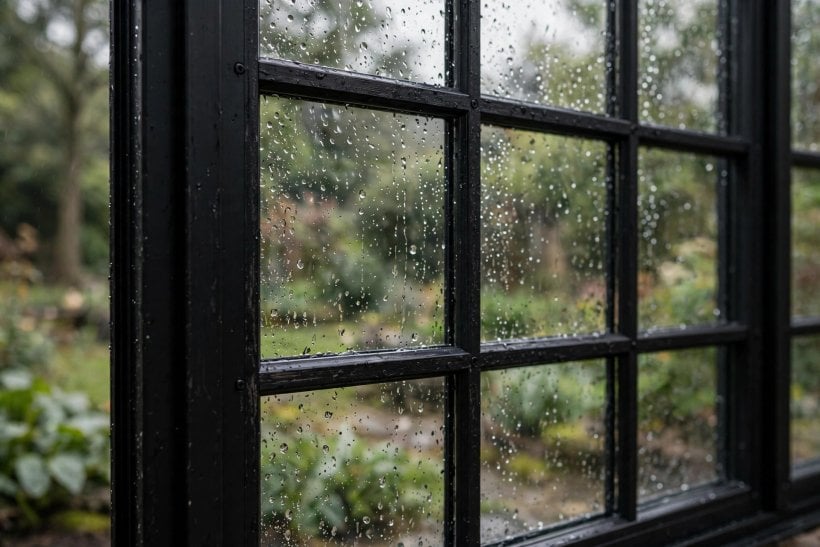
A full grid — muntins both vertical and horizontal — gives farmhouse, colonial and cottage facades their measured rhythm. Keep the grid count consistent across same-sized windows, and let smaller windows simplify rather than forcing the same number of tiny panes. Black makes grids more visible than white ever would, so alignment matters: a slightly off line that white would forgive, black will announce to the whole street.
12. Prairie and Perimeter Grids for a Lighter Touch
Perimeter or prairie-style grids, with muntins only near the edges of the pane, offer a compromise: the window keeps a crafted border while the centre stays open. This suits transitional homes that feel too formal with full grids and too bare with none. In black, the border effect is elegant and slightly architectural, and it frames the view from inside like a picture mount rather than a cage.
13. No-Grid Picture Windows for Open Views
Clean picture glass is the modern default for good reason: uninterrupted views, maximum daylight and a facade of calm dark planes. It works best with larger panes, slim profiles and a restrained exterior palette. Remember that large black-framed panes reflect the sky by day, so the facade will read darker and more glassy than a gridded version. Plan landscaping reflections as part of the design, not an afterthought.
5. Doors, Garage Doors and Shutters as Supporting Black
Black should repeat, but it should not multiply carelessly. Two or three supporting black elements — a front door, garage doors, shutters, gutters or light fixtures — make the window frames feel part of a system. More than that and the facade can turn spotty. Doors deserve particular care because they are touched daily; these Dutch doors for tiny houses show how a dark, characterful door can anchor an entry in either a farmhouse or cottage register.
14. Black Front Door to Anchor the Entry
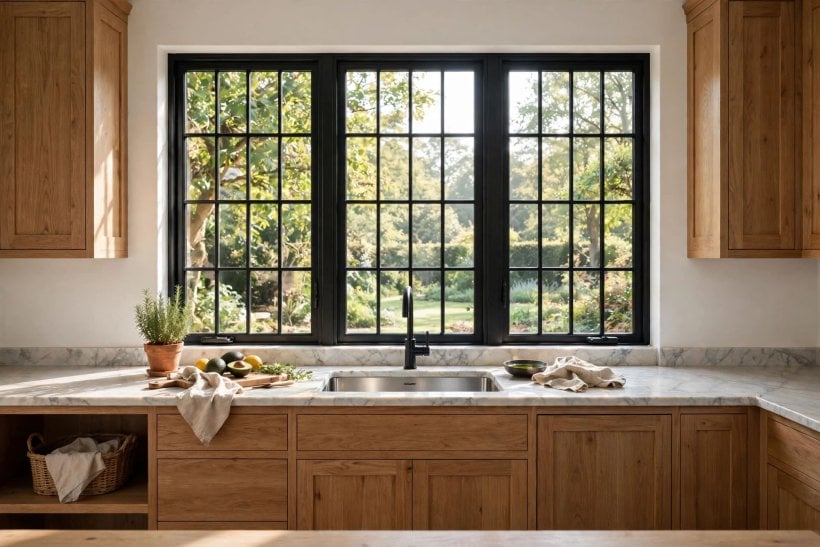
A black front door is the single most effective supporting move. It gives the eye a destination, balances the dark windows at ground level and suits almost every register from colonial to modern. Keep hardware simple and consistent with any black lanterns or house numbers nearby. If the porch is deeply shaded, a satin finish keeps the door reading black rather than disappearing into shadow.
15. Black Garage Doors to Balance a Wide Facade
On wide facades, a white garage door can leave the black windows floating without support on one side. Black or charcoal garage doors restore the balance and stop a large blank panel from dominating. Panel style should follow register: carriage-style for farmhouse and traditional homes, flush panels for modern ones. If the garage sits in full afternoon sun, raise the same heat and finish questions you asked about the windows.
16. Black Shutters Used Sparingly
Shutters are optional, and restraint suits them. Use black shutters only where they are sized plausibly for the window and where the register — colonial, traditional, cottage — expects them. Modern farmhouse designs often look cleaner without shutters, letting grids do the decorative work. If you do add them, match the black tone and sheen to the frames so the facade reads as one palette, not several near-blacks arguing.
6. Roofs, Eaves and Whole-Facade Balance
The roof is the third colour in this scheme whether you plan it or not. A dark roof completes a black-white-black sandwich of roof, walls and frames, while a light roof keeps the dark notes at window level only. Trim decides how finished the junction between the two feels, and the guidance in this overview of exterior trim materials, PVC versus wood, helps when choosing casing and fascia that will sit directly against black frames.
17. Dark Roof Pairing for Top-to-Bottom Contrast
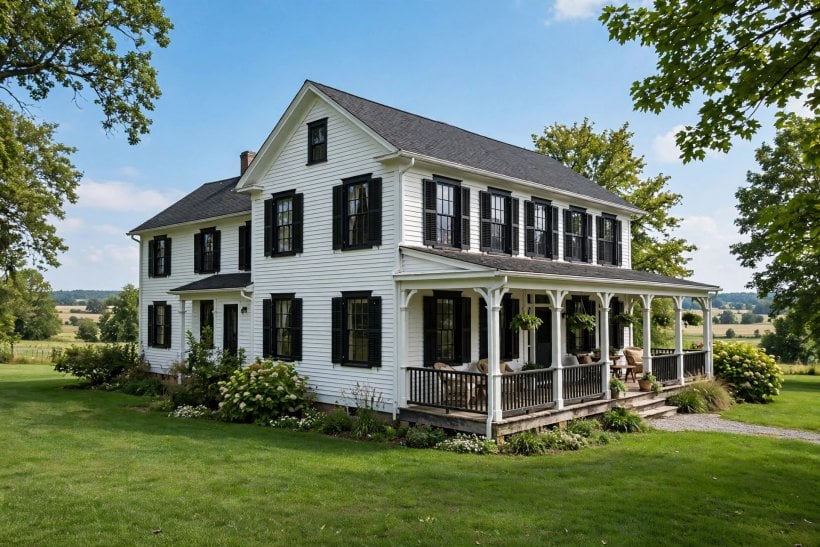
Charcoal, dark grey or black roofing is the classic partner: the roof echoes the frames, the white walls sit brightly between them, and the whole house reads as one deliberate palette. This pairing suits farmhouse, colonial and traditional registers especially well. Keep gutters and fascia consistent — black or white can work, but mixing both at random breaks the sandwich effect that makes the scheme feel composed.
18. Light Roof Pairing to Keep It Airy
A light grey, weathered or pale roof keeps the contrast lower and the mood airier, which suits cottages, coastal-feeling homes and minimalist builds in bright climates. The black frames then become the only strong dark note, so make sure doors or planting provide a little grounding at street level. This pairing also shows frame grids more gently, a useful effect if you love the idea but not the boldest version of it.
19. Eaves, Fascia and Gutters in the Same Conversation
Deep eaves with white soffits and black fascia sharpen the roofline and throw useful shade over upper windows. Black gutters and downpipes can visually extend the window frames upward, tying the facade together, while white gutters disappear into the trim. Decide these small elements on paper with the frames, not at the end of the build, because retrofitting colour consistency across metalwork is fiddly and rarely complete.
7. The Interior Side of the Frame
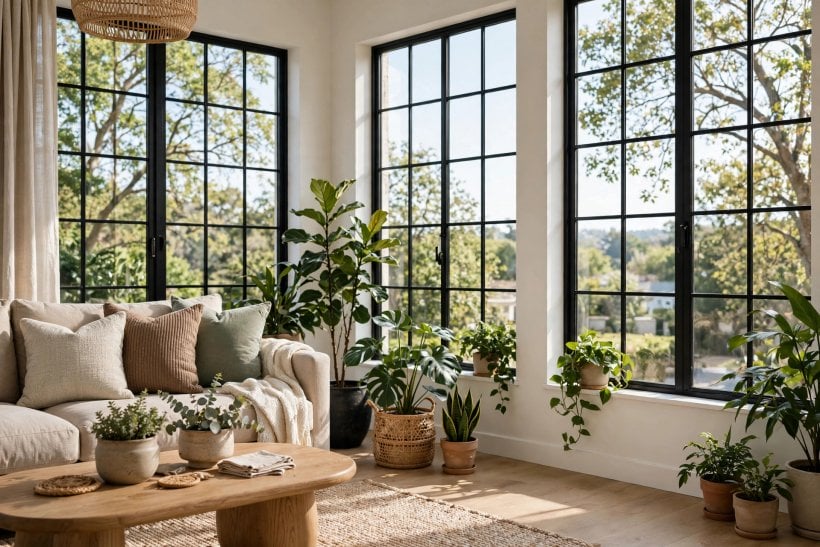
Every exterior decision here has an interior consequence. A black frame seen from inside outlines the view like a picture frame, deepens the sense of looking out, and can make a modest room feel designed rather than defaulted. It also shows dust differently, changes how curtains and blinds sit, and interacts with interior trim colour in ways worth sampling before the order goes in.
20. Interior Black for Framed Views
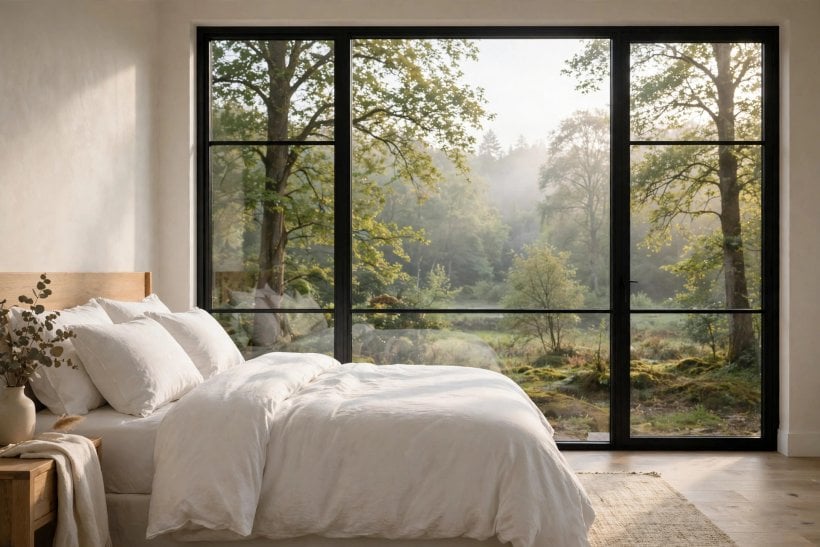
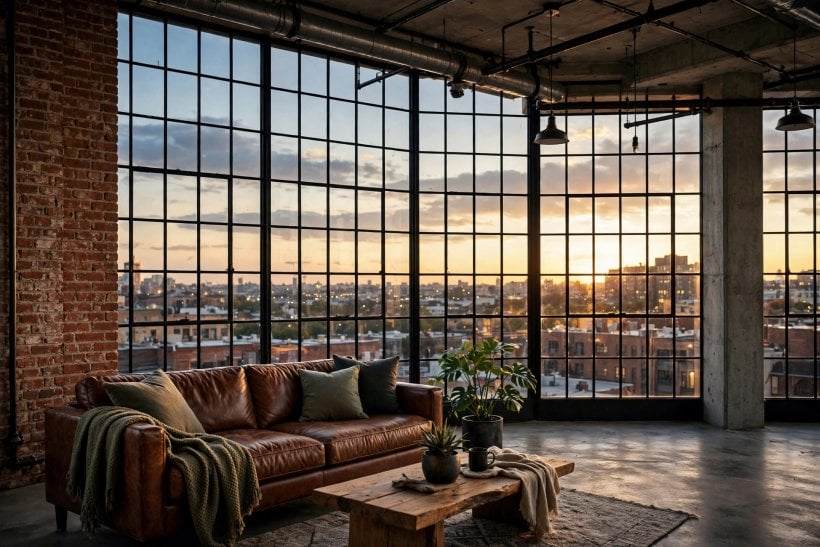
Keeping the frame black on the inside suits modern, farmhouse and minimalist interiors. The dark edge concentrates the view, pairs naturally with black hardware, lighting and furniture accents, and hides the minor scuffs of daily life around handles and sills. In rooms with pale walls, the effect is gallery-like and calm. Just commit to it across connected rooms, because a mix of black and white interior frames feels like an ordering mistake.
21. White Inside, Black Outside for a Softer Room
Many frame systems offer a dual finish: black outside, white inside. This suits traditional and cottage interiors where dark frames might fight with soft furnishings, coloured walls or period trim. The exterior keeps its contrast while rooms stay gentle. Check how the changeover reads at the edge of the frame and on opening sashes, and view a corner sample in both directions before assuming the transition will be invisible.
22. Curtains, Blinds and Trim Around Dark Frames
Window treatments sit directly against the frame colour. Sheer white curtains soften black frames beautifully, while black curtain rods and simple roller blinds extend the graphic line. Interior casing in white makes the black frame read as a deliberate inner outline; casing painted to match a darker interior scheme makes the whole opening recede. Decide the treatment style early, because track and rod fixings are easier to plan before the frames are fitted.
8. Living With Dark Frames: Sun, Cleaning and Care
Daily life with black frames is straightforward, but it is not identical to life with white ones. Dark surfaces absorb more heat in strong sun, show pale dust and pollen more readily, and make water spots and cobwebs easier to spot — which many owners count as a benefit, because the cleaning need announces itself before grime builds up. Shading, finish choice and realistic routines keep all of this minor.
23. Strong Sun, Heat and Fading: The Honest Version
Dark frames in strong sun will run warmer than pale ones; that is simple physics, stated qualitatively because the degree depends on material, profile and exposure. What you can control is specification and shading: ask suppliers how their black finish is formulated for sun exposure, favour quality factory finishes over site-applied paint on sun-baked elevations, and use eaves, porches and planting to shade the hardest-hit windows. Fading, where it happens, is gradual and even on good finishes — panel-test a sample in full sun if your climate is fierce.
24. A Cleaning Routine That Suits Black
Black frames reward little-and-often care. A soft brush or damp microfibre cloth lifts the pale dust that shows on dark surfaces, and mild soapy water handles most marks on factory finishes. Avoid abrasive pads, which dull matte and satin finishes unevenly. Clean glass and frames together on a calm, overcast morning so solution does not dry in streaks, and rinse sills where pollen collects. Twice a year, check seals, drainage slots and moving hardware while you are there.
9. Checks Before You Commit: Glazing, Energy and Cost
Colour is the last decision, not the first. Before signing anything, confirm the glazing specification, safety requirements and whole-window performance in writing. Large picture panes and any glazing near doors, floors or baths may require safety glass, and the rule explained in this guide to selecting windows and the tempered glass rule is a useful plain-language starting point for those conversations with your installer.
25. Ventilation and Hardware Checks That Keep Frames Working
Frames are machinery as well as colour. Opening windows need hinges, locks and trickle or sash ventilation that keep working in the same black finish, and the comparison in this guide to awning versus sliding windows for rain and ventilation is worth reading before you fix opening styles room by room. Lubricate moving parts as the maker directs, keep painted wood hardware free of paint build-up, and confirm that replacement handles and hinges are stocked in black before you commit to an unusual profile.
Ask for the energy rating or performance figures for the complete window unit, not the glass alone, because frame material and spacers affect the result. Check low-emissivity coatings, gas fill, warm-edge spacers and ventilation as a package suited to your climate. Then walk the cost drivers honestly: frame material and finish, dual-colour specifications, grid and muntin work, unusual sizes, safety glazing and installation complexity each move the budget more than the choice of black itself. Finally, make a sample board — cladding swatch, frame corner, trim, roof material and door colour together outdoors — and live with it for several days of changing light before ordering.
10. Curb Appeal, Resale and Pulling It All Together
Few exterior changes photograph as well as this one, which is part of its resale logic. The contrast reads clearly in listing photos and from a passing car, signals recent care and suits the farmhouse-to-modern taste that many buyers currently bring to a search. A white house black windows pairing, executed consistently, tends to be remembered as the sharp house on the street rather than as a gamble — provided the execution is disciplined and the landscaping supports it, as these front yard rock landscaping ideas for curb appeal show on the ground plane.
Resale strength, though, follows consistency more than fashion. Frames, door, garage, gutters and lighting in one considered black, one white family across cladding and trim, and a roof colour chosen with both — that discipline is what buyers read as quality. Where the scheme is half-hearted, with three different blacks and a white chosen from a screen, the same idea can date quickly. If you are updating an existing home in stages, do the street-facing elevation completely first rather than scattering partial changes around all four sides.
Pull the whole project together in this order: choose the register, choose the white in real daylight, choose the frame material and finish, set the grid pattern, place the supporting black elements, confirm glazing and energy details, and only then order. That sequence keeps the enjoyable decisions first and the expensive ones verified, and it is the difference between a house that merely has dark windows and one whose whole facade feels resolved.
Final Considerations
The strongest version of this look is a system, not a paint choice — white shade, frame material, grid pattern, roof, trim and supporting black elements all decided together, in daylight, before anything is ordered. Get that system right and the contrast will look as deliberate in ten years as it does in the first photograph, inside and out.
Start with one elevation, one sample board and honest answers about sun, cleaning and budget. If the scheme still delights you after a week of looking at it in rain, glare and dusk, commit fully and repeat it with discipline. Half-measures are the only real way this classic, flexible pairing ever disappoints.

0 Comments