

The first bedroom that is truly yours rarely looks like the ones in magazines. It is smaller, busier and asked to do far more — sleep, study, work, unwind and welcome friends, all in the same few square metres.
This guide treats that room honestly. Twenty-five practical ideas cover layout, colour, storage and styling in the order that matters, so a tight budget and a small footprint become a plan, not a compromise.
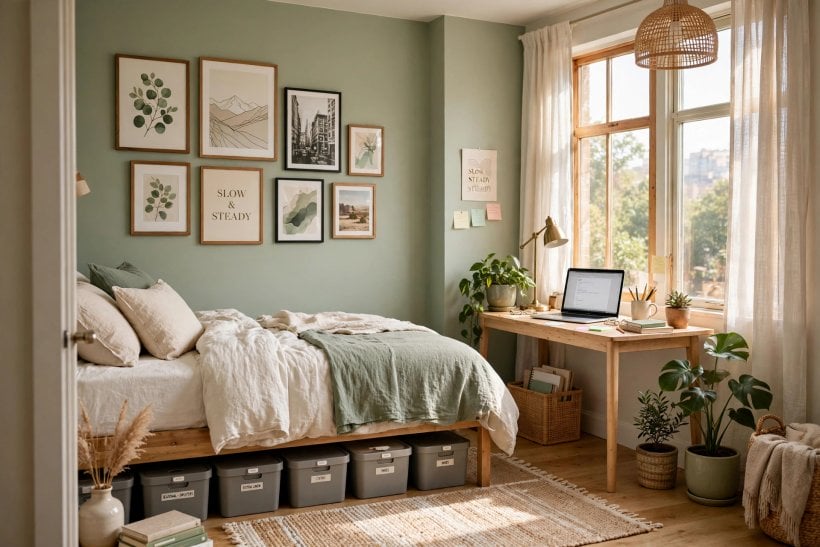
1. Young Adult Bedrooms at a Glance
A young adult bedroom is the first grown-up bedroom: a first-apartment room, a young-adult room in the family home, or a shared or rented room that has to stand on its own. The entity is a multi-duty space for sleep, study and work, media and socialising, usually small, often shared or borrowed, and almost always budget-bound. That combination decides everything else in this guide. The bed cannot just be a bed if the desk shares its wall, storage cannot be an afterthought if there is no spare room to spill into, and styling has to survive real life — laundry, deadlines and friends dropping in — rather than a single photograph. The small-space discipline behind it is the same one explored in these small bedroom interior design ideas for tiny houses: define the jobs first, then give each job a place, however compact.
| What makes this room different from a childhood bedroom? | Responsibility and range. You choose it, you clean it, and it hosts adult life — work calls, study, rest and guests — not just sleep and storage for school things. |
| How do I start if the room is very small? | By zoning, not shopping. Mark where you will sleep, work, dress and relax on a simple plan first, and only buy furniture that fits a zone you have already defined. |
| What should I buy first on a tight budget? | Sleep and light control first — a sound bed base, decent bedding and curtains or blinds that darken the room — then a workable desk and chair, then storage that closes. |
| Can I make a rental feel personal without drilling? | Yes. Removable hooks, tension rods, leaning pieces, textiles and lighting change a room completely and leave with you, provided you check your agreement and test products on a hidden patch first. |
| How do I keep it restful when it does everything? | Protect the bed zone. Keep work out of sight from the pillow where you can, dim the lights in layers in the evening, and give every daily object a closed or contained home. |
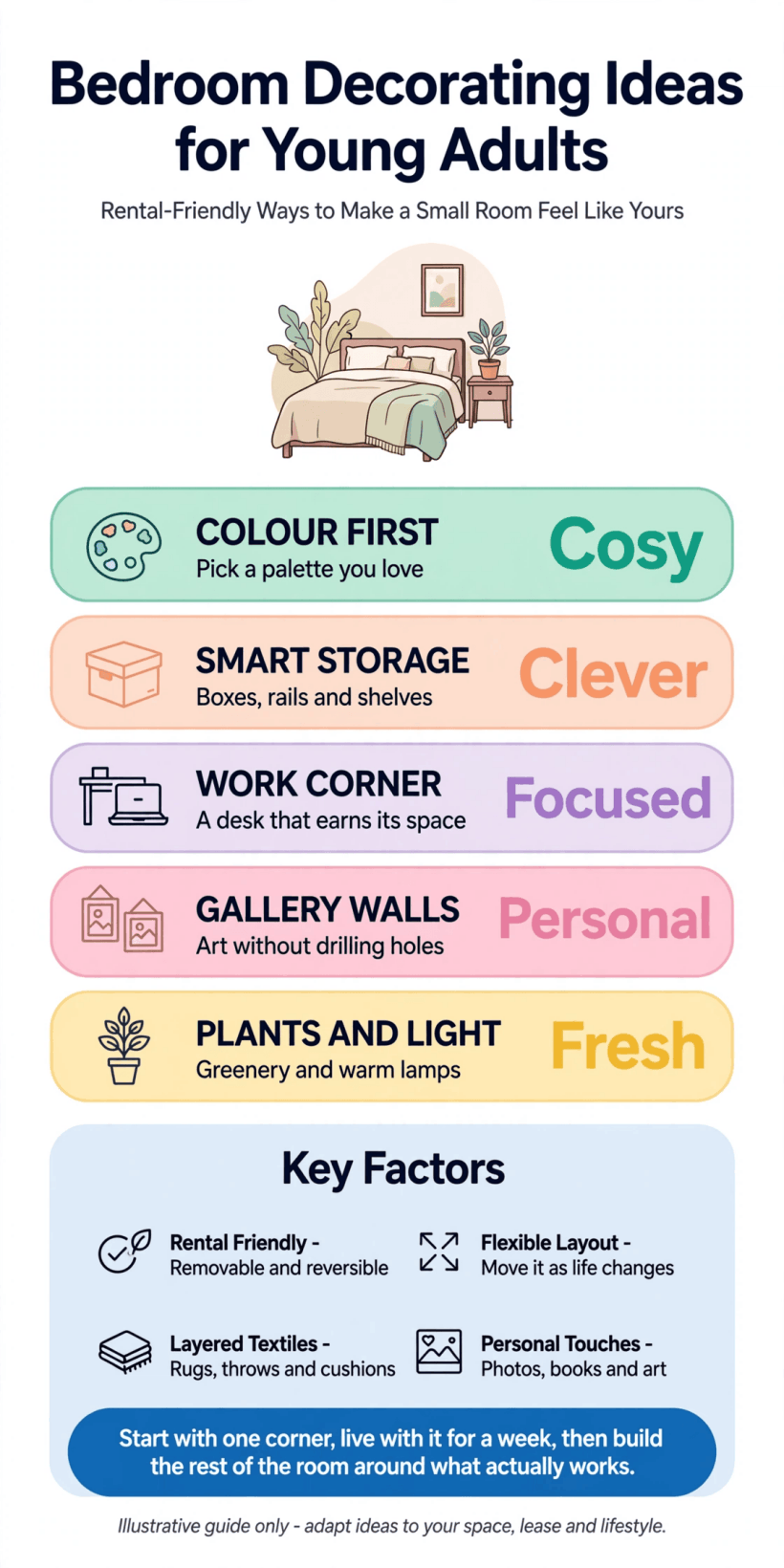
At a glance: zone the room first, spend on sleep first, store behind doors or in boxes, and style with textiles and light you can take with you.
2. Layouts for Small, Shared and Awkward Rooms
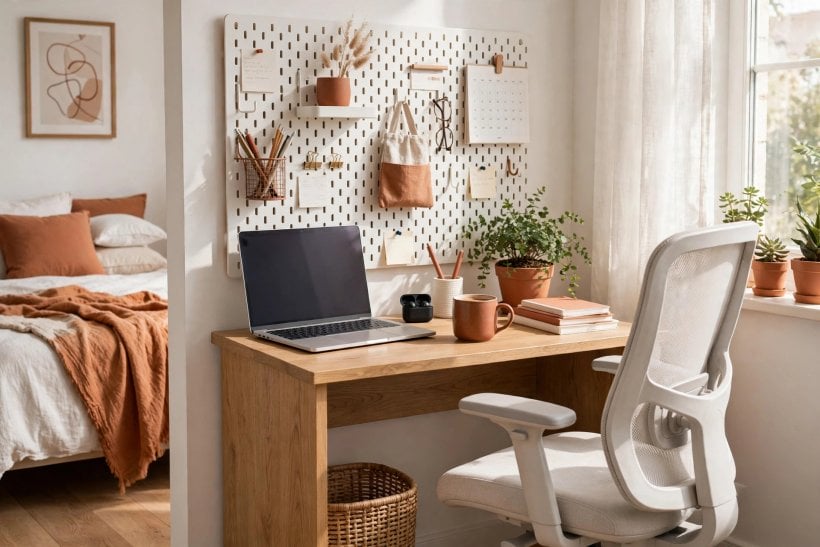
Layout is where bedroom decorating ideas young adults can actually use are won or lost, because no colour or cushion rescues a room where the wardrobe door hits the bed and the desk chair blocks the only path. Start with measurements — walls, window and door swings, radiator and socket positions — and sketch the room to scale on paper before anything is moved. In a shared room, agree the divided and shared zones with your roommate first; a layout both people accept on paper prevents a semester of quiet resentment.
Flexibility belongs in the layout too. A room that can take a second pillow, a folded guest mat or a partner staying over without a full furniture move is a room planned with real life in mind. Keep one stretch of floor genuinely clearable, keep spare bedding reachable, and avoid wedging furniture so tightly that nothing can shift. The compact layouts in these tiny house bedroom ideas show the same principle at an even smaller scale: every piece earns its position, and circulation space is protected like storage space.
1. Zone the Room Before You Buy Anything
Divide the room into four loose zones — sleep, work or study, dressing and downtime — even if some zones are a single chair or a shelf wide. Use rugs, a bookcase edge or the back of the desk to suggest boundaries without building walls. When each activity has a defined home, clutter stops migrating across the whole room, and a small space starts to feel organised rather than merely full.
2. Place the Bed Against the Longest Wall
The bed is the largest object you own, so its position sets the room. Against the longest, least interrupted wall it usually leaves the most usable floor in one piece, keeps both the window wall and the door swing freer, and gives you a headboard wall to build styling around. Leave just enough gap to make the bed comfortably; a few centimetres of access beats a stranded strip of wasted floor.
3. Keep a Clear Path From Door to Window
A room feels cramped less because of its size than because moving through it is awkward. Keep a straight, unobstructed path from the door towards the window and to the wardrobe, with nothing stored in it, no chair legs straying into it and no laundry basket colonising it. That single discipline makes shared rooms workable, cleaning faster, and the whole space feel calmer the moment you walk in.
3. Colour Palettes: Calm Bases and Bold Accents
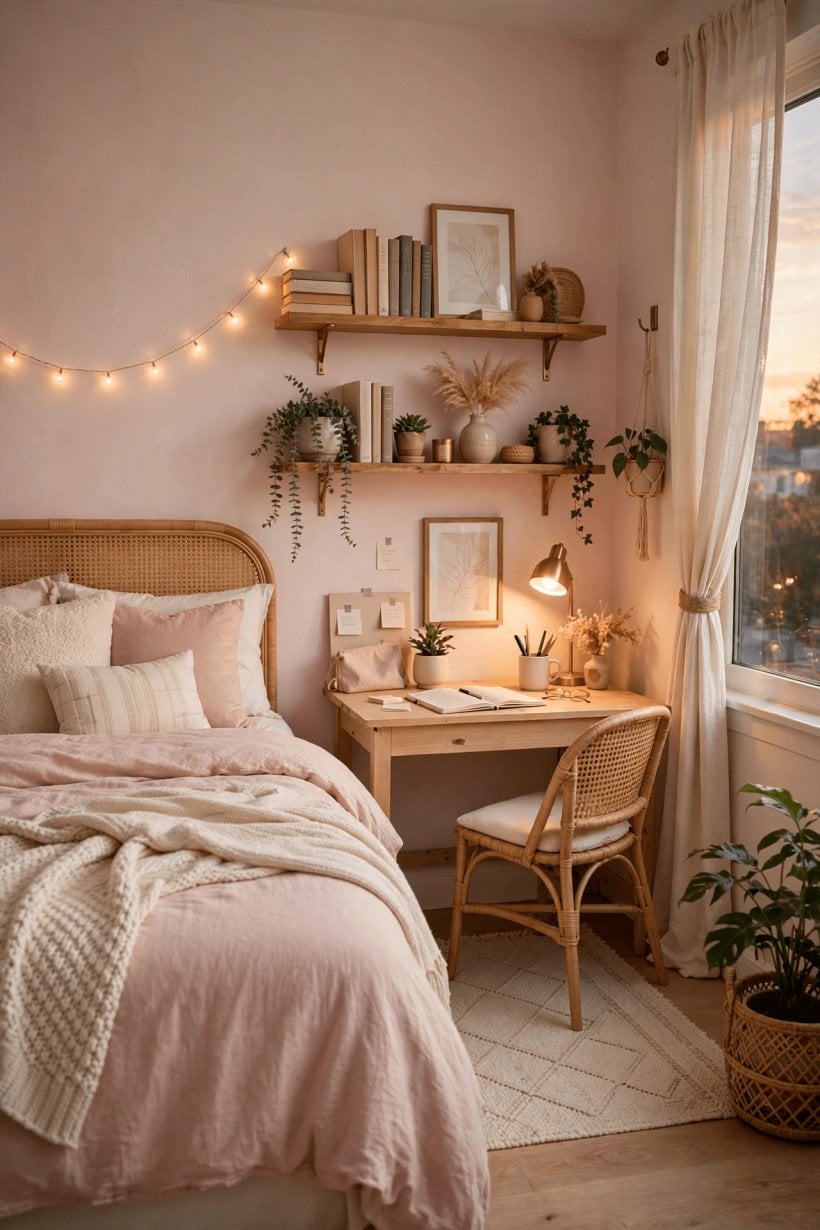
Colour does two different jobs in this room: it has to calm you down at night and keep you awake at your desk. The reliable answer is a split register — a quiet, light base across the biggest surfaces, with stronger colour held in smaller, changeable places. That way you can shift the mood with bedding, art and a painted chair when your taste changes, instead of repainting walls you may not even be allowed to paint.
4. Start With a Calm Neutral Base
Warm white, soft grey, pale stone or a muted sage across walls, large furniture and the main bedding gives a small room light, air and a restful background that everything else can sit on. Calm neutrals also forgive mixed furniture — the inherited chest, the flat-pack desk and the secondhand chair stop arguing when the palette around them is quiet. Add warmth through wood tones and textiles so neutral never reads as cold.
5. Add One Bold Accent Register, Not Five
Choose one confident accent — deep teal, rust, mustard, ink blue or a strong berry — and repeat it in three or four places: a throw, a cushion, a lamp, a print. Repetition is what makes an accent look deliberate rather than accidental. Resist collecting every colour you like into one small room; competing accents cancel each other out, raise the visual noise, and make rest harder exactly where you need it most.
6. Test Colour in Daylight and Lamplight
A colour that looks fresh at noon can turn murky under a warm evening bulb, and a rental room rarely lets you choose either the light or the wall colour freely. Before committing to bedding, paint on furniture or a large rug, live with a sample or a single cushion cover for a full day and check it morning and night. Note how north-facing cool light and low evening light shift it, then decide.
4. The Study and Work-From-Home Zone
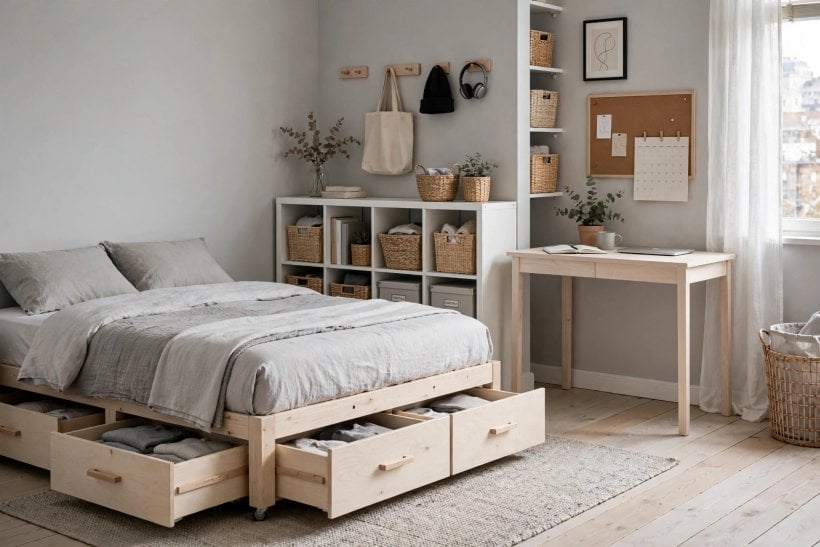
A desk in a bedroom is a compromise, so manage it like one. It needs daylight without glare, a chair that supports a full day, power within reach and — just as important — a way to stop looking like work when work is over. A lidded box for the laptop, a screen that can close, or a curtain or shelf that breaks the sightline from the pillow all help the room hand your evenings back. The workspace thinking in this guide to bedroom interior design in tiny houses applies directly: in a multi-duty room, separation is usually visual rather than physical.
7. Claim a Desk Zone by the Light
Put the desk where daylight falls from the side — beside a window rather than facing a blank wall or with your back to a door you cannot see opening. Side light is kind to screens and to video calls, and it keeps your eyes resting on distance when you look up. If the only desk spot faces a wall, hang one generous print or board there so your resting view is chosen, not bare plaster.
8. Separate Work Visually With a Rug or Shelf Edge
You do not need a partition to mark a boundary your brain will respect. A small rug under the desk and chair, a low shelf turned end-on, or simply a different, brighter lamp in the work zone tells you where work happens — and, crucially, where it stops. Pack the desk surface down to the same few objects each evening; a clear desk at night is the cheapest form of work-life separation in a one-room life.
9. Choose a Chair You Can Actually Sit In All Day
A pretty chair that hurts by eleven is the most expensive mistake in a young adult room, because it is bought twice. Prioritise seat height that lets your feet rest flat, some lower-back support and arms that fit under the desk. If budget is tight, buy the chair before decorative extras and improve it with a cushion and a footrest made from a sturdy box; posture is infrastructure, not styling.
5. Gaming, Media and Social Corners
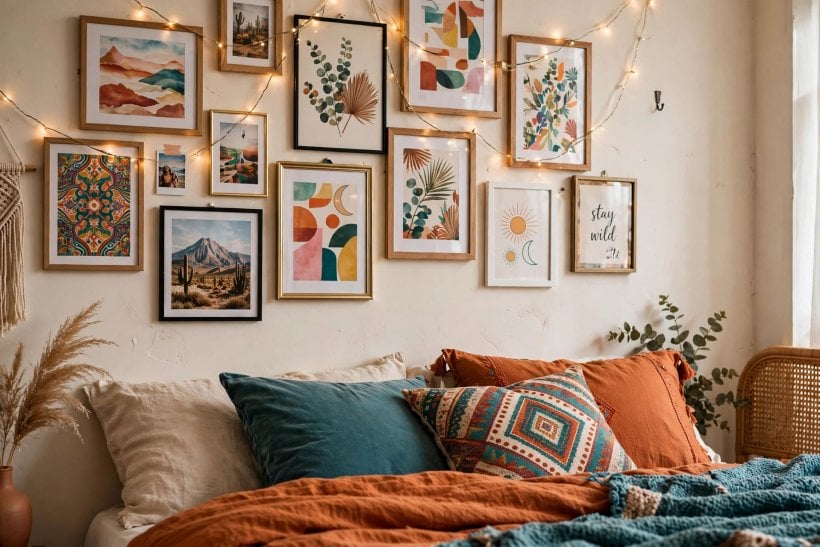
For many young adults this room is also the cinema, the games room and the sitting room, and pretending otherwise just produces a bed covered in controllers and friends perched on a desk chair. Plan the media corner deliberately: where screens sit, where sound goes, where a second person sits, and where drinks can be put down safely. A corner planned once works every night; an improvised one has to be rebuilt, and tidied, every time.
10. Build the Media Corner Around Seating, Not the Screen
Position seating first — the bed edge, a floor cushion set, or a small loveseat if the room truly allows it — then place the screen at a comfortable height and distance from it, with no window reflection across it. Keep a small side surface within reach for drinks and remotes. When seating leads, the corner works for films, games and conversation alike, instead of serving only the person in the desk chair.
11. Make Room for Friends Without Moving the Bed
Socialising in a small room works when extra seating is stored invisibly: folding chairs behind the wardrobe door, floor cushions stacked in a corner, or a padded ottoman that is storage the rest of the week. Keep one clear patch of floor they can appear onto, and a hook or two spare for guests’ coats and bags. Hospitality here is logistics, not size — two friends who can sit comfortably beat five who cannot.
12. Give Cables, Chargers and Headphones a Home
Media clutter is mostly cable clutter. Route charging to one point — a tray or basket by a socket, with a simple cable clip keeping leads from sliding to the floor — and give headphones, controllers and remotes a single basket or wall hook each. Label shared chargers in a shared room. Ten minutes of cable discipline removes the single most common source of visual mess and of tripping, standing-on and losing things.
6. Storage That Earns Its Floor Space
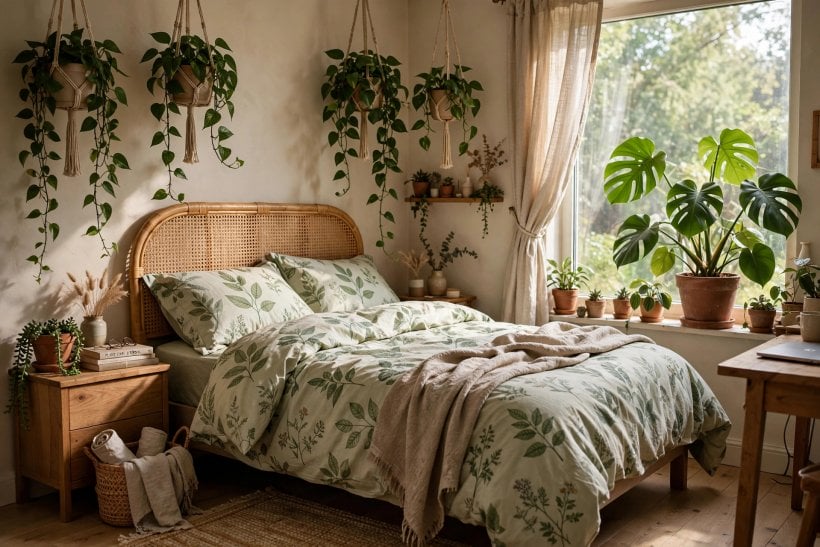
Storage is the difference between a styled room and a staged one. The test for every piece is simple: does it store the things you actually have, in the place you actually use them, behind a door or in a box when they are not handsome? Open storage is for daily objects that earn display; everything seasonal, spare or ugly needs a closed home. The concealed approaches in these tiny house plans with hidden storage translate well — dead space under beds, behind doors and above wardrobes is usually the largest free storage in the room.
13. Use the Space Under the Bed Deliberately
Under-bed space is a full cupboard lying flat — treat it that way. Lidded boxes or drawers on castors, one category per box, hold out-of-season clothes, spare bedding and shoes where dust cannot settle into them. Avoid pushing loose items underneath; what is not contained will not be found again until you move out. If your bed base is low, even shallow trays for papers, chargers and books reclaim useful volume.
14. Choose a Wardrobe That Matches How You Dress
Count before you buy: if most of your clothes hang, you need rail length, not drawers; if everything folds, shelves and deep drawers beat a token rail. Add a second low rail, shelf boxes or an over-door rack only after the main wardrobe is honestly organised. In a shared room, divide the wardrobe visibly — a side each, labelled boxes — because ambiguous storage becomes contested storage, and contested storage ends up on the floor.
15. Open Shelving for the Things You Reach For Daily
Open shelves earn their dust when they hold daily life: the books in current rotation, a plant, the watch and glasses tray, the skincare you use every morning. Group objects with breathing room and one repeated material — wood, black metal, woven baskets — so shelves read as styling rather than overflow. Anything you have not touched in a month does not belong on open display; move it to closed storage and let the shelf breathe.
16. Pick Multi-Use Furniture That Does Two Jobs Well
In a small room, single-purpose furniture is a luxury. A storage ottoman is seating, a footrest and a blanket box; a desk with drawers is also the dressing table; a daybed or a good sofa bed handles guests and partners staying over without a permanent second bed. Judge each multi-use piece by both jobs, not one — a bed-sofa that fails at sleeping helps no one — and favour simple mechanisms you can operate daily without a struggle.
7. Lighting Layers and Restful Styling
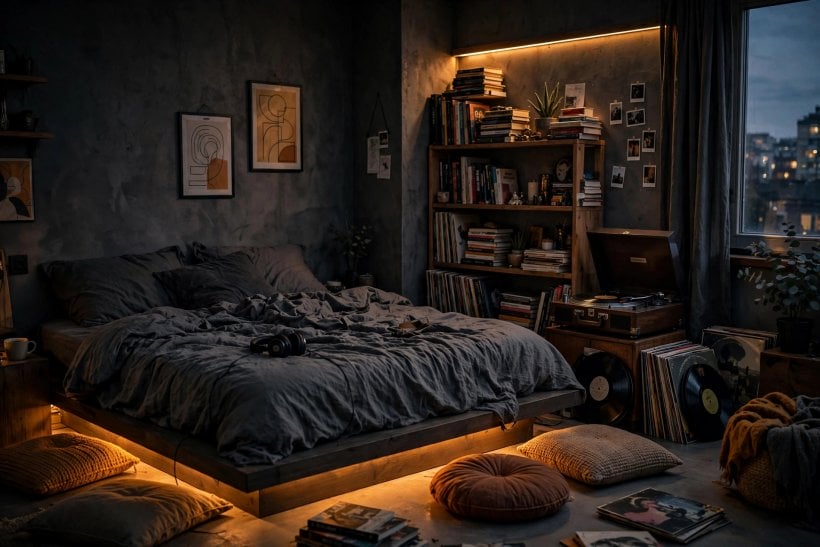
One ceiling light makes a small room look flat by day and interrogated by night. Layers change that completely: a general light for cleaning and dressing, task light at the desk and by the bed, and a low, warm glow for the last hour. Textiles carry the other half of rest — they soften sound, add colour without permanence, and make a rented box feel inhabited. Together, light and cloth do more for restfulness than any single piece of furniture.
17. Layer Light: Ceiling, Task and Low Glow
Keep the ceiling light for practical moments, then switch it off. A focused desk lamp handles work, a bedside lamp at pillow height handles reading, and a low warm source — a small lamp on a shelf, a shaded candle-style light — signals evening. Dimmers or simply lower-output bulbs in the evening layers help your body register that the work zone is closed. In a rental, plug-in lamps achieve all of this without touching the wiring.
18. Let Textiles Do the Restful Work
Bedding, a throw, curtains and a rug are the largest soft surfaces in the room, so they set its temperature — visual and literal. Choose bedding you want to get into, in the calm side of your palette; add one textured throw for the accent colour; hang curtains as full as the window allows for darkness and sound softening. Washable fabrics matter here: restful styling that cannot go in the wash will not stay restful for long.
19. Make the Last Hour Quieter and Dimmer
Protect sleep with a simple closing ritual the room is arranged to support: desk cleared and its lamp off, clothes into the basket or back on their hooks, screens charging outside the bed, low light only, and the bed made ready rather than excavated. A small bedside tray for book, water and glasses keeps the last things you touch calm and contained. The room cannot switch your mind off, but it can stop switching it back on.
8. Rental-Friendly, No-Drill Moves
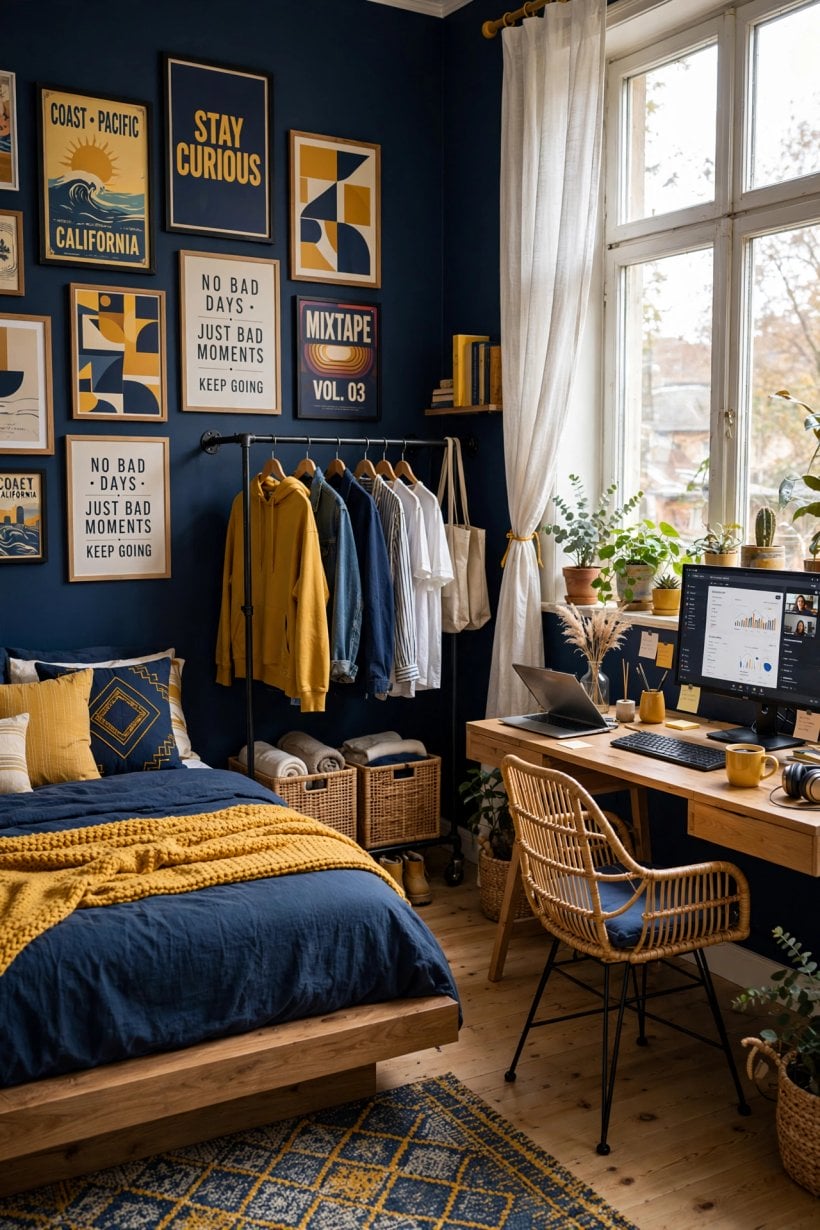
Renting, sharing a family home or living in halls all impose the same rule: change nothing you cannot reverse. That is a design brief, not a defeat. Removable fixings, leaning pieces, tension, weight and textiles can transform a room and travel to the next one with you, which suits a life stage where the next move is rarely far away. The renter’s mindset runs through this guide to how to live in a tiny apartment — invest in what moves with you, improvise what belongs to the landlord.
20. Use No-Drill Hooks, Clips and Tension Rods
Removable adhesive hooks carry art, hats, bags and fairy lights; picture-hanging strips hold framed prints; tension rods create a curtain, a wardrobe cover or extra hanging inside an alcove. Follow the weight limits honestly, clean the surface before applying, and test any adhesive on a hidden patch first — some paints lift whatever the packet promises. Keep the packaging and removal instructions, because a deposit saved is money for the next room.
21. Lean, Do Not Fix: Mirrors, Art and Shelves That Rest
A large mirror or framed print leaned on a chest against the wall gives the presence of a hung piece with none of the holes, and it can move when the layout does. Ladder shelves and leaning desks work the same way, using the wall for balance rather than fixings. Secure anything tall or heavy against tipping, especially in shared houses with passing traffic — reversible must never mean precarious, and a leaning mirror needs a steady base.
22. Cover What You Cannot Change
Every rental has an immovable eyesore: a tired carpet, a landlord’s curtains, a marked wall. Cover strategically rather than repainting emotionally — a large rug over the worst of a floor, your own curtain panel in front of theirs, a tall plant or a screen in front of a meter cupboard, a washable throw over a sofa you did not choose. The layered result often looks more personal than a blank renovation would, because it is visibly yours.
9. Personal Display, Plants and Texture
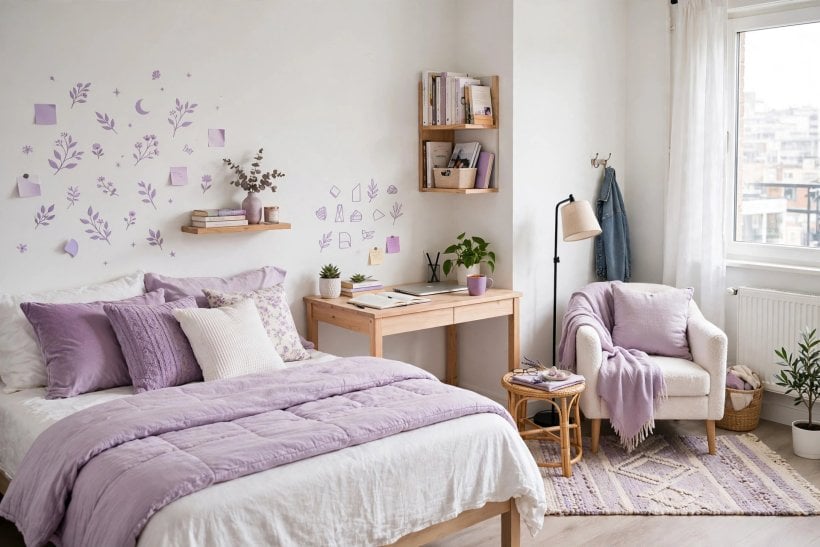
This is the layer that stops the room looking like a furnished let. Personal objects, photographs, plants and varied textures tell your story at a glance — but in a small room they need editing more than they need adding. Choose fewer things, group them properly, and let some surfaces stay empty. The finishing touches in this overview of tiny house bedroom decor make the same point at tiny scale: personality reads clearest when it is curated, not crowded.
23. Build a Gallery Wall You Can Rearrange
A gallery wall above the desk or bed head concentrates your prints, photographs and posters into one deliberate statement instead of scattering them across every wall. Plan the arrangement on the floor first, mix frame sizes but keep one shared element — frame colour, mount style or palette — and use removable strips so the display can evolve. Leave the other walls quieter; a single strong wall makes a small room feel designed, four busy walls make it feel restless.
24. Add Plants Where They Will Actually Survive
Choose plants for the light you have, not the jungle you imagine. A trailing plant on a high shelf suits a bright corner, a hardy low-light plant suits a desk away from the window, and a small herb or succulent suits a sunny sill. Group plants where you already go — near where you make a morning drink or open curtains — so watering joins an existing habit. One thriving plant beats four dying ones, visually and morally.
25. Display Fewer Things, Better
Edit personal display the way you would edit a shelf in a shop window: one small group on the bedside surface, one on the desk corner, one on a shelf — objects with space around them, rotated seasonally from a keepsake box rather than all shown at once. Tickets, ceramics, books and gifts keep their meaning when they are not competing with forty others. Restraint is also practical: fewer displayed objects means faster dusting and a calmer view from the bed.
10. Budget Sequencing, Costs and Upkeep
Sequence your spending and a small budget goes a long way; scatter it and even a generous one disappears into cushions while you sleep badly. The order that works is sleep, darkness and warmth first — bed, bedding, curtains or blinds — then the work setup, then closed storage, and only then decoration. That is the second place in this guide where bedroom decorating ideas young adults actually live by diverge from the ones in photographs: the photographed layer comes last, because it is the cheapest to add and the easiest to change. Buy the best you can afford of the things your body touches daily, and economise on the things that only need to look right.
Know the cost drivers so quotes and listings do not mislead you. Size and access drive furniture cost more than finish: a wardrobe that cannot turn the stair corner is expensive at any price, so measure doorways, halls and the room itself before ordering, and check delivery and returns terms for large pieces. Multi-use pieces cost more than single-purpose ones but replace two purchases; solid, repairable basics cost more upfront and less per year than flimsy equivalents; textiles vary hugely, so spend on the duvet and pillows you sleep in and save on the decorative throw. Checks before any major buy: landlord permission where an item fixes or alters anything, socket positions for anything powered, and whether the piece still works if you move to a smaller room next year — the thinking behind a well-chosen modern tiny house bedroom is exactly this portability test applied to every object.
Finally, plan for upkeep and for other people, because both are certain. Choose washable bedding and throws, a laundry basket with a lid that lives where clothes actually come off, and a ten-minute weekly reset — surfaces cleared, floor vacuumed, desk restored — that keeps the room from sliding. Keep guest and partner flexibility built in rather than improvised: spare bedding stored clean in an under-bed box, a hook and a small surface that can be cleared for someone else’s things, and enough chargers to share. A room that absorbs a guest, a deadline week and a laundry backlog without collapsing is the real finished product — styled, yes, but above all workable.
Final Considerations
A young adult bedroom works when it is zoned, calm at the bed and honest about storage — everything else is decoration. Start with layout and sleep, give work and media their corners, store the unlovely things behind doors and in boxes, and let colour, textiles and light do the styling in layers you can afford, reverse and take with you when you move.
Work through the twenty-five ideas in the order your room needs them rather than all at once, and re-check the plan each time your life changes — a new job, a partner, a move. The room will change with you if the bones are right: a clear path, a protected bed, a desk that can close for the night, and nothing on display that does not earn its place. That is a grown-up bedroom at any size.




0 Comments