

A stationary house asks its windows to do one job: sit there and look out. A tiny house on wheels asks far more. Every tow subjects its windows to a continuous 60 MPH earthquake — road debris, a flexing trailer frame and thin mountain air all attacking the panes at once. The glazing that survives that life is not the glazing on the big-box shelf, and this guide explains the one rule that decides it.
1. Road-Safe Windows at a Glance
Start with the rule itself, because everything else in this guide hangs off it: a tiny house on wheels should use tempered glass for all of its windows — every unit, in every position, with no exceptions made for small panes or high ones. Around that rule sit four supporting decisions: how the sealed units handle altitude, which opening styles stay shut at speed, how much clearance the installation leaves for a moving wall, and how the unit is fastened so road loads never reach the pane. The table gathers the whole system; the sections after it take each row apart.
| Attribute | Detail |
|---|---|
| The Rule | Tempered safety panes in every window — no exceptions for size or position |
| The Strength | Heat-treated panes are up to 4 times stronger than annealed (standard) glass |
| The Break Pattern | Thousands of small, dull cubes instead of large, jagged shards |
| The Debris Test | A rock kicked up by a semi-truck at 65 MPH shatters a standard pane instantly |
| The Altitude Line | Sealed double panes can balloon and blow out on passes above 4,000 ft |
| The Altitude Fix | Capillary (breather) tubes let the sealed unit equalize with outside pressure |
| The Best Operators | Casement and awning — crank-out sashes the wind presses tighter into their seals |
| The Risky Operators | Single/double hung and sliders — latches rattle loose; fit travel locks or travel sticks |
| The Install Gap | 1/4″ to 1/2″ of clearance all the way around the rough opening |
| The Fastening | Nailing-fin (new construction) units; shims only at the fastener locations |
| The Premium | Roughly 15–20% extra for tempered panes and breather tubes |
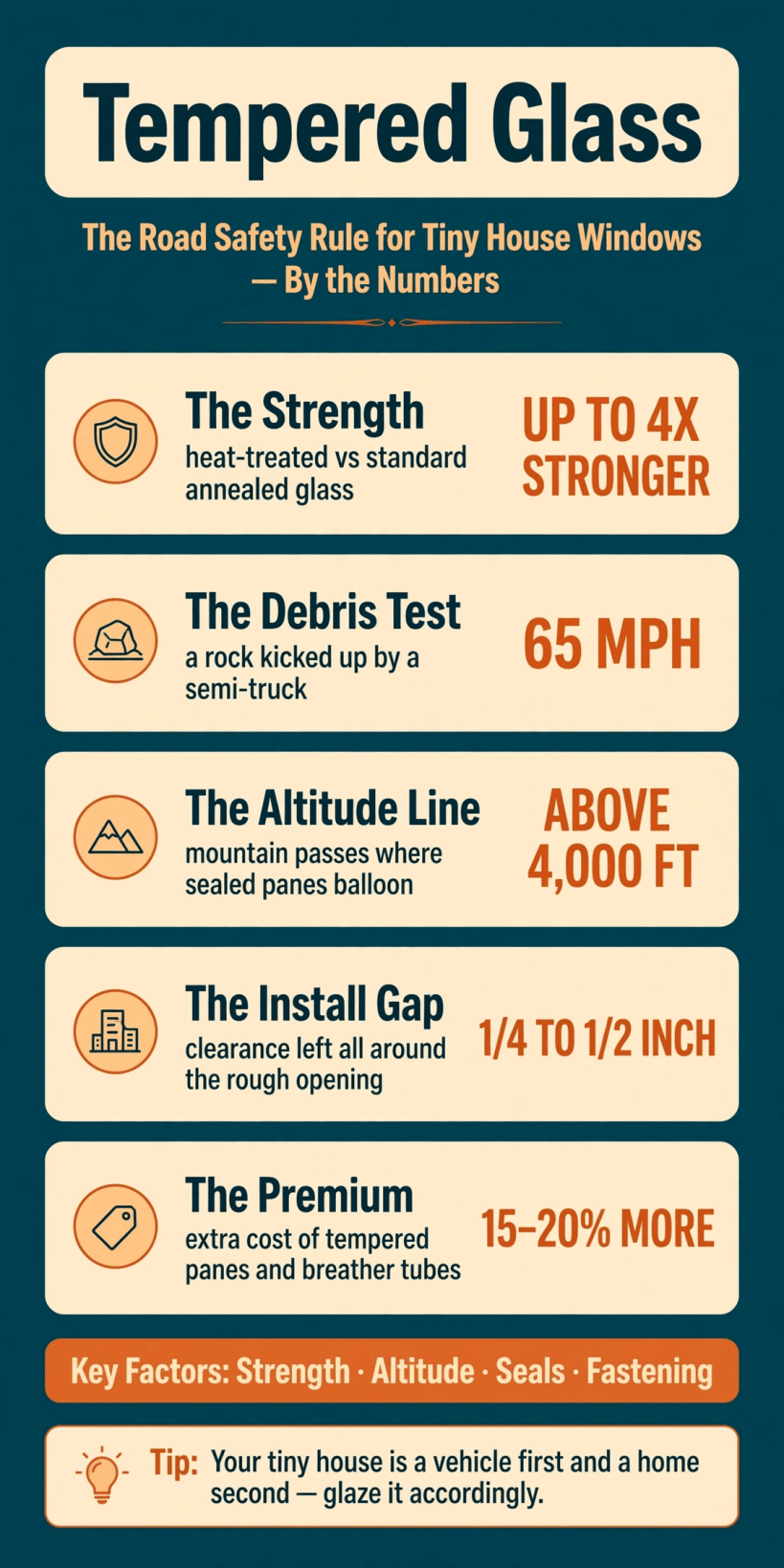
Four times the strength, a 65 MPH debris test, a 4,000-foot altitude line and a half-inch install gap — the road-glazing rule on one card.
2. The 60 MPH Earthquake: A House That Is Also a Vehicle
The starting fact is the one stationary builders never have to face: when a tiny house moves, its windows live the life of vehicle glazing, not house glazing. The original framing is exact — a Tiny House on Wheels (THOW) has its windows subjected to a continuous 60 MPH earthquake every time it moves. Vibration is not an occasional event in that life; it is the normal condition, delivered for hours at a time, through a trailer frame that flexes and twists as it rolls.
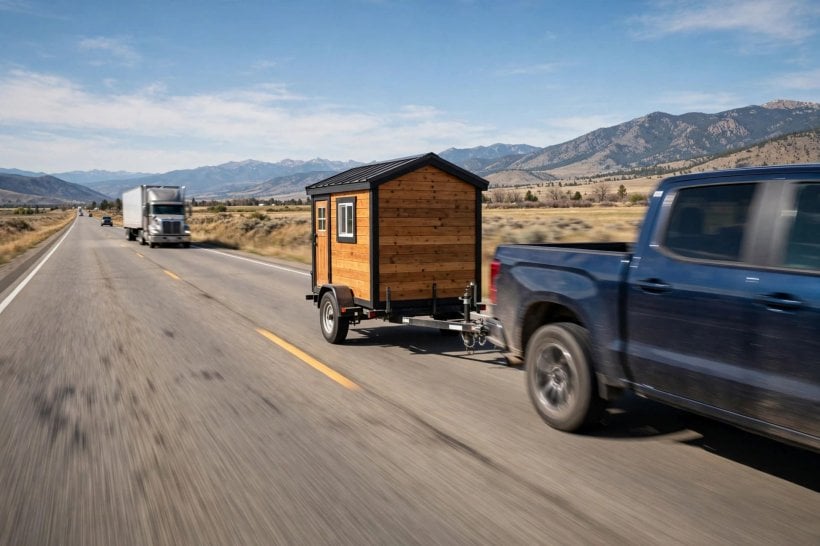
That life sits in a legal gray area between a house and a vehicle, and the gray area is where the danger hides. Residential building codes (the IRC) only require safety glazing in hazardous locations — bathrooms, doors, or panes low to the floor — because a stationary house can treat the rest of its glass as scenery. Vehicles live under the opposite assumption: DOT standards require vehicles to have safety glazing, because on a highway every pane is in a hazardous location. A THOW is built like the first and used like the second. Glaze it to the house standard and you have built a vehicle with house rules — the same category error the road makes with weight, which the tiny house tongue weight calculator exists to catch before the tow, not after it.
3. Heat-Treated vs. Annealed: What Tempering Changes
The two kinds of pane look identical on the shelf, which is exactly how the mistake gets bought. Annealed glass is the standard product — ordinary window glass, cooled slowly, with no treatment beyond that. The tempered alternative is heat-treated, and the treatment changes two things that matter on the road: how much force the pane can take, and what it becomes when it finally fails.
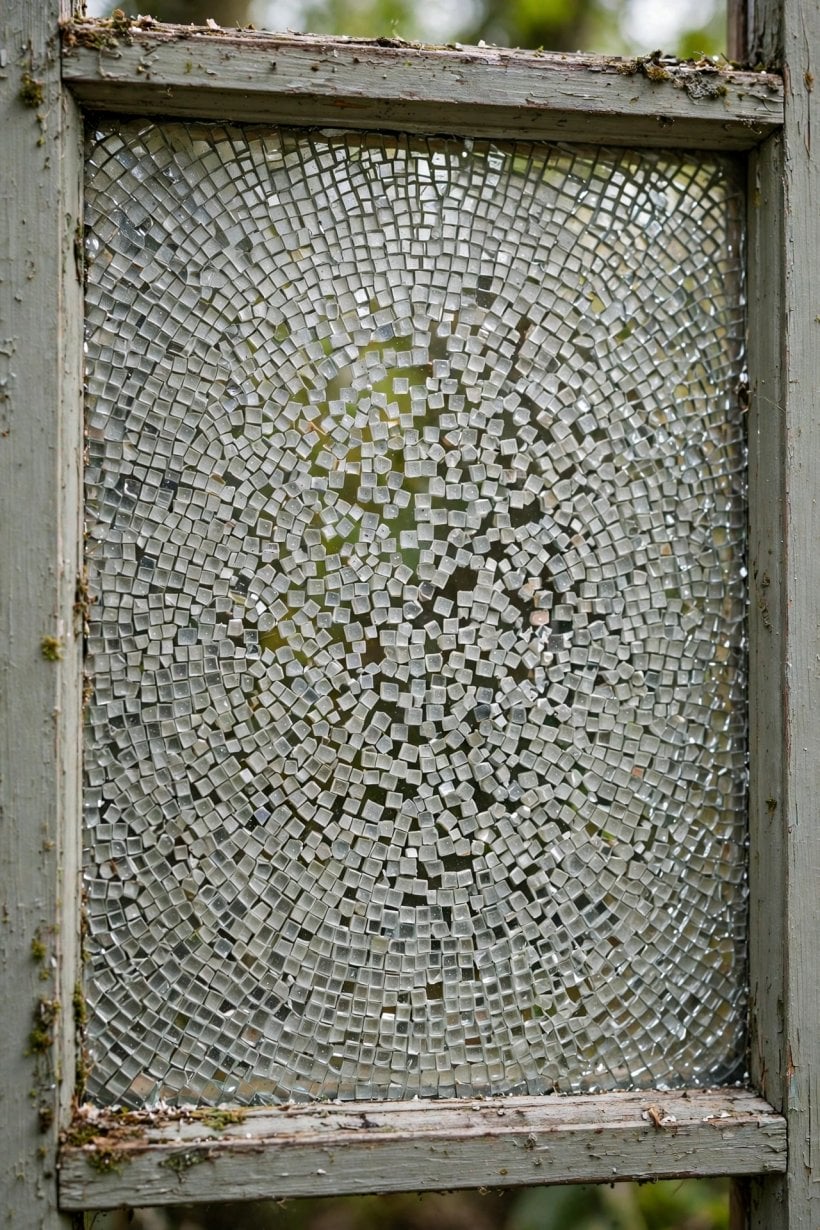
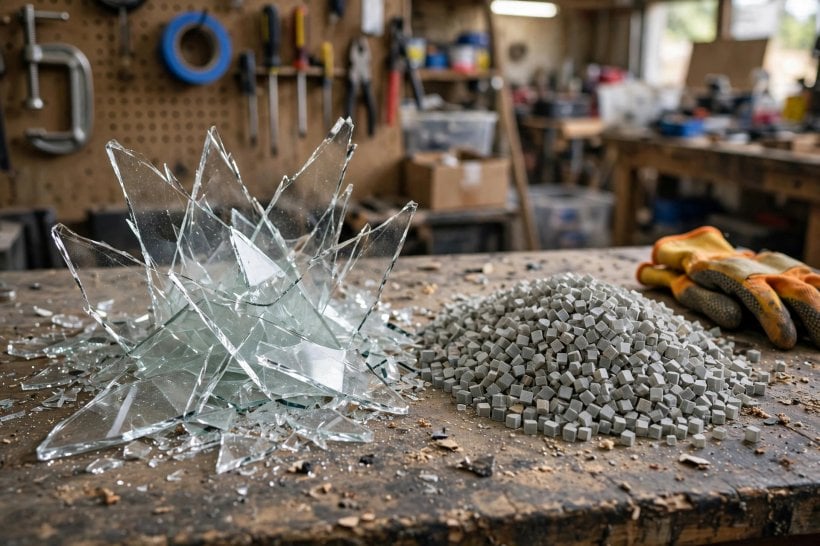
The strength difference is not marginal. A heat-treated pane is up to 4 times stronger than its annealed equivalent — the margin that decides whether a flexing frame or a flying stone ends the pane or merely tests it. The failure difference matters even more, because on a highway a broken window is an event happening inside a moving living room. Standard glass breaks into large, jagged shards — pieces with edges that can decapitate or severely injure someone. A tempered pane breaks the other way entirely: it explodes into thousands of small, dull cubes, the same crumbly failure you see in a car side window. One failure fills the room with blades; the other fills it with gravel. That contrast, more than the strength figure, is why vehicle glazing is made the tempered way — and why a house that travels should be glazed like the vehicle it is.
4. The Three Road Stresses: Debris, Vibration and Liability
Ask why the rule tolerates no exceptions and the answer comes back as three separate stresses, each sufficient on its own. The first is debris. A rock kicked up by a semi-truck at 65 MPH will shatter standard glass instantly, spraying your living room with razor-sharp shards — at the one moment the room is moving too fast for anyone to react. The tempered pane is much more likely to deflect the same rock without breaking at all, and if it does break, it breaks into the dull cubes of the last section rather than shards.
The second stress is vibration, the slow one. The flexing of a trailer frame can torque the window frame around its pane, hour after hour, tow after tow. Standard glass is brittle and cracks under this stress; the heat-treated pane’s higher tensile strength is built for exactly it. The third stress is legal rather than physical. Vehicles are required to have safety glazing, so if an accident occurs on the highway, standard glass poses a massive liability risk on top of the injury risk — the gray area of the last section stops being an abstraction the moment an insurer or a court reads the build. Debris argues for strength, vibration argues for tensile tolerance, and liability argues for the vehicle standard. All three point at the same pane.
5. The Altitude Problem: Sealed Units Above 4,000 Feet
The second road hazard has nothing to do with impact. Most tiny houses use double-pane windows for insulation, and those windows are sealed units filled with Argon gas — a fixed volume of gas, trapped at the pressure of wherever the unit was made, behind two panes that cannot breathe. Parked, that seal is the insulation. Towed over a mountain, it becomes a slow-motion pressure vessel.
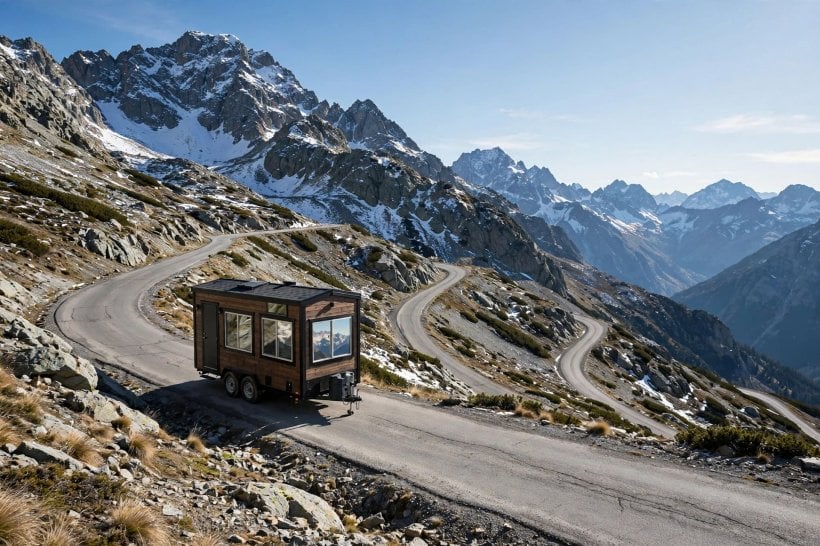
Run the scenario the original lays out. You build your tiny house at sea level, where the sealed unit is filled and closed at sea-level pressure. You then tow it over the Rocky Mountains — or any pass above 4,000 ft — and the atmospheric pressure outside drops with the climb, while the pressure inside the pane stays exactly where it was sealed. The difference has to go somewhere, and it goes into the panes: the window balloons out under its own trapped pressure, and pushed far enough, it explodes. No rock, no crash, no defect — just physics and a route map. Any travel plan that crosses high country turns this from a curiosity into an ordering requirement, which is what the next section covers.
6. Capillary Tubes: The Breather Fix
The fix is small, cheap and impossible to retrofit: capillary tubes, also called breather tubes. These are tiny metal straws inserted into the seal of the double-pane unit at manufacture. A straw sounds too simple to matter, but it changes the one thing that causes the blowout — instead of a permanently sealed volume, the unit can now breathe, allowing the pressure inside the window to equalize with the altitude outside as the climb changes it. No pressure difference, no ballooning, no explosion.
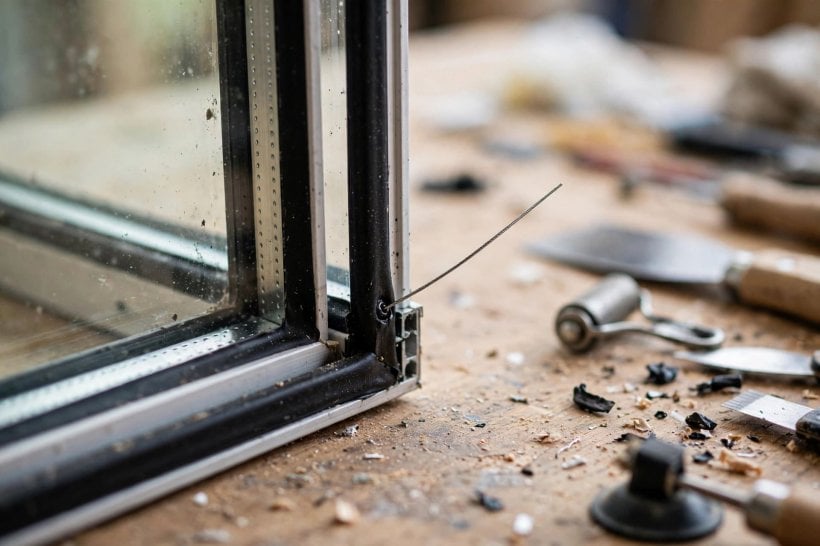
Two disciplines follow. First, the tubes are an order-time decision: they go in when the sealed unit is made, so the time to ask for them is on the order form, not at the foot of the pass. If you plan to travel — and a house on wheels that never travels is a house that paid for wheels it does not use — order the tubes. Second, they belong in the same conversation as the pane’s insulation job itself: a double-pane unit is part of the wall’s thermal system, and the insulation strategy analyzer scores that system on the wall side. Strength for the debris, breathers for the altitude — a road window is specified by the route as much as by the opening it fills.
7. Casement and Awning: The Operators That Seal Tighter
Glass is only half the window; the other half is the mechanism that opens it, and mechanisms are not created equal at 60 MPH. The best styles for the road are casement and awning windows — the ones that crank out to open. Their safety is built into how they close: the latch pulls the sash tight against the frame, seating it into its seal with the mechanism’s own force rather than gravity’s.
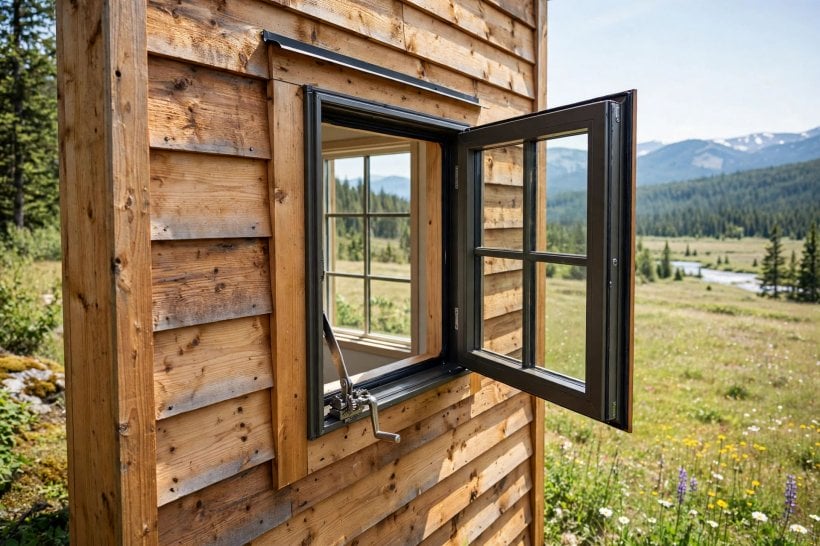
Better still, the road itself helps them. The force of the wind pressing against the front of the tiny house actually pushes a crank-out window tighter into its seal — the faster the tow, the harder the sash is pressed home. They rarely vibrate open, because vibration would have to work against both the latch and the wind. That is why the ordering checklist at the end of this guide lists the crank-out style as preferred for its air seal: it is the rare mechanism whose seal improves under exactly the condition that defeats the others. Parked, the same windows do the ventilation work — an awning sash can stay open through weather that would close other styles, which is part of the cooling picture in our tiny home summer prep guide.
8. Hung and Sliders: The Operators That Rattle Loose
The worst styles for the road are the ones that dominate the big-box shelf: single-hung, double-hung and sliding windows. Their mechanism is the problem — they slide up and down, or left and right, on a track, which means the sash is held by a latch and a groove rather than pulled into a seal. Gravity and vibration are enemies here, and on a long tow both get hours to work.
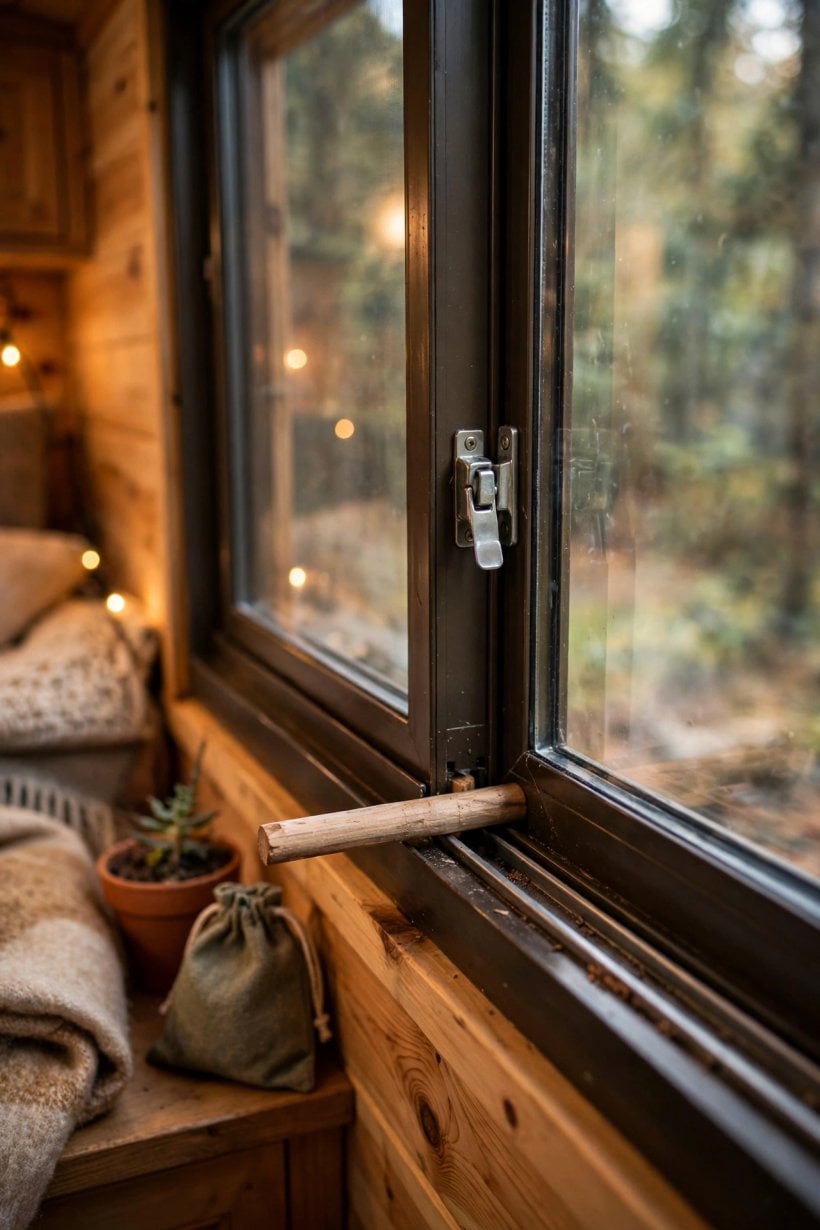
The failure is common enough to be a known pattern: double-hung window latches rattle loose on the highway, the sash drops its hold, and the window slides down and slams open violently — mid-tow, at speed, with the interior now open to the road. If you use these styles anyway, the fix is mandatory rather than optional: install secondary travel locks, or cut “travel sticks” — simple dowels wedged into the tracks during transit so the sash physically cannot travel, whatever the latch does. Treat them the way you treat every other piece of travel hardware on the house, in the same family as the stow-and-lock routine of folding deck designs: nothing on a moving house should rely on a single latch staying polite.
9. The Install Gap: Room for the Wall to Flex
How the window is installed matters as much as the glass itself, and the first installation rule is about what you deliberately leave empty. Never fit a window tight into its rough opening: leave at least a 1/4″ to 1/2″ gap all the way around the unit. A tight fit feels like good craftsmanship in a stationary wall; in a moving one it is a stress concentrator with your pane at the bottom of it.
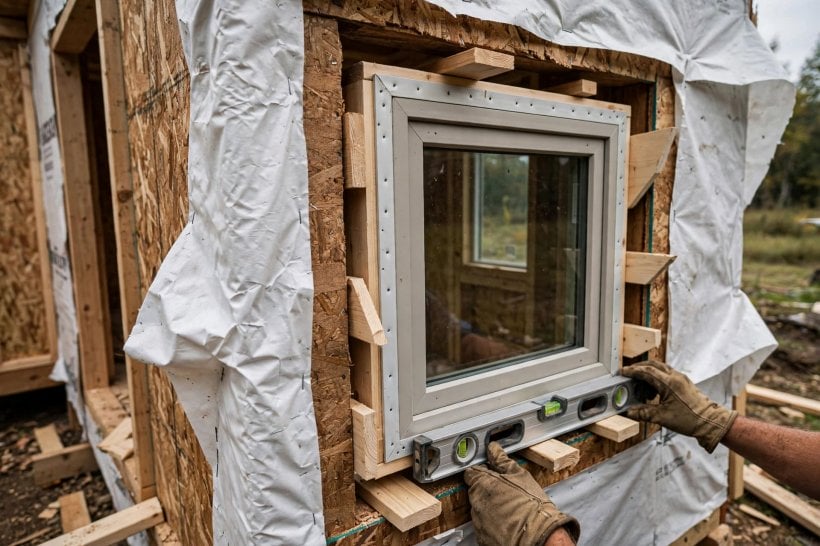
The gap exists because the wall around the window is not rigid. As the trailer moves, the wall framing flexes and twists — the same motion the frame-torque stress of §4 describes — and the gap lets it do so without crushing the rigid window frame between timbers that are moving on their own schedule. Take the clearance away and every twist of the wall is delivered straight into the frame and from the frame into the pane. It is the wall-assembly version of the drainage thinking behind a rain screen installation: in a house that moves, the assemblies that survive are the ones with somewhere for forces — water or torque — to go.
10. Flanges and Shims: The Fastening Rules
The second installation rule chooses the unit itself: always use “nailing fin” (new construction) windows, not “replacement” windows. The difference is the flange. A nailing fin gives the window a secure structural connection to the sheathing — a wide, fastened flange tying the unit into the wall’s skin — which is far superior to screwing through the jambs and asking the frame alone to hold the unit against road loads. On a stationary house the distinction is a preference; on a vibrating one it is the difference between a connection designed for structure and one designed for convenience.
The third rule is about restraint with the shims. Place shims only at the fastener locations — enough to level and support the unit where it is actually held — and no more. Over-shimming is a real failure mode, and the header is where it bites: pack the top of the opening with shims and you transfer roof loads directly onto the glass, loading the pane with the weight of the structure above it until it cracks. The window’s job is to fill the opening, not to carry the roof; shims at the fasteners keep those two jobs separate. Together with the gap rule and the flange, this is the fastening discipline the whole wall depends on — the same envelope thinking that decides the wrap layer in the Tyvek vs. ZIP System air-barrier battle.
Final Considerations
Windows are one of the most expensive line items in a tiny house build, so the temptation to buy cheap, standard glass is strong — it belongs with the other tiny house myths that cost more than they save. The arithmetic of resisting it is short: spending the extra ~15-20% for tempered glass and capillary tubes is cheap insurance against road accidents, shattered panes and failed seals. Order against the original checklist and every rule in this guide is covered before the units ship:
- Tempered safety panes in all units
- Capillary/breather tubes, if crossing mountains
- Nailing fin/flange included
- Screens included — hard to find in aftermarket sizes
- Crank-out style preferred, for the air seal
Your tiny house is a vehicle first and a home second — glaze it accordingly.




1 Comment