

The valance is the window’s finishing sentence: a short, shaped fall of fabric — or a neat wooden cornice — that crowns the glass, hides the hardware and gives a room its period, its pattern or its one moment of softness at the top of the window.
These window valance ideas collect the shapes that matter — scallops and swags, pleats and plain panels — room by room, with the fabric, length and care decisions that make each one work.
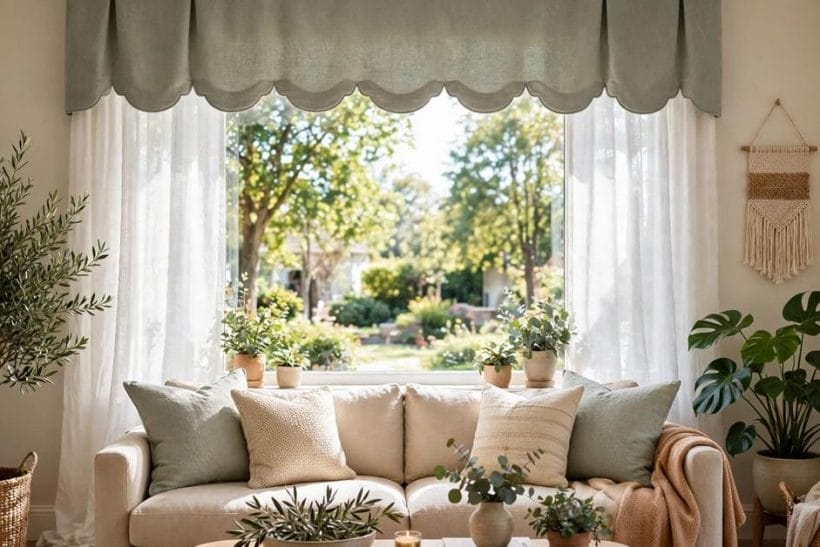
1. Window Valance Ideas at a Glance
Scope first. This collection owns the valance itself: the short decorative heading at the window’s crown. Its neighbours keep their own ground: layered full-length curtains and their hardware are treated in curtains over blinds; the whole wardrobe of dressings is surveyed in window treatments; shaped glass that demands shaped headings is in bay windows; tall light-wells are in clerestory windows; and small-space window dressing has its own dedicated set in tiny house curtain ideas. Here, everything is the top few inches of the window, done well.
One discipline runs through the collection: a valance is an accent, not a curtain that gave up. It earns its place by finishing the window — covering rods and tracks, softening the hard line of the frame, carrying the room’s pattern up to the ceiling — while leaving the glass below it free for light, blinds or full curtains. The rooms it serves best, like those in small living room ideas, are the ones where a full pair of drapes would crowd the walls.
The tour runs by shape and by room together: scalloped and pleated forms first, then cornices and swags, then the plain modern panels — closing with fabric, proportion and care, the three decisions that decide whether a valance looks tailored or tired.
| Valance family | Defining move | Best suited to |
|---|---|---|
| Scalloped | Curved hem, gentle rhythm | Kitchens and cottages |
| Swag | Draped folds over a rail or rod | Formal and traditional rooms |
| Pleated | Tailored folds, crisp stripes | Coastal and classic rooms |
| Cornice | Upholstered or wooden box heading | Studies and structured schemes |
| Plain panel | Flat linen fall, minimal fuss | Modern and relaxed rooms |
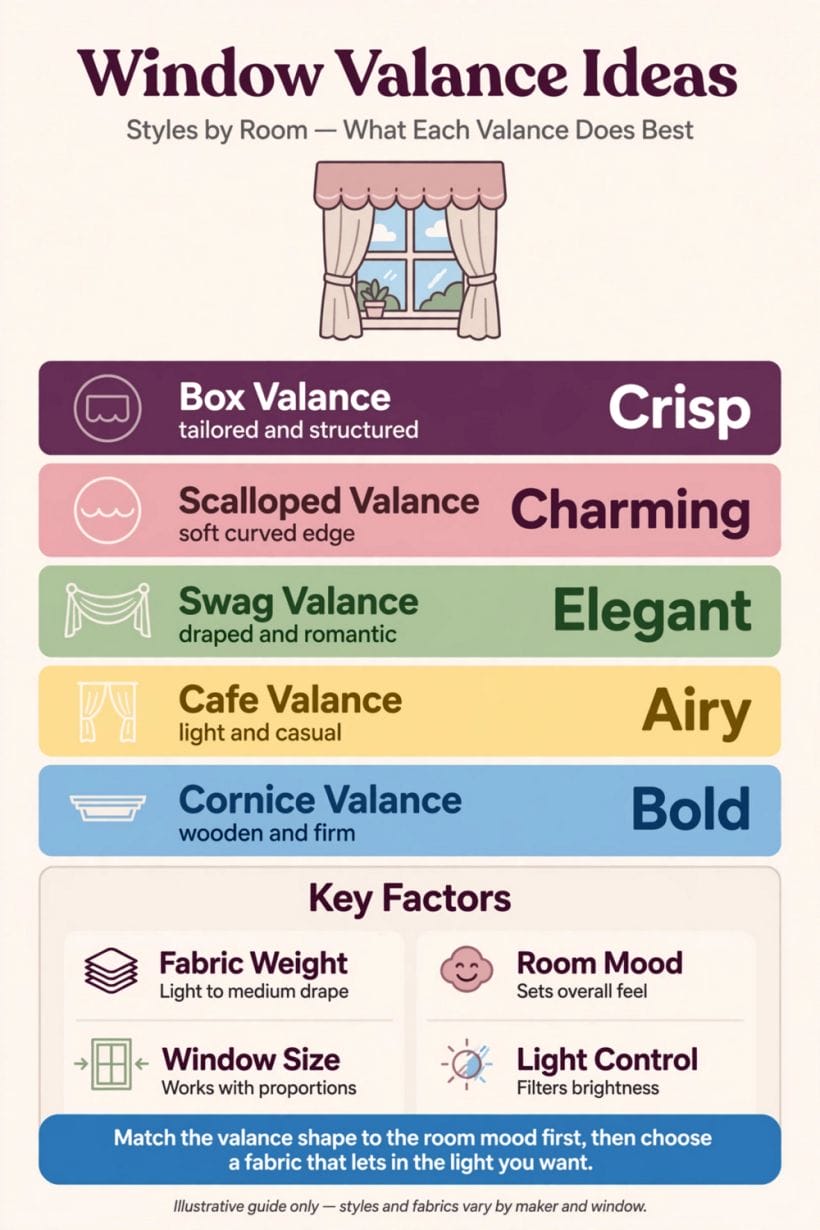
2. Scalloped and Shaped Edges

The opening gallery shows the scalloped valance where it lives happiest: over a kitchen window, its curved hem echoing the friendliest architecture in the house. A shaped lower edge is the valance’s oldest trick — it turns a plain band of fabric into a piece of design, and this section gathers its best expressions.
1. The classic single scallop repeated
A row of even scallops along the hem gives a flat valance its rhythm without any pleating at all. It is the cottage window’s signature — cheerful, simple to sew, and happiest in gingham, ticking or a small floral print.
2. A deep scallop for tall windows
Scale the curve to the glass: a deep, generous scallop suits tall windows where a shallow one would look like a frill. The deeper arc also shows off a contrast lining each time the light moves behind it.
3. Pointed and zigzag hems
A pointed hem trades the scallop’s softness for graphic energy. It suits retro kitchens and children’s rooms, and it pairs well with plain fabrics, where the silhouette itself carries all the pattern the window needs.
4. A shaped valance with contrast binding
Binding the curved edge in a contrasting colour draws the shape like a line of ink. It sharpens scallops and points alike and lets a plain fabric look deliberately finished rather than merely hemmed.
5. Layered scallops in two fabrics
Two shaped layers — a plain beneath, a print above, the lower peeking out — give a simple window unusual depth. The double hem is a small luxury that suits dressier kitchens and breakfast rooms.
6. The arched valance echoing an arched window
Where the window itself curves, a valance shaped to follow it honours the architecture instead of fighting it. A soft arc of fabric over an arched head is one of the most elegant headings a traditional house can wear.
7. Scallops over a simple roller blind
The scalloped valance’s favourite partner is the plain roller beneath it: the blind does the privacy, the valance does the charm. Together they dress a kitchen or bathroom window completely for very little fabric.
8. A festooned edge for a romantic room
Gathering the hem into soft festoons gives a valance a ballgown’s swish in miniature. It belongs to romantic bedrooms and dressing rooms, in fabrics with the drape to fall in curves — silk-look weaves and soft cottons.
9. Shaped valances in a child’s hand
For nurseries and playrooms, the shaped hem can carry the theme: clouds, waves or bunting points along the lower edge. It is decoration a child reads instantly, at the safe height of the window’s crown.
3. Kitchen Valances

The pin lingers in the kitchen, the valance’s natural home: a floral fall over the sink window, herbs below, daylight everywhere. Kitchen valances survive steam, splashes and short windows over counters, and this section collects the ones that thrive there.
10. The café-window valance over the sink
The sink window is the valance’s classic post: a short shaped or pleated fall that dresses the glass without dipping toward the taps. It finishes the hardest-working window in the house in a metre of fabric.
11. Herb-garden green at the kitchen window
A valance in leaf green or a botanical print continues the garden indoors and frames the real herbs on the sill below. The colour link between fabric and planting is what makes the window feel composed.
12. Gingham and checks for the farmhouse kitchen
Checked fabric at the kitchen window is a tradition because it works: the pattern hides the odd splash mark, the mood is instantly homely, and the valance can be a simple gathered rectangle with no shaping at all.
13. A short valance where cabinets crowd the window
Kitchens often leave only a sliver of wall above the glass. A slim valance — even a flat pelmet-style band — claims that sliver and gives the window a finished head where full curtains could never fit.
14. Washable fabrics as a hard rule
Above a hob or sink, the valance will be washed often or condemned slowly. Cotton and cotton-blend fabrics that launder without ceremony are the only honest choices; dry-clean-only fabric has no business over a stove.
15. A valance tying kitchen to dining
Where the kitchen opens to a dining space, repeating the valance fabric in both rooms stitches them together. The same print at two windows tells the eye the rooms are one place with two jobs.
16. Fruit and produce prints, used sparingly
A produce print is the kitchen valance’s cliché and its charm — the discipline is dosage. One window, a small-scale print and plain walls elsewhere keep it witty rather than themed.
17. A tailored box-pleat for the modern kitchen
In a contemporary kitchen of flat fronts and steel, a crisp box-pleated valance in a plain weave keeps the window dressed without a whisper of cottage. Geometry answers geometry.
4. Children’s Rooms and Nurseries
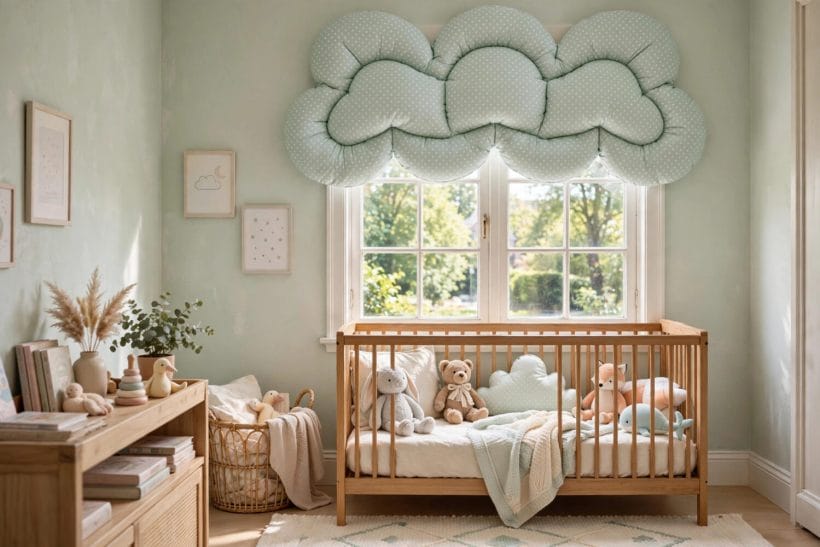
Gallery-2 floats a cloud-shaped valance over a nursery window, and it makes the section’s point at a glance: in children’s rooms the valance is decoration at a safe height — all of the charm, none of the dangling cords and pooling fabric that little hands and feet argue with.
18. The cloud valance for a nursery
A white cloud-shaped valance over a nursery window is pure storybook: soft, washable and readable by the smallest critic. Backed by a blackout blind beneath, it dresses the window without compromising the nap.
19. Bunting points in nursery colours
A hem of fabric triangles echoes party bunting and can carry the room’s whole palette in one row. As the scheme changes with the child, the valance is a small, cheap piece to remake.
20. Animal and star prints at the crown
A print of animals or stars placed high at the window reads as a frieze the child can study from the cot or bed. Keep the scale small and the ground plain so the room below stays calm.
21. A valance hiding the blackout blind’s hardware
Nursery windows work hard: blackout blinds, safety fittings, sometimes a fan. A valance draws a soft curtain over all that machinery — literally — and returns the room to the story it was telling.
22. Growth-proof: plain shapes, changeable fabric
Children outgrow themes faster than paint dries. A plain shaped valance — scallop or wave — in a neutral weave can be re-covered in an afternoon when dinosaurs give way to space rockets.
23. Soft valances for a shared children’s room
Where siblings share, the window is neutral ground. A gentle valance in a unifying colour — sky, sage, butter — gives the room one shared note above the two territories below.
24. A reading-nook window treatment
The nursery reading corner loves a dressed window: a small valance over the nook’s glass makes the corner feel like a room within the room, which is exactly how a child experiences it.
25. Safety first: short, cordless, secure
Every children’s valance shares three traits — it hangs high and short, it works without cords within reach, and its fixings are sound. The charm is real only when the safety is boring.
5. Pleated and Striped Valances

Gallery-3 goes tailored: a striped, pleated valance with the crispness of a well-made shirt. Pleats give the valance its formal education — structure, rhythm and a certain coastal confidence — and this section shows where that tailoring earns its keep.
26. Box pleats for a tailored crown
Box pleats fold the fabric into flat, architectural panels that suit dining rooms, halls and any window that wants dressing without softness. In a plain weave they read as joinery made of cloth.
27. Pinch pleats echoing the curtains below
Where full curtains hang beneath, a pinch-pleated valance in the same fabric continues their tailoring across the window’s head and hides the track in one move — the classic hotel finish, at home.
28. Stripes running vertically to lift a low window
Vertical stripes on a pleated valance draw the eye upward and lend height to low windows and low rooms. The pleats deepen the stripe’s shadow play, so the effect is architectural rather than merely patterned.
29. Ticking stripe for the coastal room
Blue-and-white ticking is the seaside valance’s native fabric: crisp, washable and forever in season with white paint and natural wood. It dresses beach-house windows without a single shell motif.
30. A pleated valance in linen for softness
Linen relaxes the pleat’s formality — the folds stand, but gently. It is the compromise fabric for rooms that want tailoring without stiffness, and it suits transitional schemes between classic and modern.
31. Knife pleats for a graphic rhythm
Sharp knife pleats all falling one way give a valance a strong directional rhythm, almost like louvres in cloth. In a bold stripe they become the window’s main event; keep the rest of the room quiet.
32. Contrasting pleat insets
A flash of contrast fabric inside each pleat rewards the close look and ties the window to an accent colour across the room. It is dressmaking detail at window scale — small effort, tailored effect.
33. Pleats on a board for a perfect hang
Mounting a pleated valance on a board holds every fold exactly where it was pressed and hides the fixing completely. For formal rooms, the board-mounted valance is the difference between made and homemade.
6. Cornices and Wooden Valances
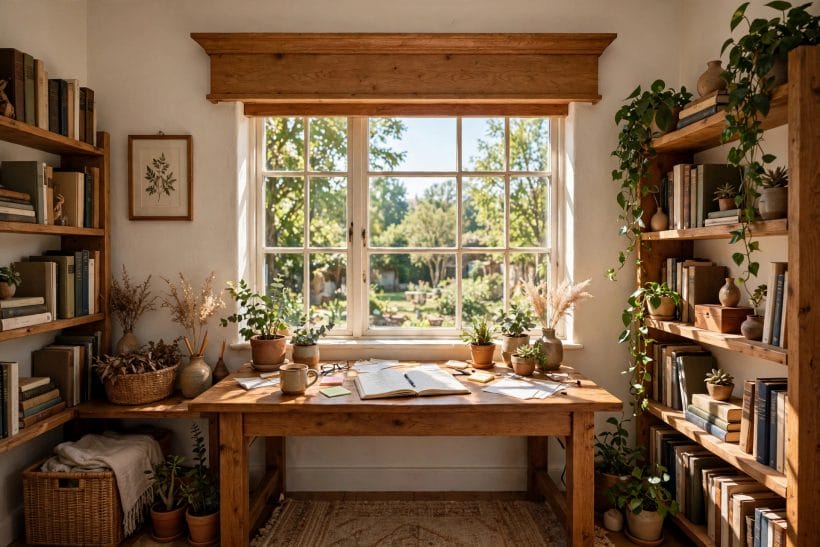
Gallery-4 turns from fabric to joinery: a wooden cornice crowning a study window, as architectural as the shelves beside it. The cornice — upholstered, painted or plain timber — is the valance family’s most structured member, and this section makes its case.
34. The upholstered cornice for a soft architecture
A padded, fabric-covered cornice gives the window a tailored box heading with a whisper of softness. It hides tracks and blind tops completely and suits bedrooms and living rooms that want a finished, hotel-grade crown.
35. A painted wooden cornice matching the trim
Painting a wooden cornice to match the room’s architraves makes it read as part of the house’s joinery rather than an added decoration. It is the most architectural valance of all — and the most forgiving of fabric indecision.
36. Natural timber for the study and library
In rooms of books and wood, a timber cornice in a matching tone crowns the window like the top of a bookcase. Gallery-4 shows the effect: the window joins the room’s joinery family and the scheme deepens.
37. A shaped cornice front for traditional rooms
Cutting the cornice’s lower edge into a gentle arch or step gives the joinery a period profile. It is the heading that suits panelled rooms, bay windows and houses whose architecture asks to be answered in kind.
38. Cornices concealing lighting and tracks
The cornice’s hollow interior is useful space: curtain tracks, blind mechanisms and even a soft strip of uplighting disappear inside it. Few window treatments work this hard while appearing to do nothing.
39. A shallow cornice where ceiling height is short
Cornices scale down gracefully — a shallow box still finishes a window and hides its hardware without eating the wall. In low rooms, proportion the depth to the drop of fabric it replaces.
40. Upholstery fabric echoing the room’s chairs
Covering the cornice in a fabric used elsewhere — a chair, a cushion — pulls the window into the room’s scheme with unusual completeness. The repetition reads as design rather than accident.
41. The cornice as a shelf line
A deep cornice’s top can carry a row of small objects — plants, ceramics, books — turning the window’s crown into a display line. It suits kitchens and studios where every horizontal surface earns its keep.
7. Swags and Formal Rooms
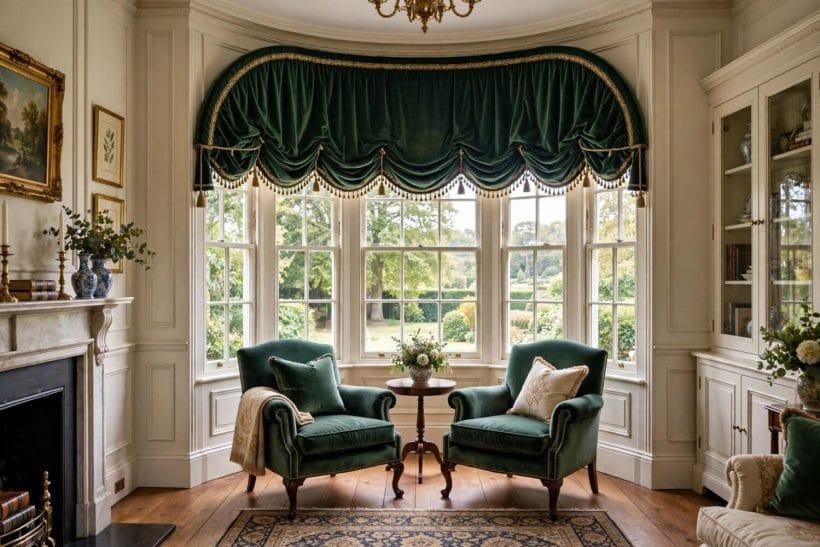
Gallery-5 drapes a green swag across a bay window, and the temperature of the tour rises: swags are the valance’s formal wear, all drapery and ceremony. This section shows where their theatre belongs — and how to keep it elegance rather than excess.
42. The classic swag over a bay
A swag’s draped arc was made for the bay’s curve: the fabric follows the window’s own geometry and crowns it like a garland. In a formal living room it remains the most graceful heading ever devised.
43. Swags with tails at the sides
The hanging tails that finish a swag’s ends frame the window like curtains in miniature. They suit tall windows, where the vertical drop balances the arc’s sweep and gives the arrangement its full period poise.
44. A single swag for a narrow window
One draped arc, simply hung, dresses a narrow hall or landing window with ceremony out of all proportion to its size. It is the formal answer where a pair of anything would overwhelm the glass.
45. Swag over sheers for the layered classic
The traditional layered window — sheer at the glass, swag at the crown — grades light and privacy while wearing its history proudly. It belongs to rooms that keep their formality: dining rooms, sitting rooms, master suites.
46. Velvet and silk-look fabrics for evening rooms
Swags live by their drape, and drape lives by fabric weight. Velvet and silk-look weaves fall in the deep, shadowed folds the style needs; stiff cottons make swags look like bunting at a funeral.
47. A swag softened by a plain under-valance
Layering a swag over a simple gathered valance fills the arrangement and hides the mechanics of the drape. The combination suits very tall windows, where a bare swag can look like it is floating.
48. Restraint: one formal window per room
Swags command attention; a room of them becomes a theatre set. Dress the principal window formally and let the room’s other glass wear simpler headings — hierarchy is what keeps formality elegant.
49. The swag in a dining room’s candlelight
Formal dining rooms are the swag’s evening home: draped fabric drinks up candlelight and lamplight and returns it as atmosphere. If a room is used mostly after dark, dress its window for the dark.
8. Bedroom Valances

The second pin settles into the bedroom: a soft pink swag softening a sleeping room’s window. Bedroom valances do gentle work — hiding the blackout machinery, softening early light and finishing the room’s softest scheme — and this section collects their best manners.
50. A soft swag over the master window
The master bedroom is the swag’s domestic home: a draped fall in a bedroom fabric — a floral, a stripe, a washed linen — gives the window the same softness as the bed it faces.
51. A valance hiding blackout hardware
Bedrooms need their darkness engineered and their mornings pretty. A valance’s oldest bedroom job is concealing the blackout blind or track so the room wakes up looking dressed rather than equipped.
52. Matching valance and bedding fabrics
Repeating the bedding’s fabric at the window knits a bedroom scheme together completely. The match is strongest in traditional rooms; in modern ones, a shared colour without the shared print does the same work more quietly.
53. A gathered valance for the guest room
The simple gathered valance — fabric shirred onto a rod — is the guest room’s friend: quick, pretty, washable and forgiving of the odd spare curtain pressed into service beneath it.
54. Romantic sheers beneath a bedroom valance
A bedroom window layered with a sheer below and a valance above gets privacy, softened light and a finished crown in two light pieces of fabric — the gentlest full dressing a window can wear.
55. A tailored valance for a modern bedroom
Contemporary bedrooms take a flat or box-pleated valance in a plain weave — the softness of fabric with the discipline of the scheme. It finishes the window without a single frill to argue with the architecture.
56. Valances in the dressing room window
Dressing rooms and en-suites deserve the same finish as the bedroom they serve. A small valance over the en-suite window carries the scheme through the doorway and makes the suite read as one designed place.
57. Low-light fabrics: choosing by morning
Judge bedroom valance fabrics by the light they will actually meet — early sun behind them. A fabric that glows pleasantly at dawn beats one that merely looked right in the shop’s evening light.
9. Plain Linen and Panel Valances
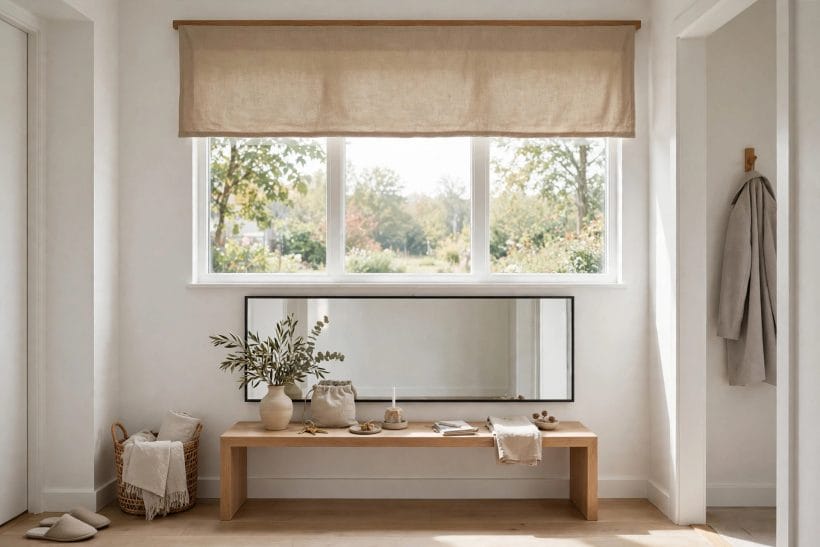
Gallery-6 ends the tour in the present tense: a flat linen panel, unadorned, doing its work by texture alone. The plain panel is the modern valance — minimal, washable and calm — and this section gathers its variations for rooms that dress quietly.
58. The flat linen panel, simply hung
A single rectangle of linen on a slim rod or track is the whole idea: the weave is the pattern, the hem is the detail. It suits Scandinavian, coastal and modern rooms that find every other valance in this collection too talkative.
59. A panel valance with a contrast hem band
One band of darker fabric along the lower edge gives the plain panel its single designed note and weights the hem so it hangs true. It is the minimalist’s version of binding a scallop — same instinct, quieter voice.
60. Tab-top panels for a relaxed room
Tabs of the same fabric looped over a pole make a valance that hangs in soft, even folds with no hardware visible. The look is holiday-house relaxed and works wherever the room’s mood is barefoot.
61. A sheer panel valance for light rooms
Where privacy is handled elsewhere — a garden-facing room, a high window — a sheer panel valance filters the top of the light and softens the frame’s hard line while changing almost nothing. It is the lightest dressing a window can wear.
62. Panels in natural fibres and earthy tones
Flax, cotton canvas and jute-look weaves in undyed tones give the plain panel its texture and its conscience. They pair with plants, timber and limewash — the materials of the calm contemporary interior.
63. A wide panel valance over sliding doors
Sliding and patio doors defeat most valances, but a single wide panel on a track crowns them successfully — softening a hard expanse of glass and hiding the door’s head track in one plain gesture.
64. Two-tone panels for a tailored modern look
Splitting the panel horizontally — pale above, deeper below — gives the minimal valance a designed horizon line that echoes a room’s dado or picture rail. It is the plain panel learning one architectural trick.
65. The panel as a changeable canvas
Because it is one flat piece of cloth, the panel valance is the cheapest seasonal change in decorating: a summer linen, a winter wool-blend, swapped in minutes. Minimalism, it turns out, is also flexibility.
66. Café-style half valances at eye level
A short panel hung at mid-window — the café arrangement — gives privacy at seated height while the window’s crown stays bare and the light pours over the top. It is the valance idea inverted, and bistros have sworn by it for a century.
10. Fabric, Length and Care
No image closes the tour, because this last section is about the tape measure and the laundry basket. The valances that fail, fail on proportion, fabric or upkeep — so the final nine ideas are the practical grammar every earlier section quietly assumed.
67. The drop: a fifth to a sixth of the window
As a working proportion, a valance’s drop sits around a fifth to a sixth of the window’s height — deep enough to crown the glass and hide hardware, shallow enough to leave the view alone. Tall windows take the deeper end; short windows, the shallower.
68. Width and fullness: gather generously
Gathered valances want fabric at roughly twice the window’s width to fall in soft, even folds; skimped fullness reads as a curtain that ran out. Flat panels and cornices are the exceptions — their whole point is the absence of gathering.
69. Fabric weight decides the shape
Swags need drape, pleats need body, panels need a honest weave that hangs straight. Match the fabric’s character to the form before falling for its colour — a shape attempted in the wrong cloth fails no matter how pretty the print.
70. Line shaped and formal valances
A lining gives shaped hems their crisp edge, helps pleats hold, and protects the face fabric from sun. For scallops and swags it is close to non-negotiable; for a flat linen panel, its absence is part of the charm.
71. Sun is the valance’s weather
The valance sits in the window’s fiercest light all day, every day. Fade-resistant fabrics, linings and the occasional rotation of a reversible panel all fight the same slow bleaching — choose with the sun in the room, not the shade in the shop.
72. Mounting: rod, board or track
Rods show and suit gathered styles; boards hide and suit pleats and cornices; tracks disappear under everything. The mounting is part of the design, not an afterthought — and it should be fixed soundly, since a valance’s whole job is to look inevitable.
73. Clearing the glass: hang it high
Mount the valance at or above the frame’s top so its drop covers hardware and the frame’s head — not the view. A valance hung too low eats the window’s best light and makes the room feel shorter than it is.
74. Washing and dusting: the honest rota
Valances collect the room’s rising dust exactly where no one looks. Washable fabrics on removable mountings get cleaned; fixed, dry-clean-only arrangements get dusty. Design for the rota you will actually keep, and the valance stays an asset instead of a reproach.
75. When not to use a valance
The final idea is permission to abstain: a beautiful window — arched, steel-framed, or floor-to-ceiling — often wants no crown at all. The valance serves the window; where the window is already the room’s best sentence, let it speak unheaded.
Final Considerations
A valance is a small thing asked to do a finishing job: crown the glass, hide the hardware, carry the room’s character up to the ceiling line and then stop. The shapes in this collection — scallop, swag, pleat, cornice and plain panel — are the whole vocabulary; every window in the house is a sentence waiting to be written in one of them.
Choose by room and by light, proportion the drop to the glass, and let the fabric suit the form. Do that, and the top few inches of every window — the part most rooms leave to chance — become the part that looks most deliberately designed.



0 Comments