

A window blind is the hardest-working soft furnishing in the house: it meters the daylight, guards privacy, frames the view and finishes the room. Choose it well and the window quietly does its job for years.
These 75 window blinds ideas work through the whole family — venetian, roller, roman, vertical, cellular and sheer — then take the decisions room by room and colour by colour, before closing on the measuring, fitting and care that decide whether a blind looks made for the window.
Related Guide: How To Remove Cordless Cellular Shades From Their Brackets: Step-by-Step
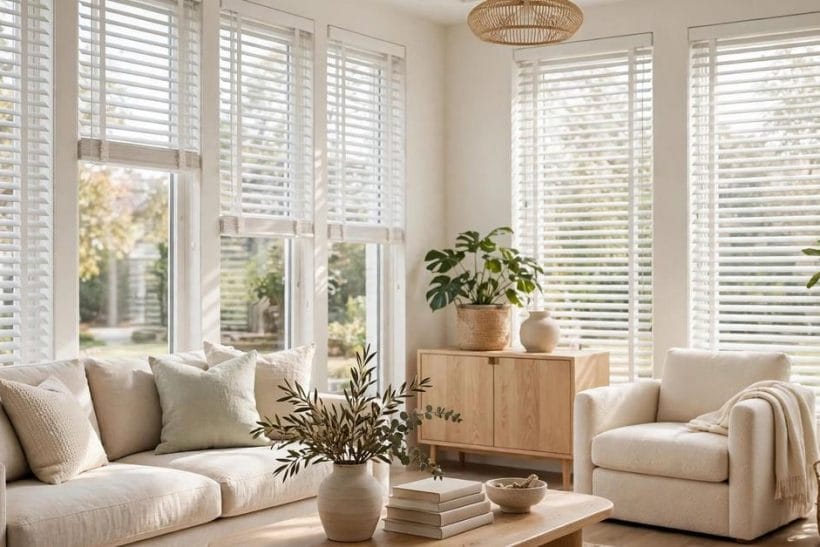
1. Window Blinds at a Glance
Scope first. This post owns blinds — the treatments that adjust with slats, rolls and folds. Its two neighbours split the rest of the window: window valance ideas covers the decorative valance that tops a window, and the guide to hanging double curtains without a double rod owns layered curtains and sheers. Where a room wants both, blinds do the daily work of light and privacy while fabric does the dressing.
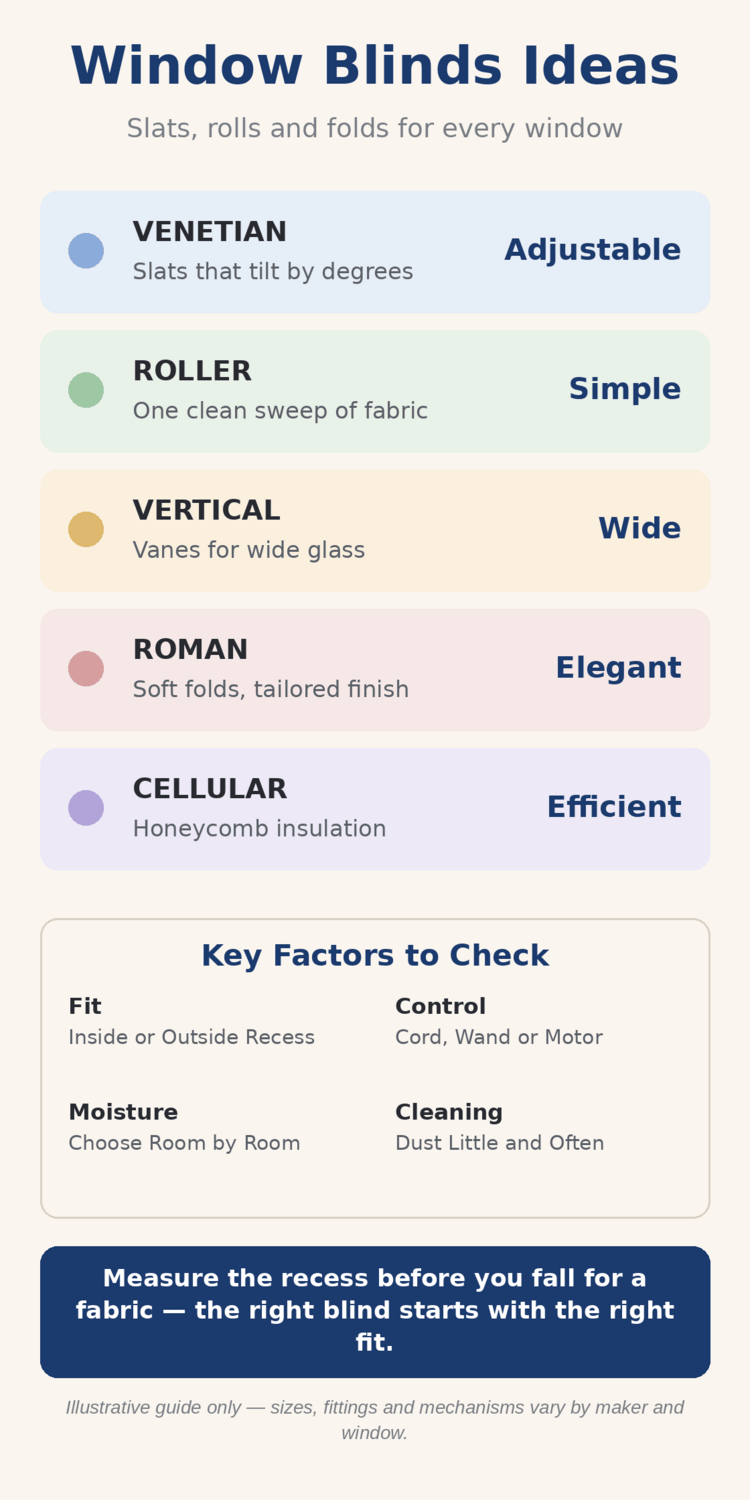
Every blind below is one of five mechanisms. Learn the five and the rest of the post becomes a matter of rooms, colours and details rather than guesswork in a showroom.
| Type | Character | What it means |
|---|---|---|
| Venetian | Adjustable | Horizontal slats that tilt to meter light and view by degrees |
| Roller | Simple | One clean sweep of fabric that vanishes to the top of the window |
| Vertical | Wide | Tall vanes built for sliding doors and whole walls of glass |
| Roman | Elegant | Soft tailored folds that dress a window like upholstery |
| Cellular | Efficient | Honeycomb pockets that insulate while they shade |
2. Venetian Blinds: Slats and Tilt
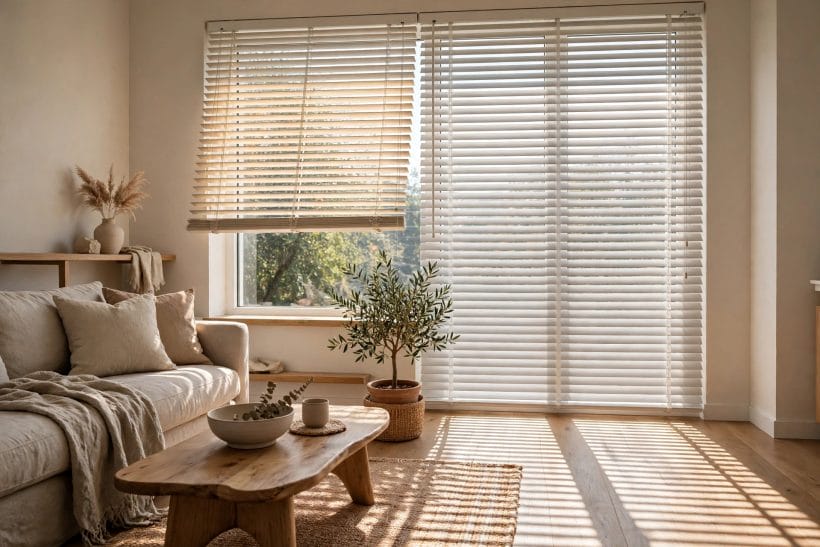
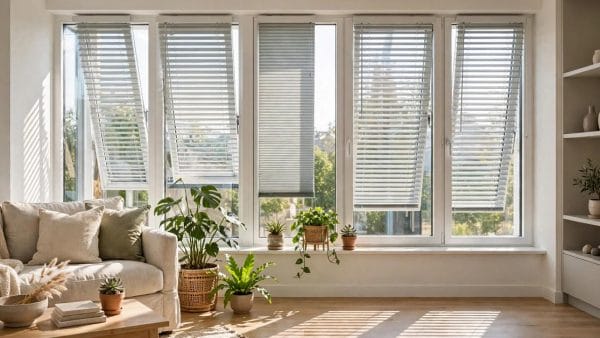
The original adjustable blind. Horizontal slats tilt from open to closed through every degree between, so a venetian meters light the way a dimmer meters a lamp — which is why it remains the default for home offices, kitchens and street-facing rooms.
1. Classic white venetians for a clean rental-friendly finish
White aluminium venetians are the quiet default of rented and first homes: cheap to replace, easy to clean, neutral against any wall colour. They earn their keep in kitchens and bathrooms where fabric would suffer.
2. Timber slats for warmth in a living room
Real timber or convincing faux-wood slats bring the grain and warmth of furniture to the window. They suit living rooms and studies where the blind is seen at close range all evening, and they pair naturally with wooden floors and leather.
3. Wide slats for a plantation-shutter look
Broad slats read calmer and more architectural than narrow ones, and they clear more of the view when open. On tall windows they approach the look of shutters at a fraction of the commitment, which is why designers reach for them in period rooms.
4. Narrow slats for small windows and doors
Slim slats suit the small panes of cottages, back doors and sidelights, where wide slats would overwhelm the glazing bars. They also sit neatly inside shallow recesses, keeping the blind flush where space is measured in centimetres.
5. Tilt for privacy without darkness
The venetian party trick is the half-tilt: slats angled so the room stays bright while the street sees only slat edges. Master the angle for your own pavement distance and you can leave the blind set there from breakfast to bedtime.
6. Coloured aluminium for a deliberate accent
A venetian in a considered colour — deep green, ink blue, soft black — turns the window into part of the scheme rather than an apology. It works best where the colour repeats elsewhere: a door, a cabinet front, a painted radiator.
7. Faux wood where real timber would warp
Steam is timber’s enemy, so bathrooms and steamy kitchens take faux-wood slats that shrug off moisture and wipe clean. Modern versions carry grain and colour convincingly enough that the compromise is invisible from a step away.
8. Cordless venetians for a tidy, safer window
Cordless lift systems clear the dangling loops that clutter a sill and worry households with small children. The blind rises with a gentle pull and sits level, giving the window a calmer outline and the room one less thing to dust.
9. Layer a venetian behind sheer curtains
The working partnership: venetian for the day’s privacy and glare, sheers softening the edges and the evening. Each does what the other cannot, and together they dress a window more completely than either manages alone.
3. Roller Blinds: One Clean Sweep
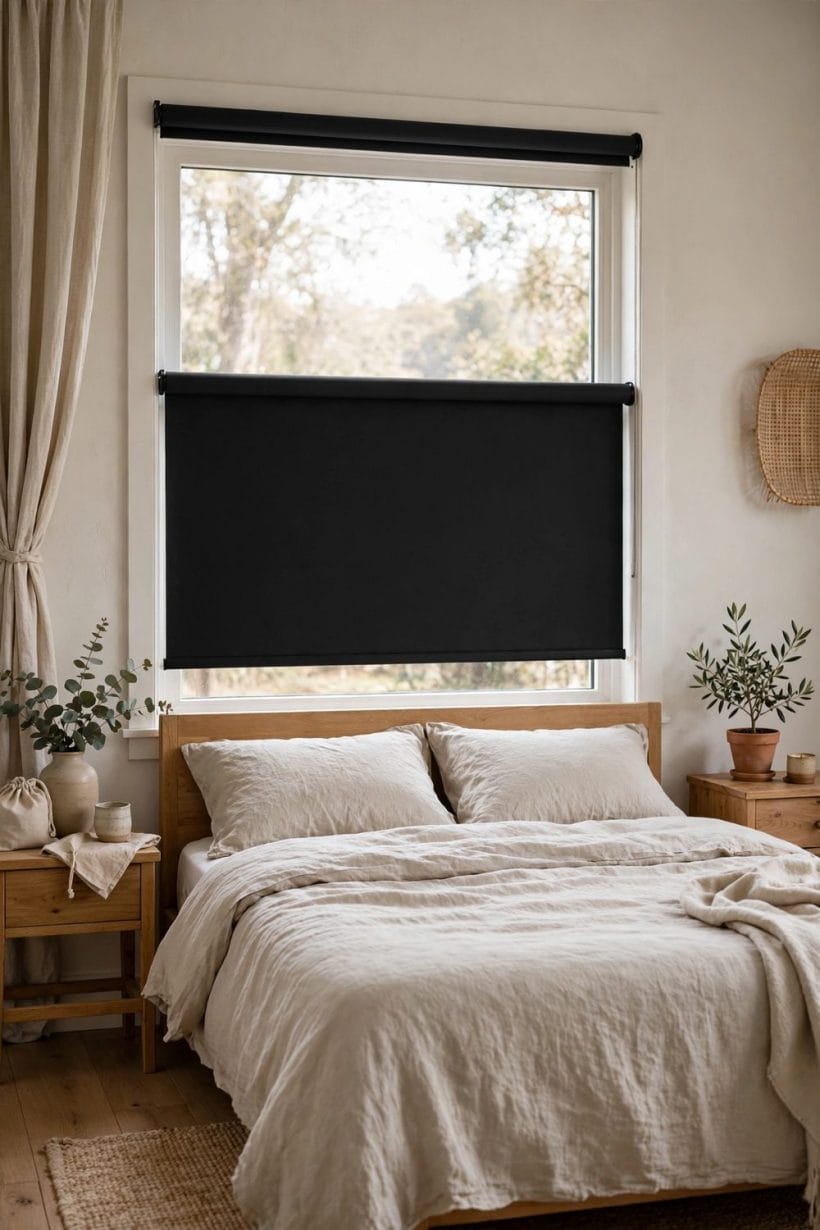
The roller is the minimalist of the family — a single panel of fabric that winds away to almost nothing. Everything about it is decided by the fabric: its weave, its colour, its opacity. Choose the cloth and you have chosen the blind.
10. Plain white rollers that disappear by day
A white or off-white roller pulled up is nearly invisible, leaving the window architecture bare and the view uninterrupted. It is the blind for people who do not want to look at a blind, and for rooms where the window itself is the feature.
11. Blackout rollers for bedrooms that mean it
A true blackout fabric, fitted close within the recess, turns a bright bedroom into a cave at noon. It is the shift worker’s and the light sleeper’s blind, and it pairs with curtains where the last seams of light creep in at the edges.
12. Sunscreen rollers that keep the view
Open-weave sunscreen fabric cuts glare and heat while keeping the garden visible — the answer for sunny living rooms where a solid blind would waste the outlook. By day it also gives privacy; by night, with lights on, add a second blind or curtains.
13. Double rollers: sheer by day, blackout by night
Two fabrics on one bracket solve the oldest roller argument. The sheer layer works the daylight hours, the blackout drops for the night, and the window never has to choose between a view and a dark room again.
14. Patterned rollers as the room’s one print
A roller is a flat canvas, which makes it the safest place in a plain room for pattern: a botanical, a stripe, a small geometric that repeats the scheme’s colours. Down, it is a picture; up, it vanishes and the room rests.
15. Linen-look rollers for softness without folds
Woven-look roller fabrics borrow the texture of linen without the roman blind’s folds and stack. They suit contemporary rooms that want softness at the window but a strict, flat outline everywhere else.
16. Moisture-resistant rollers for bathrooms
Bathroom rollers in coated, wipeable fabrics handle steam and splashes that would spot and mildew ordinary cloth. Fit them inside the recess, keep the pull cord short, and the window care reduces to an occasional wipe.
17. Motorised rollers for high and wide windows
Where windows run tall, wide or out of reach, a small motor earns its keep daily. One remote or a phone tap sets every blind in the room to the same line — a small luxury that reads as calm, deliberate design.
18. A roller in the recess, curtains outside it
Let the roller do the work and the curtains do the dressing: the blind sits tight in the recess for light control while full-length curtains frame the window and soften the room’s acoustics and edges.
4. Roman Blinds: Soft Folds, Tailored Finish
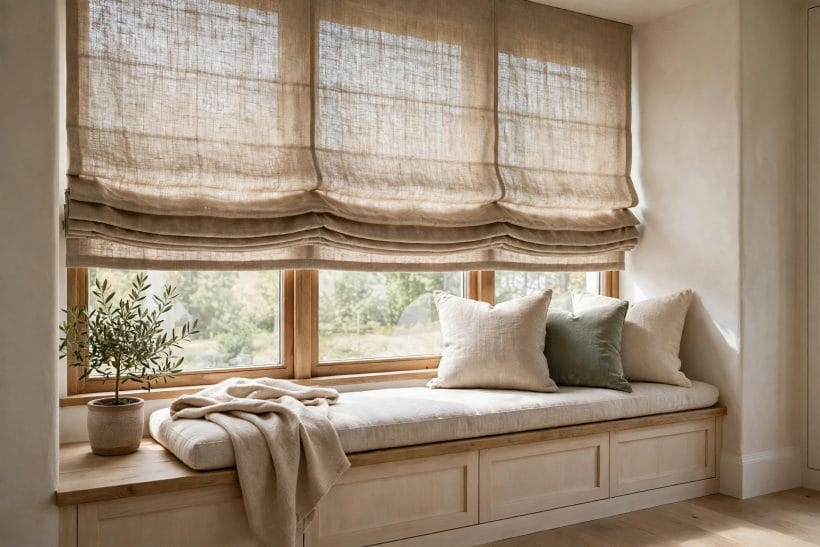
Romans are where blinds meet upholstery: fabric that falls in soft horizontal folds and stacks into a tailored pelmet of itself when raised. They dress a window more richly than any other blind, and ask only a little wall above the frame to stack into.
19. Classic linen romans for calm rooms
Unbleached and natural linens are the roman’s home ground — soft folds, visible weave, colours borrowed from stone and straw. They suit bedrooms and sitting rooms where the window treatment should lower the heart rate, not raise it.
20. Blackout-lined romans for bedrooms
A roman with blackout lining gives a bedroom the softness of fabric with the darkness of a shutter. The folds still read by day; by night the room closes properly. It is the prettiest route to a genuinely dark bedroom.
21. Relaxed romans with a gentle sag
The relaxed or swag roman lets its lowest fold curve softly instead of sitting ruler-straight. It suits country rooms and informal sitting rooms, and it forgives slightly imperfect hanging better than any crisp tailored style.
22. Romans outside the recess for taller windows
Mounting a roman above and beyond the frame makes a modest window look generous and lets the blind clear the glass entirely when raised. It is the decorator’s standard trick for small cottage windows and low ceilings.
23. Patterned romans as soft artwork
A raised roman is a framed panel of fabric, so a bold print spends half its life on display as a soft picture above the glass. Choose the pattern at the scale of the window, and repeat it nowhere else in the room.
24. Kitchen romans in washable cloth
A short roman in a washable cotton dresses a kitchen window without trailing anywhere near taps, steam or worktops. Unlined or lightly lined, it lifts for the day’s cooking light and drops for a softer evening room.
25. Layer romans over a sheer roller
For street-facing rooms that want both softness and daytime privacy, hang the roman for show and fit a plain sheer roller in the recess for the working hours. The porch sunroom window guide follows the same two-layer logic for a whole wall of glass.
26. Cascade romans that fold in steps
Cascade or waterfall romans keep a fold visible at every height, so the blind looks dressed even fully dropped. They suit dining rooms and formal sitting rooms where the window is on show through the whole evening.
27. One fabric, every window in the room
Where a room has three windows of different sizes, one fabric in romans throughout makes them read as a set. Vary nothing but the proportions; the repetition is what turns separate windows into a designed wall.
5. Vertical and Panel Blinds for Wide Glass
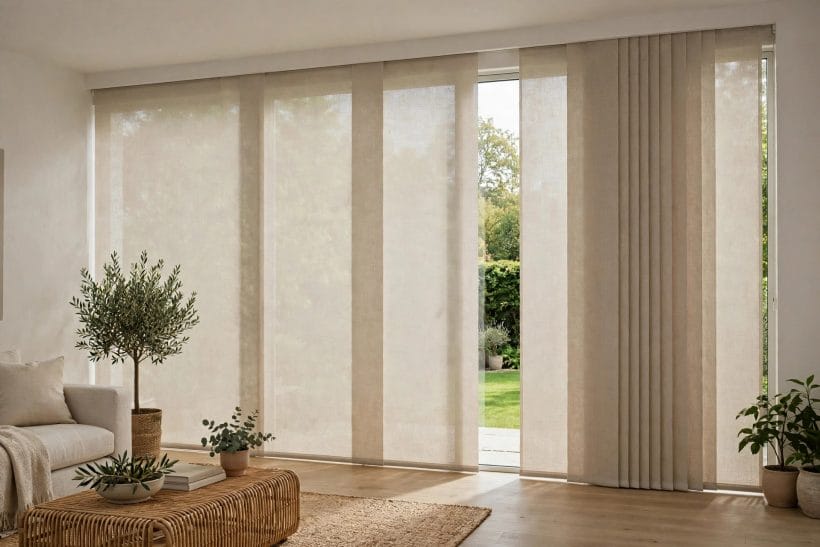
Sliding doors, bifolds and whole glass walls defeat horizontal blinds — the drop is too long and the traffic too constant. Vertical vanes and wide fabric panels are built for exactly this glass: they stack to one side and let the doors work.
28. Classic verticals for sliding doors
Vertical vanes tilt for light, draw aside for passage, and shrug off the daily traffic of a garden door. Modern versions in textured, linen-look fabrics have left the office look far behind and sit happily in family living rooms.
29. Panel track blinds for a contemporary wall of glass
Wide fabric panels glide on a track and stack neatly behind one another, reading almost as sliding screens. They suit the largest glazing — bifold walls and corner glass — where any slatted blind would look busy.
30. Verticals in a soft colour, not office white
The fastest way to domesticate a vertical blind is colour: warm white, stone, sage or a soft grey takes the boardroom out of it. Match the vane colour to the wall and the whole system quiets down.
31. Sheer verticals that soften like curtains
Sheer vanes rotate from open voile to closed privacy in one twist, giving wide glass the softness of curtains with the manners of a blind. They are the elegant answer for living rooms that face close neighbours.
32. Split-draw verticals for centred doors
Where the door opening sits in the middle of the glass, a split draw stacks the vanes to both sides like curtains, keeping the walkway clear and the composition symmetrical from the garden.
33. Blackout verticals for media rooms and bedrooms
Wide bedroom windows and garden-facing media rooms take blackout vanes that close the whole wall down. Overlap and tilt them fully and the room darkens evenly, without the edge leaks of a too-narrow roller.
34. Weighted vanes without chains
Chain-free weighted vanes hang straight, swing quietly and remove the clattering connector chain along the bottom — safer around children and pets, and calmer in a draught from the open door.
35. Panels as room dividers beyond the window
The same panel track that dresses glass can divide an open-plan room: studio bedsit, home office corner, play zone. It is a wall you can open with one hand, in the fabric of your window scheme.
36. Mix panels: two fabrics alternating
Alternating two fabrics — a plain and a texture, or two tones of one colour — gives a panel wall rhythm without pattern. It works especially well across very wide spans where a single fabric would read as a flat void.
6. Cellular, Pleated and Sheer Shadings
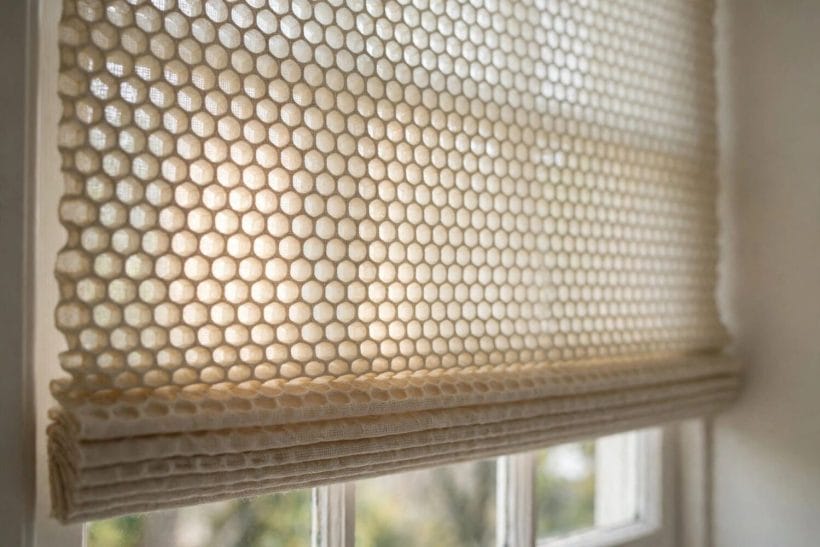
The quiet achievers. Honeycomb cellular blinds trap air in their pockets and insulate the glass; pleated blinds fold to almost nothing; sheer shadings float light through fabric vanes. All three solve problems the big four cannot.
37. Cellular blinds for cold windows
A window is the coldest surface in a winter room, and the honeycomb’s trapped air is a genuine buffer against it. Fit cellular blinds in north-facing bedrooms and the glass stops feeling like a hole in the wall. High windows that flood a room with light — the clerestory windows problem — are tamed the same way.
38. Top-down, bottom-up for street-level privacy
Blinds that lower from the top as well as raise from the bottom let you cover the pavement’s sightline while keeping the sky. It is the ground-floor front room’s perfect arrangement, and cellular and pleated blinds both offer it.
39. Pleated blinds for shaped and roof windows
Pleats fold into a sliver, follow triangles, arches and roof lights, and hold their line on sloped glass where rollers would sag. Conservatories and loft conversions run on pleated blinds for exactly these reasons.
40. Sheer shadings that float the light
Horizontal fabric vanes suspended between two sheer layers tilt to soften daylight into a glow. The room stays luminous, the view blurs to privacy, and harsh sun never lands directly on furniture or floors.
41. Day-and-night pleated duos
Two fabrics in one pleated frame — a sheer for the day, a dim-out for the evening — switch with a slide of the frame. Bedrooms over busy streets and nurseries both live happily on this arrangement.
42. Cellular blackout for attic bedrooms
Attic rooms bake in summer and freeze in winter, and their roof windows pour in light at dawn. Blackout cellular blinds answer all three complaints at once: darkness, insulation and a blind that stays put on the slope.
43. Cordless cellular for a clean sill
Cellular blinds lift feather-light, so cordless versions work beautifully even on wide windows. The sill stays clear, the outline stays simple, and the honeycomb does its insulating work without visual fuss.
44. Tinted sheer shadings for glare rooms
A gentle tint in a sheer shading takes the blue glare out of a screen-filled room without darkening it. Home offices and television corners use it to keep monitors readable through the brightest part of the day.
45. Pleated blinds in the door itself
Slim pleated blinds fitted to the glass of a back door or French doors move with the door, need no clearance, and end the era of a curtain catching on every opening. Measure the bead, order to the pane, and forget them.
7. Blinds Room by Room
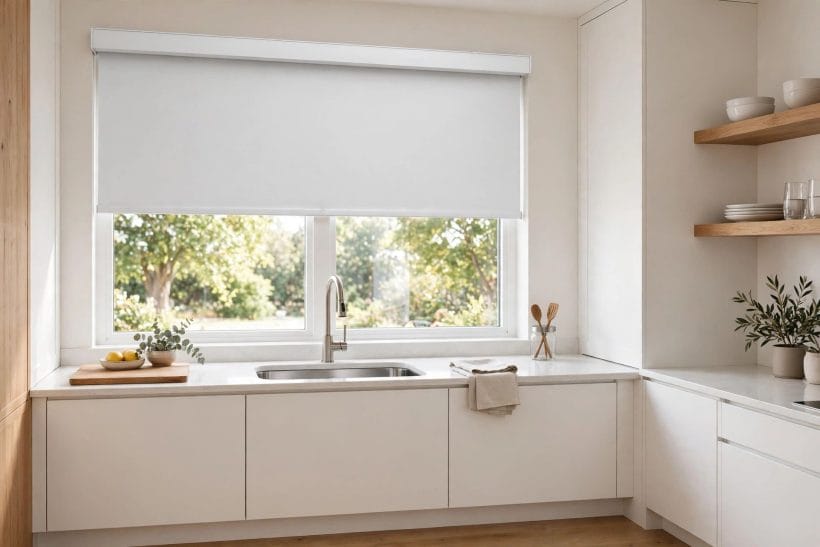
Every room asks the window a different question. The kitchen wants wipeable light, the bathroom wants privacy that survives steam, the bedroom wants darkness — so choose by room first and by taste second.
46. Kitchen: faux wood and wipeable rollers
Kitchens steam, splash and spatter, so their blinds must wipe clean and fear nothing: faux-wood venetians and coated rollers are the working pair. Keep them clear of the hob’s reach and the sink’s splash zone where you can.
47. Bathroom: privacy that survives steam
Bathroom glass needs privacy at every hour and materials that ignore humidity — frosted-effect rollers, faux wood and PVC venetians. Fit inside the recess so the blind never trails against wet tiles or the bath’s edge.
48. Bedroom: blackout first, beauty second
Judge every bedroom blind by its darkness first. Blackout rollers, lined romans or blackout cellulars, fitted close and overlapped by curtains if needed — then choose the prettiest version of whichever system wins.
49. Living room: the layered answer
Living rooms change jobs hourly, so they layer: a working blind for glare and privacy, curtains or a valance over it for softness. The blind is the tool, the fabric is the jewellery, and neither has to compromise.
50. Home office: glare control above all
Screens hate direct sun, so the office blind is a light instrument: sunscreen rollers or tilting venetians that kill glare while keeping the room awake. Position the desk first, then choose the blind that serves it.
51. Nursery and children’s rooms: cordless and dark
Two rules rule here: no accessible cords, and darkness deep enough for daytime naps. Cordless blackout systems answer both, in cheerful fabrics that can be swapped as the child outgrows them.
52. Hall and landing: light without exposure
Halls are seen from the street and used in passing, so their blinds filter rather than block: sheer rollers, cellulars and half-tilted venetians that keep the stairwell bright and the interior private.
53. Conservatory: pleats on every pane
A glass room needs shade engineered for glass: pleated blinds on roof and sides, fitted pane by pane, in reflective fabrics that bounce the heat back before it enters. It is the difference between a conservatory and a greenhouse.
54. Dining room: evening mood, daytime calm
Dining rooms live by lamplight, so their blinds can be the decorative kind — romans in a rich fabric, timber venetians, a patterned roller — with blackout a distant second to atmosphere.
8. Light Control, Privacy and Blackout
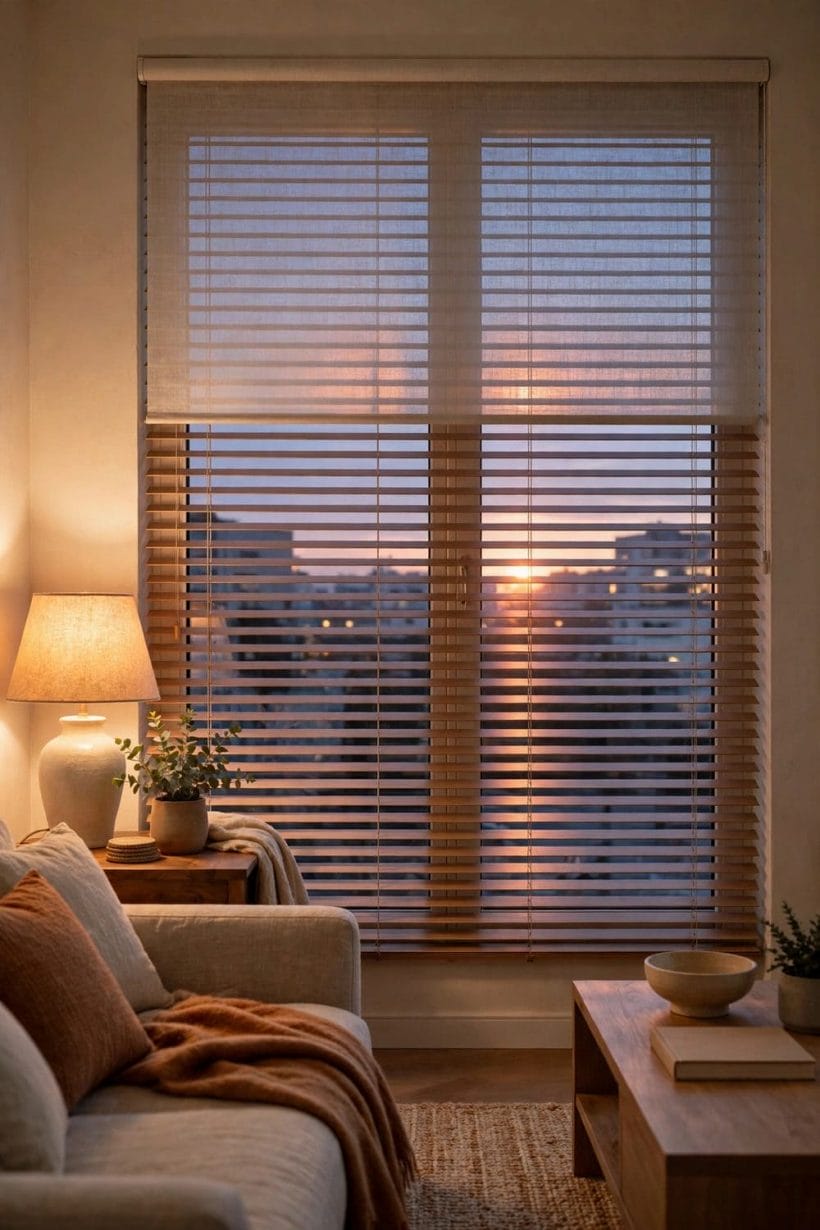
Three jobs, often confused. Light control softens the sun, privacy blocks the gaze, blackout stops light altogether. The right blind is the one whose mechanism matches the job your window actually has — the same what-to-check logic the window materials guide applies to the windows themselves.
55. Know your sightlines before you buy
Stand outside at dusk with the lights on and look at your own windows. The sightlines you find — pavement to sofa, neighbour’s landing to your stairs — are the exact map your privacy blinds must cover, no more and no less.
56. Bottom-up blinds for pavement-level rooms
Where the street is level with your sill, cover the lower glass and free the upper: bottom-up rollers and top-down cellulars both do it, keeping daylight from the sky while the pavement sees only fabric.
57. Sheer by day is not privacy by night
Every sheer and sunscreen fabric reverses after dark: lit from inside, the room becomes the display. Rooms that need night privacy need a second, opaque layer — plan for it before the neighbours plan your evenings.
58. Blackout means the edges, not the fabric
Light leaks at sides, top and bottom long before it passes through blackout cloth. Close-fitting recess installs, side channels or an overlapping curtain are what turn a blackout fabric into a blackout window.
59. Tilt math for venetian privacy
Slats tilted so their outer edge rises block the downward gaze from the street while admitting sky light; tilted the other way they serve upper floors looking down. Five minutes of experimenting finds your angle for the year.
60. Frosted-look blinds where glass meets bath
For windows directly over baths and showers, moisture-proof blinds with a frosted effect give permanent privacy without a film on the glass — and unlike film, they open on the days you want the view.
61. Layered privacy for overlooked gardens
Close neighbours above your fence line call for the two-layer answer: a sheer or sunscreen blind for the day, a solid blind or curtains for the evening, and planting outside doing the long-term work.
62. Glare control for screens and artwork
Sun that ruins a screen also fades upholstery and art. Sunscreen and sheer fabrics are conservation tools as much as comfort ones; fit them on the sunniest glass first and let the rest of the house follow.
63. Dim-out: the honest middle setting
Not every room wants a cave. Dim-out fabrics — the middle opacity — soften light and silhouette-proof a room without the sealed feel of blackout, and they are the right answer for living rooms and older children’s bedrooms.
9. Colour, Pattern and Texture
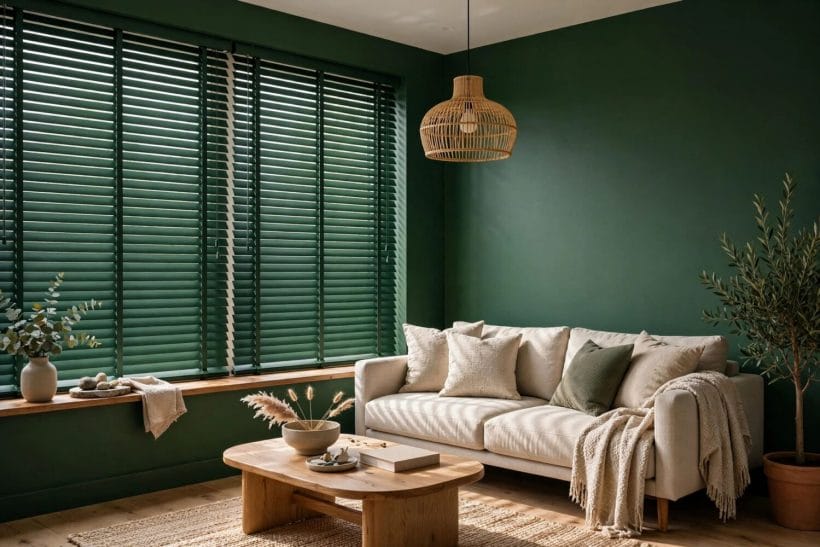
A blind covers more wall than most pictures, so its colour and surface are real design decisions. The rules are simple: match the wall for quiet, match the woodwork for architecture, or commit fully and make the window the room’s colour event.
64. Wall-coloured blinds for a quiet window
A blind in the wall’s own colour — or one shade deeper — makes the window treatment disappear into the architecture. Rooms feel larger and calmer, and the furniture carries the colour story instead.
65. White blinds against coloured walls
The classic contrast: crisp white blinds inside deep-coloured walls read fresh and deliberate, like white woodwork. It suits blues, greens and charcoals especially, and it keeps a dark room from closing in at the windows.
66. Timber tones that meet the floor
Wooden and wood-effect blinds chosen near the floor’s tone tie the room’s horizontal surfaces together. The window stops floating and joins the floor, table and shelves in one warm material conversation.
67. A bold blind as the room’s one statement
In a neutral room, one window in a strong colour or print can carry the whole scheme’s personality — and unlike paint, it can be swapped in an afternoon when tastes move on.
68. Stripes that stretch a window
Vertical stripes lengthen a short window; horizontal bands widen a narrow one. Roller and roman fabrics carry stripes best, and the effect is strongest when the rest of the window stays plain.
69. Texture over pattern for modern rooms
Where pattern feels busy, texture does the work: woven grasses, linen slubs, ribbed cellulars. The window gains depth and shadow-play without introducing a single motif the room must answer to.
70. Black blinds for graphic contrast
Black venetians and rollers outline a window like a drawn frame — striking in white rooms, greenhouses of plants, and anywhere the view deserves a border. Keep the glass spotless; the frame shows everything.
71. Metallic slats for a hint of glamour
Brushed gold, copper and pewter slats catch evening light beautifully in dining rooms and dressing rooms. Use them where lamplight, not daylight, is the main event, and let other metals in the room agree.
72. Two-tone: different blinds, one palette
Across a wall of varied windows, different blind types in one colour palette — roller here, roman there, cellular above — look intentional where identical blinds in mixed colours would look like mistakes.
10. Measuring, Fitting and Care
Most blind disappointments are measuring disappointments. Decide inside-recess or face-fit first — recess for a tailored look, face-fit for better darkness and taller-looking windows — then measure the recess in three places and order to the smallest. As any window hardware teaches, glass and its openings are never as square as they look; the awning versus sliding windows debate makes the same point about the windows these blinds dress.
73. Measure three times, order once
Recesses vary by millimetres that matter. Measure width at top, middle and bottom, drop at left and right, note every handle and tile that steals depth, and give the maker the smallest true figures — a blind can forgive a millimetre, never a centimetre.
74. Fit level, fix firm
A blind hung a degree off level announces it every day in uneven rolls and wandering folds. Use a spirit level, fix into something solid, and keep screws clear of the recess’s damp course and cables. Ten careful minutes here save years of small irritation.
75. Clean little and often
Dust is the enemy and water the risk: a weekly flick with a duster or vacuum brush keeps slats and fabrics bright, while deep cleans follow the maker’s word for that material. Blinds cleaned little and often almost never need replacing.
Final Considerations
A blind is chosen in an afternoon and lived with for a decade, so choose the mechanism for the job, the fabric for the room, and the fit for the window — in that order. Get those three right and the window simply works: light when you want it, privacy when you need it.

0 Comments