

A new floor changes how a whole home feels, so choosing one deserves more than a quick glance at a showroom display. Rigid-core planks promise a calm, wood-look surface with a click-together fitting style, and this range is one many households consider.
This guide is not a verdict. It is a checklist of sensible questions to work through before you buy, so the floor you choose suits your rooms, your subfloor and your daily life.
1. What This Flooring Is, in Plain Terms
If you have spent an evening reading armstrong pryzm reviews, you will have met plenty of opinions and very little method. A steadier approach is to understand what the product is, then check it against your own home. Pryzm is presented by its maker as a rigid-core plank floor: a stiff, man-made board with a wood-look surface design, a click-style fitting profile and a built-in backing layer on many ranges. The exact build, sizes and finish options belong to the maker’s current specification, so treat this section as a map of questions rather than a list of promises.
| Question | What to check |
|---|---|
| What is it made from? | Ask the retailer for the current product sheet and read how the core, surface and backing are described. |
| Where can it be fitted? | Confirm which rooms the maker currently lists as suitable, and ask directly about bathrooms, kitchens and conservatories. |
| What should I check on a sample? | Look at the print detail, surface texture and edge profile in your own light, at different times of day. |
| What about water? | Ask what the current guidance says about spills, mopping and standing water, and follow that rather than showroom talk. |
| What about my subfloor? | Ask how flat and dry the base needs to be, and whether your existing floor can stay or must come up. |
| What should I ask the retailer? | Ask about returns on unopened packs, batch consistency, trims, and who to contact if a plank arrives damaged. |
| What should I read before paying? | Read the current fitting guide and the warranty terms in full, especially the conditions that must be met. |
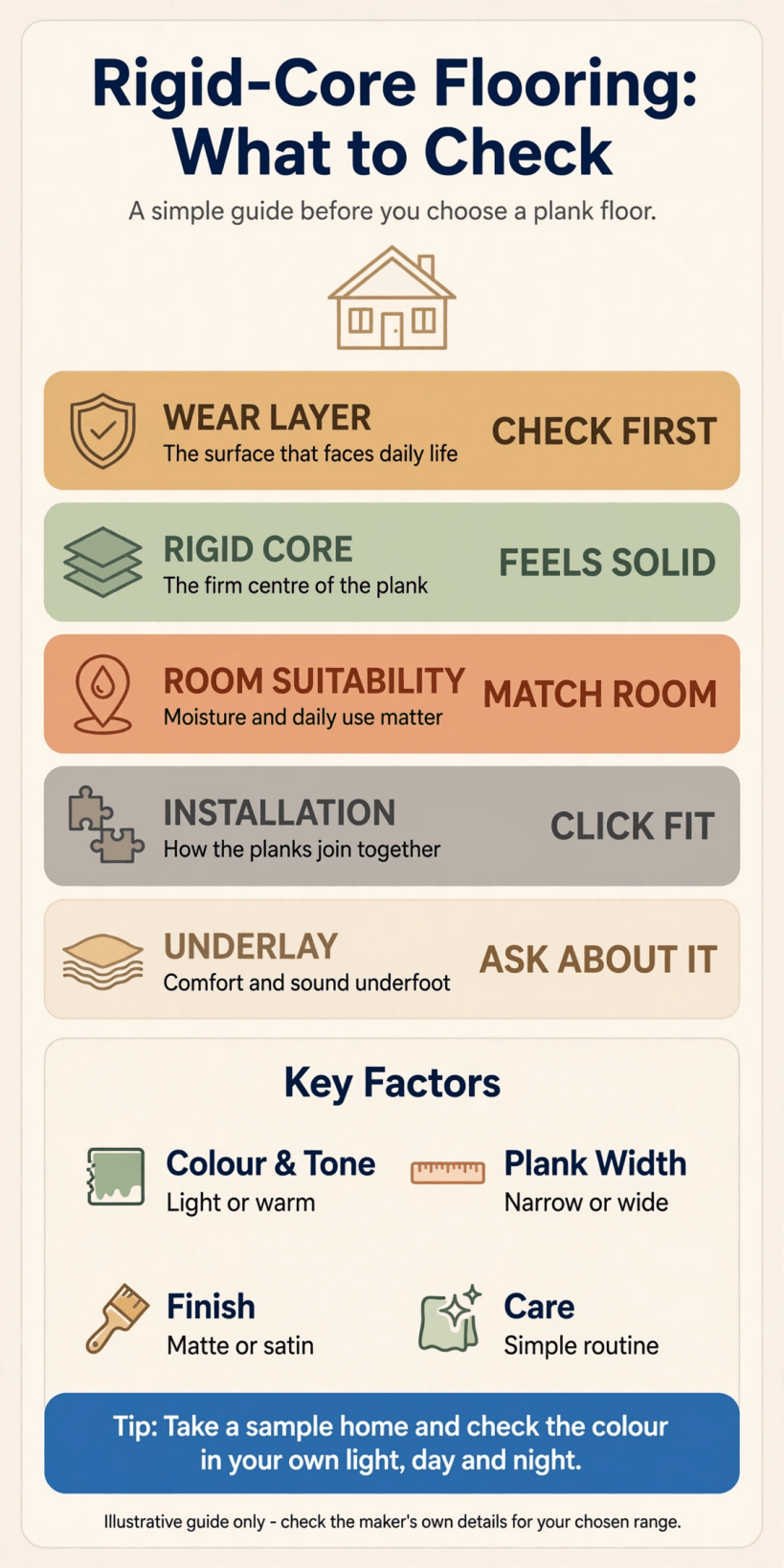
A calm summary of the checks to make before ordering a rigid-core plank floor, from samples to paperwork.
Notice what this table does not do: it does not quote performance figures, because those belong to the maker’s current documents, not to a blog post. Specifications change between ranges and over time, and the only version that matters is the one printed for the exact product you are buying. A good retailer will hand those documents over happily and give you time to read them. Keep that habit through every section below, and the purchase becomes a series of small, checkable steps instead of one big leap of faith.
2. First Checks: Samples at Home
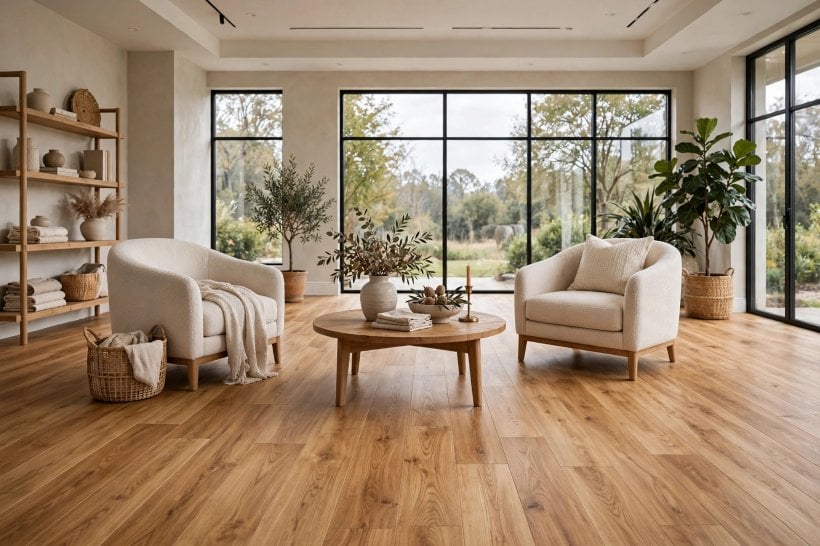
Showroom lighting flatters everything. The first real check happens at home, with samples laid where the floor will live: beside the sofa, under the kitchen cabinets, near the door where muddy shoes land. Live with them for a few days. Watch how the colour behaves in morning light, under warm evening bulbs and on a grey afternoon, because a tone that glows in the shop can turn cold or yellow at home.
- Order more than one design if you are torn; samples are the cheapest decision you will make.
- Place samples against skirting, doors and your largest furniture, not just in the middle of the room.
- Walk on them in socks and shoes to get a first feel for the surface texture.
- Check how the pattern repeat looks across several planks, not just on a single board.
- Photograph the samples in each room; photos reveal colour casts your eyes forgive in person.
Small rooms make this step easier, because a handful of planks covers a meaningful share of the floor. The sampling discipline used in our tiny house kitchen design ideas applies here too: test materials in the real light of the real room, at the real times of day you will live with them, and let the house, not the showroom, cast the deciding vote.
3. Colour, Pattern and Plank Layout
Wood-look planks vary from pale, Scandinavian-style washes to deep, traditional oak tones, and the pattern printed on them decides how busy the finished floor feels. In a large room a stronger grain can add character; in a small room it can shout. Ask how many different print designs repeat across a pack, because a short repeat becomes obvious once a whole floor is down, and check whether the surface texture follows the printed grain, which is what makes a plank read as wood rather than as a picture of wood.
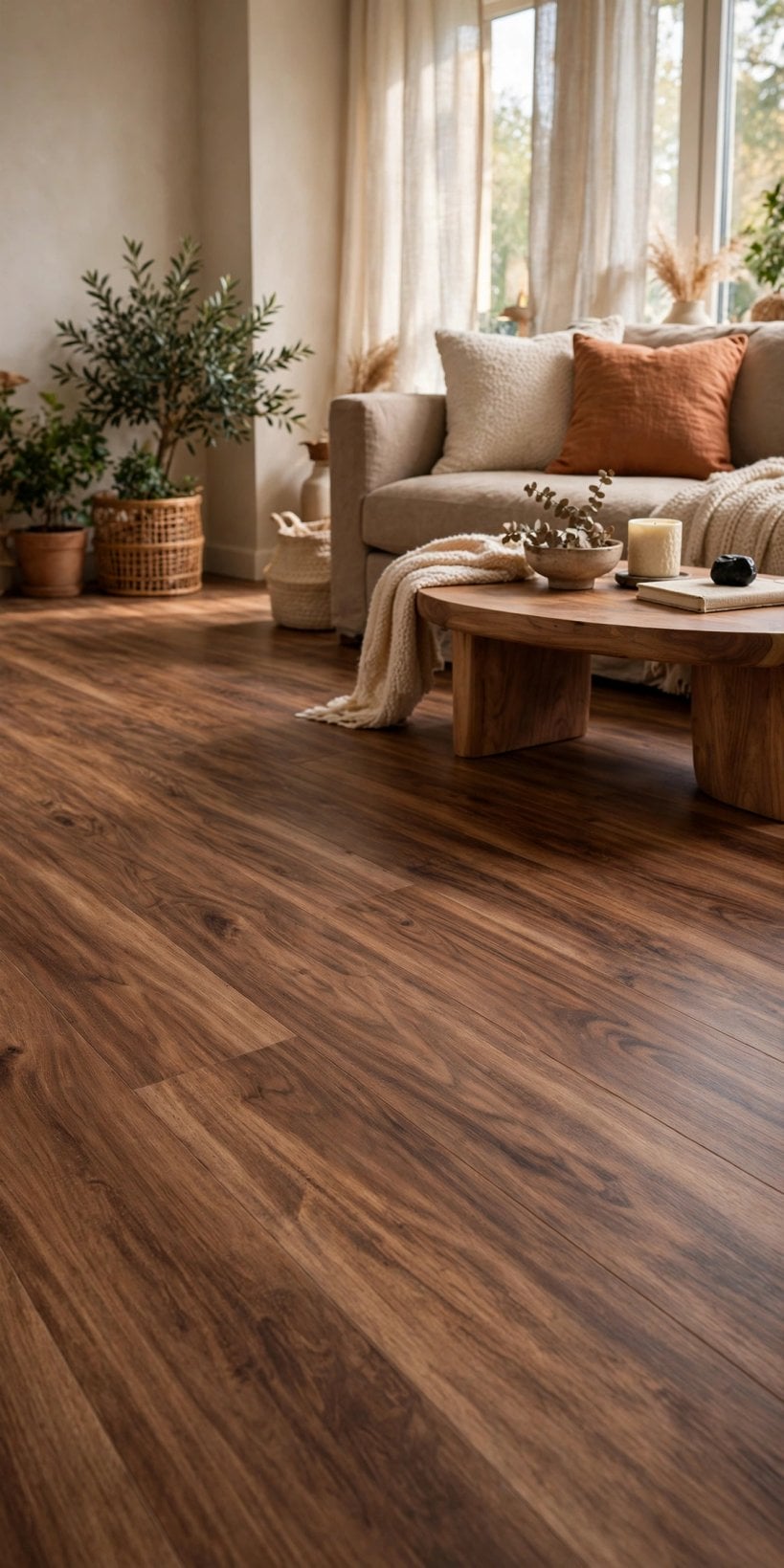
Layout is part of the same decision. Planks laid along the longest wall stretch a room visually, while a diagonal or patterned layout uses more material and more cutting time. Decide the direction before ordering, tell the fitter, and confirm it is written on the quote. Colour coordination matters beyond the floor itself, and the palette thinking in our interior design and home decorating ideas will help you place the tone against walls, curtains and furniture you already own, rather than discovering a clash after the last plank clicks in.
- View the design in a run of several planks to judge the repeat honestly.
- Match tone to the room’s natural light: north-facing rooms warm up pale designs.
- Decide plank direction early and have it noted on the order.
- Keep a photograph of the chosen design with its exact product name for future reference.
4. The Subfloor Questions
More flooring disappointments begin under the floor than on top of it. Rigid planks are stiff, which is part of their appeal, but stiffness means the base beneath them matters: a bouncy, uneven or damp subfloor will make itself known through movement, noise or joints that complain. Before ordering, establish what your current floor is, what condition it is in, and what preparation the maker’s current fitting guide requires.
- Ask whether your existing covering can stay beneath, or must be lifted first.
- Check for damp in ground-floor rooms and ask how it should be tested and treated.
- Walk the room slowly and note any bounce, dips or ridges, then show them to the fitter.
- Ask who is responsible for levelling work, and whether it is included in the quote.
- Confirm what the current guide says about underfloor heating, if you have it or plan it.
None of this needs specialist knowledge on your part; it needs honest questions and written answers. The groundwork mindset in how to build your own tiny house is a good model: structures succeed from the ground up, and floors are no different. A day spent understanding your subfloor saves the far more expensive day when a finished floor has to come back up.
5. Rooms and Daily Life: Where It Has to Earn Its Keep
A floor is lived on, not looked at, so match the product to your household’s actual habits. Think about entranceways where grit arrives on shoes, kitchens where things drop, hallways that carry everything, and quiet bedrooms where bare feet rule the morning. Ask the retailer to talk you through which rooms the maker currently recommends the range for, and be specific about your home: dogs, children, a wheelchair user, a home gym corner, a piano. Specific questions get useful answers; general ones get brochures.

Comfort counts too. Rigid planks feel firm underfoot, which many people like, and the attached backing described for many ranges is intended to soften sound and feel; judge it with your own feet on a sample run rather than from descriptions. Multi-use rooms test floors hardest, and the way our home office and guest room design ideas balance a desk chair’s castors by day with a calm sleeping space by night is exactly the sort of double duty to describe to your retailer when you ask about suitability.
- List your busiest routes and ask how the surface is expected to handle grit and chair castors.
- Ask about the maker’s current cleaning guidance for your messiest room.
- Check what the current documents say about use over underfloor heating in living spaces.
- Try a chair with castors and a dining chair’s legs on samples before deciding.
6. Underlay, Trims and Transitions
The planks get the attention, but the edges decide whether a floor looks finished. Many rigid-core ranges include an attached backing layer, and the first question is whether any additional underlay is wanted, allowed or discouraged under the maker’s current guidance, because adding the wrong layer under a click floor can cause movement the system was not designed for. Ask, and follow the current answer rather than a forum’s.
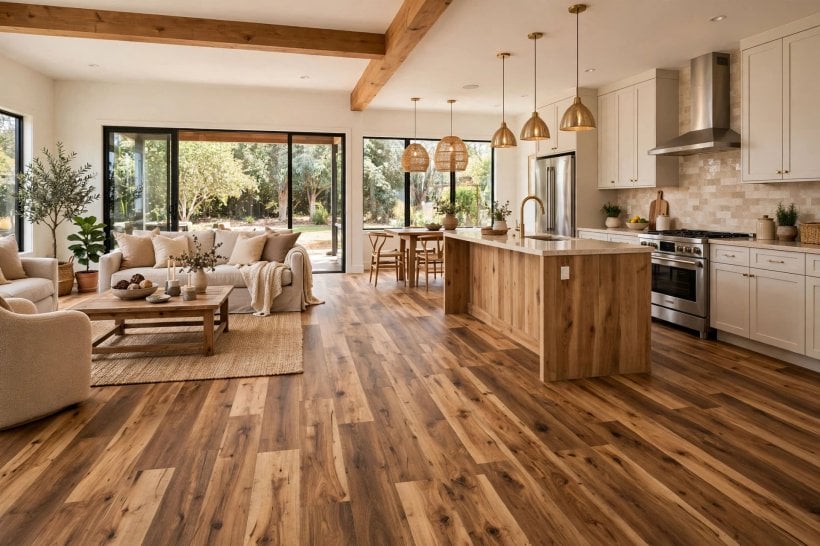
- Confirm whether extra underlay is recommended, optional or not advised for the range you choose.
- List every doorway and ask which transition profile is planned for each one.
- Decide between skirting removal and beading, and understand how each will look.
- Ask how the floor will finish against baths, kitchen units, hearths and exterior doors.
- Order trims in the same conversation as the planks, not as an afterthought.
Transitions between rooms deserve a sketch. A plank floor flowing into carpet, tile or an older wooden floor needs a planned junction, and the junction is where cheap jobs confess themselves. The room-to-room thinking in our living room interior design ideas for tiny houses shows how consistent thresholds make small homes feel larger, and the same principle scales up: one calm, deliberate line at each doorway is worth more than any single plank in the room.
7. Fitting: Do It Yourself or Bring in a Professional?
Click-together planks tempt many homeowners to fit their own floor, and for a rectangular room with a sound subfloor, a careful amateur can do satisfying work with the maker’s current fitting guide open beside them. The honest checks are about the room, not your pride: corners that are far from square, several doorways, a staircase foot, pipes and a hearth all raise the skill level, and subfloor preparation, covered earlier, matters more than the clicking itself.
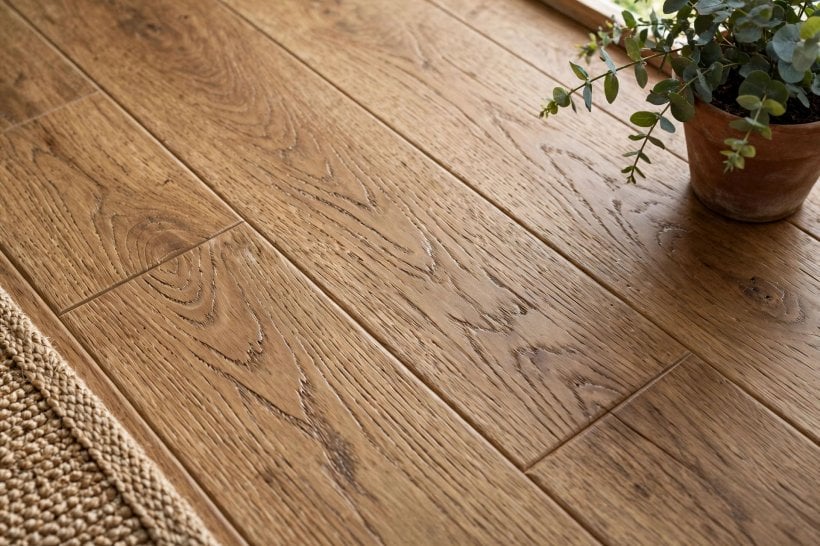
- Read the current fitting guide fully before deciding; note the tools and expansion gaps it asks for.
- Be honest about acclimatisation: ask how long packs should rest in the room before fitting.
- If hiring a fitter, ask whether they have fitted this type of rigid-core system before.
- Agree who supplies trims, who removes doors if needed, and who disposes of waste and old flooring.
- Keep spare planks from the same batch at the end of the job for future repairs.
Whichever route you choose, plan the room’s exile: furniture out, a path cleared, and a realistic timetable that allows for the subfloor surprise most older homes keep in reserve. A floor fitted calmly, in the right order, with the paperwork followed, is the version of this purchase that owners tend to stay happy with, and that happiness has very little to do with which Saturday the boxes were opened.
8. Reading the Warranty and the Paperwork
Warranties are marketing on the front and conditions at the back, and the back is the part to read. Before paying, read the current warranty for the exact range you are buying: what it covers, what it excludes, which fitting and cleaning conditions it depends on, and what proof of purchase and batch information you would need for a claim. If a condition surprises you, such as a required cleaning method or a fitting requirement, better to learn it now than during a dispute.
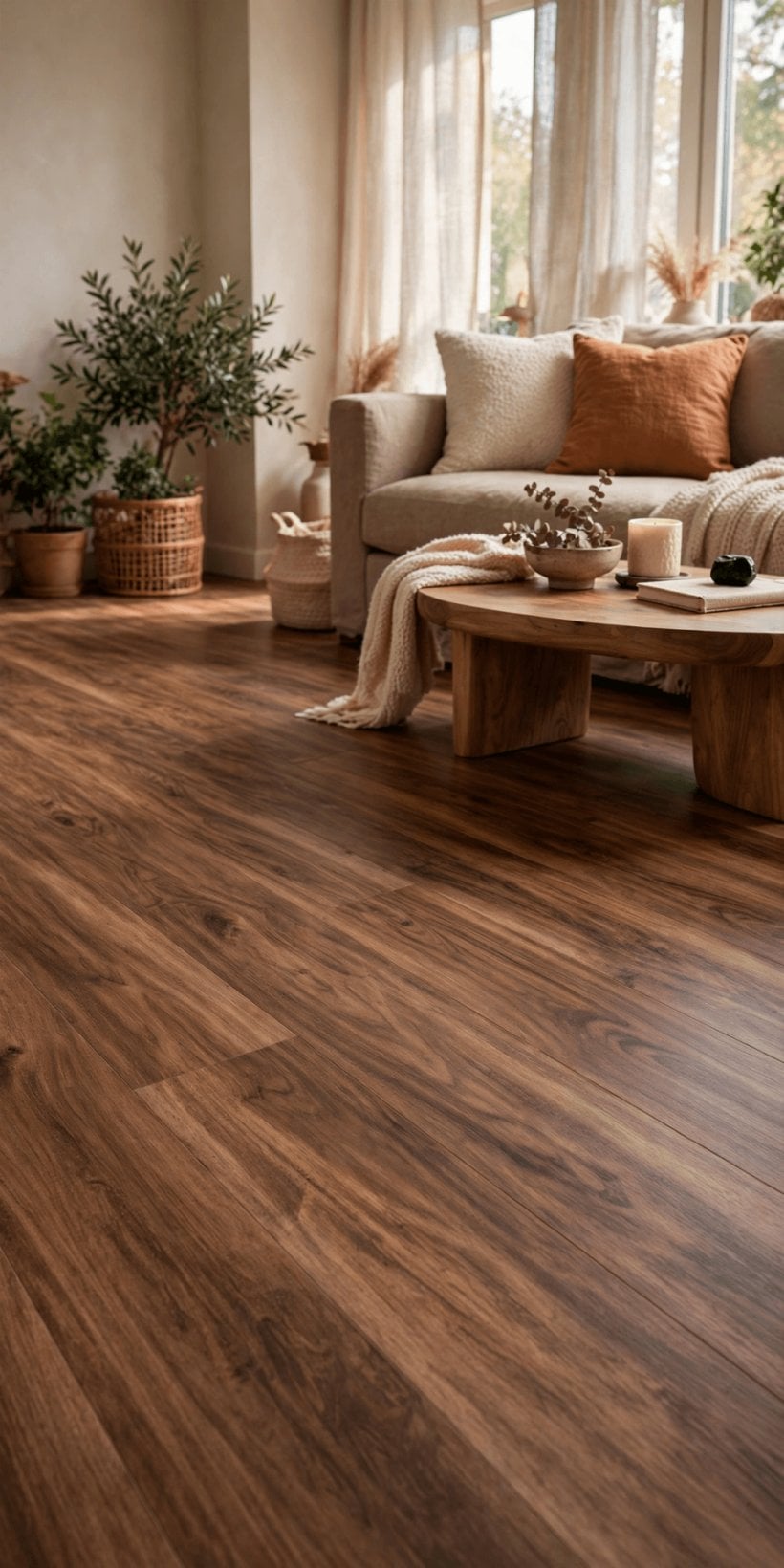
- Download or request the warranty and fitting guide for your exact range, not a sibling range.
- Note any conditions about subfloor preparation, acclimatisation and cleaning products.
- Keep receipts, batch numbers from the boxes and a note of the fitter’s details in one folder.
- Ask the retailer what their own returns and problem-solving process looks like in practice.
- Photograph the finished floor in each room as a dated record of its starting condition.
Paperwork feels dull beside samples and colour charts, but it is the part of the purchase that protects all the others. Treat it the way careful households treat appliance manuals and boiler services: filed, dated and findable. Ten minutes of reading now is the cheapest insurance in the whole project, and it costs nothing but attention.
9. Comparing Retailers and Quotes
Two quotes for the same floor can describe two different jobs. One may include subfloor preparation, trims, transitions, door trimming, waste removal and the fitting itself; another may be planks only, with everything else appearing later as extras. Ask each retailer to itemise their figure in the same categories, and compare like with like before comparing totals. Also ask about pack quantities, how wastage for cuts has been allowed for, and what happens if you need one more pack later, including whether the same batch or design run can be matched.
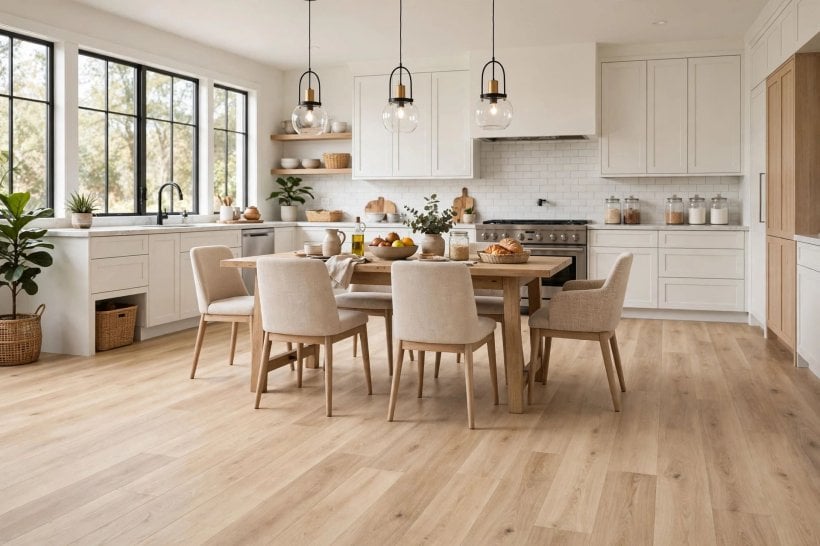
- Request itemised quotes covering product, preparation, trims, fitting and waste removal.
- Ask how cutting wastage has been allowed for, and who keeps the leftover planks.
- Confirm delivery arrangements: who unloads, where packs are stored, and what happens with damaged boxes.
- Ask about returns on unopened packs and any time limits, in writing.
- Check realistic timescales, and be wary of pressure to commit before samples have been home.
Local knowledge helps here too. Flooring choices that suit one climate and housing stock may be less common in another, and the regional perspective in our guide to Colorado tiny house communities is a useful reminder that homes, weather and building habits vary by place; a retailer who asks about your home’s age, heating and ground floor construction is usually a retailer worth listening to.
10. Aftercare Questions to Ask Up Front
The best time to learn how a floor likes to be treated is before it is fitted, while the retailer’s advice can still shape your habits and your shopping list. Ask for the maker’s current cleaning guidance in writing: which methods are recommended for everyday dust, which for spills, and which products or machines to avoid. Ask how small marks and damage are usually handled, whether single planks can be replaced, and how that replacement works with a click system once furniture is back in place.
- Get the current cleaning and maintenance guidance in writing at the point of purchase.
- Ask which felt pads, mats and door barriers are recommended to protect the surface.
- Confirm how a damaged plank can be swapped, and keep spares from the same batch.
- Note any guidance about steam cleaning or wet mopping rather than guessing later.
- Plan a simple routine: entrance mat, regular sweeping, prompt attention to spills.
Aftercare is also where calm design helps. A floor in a soothing scheme, like the restful rooms in our Zen interior design ideas for tiny houses, tends to be a floor that gets gentle, regular attention rather than occasional rescue missions. Build the habit from the first week: pads under furniture before it moves in, a mat at each outside door, and spills wiped as they happen. Small rituals, honestly followed, keep any floor looking like the sample that won you over.
Final Considerations
By now the pattern of this guide should be clear: armstrong pryzm reviews and showroom chats can start the conversation, but your own checks finish it. Samples in your own light, honest questions about the subfloor, written answers about trims and transitions, quotes itemised in the same categories, and the current warranty and fitting guide read before money changes hands: none of it is glamorous, and all of it is what separates a floor that delights from a floor that merely arrived.
Take the time the decision deserves. A floor covers more of your home than almost anything you will ever buy for it, and it is walked on every single day. Choose the design your eyes keep returning to, confirm it against your rooms and your paperwork, and then order with confidence, keeping those spare planks and documents somewhere safe for the years ahead.


0 Comments