

Hybrid flooring promises a lot: the look of timber, a rigid feel underfoot and an easier life with spills. If you have been reading fusion hybrid flooring reviews and still feel unsure, this guide slows everything down.
No hype and no invented test results — just the checks that help you decide calmly.
1. Quick Answers: The Questions Everyone Asks First
Start here for the short version. Each answer is a starting point, not a verdict, because ranges change and product documents are updated; always confirm the details for the exact product and seller you are considering, in writing, before you pay.
| Question | Short answer | What to check before you buy |
|---|---|---|
| What is it, in plain terms? | A hybrid rigid-core flooring line with a hard, stable core and a decorative surface designed to look like timber or stone. | Ask the seller to describe the construction in plain language and show you a cut sample, not just a brochure. |
| Is it suitable for kitchens? | Hybrid floors are generally marketed for busy living spaces, including kitchens. | Confirm the current guidance for spills and standing water, and how quickly spills should be wiped up. |
| Can it go in a bathroom? | That depends on the product’s current stated guidance, which varies between ranges. | Ask specifically about bathroom use, sealing around fixtures and what happens with water at the joints. |
| How does it feel to walk on? | Rigid-core floors typically feel firmer and more solid than softer flexible floors. | Walk on a fitted sample area in shoes and bare feet, and listen for hollowness or movement. |
| Will it scratch? | Every floor finish can mark; the honest question is how it copes with your household. | Take a sample home and live with it near a doorway before judging from a showroom board. |
| Is it a DIY job? | Click-together formats are often aimed at confident DIY installers. | Read the current fitting guide fully, including subfloor flatness and expansion gaps, before deciding. |
| What does it cost overall? | Prices vary widely by seller, range and region, and extras add up. | Price the whole job: flooring, underlay if needed, trims, wastage and fitting if you hire help. |
| Is it worth it? | It can be, when the room, subfloor and household suit it and the paperwork checks out. | Work through the sections below, then decide with samples, documents and a total price in hand. |
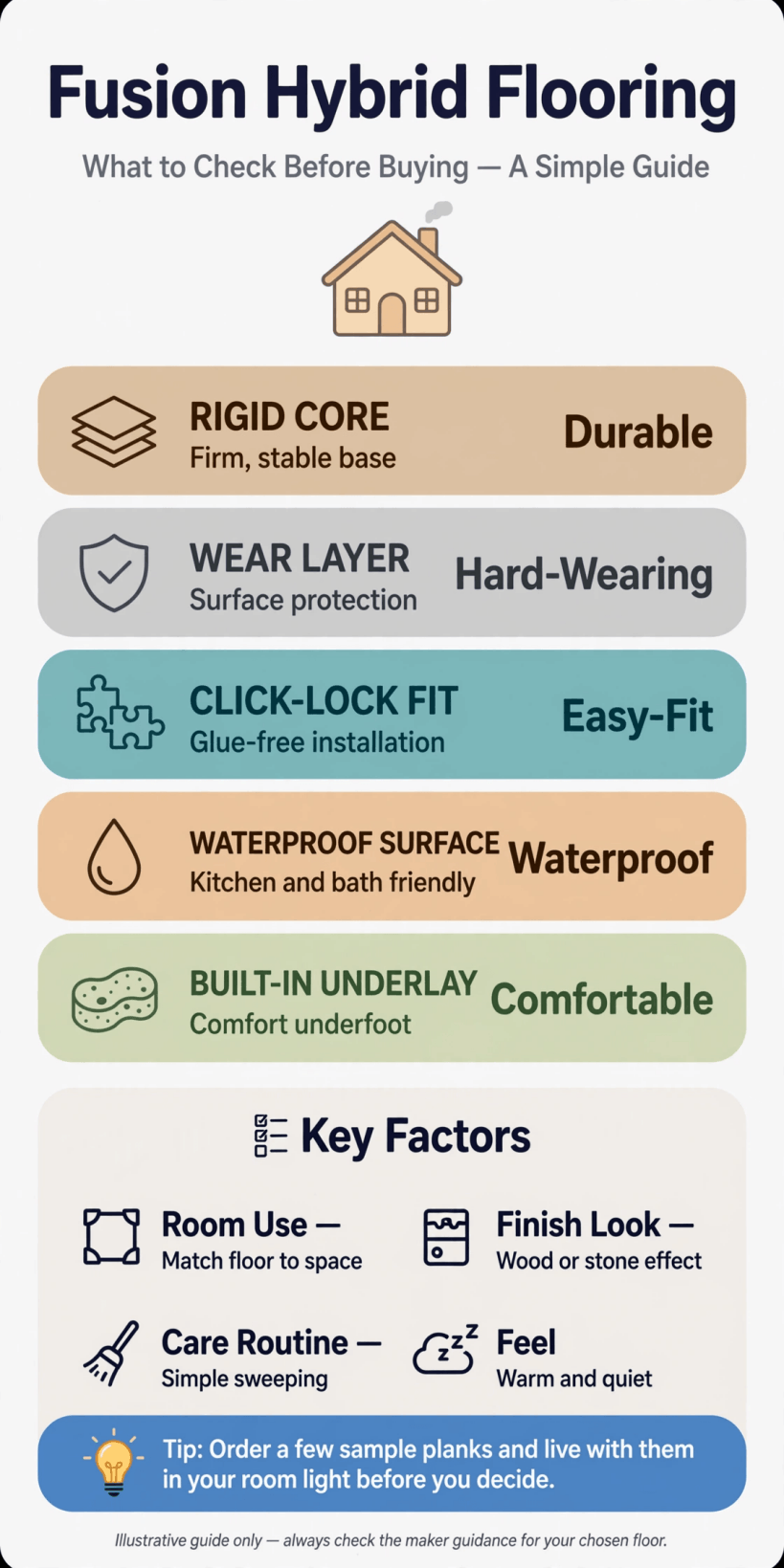
The short version on one page: what it is, where it suits, and the checks to make before any money changes hands.
2. What This Flooring Is, in Plain Terms
Hybrid flooring sits between categories. It borrows the rigid, dimensionally steady character of a hard core and pairs it with a printed or textured surface that imitates natural materials. Sellers describe this particular line in soft public terms as a hybrid rigid-core flooring, and that is a fair way to think about it: a plank built in layers, designed to feel stable, to click together and to present a timber-style face to the room.
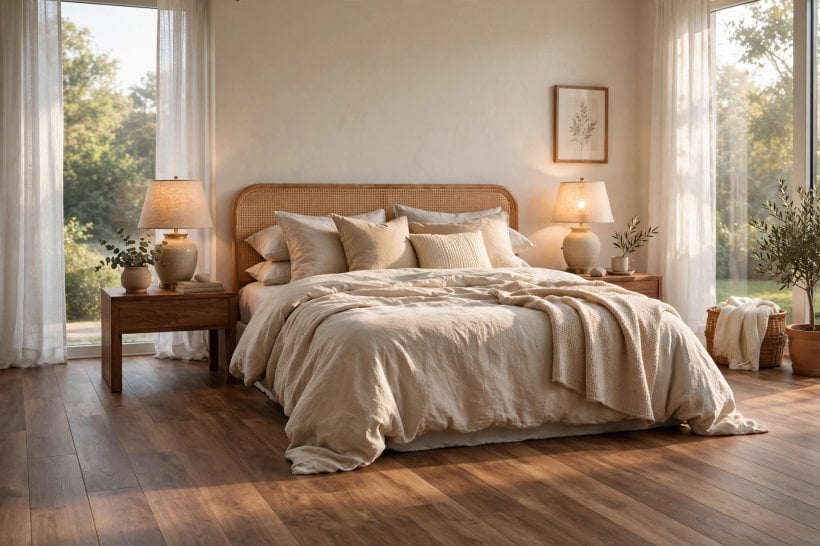
Ask what each layer does. A good seller can explain, without jargon, what the core is for, what the surface layer does and what sits underneath. If the answer is only adjectives, ask again or shop elsewhere, because understanding the build helps you judge every later claim.
Handle a full-size plank. Samples tell you more than swatches. Flex it gently, look at the edge profile, click two pieces together and apart, and check how the joint feels. You are not testing it to destruction; you are learning how the system behaves before it covers your floor.
Judge the look in your own light. Showroom lighting flatters everything. Borrow or buy a sample, lay it where the floor will go, and look at it morning and evening. Colours shift through the day, and a tone that seemed warm at noon can feel flat at dusk.
3. Water, Spills and Everyday Moisture
Water resistance is the headline promise of most hybrid floors, and it is also where careful reading matters most. A surface that shrugs off a spilled drink is not automatically a floor that tolerates standing water, steam and soaked joints for hours. The product’s current written guidance is the only version that counts, so ask for it and keep a copy.
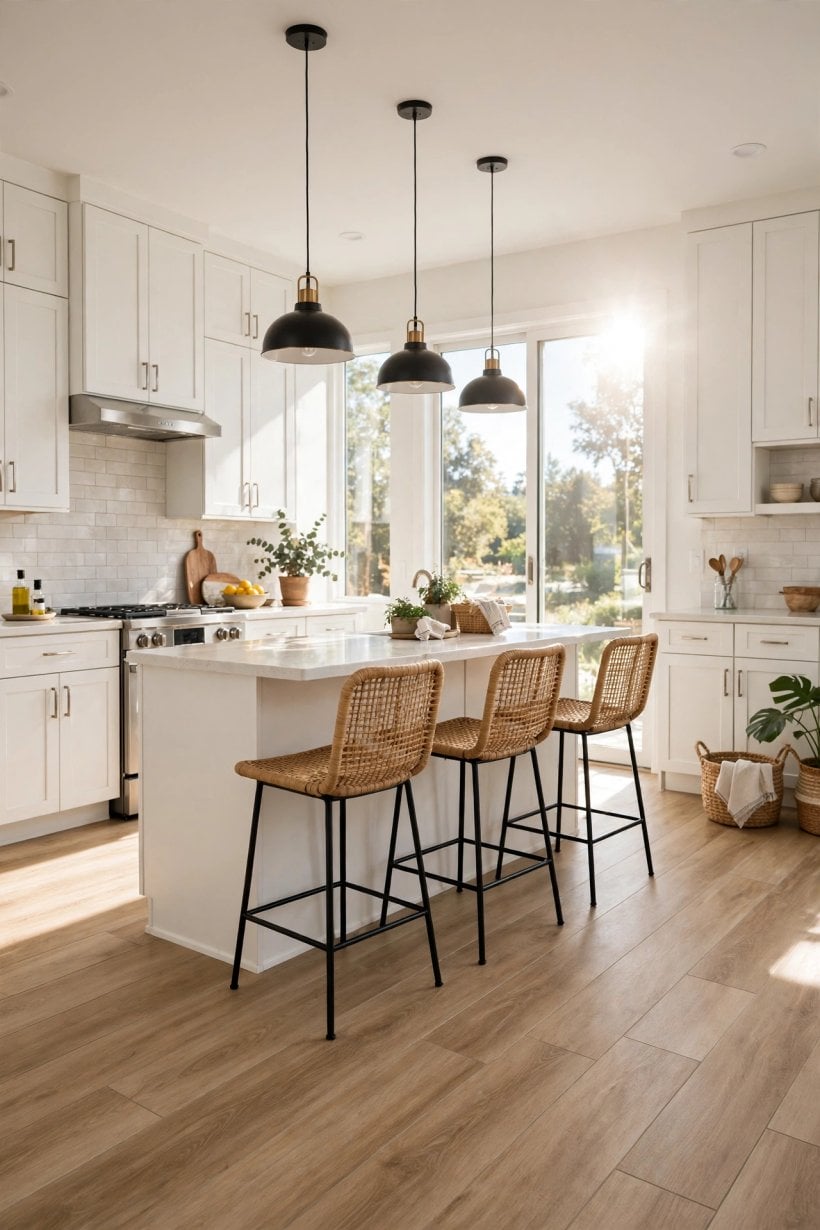
Separate splashes from soaking. Ask the seller, plainly, what happens with a knocked-over bucket, a leaking appliance or a wet dog shaking by the door. Note the answer, and check whether the written guidance says the same thing, because everyday life is mostly small spills handled quickly.
Think about the rooms honestly. Hallways, kitchens and living rooms ask different things of a floor than bathrooms and utility spaces. If a room regularly gets properly wet, discuss it specifically rather than assuming a general promise covers it, and consider what your installer advises for that space.
Plan the details that keep water out. Skirting, thresholds, sealant points around fixtures and how edges are finished decide real-world performance as much as the plank itself. A careful conversation about these finishing details, like the ones in our tiny house kitchen design ideas, prevents most moisture disappointments.
4. Feel, Sound and Warmth Underfoot
A floor is something you live on, not just look at. Rigid-core products usually feel firm and solid, which many people like and some find hard in rooms where they stand for long periods. Sound matters too: a floor can look identical to another and sound completely different in a quiet house.
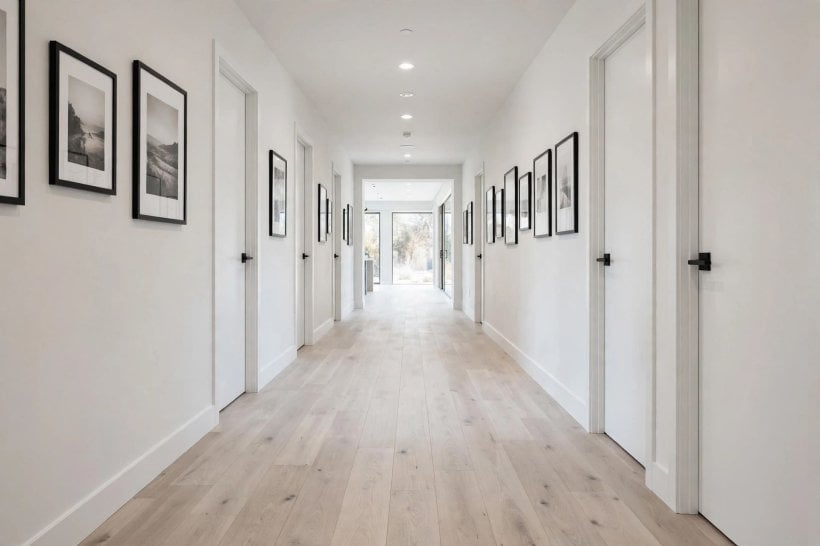
Walk a fitted area, not a loose plank. Loose samples always feel different from a laid floor. Visit a showroom with a proper display area, walk it in your usual shoes, and notice both the feel and the acoustic character, especially if the room below or beside is a bedroom.
Ask about underlay and backing. Some products include an attached underlay layer and others expect a separate one. Ask what applies to the exact product you are pricing, what it does for sound and comfort, and whether using the wrong type could affect your paperwork later. Readers planning calm rooms, like those in these tiny house living room ideas, usually rank quietness higher than they expected.
Consider rugs and mats as part of the plan. A runner in a hallway and a mat at the sink soften feel, catch grit and quieten footsteps. Planning them from the start is not an admission of defeat; it is how real households keep any hard floor comfortable and protected.
5. Scratches, Dents and Busy Households
No honest guide can promise you a floor that never marks. Chairs drag, grit grinds under shoes, dogs race corners and furniture gets moved for parties. The useful question is not whether a floor is indestructible, but how gracefully it handles your household’s specific habits, and how visible everyday wear will be in the colour and finish you choose.
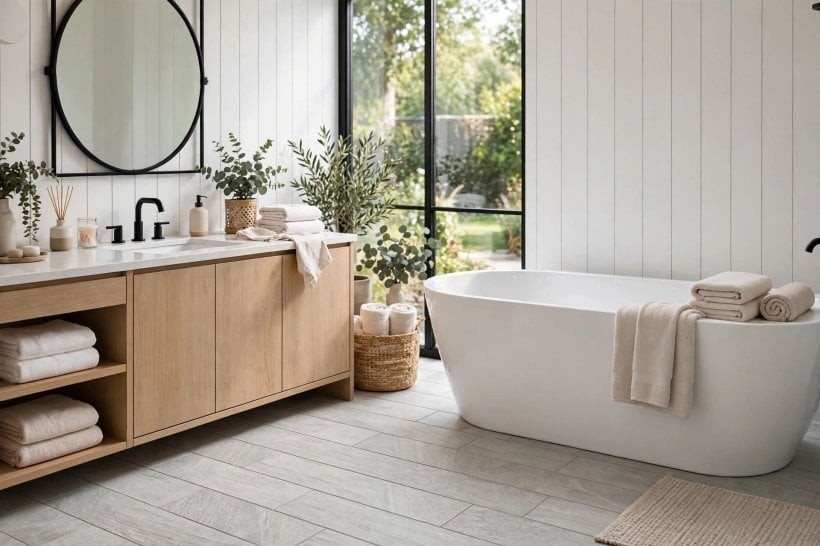
Do the doorstep test at home. Put a sample where shoes arrive, walk across it for a few days, sweep it and look closely. Grit behaviour at your own front door tells you more than any demonstration with keys in a shop, and it costs nothing but patience.
Choose colour and pattern with wear in mind. Very dark and very pale floors tend to show dust, crumbs and marks more readily, while mid-tones with some pattern usually hide daily life better. This is a general decorating truth rather than a product claim, and it is worth weighing if you dislike frequent sweeping.
Protect from day one. Felt pads under furniture, a decent doormat and a no-outdoor-shoes habit where practical will do more for any floor’s appearance than any specification. If your household includes a home workspace, the same protective thinking appears in our best tiny home office setups, where chair wheels and floor surfaces are planned together.
6. The Subfloor and Fitting Checks
More flooring disappointments are born under the floor than in it. A rigid plank bridging a bumpy subfloor can flex, click or wear at the joints, so the preparation checks deserve as much attention as the product choice. None of this is glamorous, and all of it is cheaper to handle before the planks go down.
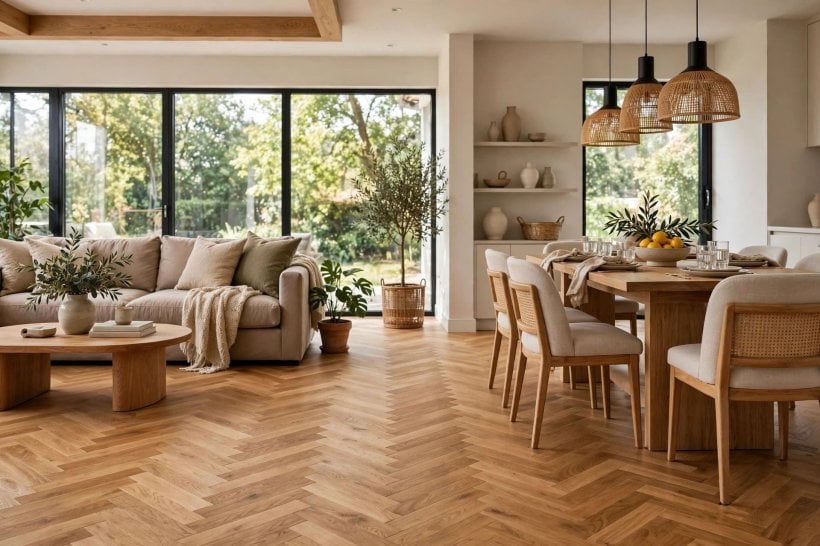
Ask how flat the subfloor must be. Every fitting guide sets expectations for flatness and preparation. Ask the seller or your fitter to explain what applies, how your floor will be checked and what levelling work, if any, they recommend, then get that in the written quote.
Talk about moisture in the base. Ground floors and newer concrete can hold moisture that needs managing before any floor is laid over them. A reputable fitter will raise this themselves and describe how they test and what they do about the results.
Confirm the practical fitting details. Expansion gaps, door thresholds, how the boards meet kitchen units, whether skirting comes off or trim is added, and how long the room is out of action — these are the questions that prevent day-of surprises. The same services-first discipline runs through these tiny house building design ideas, where what sits underneath gets decided before what shows.
Decide honestly about DIY. Click systems are designed to be fitted without glue, but designed-for does not mean effortless. Corners, pipes and the final rows test patience and tools. Price a professional fitting quote even if you plan to DIY, so the comparison is real rather than assumed.
7. Rooms It Suits, and Rooms to Think Twice About
Hybrid rigid-core floors are generally chosen for living rooms, hallways, bedrooms and kitchens, where a timber look, a firm feel and easy cleaning make daily life simpler. They are also popular in rentals and busy family homes for the same reasons. Suitability is ultimately a per-product, per-room conversation, so use this section as a set of prompts rather than permissions.
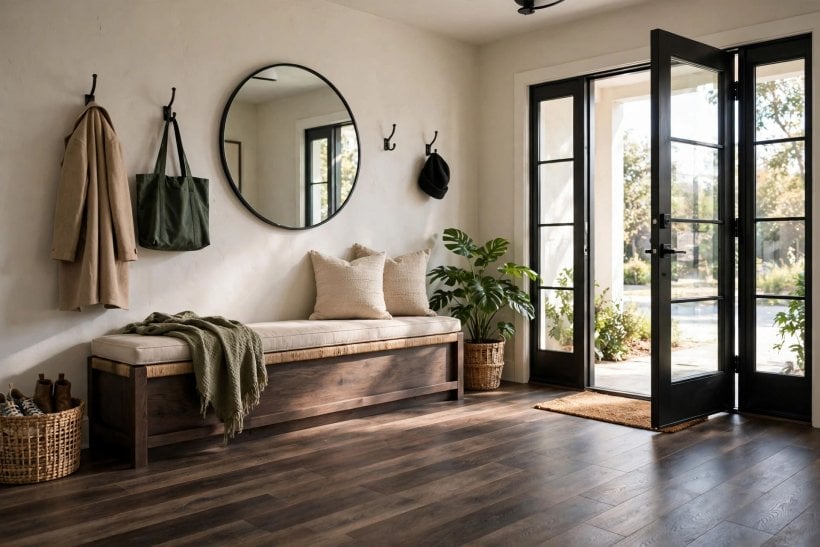 Living rooms and hallways. These are the showcase spaces, and the checks that matter are light, sound and door thresholds. Think about how the plank direction runs from the hallway into the living area, since a continuous flow is one of the pleasures of a click floor through connected rooms.
Kitchens. Spills, dropped pans and constant standing define kitchen duty. Revisit the water conversation from section three, plan a mat where you stand to cook, and confirm how the floor meets appliances that may one day need to slide out for repair.
Bathrooms and very wet rooms. Be extra careful here. Ask the direct question about the exact product, get the answer in writing and listen to your fitter. If the guidance is hesitant, believe it, and choose a floor made for that duty instead, as you would when planning with our tiny house kitchen design ideas for the room’s hardest-working surfaces.
Sunny rooms and conservatories. Strong sun and big temperature swings are worth a specific question for any floor. Ask about sunlight, heat and movement, and about window coverings or mats where the sun lands all day, rather than discovering the answer one summer later.
8. Costs, Stated Honestly
This guide will not quote you a price, because a responsible figure depends on the exact range, your region, your room sizes and who fits it, and prices change. What it can do is make sure the price you are quoted is the whole price, so the decision you make is based on the real total rather than an attractive starting number.
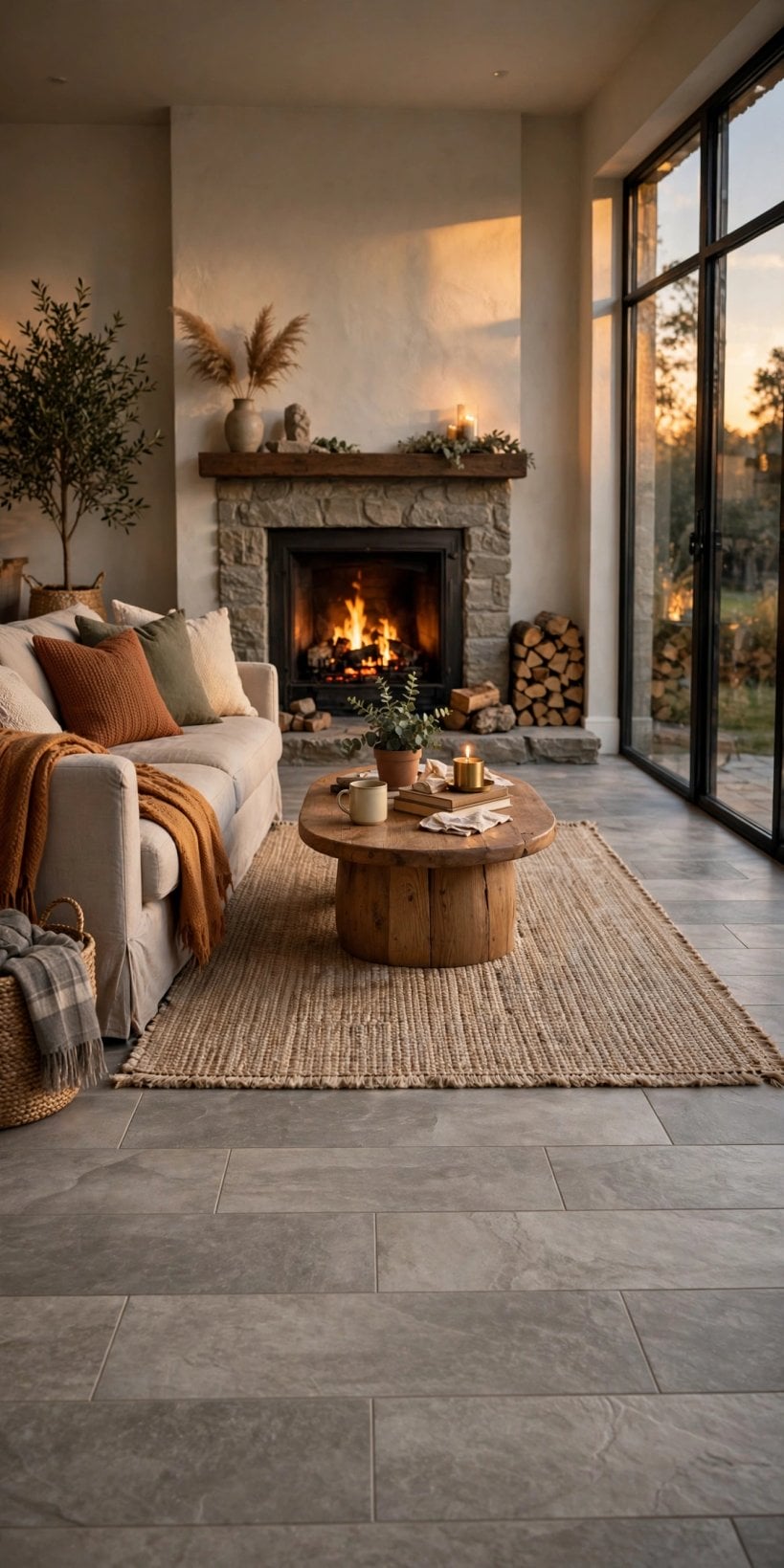
Build the full list. Flooring packs, delivery, underlay if the product needs it, trims and thresholds, skirting work, subfloor preparation, fitting labour, waste allowance and disposal of the old floor. Ask each seller to quote against the same list so comparisons are fair.
Ask about wastage allowance. Rooms with alcoves and angles use more material than their measurements suggest. A seller who explains the allowance calmly is helping you; one who will not discuss it is leaving you a surprise.
Keep the project in proportion. Flooring is one line in a room’s budget beside furniture, decorating and the garden beyond the door, much like the whole-home thinking in these tiny house landscaping ideas. A sound floor under a calm budget beats a premium floor under a strained one.
9. Warranties, Returns and the Paperwork
Paperwork is unglamorous and decisive. Guarantees and warranties differ between products and sellers, they come with conditions, and the version that matters is the one in force, in writing, for the product you actually buy. This guide deliberately states no terms, because inventing them would help nobody; instead, here is how to check them properly.
Read the actual document. Ask for the current warranty or guarantee text and read what it covers, what it excludes and what you must do, such as fitting and care requirements, for it to apply. Note especially anything about moisture, sunlight and commercial use if those touch your situation.
Check the returns position before ordering. Unopened packs are usually a different conversation from opened ones. Ask how many spare packs the seller suggests you keep, how returns of extras work and how long you have, then order with that understanding rather than hope.
Keep everything in one folder. Invoice, product name and batch details, fitting guide, care guidance and the warranty text. If a question arises in two years, the household with the folder gets the faster, calmer answer. A labelled spare-parts habit, like the one in our tiny house closet design ideas, works for paperwork too.
10. Samples, Sellers and Final Checks
By now the pattern of this guide should be clear: the floor itself is only half the purchase, and the seller, the documents and your own samples are the other half. A careful hour at this stage is worth more than a week of reading opinions, however confident those opinions sound.
Order samples properly. Get the largest samples you can of your two or three finalist colours, label the back of each, and live with them in the actual rooms. Move them through the day, put furniture legs on them and look at them beside your existing woodwork and fabrics.
Judge the seller as well as the floor. Did they ask about your subfloor, your rooms and your household, or only about square metres? Sellers who ask good questions before selling are usually the ones who answer the phone afterwards, and that is part of what your money buys.
Do a final written check. Before paying, confirm the exact product and colour, the total price against your full list, delivery timing, the fitting arrangements and the documents you will receive. If anything is verbal only, ask for it in an email. Calm, written clarity is the theme of every good purchase, flooring included.
Final Considerations
So, is it worth it? For the right room, on the right subfloor, bought from a seller whose answers survive being written down, a hybrid rigid-core floor is a sensible, good-looking choice that many households enjoy for years. The fusion hybrid flooring reviews that help most are the ones that talk about preparation, paperwork and daily life, not just first impressions.
Order your samples, ask the water and warranty questions out loud, and let the documents, not the adjectives, make the final decision with you.



0 Comments