

The wrong chainsaw turns every job into a wrestling match. Too big, and it is exhausting and dangerous; too small, and it bogs down in anything thicker than a wrist; the wrong power source, and you are either tethered to an outlet or mixing fuel at dawn. Most people buy backwards. This guide sorts the options honestly — gas, battery and corded compared on power, runtime, weight and maintenance — and matches the saw to the wood.
1. Best Wood Chainsaws for Landscaping at a Glance
Best wood chainsaws for landscaping are not a single model but a match: the power source, bar length and chain fitted to the work the homestead actually asks for — log crafts, firewood, storm cleanup and trail clearing. The homestead chainsaw does everything, but the wrong saw — too big, too small, wrong power source — makes every job harder and more dangerous. This guide matches the saw to the landscaping work: the table gathers the whole decision in one place, and the sections after it take the power choice, bar sizing, the picks by category, the safety kit, cutting technique, sharpening, maintenance and the hire-an-arborist limit apart in turn.
| Attribute | Detail |
|---|---|
| The Jobs | Log crafts, firewood, storm cleanup and trail clearing — the homestead saw does everything |
| The Power Choice | Gas for felling and bucking, battery for the everyday, corded for the workshop |
| The Homestead Answer | Battery for 80% of work + gas for the big stuff — or battery-only if your logs stay under 14″ |
| The Bar Rule | Bar length at least 2″ longer than the wood’s diameter — a 16″ bar cuts 14″ logs in one pass |
| The Battery Pick | 40–60V, 16″ bar, $250–400 with battery — buy into the platform you already own |
| The Gas Pick | 45–55cc, 18″ bar, $400–550 — the farm saw that does everything, including felling |
| The Budget Pick | Corded electric, 14–16″ bar, $80–120 — the occasional-use and craft-cutting saw |
| The First Safety Buy | Chainsaw chaps, $80–120 — most chainsaw injuries are to the left leg |
| The Sharpening Habit | File the chain every tank of gas — a dull chain throws dust instead of chips |
| The DIY Limit | Hire an arborist for trees near structures or power lines, and for hung-up trees |
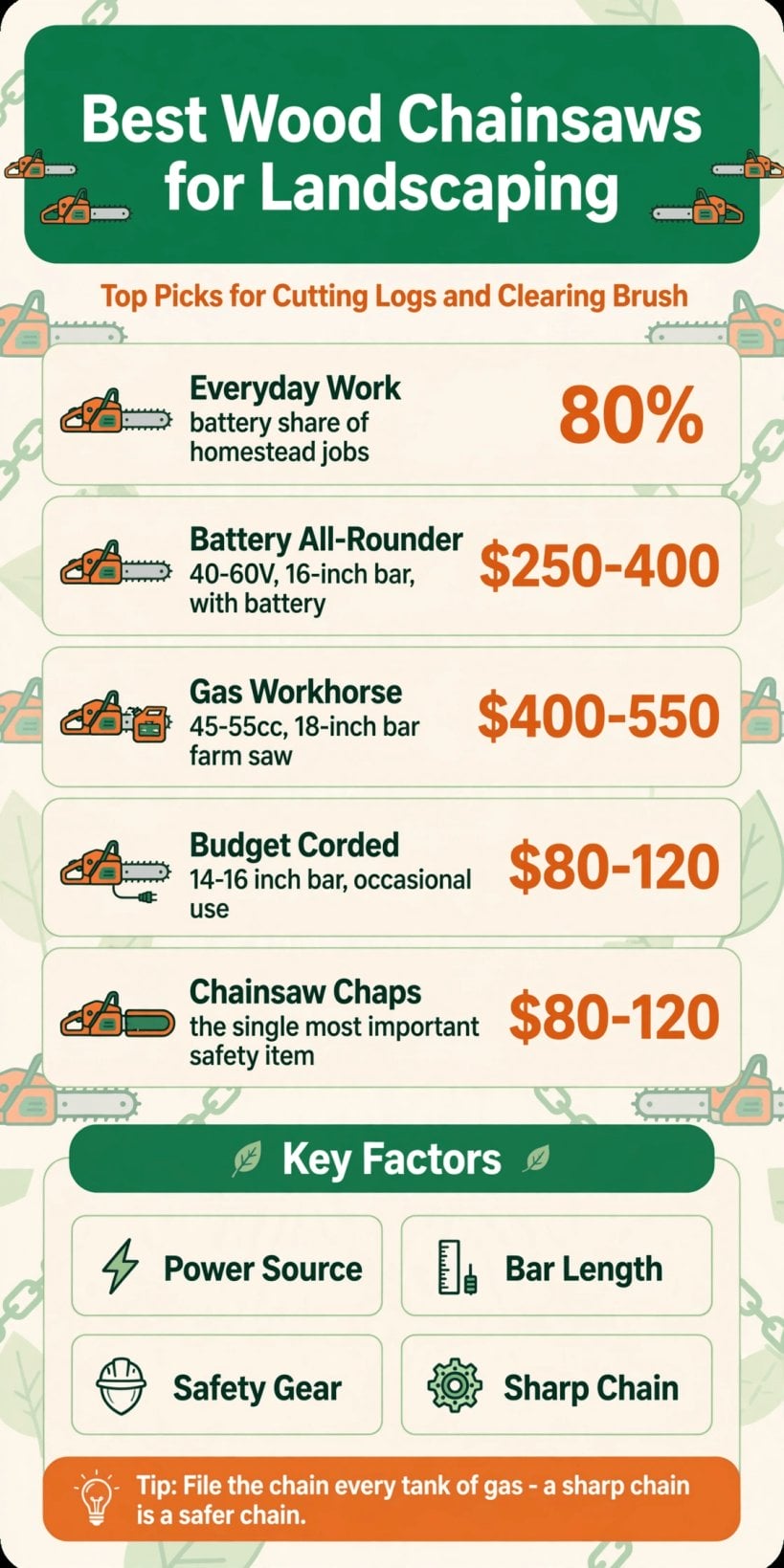
Eighty percent battery, twenty percent gas, and chaps before everything — the whole buying decision on one card.
Read the table as a chain of dependencies. The power source decides which jobs are realistic; the bar length decides which logs those jobs can touch; the safety kit decides whether the work is responsible at all; and the sharpening and maintenance habits decide whether the saw still starts and cuts safely in its fifth year. Every section that follows is one link of that chain — and the chain begins with the choice most buyers get wrong, the power source.
2. Gas vs Battery vs Corded: The Power Source Decision
Gas is the workhorse: unlimited runtime and maximum power, the felling and bucking saw. Its costs are noise, maintenance and the fuel itself — the fumes at dawn, the mixing, the upkeep that keeps it starting. Battery is the modern default: quiet, instant-start and zero maintenance — the limbing, pruning and craft-cutting saw. Modern 40V+ platforms cut 12″ logs happily; the battery is the limitation, so buy two. Corded electric is the budget option: cheap, quiet and unlimited in runtime, but tethered to the outlet — the workshop saw.
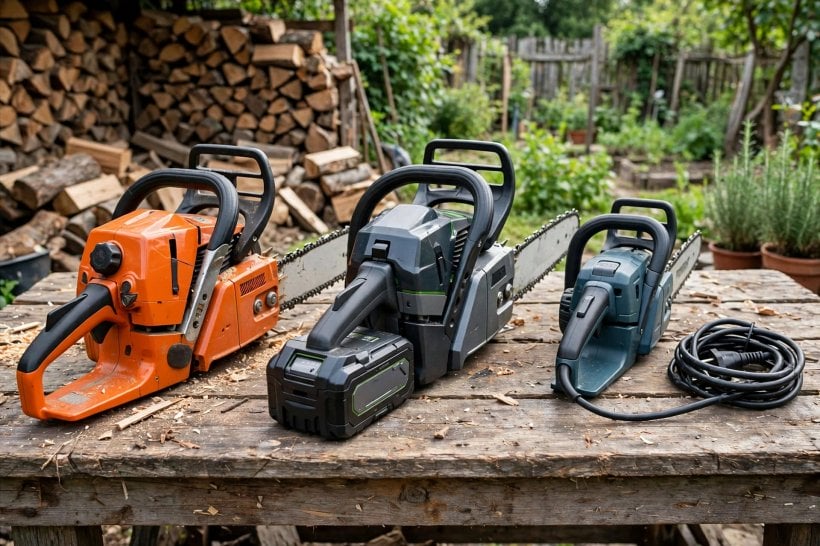
The homestead answer combines them: battery for 80% of work plus gas for the big stuff — the two-saw solution. Or battery-only, if your logs stay under 14″. The logic is workload, not loyalty. Most homestead cutting is limbing, pruning, bucking modest logs and craft work, all inside battery range; the gas saw earns its noise and maintenance only on the felling and heavy bucking days. Buy for the 80% first, and let the big wood justify the second saw when it actually appears.
The order matters as much as the choice. A first saw bought as a gas felling machine spends its life doing battery work badly — heavy in the hands for limbing, loud for pruning, and always needing its fuel fresh for jobs that last ten minutes. A first saw bought as the battery all-rounder covers the everyday list from day one, and the corded saw can still join it later as the dedicated workshop machine, where the tether stops mattering because the bench never moves. Power follows the workload: everyday first, workshop second, heavy timber last.
3. Bar Length: Sizing the Bar to the Wood
One rule sizes the cut: bar length at least 2″ longer than the wood’s diameter. A 16″ bar cuts 14″ logs in one pass, with the tip clear of the far side. The three working sizes follow from it. A 14–16″ bar is the landscaping saw — limbing, bucking firewood, cutting cookies and craft logs; the versatile size, and the one this guide’s battery pick wears. An 18–20″ bar is the felling saw — taking down trees; the serious size, heavier and carrying more kickback energy. Twelve inches and under is the pruning saw — pole saws and top-handle saws, the arborist’s tools; nimble and less intimidating.
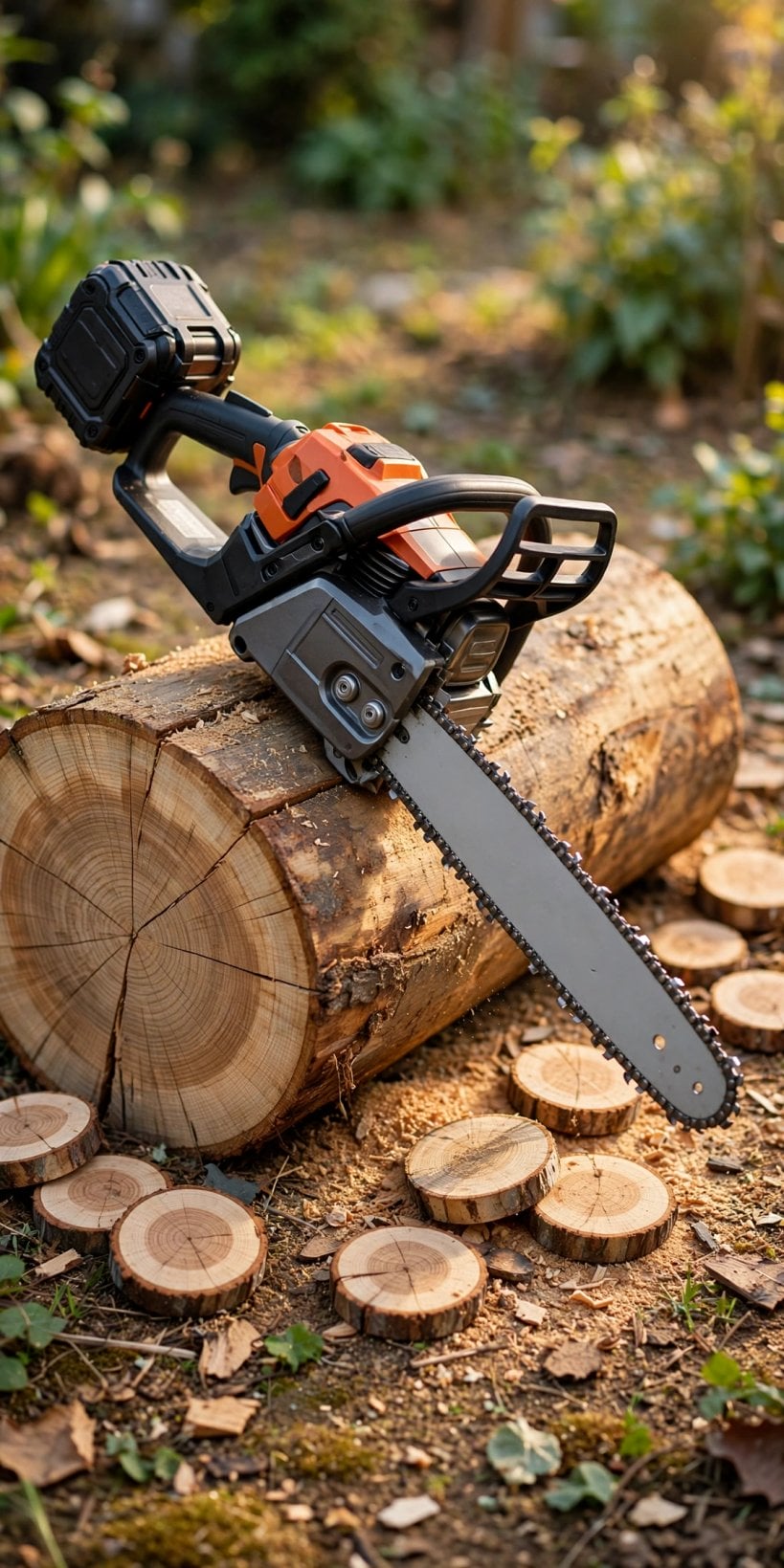
Bigger is not better. The oversized bar is heavier, more dangerous and harder to control — weight you carry on every cut to serve the one log a year that might need it. Match the bar to your wood: measure your logs before buying. The cookie cutting that a 16″ bar handles so well is its own discipline once the rounds come off the log — even thickness, end grain and patience are what slicing wood cookies without cracking comes down to. Size for the wood you have, and the saw stays a tool instead of becoming a burden.
4. The Top Picks by Category
Five picks cover the homestead range. Best battery all-rounder: 40–60V with a 16″ bar. The platform matters more than the badge — buy into the battery system you already own; EGO, Milwaukee, DeWalt and Stihl all make credible 16″ saws — at $250–400 with battery. Best gas workhorse: 45–55cc with an 18″ bar, the farm saw — the Stihl MS 271 and Husqvarna 455 Rancher class — at $400–550; the saw that does everything, including felling. Best budget: a corded electric at 14–16″, $80–120 — the occasional-use saw, surprisingly capable for craft cutting.
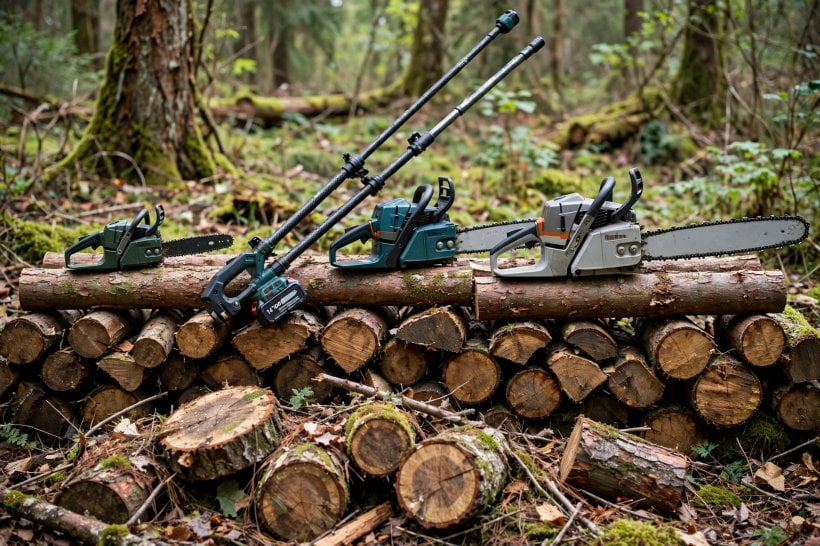
Two specialists complete the set. Best pole saw: a battery pole saw with a 10″ bar — safe ground-level pruning of high branches, the ladder alternative. Best tiny: a battery pruning saw with a 6″ bar — the one-handed saw for limbing and craft trimming; the gateway saw. The small end of the range is where the craft work lives: the rounds and offcuts a 6″ saw trims become the raw material for log craft ideas like candle holders and coasters. Buy the all-rounder first, the workhorse when the big wood demands it, and the specialists as their jobs appear.
The platform point deserves its own emphasis, because it decides the battery pick more than any specification does. A 40–60V saw bought into a battery system you already own shares its batteries with the rest of your tools, so the two-battery rule from §2 is satisfied by packs already in the shed — and the saw’s real price drops accordingly. Bought into a new system, the same saw carries the cost of every battery and charger behind it. The credible 16″ saws from EGO, Milwaukee, DeWalt and Stihl are close enough in the wood that the system on your shelf is the honest tiebreaker.
5. Safety Gear: The Non-Negotiable Kit
Chaps come first: chainsaw chaps are the leg armor, stopping the chain on contact — $80–120, and the single most important safety item, because most chainsaw injuries are to the left leg. Next, the head system: helmet, visor and ear protection at $50–80 — falling branches kill, the visor stops the chips, and the muffs save the hearing. Gloves are chainsaw gloves, grip plus cut resistance. Boots are steel-toe and cut-resistant, the foot protection. And the first aid kit is the trauma kit — tourniquet and clotting gauze, the chainsaw-specific kit you hope never to use.
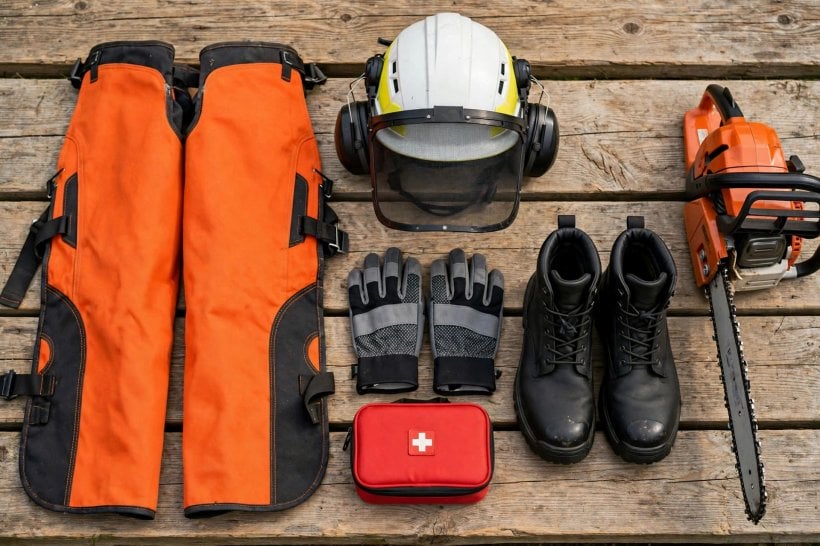
The rule binds the kit together: gear up for EVERY cut. The “just one quick cut” is when injuries happen — the two-minute suiting-up is not overhead, it is part of the cut. Notice that the whole kit costs less than the saw it protects you from, and that its most expensive item guards the leg the statistics point to. A buyer who funds the saw but not the chaps has matched the tool to the wood and forgotten to match the protection to the tool.
6. Cutting Technique: Bucking, Limbing and Ripping
Bucking — cutting fallen logs — is the workhorse cut, and its skill is bind awareness: a top-bind closes the top of the cut, a bottom-bind closes the bottom, so cut the compression side first. Limbing — removing branches — is body positioning: stand on the opposite side of the trunk from the branch, and cut from the top, so the trunk stands between you and the work. Ripping — cutting along the grain — is the bench-building cut: slower than crosscutting, and it needs a sharp chain.
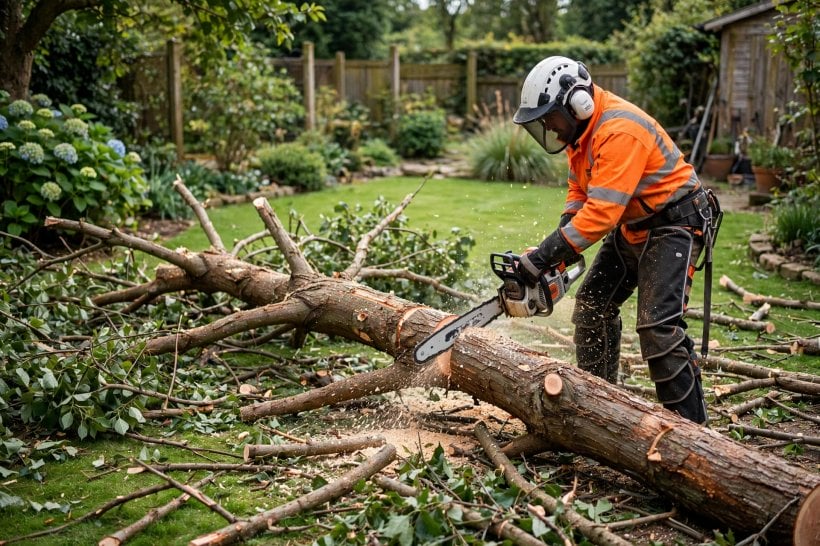
Ripping is where the saw meets furniture: the long rip down a log’s grain is how bench stock begins, and the full build that follows the cut is the rustic log cabin bench. Bucking has its own afterlife, too — a trunk cut into rounds is firewood, craft stock, or the stump sections that end up as seating in fire pit seating with boulders, stumps and logs. Technique is what turns one fallen tree into all of those: the bind read before the cut, the body placed before the throttle, the grain followed instead of fought.
7. Kickback: The Number-One Danger
Kickback is the #1 danger in chainsaw work, and it lives in one place: the bar tip’s upper quadrant. Never cut with it. When that quadrant touches wood, the chain’s motion throws the bar up and back toward the operator faster than anyone reacts — which is why the rule is positional, not reactive. You do not dodge kickback; you simply never offer it the quadrant that causes it. Keep the tip’s upper quarter out of the cut, and the saw’s most violent behaviour has no way to start.
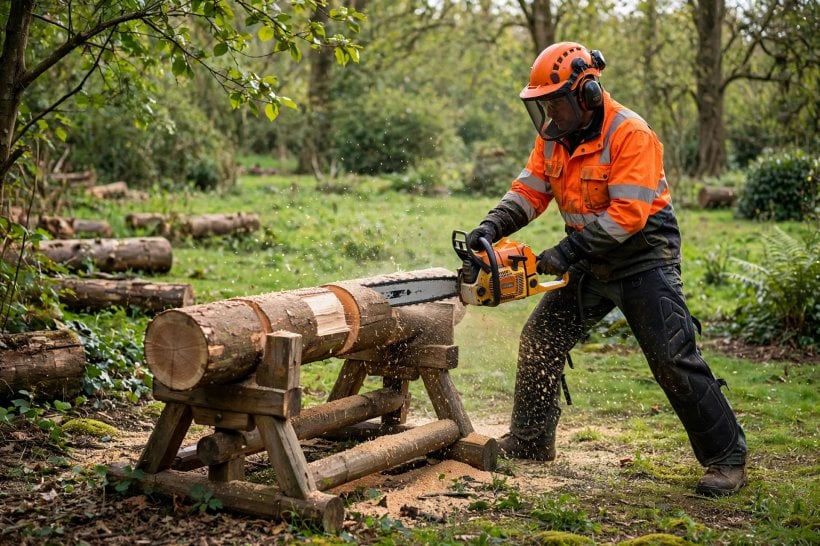
Two habits back the rule up. The chain brake: engage it — the brake is the saw’s own defence, there to stop the chain in the instant a kickback begins. And the stance: stand to the side of the cutting line, never in line with the bar, so that if the saw does come back, it passes beside you rather than into you. The sawbuck stance in the photograph is the whole lesson in one posture — body offset, footing balanced, the cut line empty of everything but wood. Combined with the sharp chain of the next section — a dull chain forces pushing, and pushing is what feeds kickback — stance and brake turn the #1 danger into a managed one.
Bar choice feeds the same risk, which is why §3 warned against oversizing. The 18–20″ felling bars carry more kickback energy than the 14–16″ landscaping bars: more chain moving at the tip, more leverage when it grabs. That is not an argument against the felling saw — felling is its job — but it is the reason the big bar is not the everyday bar. Keep the long bar for the work that needs its reach, and the shorter, calmer bar for the ninety cuts a week that don’t.
8. Sharpening: The Five-Minute Habit
Sharpening is the skill that keeps every other section honest: a sharp chain is safer than a dull one. The dull chain forces pushing; pushing causes kickback; so the file is a safety tool, not just a performance one. The habit is fixed: file every tank of gas — the five-minute habit, done at refuelling, when the saw is already stopped and in your hands. Little and often keeps the edge; a chain rescued after a day of dull cutting takes real work, and usually a real replacement.
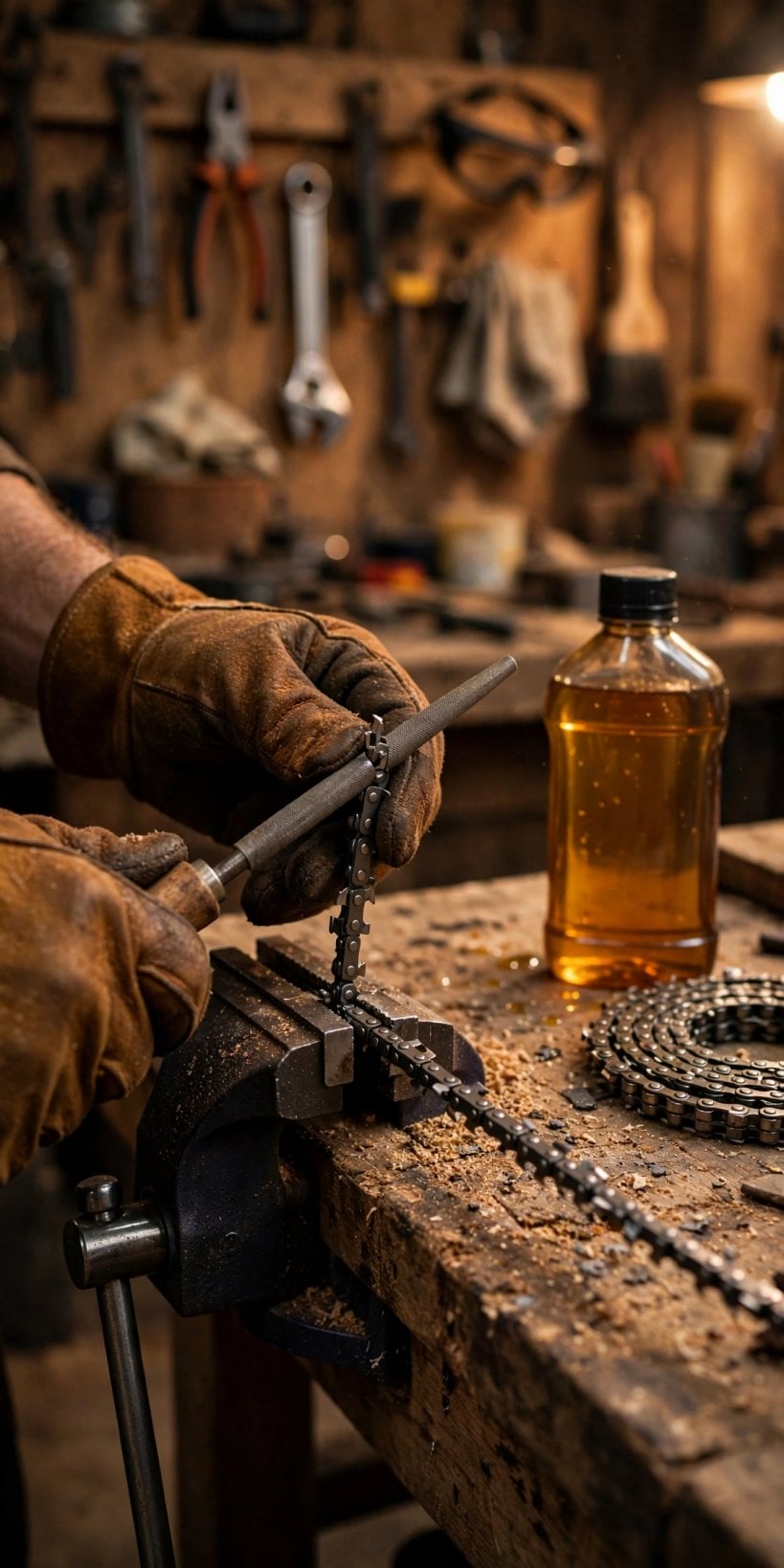
The saw tells you when the edge is gone: it throws dust instead of chips. Chips are cutting; dust is rubbing — the chain sliding over the wood and heating instead of biting. At that point, sharpen or replace. A new chain is $20 — the cheapest performance upgrade in the whole guide, cheaper than any accessory, and it restores the saw to the cutting behaviour every technique in §6 assumes. The photograph’s setup — bar held firm, file worked tooth by tooth, oil at hand — is the five minutes, exactly as unglamorous and exactly as decisive as that sounds.
9. Maintenance: Fuel, Oil, Tension and Storage
For gas saws, fuel is the no-start cure: fresh fuel, ethanol-free with stabilizer, mixed 50:1 and replaced fresh monthly. The air filter gets a tap clean every use. Chain tension is checked with the snap test — the chain pulls freely around the bar and doesn’t sag. Bar oil is checked every fill: it is the chain’s lifeblood, and a dry chain wears the bar, the chain and itself. Battery saws are simpler but not exempt: store the battery at 40–60% charge for long storage — the battery-longevity rule — and remember that battery saws need bar oil too; it is the forgotten item on the quiet saw.
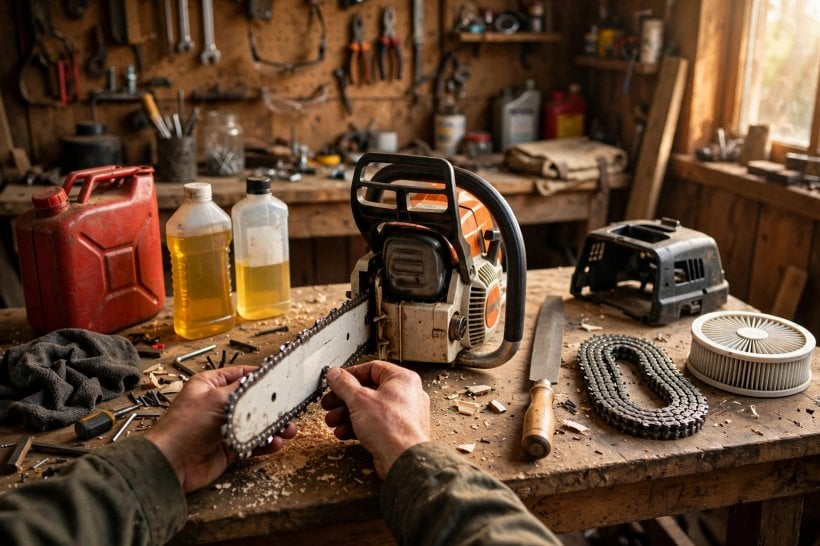
Storage closes the routine: dry, with the chain covered — the bar scabbard is both the safety and the edge protection. The saw that starts is the saw whose fuel was fresh, filter clean, chain sharp and oil full; maintenance is not a separate hobby from cutting, it is the first five minutes of it. The wood the saw produces asks for the same respect in store — bucked rounds left damp will crack and rot, which is why curing and drying wood logs properly is the maintenance habit’s other half.
10. When to Hire an Arborist: Knowing the Limit
Some trees are not DIY. Hire an arborist for trees near structures or power lines — the liability is the pro’s insurance, not yours. Hire for hung-up trees — the widowmaker; lodged trees kill amateurs. And hire for anything you are unsure about: the humility rule. A $300 arborist visit beats a $30,000 ER visit — the cheapest comparison in this entire guide, and the one that matters most. The saw’s owner who hires out the scary trees is not less of a sawyer; they are the one still sawing next year.
DIY confidently where the ground is safe: bucking fallen logs, limbing at ground level, cutting craft wood — the saw’s home territory, and the same ground-level work that clears the lines for projects like rustic log fencing or prepares the timber for a DIY log cabin shed. The progression is deliberate: start with bucking, the safest cut; learn limbing; then study felling properly — the Game of Logging course, the professional training, at $200 — the best money in chainsawing. Skill first, size second, and the limit respected throughout.
Read the progression as a ladder where each rung teaches the next cut’s judgement. Bucking teaches bind — how wood under tension and compression behaves as the kerf opens. Limbing teaches positioning — where the body stands relative to the work. Felling asks for both at once, on a tree that is still standing and full of stored energy, which is precisely why it is studied formally rather than improvised. The $200 course sits at the top of the ladder because that is where the consequences live; everything below it is practice the ground makes safe.
Final Considerations
Buy battery for the everyday — 16″, on the platform you own — and gas for the big work, 18″, the farm saw. Size the bar to your wood with the 2″ rule, gear up completely for every cut, file the chain every tank, and respect the kickback zone as the one place the bar never works. Hire the arborist for the scary trees without a flicker of pride about it. The chainsaw is the homestead’s most useful and most dangerous tool — the respect and the maintenance are the price of admission.



1 Comment