

The seating circle around a fire is humanity’s oldest architecture, and it still works best in the simplest materials. Boulders and stump logs ask nothing of you: no cushions to drag inside, nothing to stack against winter, nothing that blows away in a storm. They just sit there, solid, waiting for the next fire.
1. Fire Pit Seating at a Glance
Fire pit seating is the arrangement of permanent seats — flat-topped boulders, leveled stump logs and half-log benches — in a circle around a contained fire, close enough for warmth and far enough for comfort. The fire pit is the central entity of the outdoor room, and its attributes decide whether the space works: the siting clearances, the size of the burn area, the height of every seat, the ground the circle stands on, and the safety kit that stays within reach. This guide builds the whole gathering space from those attributes outward: a 3–4 ft fire area inside a 10–12 ft gravel circle, 5–8 boulder seats at sitting height, stump stools leveled and oiled, and the rules that keep the fire a pleasure instead of a hazard. The table gathers the system in one place; the sections after it take the pit, each seat type, the floor, the comforts and the serious part apart in turn.
| Attribute | Detail |
|---|---|
| The Fire | 3–4 ft diameter fire area — the social fire; bigger wastes wood and pushes people back from the heat |
| The Siting | 10+ ft from structures, 15+ ft from overhanging branches — check local burn regulations; some areas require permits |
| The Pit | Steel ring or stone circle with 12″ tall walls — the contained burn; the stone ring doubles as a footrest |
| Boulder Seats | Flat-topped, 18–24″ tall, 5–8 around the circle spaced 2–3 ft apart, each buried one-third deep |
| Stump Seats | 14–20″ diameter, 16–18″ tall — hardwood or cedar, tops leveled and sanded, set on gravel pads |
| Log Benches | 5–6 ft half-log bench seats 3, set 4–6 ft from the fire’s edge, with a backrest log at 30″ |
| The Circle Floor | 10–12 ft diameter of gravel or decomposed granite, 3″ deep, with a slight crown so water sheets off |
| The Wind Rule | Benches and premium seats on the windward side — smoke follows the path and the upwind seats stay clear |
| The Safety Kit | Water, shovel and extinguisher within 25 ft, always; 10 ft of vertical clearance overhead |
| The Children’s Line | The 3-ft rule — children stay behind the painted stone circle |
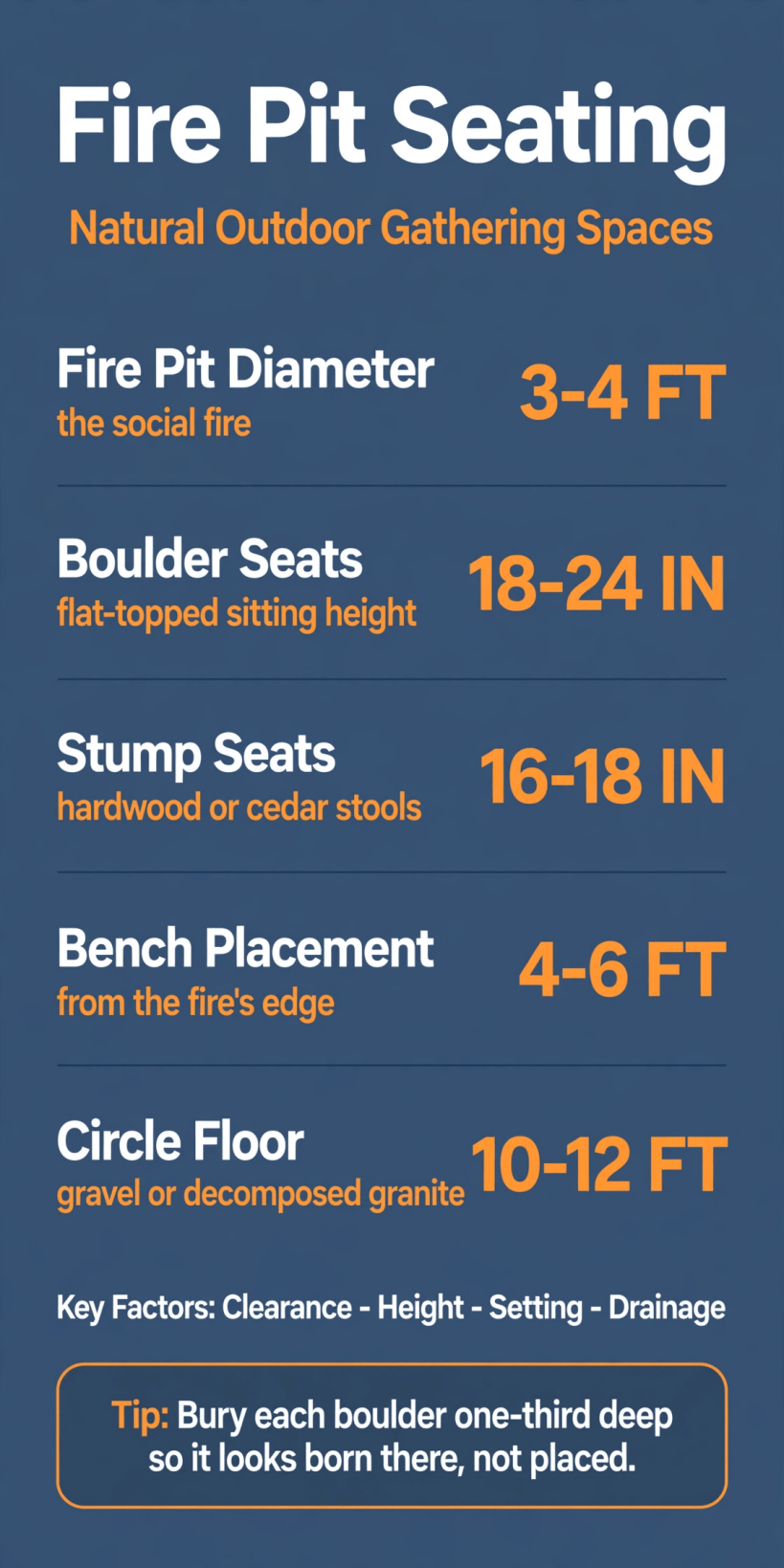
Three to four feet of fire, seats at sitting height and a gravel circle ten to twelve feet across — the whole gathering space on one card.
Read the table as a layout in miniature. The clearances decide where the circle can exist at all; the fire’s size decides how far back the seats belong; the seat heights decide who is comfortable and for how long; and the floor decides whether the space survives its first ember and its first storm. Skip the siting and everything built on top of it inherits the mistake — which is why this guide measures the ground before it moves a single stone.
2. The Fire Pit: Siting, Clearances and Wind
Safety and siting come before seating, because the pit’s position is the one decision the finished circle cannot undo. The clearances are distances: 10+ ft from structures, and 15+ ft from overhanging branches. The original guide calls these the code minimum in most jurisdictions — and adds the working rule that goes with them: check local burn regulations before you build, because some areas require permits. A circle sited inside those clearances is a garden feature; one sited outside them is a liability with good seating.
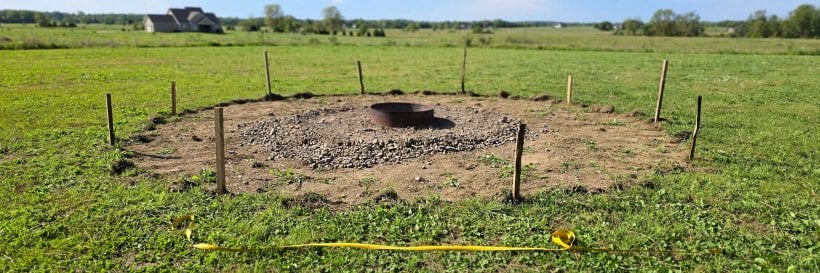
The ground under the pit matters as much as the air around it. The base must be fire-proof: mineral soil, gravel, or stone. Never on a wood deck, and never on peat — the two surfaces that turn a contained burn into a spreading one. Wind is the third siting reading, and it is taken by observation: note the prevailing wind before the seats are placed, because smoke follows the path of the wind and the windward side stays clear. That single observation decides where the premium seats go in every later section.
The fire itself is sized socially, not dramatically: a 3–4 ft diameter fire area. The original names it the social fire, and the reasoning is thermal — a bigger fire wastes wood and pushes people back from the heat, stretching the circle until conversation and warmth both thin out. The pit that contains it is a steel ring or a stone circle with 12″ tall walls: the contained burn, with the stone ring doubling as a footrest once the fire is lit. Containment, clearance and size together are the pit’s whole specification — everything else in this guide is seating arranged around them.
3. Boulder Seating: Choosing, Setting and Leveling the Permanent Circle
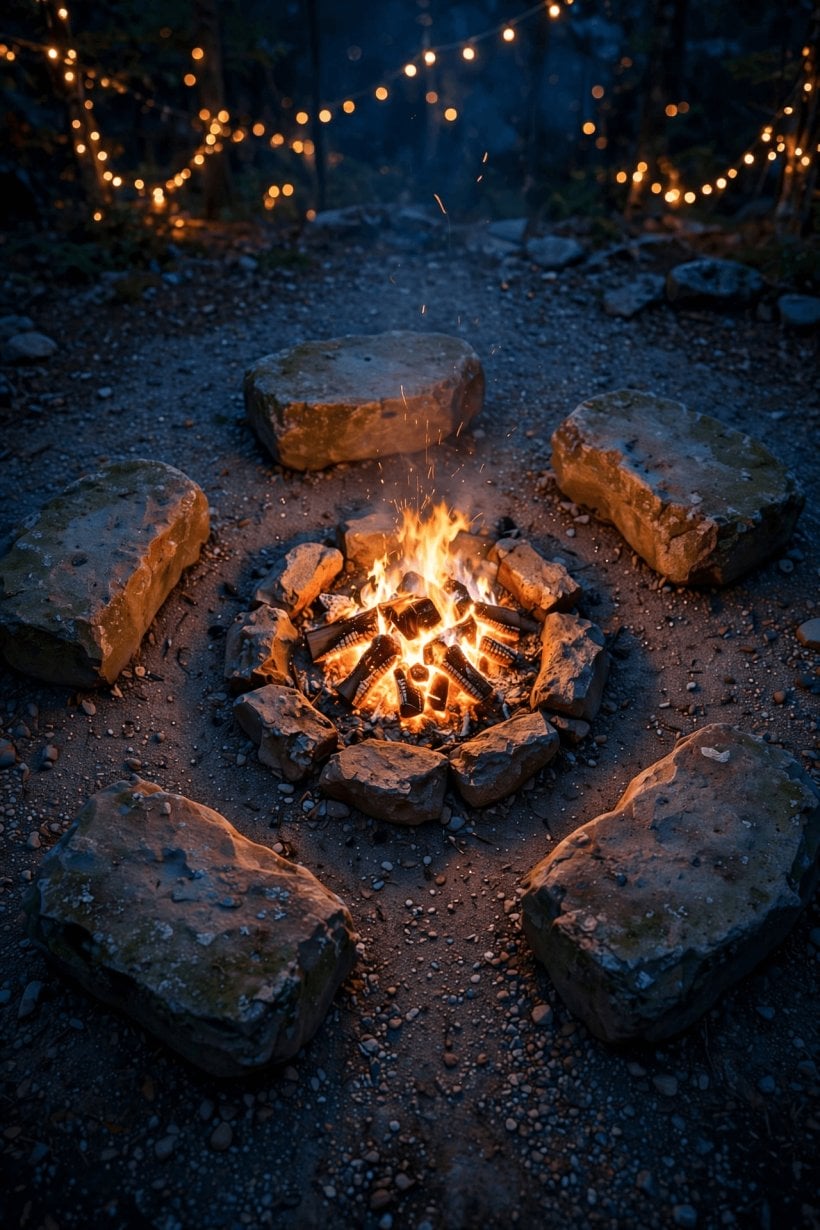
Boulders are the permanent seats of the circle, and they are chosen by their tops: flat-topped boulders, 18–24″ tall. That range is sitting height, and the original breaks it down by posture — 18″ is dining, 16″ is lounging — with the craftsman’s priority stated plainly: the flat top matters more than the size. A level, flat seat of the right height will be sat on all evening; a dramatic boulder with a sloped top will be admired and avoided.
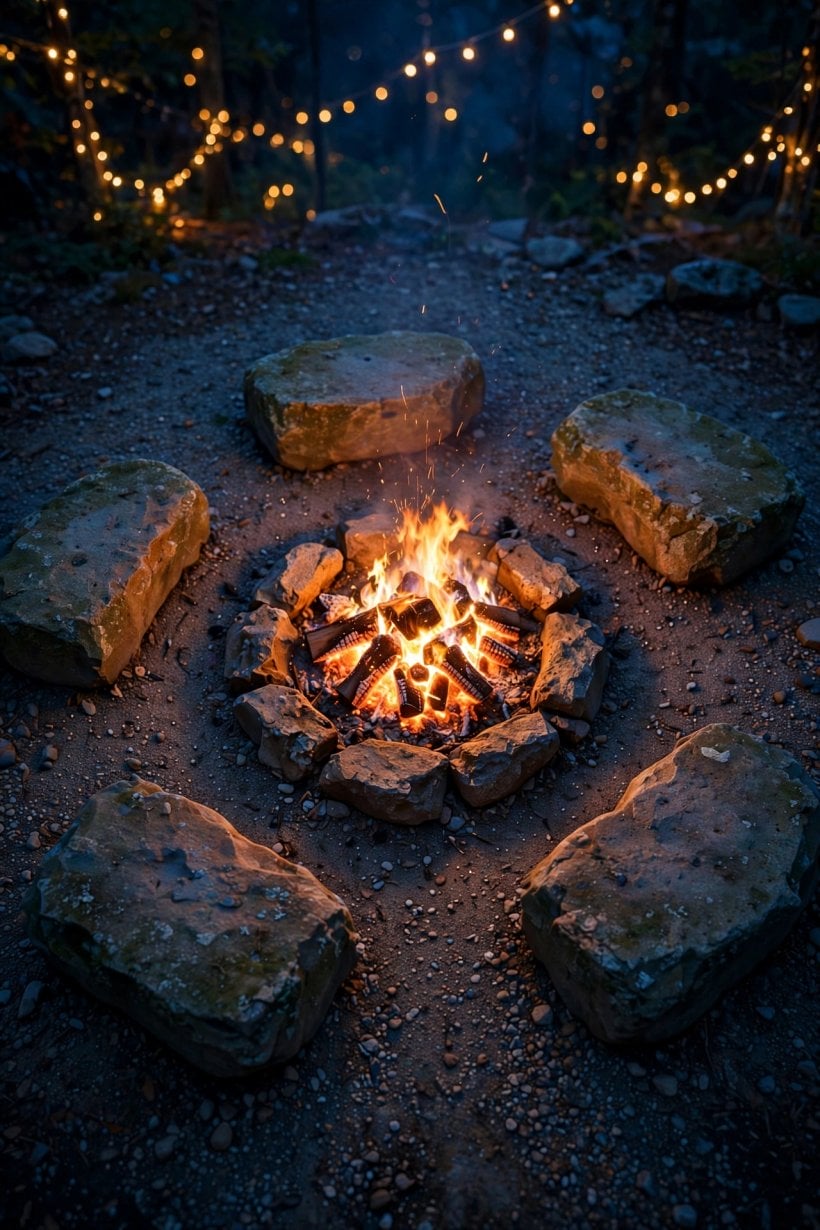
The count is 5–8 boulders, and the spacing is 2–3 ft apart for elbow room. Odd numbers feel natural — the circle reads as gathered rather than arranged — and the arrangement itself is a broken circle: leave a gap for entry, the threshold the gathering passes through. Orientation follows the land, not just the fire: face the view, not only the flames, and give the sunset side the premium boulders, because the best seat in the circle is the one that watches the light change while the fire warms your front.
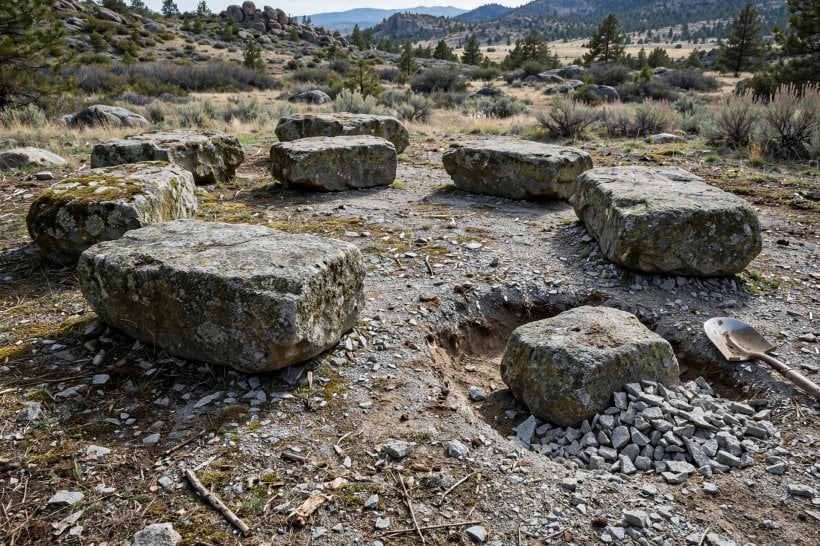
Setting is what makes a boulder a seat instead of an obstacle. Bury one-third of it — the geology rule — because the boulder must look born there, not placed. Dig the seat pocket, set the stone, backfill and tamp. Then level the tops: shim with crushed stone until each seat sits true, the 2-minute shim that the original insists on because the wobbly boulder ruins the evening. The craft behind placing stone so it reads as geology rather than delivery is the same discipline worked through in laying out big landscape rocks, and where the boulders themselves come from — for little or nothing — is covered in the guide to sourcing free landscaping rocks.
4. Stump Log Seating: Leveling, Finishing and the Rotation
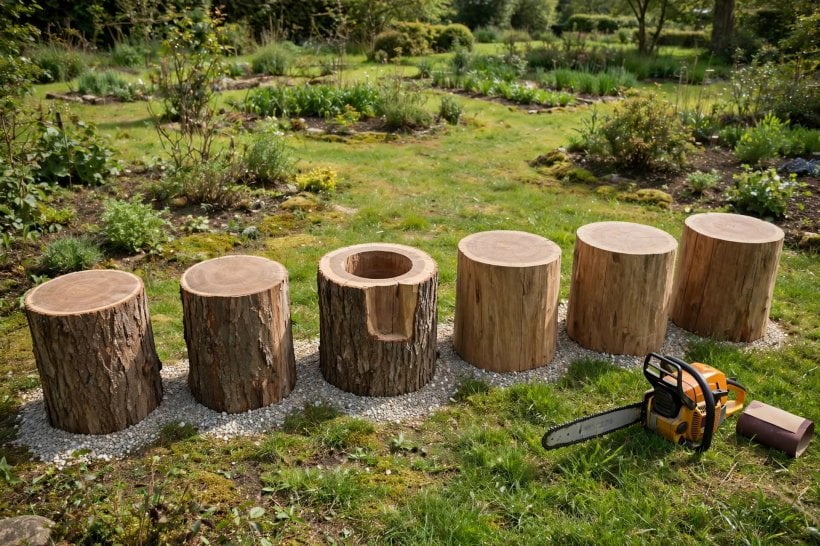
Stump logs are the wooden stools of the circle: warmer to sit on than stone, light enough to rearrange, and honest about their lifespan. Selection is a diameter and a height — 14–20″ diameter stumps, 16–18″ tall — and a species choice: hardwood, oak or maple, for durability, or cedar for rot resistance. A stump inside those dimensions is a seat one person can move and a whole evening can trust.
Preparation is two flat surfaces and a finish. Level the top — chainsaw flat, proven by the sit test — and sand the top 80-grit, because splinters in shorts are memorable for the wrong reasons. Level the bottom too: the stump must sit flat, so rock it, mark the high spots, and trim until it stands without rocking. Then oil the top, the butt-contact surface, with linseed or tung oil; the sides can weather. The clean crosscuts those flat tops come from are the same cuts covered in the guide to DIY log slicing, where the stump’s offcuts start their second life as wood cookies.
The lifespan is stated without romance: 5–10 years. Stumps rot from the ground up, and the mitigations only slow it — set each stump on a gravel pad so its base stays out of the wettest soil, and replace stumps as needed. The original reframes that replacement as a feature: the rotation is the ritual, a stump retired to the fire it once seated people around. The bonus build closes the section: hollow a stump with the chainsaw, and the stool becomes a side table — the drink holder, the camp classic — a role §7 puts to work.
5. Log Benches: The Long Seats on the Windward Side
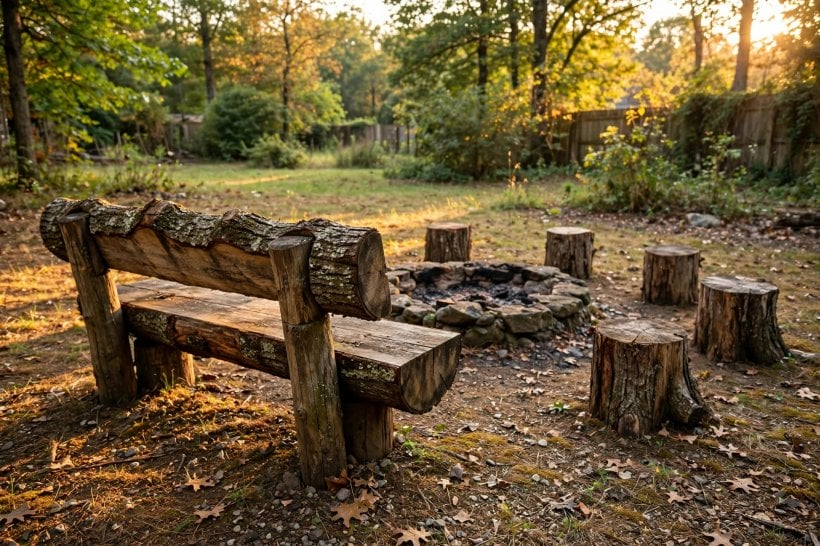
Benches are the circle’s long seats, and the build is the half-log bench: a 5–6 ft half-log on legs, seating 3. At the fireside the bench runs lower than its dining version — the fireside lounger sits at 14–16″ height, a lean-back posture for long evenings rather than a sit-up posture for meals. The full build — the rip, the legs, the leveling — is the rustic log cabin bench guide’s own project, and a bench built to that standard will outlast the stumps around it by rotations.
Placement is a distance and a direction. The distance is 4–6 ft from the fire’s edge — the heat zone the original calls the radiant sweet spot, close enough for warmth, far enough for comfort. The direction is the windward side: benches take the smoke-free seats, the premium real estate the siting reading in §2 identified, while boulders and stumps complete the circle on the other sides. Seating hierarchy is simply honesty about smoke — the longest seats, where people settle for hours, belong where the air is clearest.
The backrest is the detail that transforms long evenings: a log behind the bench, a horizontal log on posts at 30″, giving sitters something to lean against. A backless bench is a perch; a backed bench is a seat people stay in. Between the backrest, the windward placement and the 4–6 ft distance, the bench side of the circle becomes the settled side — the place the evening’s conversation anchors — while the boulders and stumps around the rest of the ring take the comings and goings.
6. The Ground: The Gravel Circle Floor
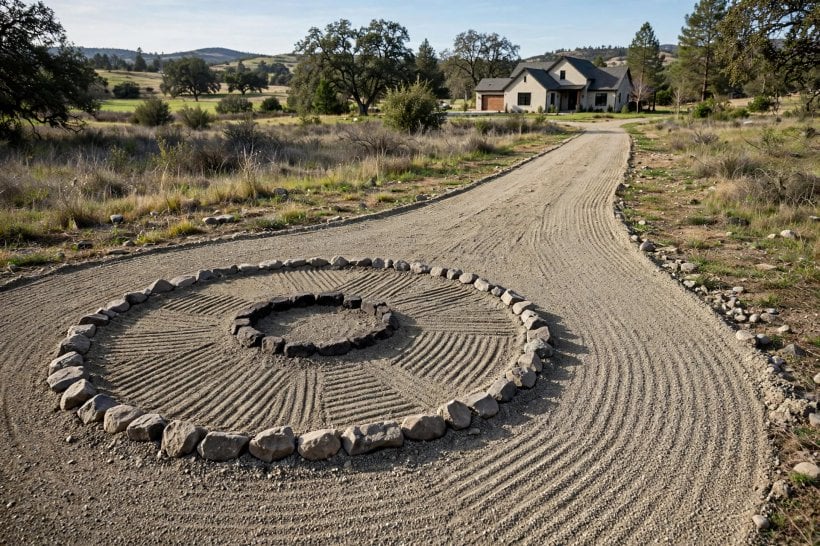
The floor is the surface the whole circle stands on: 10–12 ft diameter of gravel or decomposed granite, 3″ deep. The original calls it the spark-proof floor, and that is its first job — embers land harmlessly on stone and grit where they would smoulder in anything organic. Its second job is definition: a border of a stone ring or steel edging contains the gravel and draws the defined circle, the boundary between the gathering space and the lawn beyond it.
Drainage is built into the surface as a slight crown, so water sheets off instead of ponding — the fire circle shouldn’t pond, because a flooded floor ends more evenings than rain does. Around the circle, the transitions complete the space: a gravel path from the house is the arrival, and landscape lighting along it makes the nighttime journey part of the ritual. The path itself — its excavation, base and borders — is built to the standard of the gravel path with rock borders guide, the same permeable construction at walking scale.
The section’s hard rule is a prohibition: never bark mulch near the fire. The original states the equation bluntly — ember plus bark — and the boundary it draws is gravel only within 10 ft. Inside that radius the floor is mineral, without exception: no bark, no peat, no organic mulch of any kind under or around the seats. The gravel circle is therefore not a style choice with a safety benefit; it is a safety surface that happens to look like the mountainside the boulders came from.
7. Comfort and Ambiance: Blankets, Tables, Light and the Wood Store
Comfort is what turns a fire circle into an evening, and the original’s first detail is textiles: wool blankets in a weatherproof box — the fireside luxury. The box matters as much as the blankets; stored at the circle, dry and ready, they extend the evening an hour past the point where the cold would otherwise call it. A gathering space that asks nothing to be carried out is a gathering space that gets used on impulse, which is most of the point of building it in permanent materials.
Side tables solve the circle’s oldest problem — where the drink goes. The answer is stump tables between the seats, the hollowed stump of §4 among them, until every other seat has a surface beside it. Lighting stays low and warm: string lights overhead or path lights at the edges, never floodlights, because the fire is the star and every other light is supporting cast. Wood storage completes the working details: the log store within 20 ft, covered — the evening’s fuel at hand without a trek to a distant pile in the dark. And cooking brings the section home: a hinged grill grate over the pit turns the fire into the kitchen, and the marshmallow fork set is, in the original’s verdict, the non-negotiable.
8. Safety and Regulations: The Serious Part
The serious part starts overhead: 10 ft of vertical clearance, no branches above the pit, because the spark column rises straight and what it reaches, it can light. The extinguishing kit is a trio — water, shovel and extinguisher — kept within 25 ft, always: the responsible fire is the one whose ending is already staged before it is lit. These are the original’s numbers, kept exactly, because safety figures are not the place for a paraphrase.
Burn bans are the absolute: respect them, and check before every burn in dry season — the penalty is the fine plus the wildfire risk, and no evening around a fire is priced in either currency. Children get the 3-ft rule: kids stay behind the 3-ft line, the painted stone circle, the boundary they understand — a rule drawn in paint on stone works because a child can see it, unlike an instruction repeated into the dark. The three nevers close the commandments: never leave a fire unattended, never burn treated wood, never use accelerants. And the paperwork gets one line: tell your insurer — some policies have fire-pit clauses, and learning yours is the 5-minute call. Regulations, like clearances, are part of the build; a circle that ignores them is unfinished no matter how well it sits.
9. The Circle in the Wider Landscape
A fire circle does not sit in isolation; it is the anchor room of the outdoor space, and its stone language should match the ground around it. The boulders that seat the gathering are the same anchors, at sitting scale, that organise the rockscape ideas for small yards — hero stones placed first, smaller stone flowing between them — so a circle built beside a rockscape reads as one composition rather than two projects. The gravel floor’s pale, mineral surface is likewise the ground plane of the alpine rock garden, where stone is both mulch and structure; the two spaces share a palette because they share a logic.
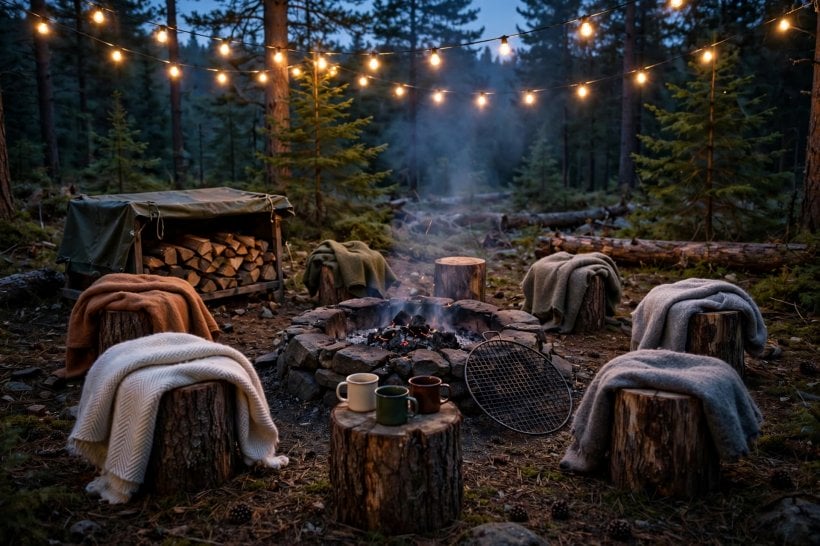
On a sloping lot, the circle asks for level ground first — a fire ring and five boulders cannot share a hillside — and the level pad it stands on is held by the same dry-stack craft as the natural rock retaining wall, stone seated into the slope so the flat ground it creates stays flat. Orientation still rules the whole composition, as it did in §3: the broken circle faces the view, the premium seats take the sunset side, and the entry gap — the threshold — aligns with the path from the house. A fire circle composed this way is not furniture placed outdoors; it is a room whose walls are sightlines and whose ceiling is the clearance the sparks are allowed.
10. Keeping the Circle: Stone, Stumps and Gravel Over the Years
The circle’s maintenance is inspection, not renovation, because its materials fail slowly and announce themselves. The boulder that starts to wobble gets the 2-minute shim again — crushed stone under the low side — caught while it is still a shim and not yet a re-set. The gravel floor is walked after storms: the crown still shedding water, the surface still at its depth, the border ring still holding the gravel inside the line the fire requires. None of this is a project; it is a look, taken on the way to lighting the fire.
The stumps carry the calendar. Each one is checked as the seasons turn — a base softening where it meets its gravel pad is a stump entering its rotation — and when its 5–10 years are spent, it is replaced and the old one joins the wood store it once stood beside. The safety kit is part of the same habit: the water, shovel and extinguisher confirmed within their 25 ft, the overhead growth checked against the 10 ft of vertical clearance, the blanket box dry. A circle kept this way never needs rebuilding; it only needs noticing, which is the entire maintenance philosophy of furniture made from stone and tree trunks.
Final Considerations
Site it safe — 10 ft from everything burnable — ring it in stone, seat it with buried boulders and leveled stumps at 16–18″, floor it in gravel, light it low, stock the wood close, and respect the burn bans. The fire circle is humanity’s oldest room: build it from the land’s own stone and timber, and every evening becomes a small ceremony. Nothing in the space asks to be stored, folded or forgiven — it waits, solid and level, for the next fire.




0 Comments