

A black house turns heads on every street it stands on — and then, a season later, something subtler happens: it starts to look inevitable, as if the house had simply been waiting for its colour. Black is the exterior colour of shape. It strips a facade down to silhouette, shadow and proportion, and in exchange for that drama it asks only for good partners: warm wood, crisp trim, green planting and honest light.
This post stays with the colour itself: all-black schemes, black with timber and stone, the monochrome pairing with white, and the practical truth about heat, fading and care — stated generally, because black rewards honesty as much as boldness.
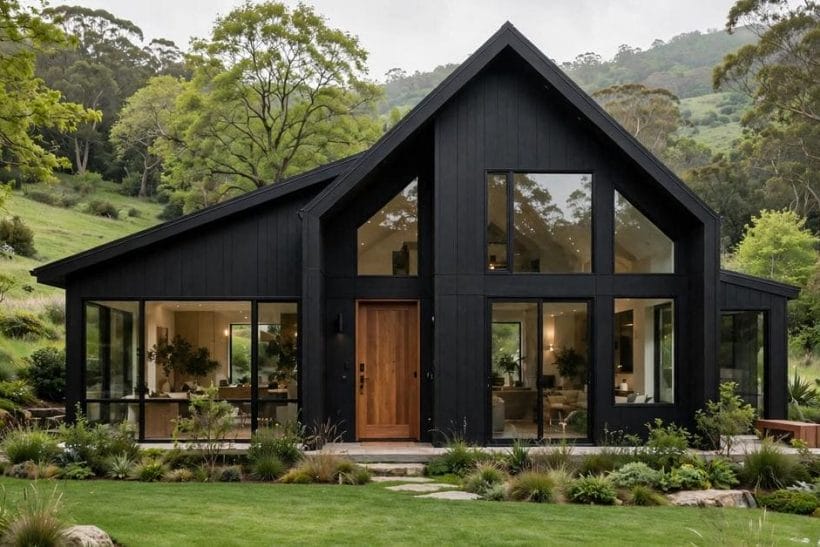
1. Black Exteriors at a Glance
Scope first. This post owns one colour: black, on the outside of the house. The neighbouring reading lives elsewhere on the site: white exterior home ideas, its monochrome partner (the two posts are designed as a pair), and black roof houses, where black stays on the roof and leads the colour pairing from above — that split is deliberate. Here, black is the wall colour, and everything else serves it.
One rule governs the whole post: black shows shape, not detail. Cladding rhythm, window placement and roofline carry a black house; ornament disappears into it. Choose black for a house whose form deserves the spotlight — or give it form with the cladding choices below.
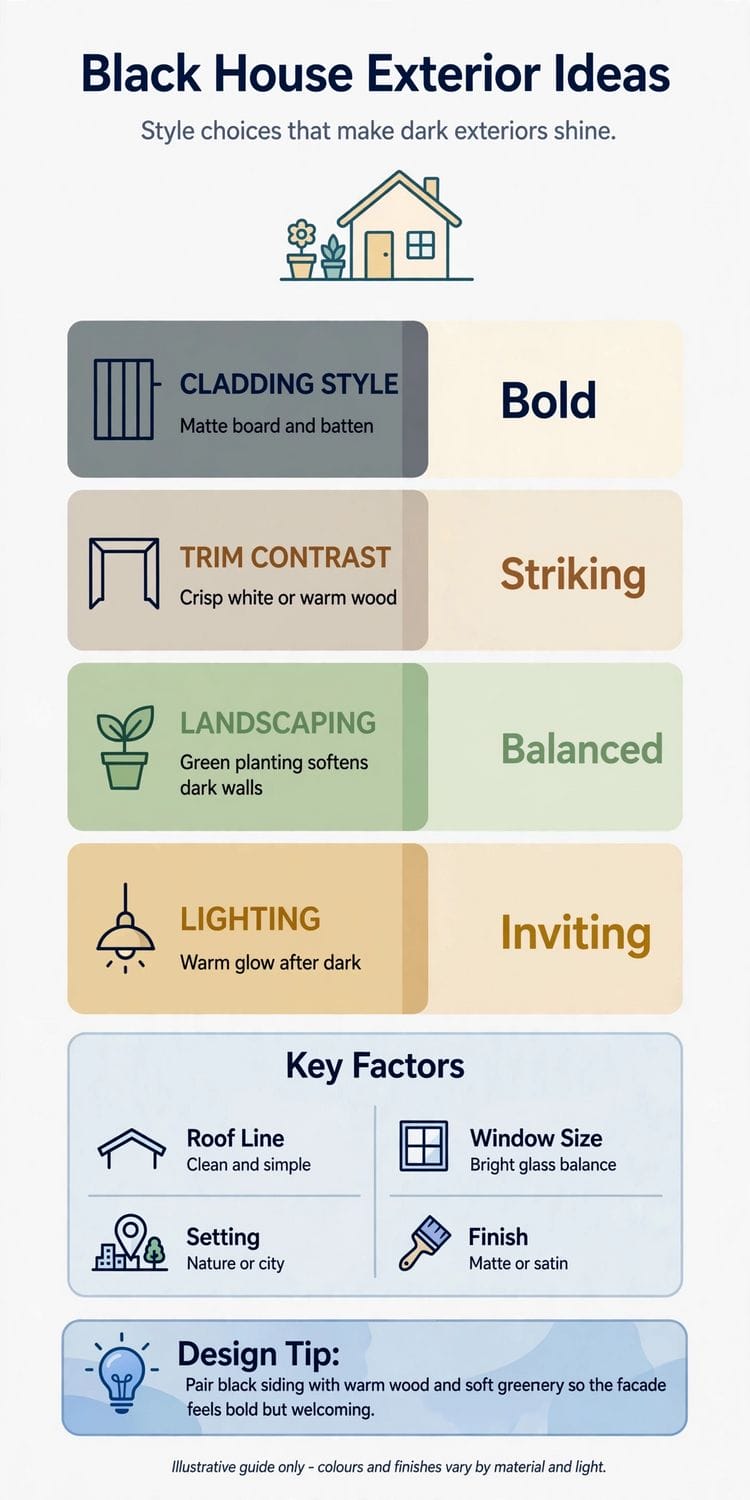
| Element | Character | What it means |
|---|---|---|
| Cladding Style | Bold | Matte board and batten is the signature look |
| Trim Contrast | Striking | Crisp white or warm wood against the dark |
| Landscaping | Balanced | Green planting softens dark walls |
| Lighting | Inviting | Warm glow after dark makes black welcoming |
2. Why Black Works
1. Silhouette is the luxury
Expensive-looking houses are usually the ones with confident shapes. Black deletes visual noise — joints, shadows between boards, minor imperfections — and leaves pure form. A simple house in black reads as designed; the same house in a mid-tone can read as merely built.
2. The landscape becomes the colour
A black facade is a backdrop: green lawns look greener, flowering shrubs perform, autumn trees ignite against it. Owners of black houses consistently find they have designed a garden gallery — the house is the frame, the planting is the picture.
3. It recedes instead of shouting
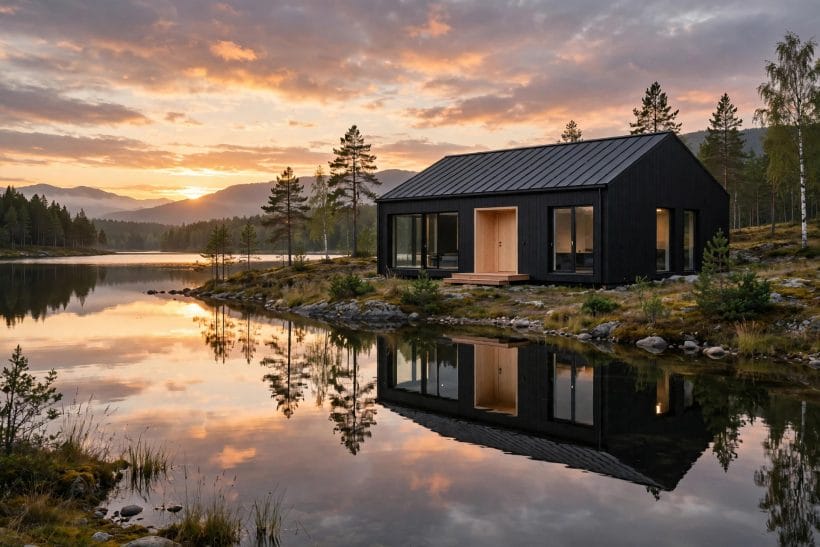
Counterintuitively, black houses often sit quieter in wooded or rural settings than white ones, which glare out of the trees. Against dark foliage and shadowed ground, black belongs — which is why the colour has centuries of history in Scandinavian and Japanese building.
4. One colour, every style
Farmhouse, barn, cottage, modern box, traditional gabled family house — black flatters each by simplifying it. Few exterior colours are as style-agnostic, because few others work purely through shape and shadow.
5. It makes small houses feel deliberate
A small house in a light colour can look apologetic; in black it looks like a jewel box — a cabin, a studio, a tiny guest house with intent. For the small-house world this site serves, black is the great dignifier.
6. Windows become lanterns
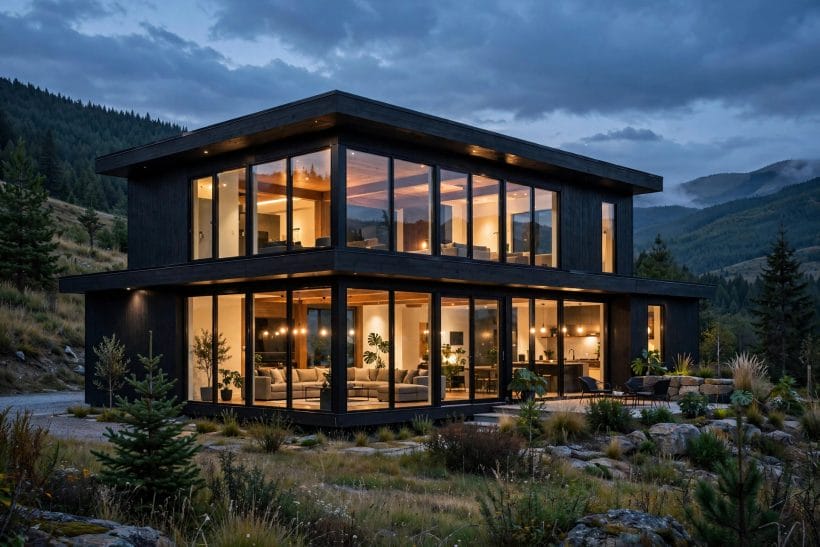
After dark, lit windows in a black facade glow like lanterns in a forest. The evening effect is the colour’s secret weapon — the house looks warmest exactly when its owners are home to enjoy it.
7. Dirt, honestly assessed
Black hides soil splash and shadow grime better than white, but shows pale dust and pollen more. Neither colour is “low maintenance” in the round; black simply trades one set of visible marks for another, and matte finishes are kinder than glossy ones.
8. The resale question
Black polarises: some buyers pass, others fall instantly. In design-conscious markets the black house is often the memorable listing on the street — but it is a choice to make for your own years in the house first, and the market second.
9. Black among the dark colours
Charcoal, near-black green and deep bronze are black’s softer cousins, and the siding they wear matters as much as the shade. The site’s clapboard exterior ideas show the classic horizontal version of the dark-timber story this post tells in black.
3. All-Black Schemes
10. Black on black: walls and roof
The full statement — black walls under a black roof — turns a house into a single sculptural volume. It asks for a strong shape and rewards one; on a weak shape it merely makes a bigger shadow. Keep the landscaping bright and the path lighting warm.
11. Matte is the modern black
The infographic names the signature: matte board and batten. Flat black absorbs light evenly, hides surface variation and gives the colour its contemporary softness. Glossy black is a different, more formal animal — striking on doors and trim, demanding on whole walls.
12. Board and batten in black
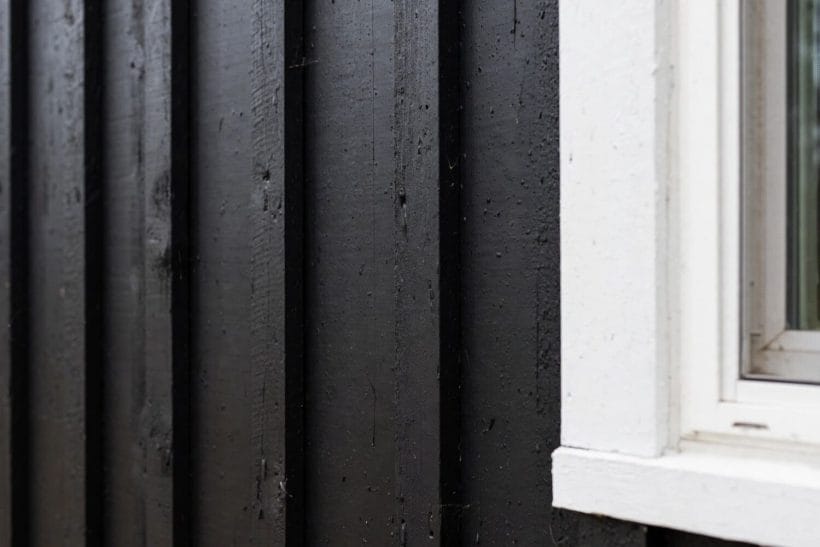
Vertical boards with narrow battens give black walls a gentle rhythm of shadow lines — the texture black needs to avoid flatness. It is the cladding of barns and Scandinavian houses, and the most forgiving way to wear the colour.
13. Black clapboard: the horizontal classic
Horizontal siding in black reads more traditional and more tailored — shadow lines running level, trim doing the talking. It suits cottages, colonials and any house whose charm is in its proportions rather than its drama.
14. Black shingles and shakes
Shingle siding in black or near-black stain gives the colour texture at a smaller scale — softer than boards, almost fabric-like. It is lovely on gables and upper storeys, and it weathers into its setting with particular grace.
15. The black box: modern volumes
Flat-roofed, large-glazed modern houses wear black like a tailored suit. Panel siding or vertical battens, minimal trim, and glass doing the decoration — the scheme depends on perfect simplicity, so every junction has to earn its place.
16. Mixing black finishes on one house
Matte walls, satin trim, a gloss front door: subtle finish differences keep an all-black scheme from going flat. The eye reads finish changes on black the way it reads colour changes on lighter houses.
17. Black fences and outbuildings agree
Extend the colour to the fence, the shed and the garage and the whole plot composes: dark structures, bright garden. Black outbuildings recede behind planting in a way pale ones never do — a genuine landscape trick, not just a style.
18. When all-black is too much
On a house with fiddly, broken-up shapes, or one that stands in deep permanent shade, total black can gloom. The fix is not abandoning black — it is the partner schemes in the next three sections, each of which keeps black in charge and lets something else carry the light.
A material note before the partner schemes: black reads differently on every cladding it touches. On smooth render it is a flat graphic field; on boards it gains shadow rhythm; on shingles it turns almost textile; on metal panels it becomes architecture. When you fall for a photograph of a black house, name the cladding in the photograph before you name the colour — half of what you are loving is the material, and your own house must supply that half honestly.
4. Black With Natural Timber
19. The warm wood front door
The single most effective accent on a black house: a natural timber door, glowing like a hearth in the dark facade. The feature photograph’s scheme — black boards, big glass, one beautiful wooden door — is the colour’s portrait for a reason.
20. Cedar accents and screens
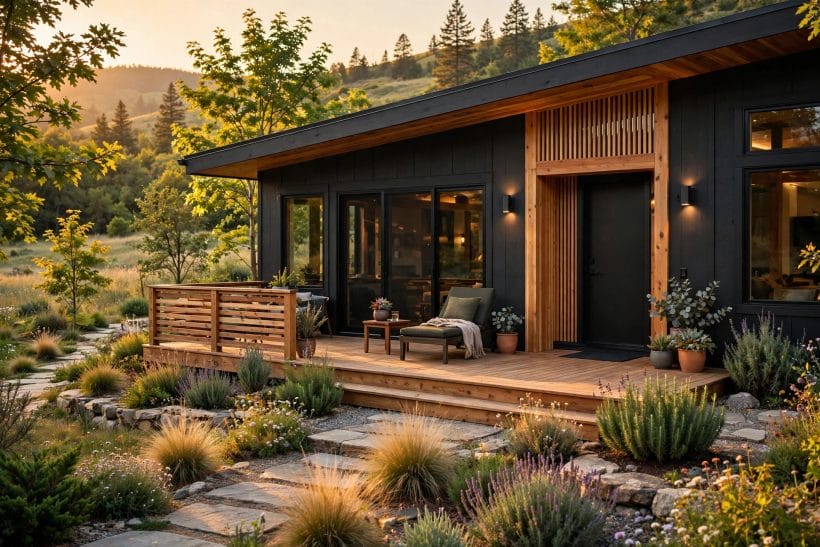
A cedar screen, a timber-lined porch ceiling or a wood-slat fence section warms black exactly where people approach the house. Cedar and black share a modern-Scandinavian accent, and the pairing never seems to date.
21. Timber gables on black walls
A natural-wood gable triangle above black walls crowns the house with warmth and draws the eye up. Stained to silver, the same gable turns the scheme cooler and more coastal — one decision, two climates of mood.
22. The wood-lined entry
Line the porch — ceiling, floor, one wall — in warm timber and the black house gains a glowing threshold. Entries are where black most needs softening, and wood does it without breaking the material palette.
23. Decks and steps in warm wood
A natural timber deck against black siding repeats the door’s warmth at ground level and keeps the transition from garden to house gentle. Keep the deck’s own colour story in mind — the silvered-deck and the red-deck versions flatter black differently.
24. Matching the wood’s undertone
Golden woods (cedar, pine, teak tones) make black feel warm and Scandinavian; dark woods (walnut tones) make it feel moody and tailored; grey-weathered woods make it feel coastal. Pick the undertone first — it sets the whole scheme’s temperature.
25. Wood where hands land
Handrails, bench seats by the door, the gate: put timber where the body touches the house, and black’s severity becomes hospitality. It is the same focal-touch principle that governs good entries everywhere.
26. Shou-sugi and charred finishes
Charred-timber cladding is black made FROM wood — a traditional Japanese finish with a crackled, light-catching surface. It belongs in this family rather than with paints: black with grain still moving inside it, and a story to tell at the door.
27. How much wood is enough?
One strong gesture — door and porch ceiling, say — usually suffices. Wood everywhere dissolves the black scheme into a brown one; the drama lives in the restraint. Add the second gesture only where the facade is genuinely large.
5. Black and White: The Monochrome Pair
28. White trim, the classic contrast
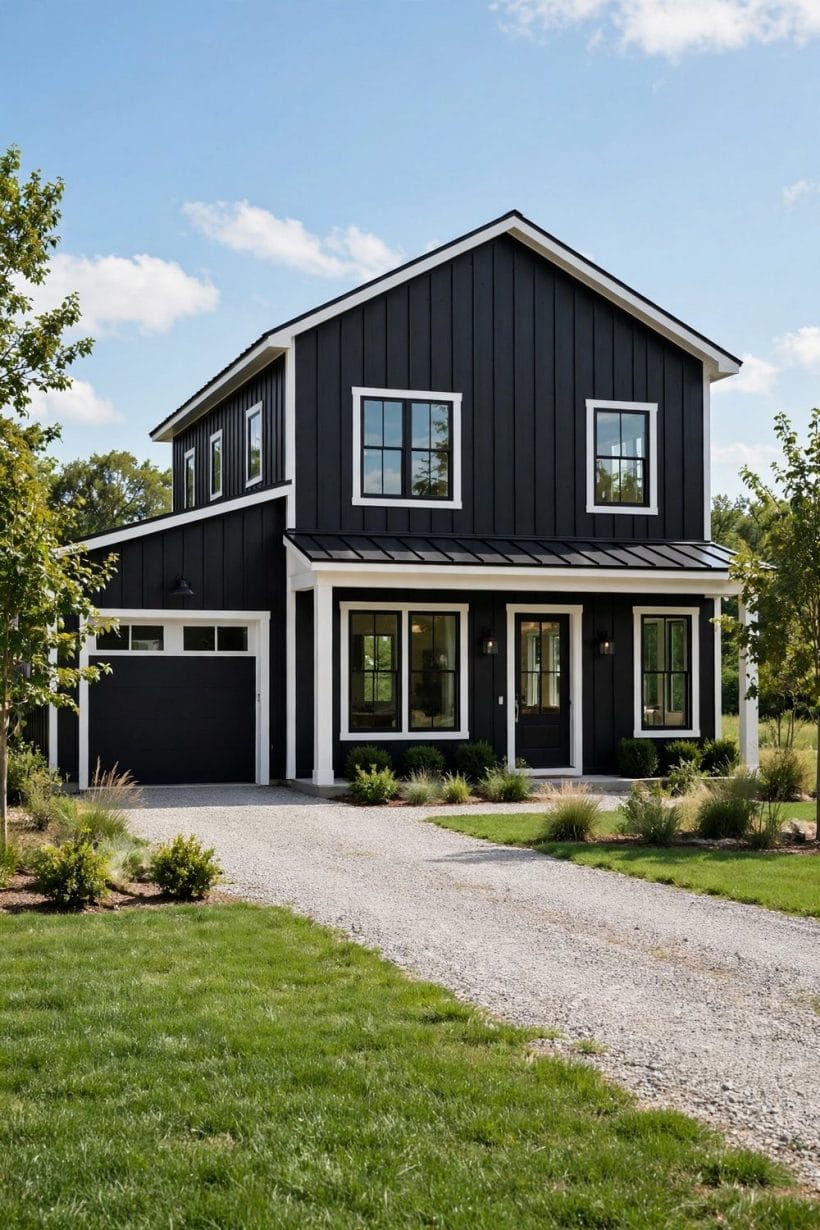
Crisp white window frames, corner boards and eaves against black walls is the sharpest traditional scheme in the book — farmhouses and barns have worn it for centuries. It makes every opening read clearly and gives the house its tailored edge.
29. The reverse house
This post’s pair post covers the mirror image — white walls, black trim and roof — and the two schemes are worth comparing before choosing, because they suit different houses: black walls favour strong shapes, white walls favour detailed ones. Read white exterior home ideas alongside this section and decide as a pair.
30. Black walls, white roofline details
White fascia, soffits and gutters trace the roofline like piping on a jacket — a small amount of white placed exactly where the silhouette needs defining. On simple gabled houses the effect is quietly graphic.
31. White doors and garage doors
A white front door in a black wall is a bold, almost modernist move — brighter than wood, cooler in mood. It suits houses with white trim elsewhere; as the ONLY white note it can look like a mistake at the dry cleaner’s.
32. Black and white with grey between
Introduce a mid-grey — stone, render or a grey roof — and the harsh contrast softens into a gradient. This three-tone scheme is the easiest black palette to live with in bright, high-glare climates.
33. Checkerboard farmyards
On rural plots, a black house with white-fenced paddocks and a white barn (or the reverse) gives the whole holding a designed, almost storybook order. The trick scales from a cottage garden to a small farm.
34. Window colour is a scheme decision
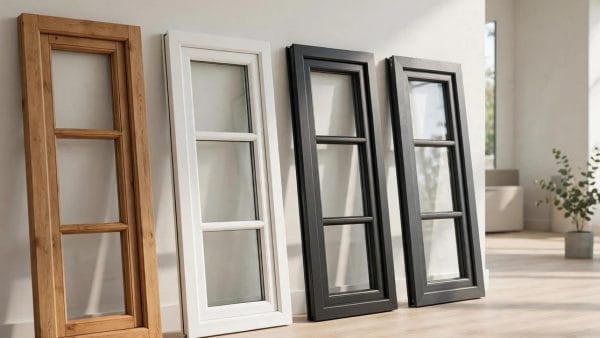
Black window frames disappear into black walls — the glass becomes the feature. White frames draw a grid of light rectangles. Neither is wrong; they are different houses. Decide the frames with the cladding, never after.
35. Monochrome with one accent
The disciplined flourish: a black-and-white house with exactly one coloured note — a red door, a copper light, a blue bench. Because the field is monochrome, the single note carries enormous charm, and it can change with the seasons.
36. Interiors looking out
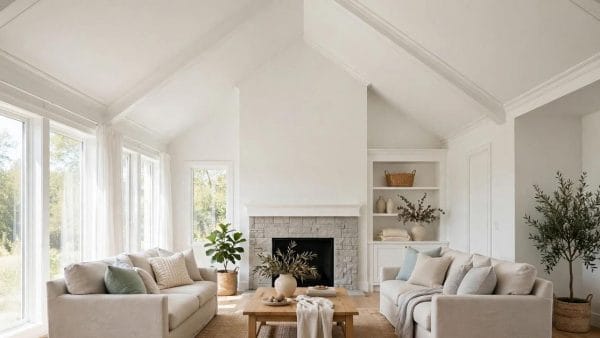
Remember the view FROM the house: black window frames turn every view into a framed print, while white frames lighten interior walls. The monochrome decision is one of the few exterior choices you will also live with from your sofa.
6. Black With Brick, Stone and Metal
37. Black above stone
A stone ground floor with black cladding above is the contemporary-classic section: the stone grounds the house, the black keeps it sharp. It borrows the oldest arrangement in masonry and dresses it in the newest colour.
38. Black with red brick
Black trim, black upper storeys or a black extension against existing red brick is how older brick houses go modern without a fight: the brick supplies the warmth, the black supplies the editing. The site’s brick-and-stone combination post tells the masonry side of this family story.
39. Black metal roofing accents
A black standing-seam metal roof over any wall colour is the gateway version of this post’s colour — and over black walls it completes the sculptural volume. Metal’s crisp seams suit black’s shape-first logic beautifully.
40. Galvanised and zinc details
Silver-grey metals — zinc gutters, galvanised planters, steel handrails — give black a cool industrial glint and weather to a soft matte that agrees with matte cladding. A restrained, very liveable palette.
41. Copper and corten warmth
Copper (which will green with age) and rust-toned corten steel are black’s warm metallic partners. One corten planter wall or a copper light fitting against black boards is enough — these are jewellery materials, dosed like jewellery.
42. Black render and stucco
Smooth render in black reads more urban and more minimal than any board — the colour of city townhouses and gallery-like modern homes. It shows every imperfection of the surface beneath, so the substrate and the craftsman matter enormously.
43. Black brick
Glazed or stained black brick gives the colour real masonry permanence with a subtle unit rhythm — the most formal way to wear black, and the one that suits symmetrical, traditional shapes best.
44. Concrete and black
Board-marked or smooth concrete with black cladding and black frames is the industrial register of the family — honest, heavy, gallery-calm. Planting must work harder here; green is what keeps the scheme from severity.
45. Mixed siding, edited in black
Two sidings both in black — boards below, shingles above; panels beside battens — give texture without colour noise. It is the monochrome version of the mixed siding idea: the mix is in the material, not the palette.
7. Roofs, Trim and Windows
46. The roof that continues the walls
Black roof, black walls: one volume (covered in the all-black section, and led from the roof’s side by the black roof pair post). Here the trim question dominates: with roof and walls unified, fascia and gutters in the same black keep the silhouette cleanest.
47. A contrasting roof over black walls
A grey, silver-metal or pale roof over black walls draws a deliberate line at the eaves — the house reads as a dark body with a light hat. It suits houses whose roof is a big part of their charm, and in hot climates it carries a practical argument too.
48. Eaves, soffits and the shadow line
Deep eaves over black walls throw strong shadow lines that are part of the architecture. Keep soffits black for the monolith, or paint them pale to bounce light into the rooms below — an old porch trick that still works.
49. Gutters and downpipes disappear
In black, rainwater goods vanish against black walls — one of the colour’s practical kindnesses. Resist the urge to make them a feature; the disappearing act is worth more than the accent.
50. Big glass in black walls
Generous windows are black’s best friend and the infographic’s Key Factor: bright glass balances dark walls, and the reflections give the facade a daytime life that paint alone cannot. If your house has small windows, black will make them look smaller — plan accordingly.
51. Small windows, handled honestly
On a small-windowed house, lighten the surrounds — pale frames or a contrasting trim ring — so the openings read as intentional punctuation rather than shrinkage. Or lean in: tiny windows in a black cottage wall can look storybook rather than mean.
52. Shutters and screens in black
On a black house, shutters are texture, not contrast — use them for the board rhythm and the shadow they cast. On pale-trimmed schemes, black shutters are the bridge that brings the dark note to the openings. The trim materials themselves are compared in the site’s exterior trim materials explainer.
53. The front door decision
Wood for warmth, white for graphic pop, a single brave colour for charm, black for the full monolith. The door is the one place every scheme must make its choice explicitly — and the cheapest part of the whole facade to repaint if the choice ever changes.
54. House numbers, lights and hardware
On black walls, brass and copper house numbers and fittings glow like jewellery; black-on-black hardware disappears (choose it deliberately or not at all). These fingertip details are where a black house proves it was designed, not just painted.
8. Black in the Landscape
55. Green is black’s first partner
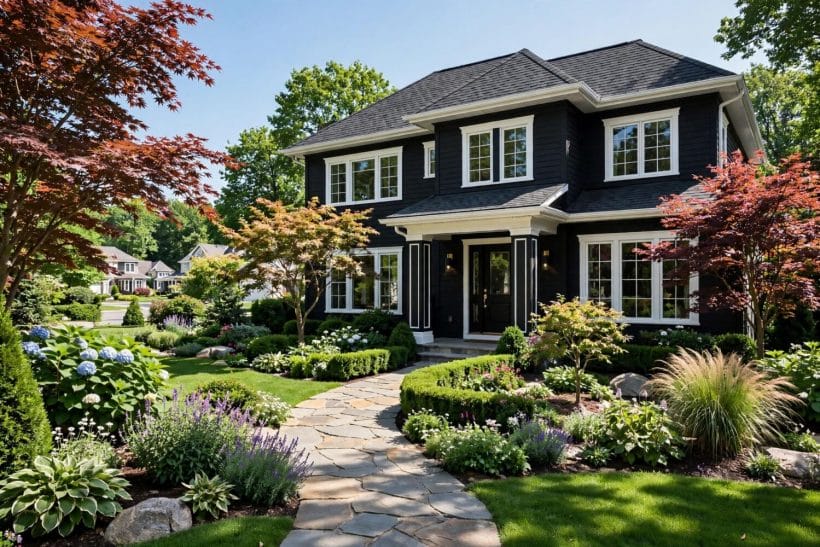
The infographic’s balanced note: green planting softens dark walls. Lawns, hedges and trees against black look more saturated, more deliberate — the garden and the house design each other. Budget for planting as part of the black scheme, not as an afterthought.
56. The wooded plot
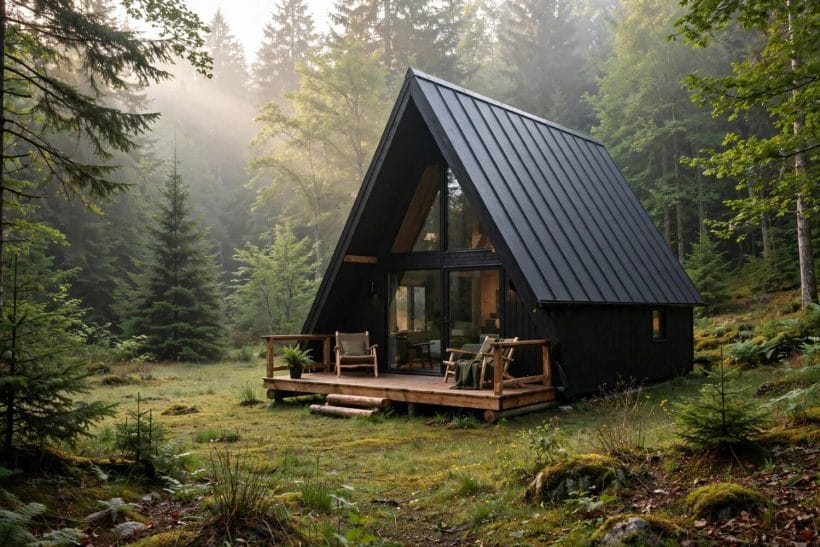
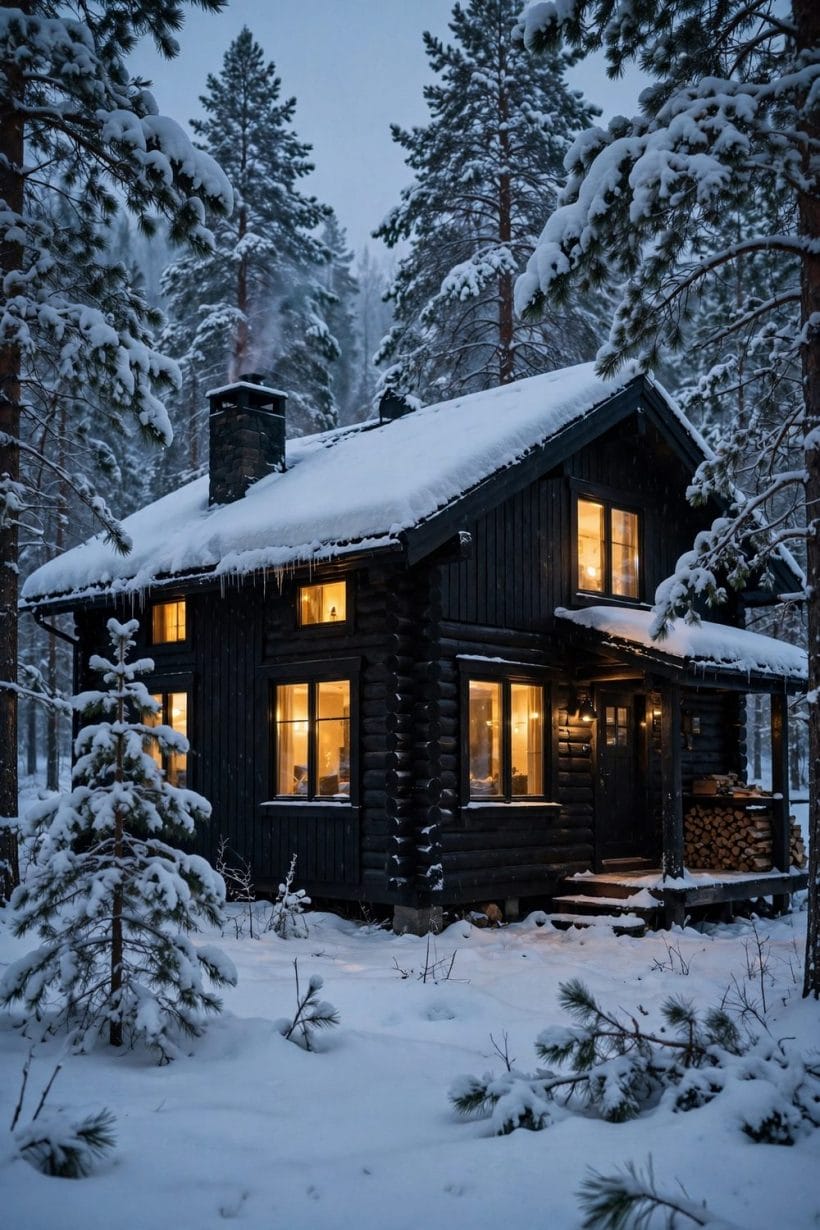
Among trees, black is camouflage and elegance at once. A black cabin or house in a wood reads as a shadow with windows — present in winter, half-vanished in summer leaf. It is the setting where the colour feels least like a statement and most like a home.
57. The open, sunny plot
On a bare, bright plot the black house stands in full graphic exposure — magnificent if the shape is good and the landscaping is planned, stark if either is missing. Pale gravel, light paving and structured planting are the sunny plot’s softeners.
58. Coastal black
Black weatherboard against sea light and dune grasses is a maritime classic in several countries at once. Silvered wood accents, galvanised details and tough planting complete the register — and salt air argues for the best paint system you can give it.
59. Desert and dry-country black
Against pale earth and stone, a black house is a bold sculpture — and the scheme where the heat discussion below matters most. Deep porches, shade structures and pale roofs are the dry-country black house’s traditional answers, all of them also beautiful.
60. Lighting the black house
Warm light, low and grazing: path lights that skim the cladding’s texture, a lantern at the door, one tree uplit behind the house. Cold white floodlighting murders black’s mood; candle-warm light is what turns the dark facade into the inviting one the infographic promises.
61. Paths and drives in pale materials
A pale gravel path or light stone terrace leads the eye and the visitor to a black house like a ribbon. The contrast at ground level also keeps the house visually afloat on dark evenings.
62. Fences, gates and the approach
A black fence in front of a black house extends the composition to the plot’s edge; a timber gate in it repeats the door’s warmth. The approach sequence — fence, gate, path, porch, door — is the black house’s opening paragraph.
63. Snow country
Against snow, a black house is a woodcut — the most graphic winter image a house can make, with smoke from the chimney as the final line. If your winters are long and white, black gives the dark months a beautiful object.
9. Heat, Fading and Honest Care
64. The heat truth, stated plainly
Dark surfaces absorb more sun and run hotter than pale ones — that is physics, and black cladding will be warmer to the touch and will ask more of the wall’s ventilation and the rooms’ cooling than white would. Modern siding systems and good insulation manage much of this, but go in with eyes open, especially in hot climates.
65. Fading and chalking
Black shows fading and surface chalking more honestly than colours do — a tired black is visibly grey-black. Quality exterior paints and stains in deep bases are formulated for exactly this; the colour is a place to buy the maker’s best line, not their cheapest.
66. Matte hides, satin reveals
Matte finishes forgive surface flaws and age the most evenly, which is why they are the colour’s signature. Satin and gloss show every ripple of the boards beneath — choose them only on surfaces prepared to deserve them.
67. Touch-ups and repainting
Black is mercifully consistent to touch up — no complex colour matching, and small repairs disappear in matte finishes. Keep the product name and a labelled sample from painting day; future-you will be grateful.
68. Dust, pollen and water spots
Pale dust and spring pollen show on black as they never do on cream. A soft wash-down of the sun-facing walls once or twice a year is the honest maintenance entry — less than an hour’s work for the colour’s drama.
69. Wood movement in the sun
Timber cladding moves more under strong heat cycling; dark-stained wood asks for its finish to be maintained on the maker’s schedule to keep that movement graceful. South and west faces lead the maintenance calendar — plan to refresh them first.
70. Snow, shade and the north face
The north face of a black house stays damp longest and can grow algae films that pale walls hide no better — they merely show differently. A gentle wash and trimmed-back planting are the standing answers, here as on any colour.
71. Test the whole system
Paint a full board or a whole inconspicuous wall section — the shed is the classic test bed — and live with it through a hot week. Black is a system (colour + finish + material + aspect), and systems are tested whole.
72. The colour that improves with care
A well-kept black house at ten years looks sharper than a neglected house of any colour. The care is unglamorous — washing, touching up, keeping the best paint line — but black repays it more visibly than any colour on the chart.
10. Costs and Practical Details
73. What actually drives the cost
The colour itself is rarely the cost — it is the preparation and the product tier. Dark schemes justify premium exterior paints (better pigments, better UV behaviour), meticulous prep (black shows flaws), and sometimes a ventilation or insulation upgrade behind the cladding. Labour and product quality, not pigment, are the budget lines.
74. Permissions and neighbourhood rules
Some districts, estates and conservation areas regulate exterior colours, and black is the colour most likely to meet a rule. Check before you fall further in love; where black is refused on walls it is often allowed on trim, roofs and outbuildings — the partial schemes in this post exist partly for that reason. Existing houses changing TO black should also check what their cladding maker says about dark colours on their specific product.
75. The black house that lasts
Choose black for a house with a shape worth showing, give it warm wood, bright glass and green company, keep its finish matte and its maintenance honest — and the darkest colour on the chart becomes the warmest house on the street. The small-house versions of the same thinking run through the site’s tiny house exterior ideas.
Final Considerations
Black is not a risk; it is a decision — about shape over ornament, silhouette over detail, and a house that trusts its landscape to supply the colour. Make that decision with the partners in this post (timber for warmth, white for contrast, glass for light, green for softness) and black will not date, glower or overwhelm. It will simply look, year after year, like the house that was always meant to stand there.

0 Comments