

A kitchen cabinet quote looks like a number. It is actually a list — of boxes, doors, mechanisms, finishes and services — wearing a number as a coat. Learn to read the list, and the number stops being a mystery you either accept or fear, and becomes something you can question line by line.
This guide explains kitchen cabinet pricing in general terms: how a quote is built, which choices drive it, where upgrades and hidden lines hide, how to compare two quotes like-for-like, and the questions that protect you before you sign. No prices, no percentages — just the structure every quote is made of.
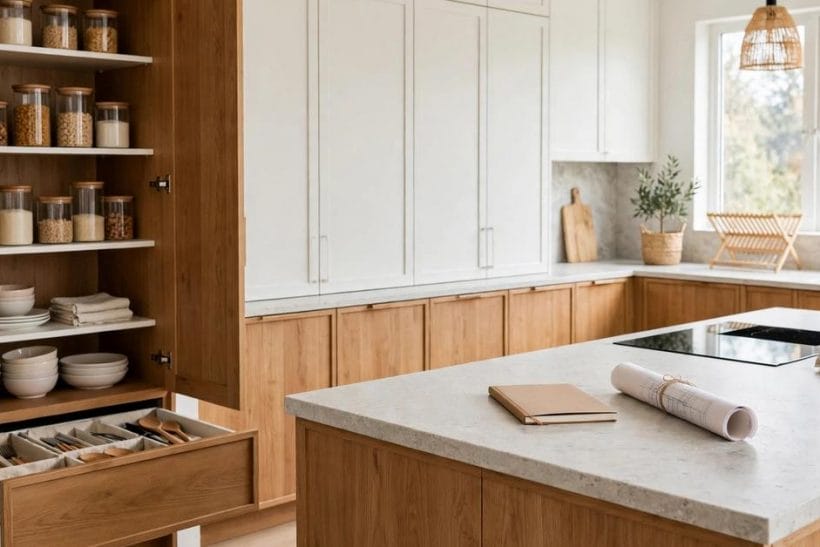
1. Kitchen Cabinet Pricing at a Glance
Scope first. This guide owns the money side of kitchen cabinets: how the price is assembled and how to read it. The physical side — judging the cabinet itself, its box construction, joinery, drawers, doors and finishes in the hand — is owned by kitchen cabinet quality guide, and the two guides split the subject deliberately: that one asks whether the cabinet is well made, this one asks what you are being charged for and why. Around them sit the wider kitchen survey in kitchen ideas, the same evidence-first approach applied to furniture in furniture quality check guide, and the partial-renovation routes in replacement cabinet fronts, replacing kitchen cabinet doors before and after and discontinued kitchen cabinets.
One discipline runs through the guide: a quote can only be judged against its specification. Two totals are meaningless until the lists beneath them match, so everything here works towards one skill — making sellers state, in writing, exactly what their number buys.
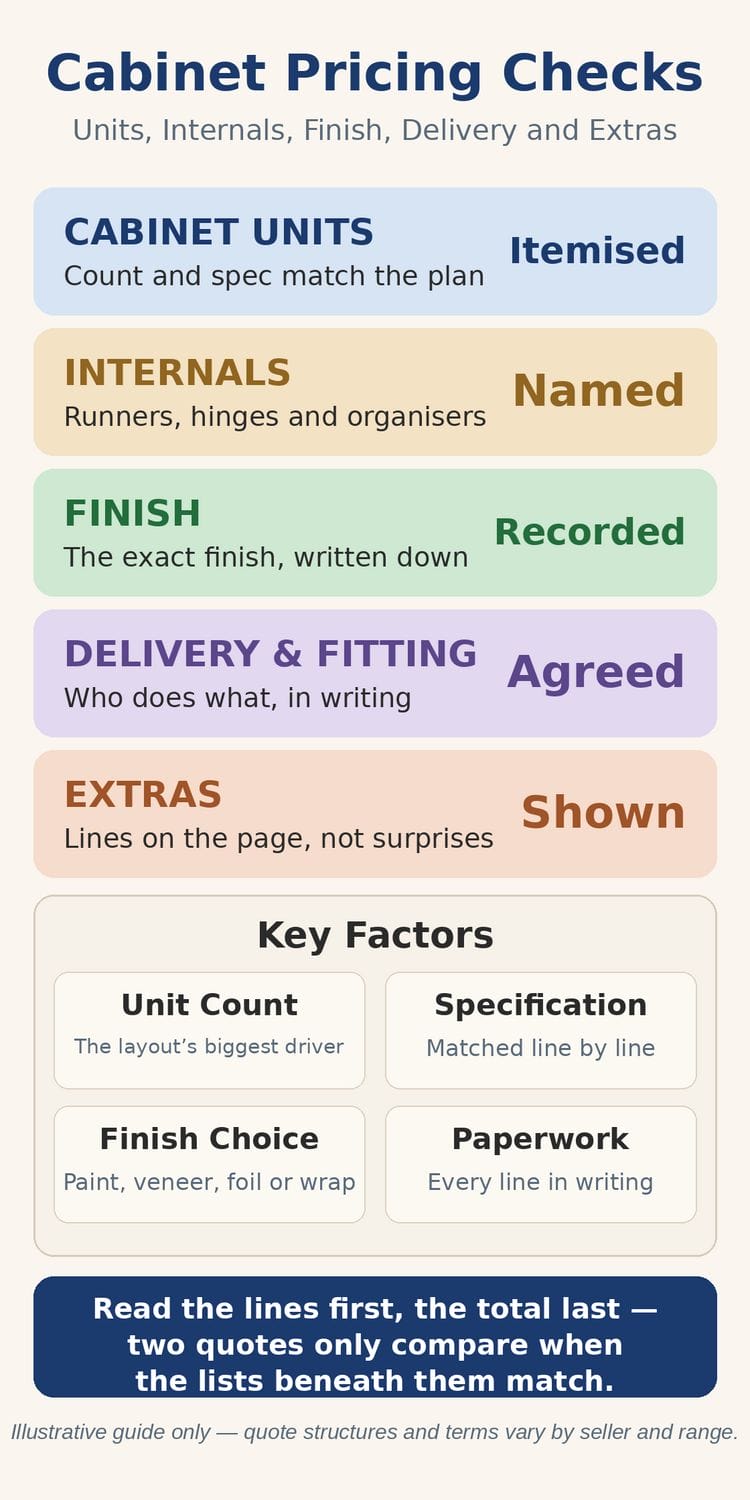
The tour follows the money: how a quote is built, the count and layout drivers, specialty units and internals, finishes and hardware, delivery and installation, comparing quotes, the specification sheet, deposits and ordering, and the final questions.
| Quote line | What it covers | What to check |
|---|---|---|
| Cabinet units | Boxes, doors and drawers as specified | Count and specification match the plan |
| Internals and hardware | Runners, hinges and organisers | Named in the spec, not just “included” |
| Finish | Paint, veneer, foil and handles | The exact finish written down |
| Delivery and installation | Transport, fitting and adjustment | Who does what, in writing |
| Extras | Removal, making good and fees | Present as lines, not surprises |
2. How a Cabinet Quote Is Built
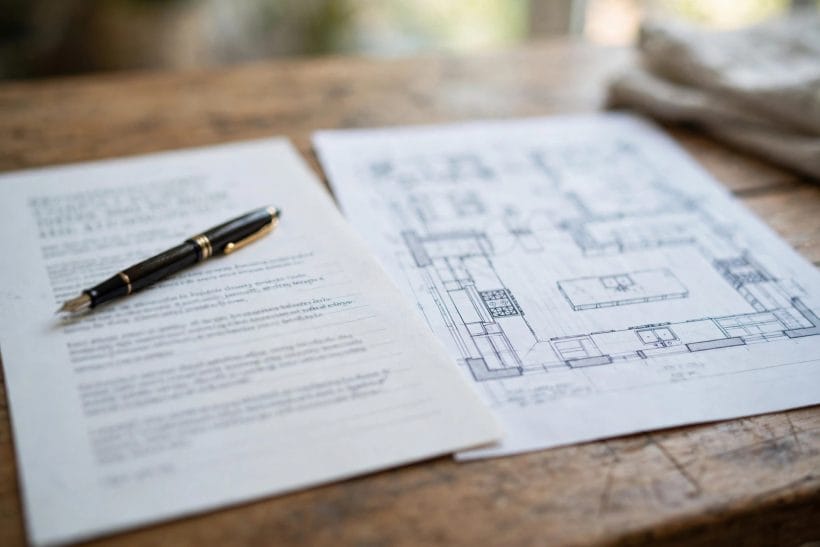
The opening gallery shows the document this whole guide is about. A quote is assembled from lines, and these first points teach the reading order: lines first, total last.
1. A quote is a list of lines, not a number
Every total is a sum of parts: units, fronts, mechanisms, finish, delivery, fitting and the rest. Read it the way it was built — line by line, asking what each line buys — and the total becomes the least interesting figure on the page. A seller who cannot or will not itemise is asking you to sign the coat without seeing the list.
2. Cabinets are counted per unit, not per kitchen
Quotes are assembled cabinet by cabinet: each base unit, wall unit and tall unit is its own line with its own specification. That is why two kitchens of identical size can be priced so differently — the count and the per-unit specification differ, and both are visible if you read the lines against the plan.
3. The plan and the quote must agree
The drawing and the quote are two descriptions of one kitchen, and they should match box for box. Count the units on the plan and find each one in the quote; anything drawn but not quoted will reappear later as an extra, and anything quoted but not drawn deserves a question now, not at delivery.
3. The Cabinet Count and Layout Drivers
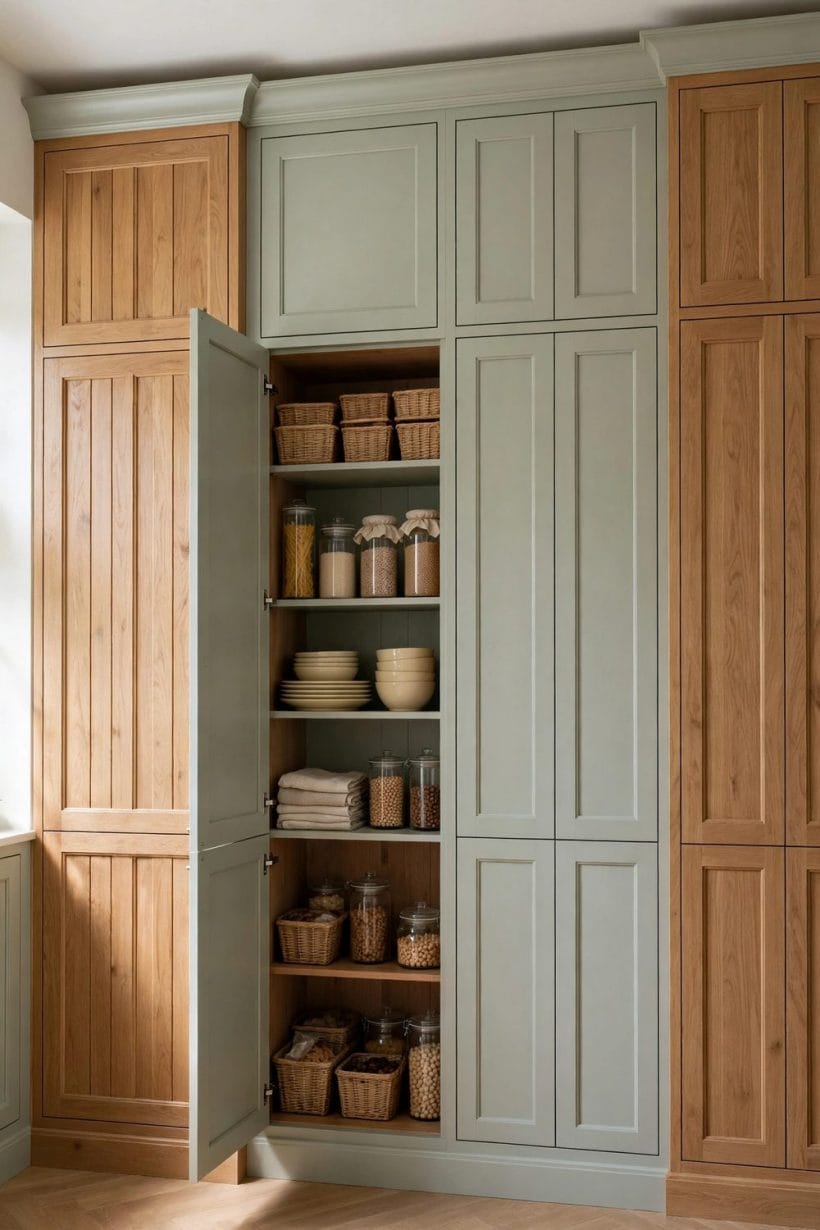
The pin opens the drivers section with the largest of them: how much cabinetry the layout contains. Before finishes or mechanisms enter the discussion, the plan itself has already decided most of the price.
4. The unit count is the biggest driver
More cabinets mean more material, more mechanisms and more fitting time, so the layout’s appetite is the quote’s foundation. A design that wraps cabinets around every wall will always out-price a leaner one in the same specification — which is why honest comparisons start by comparing counts, not totals.
5. Corners, fillers and end panels are lines too
The pieces nobody daydreams about still get priced: corner units and their mechanisms, filler pieces that close the gaps, and the finished end panels that make a run of cabinets look built-in. They are legitimate lines, but they should appear as lines — a quote that hides them inside a round total hides their cost as well.
6. Different unit types carry different weight
A tall larder unit, a wide drawer pack and a small wall cupboard are all “one cabinet” in conversation and three very different lines in a quote. When comparing layouts or sellers, compare type by type; a kitchen heavy in tall and specialty units is a different purchase from one of plain boxes at the same count.
4. Specialty Units and Internals
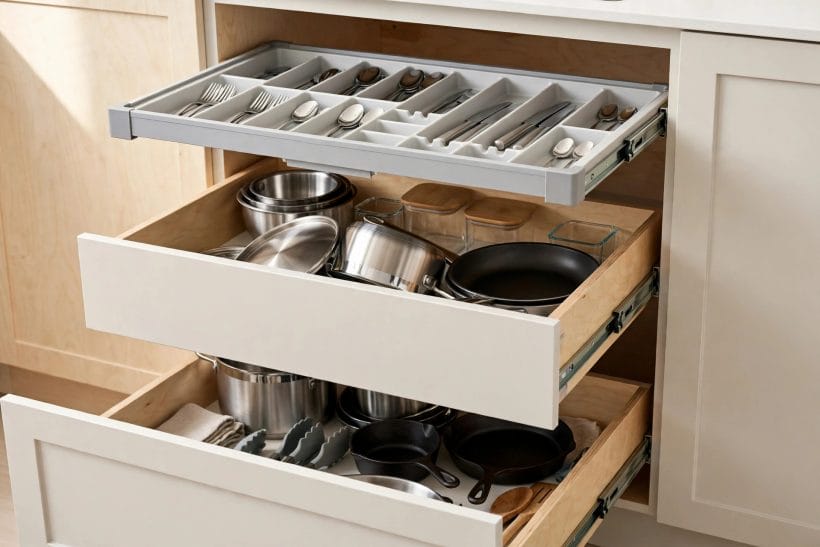
Gallery-2 shows where modern quotes grow: inside the boxes. Specialty units and internal fittings are the upgrade layer, and these points explain how they enter the price.
7. Specialty units price above plain boxes
A cabinet that does something — a corner solution that brings its contents forward, a pull-out larder, a bin unit that separates waste — carries mechanisms a plain cupboard does not, and it is priced accordingly. None of this is unreasonable; the check is simply that each specialty you are paying for is one you will actually use weekly.
8. Every drawer is a box plus its hardware
A drawer unit costs its cabinet, its drawer boxes and a set of runners per drawer, where a door unit needs hinges alone. Deep pan drawers earn their keep in most kitchens, but a wall of them is a deliberate purchase: count the drawers in the specification and you have counted a real slice of the quote.
9. Internals are specified or they are absent
Cutlery inserts, organisers, internal drawers behind doors, pull-out shelves — internals are the classic line that exists in the showroom conversation and evaporates from the paperwork. If an internal feature helped sell you the kitchen, find its name in the specification; if it is not written, it is not included.
5. Finish and Hardware: Where Upgrades Land
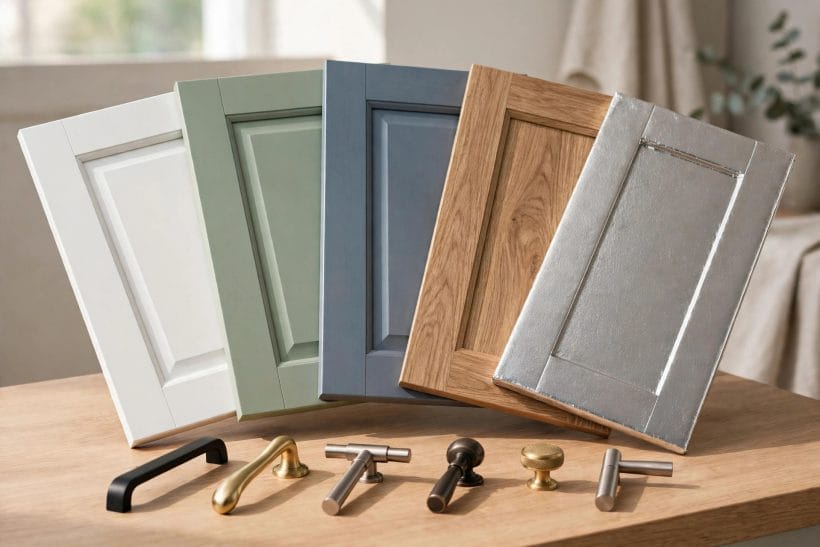
Gallery-3 gathers the visible upgrades. The same run of boxes can wear several finishes and handle sets at quite different prices, which makes this section of the quote the easiest to inflate and the most important to pin down.
10. Finish changes the price without changing a single box
Painted, veneered, foil-wrapped and solid-timber fronts over identical cabinets form a ladder of prices in most ranges, and moving one rung changes the total without changing the kitchen’s shape at all. When a quote surprises you, check which rung it assumes — finish is the quietest large number in the document.
11. Handles are a separate line more often than expected
Knobs and handles are commonly priced per piece, and a kitchen has more doors and drawers than intuition suggests. A premium handle chosen casually multiplies quietly across the whole run; confirm whether handles sit inside the unit prices or on their own line, and count them either way.
12. Plinths, pelmets and cornice are cabinetry too
The finishing timbers — the plinth at the floor, the pelmet under the wall units, the cornice above them — are priced as part of the cabinetry and vary with the range’s styling. They are small lines that complete the built-in look; a quote missing them may be missing the finished look as well.
6. Delivery, Installation and the Hidden Lines

Gallery-4 moves from the cabinets to the services around them. The gap between two quotes for identical cabinetry usually lives here, in what happens between the factory and the finished kitchen.
13. Delivery is a line, whether you see it or not
Cabinets travel as bulky, damage-prone freight, and somebody pays for that journey: either delivery stands as its own line, or its cost is folded into the units. Neither is wrong, but knowing which arrangement you have matters when something arrives damaged and the question of responsibility is asked.
14. Installation scope varies more than any other line
One fitter’s “installation” means hanging and levelling the units; another’s extends to connecting appliances, adjusting every door and disposing of the packaging. Two quotes with identical cabinetry diverge here more than anywhere else, so compare the verbs: what exactly will be done, by whom, and what is left to you or to other trades.
15. Removal and making good are the classic missing lines
The old kitchen must come out, its remains must go somewhere, and walls and floors behind it usually need attention before the new units sit well. Quotes that omit removal, disposal and making good are not cheaper — they are unfinished, and the missing work returns later at the least convenient moment, priced on the spot.
7. Reading Two Quotes Side by Side

Gallery-5 sets up the comparison this guide exists to teach. Two totals cannot be compared; two specifications can. These points give the method.
16. Align the specifications before the totals
Comparison begins by making the two offers describe the same kitchen: same units, same finish rung, same mechanisms and internals, same services. Until the specifications align, the totals are answers to different questions, and the lower one is not a saving — it is a shorter list you have not read yet.
17. Build a simple comparison grid
Draw the grid yourself: one row per quote line — each unit type, the finish, the internals, delivery, installation, removal — and one column per seller. Fill what each offers against every row. The empty cells in the grid are the most valuable information in the whole exercise, because each one is a question with a price attached.
18. A lower total usually means a shorter specification
When two sellers price the same cabinets and one total sits well below the other, the difference almost always lives in the specification: a finish rung lower, internals absent, installation narrower, removal missing. Find the missing lines and the mystery resolves — sometimes in the cheaper quote’s favour, sometimes not, but always in the open.
8. The Specification Sheet: Get It in Writing

The second pin turns to the document that outlives every showroom conversation. Memory drifts and sales staff change; the specification sheet is what the kitchen will actually be built from.
19. Every cabinet, finish and mechanism gets named
The specification should name each unit by type and size, the front style and finish, the handle, the runner and hinge types, and every internal fitting agreed. Vague entries — “units as discussed” — protect nobody. If a detail helped you choose, it belongs in the sheet by name.
20. Beware “or equivalent” and revision drift
Substitution clauses allow a seller to swap components for equivalents of their choosing, and a quote revised several times can quietly diverge from the drawing it prices. Check that the specification’s revision matches the plan’s revision, and ask what “equivalent” would mean for the finishes and mechanisms you care about most.
21. Changes after signing are variations — priced as such
Once the order is placed, every change — a unit swapped, a finish altered, an internal added — is a variation with its own price and its own effect on the schedule. Agree before signing how variations will be quoted and confirmed, in writing, so a small change of mind never becomes an open-ended one.
9. Deposits, Stages and Ordering Checks
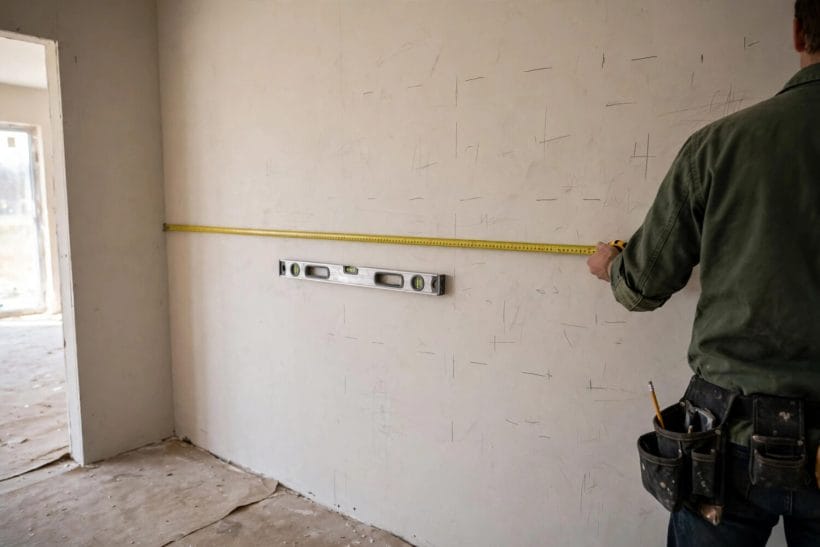
Gallery-6 shows the last check before manufacture: the final measure. These points cover the payment structure and the ordering sequence that stand between a signature and a kitchen.
22. Understand the payment schedule before the first payment
Cabinet orders commonly run on staged payments — a deposit at order, further stages as manufacture and delivery approach, and a balance on completion — but the stages, the triggers and what each stage commits you to are the seller’s terms, not a universal pattern. Read the schedule as carefully as the quote: it defines your exposure at every point if anything goes wrong.
23. Check the measuring responsibility
Somebody measures the room the cabinets are built to, and somebody carries the cost if the measure is wrong. Establish who takes the final measurements, whether a survey visit is included, and whose problem a mis-measured unit becomes. This single line of responsibility prevents the most expensive argument in the whole trade.
24. Confirm the ordering sequence and lead-in
Between signature and delivery sit a survey, a final specification freeze, manufacture and a delivery slot — and your old kitchen’s removal and other trades must be timed around them. Ask for the sequence in writing, with the points at which your decisions become final, so no part of the project is scheduled on hope.
10. Questions to Ask Before You Sign
The guide ends with the three questions that summarise it. Ask them of every seller, in this order, and let the answers — or the reluctance to give them — finish your comparison.
25. “What is not included in this total?”
The single most revealing question in kitchen buying. A good seller answers with a list: the trades, removals, finishes or fittings their number leaves to you. A vague answer here predicts every surprise that follows, and it costs you nothing to hear it before the deposit rather than after.
26. “What could make this price change?”
Honest answers name the live possibilities: a survey finding the walls out of true, a specification change, a discontinued line substituted, access problems on delivery day. The point is not to eliminate change — kitchens are built in real houses — but to know in advance which changes carry prices and how those prices will be agreed.
27. “Can I have all of it in writing?”
The final specification, the itemised quote, the payment schedule, the ordering sequence and the answers to the two questions above — one written set, matching revisions, kept together. Sellers who trade on paperwork welcome the request; it is also, in the end, how they protect themselves. Sign nothing that exists only as a conversation.
Final Considerations
Kitchen cabinet pricing is not a code to crack but a list to read. The quote is built from countable units, a chosen finish, mechanisms and internals you either specified or did not, and services whose scope varies more than the cabinets themselves. Read the lines, align two specifications before comparing two totals, and insist that everything agreed exists in writing at a matching revision.
Pair that discipline with its companion guide’s eye for the physical article — construction, joinery and finish judged in the hand — and you hold both halves of the purchase: what the cabinet is, and what you are paying for it. A buyer armed with both rarely overpays, and never signs in the dark.




0 Comments