

A cathedral ceiling changes a room from the top down: two slopes climb to a central peak, following the roofline above, and the whole space feels taller, lighter and calmer for it.
These seventy-five ideas stay with that pitched form throughout, moving from layout and light to beams, colour, kitchens and bedrooms. Costs and care stay in general terms, because proportion and finish matter most.
1. Cathedral Ceiling Ideas at a Glance
A cathedral ceiling rests on the pitched form itself and the families the guide above gathers around it: exposed beams giving rustic weight, skylights bringing brightness, wood cladding adding warmth, and white paint keeping everything airy.
Browsing cathedral ceiling rooms, the same pattern keeps returning: the peak leads, materials support it, and decoration stays quiet. Get that order right and even a modest room feels generous.
| Family | Character | What it means |
|---|---|---|
| Pitched Form | Follows the roofline | Soaring |
| Exposed Beams | Rustic | High |
| Skylights | Bright | Bright |
| Wood Cladding | Warm | Warm |
| White Paint | Airy | Airy |
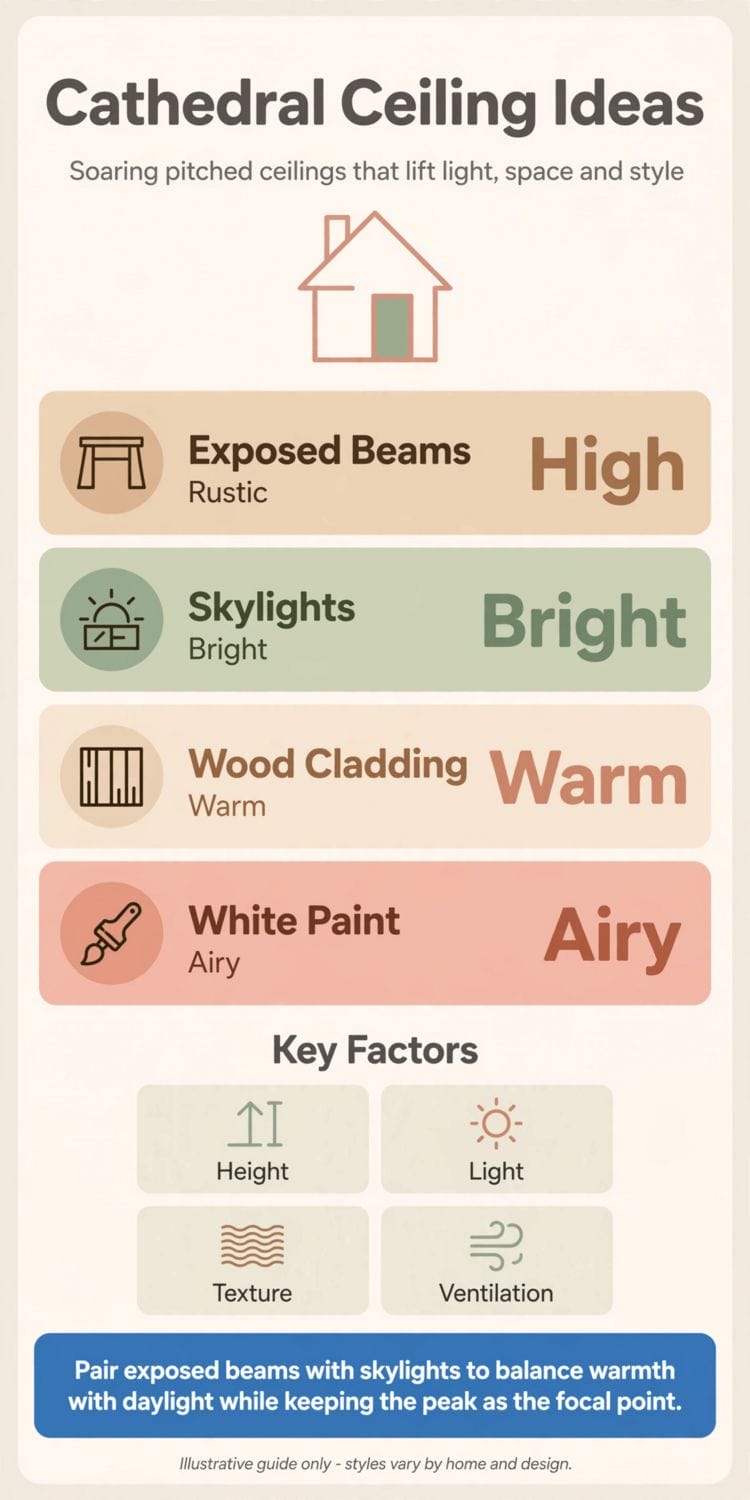
Scope, so the lanes stay clear: this post covers the cathedral form only — the pitched ceiling that follows the roofline. A vaulted ceiling dressed with crown moulding sits in vaulted ceiling crown moulding ideas, the tray form belongs to tray ceiling bedroom ideas, and the wider vaulted family is gathered in vaulted ceiling ideas — related ceilings, each a different treatment.
The sections walk the pitched room in the order the eye travels: layout and form, light from above, living rooms, beams and timber, kitchens, bedrooms, colour, fine details, and finally costs and care. Each idea is meant to be used singly.
2. Layouts and the Pitched Form
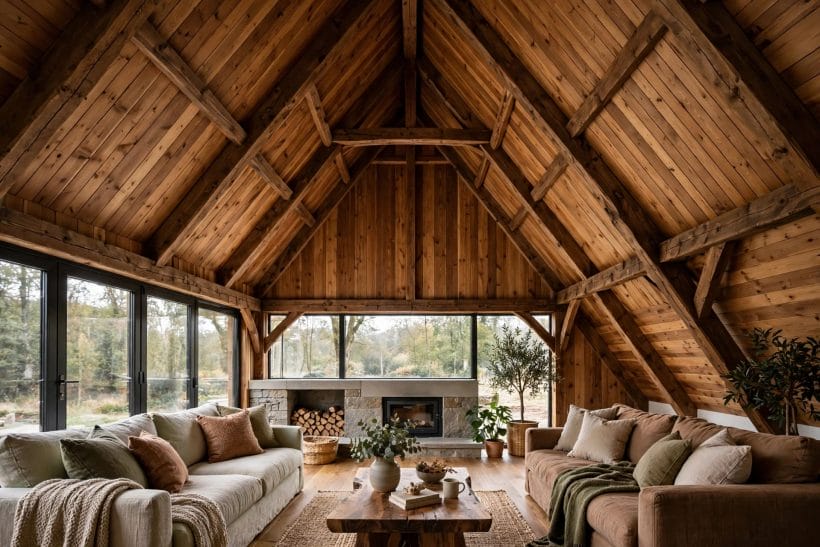
The wood-clad room above shows the form at full stretch: slopes, beams and gable glass working as one. Layout begins by respecting that geometry, placing the life of the room where the height can be felt.
1. Let the Peak Set the Room’s Axis
Arrange the room along the line of the peak, with the main seating, table or bed centred beneath it. A room aligned to its ridge feels ordered at once, because furniture and architecture agree about the middle.
2. Keep the Tallest Zone for Living
Give the highest part of the pitch to the activity the room exists for — sitting, dining, gathering — and let storage and quieter corners take the lower edges. Height spent on daily life is height felt daily.
3. Treat the Slopes as a Pair
Whatever one slope carries, the other should answer: matching colour, balanced light, similar weight of beam or finish. A cathedral ceiling reads as one folded surface, and treating it as a pair keeps the room calm and symmetrical.
4. Leave the Gable End Glorious and Clear
The triangular gable end is the room’s natural picture wall or window wall. Keep it uncluttered, let furniture sit low beneath it, and the pitch ends in light or a single strong feature instead of a crowd of objects.
5. Zone Open Rooms Along the Ridge
In an open plan beneath one pitch, let the ridge divide the zones lengthways or mark the border across it: living under one stretch, dining under another. Rugs and lighting complete what the ceiling begins, without a single partition wall.
6. Keep Tall Furniture Against Tall Walls
Bookcases, cupboards and storage belong against the gable end or the highest wall sections, never stranded under the low eaves. Placing tall pieces where the ceiling is tall keeps the slopes clean and the walking lines comfortable.
7. Use the Low Eaves for Low Jobs
The narrowing edges where slope meets wall suit low seating, chests, baskets and reading nooks. Used deliberately, the eaves become the room’s most characterful corners, cosy because the ceiling comes down to meet you.
8. Plan the Room from the Peak Down
Decide the ceiling first — its finish, beams and light — then choose furniture and colour to serve it. Rooms planned from the floor up often fight their pitch; rooms planned from the peak down feel settled from the first day.
3. Light from Above
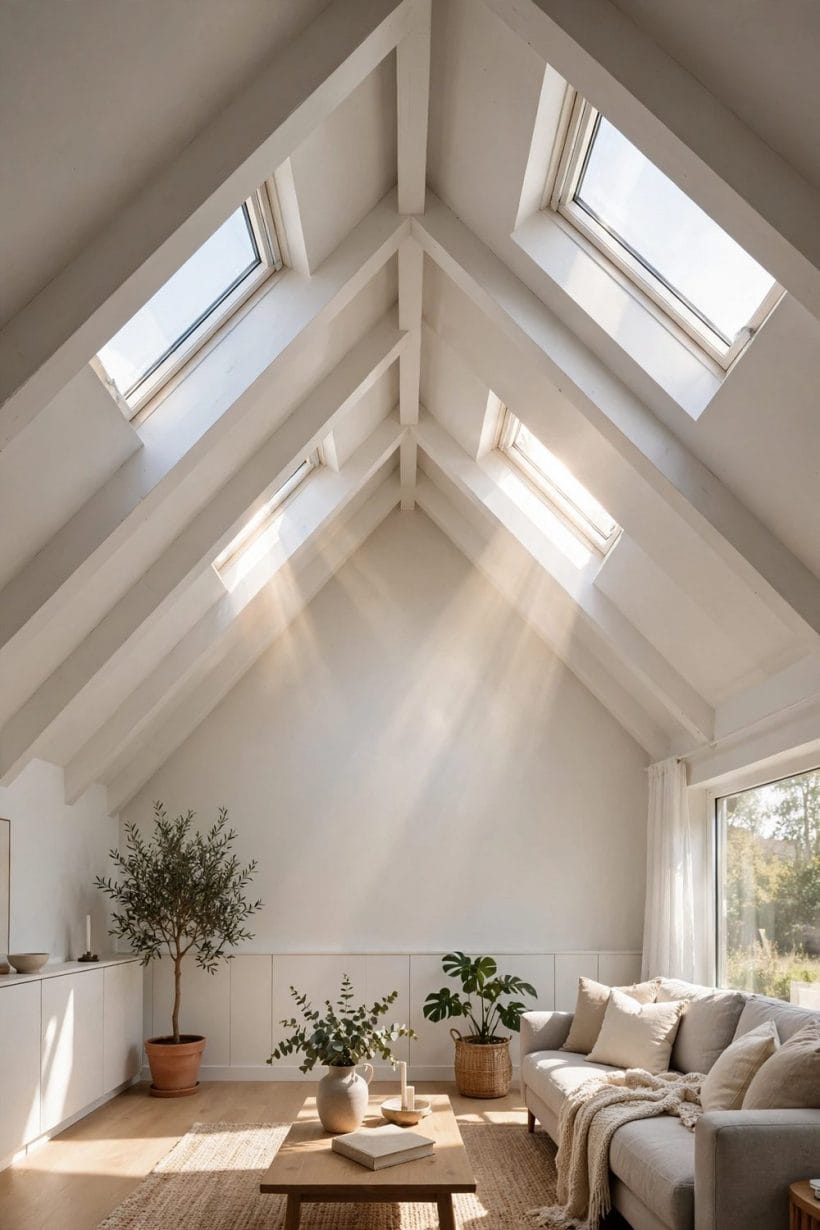
The white room above, lit through skylights set into both slopes, shows why pitched ceilings and daylight belong together. Height without light feels hollow; these ideas bring brightness down the slopes and into the middle of the room.
9. Let Skylights Wash the Slopes
Skylights set into the slope pour daylight down the ceiling surface itself, so the pitch glows instead of shadowing. Even modest openings change the room’s mood, because the brightest surface becomes the one everyone looks up at.
10. Balance Openings on Both Slopes
Light from one slope alone can feel lopsided, bright on one side and brooding on the other. Openings answered across the ridge — or balanced with gable glass — keep the room evenly lit and the ceiling reading as one calm surface.
11. Give the Gable End to Glass
A glazed gable turns the whole triangular end into a lantern: view, sky and weather become the room’s decoration. Keep frames slim and the sill line clear, and the pitch seems to continue straight out into the landscape.
12. Hang Pendants from the Peak with Care
A pendant dropped from the ridge gives the height a visible centre and brings light down to table or seating level. Keep it in proportion — the fitting should punctuate the peak, never compete with it or hang as an obstacle.
13. Layer Lamplight Low for the Evenings
Daylight owns the slopes by day; evenings belong to lamps at sitting height. Table and floor lamps pool warm light where people gather, while the darkening pitch above adds depth instead of gloom.
14. Keep Window Dressings Simple and Light
Tall glass and skylights ask for the simplest coverings: plain blinds or sheer cloth that soften glare without eating the light. Heavy dressing on a gable window fights the architecture and spends the brightness the ceiling was built to gather.
15. Use Pale Surfaces to Carry Light Down
Light landing on a pale slope travels further into the room than light landing on a dark one. Where a pitched room feels dim, whitening the ceiling is often the kindest fix, returning daylight to the walls and floor below.
16. Let One Mirror Answer a Bright Slope
A mirror placed to catch a skylit slope or gable window quietly doubles that brightness in a darker corner. One well-aimed mirror is enough — the aim is borrowed light, not a hall of reflections under the peak.
4. Living Rooms Under the Peak
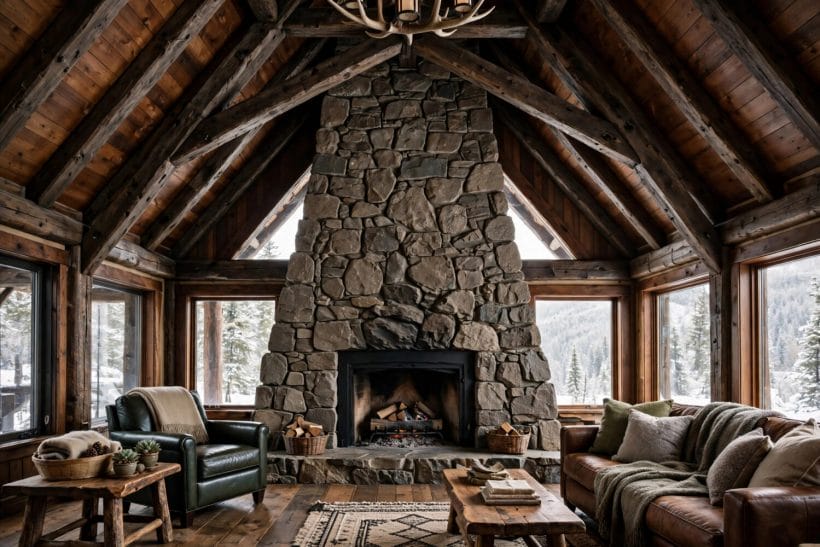
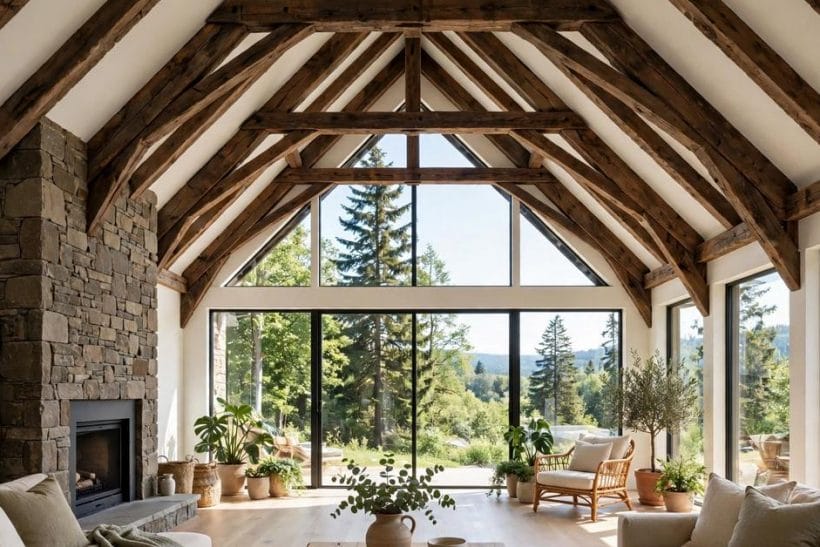
The stone fireplace room above is the pitched living room at its most complete: fire at the gable, leather and timber under dark beams. The wider family gathers in vaulted ceiling living room ideas; here the living room itself, arranged beneath the peak, is the focus.
17. Centre the Seating Beneath the Ridge
Sofas and chairs gathered under the ridge line inherit the room’s full height and its sense of occasion. A centred arrangement also leaves the sloping edges free for shelves, plants and the low furniture the eaves suit best.
18. Let a Fireplace Climb the Gable
A chimney breast rising up the gable end gives the pitch a destination and the seating a focus. Stone or brick carried high looks inevitable rather than added, and the fire sits exactly where the room’s lines already point.
19. Keep Furniture Lower than the Drama
Under a soaring ceiling, low sofas and chairs keep people comfortable and the proportions human. Tall, fussy furniture competes with the slopes; low, generous pieces let the architecture stay grand while the sitting stays relaxed.
20. Anchor the Height with a Generous Rug
A large rug under the seating gathers the room at floor level while the ceiling soars above it. That contrast — warm ground beneath tall, quiet air — makes a pitched living room feel impressive and liveable at once.
21. Dress the Peak Lightly or Not at All
Resist decorating the upper slopes with pictures, shelves or clutter. The empty upper air is the luxury a cathedral ceiling buys; keeping it clear lets the eye travel the full height.
22. Use Tall Plants to Soften the Corners
One tall plant in a corner bridges the distance between furniture and slope, softening the junction without blocking it. Greenery reads kindly against timber and stone, and a single specimen does more than a row of small pots.
23. Keep the Coffee Table Quiet and Sturdy
The table at the centre of a grand room should be calm: solid, low and mostly clear. It grounds the seating arrangement while everything vertical — beams, glass, chimney — does the expressive work above it.
24. Let Throws and Cushions Carry the Colour
With the ceiling and structure doing the grand work, colour can arrive softly at seat level: cushions, throws and a rug in the room’s chosen tones. Soft goods change seasonally, so the room can shift mood without touching its bones.
5. Beams, Trusses and Timber Character
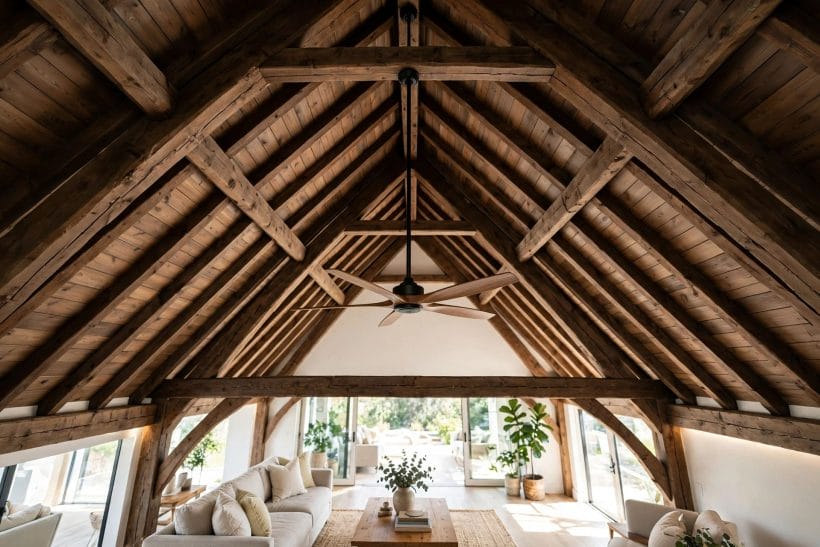
The view along the trusses above shows structure as decoration: repeated timber, honestly joined, carrying the whole design. Flat panelled treatments belong to another family entirely — coffered ceiling ideas — while here the pitched structure itself is the ornament, and any structural question stays with professionals.
25. Let Exposed Beams Tell the Story
Beams left visible give a pitched ceiling its rhythm and its honesty: the room shows how it stands up. Keep them clean and consistently finished, and they read as craft rather than construction.
26. Keep the Beam Rhythm Even
Regularly spaced rafters and trusses please the eye the way colonnades do — by repetition. When beams are added or dressed, an even rhythm matters more than sheer size, because the pattern is what the room remembers.
27. Contrast Dark Timber with Pale Slopes
Dark beams against white or cream slopes is the classic pitched pairing: the structure draws itself in bold lines while the surfaces stay bright. It suits living rooms especially, giving height definition without darkness.
28. Clad the Slopes in Wood for Warmth
Timber boards across the slopes turn the whole ceiling into a warm canopy. Wood cladding pairs naturally with stone and leather below, and asks for pale textiles to keep the balance.
29. Paint Beams White for a Quieter Room
Beams painted to match the slopes nearly disappear, leaving pure shape and light. It is the calmest treatment a pitched ceiling can wear, ideal in bedrooms and small rooms where dark timber might press too close.
30. Let One King Post or Tie Draw the Eye
A single pronounced truss — a king post rising to the ridge, a tie beam crossing low — gives a long ceiling a centrepiece. One hero truss among quieter repeats creates the focal point the gable end may be missing.
31. Keep Finishes Consistent Along the Pitch
Beams, cladding and ridge should share one finish family: the same stain depth, the same paint tone, the same mood. Mixed finishes along a single slope look accidental; consistency is what turns structure into design.
32. Treat Timber Gently and Let It Age
Timber overhead needs little beyond dusting and kindness: soft brushes, no harsh treatments, and patience with the way wood deepens in tone over the years. Ageing gracefully is part of the material’s charm, so let it.
6. Kitchens and Dining Beneath the Slopes
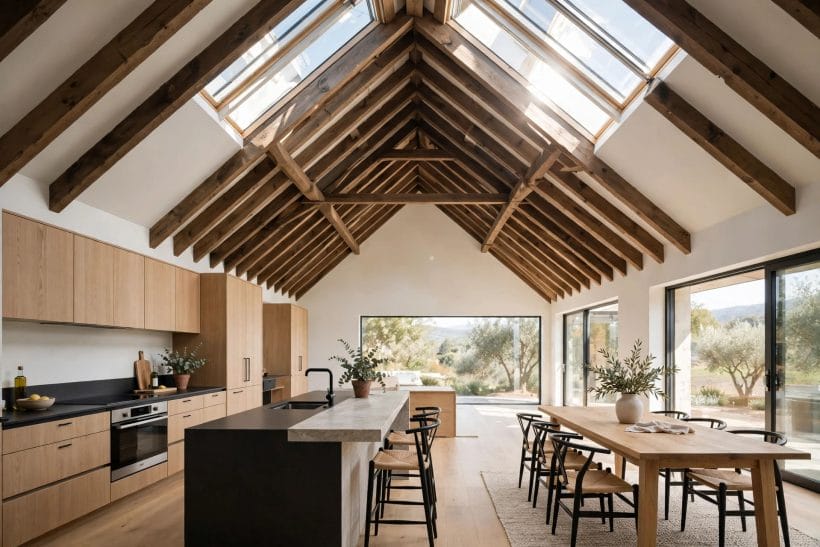
The kitchen above — pale cabinets, a long table and skylights pouring down the rafters — proves a pitched ceiling suits working rooms as well as grand ones. Cooking and dining gain height, light and a sense of gathering under the peak.
33. Run the Kitchen Along the Low Edge
Cabinets and worktops sit happily where the slope is lowest, keeping the tall centre of the room for people, the table and movement. The cook works under a cosy ceiling while the gathering space keeps the grandeur.
34. Put the Dining Table Under the Ridge
A table centred beneath the ridge inherits the room’s best light and its full ceremony. Meals under a peak feel hosted by the architecture itself, and a single pendant above the table completes the picture.
35. Let Skylights Serve the Worktops
Daylight from the slopes falls exactly where cooks need it: on counters, sinks and the table. A kitchen planned around its roof light needs less artificial light by day and feels fresher through every season.
36. Keep Tall Storage on the Gable Wall
The full-height gable end takes the tall cupboards, shelving and stored pieces that the sloping walls cannot. Keeping storage vertical at the end wall leaves the slopes clean and the working walls uncluttered.
37. Choose an Island that Respects the Peak
An island placed along the ridge line echoes the ceiling’s geometry and keeps circulation even on both sides. Keep anything above it — lights, pans, shelves — light and low, so the pitch stays visible end to end.
38. Hang Very Little from the Slopes
Kitchen clutter hung overhead quickly turns a serene pitch into a thicket. Keep rails, pans and utensils at wall and counter level, and let the rafters stay as clean in the kitchen as in the living room.
39. Pair Pale Cabinets with Timber Above
Cream or pale cabinets under a timber-clad slope keep a kitchen bright at working level and warm overhead. The contrast flatters both materials and stops a wood ceiling from making the room feel like a cabin cliché.
40. Let the Table Double as the Social Centre
Under a cathedral ceiling, the dining table becomes the natural gathering point: homework, suppers, projects and celebrations all land there. Choose a top that shrugs off daily use.
41. Keep Dining Chairs Low and Calm
Low-backed chairs keep sightlines open beneath the slopes and let the ceiling remain the tall element in the room. A calm set of chairs also slides neatly away, leaving the table and the pitch to furnish the space.
7. Bedrooms and Quiet Rooms
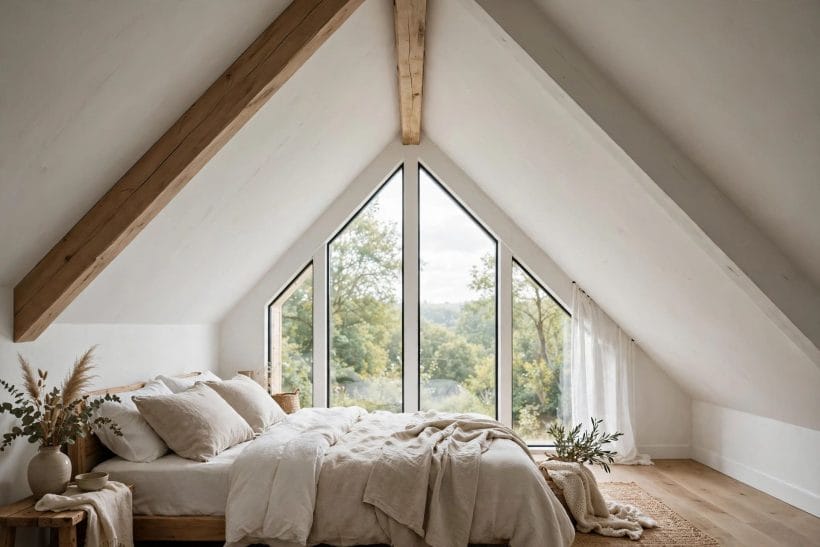
The white bedroom above, with its single beam and tall triangular windows, shows the pitched ceiling at its most restful. Bedrooms ask the form to be gentle: height for air and light, slopes that shelter rather than impress.
42. Centre the Bed Beneath the Peak
A bed placed under the ridge, headboard on the gable wall, wakes beneath the room’s full height and its best window. The symmetry settles sleepers, and the view up the slopes becomes part of the morning.
43. Keep the Bedroom Palette Pale and Soft
White and soft tones suit pitched bedrooms: they gather what light the slopes offer and keep the narrowing edges feeling airy rather than close. Colour can wait in bedding and a single warm throw.
44. Use the Eaves for Low, Quiet Storage
The low triangles beside a bedroom’s walls take chests, baskets and folded blankets perfectly. Storage tucked under the eaves keeps the tall centre of the room empty, which is exactly what a restful room needs.
45. Let Gable Windows Wake the Room
Tall or triangular gable glass brings morning light straight to the bed and frames the view like a picture. Keep the dressing simple — a sheer or a plain blind — so waking stays the room’s quiet ceremony.
46. Keep Bedside Light Low and Warm
Small lamps at bedside height glow kindly under pale slopes, where one bright overhead light would glare down the pitch. Low lamplight also flatters timber, should a beam cross the room, and tucks the space in for the night.
47. Dress the Bed in Calm Layers
Layered bedding — sheet, blanket, cover, a folded throw — lets sleepers adjust through the night. Visible layers also give a plain white room its texture without a single picture.
48. Hang Almost Nothing on the Slopes
Bedroom slopes rest the eye best when they stay bare: no pictures climbing the pitch, no shelves near the pillows. The clean fold of the ceiling is decoration enough, and quiet walls above the bed help sleep arrive.
49. Add One Rug Where Feet Land
A soft rug beside the bed answers the one moment a high, airy room can feel austere: bare feet on a morning floor. Choose a forgiving colour and a weave that shakes out easily, and the room stays serene.
8. Colour, Paint and Surface Finish
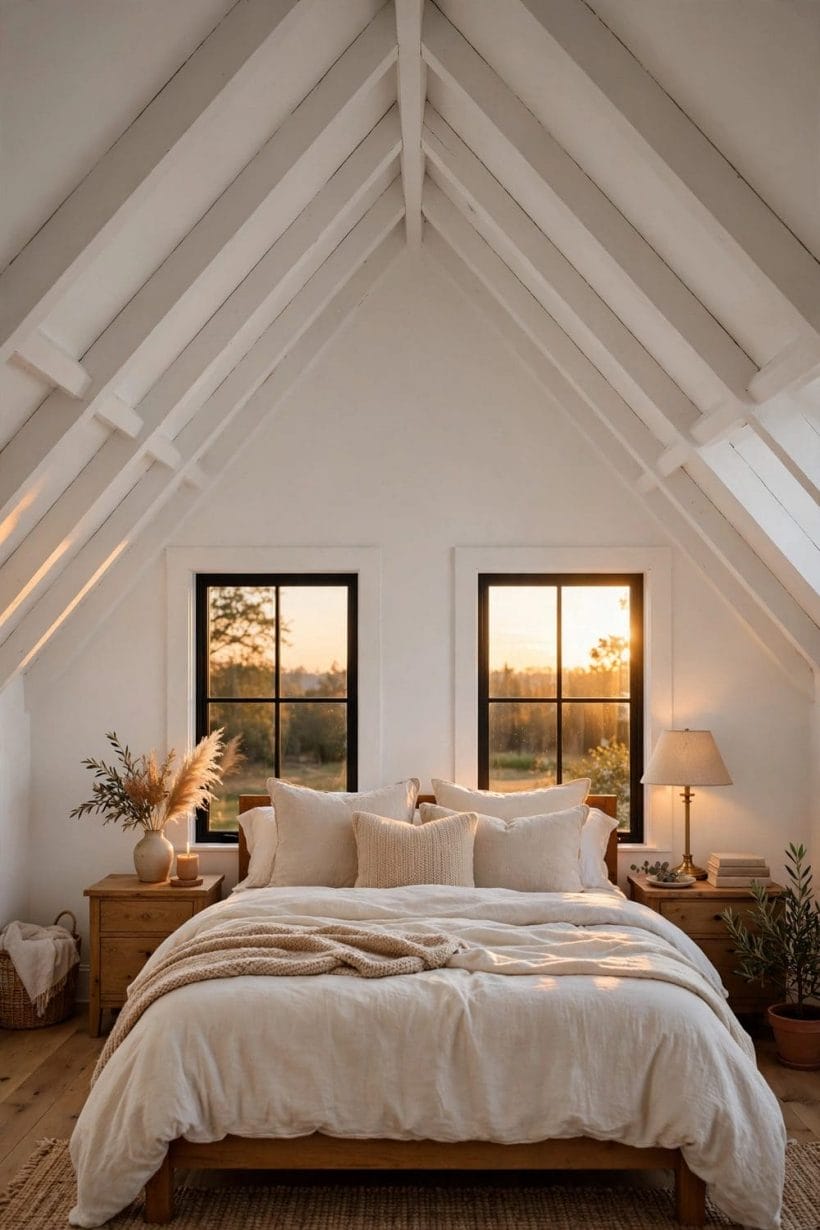
The white-painted bedroom above — beams, slopes and walls in one calm tone — shows finish doing the quiet work. The broader family of treatments sits in ceiling design ideas; here colour is judged only as it behaves on the pitch.
50. Paint the Whole Pitch One Calm White
Slopes, beams and ridge in a single soft white make the ceiling read as pure shape and light. It is the most forgiving finish a cathedral ceiling can wear, brightening dark rooms and calming busy ones alike.
51. Let Timber Stay Natural Where It Earns It
Good timber, honestly grained, deserves to stay visible: cladding and beams in natural finish give the pitch warmth no paint imitates. Reserve natural wood for rooms with daylight enough to keep it glowing.
52. Use Soft Colour on the Gable Only
If colour calls, spend it on the triangular gable end and keep the slopes pale. A softly coloured gable gives the room a destination and a mood, while the ceiling itself stays bright and the pitch stays legible.
53. Keep Contrast Gentle in Small Rooms
In a small room under a pitch, strong contrast between beams and slopes can feel busy and close. Gentle differences — pale wood on white, cream on warm grey — keep the height feeling generous and the mood composed.
54. Match the Ceiling Mood to the Room Below
A rustic living room can carry dark beams and wood cladding; a serene bedroom wants white on white. Let the room’s purpose choose the ceiling’s finish, and the whole space will feel of one mind.
55. Choose Matte Finishes for Slopes
Matte paint softens a pitched surface, hiding minor unevenness and refusing to glare when skylight strikes it. Shine belongs on small details if anywhere; large slopes look kindest, and photograph best, without a sheen.
56. Refresh Paint Before Replacing Anything
A tired pitched room usually needs fresh paint, not new finishes: clean, sound slopes and beams repay a repaint completely. It is among the lowest-cost transformations the ceiling offers, and it restores the light the room was losing.
57. Let Textiles Test Colour First
Before committing colour to a whole ceiling, test it at seat level: cushions, throws and curtains in the candidate tone. If the room loves it small, it may earn the gable wall; the slopes themselves rarely need more than white.
9. Details, Joints and Finishing Touches
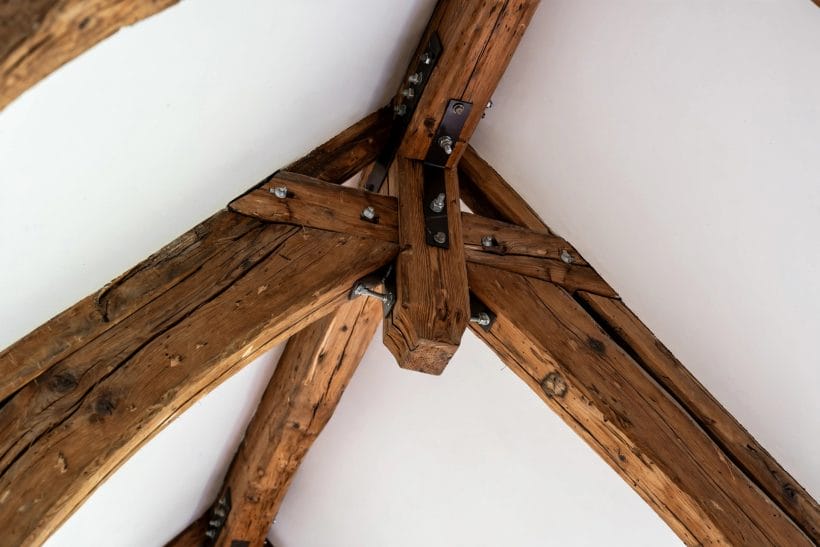
The close view above — a timber truss joint, plates and bolts against a white slope — is a reminder that pitched ceilings reward attention at close range too. These details finish the form without disturbing its calm.
58. Let Honest Joints Stay Visible
Where trusses meet with plates, pegs or bolts, that joinery is part of the ceiling’s craft story. Kept clean and consistent, visible joints read as character; hiding them under boxes and covers usually pleases nobody.
59. Keep the Ridge Line Clean
The ridge is the ceiling’s spine and its longest uninterrupted line. Keep it free of clutter, fittings and decoration, and the whole pitch looks intentional — one clean fold from gable to gable.
60. Run Cables and Fittings Discreetly
Whatever a pitched room needs by way of lighting and services should travel quietly, following beams and edges rather than crossing open slopes. Any such work belongs to professionals; the aim is simply a serene ceiling.
61. Finish Beam Ends with the Same Care
Where beams meet walls, the junction shows at eye level from across the room. Neat, consistent finishing at those meeting points is what separates a crafted ceiling from a merely tall one, so judge a room by its edges.
62. Choose One Ceiling Fan, Quietly Styled
In general terms, a single well-chosen fan centred on the ridge suits a high room’s comfort and gives the peak a gentle focal point. Keep its style plain and its scale modest, so it serves the room without stealing the ceiling.
63. Keep Plants Below the Slope Line
Plants belong on floors, tables and low shelves beneath the pitch, not trailing from beams or perched on trusses. Greenery kept low frames the ceiling from below and leaves the structure itself clean and unbothered.
64. Let Curtain Rails Follow the Walls, Not the Pitch
Window dressing hardware should follow the window and the wall, never climb the slope at an angle. Rails that respect the room’s straight lines keep the triangle of the gable serene, which is the effect the ceiling exists to give.
65. Repeat One Metal Tone Throughout
Plates on trusses, lamp bases, handles and rails in a single quiet metal tone tie a pitched room together. Consistency in the small hardware is invisible when right and jarring when mixed, so choose once and repeat.
66. Step Back and Judge the Whole Fold
Before adding anything to a pitched room, stand at its door and look at the ceiling as one folded surface. If the eye travels gable to gable without snagging, the details are right.
10. Costs, Comfort and Practical Care
Costs stay in general terms throughout, because roofs and ambitions differ too widely for tidy figures. What can be shared is the order to spend in, the comfort questions worth raising early, and the light care a pitched ceiling repays.
67. Spend First on the Form and the Finish
When money must choose, it belongs first in the ceiling itself — a sound pitch, a finish that flatters it — and in the seating or bed the room exists for. Decoration can arrive slowly; the architecture is enjoyed every single day.
68. Expect Height to Shape the Budget
In general terms, tall rooms ask more of everything: more surface to finish, more thought about light and warmth. Naming that early keeps a project honest, and a room with real presence justifies the planning.
69. Raise Insulation Early, in General Terms
A ceiling that follows the roofline lives close to the weather, so insulation and comfort deserve early, general conversation on any project, with detail left to professionals. A well-considered pitch feels calm in every season.
70. Think about Air Movement as Comfort
Warm air gathers high and cool air settles low in any tall room, so gentle air movement is part of pitched-room comfort in general terms. Raising it early keeps the room kind year-round.
71. Keep Ventilation in the Early Conversation
Fresh air matters as much under a peak as anywhere, and pitched rooms reward thinking about ventilation in general terms from the start, with specifics left to professionals. A room that breathes well keeps its timber in good condition.
72. Plan Safe Access for High Finishes
Paint, dust and lamplight all eventually need reaching at height, so access deserves a thought before it becomes an emergency. In general terms, finishes that age gracefully and need little attention suit the highest surfaces best of all.
73. Dust Slopes and Beams with a Soft Touch
Pitched ceilings gather dust along their beams and ridge, and a soft brush worked gently, a few times a year, keeps them fresh. Timber rewards light, regular care over rare heavy cleaning at awkward heights.
74. Air the Room and Watch the Seasons
Tall rooms repay regular airing: windows opened, air allowed to travel the full height, soft furnishings shaken out as seasons turn. A seasonal pass also reveals small issues — a tired finish, a dull slope — while they are still small.
75. Change One Layer at a Time
When a pitched room feels tired, change one layer only: the paint tone, the rug, the lamp, the bedding. Single changes are affordable and easy to judge under a ceiling this expressive — and most grand rooms needed far less.
Final Considerations
A cathedral ceiling is never really a background: it is the room’s weather, its light and its sense of occasion, folded into two slopes and a peak. Keep finishes calm and materials honest, and it will repay every room beneath it with height that feels like hospitality.
Start with the room you use most, choose one change you will feel every day, and let the rest wait. Pitched rooms reward patience more than spending: get the peak and the light right, and the whole house feels taller for it.



0 Comments