
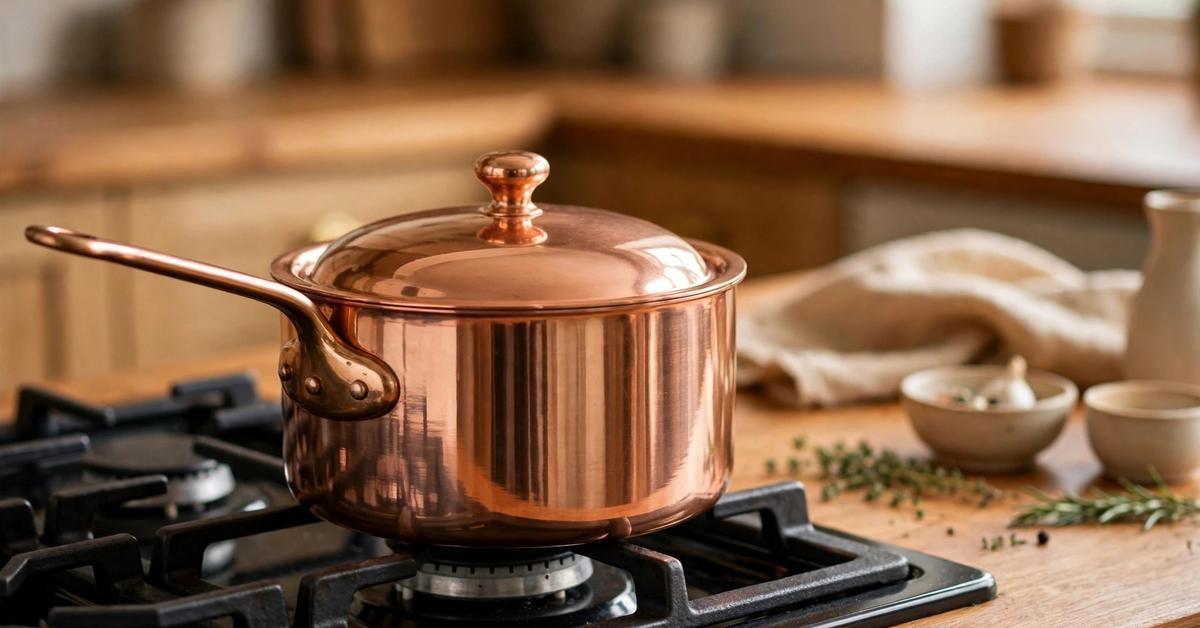
Copper cookware has a reputation that runs ahead of it: beautiful to look at, responsive to heat, and demanding in ways that surprise first-time buyers. The question is not whether copper is good — it is whether a particular pan suits your hob, your cooking and your willingness to care for it. This guide checks copper cookware the way you should check any tool: by weight, lining, base, handles and care, with no verdict on any maker and no promises about performance.
Everything here is general. Copper pans differ in thickness, lining and construction, and the maker’s guidance for your specific pan matters more than any general rule. Use this guide to know what to look at, what to ask, and what to test in the shop before you buy.
1. Start With the Weight in Your Hand
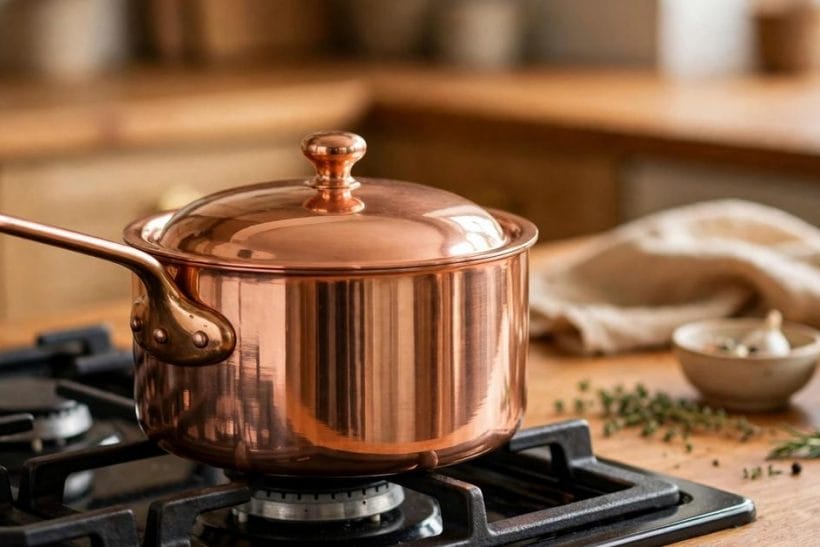
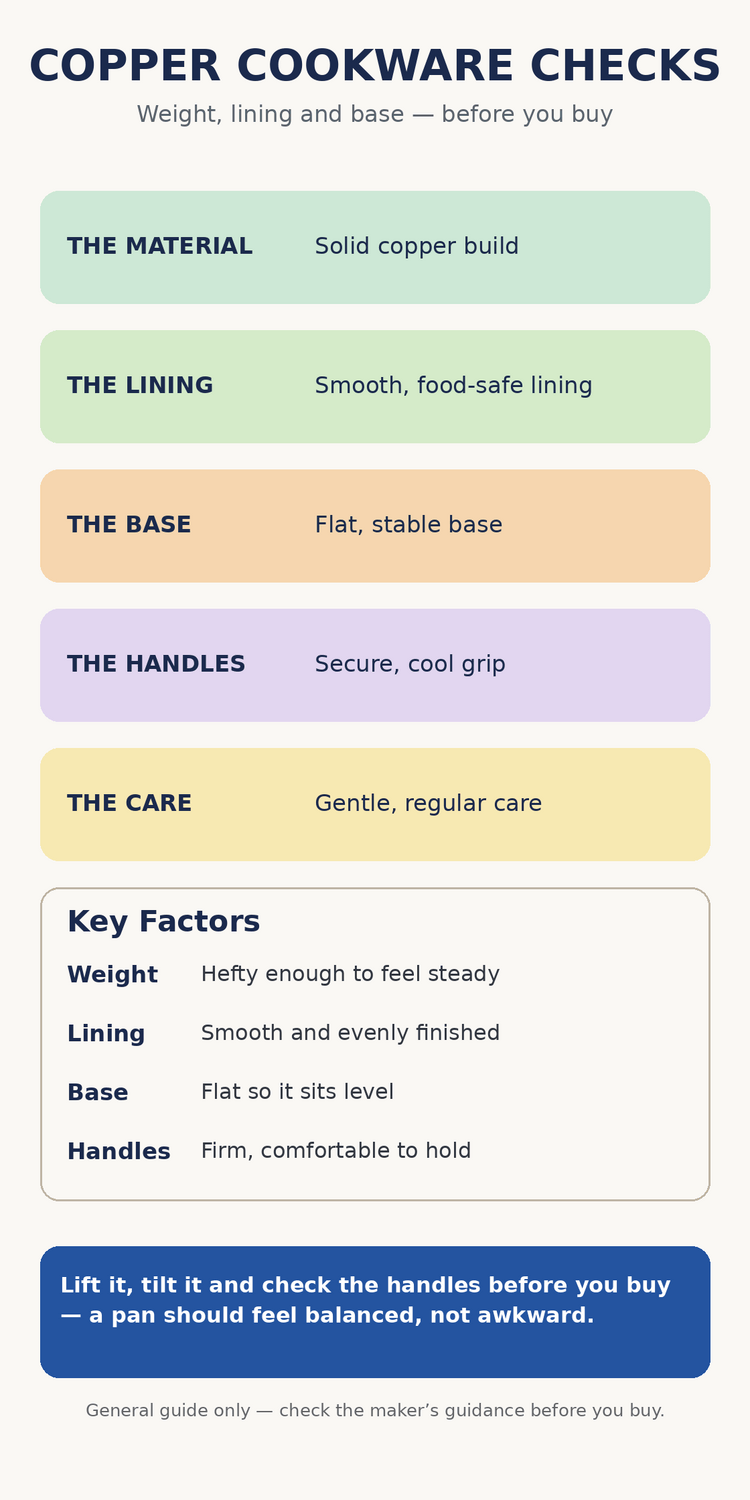
Pick the pan up. Weight tells you a great deal about a copper pan before you look at anything else. A pan that feels substantial usually has enough metal to spread heat evenly and hold temperature when food goes in, while a very light pan can feel twitchy on the hob, heating fast and cooling fast. Neither extreme is automatically wrong — a light pan suits quick tasks and small hands — but the weight should match the cooking you actually do.
Lift it the way you will lift it at home: one hand on the handle, as if you are moving it from hob to sink with food inside. If it feels awkward empty, it will feel worse full. Tilt it gently and notice where the balance sits. A well-balanced pan feels steady, not handle-heavy or nose-heavy. Weight is not a quality score; it is a fit check, and the right weight is the one you can manage comfortably, repeatedly, without strain. Also consider who else cooks in your household. A pan that suits the strongest cook may be a burden for others, and a pan that everyone can lift safely gets used more often and more happily. If the household shares cooking, choose a weight that the least strong regular cook manages comfortably, because a pan that only one person can move becomes that person’s chore rather than the household’s tool.
2. The Lining Is Where Food Meets Metal
Most copper pans are lined, because food is not usually cooked directly on copper. The lining is the surface your food touches, so it deserves as much attention as the copper outside. Look for a lining that is smooth and even, with no ripples, bubbles or thin spots, especially around the base edge where wear shows first. Run a fingertip over it: it should feel continuous, not patchy.
Ask what the lining is made of and how it is maintained, because linings differ and so does their care. Some linings tolerate vigorous scrubbing, others ask for a gentler hand. What matters for you is whether the care routine fits your kitchen habits. A pan whose lining needs delicate treatment will frustrate a cook who cleans everything in a hurry, while a cook who enjoys careful maintenance will not mind at all. Match the lining to your habits, not to an ideal of how a kitchen should be run.
3. The Base Must Sit Flat and Stable
Set the pan on a flat surface in the shop and check that it sits without rocking. A base that rocks will heat unevenly, spill more easily, and annoy you every time you stir. Press gently on opposite edges: any wobble is a reason to set that pan aside and look at another, because a rocking base does not improve with use. Also check the base diameter against your hob rings or zones. A pan much smaller than its heat source wastes energy and scorches at the edges; a pan much larger than its source heats unevenly in the middle.
Think about the hob you actually own. Copper behaves differently on different heat sources, and not every copper pan suits every hob type. Check the maker’s guidance for your hob before you buy, rather than assuming a beautiful pan will work everywhere. A quick check now prevents the disappointment of a pan that looks perfect in the shop and performs poorly on your cooker at home.
4. Handles: Secure, Comfortable and Cool Enough
Handles are where copper pans most often disappoint, because copper conducts heat into everything it touches, including the handle fixings. Grip the handle as you would in use and check that it feels secure, with no movement at the joints. Rivets or fixings should sit flush and solid, not loose or proud. A handle that flexes or wobbles in the shop will only get worse with heat and weight.
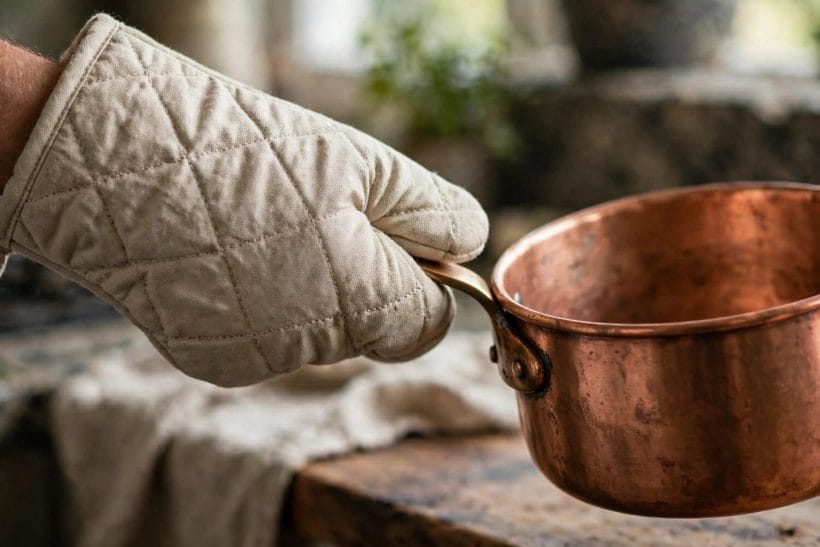
Consider length and shape too. A long handle gives leverage for a heavy pan but can make storage awkward; a short handle stores neatly but brings your hand closer to the heat. Loop handles on larger pots should feel balanced when lifted with both hands. And remember that copper pan handles often get hot in use — plan for a dry cloth or glove as part of the routine, not as an afterthought. A pan you cannot move safely is a pan you will not enjoy using, however beautiful it looks hanging in the kitchen. Our induction cookware checks guide covers handle and base checks from another angle, and the same habits apply here.
5. Size and Shape for the Cooking You Do
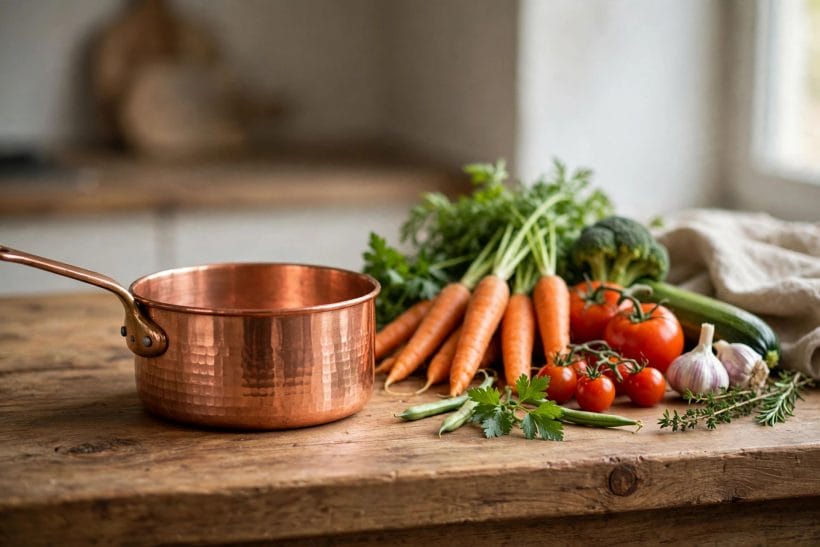
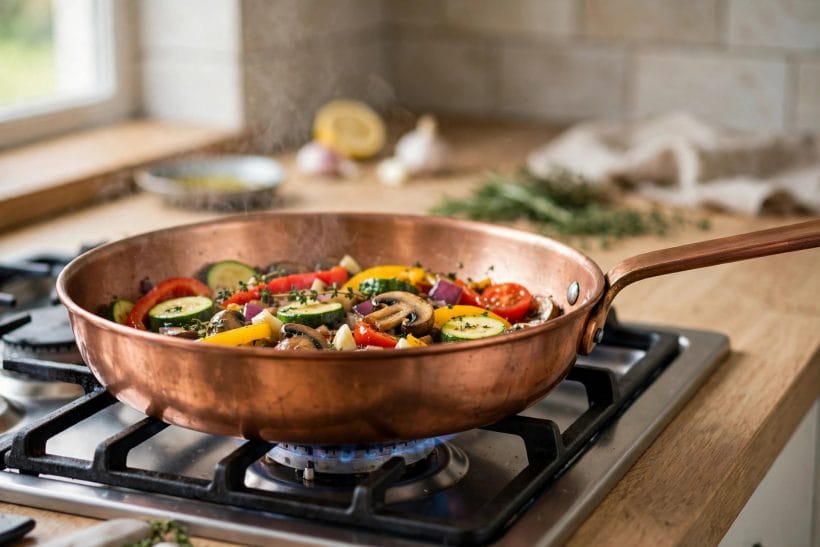
Copper pans come in many shapes, and the right shape depends on what you cook most. A straight-sided saucepan suits sauces and reheating; a sloped frying pan suits quick tossing and browning; a wide, shallow pan suits dishes that need evaporation. Buying the shape that matches your most-cooked meals matters more than owning a complete set, and one well-chosen pan used often beats five beautiful pans gathering dust.
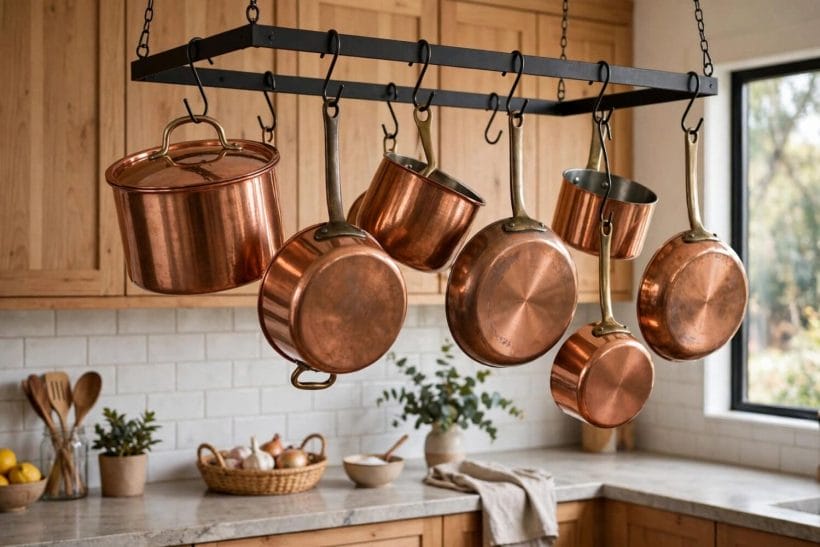
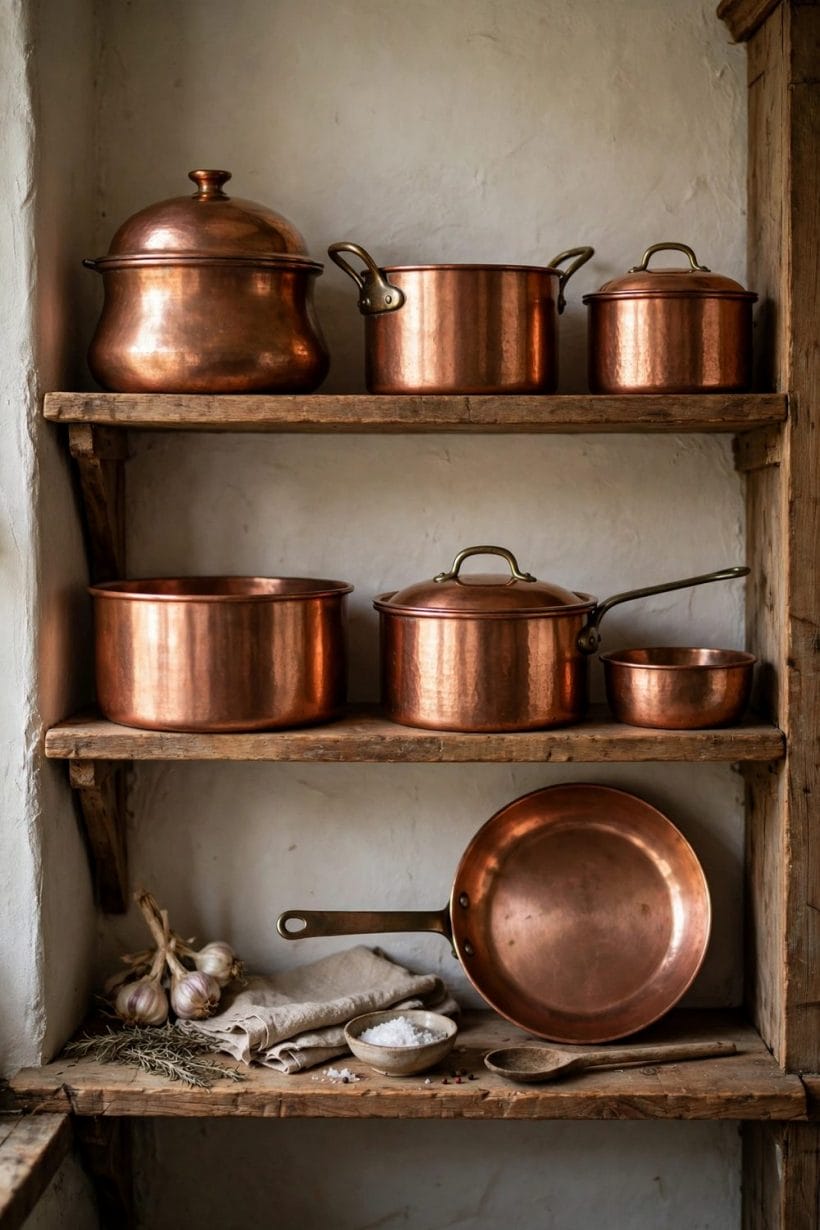
Check capacity honestly. A pan that looks generous in the shop can feel small once food, liquid and stirring room are accounted for, while an oversized pan wastes heat and storage for small households. Think about your largest regular meal, not your largest imaginable one, and choose a size that handles it comfortably. Storage matters too: copper pans are often hung or stacked, and a pan that does not fit your storage will end up somewhere inconvenient, which means it gets used less. Hanging has an added benefit for copper, because it keeps pans visible and accessible, which encourages use, and it avoids the scratches that stacking can cause when pans nest together. If you hang pans, check that the hooks and rail hold the weight securely, and hang the heaviest pans lowest. If you stack, place a soft liner between pans so the lining of one does not mark the copper of another.
6. Heat Response and Control
Copper’s great claim is responsiveness: it heats quickly and cools quickly, which gives the cook fine control. That responsiveness is real, but it cuts both ways. A responsive pan rewards attention and punishes distraction, because temperatures change fast. If you cook dishes that need steady, gentle heat over a long time, responsiveness is less important than stability, and a heavier pan may suit you better. If you cook sauces and dishes that need quick adjustments, responsiveness is a genuine pleasure.
Test the idea before you buy by thinking about your last few weeks of cooking. How often did you wish a pan would heat faster, cool faster, or hold steady? The answers point to the pan you need, not the pan that photographs best. Copper rewards cooks who stay at the hob and adjust as they go; it is less forgiving of a cook who walks away. Neither style is wrong, but matching the pan to your style is what makes the purchase satisfying rather than frustrating. Sauces are the clearest test: a sauce that needs constant adjustment rewards a responsive pan, while a long-simmered dish rewards stability. Think about which you cook more, and let that answer guide the weight and thickness you choose.
7. Care: The Routine You Will Actually Keep
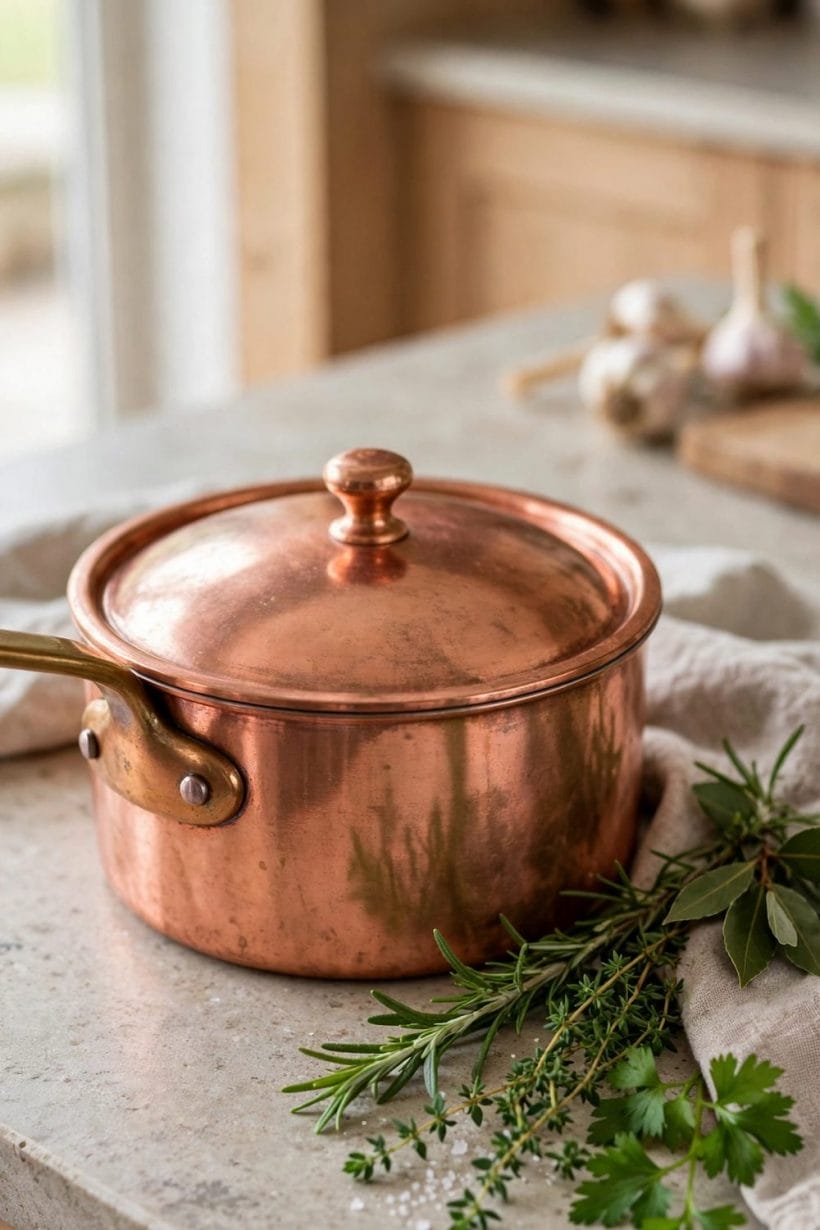
Copper tarnishes. That is not a fault; it is the nature of the metal. How much tarnish bothers you, and how much polishing you are willing to do, should shape your purchase. Some cooks love the bright, polished look and enjoy maintaining it; others prefer the deeper, lived-in tone that copper develops with use. Both are legitimate, but they lead to different choices about finishes and lacquers, so decide which camp you are in before you buy.
Cleaning matters as much as polishing. Check the maker’s cleaning guidance for the specific pan: what it tolerates, what dulls it, and whether it can go in a dishwasher at all. Many copper pans ask for hand washing and immediate drying, which is a small routine that either fits your kitchen or does not. Be honest about it. A pan that needs care you will not give will look worse, sooner, than a pan whose care routine you actually keep. The best pan is the one whose maintenance you do without resentment. Drying deserves emphasis: copper spots if left to air-dry, so a quick towel-dry after washing keeps the pan looking its best with almost no effort. Make drying part of the washing routine rather than a separate chore, and the pan will reward you by staying bright with very little polishing at all.
8. What Copper Will Not Do
It is worth stating plainly what copper cookware will not do, because its reputation sometimes promises too much. It will not make you a better cook. It will not rescue poor technique, fix a weak hob, or turn an indifferent recipe into a great one. What it can do is respond precisely to the cook using it, and that precision is valuable only if you use it. Buying copper in the hope that the pan will do the cooking is a recipe for disappointment, whatever the price.
Similarly, copper is not the right answer for every kitchen. Households that need low-maintenance, dishwasher-safe, grab-and-go cookware will be happier with other materials, and there is no shame in that. Our kitchen ideas collection shows kitchens equipped in many different ways, which is a useful reminder that the best kitchen is the one that fits its cook. Choose copper because it fits your cooking, not because it impresses your guests. A final thought on fit: the pan should also fit your hob’s size and your sink’s size, because a pan that is awkward to wash or too large for the ring will be used less, however good it looks. Practical fit beats prestige every time.
9. Checking Before You Buy: A Short Routine
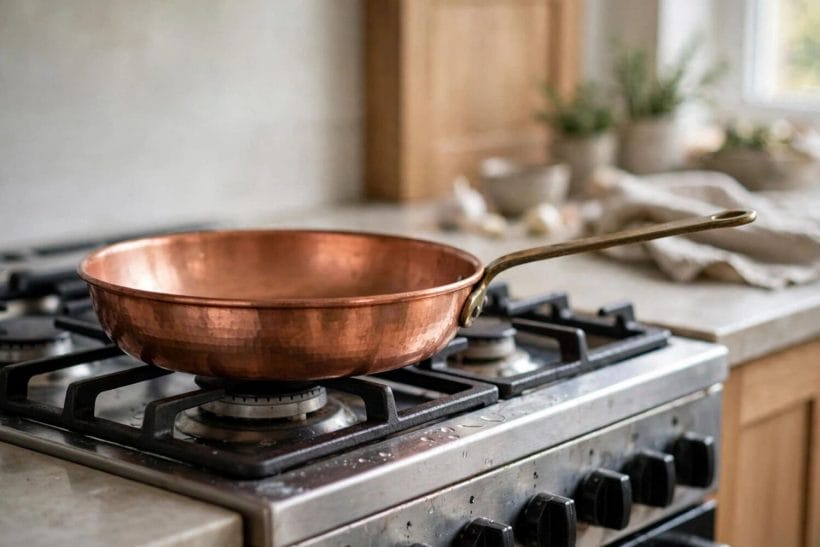
Put the checks together into a short routine you can run in any shop. Lift the pan and test the balance. Set it down and check for rocking. Inspect the lining for smoothness and the base for flatness. Grip the handles and test the fixings. Check the base size against your hob. Read the maker’s care guidance and ask yourself honestly whether you will follow it. The whole routine takes a few minutes, and it separates a pan you will love from a pan you will regret. Bring a note of your hob type and your most-cooked meals when you shop, because those two facts answer most of the sales questions before they are asked, and they keep the conversation focused on fit rather than features. A shop assistant who hears your hob type and your cooking style can point you to the right shape and size quickly, while a conversation about reputation alone can drift into a purchase that suits nobody’s kitchen.
While you are in the kitchen mindset, think about the room the pan will live in. Copper looks best in kitchens where it is used and displayed, not hidden away, and it pairs naturally with timber and stone. Our knotty pine cabinets, knotty alder cabinets and quartz backsplash ideas posts show kitchens where warm materials and practical surfaces sit together, which is the right context for judging whether copper belongs in yours.
10. Price, Value and the Long View
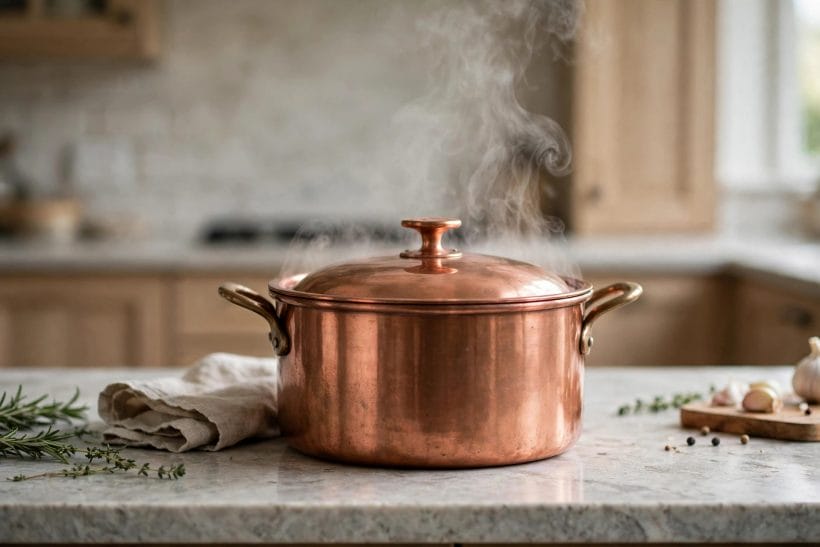
Copper cookware varies enormously in price, and price alone tells you little. A costly pan may earn its price through thickness, lining and construction, or it may simply carry a costly name. Judge by the checks in this guide — weight, lining, base, handles, care — rather than by price tag or reputation. A moderately priced pan that passes every check is better value than a costly one that fails the balance test in your hand.
Think long-term as well. A copper pan kept well can last for years, and its appearance will change as it ages. If you enjoy that evolution, copper is a satisfying purchase. If you want a pan that looks identical in five years to the day you bought it, another material will suit you better. Value is not what you pay; it is what you enjoy using, year after year, and that is a question only you can answer. For a broader sense of how kitchens come together, our tiny house designs show compact kitchens where every tool must earn its place, which is a good discipline for any cookware purchase.
Final Considerations
Copper cookware rewards the cook who checks before buying and cares after buying. Test the weight and balance, inspect the lining and base, grip the handles, and read the maker’s guidance with an honest eye on your own habits. Do that, and the pan you bring home will be one you reach for with pleasure, not one you admire from a distance while cooking with something else.




0 Comments