
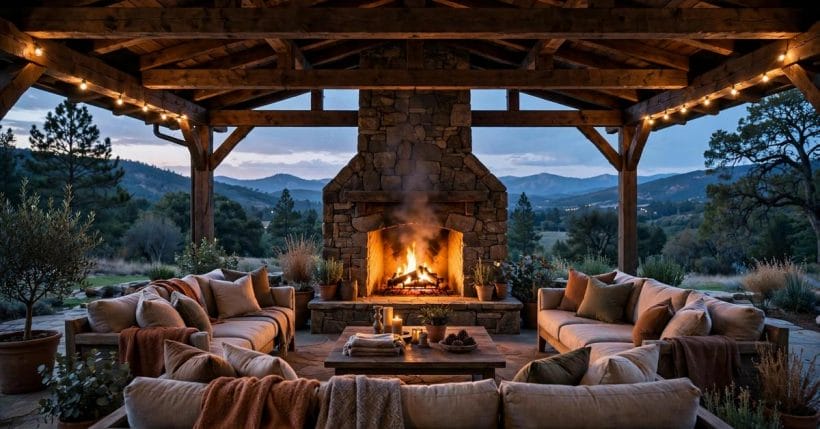
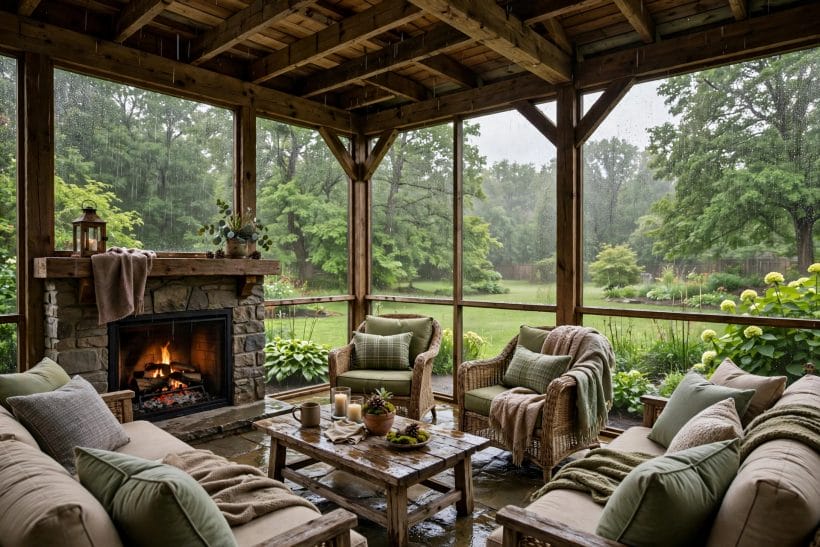
A roof overhead changes everything about an outdoor fire. Rain stays off the seating, evening air feels calmer, and the fireplace becomes a steady anchor for the whole patio rather than a feature used only on dry nights. A covered patio with fireplace at its heart works best when the layout is planned around real life: where people sit, how smoke drifts, where food is served, and how the space feels after dark. This guide looks at the outdoor side only, with layouts, shade, furniture and outdoor living details that help a covered patio feel comfortable, practical and welcoming through the seasons.
The ideas below stay on the design and living side of the subject. Any fireplace, chimney, flue, gas line or outdoor electrical work belongs to a qualified professional, and clearances, ventilation and local rules should always be confirmed with the people who install and inspect the work. Nothing here is a building guide. Think of it as a way to picture the finished patio clearly, so conversations with a professional start from a layout you already understand.
| Item | What it is |
|---|---|
| Where the Fireplace Sits in a Covered Layout | The fireplace usually earns the best wall of the patio, the one that frames the view without blocking the way in from the house. |
| Roof Forms and Shade Over the Fireplace Zone | The roof over a patio fireplace does more than keep rain off. |
| Fireplace Forms for Outdoor Rooms | Outdoor fireplaces come in several broad forms, and each one suits a different kind of patio life. |
| Seating Arranged Around the Fire | Seating is where a patio fireplace earns its keep. |
| Dining Near the Fire | Dining beside a fireplace turns ordinary meals into occasions. |
| Surfaces Underfoot | What lies underfoot shapes how a patio fireplace feels every time someone steps outside. |
| Lighting After Dark | A covered patio fireplace comes alive after dark, when the fire becomes the main light source and the rest of the lighting should support it rather than compete with it. |
| Planting and Softening the Edges | Planting stops a covered patio fireplace from feeling like a hard, built structure and turns it into a garden room. |
| Storage, Shelter and Everyday Practicalities | A patio fireplace gets used far more when everyday practicalities are solved. |
| Small Covered Patios With a Fireplace | A small patio can still carry a fireplace beautifully, provided the fire is sized to the space. |
1. Where the Fireplace Sits in a Covered Layout
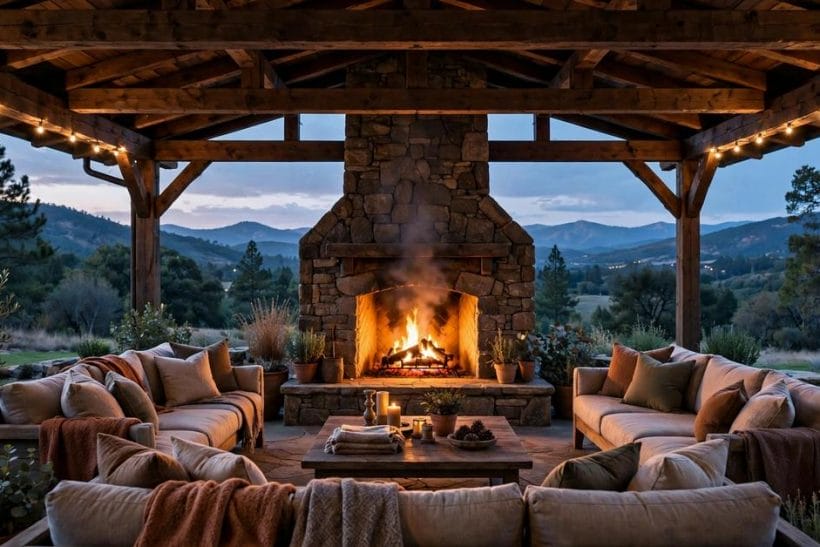
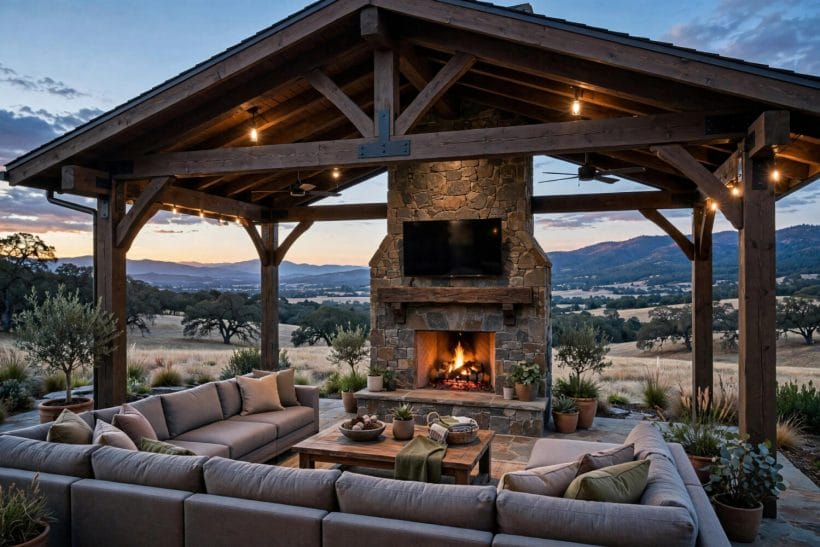
The fireplace usually earns the best wall of the patio, the one that frames the view without blocking the way in from the house. Placing it on a short end wall keeps the long side open for movement, while a fireplace on the long wall turns the whole patio into a room that faces the fire. Either choice works, provided the seating can gather around the fire without squeezing the paths people use every day. Walkways to the garden, the grill area and the back door should stay clear and generous, so nobody has to step around chairs or a coffee table to get through.
Consider the wind before settling the layout. Smoke drift matters more under a roof than in an open garden, because the cover can hold drifting smoke near the seating. A fireplace sheltered from the prevailing breeze, with open sides that let air move through, tends to feel far more pleasant than one tucked into a still corner. If the patio already has a roof, the fireplace position, the height of the chimney or flue, and the ventilation of the covered space are all matters for a professional to settle, since they affect how the fire draws and how comfortable the seating feels.
The view from inside the house matters too. A fireplace glimpsed through glass doors draws people outside, especially in the cooler months, and it gives the patio a focal point even when nobody is sitting out there. Try to keep that sightline open rather than filling it with tall storage or a screen. When the fireplace, the seating and the doorway line up naturally, the patio reads as an extension of the home, not as a separate yard feature that only gets used on special occasions.
2. Roof Forms and Shade Over the Fireplace Zone
The roof over a patio fireplace does more than keep rain off. It sets the mood of the whole space, softens bright sun, and gives the seating area a sense of enclosure that an open terrace never quite achieves. Solid roofs give the most weather protection and the most consistent shade, which suits patios used for dining and long evenings. Open beams and slatted covers let dappled light through and keep the space feeling airy, which suits warmer gardens where shade matters more than rain cover. The choice depends on climate, the direction the patio faces, and how much shelter the household actually wants.
Shade planning should follow the sun through the day rather than chasing a single midday snapshot. A patio that faces west needs late-afternoon shade most, while an east-facing patio needs morning cover for breakfast seating. The fireplace zone itself benefits from steady, even shade so the fire remains visible and inviting without glare bouncing off surrounding surfaces. For the broader question of roof shapes and materials, the companion guide to covered patio roof ideas looks at layouts, shade and furniture for covered patios in general, and it pairs naturally with the fireplace layouts here.
Whatever roof form is chosen, the structure above and around a fireplace needs professional attention. Heat, flue routing, clearances to combustible materials and local rules all interact with the roof design, and those decisions should never be improvised. A roof that looks generous can still be wrong for a fire if the clearances are tight or the ventilation is poor. Getting the roof and the fireplace designed together, by qualified people, is what makes the finished patio both beautiful and safe to enjoy.
3. Fireplace Forms for Outdoor Rooms
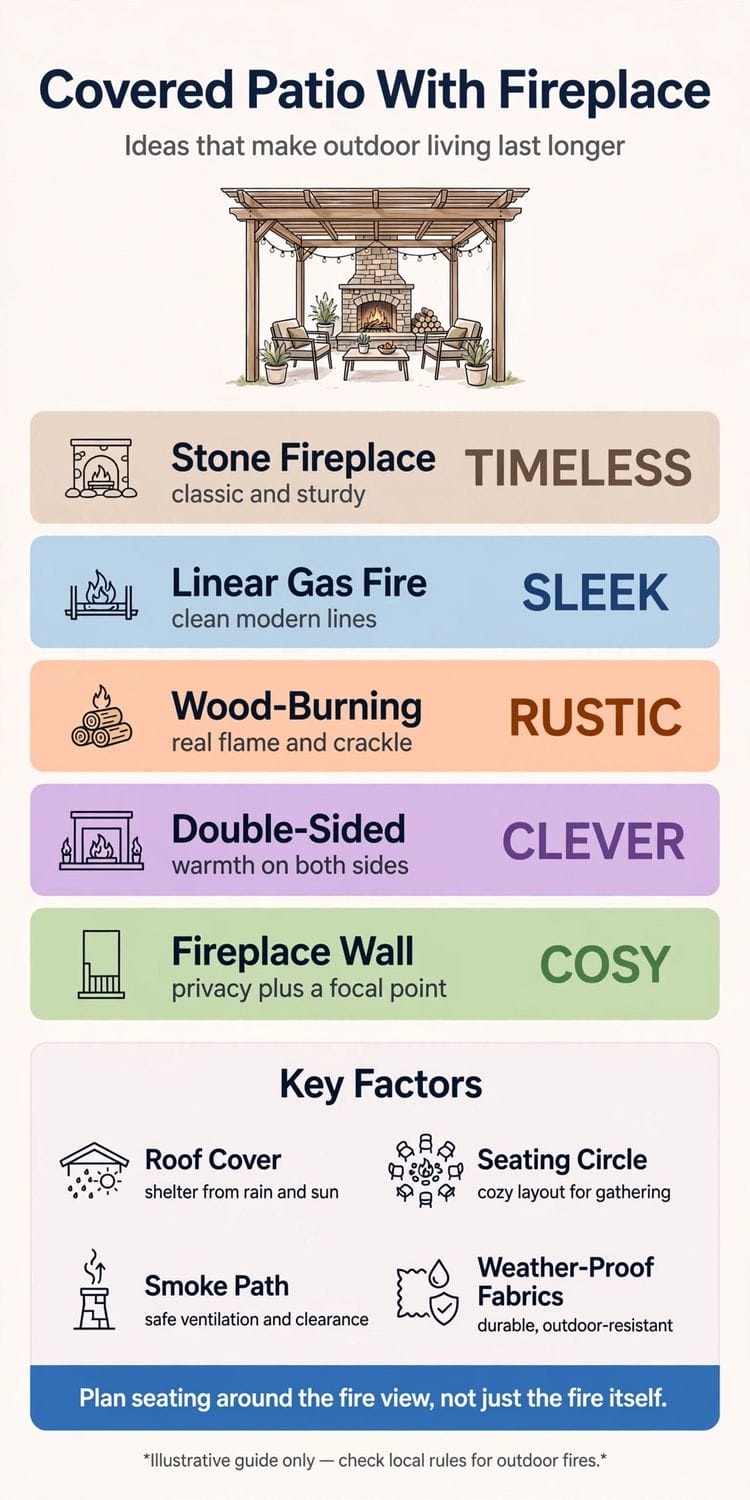
Outdoor fireplaces come in several broad forms, and each one suits a different kind of patio life. A traditional masonry fireplace gives a substantial, permanent anchor and suits larger patios where the fire is the centrepiece of the whole design. A freestanding or prefabricated outdoor fireplace can suit a smaller patio or a later addition, where a full masonry build would overwhelm the space. Linear and contemporary forms suit modern patios with clean lines, while a rustic stone surround suits gardens with a natural, relaxed character. The form should match the patio’s scale first and its style second.
Fuel choice shapes daily life more than most people expect. Wood fires bring crackle, scent and a lively flame, but they need dry wood storage, ash handling and attention to local burning rules. Gas fires light at the touch of a control, burn cleanly and suit households that want warmth without tending a fire, but the gas supply and connections are strictly professional work. Electric outdoor-rated fire features suit covered patios where a real flame is impractical, giving glow and atmosphere with simpler servicing. Each option has its own ventilation and clearance needs, stated by the manufacturer and confirmed by the installer.
Whatever form is chosen, the surround and mantel deserve as much thought as the fire itself. Stone, brick, stucco and tile each weather differently outdoors, and the right choice depends on exposure, frost, and how much upkeep the household is happy to do. A deep mantel shelf gives somewhere for lanterns and seasonal decoration, while a plain surround keeps the focus on the flame. For wall treatments and surround styling, the guide to fireplace wall designs explores surrounds, mantels and materials in detail, and the collection of photos of fireplaces shows how different surrounds look in finished rooms and outdoor spaces.
4. Seating Arranged Around the Fire
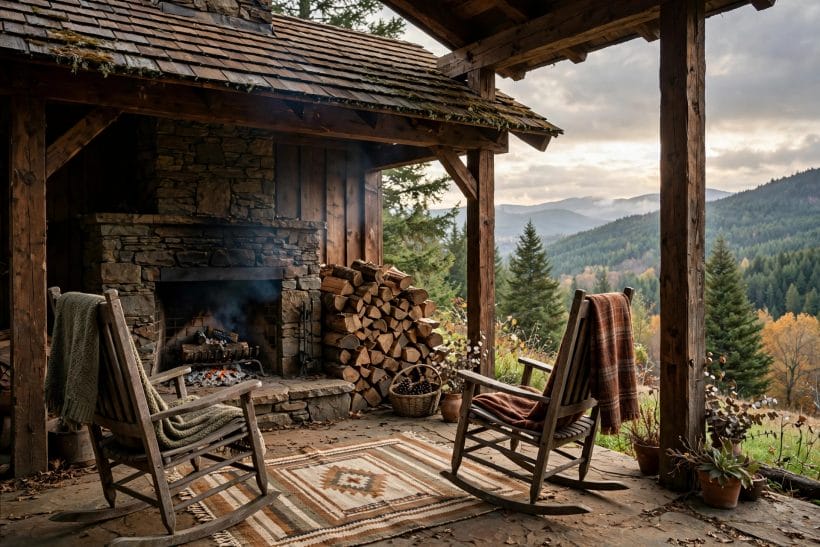
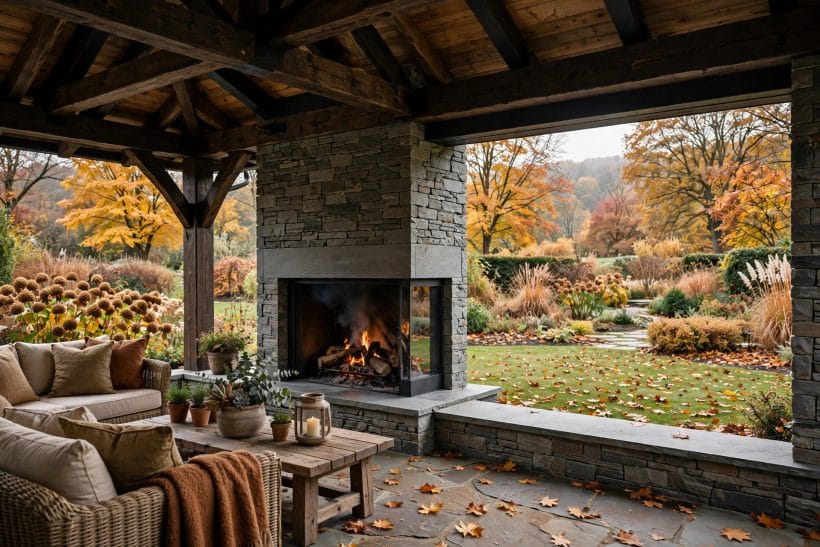
Seating is where a patio fireplace earns its keep. A deep sofa facing the fire, flanked by armchairs, creates a natural conversation circle, while a pair of lounge chairs angled toward the flames suits quieter evenings for two. The key is distance: close enough to feel the warmth and watch the flames, far enough that the fire never feels overpowering. Keep cushions, throws and any fabric well clear of the fire opening, following the manufacturer’s guidance and the installer’s advice on clearances. Comfort and safety sit together here, and neither should be traded for the other.
Flexible seating helps a patio serve both everyday use and gatherings. Lightweight chairs that can be pulled closer or pushed back let the same space host a family evening and a larger group without rearranging heavy furniture. A low coffee table or a pair of side tables keeps drinks within reach without blocking the view of the fire. If the patio is used year-round, outdoor fabrics that dry quickly and resist fading make the seating far easier to live with, and a nearby storage bench keeps throws and cushions protected when rain blows in under the roof edge.
Think about who sits where. The best seat in the house is usually the one with the fire in view and the garden beyond, so avoid putting a tall chair back directly in that sightline. Children and pets need seating that keeps them comfortably away from the fire, with clear paths that do not pass close to the opening. A hearth seat or built-in bench can be a lovely feature, but only where the design keeps sitters at a safe distance from heat and flame. When in doubt, give the fire more breathing room than seems necessary; a patio that feels spacious around the fire is a patio people relax in.
5. Dining Near the Fire
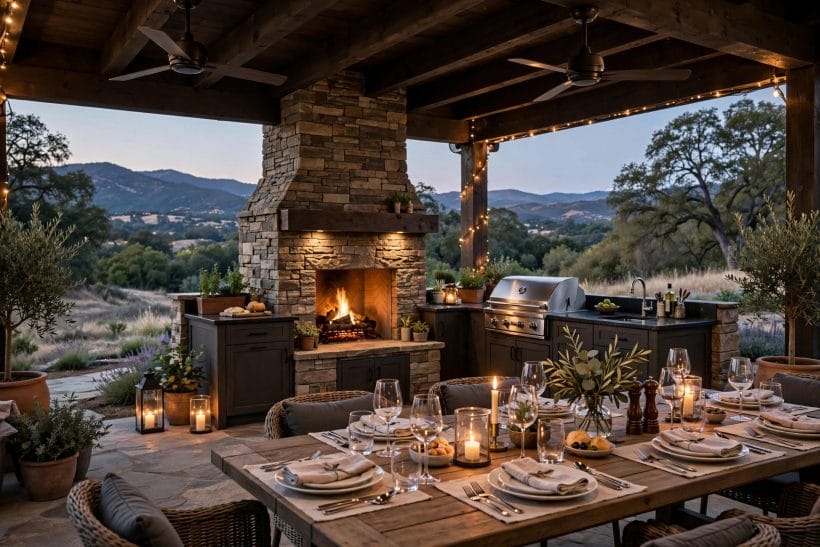
Dining beside a fireplace turns ordinary meals into occasions. A table set a comfortable distance from the fire lets diners enjoy warmth and flame-light without smoke drifting across the food. Position the dining table so the prevailing breeze carries smoke away from it rather than toward it, and keep the route between the kitchen door and the table clear for carrying dishes. A table that seats the household plus a couple of guests covers most evenings, while extension leaves or a second small table can handle larger gatherings without crowding the fire zone.
Lighting over the dining table deserves separate thought from the firelight itself. A pendant or a set of festoon lights above the table gives enough light to eat by, while the fire supplies atmosphere rather than task lighting. Keep any fabric, paper decoration or hanging greenery well away from the fire and from heat rising near the flue. Candles on the table add to the mood, but they should sit in steady holders, away from table edges where they could be knocked, and never be left burning unattended.
Practical touches make outdoor dining far more enjoyable. A sideboard or serving cart near the dining zone keeps plates, glasses and condiments close at hand, and a small sheltered spot for a cooler or drinks station saves trips indoors. If the patio hosts barbecues as well as fireplace evenings, keep the cooking area and the fireplace zone distinct, so smoke, heat and foot traffic do not compete. The result is a patio where cooking, eating and sitting by the fire each have their own comfortable corner under the same roof.
6. Surfaces Underfoot
What lies underfoot shapes how a patio fireplace feels every time someone steps outside. Stone and pavers give a natural, grounded character and handle heat and weather well, while poured concrete offers a clean, continuous surface that suits modern patios. Brick brings warmth and pattern, and gravel or decomposed granite can soften the edges of a patio, though loose surfaces need edging to stay put near seating. The surface around the fireplace itself should be chosen with heat in mind, using materials suited to the area and installed to the manufacturer’s guidance.
Texture matters as much as looks. A surface that stays sure-footed when wet is worth more than a beautiful one that turns slippery after rain, especially on the paths between the house, the seating and the fire. Slight falls that carry water away from the seating area keep the patio drier, and a level area under chairs and tables stops wobble and uneven wear. Rugs made for outdoor use can add softness and colour, but they should sit well clear of the fire opening and be easy to lift and dry after wet weather.
Consider upkeep honestly before choosing. Some surfaces need regular sealing or sweeping, while others largely look after themselves. A patio that is easy to sweep clear of leaves and ash will get used more often than one that demands constant care. For surface ideas across the wider patio family, the guide to patio with a fire pit ideas shows how different ground treatments change the feel of an outdoor room, and the companion post on patio with a fireplace ideas gathers the broader family of patio fireplace layouts alongside this covered-patio guide.
7. Lighting After Dark
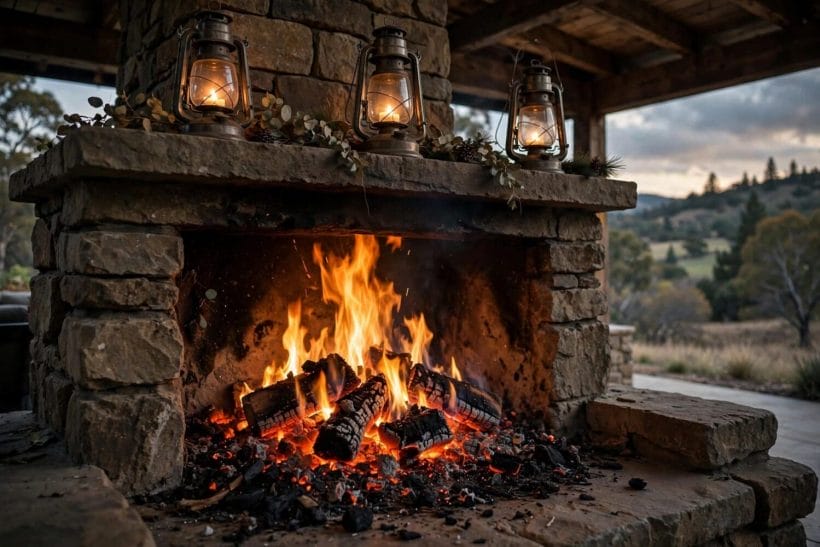
A covered patio fireplace comes alive after dark, when the fire becomes the main light source and the rest of the lighting should support it rather than compete with it. Low, warm lighting suits this mood: wall lights that wash the posts and beams, small lights tucked into planting, and a soft glow over paths. Bright overhead lights flatten the atmosphere and wash out the flames, so dimmable or low-level fittings give far more control. The aim is a patio where faces are easy to see, steps are clear, and the fire still holds the eye.
Layer the light in the same way the patio is layered by use. The seating zone needs gentle light for conversation, the dining zone needs enough light to eat comfortably, and the paths to the garden and the house need clear, safe lighting. Solar path lights and battery lanterns can fill gaps without new wiring, but any fixed outdoor electrical work, including new circuits, switches and permanently wired fittings, belongs to a qualified electrician. Outdoor fittings should be rated for their position and exposure, and covers and connections should be checked as part of routine upkeep.
Firelight itself is part of the design. A fire viewed through a wide opening throws moving light across the seating, which is one of the great pleasures of a patio fireplace, but it also means shadows shift through the evening. Keeping a steady background light prevents the patio from feeling too dark between flames, and it helps guests move safely when the fire burns low. String lights along the roof edge can frame the whole space beautifully, provided they are kept clear of heat, flues and any combustible material.
8. Planting and Softening the Edges
Planting stops a covered patio fireplace from feeling like a hard, built structure and turns it into a garden room. Climbers on the outer posts soften the roofline, pots of scented plants near the seating add fragrance on warm evenings, and a green backdrop behind the fireplace makes the stone or brickwork stand out. Choose plants for the light the patio actually gets: shade-tolerant planting suits a deeply roofed patio, while sun-loving pots suit the open edges where light spills in.
Keep planting clear of the fire and the flue. Dry foliage, overhanging branches and climbing plants that creep toward heat or a flue outlet are hazards, not decorations, and they should be kept well away, with regular trimming as part of garden upkeep. Pots and planters are easier to control than climbers, since they can be moved if growth heads the wrong way. A herb pot near the dining zone is a practical pleasure, giving fresh leaves within reach of the table while staying safely distant from the flames.
Seasonal planting keeps the patio interesting through the year. Evergreen structure gives the fireplace a green frame in winter, when the fire is used most, while summer colour comes from pots and beds at the patio edge. Grasses and foliage plants add movement and texture without the fuss of constant flowering displays. The planting should frame the fireplace, never hide it: the fire is the anchor of the space, and the garden’s job is to make the approach to it feel inviting.
9. Storage, Shelter and Everyday Practicalities
A patio fireplace gets used far more when everyday practicalities are solved. Cushion storage is the first of them: a weatherproof bench or box near the seating keeps cushions dry and ready, so sitting outside does not start with a trip to fetch everything from indoors. Firewood, where relevant, needs a dry, ventilated store kept at a sensible distance from the fire itself, with only the evening’s wood brought close to the fireplace. Tools, matches or lighters, and a small brush for ash should have a fixed, tidy home rather than drifting around the patio.
Shelter from wind and sideways rain makes a covered patio genuinely usable in more weather. Outdoor curtains, retractable screens or louvred side panels can close off the windward side while leaving other sides open for air and ventilation, which matters greatly around any fire. Any screening near a fireplace must respect clearances and stay clear of heat and flame, and the choice of materials should suit the heat of the area. When screens are drawn, check that air can still move through the space, since a fire under a roof needs ventilation to burn well and to keep smoke from lingering.
Routine care keeps the whole patio welcoming. Sweeping leaves and debris away from the fireplace area, wiping down the surround, checking that drainage still runs clear, and having the fireplace, flue and chimney inspected and serviced by a professional on the schedule they recommend all belong in the yearly rhythm. A patio that is easy to tidy after an evening by the fire is a patio that gets used again the next night, and regular professional servicing is what keeps that pleasure safe.
10. Small Covered Patios With a Fireplace
A small patio can still carry a fireplace beautifully, provided the fire is sized to the space. A compact fireplace on the end wall, a slim linear form, or a modest freestanding feature can anchor a small covered patio without swallowing it. In tight spaces, the seating should be chosen for scale: a small loveseat and a pair of chairs often serve better than a full sofa suite, and a side table or two can replace a large coffee table that would crowd the fire zone. Every piece should earn its footprint.
Small patios benefit from visual tricks that make them feel larger. A light-coloured surround, a mirror or pale wall finish opposite the fire, and planting kept to the edges rather than the middle all help the space breathe. Vertical storage, such as a slim wall-mounted shelf for lanterns and small pots, keeps surfaces clear without adding bulk. The fireplace itself can do double duty as a visual anchor and a backdrop, so the patio feels designed rather than filled, even where the floor area is modest.
Clearances matter even more in a small patio, because distances shrink and furniture naturally creeps closer to the fire. Keep the manufacturer’s clearance guidance and the installer’s advice in front of mind when arranging furniture, and resist the temptation to squeeze in one more chair near the flames. A small patio with generous space around its fireplace feels calmer and safer than a larger patio packed tight, and it invites people to linger rather than perch. For furniture that fits compact outdoor rooms, the guide to patio furniture checks covers frames, finishes, cushions and fit, which is exactly the detail small patios need.
Final Considerations
A covered patio fireplace succeeds when the design serves the way the household actually lives outdoors. The best layouts give the fire a clear anchor wall, seating at a comfortable distance, dining that stays clear of smoke drift, and lighting that flatters the flames after dark. Shade, surfaces and planting all support that core, while storage and routine care keep the patio ready to use on an ordinary evening, not just on special occasions. When those pieces line up, the patio becomes the room the household reaches for first.
Two cautions run through every choice in this guide, and they are worth repeating at the end. First, all fire, chimney, flue, gas and electrical work belongs to qualified professionals, with clearances and local rules confirmed in general terms before anything is built or changed. Second, a fire should never be left burning unattended, and combustibles, fabrics and dry planting should always be kept well clear of heat and flame. A covered patio with fireplace is a pleasure precisely because it is enjoyed with care, and a well-planned, professionally built patio repays that care for years. For wider inspiration across the home, the collection at tiny house designs shows how indoor and outdoor rooms can share the same relaxed, practical character.




0 Comments