
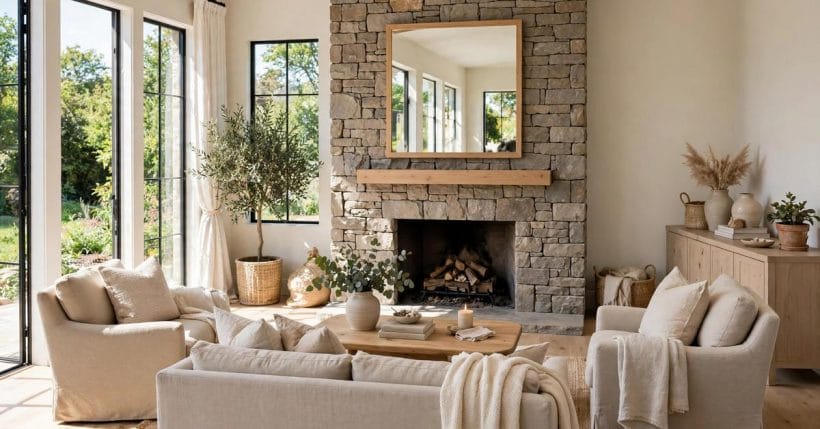
Walk into a room that feels settled and your eye knows where to go first. It might land on a fireplace, a wide window, a wall of colour, or a single piece of art that seems to hold the whole space together. That landing place is the room’s focal point, and it is doing more work than you might think. It gives the eye somewhere to rest, it tells you how the furniture should be arranged, and it stops a room from feeling like a collection of unrelated pieces that happen to share four walls. Learning focal point interior design is really learning how to find that landing place and then let the rest of the room support it.
This guide explains what a focal point is, how to identify the one your room already has, and how to work with it once you have found it. It covers rooms with an obvious centre and rooms with none, rooms with two strong contenders, and the small decisions about furniture, light, and restraint that decide whether a focal point sings or gets drowned out. The principles here apply to living rooms, bedrooms, dining rooms, and any other room where people gather, sit, and spend time. For the wider picture of how rooms come together, our interior design ideas are a good companion read.
Related Guide: Live in Harmony: 3 Types of Balance in Design
1. What a Focal Point Actually Is
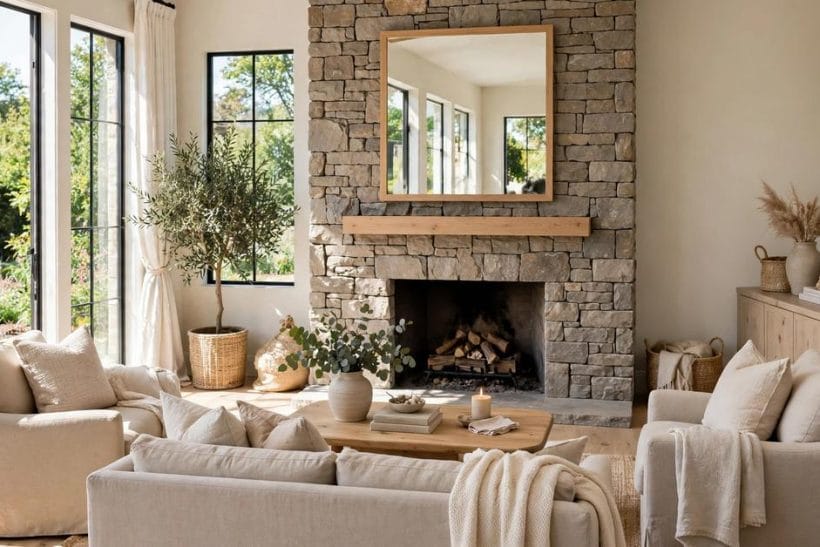
A focal point is the first thing your eye is drawn to when you enter a room, and the place your eye keeps returning to as you look around. It is not necessarily the biggest thing in the room, and it is not necessarily the most expensive thing either. It is the thing with the strongest visual pull, whether that pull comes from size, colour, contrast, light, height, or simply from being different from everything around it. A dark fireplace in a pale room pulls the eye because of contrast. A tall window pulls the eye because of light and view. A single vivid painting on a plain wall pulls the eye because it is the only place where colour gathers with any force.
Every room that feels comfortable has a focal point, even when nobody planned one. If you have never thought about it, your room still has one, because the eye always lands somewhere. The trouble starts when a room has no clear landing place, or when several things compete for attention at once. Then the eye wanders, the room feels restless, and no arrangement of furniture quite seems to settle. That restless feeling is often blamed on the wrong things: the sofa, the rug, the colour of the walls. More often, the real problem is that the room has no agreed centre, so nothing else knows where it belongs.
It helps to think of a focal point as an anchor rather than a star. A star demands attention for itself. An anchor holds everything else in place and makes the rest of the room easier to understand. A good focal point does not shout down the room; it organises it. Once it is established, the furniture has a direction to face, the lighting has a place to gather, and the quieter corners of the room can relax into their supporting roles. Without it, every piece has to fight for attention, and the room feels busy even when it is nearly empty.
2. How to Spot the One Your Room Already Has
The simplest way to find a focal point is to stand in the doorway and notice where your eye goes before you think about it. Do not analyse the room, and do not look for what you think should be the centre. Just notice the first landing place. Then step to another doorway, or another corner, and notice again. If your eye lands in the same place from more than one position, you have found your room’s natural focal point, and your job is mostly to honour it rather than invent something new.
If your eye lands in a different place from every angle, the room may have competing centres, and that is useful information too. A fireplace on one wall and a large television on another is a classic example: from the door, the fireplace wins, but from the sofa, the screen wins. Neither is wrong, but the room cannot serve two masters equally, and the later sections of this guide deal with exactly that problem. For now, simply noticing the competition is progress, because most rooms are rearranged repeatedly without anyone ever naming what is competing.
Another useful test is to imagine the room with everything movable taken out. Picture the bare walls, the windows, the fireplace if there is one, and the shape of the room itself. What remains that still draws the eye? Often the answer is an architectural feature: a window with a view, a fireplace, a wall of panelling, a staircase, or a ceiling detail. These built-in features are the room’s natural centres, and they are usually the best focal points, because they belong to the room itself rather than to anything placed in it. Working with what is already there is almost always easier than fighting it.
Finally, watch how people actually use the room. Where do guests look when they sit down? Where do family members naturally gather? The social centre of a room and its visual centre often coincide, and when they do, the room feels effortless. When they do not coincide, when everyone gathers around a table that sits in a visual dead zone while the beautiful window stands ignored behind them, the room feels subtly wrong even though nothing is obviously out of place. The eye and the gathering place should agree.
3. When a Room Has No Obvious Centre
Some rooms genuinely have no built-in feature worth building around. A plain rectangular room with modest windows, no fireplace, and flat walls is common, and it is nothing to worry about. In such a room, the focal point has to be made, and that is a creative opportunity rather than a problem. A made focal point can be a wall of colour, a large piece of art, a well-dressed bed, a handsome bookcase, or a dining table given the lighting and space it deserves. The principle is the same as with a natural focal point: one place gathers visual weight, and everything else quiets down around it.
The mistake to avoid in a plain room is trying to make everything interesting at once. A patterned rug, a bold sofa, a busy gallery wall, and a bright accent wall in the same room do not add up to a focal point; they add up to noise. Each of those elements is perfectly good on its own, but together they cancel each other out, and the eye finds nowhere to rest. A plain room actually needs more restraint than a room with a strong fireplace, because there is no natural anchor strong enough to hold its own against several loud contenders. Choose one idea, give it room, and let the rest of the room be calm.
Scale matters enormously when you are making a focal point. A small picture on a large empty wall does not become a focal point just because it is the only thing there; it looks lost, and the wall still feels blank. A focal point needs enough presence to hold a wall or a corner, whether that presence comes from size, from a grouping, or from contrast with its surroundings. A grouping of pictures can carry a wall that a single small frame cannot, and a generous piece of art can carry a wall that a cluster of tiny frames cannot. The test is the doorway test again: does your eye land there without effort? If you have to hunt for it, it is not carrying the room yet.
4. Choosing Between Two Strong Contenders
Many rooms have two features that both want to be the centre, and the honest answer is that one of them has to win. Trying to give equal weight to a fireplace and a large window, or to a view and a television, usually leaves the room feeling divided, with furniture pulled in two directions and no comfortable place to sit. The choice does not have to be permanent, and it does not have to be dramatic. It only has to be clear enough that the furniture, the lighting, and the eye all agree on the same answer.
Start by asking which feature serves daily life better. A fireplace that is used through the colder months and a window with a fine view are both attractive, but they serve different seasons and different moods. A room used mainly in the evening may belong to the fireplace, while a room used mainly in daylight may belong to the window. A room where people gather to talk belongs to whatever people can comfortably face together. There is no universal winner; the right choice is the one that fits how the room is actually lived in, not how it looks in a photograph.
Once you have chosen, the loser does not have to be hidden or apologised for. It simply steps down to a supporting role. The second feature can still be beautiful, still be dressed with care, and still be enjoyed, but it should not compete in scale, brightness, or busyness with the chosen centre. If the fireplace is the focal point, the window wall can carry quiet curtains and a low seat that enjoys the view without demanding attention. If the window is the focal point, the fireplace can be kept simple, with a calm mantel and nothing that shouts. Demotion is not banishment; it is the difference between a room with a lead and a room with an argument.
There is one exception worth naming, and it is the room that genuinely has two separate uses. A long room with a sitting area at one end and a dining area at the other can carry a focal point at each end, because each end is really its own space. The key is separation: the two centres should belong to two distinct areas, divided by furniture, by a rug, or by a change in lighting, so that the eye reads them one at a time rather than both at once. If the two areas blur into each other, the two focal points blur as well, and the room is back to competing with itself.
5. Fireplaces, Windows and Other Built-In Centres
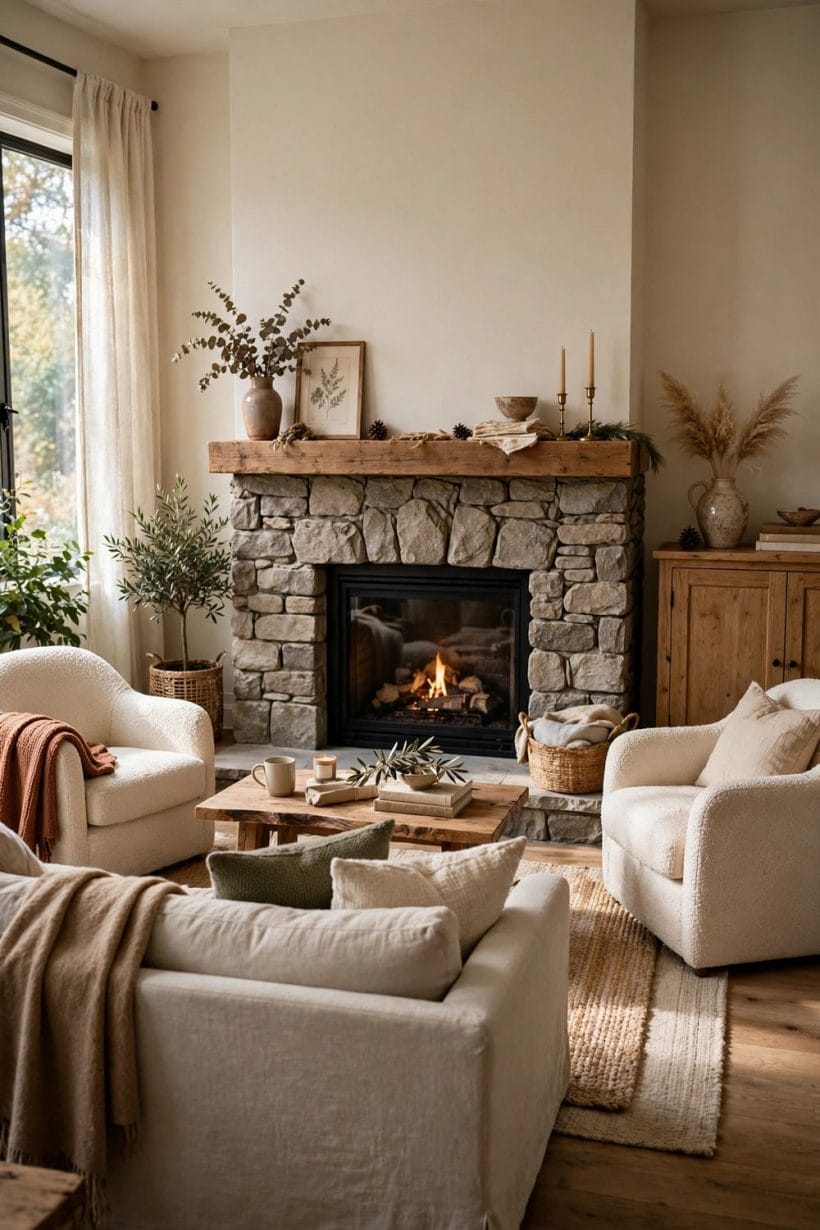
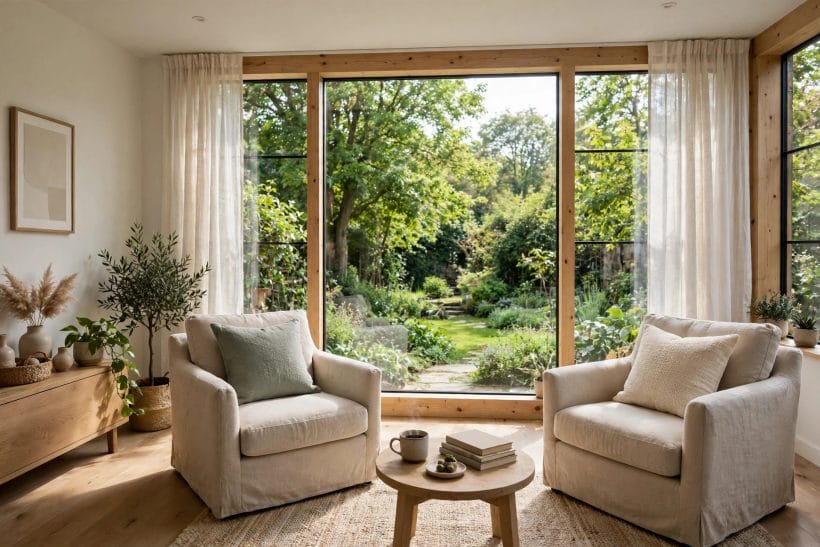
Built-in features make the most forgiving focal points, because they are part of the room’s bones. A fireplace brings height, symmetry, and a natural place for a mantel display, and it invites seating to gather around it in a way that few other features can. A window brings light and a view, and it makes a room feel connected to the world outside. A wall of panelling or a handsome staircase brings texture and structure. When your room has one of these, the wisest move is usually to accept the gift and build around it, rather than to invent a rival.
That said, a built-in feature still needs a little help to do its job well. A fireplace with a cluttered mantel and a television looming above it stops being a fireplace focal point and becomes a jumble. A window hidden behind heavy curtains and bulky furniture stops being a view and becomes a wall. The help a built-in centre needs is mostly subtractive: clear the clutter, give it breathing space, and let its own qualities show. A simple mantel with a few well-chosen objects beats a crowded one. A window with light, unobtrusive dressing beats one smothered in layers. The feature is already strong; it needs framing, not competition.
Seating is the clearest signal of which feature you have chosen. People sit facing what matters to them, and a room where every seat faces the fireplace reads as a fireplace room, just as a room where the chairs turn toward the window reads as a view room. If your seating faces neither, or faces in several directions at once, the room is telling you that no decision has been made. Turn the main seating toward the chosen centre, even if only slightly, and the room will immediately feel more deliberate. Our living room ideas show many rooms where this single decision does most of the work.
It is also worth remembering that a built-in centre changes with the seasons and the time of day. A fireplace matters most in the colder months, a window matters most in daylight, and a room that leans entirely on one of them can feel flat when that feature is quiet. The answer is not a second rival focal point, but a room that is comfortable even when its centre is resting. Good lighting, comfortable seating, and calm supporting walls keep the room pleasant at all hours, so the focal point can shine when its moment comes and rest gracefully when it does not.
6. Art, Colour and Texture as Made Focal Points
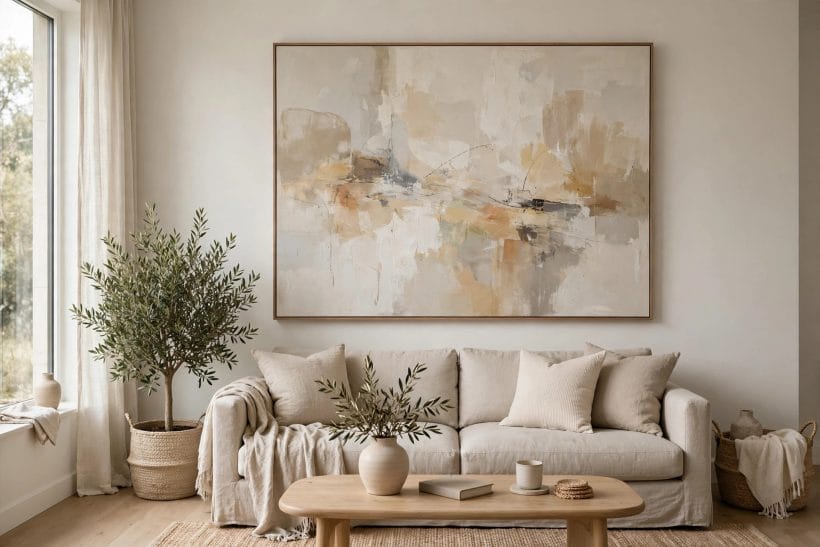
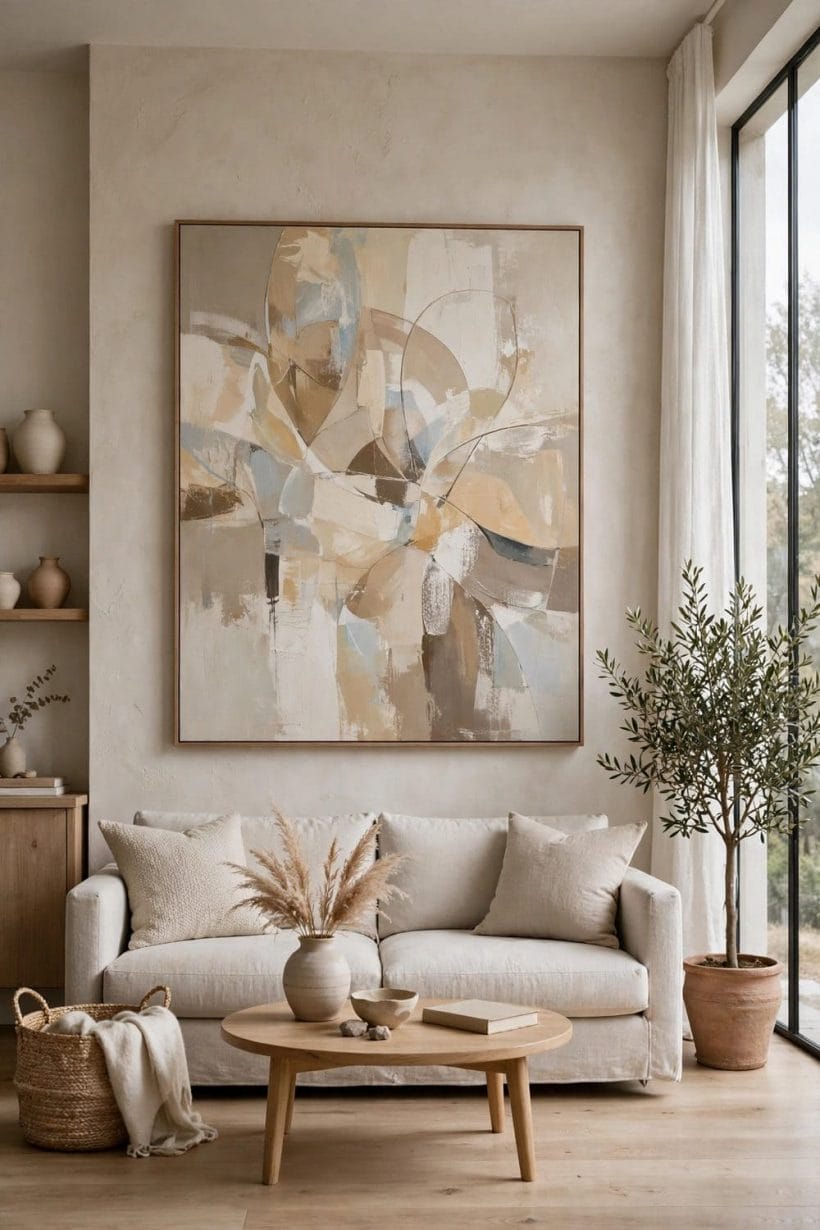
When a room has no built-in centre, art, colour, and texture are the most reliable tools for making one. A large piece of art works because the eye is drawn to imagery, to contrast, and to anything that breaks a plain surface with intention. A wall of colour works because a single strong colour in a calm room is impossible to ignore. Texture works more quietly: panelling, timber, woven hangings, or a tactile wall finish can hold a wall without colour or imagery at all. Each tool has its own character, and the choice between them should follow the mood you want the room to have.
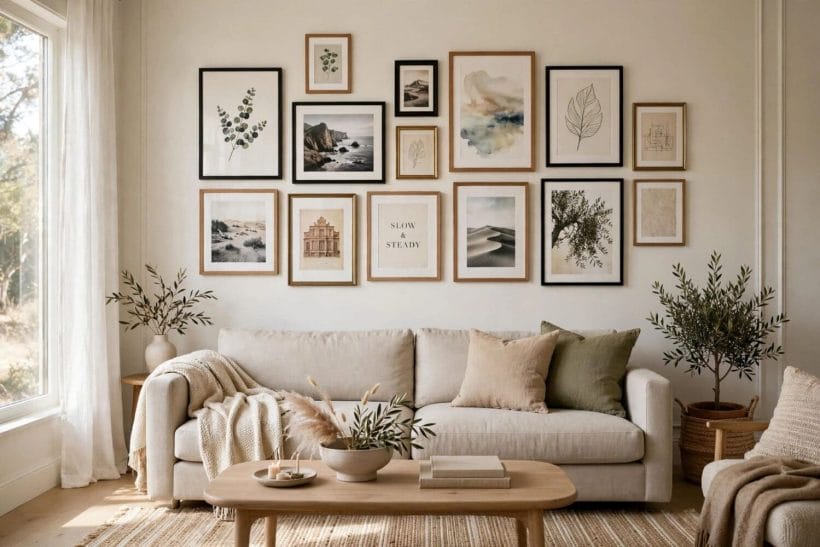
Art deserves a word of caution, because it is easy to get wrong in both directions. A piece that is too small for its wall looks tentative, while a wall crowded with many small pieces can feel busy rather than focused. A single generous piece, or a grouping arranged as one clear composition with a shared rhythm, reads as a focal point. A scattering of unrelated frames reads as clutter. The grouping should feel like one decision, not several: frames that relate to each other, spacing that is even and deliberate, and an overall shape that the eye can take in at a glance. If you have to explain the arrangement, it is probably not reading as one thing.
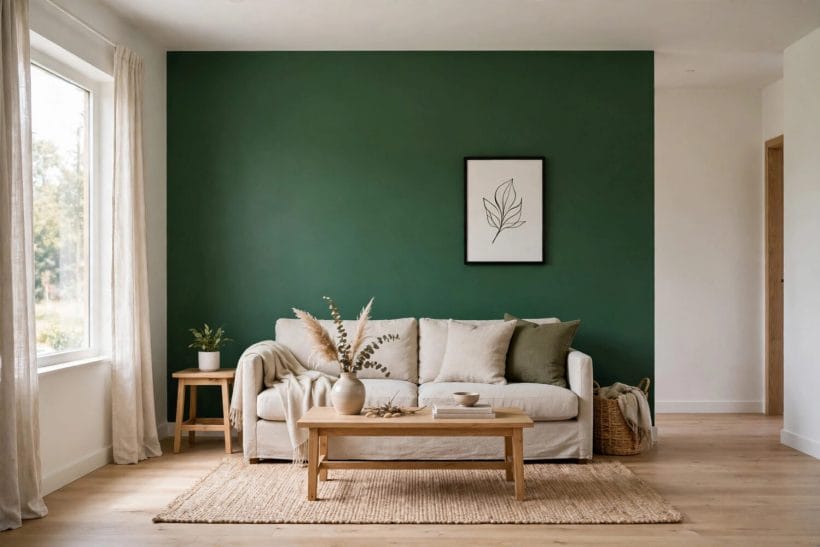
Colour as a focal point follows a similar discipline. One coloured wall in a room of calm walls is a focal point. Two coloured walls start an argument, and a coloured wall plus a bold sofa plus a patterned rug is a crowd. The coloured wall also needs something to justify it: a sofa against it, a bed against it, or a piece of furniture that anchors it and gives the eye a reason to stop there. A coloured wall with nothing against it can feel like an unfinished thought. Pair the colour with the room’s main piece of furniture, and the two strengthen each other. For ideas on carrying a single colour with confidence, our accent wall ideas show the principle in many different rooms.
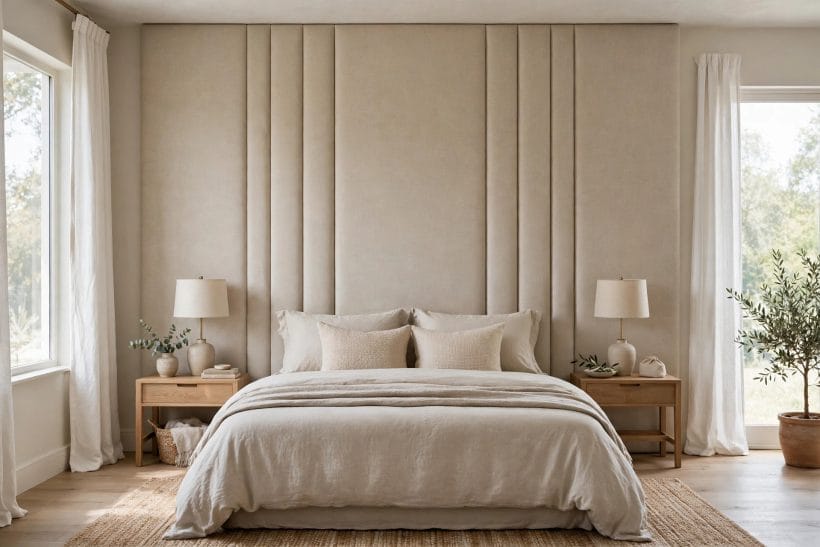
Texture is the quietest of the three tools, and often the most sophisticated. A timber wall, a panelled wall, or a wall of woven texture holds attention through touch and shadow rather than through colour or image, and it suits rooms where calm matters more than drama. Texture works best when the rest of the room is simple, because its effect is subtle and easily drowned out by pattern elsewhere. In a quiet room, a textured wall can be the most interesting thing in it without ever raising its voice, and that is exactly what a good focal point should do.
7. Arranging Furniture Around the Centre
Once the focal point is chosen, furniture arrangement becomes much simpler, because every piece now has a job: face the centre, support the centre, or stay quietly out of the way. The main seating should face the focal point, or angle toward it, so that sitting down feels like arriving somewhere rather than floating in the middle of a room. Side tables, lamps, and smaller chairs then fill in around the main seating, close enough to be useful and far enough apart to let the room breathe. The arrangement should feel like a conversation with the focal point, not a queue for it.
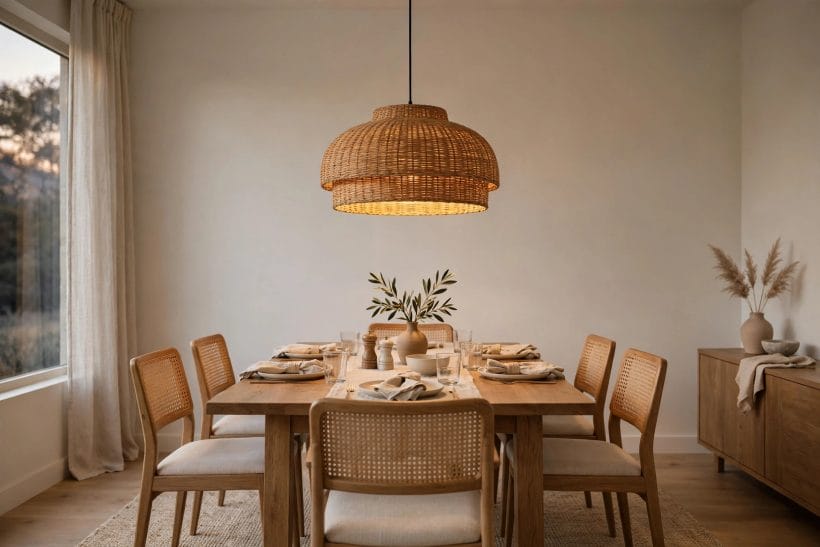
Distance matters as much as direction. Seating pushed hard against a fireplace wall feels cramped, while seating stranded in the middle of a large room feels disconnected from everything. The comfortable middle ground is close enough that the focal point feels present and far enough that the room has air in it. The same applies to a bed against a headboard wall, or a dining table beneath a pendant: the furniture and the focal point should feel related, with a gap that lets each be appreciated. If you have to raise your voice across the gap, or if you feel crowded against the wall, the distance needs adjusting.
Rugs are often the unsung heroes of focal-point arrangement, because they define the gathering zone and tie the seating to the centre. A rug that sits under the front of the seating and reaches toward the focal point draws the eye forward and makes the arrangement feel intentional. A rug that is too small, floating in the middle of the floor with furniture perched around its edges, does the opposite: it chops the room into pieces and weakens the connection to the centre. The rug does not need to be grand, but it does need to be generous enough to gather the seating into one group.
Small rooms deserve a special note here, because the temptation in a small room is to push everything against the walls and leave the middle empty, which often turns the back of every piece toward the centre. In a small room, the focal point still rules, and the seating should still face it, even if that means floating a chair or a small sofa slightly away from the wall. The room will feel larger, not smaller, when the arrangement has a clear direction, because the eye travels to the focal point instead of bouncing between the walls. Our small living room ideas and tiny living room ideas both show how this works at the smallest scales.
8. Lighting the Focal Point Without Shouting
Light is the subtlest way to strengthen a focal point, and the easiest to overdo. A little extra light on the chosen centre, whether from a picture light, a pair of lamps, or daylight allowed to fall where it naturally wants to, tells the eye that this place matters. The key is that the light should feel like emphasis, not like a spotlight on a stage. The focal point should be the brightest thing in the room by a gentle margin, not by a glaring one, so that the eye drifts toward it rather than being yanked.
Daylight deserves first consideration, because it is free, flattering, and changes through the day in a way that keeps a room alive. If the focal point is a window, daylight is already doing the work, and the job is simply not to block it. If the focal point is a fireplace or a wall of art, the light that falls on it from a side window is often enough, and heavy curtains or tall furniture that steal that light should be reconsidered. A focal point that sits in shadow while a side wall glows will lose the contest no matter how beautiful it is, because the eye follows light before it follows anything else.
In the evening, layered lamplight takes over from daylight, and the same principle applies. A lamp beside the seating, a gentle wash of light on the focal wall, and a dimmer, calmer light elsewhere will keep the centre in charge after dark. The mistake is to light everything equally, which flattens the room and leaves the eye with nowhere to land, or to blast the focal point with a single harsh source, which makes it feel interrogated rather than admired. Soft, warm, and slightly stronger at the centre is the recipe, and it is worth adjusting lamp by lamp until the balance feels right.
One more lighting caution: a television or a glowing screen is a light source too, and it will hijack a room’s focal point the moment it is switched on, no matter how carefully the rest of the room is arranged. This does not mean screens have no place, but it does mean their role should be decided honestly. If the screen is the evening focal point, let the seating and the lighting admit it. If the fireplace or the art is meant to hold the room, the screen should sit quietly, ideally where it does not glow directly into the seating’s line of sight when idle. Pretending the screen is not a focal point is the one arrangement that never works.
9. What to Do With Everything Else
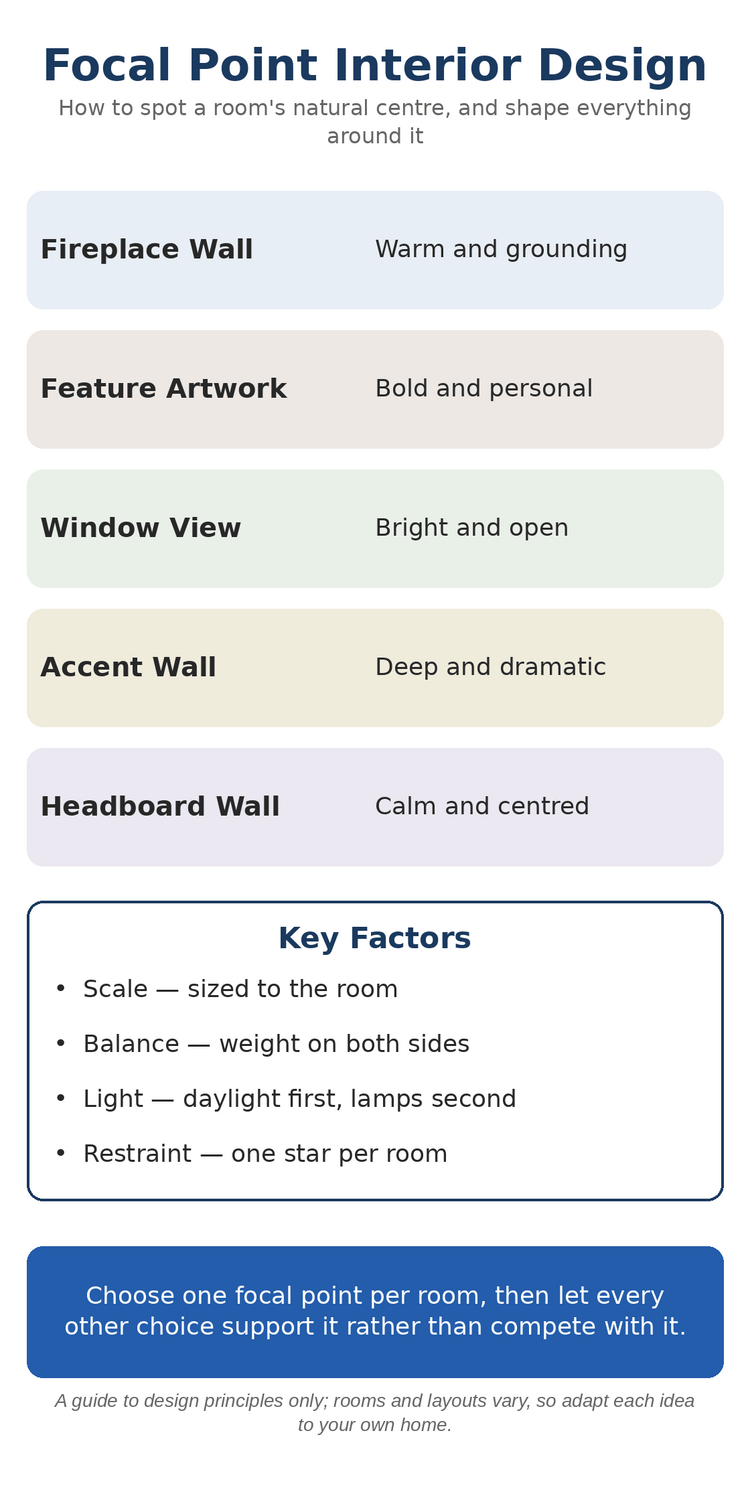
Choosing a focal point is only half the work. The other half is deciding what happens to everything else, and the answer is that everything else should become quieter, simpler, and more supportive. This does not mean bare or boring. It means that the supporting walls carry calm colour, the secondary furniture is comfortable without being loud, and the decoration on the non-focal walls is restrained enough that it reads as texture rather than competition. A room with a strong centre and calm surroundings feels rich. A room with a strong centre and loud surroundings feels like an argument.
Symmetry is a useful tool for the supporting cast, even in rooms that are not formal. A pair of lamps, a pair of chairs, or a pair of matching objects flanking the focal point will strengthen it, because symmetry tells the eye that this place is important enough to be framed. The framing does not have to be rigid or perfect; a roughly balanced arrangement, with similar visual weight on each side, does the same work in a relaxed room. What matters is that the eye senses order around the centre, rather than a random scattering that pulls attention sideways.
Empty space is also part of the supporting cast, and it is the part people most often undervalue. A bare stretch of wall beside a focal point is not wasted space; it is the silence that lets the focal point be heard. A room crammed edge to edge with furniture and decoration gives the eye no rest, and the focal point drowns in the crowd. Leaving some wall bare, some floor visible, and some surfaces clear is not minimalism for its own sake; it is the practical discipline that keeps the centre visible. If a wall feels empty, the answer is rarely to fill it; the answer is usually to check whether the focal point itself is strong enough.
Bedrooms illustrate this principle beautifully, because the bed wall is the natural focal point and everything else in the room exists to serve rest. A calm headboard wall, quiet bedding, and bedside lamps that frame rather than compete will make the room feel restful in a way that no amount of decoration on the other walls can achieve. Our tiny bedroom ideas show the same discipline in rooms where every inch counts, and the lesson transfers directly: the supporting cast earns its keep by being calm.
10. Common Mistakes That Split a Room’s Attention
The most common mistake is having no focal point at all, which usually shows up as furniture arranged around the edges of a room with nothing to face. The room feels like a waiting area rather than a living space, and no amount of new cushions or decoration fixes it, because the problem is structural, not decorative. The fix is to choose a centre, even a modest one, and turn the main seating toward it. The room will change character immediately, and the change costs nothing.
The second most common mistake is the opposite: too many focal points, each shouting. A bold rug, a bright sofa, a busy feature wall, and a large television in one room do not make the room more interesting; they make it exhausting. The eye cannot rest, and the room feels tense even when it is tidy. The fix is subtraction, not addition: quieten everything except the chosen centre, one element at a time, until the room settles. It is often surprising how little needs to change. Removing one loud element can be enough to let the centre emerge.
The third mistake is scale: a focal point too small for its wall, or too large for its room. A tiny picture on a vast wall looks apologetic, while an enormous piece in a small room feels oppressive and leaves nowhere for the eye to go next. The test is proportion, judged by eye rather than by rule: does the focal point feel sized to the wall it sits on and the room it serves? If it feels lost, it needs grouping, framing, or a larger presence. If it feels overwhelming, it needs a calmer setting or a smaller stage. Proportion is felt before it is measured, and the doorway test will tell you honestly which side of the line you are on.
The fourth mistake is placing the focal point where nobody can enjoy it: behind the sofa, in a corner nobody faces, or on a wall that the seating turns away from. A focal point is not a trophy to be stored; it is a place the room gathers around. If the seating cannot face it comfortably, it is in the wrong place, no matter how beautiful it is. Move the seating, or move the focal point, until the two agree. A room where the centre and the seating face each other is a room that works, and a room where they do not is a room that will always feel slightly off, even if nobody can say why.
Final Considerations
Working with focal points is less about acquiring anything new and more about deciding what matters in the room you already have. Stand in the doorway, notice where your eye lands, and trust that first glance: it is usually telling the truth. If the room already has a natural centre, honour it, clear its surroundings, and turn the seating toward it. If it has none, make one with art, colour, or texture, sized generously enough to carry its wall. If it has two, choose the one that serves daily life better, and let the other step gracefully into a supporting role.
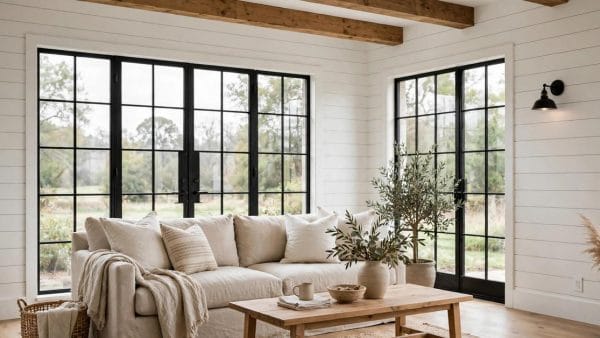
Then give the decision time to settle. Live with the arrangement for a while before judging it, because a room that has just been rearranged always feels strange at first, and the eye needs time to learn its new route. Adjust the lighting, quieten one loud element if the room still feels busy, and leave some space bare. The goal is not a room that impresses in a single glance, but a room that feels easy to be in day after day, where the eye knows where to go and the body knows where to sit. That ease is the real reward of focal point interior design, and it is available in rooms of every size and style, from the grandest farmhouse living room to the smallest cosy corner. Our farmhouse living room ideas show the same principles at work in rooms built around warmth, timber, and gathering, and they are a fitting place to end: a focal point, after all, is simply the place a room gathers around.


0 Comments