

Every flock keeper eventually learns the same hard lesson: predators test your setup on the nights you are tired, late or away. Good chicken predator protection is not one product. It is mesh, locks, ground work and routine, done properly before the birds arrive.
Build like they are already trying, because sooner or later, they will be.
1. Protection at a Glance
Predator defence works in layers, and a flock is only as safe as the weakest one. The mesh keeps things from reaching through. The locks keep clever paws from simply opening the door they cannot chew. The ground work stops the diggers going under what they cannot get through or into. And the night routine makes sure the other three layers are actually in force when it matters, because most serious losses happen between dusk and dawn, while the flock sleeps and the yard is unobserved. Leave any one layer out and a determined local predator will eventually find that exact gap.
| Layer | What It Means | Why It Matters |
|---|---|---|
| Mesh | Hardware cloth | Not chicken wire |
| Locks | Two-step latches | Raccoon-proof |
| Ground | Buried skirt | Stops diggers |
| Night | Locked by dusk | Every night |
Four key factors organise everything that follows: mesh, locks, ground and routine. Notice that three of them are built once, with a drill and a spade, and the fourth is free, repeated nightly for the life of the flock. That is the encouraging shape of this whole subject. Security is mostly a building project with a diary attached, not an endless battle. Work through the layers in the order given, coop first, run second, routine always, and judge every decision by one simple test: would this still be shut, sound and unbreached after a clever, hungry animal worked at it undisturbed all night?
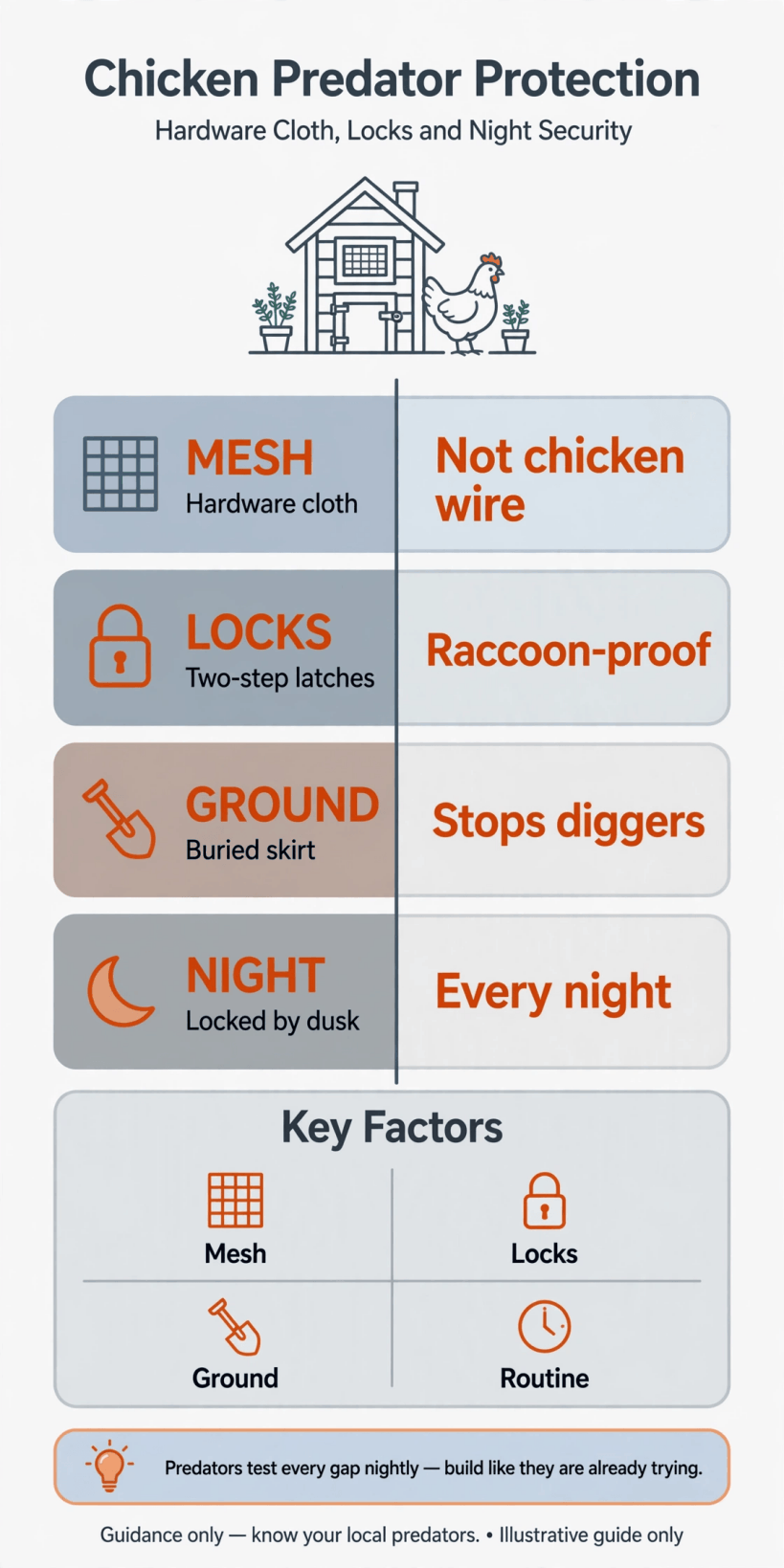
Mesh, locks, ground and night routine: the four layers that between them keep a flock safe.
2. Know Your Local Predators
Protection starts with knowing what you are protecting against, because a fox, a raccoon, a rat and a hawk attack four completely different weaknesses. Ground hunters dig, climb and test latches. Raccoons in particular work with dexterous paws and real problem-solving patience, reaching through wide mesh and undoing simple fastenings. Rats take eggs and chicks through gaps a keeper would swear nothing could use. Dogs, your own included, do damage in minutes of excitement. Birds of prey take free-ranging birds by day, silently and from above. This guide stays general guidance only: know your local predators, and their legal status, before you build.
The signs are usually there before the losses. Tracks in mud, droppings, feathers pulled at a fence line, scratch marks at a door, a run dug at always in the same corner: read the yard the way the night shift reads it. Ask neighbouring keepers what visits them, because local knowledge is the most accurate predator map there is. Then build for the strongest and cleverest of your regular visitors, not the average one. A setup that defeats your worst local predator defeats everything below it automatically, while a setup built for the average explains itself, sadly, on the first night the worst one calls.
3. Mesh: Hardware Cloth, Not Chicken Wire
The single most important materials decision in poultry keeping is this: use hardware cloth, the strong welded mesh sold on rolls, and not chicken wire. Chicken wire exists to keep chickens in, and it does that adequately; it was never designed to keep predators out, and determined animals tear, stretch and unravel it with ease. Hardware cloth is a different substance entirely, rigid, welded at every joint and strong under paw and jaw. Use it on every opening of the coop, windows, vents and doors, and across the run wherever a barrier is meant to be a barrier rather than a suggestion.
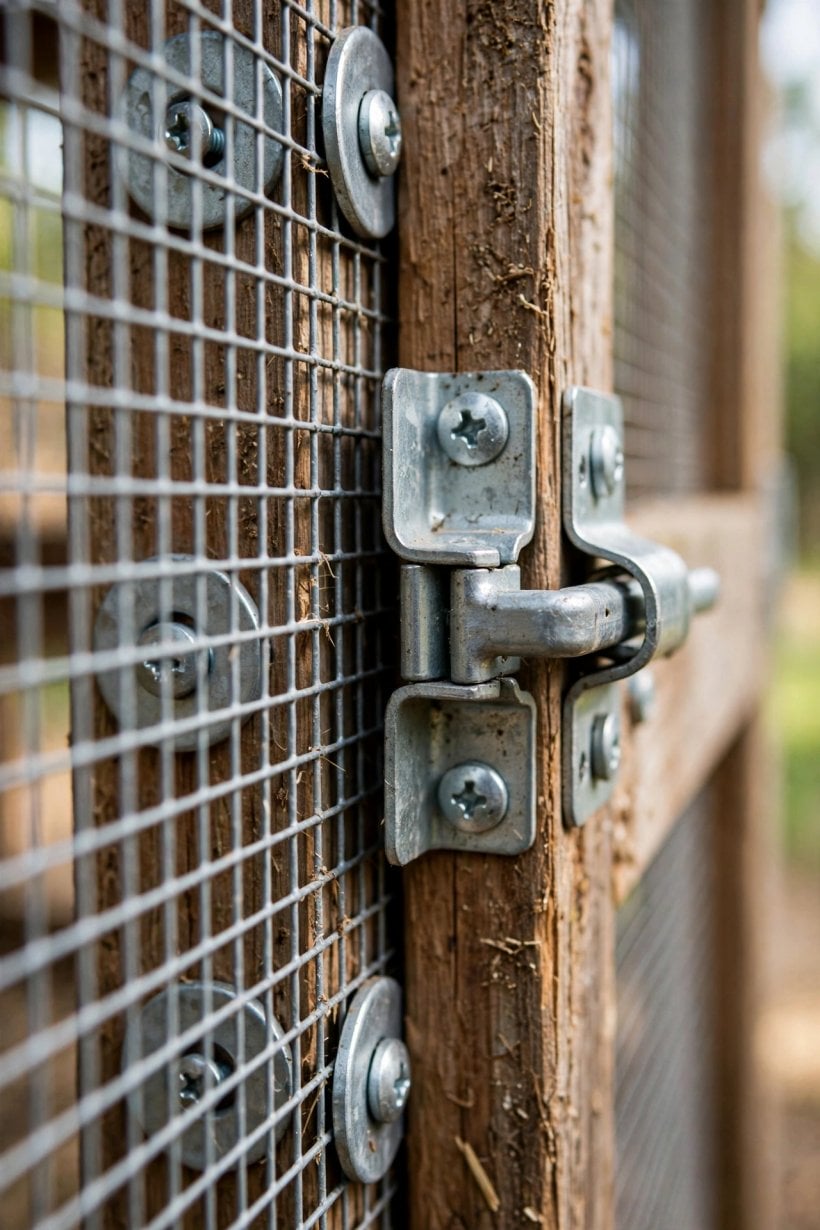
Chicken wire keeps chickens in; hardware cloth keeps predators out. The difference is the flock.
How mesh is fixed matters as much as the mesh itself. Screws with washers, battened edges and fixings a paw cannot pry at will outlast staples, which work loose and pull out under pressure exactly where the pressure is applied. Overlap joints, fold raw edges away, and walk the whole enclosure afterwards with a predator’s eye and a strong hand, pushing at every panel. Check corners and the junction of mesh and timber with particular suspicion, because that is where builders get tired and gaps are born. Good mesh, well fixed, is the layer every other layer depends on.
4. The Coop: A Solid Night Box
At night the coop is the flock’s fortress, and it should be built like one: solid walls, a sound floor, a roof that sheds weather and weight, and no opening anywhere that is not covered in hardware cloth or shut behind a latch. Ventilation is essential and entirely compatible with security, provided every vent is meshed, because the old mistake of leaving a gap for air under the eaves is an engraved invitation to everything that climbs. Inspect the building at bird height and at ground level, inside and out, in daylight and by torch, and treat every knothole, warped board and gnawed corner as a door until proven otherwise.
Builders get one great chance to get this right, which is before the first bird moves in. If you are building new, working from tested chicken coop plans and then hardening them, meshing every opening, upgrading every latch, thinking about the floor and the ground line, produces a coop that is secure by design rather than by a dozen later repairs. If you are converting a shed or outbuilding, the same audit applies, with extra suspicion reserved for old timber at ground level and any previous life the building has had as a store, because stored feed smells carry, and what carries to a keeper’s nose advertises itself far more strongly to the night shift.
5. Locks and Latches: Two-Step and Raccoon-Proof
A raccoon can learn to operate almost any fastening a tired human can operate with one hand in the dark, which rules out a small army of common latches. Simple hooks, sliding bolts without resistance, lift latches and loose hasps have all been opened by paws that had never seen them before. The standard to aim for is a two-step fastening: a latch that must be lifted and turned, pressed and slid, or secured with a clip or padlock, something that needs two different motions or a human thumb. If a child of five in mittens could open it at midnight, so can the local raccoon, and it eventually will.
Fit these fastenings everywhere a door exists: the coop door, the pop door, nest box lids that open from outside, feed store doors and run gates. Check them as part of the weekly round, because a stiff, bent or ice-bound latch that gets left half-done is an open door with extra steps. Make the secure way the easy way, latches at a comfortable height, a padlock where the yard is overlooked by no one, a torch kept by the back door for the nightly round. Security that fights its owner loses, slowly, one lazy evening at a time; security that clicks shut kindly gets done every single night.
6. Ground Defence: Buried Skirts and Sound Floors
What cannot climb or chew will dig, and digging is the quietest attack of all, so the ground line of coop and run needs its own layer of thought. The proven method is a skirt: hardware cloth that runs down from the base of the wall and out flat under the surface of the ground around the building, pinned or buried, so that anything digging at the wall meets mesh under its paws a short way in and gives up. Digging animals almost always start at the wall itself, which is exactly where the skirt waits for them. A solid coop floor achieves the same end indoors, with the bonus of dryness and easy cleaning.
Walk your ground line looking for the invitations: soil washed away under a corner, a gap where the run meets a slope, stones or timber stacked against a wall giving cover and a start for digging, a gate that hangs clear of the earth. Level, mesh and clear as you find them. Placing the run and coop well to begin with makes all of this easier, and sketching the holding on paper first, as in a simple livestock farm layout, keeps poultry buildings off the low, soft, hidden ground that digging visitors prefer and on the open, drained, observable ground that keepers can actually defend.
7. The Run: Roof, Sides and Day Security
The run is where the flock spends its waking life, and its security has to defeat a different shift: daytime hunters. A run’s sides want the same hardware cloth as the coop, fixed just as firmly, and its top wants covering, with mesh or a solid roof, against climbers and against attack from the air. An uncovered run under trees, beside fences or near outbuildings offers launching points and blind spots in every direction. Corners where two fences meet, the sheltered side of the coop and any stretch of run hidden from the house are where a daytime visitor will work undisturbed, so design them out or watch them hardest.
Day security is also about what the run does not offer. Feed spilled outside the wire feeds crows, rats and everything else you are excluding, and a rat population drawn to the run by day becomes a chick and egg problem by night. Store feed in sealed metal containers, take feeders in or hang them thoughtfully, and keep the run’s surroundings clear of the long grass, junk piles and wood stacks that give approaching animals a covered route to the fence line. A run standing in short, open ground, visible from the house, with its food kept inside its wire, is a much harder target than its mesh alone would suggest.
8. Night Security: Locked by Dusk, Every Night
All the building in the world is undone by one habit, and protected by one habit. The protective habit is absolute: the flock is shut in, counted, and locked by dusk, every night, without exception for weather, visitors, tiredness or the birds’ own reluctance. Chickens come home to roost as the light fails, which makes the keeper’s part easy, a short round at the same time each evening, shutting the pop door on a settled flock, checking the latches by hand, and having a word with the dark as you go. Automate the door if your life needs it, but never automate away the walk, because the walk is also your daily inspection of wire, ground and birds.
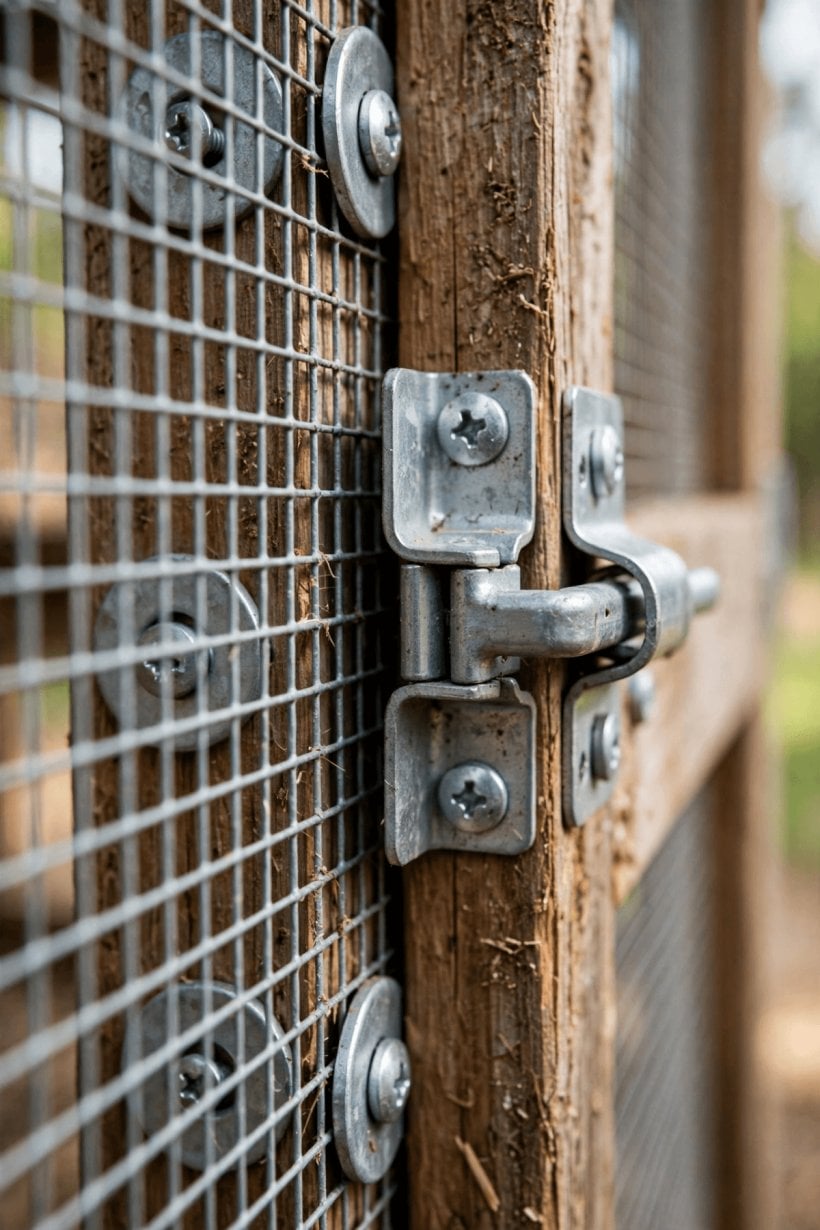
Locked by dusk, every night: the routine is the layer that makes all the other layers count.
The failures, when keepers describe them honestly, are almost never exotic. The door was left for a late bird that was already in. The latch was forgotten because it rained. The flock was left out because the keeper was away and a neighbour was asked to feed but not to shut. Build the routine for the tired, rained-on, running-late version of yourself: one unmissable round, a checklist until it is muscle memory, and a backup person properly briefed for holidays. Night security is not a product you buy once. It is a promise you keep nightly, and the flock’s safety is quite literally counted in how rarely it is broken.
9. Free Range: Supervision, Cover and Honest Trade-Offs
Free ranging is the joy of keeping chickens and its one deliberate risk, and honest protection advice has to say so plainly. A bird ranging free is a bird accepting the daytime dangers of its landscape, hawks above, dogs and foxes at the edges, in exchange for the best life poultry can have. Keepers reduce that risk without removing it: ranging birds where there is real cover to dive under, keeping the flock in when a local hunter is actively working the ground, supervising at the risky ends of the day, and never ranging young or new birds until they know exactly where home and safety are.
The middle path suits most homesteads: a secure run for the ordinary day, and ranging as a supervised pleasure in the safer hours, on the safer ground. That balance is part of the wider craft covered in how to raise chickens, where housing, ranging and routine are planned as one system rather than as separate arguments. Mixed-species yards should plan security bird by bird, too: keepers wondering can turkeys live with chickens will find the housing questions familiar, and ducks, slower and ground-bound, need a keeper who has read the routine in our raising ducks for beginners guide and shuts them in with the same nightly discipline.
10. After an Attempt, and the Mistakes That Invite One
Sooner or later most yards are tested, and the response decides whether a test becomes a habit for the visitor. Repair damage the same day, and repair it stronger, because an animal that nearly got in has learned exactly where to return and will return the next night with the lesson fresh. Look for the evidence as an investigator would, tracks, hair on wire, the direction of digging, and fix the cause, not just the hole. If a bird was taken, resist the urge to simply buy a replacement into the same unaltered setup; that is restocking a larder. Change the layer that failed, then restock into a yard that has genuinely improved.
The inviting mistakes are worth listing once, plainly: chicken wire used as protection; vents and eaves left unmeshed; a single simple latch on the only door; no skirt where digging is possible; feed stored in the coop in sacks; the flock shut in late, sometimes, when convenient. Every experienced keeper has made one of them, usually in the first year. Small poultry yards live by the same list, and our quail coop ideas show how completely even the smallest housing must be meshed to be safe. A growing meat batch deserves the same rigour, which is why security is planned before chicks arrive in our guide to the best meat chickens: the yard is ready first, and the birds move into protection that already exists.
Final Considerations
Predators test every gap nightly, so build like they are already trying: hardware cloth everywhere it matters, two-step locks on every door, a skirt against the diggers, a roof against the climbers and fliers, and a keeper who shuts the flock in by dusk without exception. None of it is glamorous and all of it works, quietly, for years. Do those things and chicken predator protection stops being a worry that shadows the hobby, and becomes simply the way your yard is built and run.


0 Comments