

A coop is where hens sleep, but the run is where they live — and good chicken run ideas turn that daytime space from a bare pen into a small world worth exploring.
This guide covers space, shade, dust baths and enrichment: the four things that decide whether a flock stays calm, healthy and busy, or bored and quarrelsome.
1. Chicken Run Ideas at a Glance
Every good run does the same four jobs. It gives each bird enough room to keep her distance from flock-mates when she wants it. It offers shade and shelter so the flock can escape sun, wind and rain without going indoors. It provides a dry dust-bathing corner, because bathing is how hens keep their feathers and skin in order. And it contains things to do — perches, stumps, things to scratch through — because a busy hen is a peaceful hen. The table below sums the whole approach up; the rest of this guide takes each row in turn and shows how to build it into a run of any size, from a small garden pen to a large fenced paddock.
| Element | What to Provide | Why It Matters |
|---|---|---|
| Space | Room per bird | Bigger is calmer |
| Shade | Cover and trees | Cool corners on hot days |
| Dust bath | Dry soil box | Feather and skin care |
| Enrichment | Perches and stumps | No boredom, fewer quarrels |

A good run at a glance: room per bird, shade and cover, a dry dust bath, and perches and stumps for interest.
2. How Much Space a Run Really Needs
Space is the foundation everything else stands on. A flock with room spreads out, grazes, scratches and sunbathes in peace; a flock without it queues, competes and picks at each other. When keepers ask how much room hens need outdoors, the honest answer is: as much as you can possibly give. Published minimums are floors, not targets, and every extra stretch of ground reduces pressure on the grass, the pecking order and the keeper. If you are starting from scratch, the flock basics in the how to raise chickens for beginners pillar will help you match flock size to the ground you actually have, which is the decision that decides everything else.
Think in zones rather than totals. Hens use a run unevenly: the strip by the coop door gets hammered, the far corners stay fresh. A long run often works better than a square one of the same area, because distance itself creates quiet corners where lower-ranking birds can feed and rest unobserved. Height helps too — a run tall enough for perches and for you to stand in is easier to clean, easier to enrich and used far more fully by the birds.
Finally, plan space for the flock you will have, not just the one you bought. Chickens are famously moreish, and a run sized exactly for six birds is cramped at nine. Leaving headroom in the layout — a fence line that can move, a gate that can open into a second area — saves a rebuild later.
3. Laying Out the Run: Zones That Work
A well-zoned run almost manages itself. Put the busy, hard-wearing things near the coop: the feeder, the drinker and the main dust bath belong on the driest, most sheltered ground, close to the door the birds use all day. Push the quiet things outward: grazing ground, scratching corners and a second perch belong at the far end, so the flock has a reason to use the whole space instead of camping by the gate.
Paths matter more than keepers expect. Your route from gate to coop to feeder should be walkable in wet weather without wading through the birds’ favourite spots; slabs, gravel or wood chip along that line keep your boots and their ground in better shape. If the run is part of a new build, the layouts in these chicken coop plans for small homesteads show how door positions decide these paths — a pop-hole that opens into the sheltered corner saves a lot of mud.
Keep one flexible zone. A corner that can hold a broody pen, a couple of growing youngsters, or a bird resting away from the flock for a day turns a simple run into a working system. It need not be elaborate: a small framed section with its own little shelter earns its keep several times a year, and it beats improvising in a hurry when you suddenly need separation.
4. Shade and Shelter From Sun and Rain
Hens overheat far faster than they chill, and a run without shade is a run they cannot use at midday in summer. Natural shade is best where it exists — a tree or hedge cools the air as well as shadowing the ground — but most runs need help: a simple roofed section, a shade cloth panel, or even a leaning board wall creates the cool corner every flock needs. Aim for shade that moves a little through the day, so there is always somewhere out of the sun that is also dry.
Rain shelter matters just as much. Birds will happily stay out in drizzle if they have a dry patch to stand in, and a covered area over the dust bath and feeder keeps both working in wet weeks. The same covered corner does double duty in winter, which is why run shelter features so strongly in the routine described in the winter chicken care guide — one good roof over part of the run serves the flock in every season.
Wind is the third element. A run in an exposed spot needs a windbreak on the prevailing side: a fence panel, a hedge, or a simple screen of boards low enough not to shade everything. Watch where the birds gather on a windy day and you will learn exactly where shelter is missing; the flock votes with its feet, every time.
5. The Dust Bath Corner
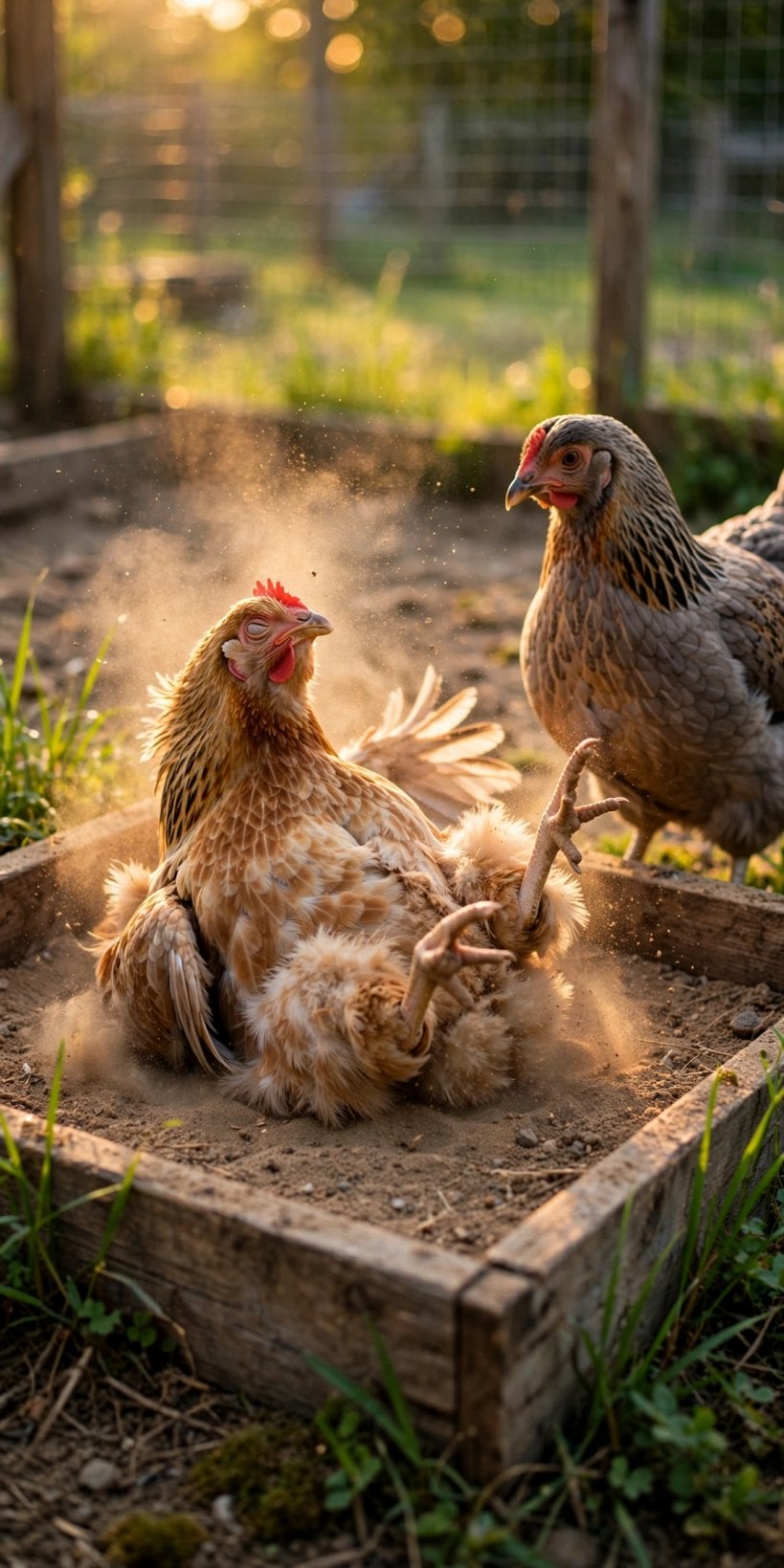
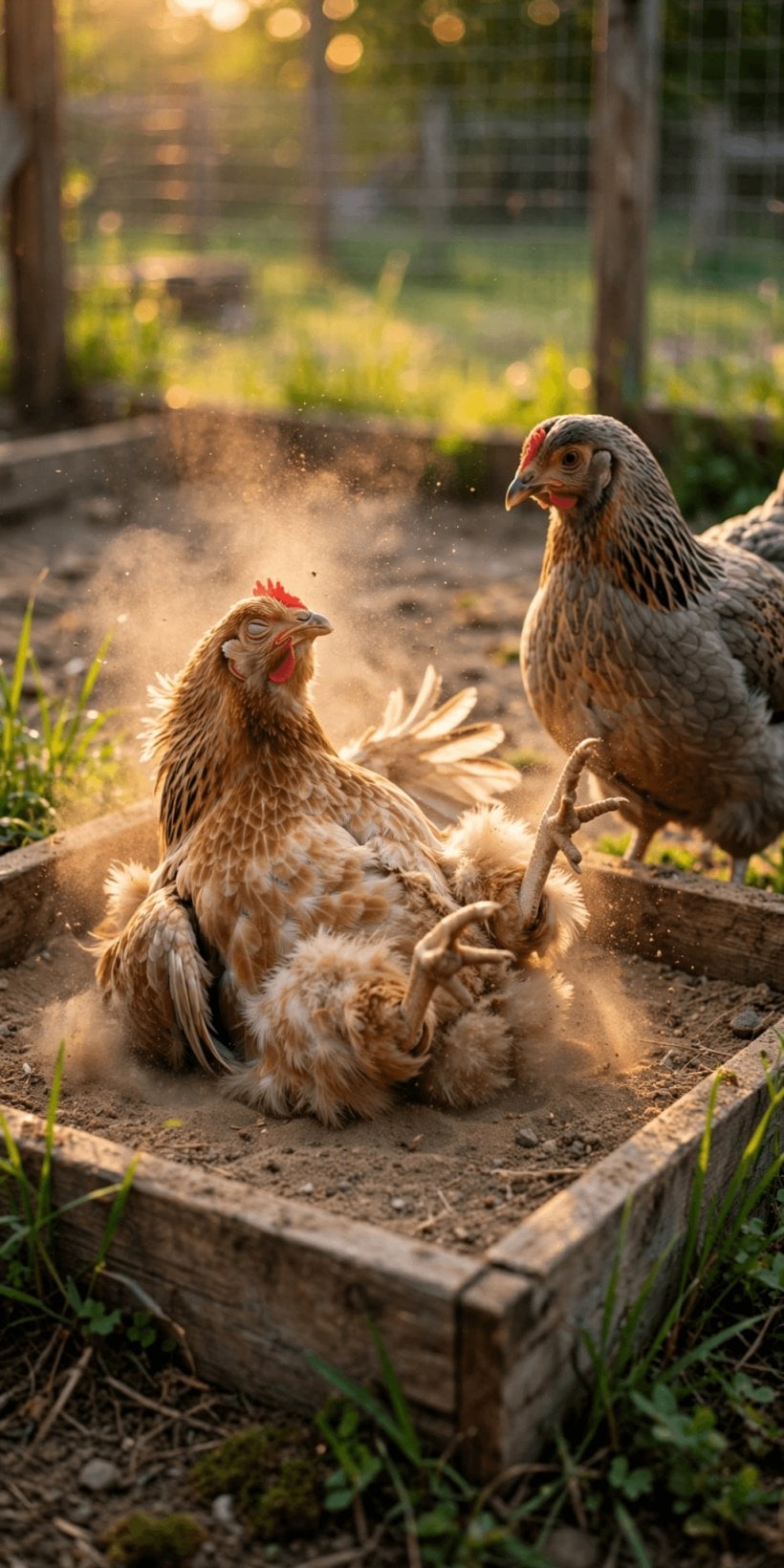
Dust bathing is not a luxury; it is hygiene. Hens work dry, loose material through their feathers to keep skin comfortable and plumage in good order, and a flock denied a bathing spot will dig one wherever the ground is driest — usually somewhere inconvenient. Give them a proper bath and they will use it daily, often several birds shoulder to shoulder, in one of the most contented scenes in the garden.
Build it simple. A low-edged box, an old shallow crate, or a framed corner of the run filled with dry soil, sand and a little wood ash from clean, untreated wood is all it takes. The secret is dryness: site the bath under the covered section of the run, or give it its own little roof, because a bath that fills with rain is just a puddle with ambitions. Top the material up as it gets kicked away, and rake it over now and then so it stays loose and inviting.
Size it for company. Bathing is social, and a bath built for one bird causes arguments; a generous bath that fits three or four hens becomes the flock’s afternoon meeting place. If space is tight, two smaller baths at opposite ends of the run beat one — the lower-ranking birds get their turn without an audience of their superiors.
6. Perches, Stumps and Enrichment
Bored hens invent their own entertainment, and keepers rarely like the results: feather picking, egg eating and bullying usually grow out of long, empty days. Enrichment is the cure, and it costs almost nothing. Perches at different heights — branches, rails, an old step ladder — give birds somewhere to sit, survey and escape ground-level quarrels. Stumps and logs do the same job at lower level and double as lookout posts for the flock’s self-appointed sentries.
Rotate the interest. A pile of leaves, a heap of garden weeds, a section of turf cut and turned, or a log pile that harbours insects will occupy a flock for hours; scatter a handful of grain through a deep litter or leaf pile and the whole run turns into a treasure hunt. Change one thing every few days rather than everything at once — hens investigate novelty cautiously, and a small regular change keeps curiosity simmering.
Keep enrichment safe and simple. Avoid anything with loops or strings a bird can tangle in, anything treated or painted that flakes, and mirrors or toys that individuals become obsessed with; natural, diggable, climbable and edible-in-moderation wins every time. The reward for this small effort is a visibly calmer flock — the same principle the chicken predator protection guide relies on, since settled birds in a secure, interesting run are easier to watch and quicker to alarm than a stressed flock.
7. Ground Cover, Mud Control and Rotation
Bare earth is the default run surface, and the worst one. Grass survives only where stocking is light and rotation is real; everywhere else, ground cover is a management choice. Wood chip is the workhorse: spread deep, it drains, cushions, gives endless scratching, and slowly breaks down into soil the birds love digging. Gravel suits gateways and drinker aprons where the traffic never stops, and a mixture — chip in the main area, hard standing at the busy points — works better than any single surface.
Mud is controlled by drainage and rest, in that order. A run that sheds water — sited on a slope, or with a shallow channel carrying rain away — recovers in days; one that ponds needs the water dealt with before anything else helps. Resting ground matters as much: splitting a run in two and alternating halves, or moving a portable pen regularly, lets surfaces dry, green up and clear the build-up that constant use creates.
Accept the seasons. In a wet winter even the best run looks tired; deep chip, the covered corner and a rested half waiting for spring carry the flock through. Keepers planning bigger setups will recognise the same rotation thinking in the homestead livestock layout approach — ground is a resource to be cycled, not a floor to be used up.
8. Water, Feed and Grit Stations in the Run
Where you put the essentials shapes how the run is used. Drinkers belong on hard standing — slabs, gravel or a wire-topped frame — so the constant small splashes do not create a permanent mud patch, and in a spot you pass on every visit, because water is checked more often than anything else. In larger runs, two smaller drinkers at opposite ends beat one big one: dominant birds cannot guard both, and shy hens always have an open station.
Feeders deserve the same thought. Covered feeders keep rain off the feed and discourage wild birds; hanging or treadle styles add protection. Site the main feeder under the run’s roof if you have one, with room around it for the whole flock to feed at once without queuing pressure. Grit needs its own little pot in a dry corner: hens self-serve the grit they need for grinding grain, and a separate dish of shell grit supports shell quality for laying birds — small stations, permanently filled, quietly doing their job.
Scatter feeding ties the stations together. Throwing the afternoon grain ration widely through the scratching areas, rather than into a heap, spreads the flock across the whole run, gives every bird a share, and turns feeding time into the day’s best enrichment. It takes one minute and changes the flock’s entire afternoon.
9. Fencing, Netting and Predator Proofing
A run is only as good as its boundary. Fencing has two jobs — keep hens in, keep everything else out — and winter and night test it hardest. Sturdy mesh with small holes at the base stops predators reaching through and young birds squeezing out; a skirt of wire turned outward at ground level, or buried mesh, discourages digging. Gates need proper latches, because a gate a child can open, a fox can usually open too.
Overhead cover decides whether the run is safe from above. Netting or a wire roof keeps out airborne predators and stops wild birds sharing the flock’s feed and water; it also keeps athletic hens in, which matters near gardens and roads. Where a full roof is impractical, a network of lines plus the perches and shelters below still breaks up a clear swoop and gives birds cover to dive for.
Walk the boundary like an opponent. Look for gaps at corners, loose mesh, rotting posts and the tell-tale scrapes of something testing the wire, and fix small faults the week you find them. Keepers of larger birds apply the same rules at a bigger scale — the thinking in these turkey coop and shelter ideas about strong latches and checked boundaries is identical, because predators do not care what size the dinner is.
10. A Run That Stays Interesting All Year
The best runs change a little with the seasons. Spring brings fresh grazing and the first rested ground; summer needs the shade deepened, the baths topped up and water checked twice on hot days. Autumn leaf fall is a gift — pile leaves deep in the run and the flock will shred them happily for weeks, turning them into the base of next year’s surface. Winter leans on the covered corner, the windbreak and the rotation, with enrichment doing the work that grazing did in summer.
Keep a keeper’s eye on behaviour as your report card. A flock that spreads out, bathes, perches, scratches and settles in companionable groups is telling you the run works. A flock that camps by the gate, queues at one station, or picks at each other is telling you exactly what to fix next — space, stations or interest, in that order of suspicion.
And remember the run is shared ground across a smallholding. Ducks, for instance, use outdoor space differently — wetter, messier, just as enrichment-hungry — and the comparison in the guide to raising ducks for beginners is a useful design check before housing species side by side. Design for the birds in front of you, adjust a little every season, and the run stays the hardest-working part of the whole setup.
Final Considerations
Great runs are not bought; they are assembled from four simple commitments — space, shade, a dry dust bath and something interesting to do — then adjusted as you watch the flock use them. Start with room and shelter, add the bath and the perches, manage the ground before it manages you, and keep the boundary honest. Do that, and the run becomes what it should be: the place hens choose to spend their day, busy from dawn to roost.


0 Comments