

Cold snaps test every flock, but winter chicken care is mostly about dryness, water and steady feed — not heat.
This guide walks through the coop setup, the daily water routine and the feeding rhythm that carry hens calmly through the coldest weeks of the year.
1. Winter Chicken Care at a Glance
Before the detailed routine, here is the whole season in one view. Winter keeping succeeds or fails on four simple things: a coop that stays dry, water that never freezes solid, feed that arrives on a steady rhythm, and air that moves gently above the birds rather than across them. Get those four right and most hardy flocks handle cold weather with very little drama. Get them wrong — a damp coop, an empty drinker, a draughty roost — and even a mild winter feels hard on the birds. The table below sums up the approach this guide follows, and the sections after it turn each row into a daily or weekly habit you can actually keep up when the mornings are dark and the ground is hard.
| Focus | Winter Approach | Routine Note |
|---|---|---|
| Coop | Dry and draft-free | Ventilated high, above roost level |
| Water | Never allowed to freeze | Checked daily, refreshed as needed |
| Feed | Extra energy in cold spells | Evening scratch before roosting |
| Light | Optional boost only | Laying dips naturally on short days |

The winter routine in one picture: a dry, draft-free coop, water that never freezes, steady feed and high ventilation.
2. Setting Up the Cold-Weather Coop
The coop is the centre of the whole winter system. Hens generate their own warmth and share it well, as long as the building keeps that warmth dry. Start with the shell: patch leaks, fix loose boards, and check the roof before the first real freeze, because repairing a coop in a storm is no fun at all. The birds themselves matter less than the building — as the how to raise chickens for beginners pillar explains, a settled flock in a sound coop needs very little extra help.
Size the winter coop for the days the flock stays in. On the worst mornings, birds may not leave until the weather lifts, so the house needs enough floor space for everyone to move, feed and drink without crowding or bullying. If you are planning a new build, the layouts in these chicken coop plans for small homesteads show how roost space, nest boxes and storage fit together. Face the door away from the prevailing wind if you can, keep the pop-hole small enough to limit draughts, and make sure you can open and close everything wearing thick gloves — winter chores are done with cold hands, and fiddly latches get skipped.
Finally, walk the coop at bird level on a windy evening. Feel for air moving across the roost bar: that draught, not the cold itself, is what chills sleeping hens. Seal the gaps you find at roost height, and leave the shelter snug where the birds actually spend the night.
3. Ventilation Without Draughts
Ventilation sounds like the opposite of warmth, but in winter it protects it. Every hen breathes out moisture all night, and that damp air has to escape or it settles on combs, walls and bedding. This is why experienced keepers say a dry coop matters more than a warm one: moist air makes cold feel sharper and encourages the frostbite and breathing troubles that dry air does not.
Put the openings high. Vents above the roost — under the eaves or near the ridge — let warm, moist air rise and leave while the air at bird level stays still. Mesh every opening against predators and wild birds, and size vents so you can partly close them in the very worst weather without ever sealing the coop completely. On calm, milder days, opening the pop-hole wide for an hour air the house out nicely.
Watch the bedding and the windows for feedback. Condensation on the inside of a window, a sour smell at dawn, or damp patches in the litter all say the same thing: more air needs to leave from the top. Keepers of waterfowl learn the same lesson, as the guide to raising ducks for beginners shows — damp housing, not low temperature, is the recurring winter problem across backyard poultry. Adjust one vent at a time, and let the coop’s morning smell tell you when you have it right.
4. Bedding and the Dry Floor Routine
Bedding is the coop’s insulation and its sponge. A deep, dry layer of straw, shavings or chopped bedding material cushions cold floors, absorbs droppings and gives hens something to scratch through on shut-in days. Add fresh material little and often rather than in one huge clean-out mid-winter: turning the top layer and topping up the worn spots near the door and under the roost keeps the whole bed working.
Pay special attention to the wet zones. The area under the drinker and around the pop-hole gets muddy fastest, and wet litter chills feet and fouls the air. Move drinkers onto a stand or a patch of slabs if the floor stays soggy, and scrape out genuinely wet bedding rather than burying it — buried damp keeps rising back to the surface.
Roost bars deserve a weekly once-over too. Check they are smooth, dry and wide enough for hens to sit flat-footed with their feathers covering their toes; a bird that can settle her whole body over her feet protects them from the cold far better than one gripping a narrow perch. While you work, glance at combs and wattles: pale, dry tips on the largest-combed birds are an early prompt to improve ventilation and bedding, long before anything becomes a real problem. Hardy laying breeds cope especially well when the floor stays dry — the comparison of the best chicken breeds for eggs notes how much breed hardiness varies, which is worth knowing before you blame the weather.
5. Water That Never Freezes
Water is the job winter keepers do most, and the one that matters most. Hens drink less in cold weather but they still drink every day, and a drinker frozen solid by mid-morning quietly cuts feeding, laying and condition. Build the routine around one question: how do I guarantee open water during the coldest part of the day, every day, without fail?
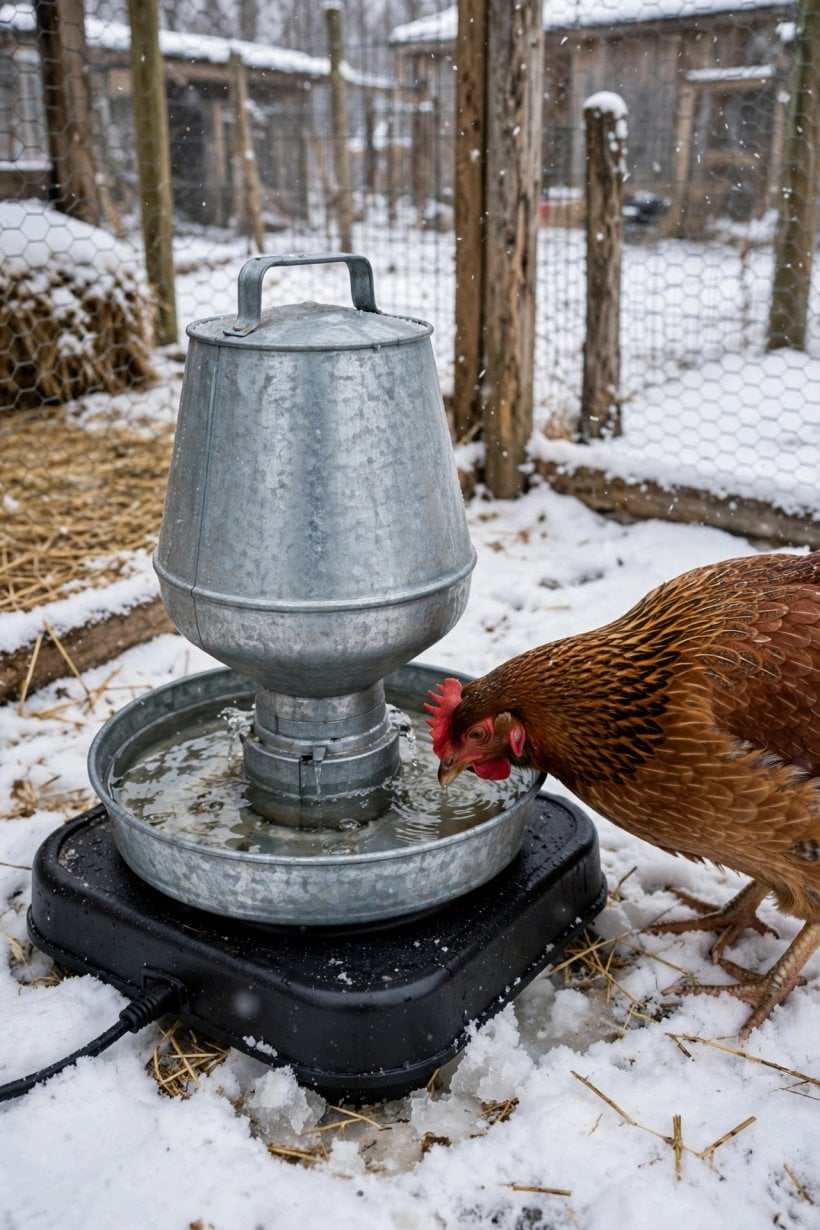
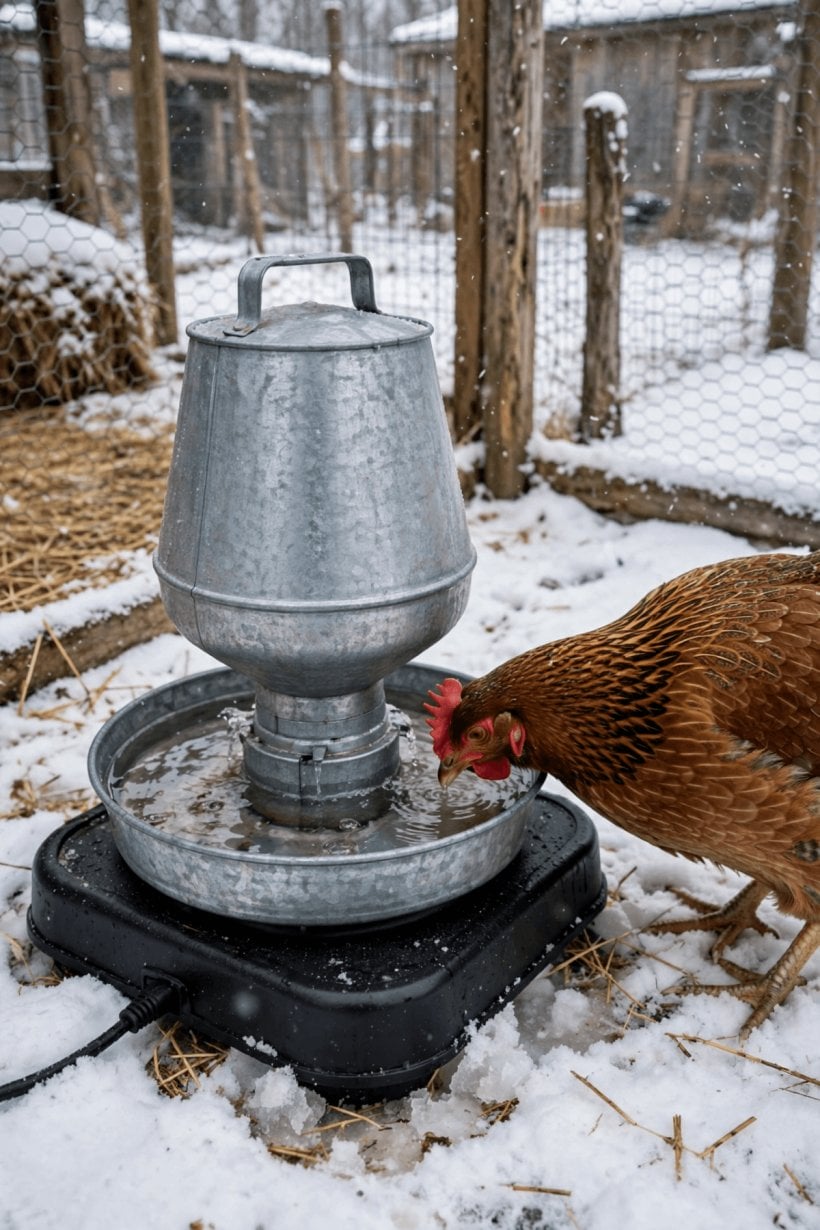
The low-tech answer works for many small flocks. Fill drinkers in the morning with water that is cool rather than warm — very warm water actually freezes again in a way that surprises people, and it can scald nothing but your routine — and check again in the afternoon during a hard freeze. Rubber trugs and shallow tubs are easier than rigid drinkers in winter because ice pops out of them in one flexible twist; keeping two drinkers and rotating them between the coop and the house is a simple, reliable system. Where winters are long and severe, a purpose-made heated base or a drinker designed for cold weather earns its place, used exactly as its maker directs and checked daily like everything else.
Position matters as much as the vessel. A drinker in the sunniest, calmest corner thaws fastest and freezes last; one in the wind by the gate is always first to skin over. Break thin ice whenever you pass — hens cannot — and never rely on birds eating snow instead of drinking. Clean water also keeps feed moving through the crop on short days, which is what keeps body condition steady until spring.
6. The Winter Feeding Routine
Feed is fuel, and winter birds burn more of it staying warm. The routine does not need to change dramatically — the same balanced layer feed stays at the centre — but the rhythm around it matters. Offer the main feed early so hens start the short day with full crops, keep feed available through the daylight hours, and finish with a small evening scatter of mixed grains in the litter just before roosting. That last feed is digested overnight, and digestion is what quietly warms a sleeping hen.
Keep the extras sensible. Kitchen scraps and greens are welcome variety, but they should stay a small part of the diet so the balanced feed still does its job; frozen ground also means far less forage, so a hanging cabbage or a few handfuls of sprouted grains replace some of what the birds would find for themselves in summer. Grit stays available all winter — birds swallow it to grind whole grains — and a separate pot of shell grit lets laying hens top up calcium on the days they need it.
Store feed like it matters, because it does. Cold, damp feed sheds go mouldy quietly, and hungry winter wildlife works hard to get in. Keep sacks in a sealed bin, off the ground, and check for damp or musty smells when you scoop. A steady routine, the same feed, and clean storage will hold a flock’s condition through the cold months far better than any tonic or treat.
7. Light, Laying and Letting Hens Rest
Laying slows in winter, and that is biology, not failure. Hens respond to day length, so as the days shorten, most flocks ease off, moult, and put their energy into feathers and body condition instead of eggs. Understanding that rhythm stops a lot of unnecessary worry: a healthy hen resting through the darkest weeks is doing exactly what her body is designed to do.
Some keepers add light to the coop to stretch the day a little and keep some eggs coming. If you choose that route, the usual approach is gentle: a low light on a timer in the early morning, extending the day at dawn rather than after dusk, so birds still roost naturally when the light goes. Others prefer to let the flock rest, accepting fewer eggs in exchange for a natural break — many keepers find hens come back into lay strongly in spring either way. There is no single right answer; there is only the choice that suits your flock, your climate and how much you depend on winter eggs.
What does not help is chopping and changing. Pick a policy in autumn, keep the routine steady, and watch condition rather than the egg basket. Young pullets often lay through their first winter with little encouragement, while older hens take the longest rest — one more reason a mixed-age flock smooths the household egg supply across the year without anyone fighting the seasons.
8. Keeping the Run Usable in Winter
A winter run turns to mud unless it is managed, and mud is where winter health problems start. Birds that spend the day on wet, churned ground chill their feet, foul their feathers and pick at ground that never gets a rest. Start with drainage: runs on a slight slope, or with a load of wood chip or coarse gravel in the worst patches, stay usable weeks longer than bare earth. A roofed section — even a simple covered corner — gives the flock dry ground on the wettest days and keeps a dust-bathing spot working all season.
Rotate and rest ground where you can. Moving a pen, splitting a run, or fencing off the worst half to recover makes a visible difference by late winter, and scattering the evening grain ration in the resting area keeps birds off it less than you’d hope — fence it properly. Keep paths for yourself, too: a few slabs or a line of pallets from gate to coop stops you churning the same mud the birds stand in, and makes the twice-daily water run quicker in the dark.
Think about how the whole holding works together. The planning approach in this homestead livestock layout guide — placing housing, runs and storage so winter chores stay short — is worth copying even at garden scale. The best winter run is simply the one you can still use comfortably in February.
9. Predators and Winter Security
Winter is the hungry season, and poultry housing gets tested hardest when wild food is scarce and nights are long. Foxes, rats and other predators work runs and coops more boldly in winter, and frozen ground that stops them digging in one place simply moves them to test the wire somewhere else. The full checklist in this chicken predator protection guide is worth a re-read every autumn; the winter essentials are simple. Check wire and latches monthly, look for rat runs along walls, and keep feed sealed so you are not feeding the local rodent population next to the coop.
Lock-up time moves with the light. In midwinter dusk arrives in the middle of the afternoon, and a flock left out after dark is a flock at risk; automatic doors help, but a keeper’s evening round — water check, egg collect, door check — catches the problems a timer cannot. Clear snow from netting and light roofs before its weight does damage, and after storms, walk the boundary: fallen branches and drifted snow make ladders and ramps over fences that were secure in October.
The same security thinking scales up. Keepers planning housing for bigger birds will find the ideas in these turkey coop and shelter ideas useful — larger doors, stronger latches and the same rule that winter security is checked, not assumed.
10. Daily and Weekly Winter Checks
Routines beat heroics. A two-minute morning check and a slightly longer weekly one catch nearly every winter problem while it is still small. Mornings: open the pop-hole, check water is open and clean, put out feed, and watch the flock come out. Healthy hens emerge keen, move to feed, and spread out; a bird that stays hunched, alone or off her feed is telling you something, and winter is the season to listen early. Collect eggs often in a freeze — frozen eggs split — and glance at the bedding and vents as you go.
Evenings: top up water if the night will be hard, scatter the evening grain, count heads at roost, and shut every door properly. Weekly: turn and top up bedding, scrub drinkers, check roost bars, combs and the wire, and handle a couple of birds to feel body condition under the feathers — winter plumage hides a thin bird very well. Keep a simple note of frost dates, water problems and laying changes; patterns in your own flock’s winter are worth more than anyone else’s rules.
Adapt the same checklist to the rest of the holding as it grows. The shelter principles in the guide to goat shelter ideas — dry bedding, draught-free rest, water that never freezes — are the chicken routine wearing different clothes. Winter care, in the end, is one system repeated calmly across every animal you keep.
Final Considerations
Winter asks for steadiness, not expense. A dry, draft-free coop with air moving above the roost, water you personally guarantee stays open, feed on a rhythm the flock can set its clock by, and a run that drains instead of drowning — those four habits carry hens through the cold in good condition. Keep the checks short, keep them daily, and let the flock’s behaviour tell you when to adjust. Spring laying, strong feathers and a calm flock in February are the receipts that the routine worked.


0 Comments