

What a Moving Container Service Actually Includes
A moving container service sits between hiring a full-service mover and renting a truck to drive yourself. The company delivers an empty container to the driveway or another agreed spot, leaves it there for loading, then collects it and transports it to the new address or to a storage facility. At the destination, the container is placed for unloading, and the company picks it up once empty. That simple sequence explains much of the appeal: the household controls the pace of packing and loading, while the driving and the heavy transport stay with the company.
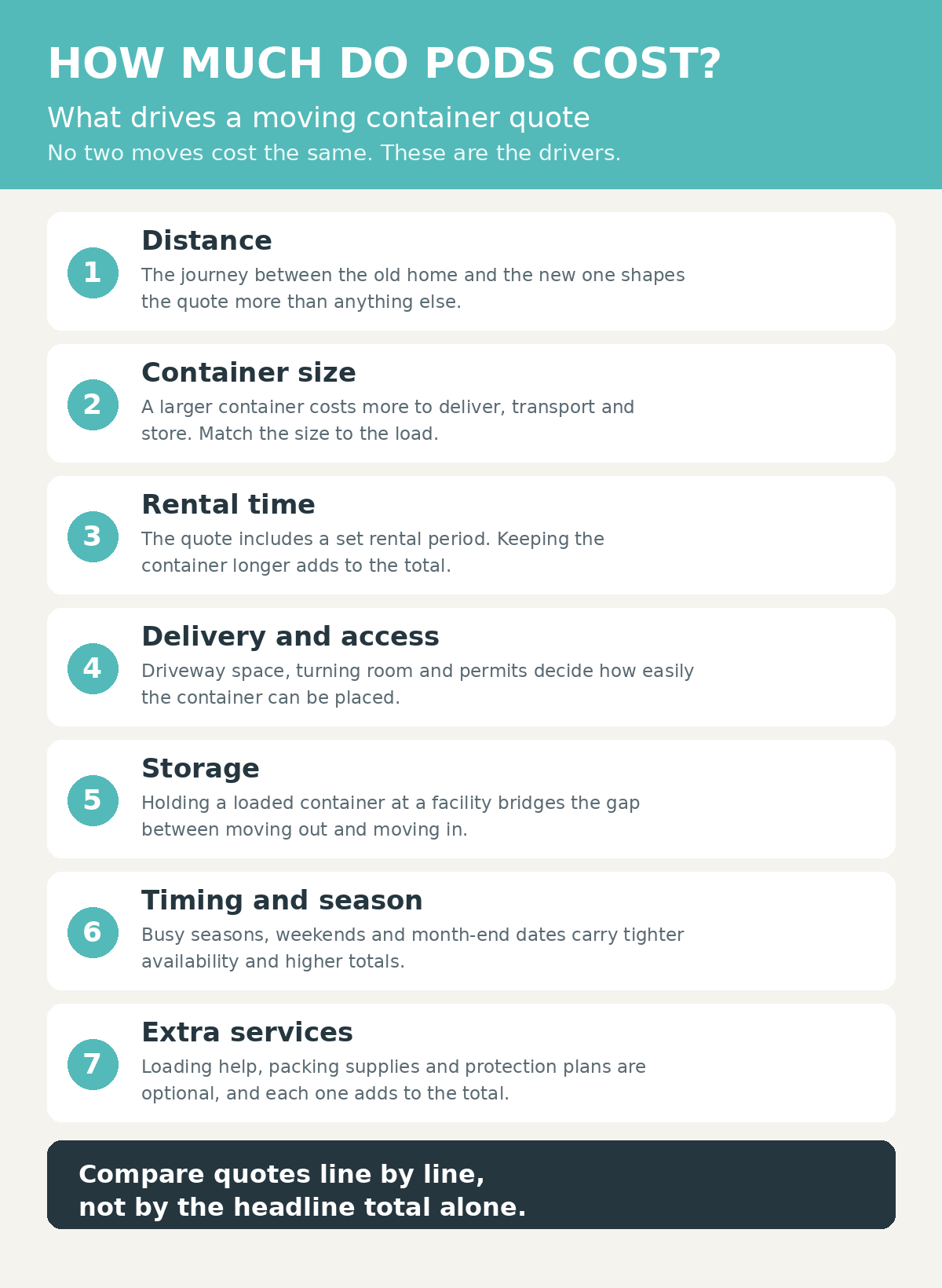
Understanding pods moving cost starts with that sequence, because every stage of it can add to the total. Delivery, transport, rental time, and storage are usually priced as separate parts of one quote, even when they appear on a single page. A quote that looks simple at first glance may bundle several of these stages together, so reading each line matters more than glancing at the headline figure. The container itself is only one part of the service; the trips to and from the property, the days it sits on the driveway, and the miles it travels all shape the final amount.
Most households use a moving container for one of three situations: a move across town, a move to another region, or a move that needs storage in the middle. The service works in all three, but the cost drivers shift with each one. A short local move keeps transport simple and puts the focus on rental time and access. A long-distance move makes the journey the main factor. A move with storage in the middle adds a facility charge and an extra handling stage. Knowing which situation applies makes it far easier to judge whether a quote is fair.
For readers planning a smaller home, the same thinking applies to the whole move. A guide to transporting a tiny house and what drives the cost of the move covers similar ground, from distance to access, and the lessons transfer well to any container move.
Distance Shapes the Quote More Than Anything Else
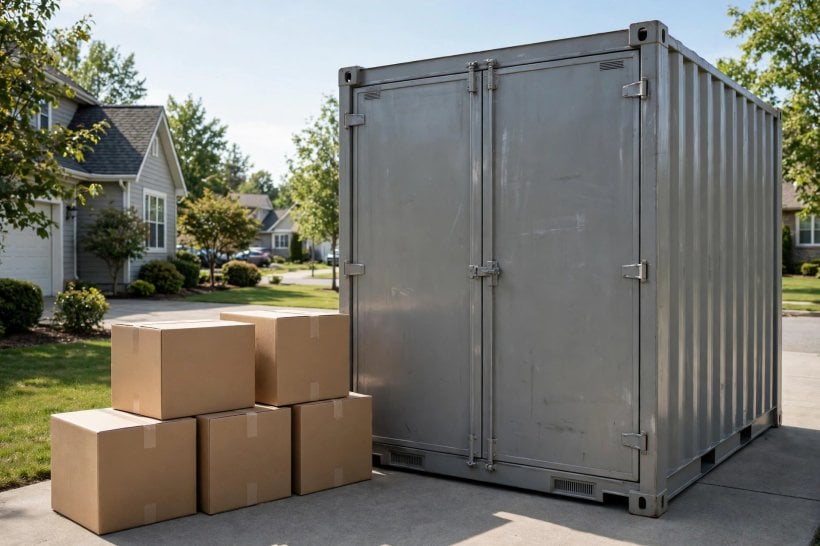
Distance is the single largest driver of a moving container quote. A container travelling across town needs one short trip with a local driver, while a container travelling across the country needs a long-haul journey, fuel, driver time, and scheduling across a wider network. The gap between those two jobs is wide, and it shows in the quote. Any household comparing quotes should expect the distance between the old address and the new one to dominate the conversation.
Local moves and long-distance moves are priced in different ways. A local move often centres on the delivery and collection trips plus the rental period, because the transport leg is short. A long-distance move centres on the journey itself, and the rental period becomes a smaller share of the total. That difference matters when weighing options: saving a few days of rental time helps more on a local move, while a shorter route or a more flexible delivery window helps more on a long move.
Distance also interacts with the route. A straightforward journey along major roads is simpler to schedule than a journey that ends on a narrow rural lane or in a dense city centre. Delivery drivers need room to manoeuvre a large vehicle and to place the container safely, so the final stretch of the journey can matter as much as the total mileage. Households in remote areas or in tightly built neighbourhoods should mention access early, so the quote reflects the real job rather than an ideal one.
The destination matters too. A move between two well-served towns is easier to schedule than a move to a place the company visits rarely. If the new address sits outside the usual service area, the company may need to arrange a special trip or a handover with a partner, and that extra planning can add to the total. Asking how the destination affects the quote is a reasonable question, and the answer helps explain why two moves of similar length can carry different totals.
Container Size and How Much Fits Inside
Moving containers come in a range of sizes, from compact units suited to a small flat or a single room of furniture through to large units that can hold the contents of a family home. Size is the second major cost driver after distance, because a larger container costs more to deliver, transport, and store. Choosing the right size is therefore one of the most effective ways to control the total.
Estimating volume is the hardest part of the decision. Most households underestimate how much they own, especially when lofts, garages, sheds, and garden furniture are counted. A container that is slightly too small creates a real problem: either a second container is needed, or some items must travel separately. Both outcomes add cost and complication. A container that is far too large wastes money on unused space and can make loading harder, because items shift around during transport unless they are secured well.
A practical approach is to walk through the home room by room and list the large items first: beds, sofas, wardrobes, tables, appliances, and anything that cannot be packed into a box. Then count the boxes roughly, including books, kitchenware, clothes, and the contents of cupboards. That rough inventory gives a clearer picture than guessing from the number of bedrooms alone, because two homes with the same bedroom count can hold very different amounts of furniture.
Downsizing before the move also helps. Selling, donating, or recycling items that will not be needed in the new home reduces the volume to move and can drop the household into a smaller container. The same logic applies to tiny homes, where every item earns its place; a look at how much tiny houses cost in total, from purchase to setup shows how closely size, space, and budget are linked in a small home.
Rental Time and the Cost of Keeping the Container Longer
A moving container quote usually includes a set rental period, often measured in weeks rather than days, during which the household can load at its own pace. That built-in time is one of the main advantages over a rental truck, where the clock runs in hours. But keeping the container beyond the included period adds to the total, and the extra time is charged for as long as the container stays on the property or in storage.
The rental clock normally starts when the container is delivered and stops when it is collected empty or placed into storage. Loading slowly is fine within the included period, but a move that drags on because packing is unfinished can push the household into extra rental time. The same applies at the destination: a container that sits unloaded for days after arrival keeps the rental running. Planning the loading and unloading days in advance is the simplest way to stay inside the included period.
Some households deliberately rent for longer, and that can be a sensible choice. A home renovation, a gap between tenancies, or a staged move may need the container on site for an extended stretch. In that case, the extra rental time is a planned expense rather than a surprise, and comparing the cost of a longer rental against the cost of separate storage can show which option is cheaper. The key is to treat rental time as a decision, not as something that simply happens.
Flexibility has value too. A container that can stay a little longer without a penalty gives breathing room when moving day slips, and that breathing room is worth asking about before booking. Households should check how the rental period is counted, what happens when it runs over, and whether an extension can be arranged at short notice. Clear answers to those questions prevent a small delay from turning into an unwelcome extra charge.
Delivery, Placement and Access at Each Address
Delivery sounds simple, but placement is where many moves meet their first practical problem. A container needs a flat, firm surface with enough clear space for the delivery vehicle to manoeuvre and for the container doors to open fully. A wide, level driveway is ideal. A steep slope, a soft lawn, low branches, or a narrow street can all complicate the drop-off, and in some cases the container cannot be placed where the household hoped.
Access at both addresses matters, because the container is delivered twice in a typical move: once at the old home for loading and once at the new home for unloading. A problem at either end can add time and cost. Households should check the driveway width, the overhead clearance, and the turning space, and should think about neighbours, parked cars, and any gates or fences that narrow the approach. Photographs of both driveways, shared with the company before booking, can prevent a wasted trip.
Permits and rules add another layer. Some streets need a permit for a container or for the delivery vehicle, and some housing developments restrict where containers may sit and for how long. Local rules vary widely, so the household should check with the local authority or the property manager before delivery day. A container that must be moved because it breaches a rule creates extra handling and extra cost that a quick check would have avoided.
When driveway space is tight, alternatives exist. The container may sit on the street, in a nearby car park, or at the storage facility while the household loads from there. Each alternative has its own trade-offs: street placement may need a permit and leaves belongings further from the front door, while loading at a facility means extra trips with a car or van. Weighing those trade-offs early keeps delivery day calm and the total predictable.

Storage Between the Old Home and the New One
Storage is one of the most useful features of a moving container, and one of the easiest to overlook when comparing quotes. If the new home is not ready, or if the household is moving in stages, the loaded container can be held at a secure facility until it is needed. That removes the need to unload everything into a separate storage unit and then load it all again, which saves labour and reduces the risk of damage.
Storage duration is the main cost factor here. A short hold while keys change hands adds a modest amount, while storage stretching across weeks or months becomes a significant part of the total. Households should ask how storage is charged, whether it is billed alongside the rental or as a separate line, and whether the container can be accessed during storage. Access matters: if belongings are needed mid-storage, a facility visit may be required, and some facilities charge for that.
Storage also interacts with the rental period. In many quotes, the container moves from rental to storage once it reaches the facility, and the two charges do not overlap. In others, rental continues alongside storage. The difference is worth clarifying in writing before booking, because it changes the total for any move with a gap between leaving and arriving. A clear written breakdown avoids confusion later.
For households downsizing into a smaller space, storage can also become a longer-term question. Items that do not fit in the new home may stay in the container longer than planned, and that drift turns a short hold into an ongoing expense. A guide to tiny house storage ideas that make every inch work harder offers useful thinking on deciding what deserves space and what should go, which applies just as well to a container in storage as to a small home.
Timing and the Season of the Move
When a move happens affects the quote almost as much as where it goes. Demand for moving services rises sharply in the warmer months, around school holidays, at the end of the month, and at weekends. More households moving at the same time means tighter availability and higher totals, while a midweek move in a quieter season often costs less and offers more choice of delivery dates.
Flexibility is the household’s best tool here. A move date that can shift by a few days opens up cheaper slots, and a delivery window rather than a fixed day can help the company plan routes efficiently. Households tied to a fixed completion date have less room to manoeuvre, but even then, asking about nearby dates can reveal a cheaper option that still fits the schedule.
Booking early also helps, especially for a summer or month-end move. Early booking secures the preferred container size and delivery slot, and it leaves time to compare quotes properly rather than accepting the first available option. Last-minute bookings are possible, but the choice narrows and the total tends to rise, because the company must fit the job around an already full schedule.
Seasonal thinking extends beyond the quote. Hot weather makes loading harder and can affect heat-sensitive items, while wet or cold weather can make driveways slippery and loading slower. Planning the loading day with the season in mind, and keeping packing supplies and protective covers ready, keeps the move on schedule and protects belongings regardless of the time of year.
Loading Help, Packing and Extra Services
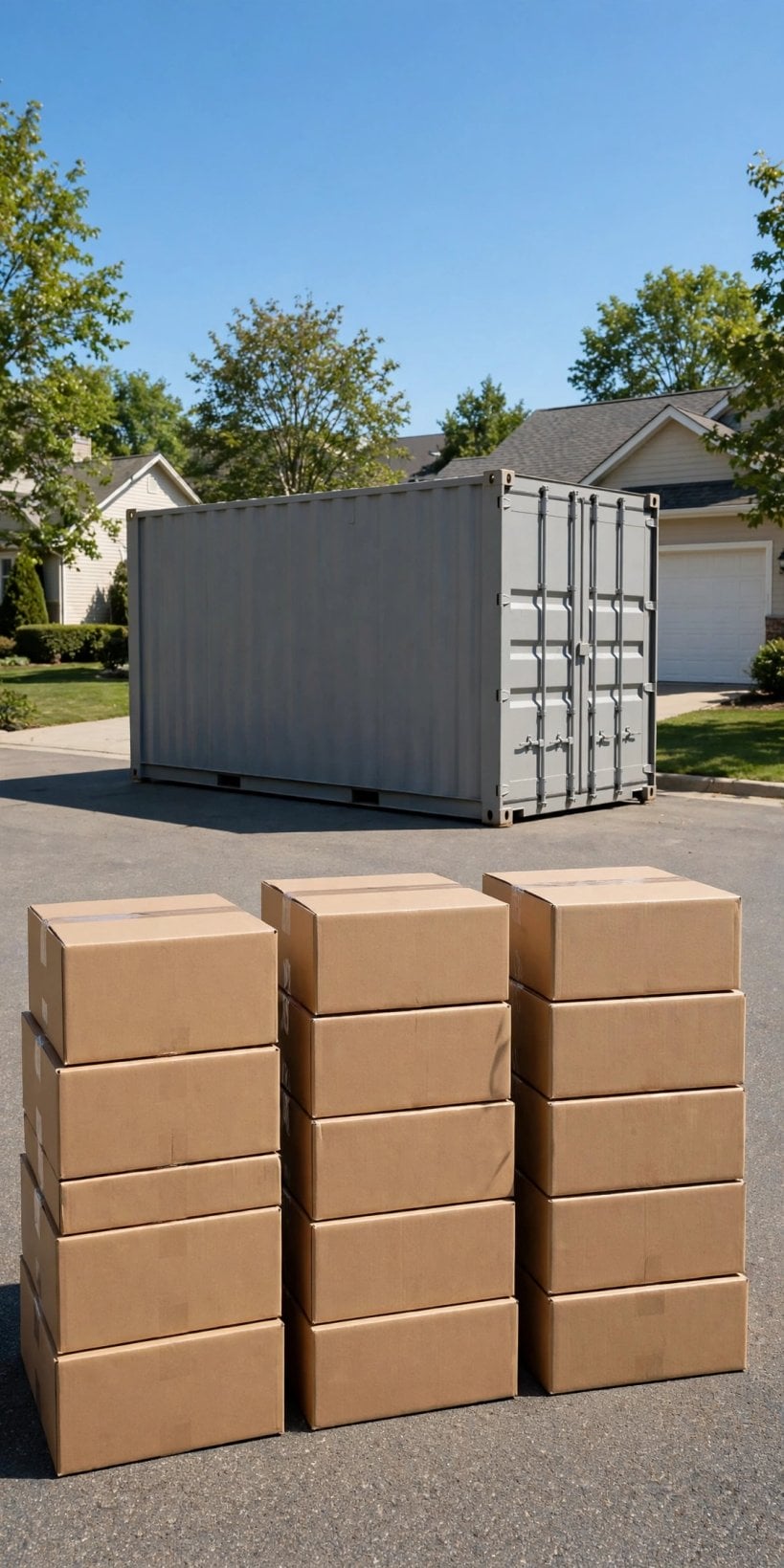
Loading a container well is a skill, and many households choose to pay for help. Loading crews can be booked through the container company or hired separately, and they bring experience in stacking boxes, securing furniture, and using the space efficiently. Good loading protects belongings during transport and can mean the difference between fitting everything in one container and needing a second.
Packing supplies are a separate expense that is easy to underestimate. Boxes, tape, protective wrap, blankets, and mattress covers add up, especially for a large home. Buying supplies in bulk, reusing sturdy boxes, and wrapping furniture in blankets rather than buying single-use covers can keep this part of the budget under control. Labelling every box clearly also speeds up unloading, which matters when the rental clock is running at the destination.
Protection plans deserve a careful read. Container companies usually offer a form of contents protection, and the level of cover varies. Households should check what is covered, what is excluded, and whether the cover applies during storage as well as transport. Valuable or fragile items may need extra care or separate cover, and photographs of items before loading create a useful record if anything is damaged.
Other extras can appear on a quote, such as help with disassembly, appliance handling, or the supply of locks and ramps. Each one is optional, and each one adds to the total, so the household should decide which extras are genuinely needed and which can be handled without paid help. A move with fewer extras is not a lesser move; it is simply a move where the household has taken on more of the work itself.

Reading a Quote and Comparing Options Fairly
A moving container quote is only useful if it can be compared fairly with another quote, and that means checking that both quotes cover the same service. One quote may include delivery, collection, a set rental period, and transport, while another may list delivery separately and charge storage on top. Comparing headline totals without checking the inclusions is misleading, and it can make the more expensive-looking option the cheaper one in practice.
Comparing pods moving cost fairly means lining up the same items side by side: the container size, the rental period, the delivery and collection trips, the transport distance, any storage, and any protection plan. A simple table drawn up by hand, with one column per company and one row per item, makes differences obvious. Items that one company includes and another charges extra for stand out immediately, and the household can then decide whether the extra is worth paying for.
Small print deserves attention too. Cancellation terms, rescheduling fees, and charges for failed delivery all hide in the terms, and they matter most when plans change. A company that allows a free date change is worth more to a household with an uncertain completion date than a slightly cheaper quote with strict terms. Reading the terms before booking is dull work, but it prevents the kind of surprise that turns a planned move into a stressful one.
Hidden extras are a familiar problem in any move, and the pattern repeats across housing costs generally. A rundown of hidden costs of tiny house living that nobody warns about shows how small overlooked items accumulate, and the same habit of checking for extras pays off with container quotes. Similarly, a guide to what drives the price of turning a metal building into a house and how to plan the budget is a useful model for breaking any large project into cost drivers before committing.
Ways to Keep the Total Lower Without Cutting Corners
The most reliable way to lower a container move is to move less. Decluttering before packing reduces volume, and reduced volume can mean a smaller container, fewer boxes, and faster loading. Every item that leaves the home before moving day is an item that needs no space, no packing, and no carrying. A ruthless sort through cupboards, the garage, and the loft often surprises households with how much can go.
Efficient packing is the second saving. Heavy items go in small boxes, light items in large ones, and gaps are filled with soft items such as bedding and towels. Furniture is dismantled where possible, and hollow spaces inside wardrobes and drawers are used for clothes and linens. Good packing fits more into the same container and protects belongings better, which is a saving in both money and worry.
Flexible dates and early booking have already been mentioned, and they remain the simplest savings available. A midweek date in a quieter season, booked well ahead, gives the company room to offer a better total. Combining that flexibility with a realistic rental period, so the container is not kept longer than needed, keeps the quote tight without sacrificing comfort.
Finally, compare the container option against the alternatives honestly. For a small load over a short distance, a van or a truck rental may cost less. For a large load over a long distance, a container often wins on convenience and on the value of loading at leisure. A comparison of building versus buying a tiny house and the true cost comparison shows the same discipline: weigh the full picture, not just the headline. And a look at the annual cost of living in a tiny house, with a full budget breakdown, is a reminder that the move is only the first line of a longer household budget, so a saving here frees money for settling in there.

A Clearer Picture Before Booking
PODS moving containers suit households that want control over loading and a flexible timetable without driving a large vehicle themselves. The total depends on distance first, then on container size, rental time, delivery access, storage, timing, and any extra services. None of those drivers is mysterious, and each one can be checked, questioned, and planned for before booking.
The practical steps are simple: measure the volume honestly, check access at both addresses, pick a realistic rental period, ask what storage costs if dates slip, and compare quotes line by line rather than by headline. A household that does those things will understand its quote, avoid the common surprises, and arrive at the new home with the budget intact. That clarity is the real value of understanding container costs before the move begins.




0 Comments