

Rain falls on your roof, runs down your gutter — and in a few states, catching it in a barrel can technically break the law. Water rights in the American West were written for miners and ranchers, not homesteaders with tanks. This state-by-state guide maps where harvesting is encouraged, where it is restricted, and how to keep a good project legal.
1. The Legality of Collecting Rainwater at a Glance
The Legality of Collecting Rainwater is a patchwork, not a national rule: in most states the rain on your roof is yours, while in a few it legally belongs to someone downstream. Two old water doctrines draw the map — riparian rights in the East, prior appropriation in the West — and on top of the state layer sit use tiers, permits, building codes and HOA rules. The table below gathers the whole system; the sections after it take each doctrine, state group and compliance step apart in turn.
| Attribute | Detail |
|---|---|
| The Eastern Doctrine | Riparian rights — water belongs to the land, governed by reasonable use; the rainwater-friendly default |
| The Western Doctrine | Prior appropriation — first in time, first in right; the rain may already belong to downstream users |
| The Encouraged | Texas, the leader — tax exemptions and mandated new-construction provisions promote harvesting |
| The Incentivised | Arizona — harvesting incentives, including Tucson rebates for systems |
| The Unrestricted | North Carolina, Ohio and most of the East — riparian, no permit, free to harvest |
| The Limited | Colorado — the 2016 law allows 110 gallons stored in 2 barrels |
| The Registered | Utah — registration required at the 2,500-gallon threshold |
| The Cautious | Nevada — doctrine-based caution; check before you build, rules evolving |
| The Use Tiers | Outdoor use almost everywhere; indoor non-potable usually; potable regulated — filtration plus testing |
| The Other Layer | HOAs and building codes — tank bans in the CCRs, cross-connection and backflow rules; the strictest rule wins |
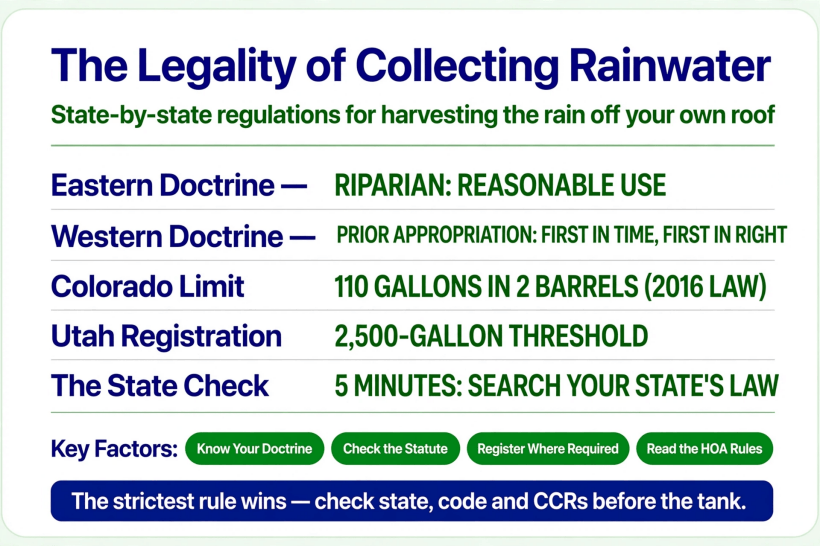
Two doctrines, a 110-gallon Colorado limit, a 2,500-gallon Utah threshold and a five-minute check — the whole map on one card.
Read the table as a sequence of questions rather than a verdict on any single state. First, which doctrine governs where you live — that sets the default. Second, which group your state falls into — encouraged, unrestricted, limited, registered or cautious. Third, what you intend to do with the water, because the use tiers can matter more than the map. And finally, what your HOA and local code add on top. Answer those four in order and the legal picture for any address in America resolves itself.
2. Who Owns the Rain?
Start with the question that surprises every new homesteader: the rain that lands on your roof may not be yours. In most states it is — the water that falls on your land belongs with your land, and catching it is no more legally interesting than catching it in a bucket has ever been. But in a few states, the legal answer is that the rain belongs to someone downstream: a rancher, a ditch company, a senior water-right holder whose claim was staked generations ago, under rules written when water in the West was quite literally worth fighting over.
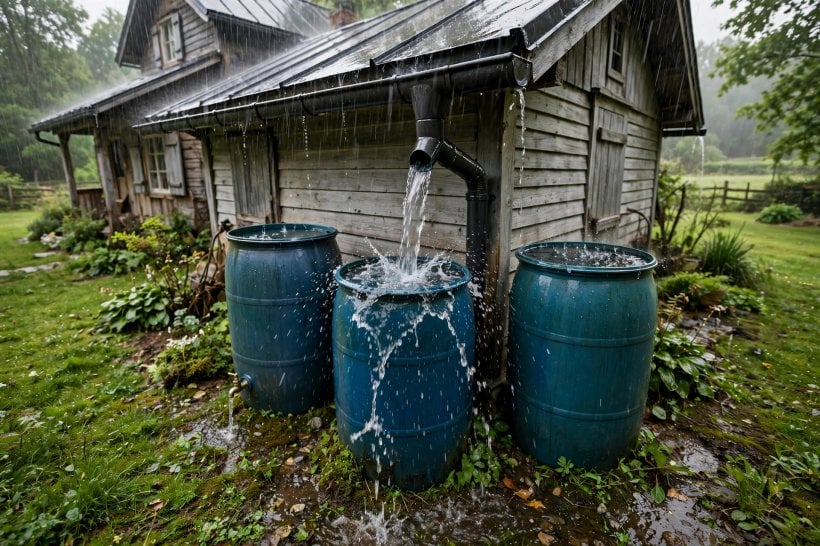
That split is why two neighbours in different states can build the identical system — same roof, same barrels, same garden — and stand in completely different legal positions. It is also why the checking habit this guide keeps returning to matters more than any memorised list: doctrines set defaults, legislatures keep amending them, and the trend runs steadily toward permission. The homesteader’s task is not to become a water lawyer. It is to know which side of the line their state stands on before investing in tanks — ideally before investing in the land itself, since the water picture belongs on the checklist scored in the guide to where to buy land for eco-living.
3. The Two Doctrines: Why the Law Varies
The eastern doctrine is riparian rights. Under riparian thinking, water belongs to the land it touches: the owner of the bank or the roof may make reasonable use of the water that arrives there, provided the use does not unreasonably harm others who share it. It grew up in a wet landscape, where rain was abundant and the legal problem was sharing a surplus fairly. For the rainwater harvester it is the friendly doctrine — the rain on your roof is part of your land’s reasonable use, and the barrel under the downspout needs no one’s permission.
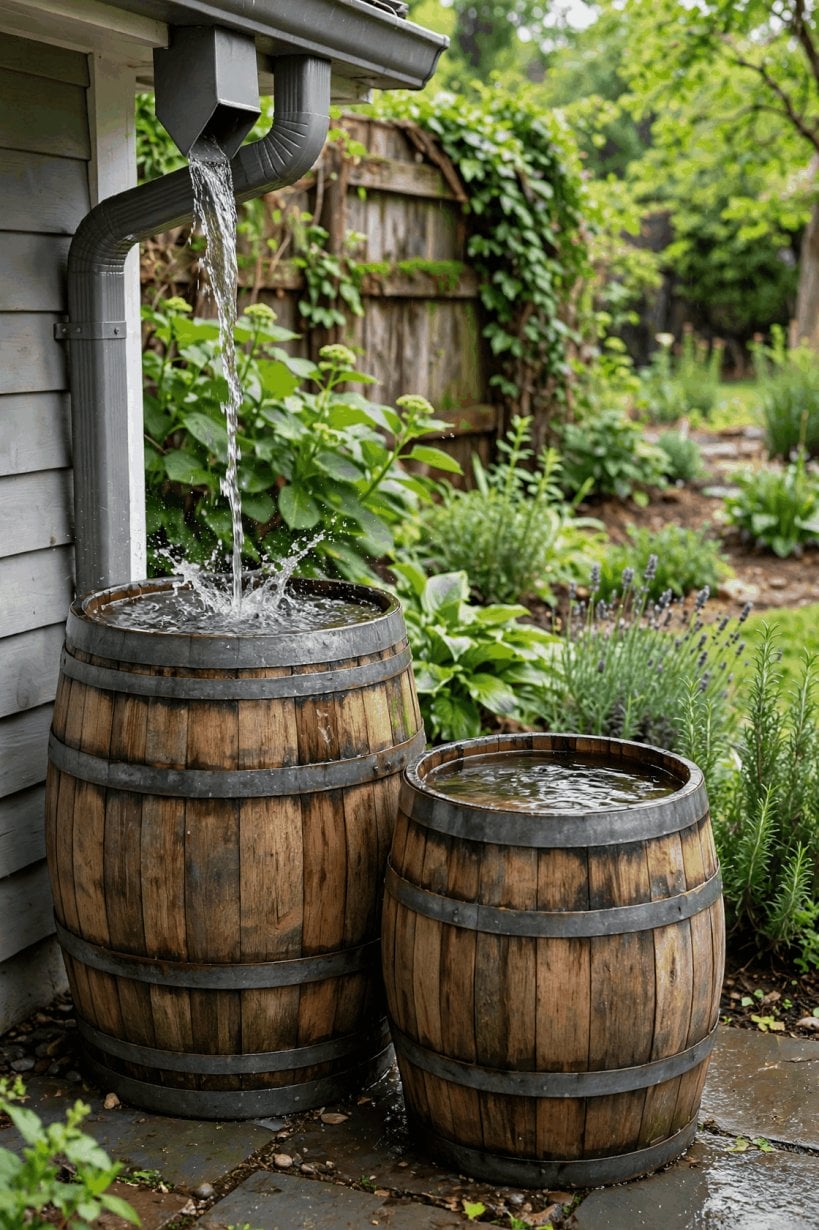
The western doctrine is prior appropriation, and its logic is the opposite: first in time, first in right. In an arid landscape, water was claimed by whoever put it to use first, and senior claims outrank junior ones in dry years. Under that thinking, rain that would otherwise flow into a stream already belongs, on paper, to the downstream holders of those early claims — which is how a barrel on a roof can, in the strict reading, intercept someone else’s water. The doctrine explains every restriction in this guide. It also governs the West’s other homestead water source: a stream you hope to run for power carries the same senior-rights questions, worked through in the guide to micro-hydro power systems for small streams.
Between the two doctrines sits the trend, and the trend is liberalisation. Even prior-appropriation states have spent the last decade and a half writing limited harvesting allowances into law — capped volumes, registrations, carve-outs for rooftop collection — because drought taught the region that a barrel on every roof is a reservoir the state does not have to build. The doctrines still draw the map, but the lines on it keep being redrawn in the harvester’s favour.
4. The Friendly States: Encouraged and Unrestricted
Texas is the leader of the encouraged states, and it leads with policy rather than mere permission. The state pairs its welcome with tax exemptions for harvesting equipment and with mandated new-construction provisions that build collection into new development — the two moves that turn a tolerated practice into an encouraged one. A state that exempts your tank from tax and writes harvesting into its building expectations is not grudgingly allowing the barrel; it is recruiting it. For a homesteader choosing where to settle, that policy posture is worth as much as the rainfall itself.
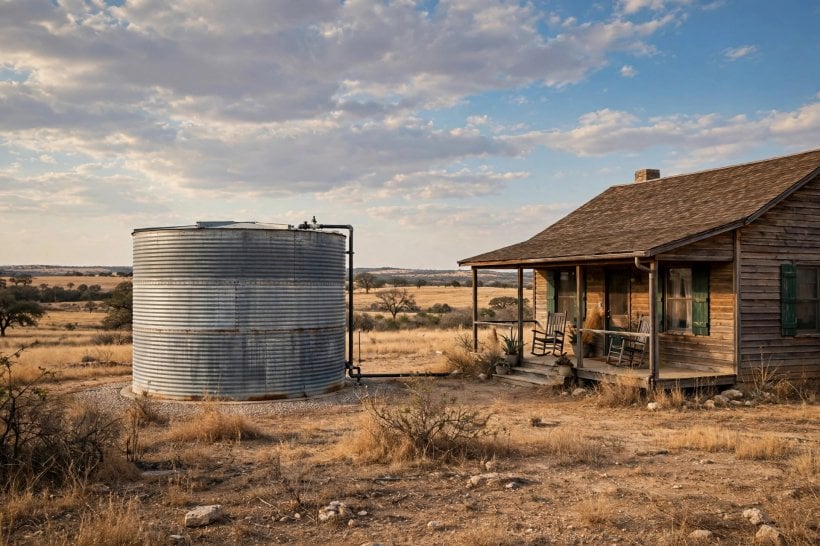
Arizona makes the desert’s version of the same argument. A state with little rain has the most reason to catch all of it, and Arizona answers with harvesting incentives — Tucson’s rebates being the named example, paying residents back for installing systems. The logic is the mirror of the prior-appropriation West around it: where every gallon is precious, wasting the roof’s share stops making sense, and the incentive cheque is the state admitting it. Desert harvesting is a design discipline of its own — small rain, large roofs, storage sized to bridge long dry gaps.
Then there is the unrestricted East: North Carolina, Ohio and most of the riparian states, where the harvester’s legal position can be stated in three words — no permit, free. Under the riparian default the barrel is simply a reasonable use of your own land’s water, and nobody registers it, caps it or inspects it. If you garden in the East, the legal section of your project plan is the shortest one you will write, and your energy belongs on the engineering instead: the catchment and storage arithmetic in the guide to rainwater harvesting system sizing is where an eastern project is actually won or lost.
5. The Restrictive States: Know the Limits
Colorado carries the deepest prior-appropriation history in the country, and for generations it was the state where rooftop harvesting was, in the strict doctrine, simply not allowed — the rain belonged downstream. The change came with the 2016 law: Colorado now allows 110 gallons of harvested rainwater, stored in 2 barrels. Read that allowance carefully and its shape teaches the doctrine better than any summary — the volume is household scale, the container count is specified, and the permission is a deliberate, bounded exception carved into a strict system rather than a general freedom. A Colorado harvester works legally by working inside the carve-out, exactly as written.
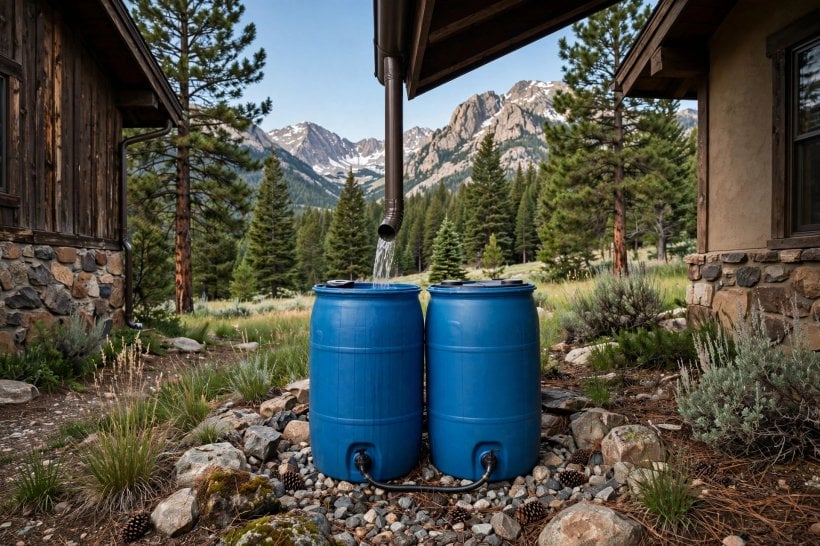
Utah takes the paperwork route: registration. The state’s threshold is 2,500 gallons — collection at that scale is a registered activity, permitted with paperwork rather than prohibited. Registration is the middle instrument between a ban and a free-for-all: the state knows who is storing water and how much, the harvester gets a clear legal footing, and the system stays lawful by being documented. Nevada is the caution case: a prior-appropriation state where the honest instruction is to check before building, because the position is doctrine-driven and evolving. In states like Nevada, yesterday’s summary — including, potentially, this one — is not a substitute for the current statute.
The practical meaning of the restrictive group is not “don’t” — it is “don’t assume.” Every state in this section allows harvesting in some form; each simply attaches a shape to the permission: a volume cap, a barrel count, a registration, a verification step. Those shapes also feed the project’s numbers, since storage you cannot legally fill is storage you should not buy — one of the quieter line items in the wider ledger of homesteading economics and financial independence off-grid.
6. The Use Tiers: What You Do With the Water
Cross every doctrine and every state line and one structure repeats: the law cares less about the barrel than about the tap it feeds. The tiers run in a fixed order. Outdoor use — irrigation, the garden — is universally allowed, or near enough that the original calls it the almost-everywhere tier: water that goes back into your own soil raises no health question and, in most readings, no rights question either. If your entire ambition is a watered garden, your legal project is almost certainly already finished.
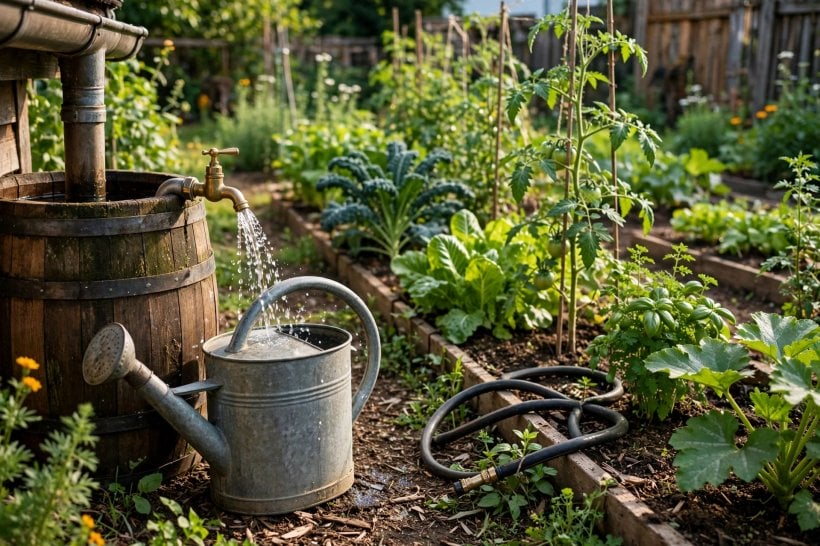
Indoor non-potable use — the toilet and the laundry, the plumbed tier — is the usual middle: generally permitted, but now the water enters the house’s pipes, and plumbing is where regulators live. Expect the permission to come with conditions about how the two water systems meet, which the next section takes up. Potable use — drinking water — is the regulated tier everywhere: filtration plus testing, the health department involved, harvesting permitted with standards rather than permitted outright. The tier structure is the single most useful idea in this guide, because it lets a harvester sequence a project lawfully: garden now, laundry when the plumbing is approved, drinking water when the treatment and testing are in place. How harvested water joins the rest of a home’s supply is set out in the overview of tiny house utilities for power, water and sewage.
7. HOA and Local Rules: The Other Layer
Clear the state and a second legal layer is waiting, closer to home. Homeowners’ associations regulate by aesthetics, and the rainwater tank is, to an HOA eye, an industrial object in a residential view. Tank bans live in the CCRs — the covenants you agreed to when you bought — and they bind as private contract even where the state encourages harvesting with tax exemptions. The workaround the original names is the buried cistern: the tank the neighbourhood cannot see is the tank it rarely bans. The rule that governs every conflict in this section is the hierarchy: where the state allows and the HOA forbids, the strictest rule wins, because the private ban is enforceable against you even when the public law is on your side. Read the CCRs before you buy the tank — before you buy the house, ideally.
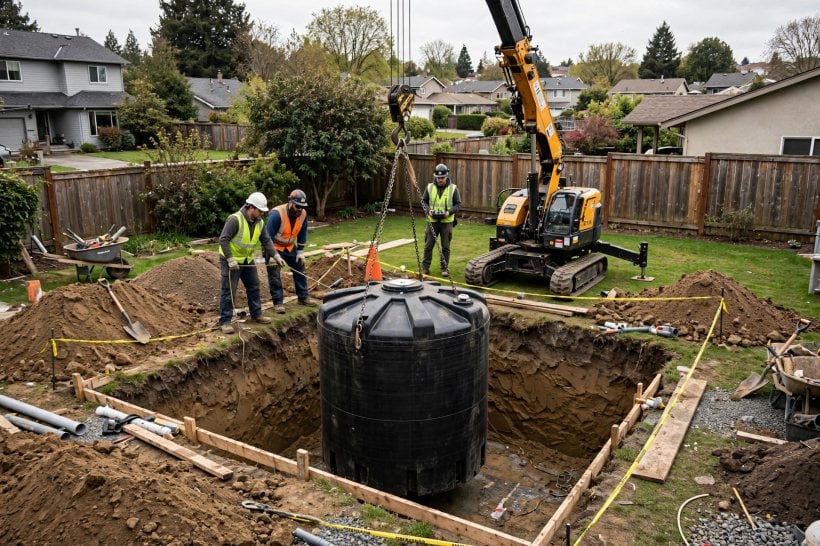
Building codes form the layer beneath the HOA, and their concern is plumbing, not looks. The moment harvested water is plumbed indoors, the code’s cross-connection rules apply: the rainwater lines and the potable lines must never be able to mix, and the backflow preventer is the device that guarantees it — a one-way gate that stops harvested water from ever being pushed back into the drinking supply. Permits in this layer are the ordinary building kind, and the inspectors are the ordinary building kind too. The neighbouring territory — how codes treat unconventional structures and systems generally — is mapped in the guide to navigating building codes for unconventional eco-structures, and the pattern of city-level permission varying street by street is the same one traced in the comparison of US cities with the best urban agriculture and sustainable living codes.
8. The Five-Minute Check: Verifying Your Own State
Everything in this guide is a map; this section is how you confirm your own address on it. The original’s rule is disarmingly small: the 5-minute state check. Search “[state] rainwater harvesting law,” read what the state’s own environmental agency publishes, and you have the current position — current being the operative word, in a field where legislatures amend the rules session by session. Five minutes is not a rhetorical figure. State agency pages summarise the doctrine, the allowances and the registration duties in plain language, because harvesters asking exactly your question are the audience those pages exist for.

Run the check in the right order and it answers the whole guide for your address. Doctrine first: riparian or prior appropriation — the agency material states it or the state’s group in this guide implies it. Allowance second: unrestricted, capped like Colorado’s 110 gallons in 2 barrels, or registered like Utah’s 2,500-gallon threshold. Tier third: what your intended use requires — outdoor certainty, plumbed permission, or potable standards. Local layer last: the county or city code and, where one exists, the HOA’s CCRs. Four questions, five minutes of searching plus a call if the paperwork tier applies — and a project that was “probably legal” becomes a project you can prove is.
9. Staying Compliant: The Working Practice
Compliance, done well, is four habits rather than a legal campaign. Research is the first: the current statute, checked at the state’s environmental agency — ten minutes of reading that the original prices honestly and that this guide’s state check compresses further. Permits are the second: where they are required, get them — Utah’s registration is the type specimen, paperwork that converts a tolerated system into a documented one. Neither habit is burdensome; both are the difference between a harvester who believes they are legal and one who can show it.
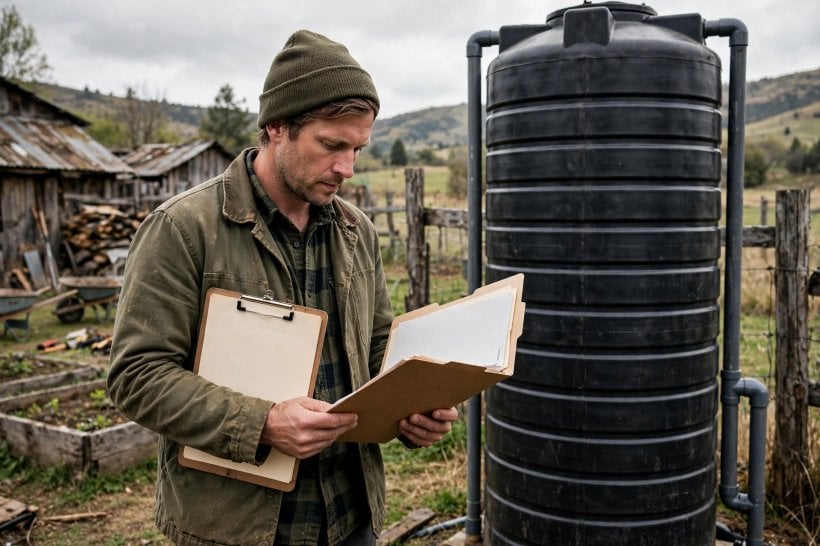
Standards are the third habit, and they belong to the potable tier: filtration plus testing, the health code met rather than approximated. A household drinking its roof water is running a small water utility, and the testing file is what makes that responsible rather than hopeful. Documentation is the fourth habit, the one that protects all the others: keep the file — permits, registrations, test results — because proof kept is a dispute ended before it starts. Together the four habits scale with the project. A garden barrel in the riparian East needs the first habit once. A plumbed, potable system in the prior-appropriation West needs all four, kept current — a modest administrative shadow for a system that waters a household.
10. The Direction of Travel: Liberalisation
Step back from the state-by-state detail and the map is moving in one direction. The trend of the 2010s and 2020s is an everywhere-loosening: state after state has written harvesting allowances into law, raised caps, added incentives or replaced doctrines’ strict readings with practical carve-outs. The teacher was drought. As dry years stacked up in the West, legislatures absorbed the arithmetic that harvesters had always made — rain running off a million roofs into storm drains is water the state then pays to replace — and the barrel stopped looking like theft and started looking like infrastructure.
Advocacy drives the next round. Harvester associations push model legislation from state to state, so a carve-out proven in one capital gets borrowed by the next — the mechanism behind the spreading pattern the doctrines section noted. The prediction the original closes with is the unrestricted decade: within it, the rain’s return to the roof becomes the default American position rather than the eastern exception. For the homesteader planning today, the direction of travel is itself a planning fact — rules are likelier to loosen around a system than to tighten on it, and the sibling resource decision, sun versus wind, is worked through in solar versus wind power for the homestead. Build to today’s statute, keep the documentation file, and the law will most likely keep walking toward you.
Final Considerations
Know your doctrine — riparian freedom in the East, prior appropriation’s limits in the West. Check the current statute in five minutes and trust the state’s own page over any summary, this one included. Register where required, at Utah’s 2,500-gallon mark and anywhere like it. Separate potable ambition from outdoor certainty, tier by tier. And read the HOA covenants before the tank arrives, because the strictest rule is the one that governs. The rain falls on your roof — in most of America now, the law agrees it is yours to keep.




1 Comment